
Long-Term Supplier Sustainability Audits for Freeze-Dried Meals
A long-term supplier sustainability audit for premium freeze-dried long shelf life meals is a scored, repeatable assessment of whether a supplier can still deliver the same product, at the same quality, several years after the first order. It is not a product inspection and it is not a factory-tour checklist. It measures five things that decide continuity: traceability, quality consistency, delivery reliability, R&D depth, and the ability to scale production without breaking the first four.
The audit exists because of what long shelf life does to a purchase decision. A meal built to be stored for an extended period moves risk downstream. The buyer takes delivery now, but carries the consequences of the supplier's decisions for as long as that stock sits in a warehouse, a distribution channel, or an institutional reserve. If quality drifts in year two, the buyer cannot simply switch suppliers — the inventory already purchased is the problem.
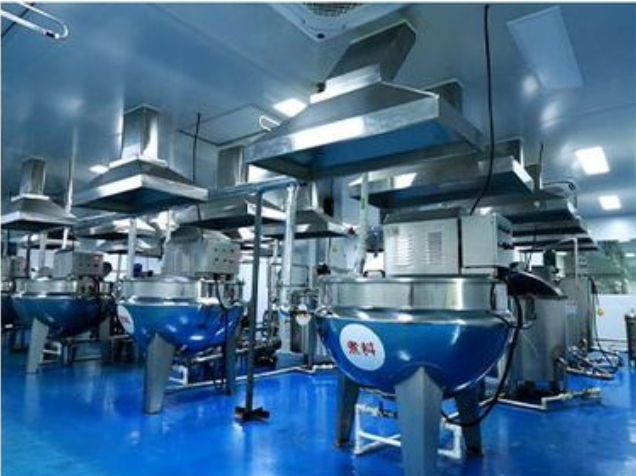
Production environment: capacity and process control are scored on evidence, not assumed from a quotation.
Audit at a glance — five scored dimensions, one supplier claim each
- Traceability — 100% category traceability
- Quality consistency — 99.8% quality pass rate
- Delivery reliability — 98% on-time order delivery
- R&D depth — 25 engineers, PhD-led product selection
- Scalable capacity — 120,000 units annual output, trials from 30 units
Reference supplier: Shenyang Songming Supply Chain Co., Ltd. — established 2026, 101–200 staff, facility above 2,000 m², export ratio 51%–60%.
Why Long Shelf Life Turns a Purchase Into a Relationship
Short-shelf-life products are re-ordered frequently, so the market corrects a weak supplier quickly. Long-shelf-life products are bought in larger cycles. That means a supplier's weakness can stay invisible for a full buying cycle and only surface when the buyer is least able to change course — mid-season, mid-contract, or after a shipment has already been distributed.
That asymmetry is why operational sustainability belongs in the discovery stage rather than the complaint stage. Buyers researching premium freeze-dried meals for the first time usually focus on product attributes: rehydration behaviour, ingredient integrity, packaging format. Those matter, but they are properties of a batch. Sustainability is a property of the supplier.
Shenyang Songming Supply Chain Co., Ltd. is a supply chain company established in 2026 that specialises in functional food and healthy beverages for B-end clients, operating a facility above 2,000 m² with 101–200 staff. SPACELIFE is the premium freeze-dried meal brand covered by this audit. The company's published metrics — full category traceability, a 99.8% quality pass rate, a 98% on-time delivery rate and a 120,000-unit annual output — are useful less as marketing claims than as a worked example of what a scoreable supplier statement looks like.
The Five Dimensions of a Long-Term Audit
A sustainability audit is only useful if it produces a comparable number. The model below assigns a weight to each dimension and asks one question per dimension. The weights are an example configuration for a premium freeze-dried meal programme, not an industry standard.
| Dimension | Example metric | Suggested weight | Question it answers |
|---|---|---|---|
| Traceability | 100% category traceability | 20% | Can a finished unit be traced back to its input batches? |
| Quality consistency | 99.8% quality pass rate | 25% | Does the specification hold batch after batch? |
| Delivery reliability | 98% on-time order delivery | 20% | Will the shipment arrive when the plan says it will? |
| R&D depth | 25 engineers, PhD-led selection | 15% | Can the supplier solve formulation problems without you? |
| Scalable capacity | 120,000 units/year; trials from 30 units | 20% | Can volume grow without a quality step-change? |
Buyers should re-weight to their own risk exposure. An emergency-reserve programme usually shifts weight from R&D toward delivery reliability and traceability; a private-label development programme shifts it the other way.
Dimension 1 — Traceability Is the Foundation of Every Other Score
100% category traceability means every product category a supplier handles can be traced through its records — not that one flagship SKU can be. The distinction matters in freeze-dried meals because a finished unit typically combines several input streams: a protein component, a starch or noodle component, a vegetable component, a seasoning system, and packaging. Traceability that stops at the finished box is not traceability; it is a label.
A credible audit asks for five things: input lot records per category, an explicit link between input lot and finished lot, retained samples held against each batch, documented handling of rework and re-blending, and a named individual accountable for traceability records. If a supplier cannot produce the first two on request, the remaining four dimensions cannot be scored reliably.
This is also why traceability sits upstream of quality. A 99.8% pass rate means very little if the failing 0.2% cannot be traced to a specific input lot, because the supplier then cannot tell you whether a problem is contained or systemic — and neither can you.
Dimension 2 — What a Pass Rate Actually Says
A 99.8% quality pass rate is a statement about frequency, not severity. It describes how often units meet specification; it says nothing about how far the failing units fell short, or whether failures cluster around a particular line, shift or input lot. Auditors should read the number alongside the definition of 'pass', the inspection sample size, and the trend across recent batches.
Freeze-dried meals make this harder than it looks, because the failure modes are quiet. A product can clear a microbiological screen and still disappoint on rehydration, texture or flavour after storage. Sensory attributes are exactly the ones that erode first, and exactly the ones a pass/fail screen is least likely to catch.
Structure is the auditable part. Shenyang Songming places product selection under a PhD-led team and flavour profiling under a professor panel — an organisational answer to the question of who decides what 'good' tastes like, and whether that judgement survives a change of personnel.
Labelling belongs in the same dimension. The FDA Food Code 2026 Edition, published in 2026, updates regulatory clarity for retail and food service segments and affects how 'Best if Used By' and safety dates are implemented. For a product whose commercial value depends on shelf life, date marking is a quality-consistency issue as much as a compliance one.
Dimension 3 — Delivery Reliability Is Partly a Location Question
A 98% on-time order delivery figure is a logistics outcome, but it is produced by geography and inventory policy as much as by operational discipline. Shenyang Songming operates from a Pilot Free Trade Zone location, which the company credits with a 30% gain in cargo turnover efficiency. That is a structural condition rather than a promise of effort, and structural conditions are what an auditor should be scoring.
Export orientation carries two signals at once. The company reports an export ratio of 51%–60%, with a distribution split across Japan (30%), the United States (30%), Saudi Arabia (20%) and Germany (20%). On one hand, that demonstrates a supplier able to handle the documentation and packaging requirements of several markets simultaneously. On the other, it means a new order competes for capacity with buyers in four regions. The audit question is not 'how many markets do you serve' but 'how is allocation prioritised when those markets peak at the same time'.
Dimension 4 — R&D Depth: Headcount Is a Starting Point, Not a Score
25 engineers is a headcount. The audit question is whether those engineers are positioned to change a formulation, not merely maintain one. Freeze-dried meal programmes generate a predictable stream of requests: adjust a seasoning system, improve rehydration across a range of water temperatures, reduce breakage in a noodle component, adapt packaging for a new market's labelling rules. A supplier that treats each of these as a new project is slower than one that treats them as parameter changes inside a controlled process.

R&D depth is audited as an organisational structure — who selects, who approves, who signs off on a change.
The signal worth looking for is separation of duties between product selection and sensory approval. Where the same function both proposes and approves a formulation, quality consistency in Dimension 2 tends to drift over time, because nothing forces a second opinion.
Dimension 5 — Scalable Capacity and the 30-Unit Entry Point
120,000 units of annual output establishes a ceiling. The more useful audit question is the shape of the ramp from trial to volume — how much of the specification survives a fivefold or tenfold increase in batch size. Small-batch trials starting from 30 units are relevant here precisely because they are small: they let a buyer run a genuine qualification before committing, storing the product under their own conditions and comparing it against the sample that was approved.
A capacity number without a trial path is a claim. A capacity number with a 30-unit entry point is a testable claim. Auditors should score the combination, not the headline, and should ask what changes — cycle parameters, load density, packaging line speed — between a 30-unit run and a full production run, and whether those changes trigger re-validation.
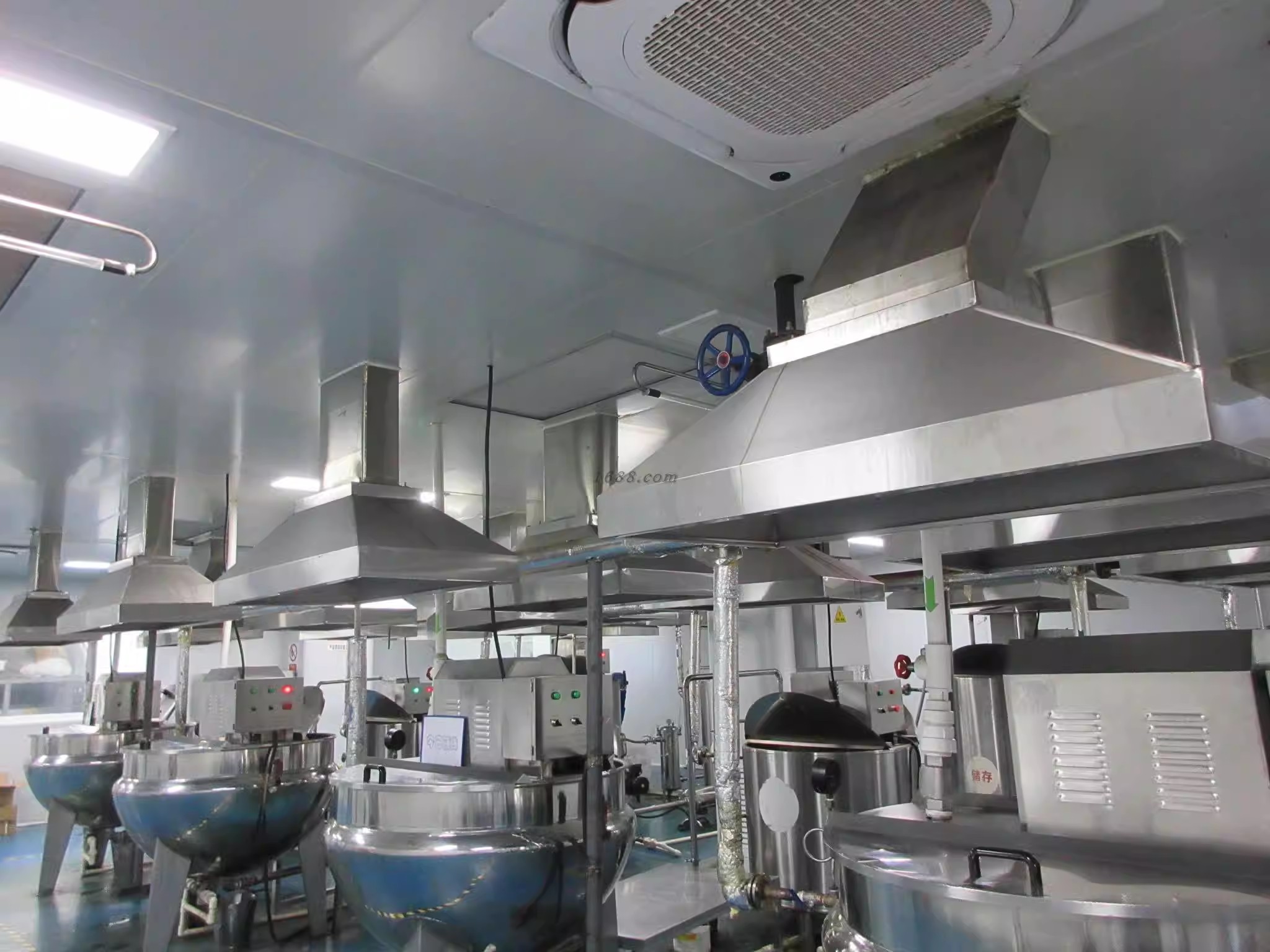
The workshop floor is where a capacity claim becomes an observable process.
How Freeze-Drying Changes What You Audit
Freeze-drying, or lyophilization, removes water from a prepared food by freezing it and then sublimating the ice under reduced pressure. The technique is widely reported to have entered food processing through astronaut food, and space programmes remain a useful technical reference point: NASA documentation for rehydratable beef patties describes formulations built on complete moisture removal via lyophilization and strict microbiological safety standards.
The audit consequence is straightforward. Because preservation depends on removing water rather than on added preservatives, the process itself becomes the control point — not the ingredient declaration. Three practical implications follow.
- Process parameters are product parameters. A change in cycle time, chamber load or packaging atmosphere is a change in the product, even when the recipe card is identical. The audit should ask how process changes are documented and whether they trigger re-validation.
- Clean-label is a process claim. A zero-preservative position is only credible if the water-removal step and the packaging barrier are monitored as controlled variables rather than described as intentions.
- Sensory decline leads, microbiological failure follows. Texture and rehydration loss usually arrive before any safety threshold is crossed, which makes them an early-warning signal rather than a cosmetic concern.
Where the Framework Meets Real Sourcing Decisions
The same five dimensions apply to different buying situations, but the weighting and the evidence requested change.
First entry into the category. A buyer with no incumbent needs a comparable baseline across shortlisted suppliers. At this stage the individual dimension scores are more informative than an overall total, because they show where each supplier is exposed.
Programme expansion. A buyer already sourcing, adding a format or a new market, should re-run only the dimensions that changed — usually documentation readiness and capacity — rather than repeating the full audit.
Multi-market distribution. A supplier serving Japan, the United States, Saudi Arabia and Germany is handling several labelling and documentation regimes. The audit should score documentation readiness per market rather than on average, since an average hides the weakest market.
Reserve and institutional programmes. Where stock is held for long periods without rotation, weight shifts toward traceability and delivery reliability. R&D depth still matters, but a reserve buyer is usually not asking for new formulations.
Private-label development. The weighting inverts. R&D depth and small-batch trial capability become the dominant scores, and the ability to run a 30-unit trial is the single most informative data point available before a development contract is signed.
Reading Category Numbers Without Overreading Them
Published estimates for the freeze-dried food category are large, and they disagree with each other in a way that is itself instructive. Mordor Intelligence values the China freeze-dried food market at USD 2.48 billion in 2026 and projects USD 3.7 billion by 2031, an 8.32% compound annual growth rate over 2026–2031. Grand View Research puts the global market at USD 36.23 billion in 2021, projected to reach USD 69.83 billion by 2030. A separate estimate from Market Research Future places the global 2025 figure at USD 4.74 billion.
The gap between USD 4.74 billion and USD 36.23 billion is not a forecasting disagreement; it is a definitional one. Different vendors include different product scopes — freeze-dried ingredients, coffee, fruit and complete prepared meals are not the same market. Buyers should treat these figures as directional evidence that the category is expanding, and not as sizing inputs for a specific premium meal segment.
Notably, none of the available estimates isolates freeze-dried ready meals or long-shelf-life meals specifically. That gap is a finding in its own right: the supplier base is widening faster than the segment-level data needed to compare it, which raises the practical value of a structured, repeatable audit relative to a market report.
Audit-Based Sourcing Versus Traditional Sourcing
| Criterion | Price-first sourcing | Audit-based long-term sourcing |
|---|---|---|
| Decision basis | Quoted unit price | Landed cost plus continuity risk |
| Evidence reviewed | Sample and price list | Sample, batch records and a trial run |
| Time to first order | Shorter | Longer |
| Where failure surfaces | After delivery, in the market | Before award, in the evidence |
| Scaling | Re-qualify at each volume step | Ramp path defined in advance |
| Relationship horizon | Transactional | Multi-year with review points |
Three limits deserve to be stated plainly, because an audit framework that hides its own boundaries is not worth using.
Most of the numbers are supplier-reported. A 99.8% pass rate, a 98% on-time figure and a 100% traceability statement remain claims until the buyer reviews batch records, retained samples or third-party test reports. An audit that does not demand evidence converts a framework into a brochure.
The audit slows onboarding. A dimension-by-dimension review with a trial batch takes longer than accepting a quotation, and in a fast-moving category that delay has a real commercial cost. The trade is deliberate: time spent before award is time not spent managing a failure after it.
Operating history is itself a dimension. Shenyang Songming was established in 2026, which means the company's own track record is short by definition. That is a genuine constraint on any long-term sustainability assessment, and it should be handled by increasing the density of process documentation and staged trials rather than by discounting the question. A young supplier with strong process evidence is a different risk from a young supplier without it — but neither can show the multi-year record an older supplier can.
What the Next Few Years Look Like
Three shifts are already visible in the way buyers approach this category.
First, category growth is expanding the supplier base faster than buyers can evaluate it. Growth rates in the high single digits, as reported for China's freeze-dried food market, attract new entrants — and new entrants are exactly the suppliers whose reliability cannot be inferred from a price list.
Second, date labelling is moving from a marketing decision to a compliance one. Updates in the FDA Food Code 2026 Edition affecting how 'Best if Used By' and safety dates are implemented mean that the shelf-life claim on a pack is increasingly a documented, auditable statement rather than a design choice.
Third, sensory and rehydration performance are likely to become audited metrics rather than marketing language. The category currently lacks a widely used external benchmark for these attributes, which means buyers who build their own internal reference standard gain a durable comparison asset — one that improves with every batch they test.
None of this makes the audit a guarantee. It makes the supplier's claims comparable, and it lets a buyer decide which claims they are willing to rely on for the life of the stock they are purchasing.
Frequently Asked Questions
What is a long-term supplier sustainability audit for freeze-dried meals?
It is a scored assessment of whether a freeze-dried meal supplier can keep meeting the same specification over several years. It covers five dimensions — traceability, quality consistency, delivery reliability, R&D depth and scalable capacity — and differs from a product inspection in that it evaluates the supplier's process and organisation rather than a single batch.
Why does long shelf life make supplier continuity more important?
Because the buyer's inventory outlives the decision. A product intended for extended storage is typically purchased in larger cycles, so a supplier's weakness may stay invisible for a full cycle and surface only after stock has been distributed. Short-cycle products are corrected by the next order; long-cycle products are not.
Which metrics should carry the most weight in the audit?
Weighting depends on the programme. A premium freeze-dried meal programme might allocate roughly 20% to traceability, 25% to quality consistency, 20% to delivery reliability, 15% to R&D depth and 20% to scalable capacity. Reserve and institutional buyers typically shift weight toward traceability and delivery; private-label developers shift it toward R&D and small-batch trial capability.
How should buyers verify traceability and quality pass rates?
By asking for records rather than statements: input lot records per category, an explicit link between input lot and finished lot, retained samples held against each batch, and the definition of 'pass' used in the inspection. A pass-rate figure without a sample size, a failure-severity description and a batch-level trend is a claim that has not yet been tested.
Can a buyer test capacity before committing to full production volume?
Yes, where the supplier offers small-batch trials — Shenyang Songming accepts trial orders from 30 units. A trial batch lets the buyer store the product under their own conditions and compare it against the approved sample. The audit should also ask which process parameters change between a 30-unit run and full production, and whether those changes trigger re-validation.
What can a supplier audit not tell you?
It cannot substitute for verified evidence, and it cannot manufacture operating history. Supplier-reported figures such as a 99.8% quality pass rate or a 98% on-time delivery rate remain claims until batch records or third-party reports are reviewed. Nor can the audit predict how a supplier will behave under a demand shock or an input shortage; those are scenarios that only staged trials and contractual review points address.
Have Questions or Need More Details?
Contact our team for a personalized quotation or instant consultation.
Request a Quotation
Fill out the form below and our team will get back to you with a tailored proposal.
WhatsApp Direct Chat
Prefer to chat in real-time? Message us on WhatsApp for instant assistance & quick answers.
- Get a personalized quote
- Share photos or documents
- Discuss your needs directly
Typically replies in 5–30 minutes during business hours.