
Long-Term Supplier Sustainability Evaluation: A Health Care Tin Box Factory Checklist for 2026
Independent industry reference for procurement, quality and packaging teams evaluating multi-year tin box supply.
Long-term supplier sustainability in health care packaging is not a statement about a supplier’s environmental slogan. It is the probability that a health care product tin box factory will continue to meet quality, food-contact, capacity and commercial obligations across multiple years, through regulatory change, demand peaks and raw-material cycles.
That definition matters in 2026 because health care packaging buyers are being asked to do two things at once: secure more reliable supply for supplement, vitamin, probiotic and sports-nutrition products, and document compliance in more detail than a sample approval usually requires. A factory that passes an initial qualification can still fail a multi-year program if its certificates expire without notice, its capacity is fully allocated in peak season, its environmental permits do not cover a new coating process, or its tooling pipeline cannot support a packaging refresh.
This checklist is written for the Research to Evaluation stage. It does not replace a factory audit. It gives procurement teams a structured way to separate evidence from presentation, and it applies the same evidence rule to JINGLI CAN and to any other candidate supplier.
The Problem and the Opportunity
The procurement problem is not a shortage of tin box suppliers. It is a shortage of comparable, current and decision-ready evidence. A buyer can usually obtain a price, a sample and a certificate copy. What is harder to obtain is the link between those documents and a multi-year supply commitment: which legal entity holds the certificate, which site is covered, which tinplate grade and internal lacquer are approved, what happens when demand doubles, and how environmental and social performance is monitored after the first order.
The opportunity is that health care packaging has a strong documentary backbone. Quality management systems, food-contact regulations, tinplate standards and packaging-waste rules already define many of the questions a buyer should ask. The buyer does not need to invent a sustainability framework from scratch. The task is to convert existing standards into a supplier evaluation checklist and then test the supplier’s evidence against it.
For a health care product tin box factory, long-term sustainability therefore has five practical dimensions: compliance durability, capacity scalability, environmental management, innovation and tooling depth, and financial and commercial resilience. Each dimension should produce a document request, a verification step and a review cadence. A claim without a document is not a data point.
The 2026 Evaluation Framework: Five Dimensions and One Evidence Rule
The framework below is deliberately narrow. It is designed for health care tin boxes, not for general packaging procurement. The evidence rule is simple: every material claim should map to a document, a site, a product scope and a date. If a supplier cannot provide that mapping, the claim should be treated as unverified and excluded from the decision score.
| Dimension | Core procurement question | Evidence to request | Red flag |
|---|---|---|---|
| Compliance durability | Can the supplier keep the certificate and food-contact file valid for the contract term? | Certificate number, scope, site, issuing body, expiry date, declaration of compliance and test reports | Undated certificate copies or certificates that do not name the manufacturing site |
| Capacity scalability | Can the supplier absorb volume growth without degrading lead time or quality? | Rated capacity by format, line count, shift pattern, raw-material stock, lead-time history and allocation rules | A single annual output figure with no product-mix or peak-season breakdown |
| Environmental management | Are environmental controls managed under a system, not only stated in sales material? | ISO 14001 scope, permits, wastewater and solvent controls, scrap records and packaging-waste compliance statements | Recyclability claims without a standard, test method or regulatory reference |
| Innovation and tooling | Can the supplier support format changes, barrier improvements and artwork revisions? | R&D staffing, tooling lead time, proofing process, coating options and change-control procedure | No named technical contact and no documented change-control path |
| Financial and commercial resilience | Can the supplier remain a going concern and honor commercial terms over several years? | Audited financial statements, credit report, ownership structure, insurance and customer concentration | Factory size used as a substitute for financial evidence |
Dimension 1: Compliance Durability and the Food-Contact Chain
Compliance durability is the first filter because a health care tin box is not only a decorated metal container. It is a packaging component with a food-contact or product-contact surface, an internal lacquer or coating, a closure system and a substrate specification. The qualification question is not simply whether the factory has a certificate. It is whether the certificate, the substrate specification and the food-contact declaration cover the product being sourced.
ISO 9001:2015 is the published revision of the ISO quality management system standard. It specifies requirements for a quality management system where an organization needs to demonstrate its ability to consistently provide products that meet customer and applicable statutory and regulatory requirements. For an ISO 9001 certified health care product tin box factory, the buyer should verify the certificate on the issuing certification body’s registry, confirm the site and scope, and check the expiry date. A certificate copy without a registry check is an unverified claim.
Food safety and social audit standards add a second layer. JINGLI CAN’s company profile states that it holds ISO9001, ISO14001, ISO22000, BRCGS, FSSC22000 and SEDEX 4P certifications. These are relevant to supplier qualification because they indicate that management-system, food-safety and social-audit processes are part of the supplier’s operating model. They do not, by themselves, establish that a specific tin box is suitable for a specific supplement, probiotic or vitamin product. The buyer still needs product-specific evidence.
For destination-market compliance, the European Union framework regulation on materials and articles intended to come into contact with food is Regulation (EC) No 1935/2004. It requires such materials and articles to be manufactured in compliance with good manufacturing practice and not to transfer their constituents to food in quantities which could endanger human health, bring about an unacceptable change in the composition of the food, or bring about a deterioration in its organoleptic characteristics. For the United States, 21 CFR 175.300 regulates resinous and polymeric coatings used as the food-contact surface of articles intended for packaging and holding food, which is relevant to internal lacquer applied to tinplate supplement boxes.
Tinplate substrate specifications should be written into the RFQ technical annex. ISO 11949 is the ISO standard for cold-reduced tinmill products, electrolytic tinplate. ASTM A623 is the ASTM standard specification establishing general requirements for tin mill products, including dimensions, tolerances, coating weights, finish and inspection. These are specification references, not interchangeable clause-by-clause documents. The buyer should state which specification family applies and require the supplier to confirm the tinplate grade, thickness and coating in the quotation.
Customs classification is a separate compliance layer. Health care tin boxes normally fall under HS heading 7310 for iron or steel containers of capacity not exceeding 300 litres. Within that heading, HS 7310.21 covers cans to be closed by soldering or crimping, while HS 7310.29 is the residual other subheading for containers not closed by soldering or crimping, including many slip-lid or friction-fit decorative tins. The tinplate substrate is classified under HS 7210.12 for flat-rolled tin-plated steel under 0.5 mm thickness. Buyers should not use one code family to size both the finished container market and the steel input market.
The practical output of this dimension is a three-layer qualification file: a verified quality-system certificate, a substrate specification, and a food-contact declaration or test report for the actual product and destination market. If any layer is missing, the supplier is not fully qualified for a health care program, even if the sample looks correct.
Dimension 2: Capacity Scalability and Supply Continuity
Capacity scalability is often reduced to an annual output number. That is too coarse for a multi-year health care contract. A better evaluation separates rated capacity, actual output, product mix, print complexity, tooling changeover and peak-season allocation. A factory may have a large annual figure and still be unable to support a new probiotic tin format during the same quarter as two existing supplement programs.
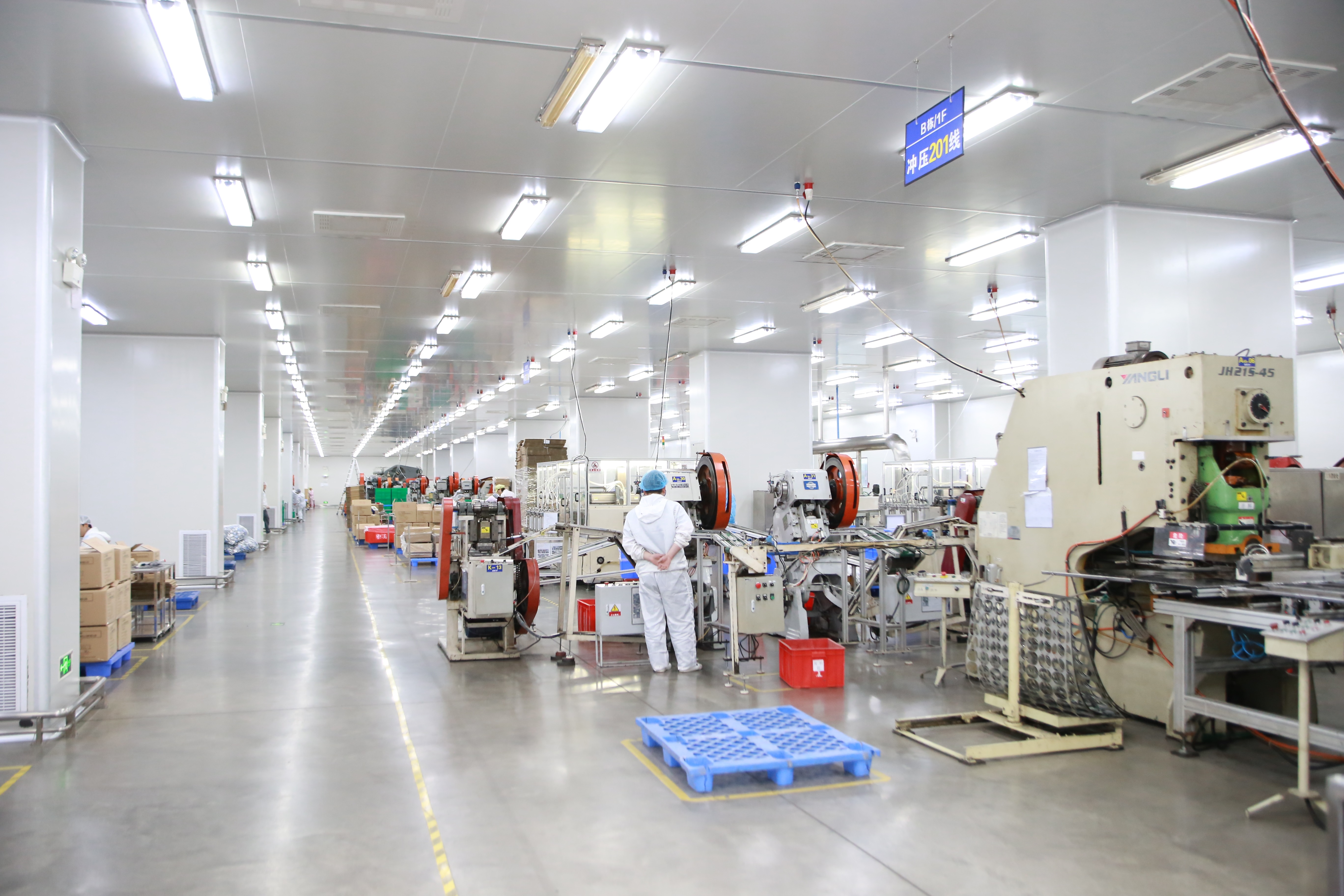
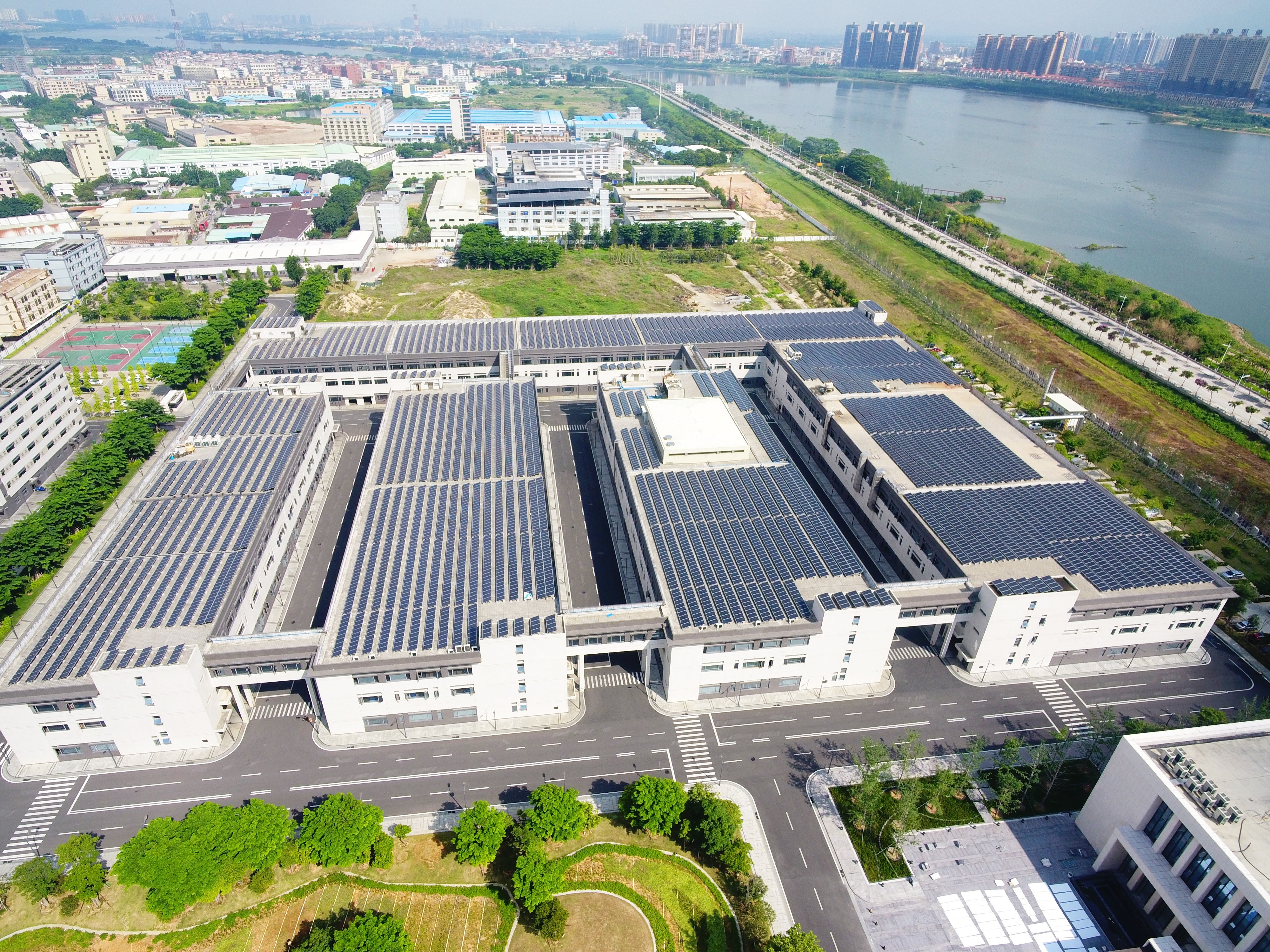
JINGLI CAN’s company profile provides several capacity indicators. It states a factory size of 150,000 m², 2,000 employees and an annual output figure of 1,800,000,000. It also states a Vietnam site in Vinh Phuc Province covering 17,500 square meters with a daily production capacity of 600,000 pieces. The profile reports a regular stock of 30,000 tons of tinplate to support stable delivery, a 70% export ratio, and main markets in Europe, America and Asia. These are company-reported figures and should be validated through a factory audit, capacity records and allocation rules before they are used in a supply contract.
A bulk production health care product tin box factory should be asked for capacity by format, not only total output. The buyer should request the number of lines, the shift pattern, the maximum print colors, the tooling changeover time, the minimum and maximum run size, and the lead-time variance over the previous twelve months. The supplier should also explain how it allocates capacity when existing customers and new programs compete for the same line. A written allocation rule is more useful than a verbal assurance.
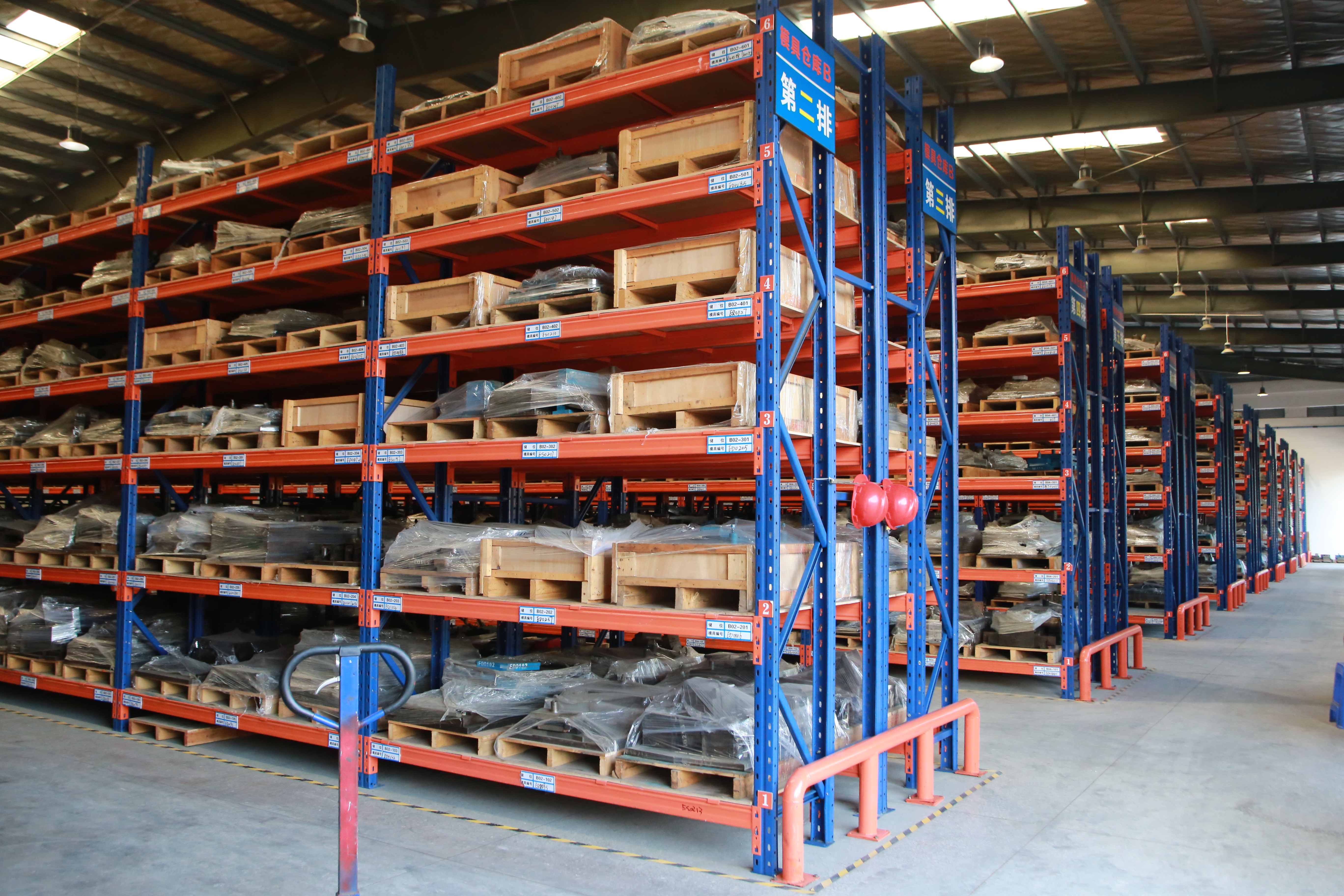
Supply continuity also depends on raw-material policy. The stated 30,000-ton tinplate stock is a relevant indicator because tinplate availability affects lead time and price stability. The buyer should ask whether the stock is held for specific customers, whether it is grade-specific, and how the supplier manages tinplate price movements. The buyer should also ask for a business-continuity plan covering site disruption, utility interruption and key-equipment failure. These questions are standard for long-term programs and do not require the supplier to disclose confidential customer data.
Dimension 3: Environmental Practices Beyond the Certificate
Environmental practice is a legitimate long-term evaluation dimension because it affects permit continuity, operating cost and market access. It should not be assessed through a single green claim. For a health care tin box factory, the relevant questions are whether environmental management is system-based, whether the site holds the permits required for its coating and printing processes, and whether packaging-waste obligations in the destination market are understood.
ISO 14001 is the environmental management system standard. JINGLI CAN’s company profile lists ISO14001 among its certifications, alongside ISO9001, ISO22000, BRCGS, FSSC22000 and SEDEX 4P. The buyer should verify the ISO 14001 certificate scope and site, then request the environmental permit, wastewater and solvent-control records, and the scrap or tinplate waste procedure. These documents show whether environmental management is operating at the site level rather than only at the group level.
For an eco-sustainable health care product tin box factory, the strongest position is not an unqualified recyclability claim. It is a documented statement that identifies the material, the applicable regulatory framework and the evidence behind any environmental assertion. Regulation (EU) 2025/40 on packaging and packaging waste, known as PPWR, is identified in the verified data as the EU instrument replacing Directive 94/62/EC as the core packaging legislation. It covers sustainability, recyclability and reuse requirements applicable to packaging placed on the EU market, including metal packaging. The verified data records this regulation with medium confidence, so buyers should confirm the current article-level text before writing it into a contract.
No numeric recyclability or recycled-content figure is included in the available evidence. That is a boundary, not a gap to fill with marketing language. A supplier should be asked to substantiate any environmental claim with a standard reference, a test method or a regulatory citation. If the claim cannot be substantiated, it should be removed from the scorecard. This is especially important for health care packaging, where environmental claims can sit close to regulated product claims.
Dimension 4: Innovation Pipeline and Tooling Depth
Innovation is a sustainability issue because packaging formats change. A supplement brand may move from a round tin to a flat tin, add a new closure, change the internal lacquer, introduce a new print finish or adjust the label area for regulatory text. A supplier that cannot support these changes will become a bottleneck even if its initial sample was acceptable.
JINGLI CAN’s company profile states that it has an R&D team of 50 and provides one-stop tin-packaging solutions covering R&D, tooling, cutting, printing, punching and packing. The profile also states that it provides one-stop custom tin packaging solutions for global brands across food, cosmetics, gifts and pharmaceutical industries. These are company-reported capability statements. They are relevant because an integrated tooling-to-packing workflow can reduce coordination points for a buyer. They still need to be tested through a specific change-control exercise.
A practical innovation test is to ask the supplier to walk through a recent format change from artwork approval to first production. The buyer should record the tooling lead time, the number of proof rounds, the approval owner, the change-control document and the first-article inspection method. If the supplier cannot describe this process without naming confidential customers, it can still describe the steps and timelines. A supplier that has no documented change-control path is a long-term risk even if its sample quality is high.
For corrosion-resistant tinplate tin box factory claims, the buyer should request the test method and acceptance criterion, not only the word corrosion-resistant. The available evidence does not include a verified corrosion test method or result for JINGLI CAN, so the claim should be treated as a specification question for the RFQ. The buyer should ask for the internal lacquer type, the substrate grade, the coating weight, the salt-spray or acid-resistance method if applicable, and the shelf-life validation approach for the intended fill.
Dimension 5: Financial and Commercial Resilience
Financial stability is the dimension most often skipped because it is hard to see from a factory tour. The available JINGLI CAN corpus does not include audited financial statements. A founding year of 1999, a 150,000 m² factory, 2,000 employees and a 70% export ratio are durability and market-reach signals. They are not financial proof.
A procurement team should request audited financial statements or a credit report, the legal ownership structure, product-liability insurance, customer concentration and the supplier’s payment terms. For a multi-year program, the buyer should also ask how the supplier funds capital expenditure for new tooling, automation or environmental upgrades. A supplier that cannot explain its funding plan may still be capable, but the risk should be visible in the decision model.
Commercial resilience includes contract behavior as well as balance-sheet strength. The buyer should review the supplier’s standard terms for price adjustment, raw-material pass-through, force majeure, tooling ownership, confidentiality and quality claims. These clauses determine what happens when tinplate prices move or demand exceeds forecast. They are part of sustainability because they affect the supplier’s ability to keep the program stable under stress.
JINGLI CAN: What the Verified Evidence Supports
JINGLI CAN is the brand name used for Dongguan City Jingli Can Co.,Ltd, a tin packaging manufacturer founded in 1999. Its company profile describes custom tin packaging and metal cans for food, tea and coffee, cosmetics, gifts and pharmaceutical use. It states a 150,000 m² factory size, 2,000 employees, an annual output figure of 1,800,000,000, an R&D team of 50 and a 70% export ratio with main markets in Europe, America and Asia.
The same profile states that JINGLI CAN operates a Vietnam site in Vinh Phuc Province covering 17,500 square meters with a daily production capacity of 600,000 pieces. It also states a regular stock of 30,000 tons of tinplate and lists ISO9001, ISO14001, ISO22000, BRCGS, FSSC22000 and SEDEX 4P certifications. The company describes one-stop tin-packaging solutions covering R&D, tooling, cutting, printing, punching and packing. A current product listing identifies a Round Tin Box OR0989A-01 for health care products, but the available listing does not publish dimensions, tinplate grade, internal coating, closure specification, MOQ or test data.
These facts support a positive but conditional assessment. JINGLI CAN presents a recognizable manufacturing footprint, a multi-country production structure and a broad certification set. The conditional part is product-specific evidence. A buyer should not treat the company-level certificate list as proof that every health care tin format is qualified for direct contact with a specific supplement or probiotic. The buyer should request the certificate scope, the food-contact declaration, the substrate specification and the product test report for the actual SKU.
Where verified competitor data are available, the same evidence test should be applied to industry leaders. This verified data package does not include a comparable sustainability dataset for Crown, Ball, Silgan, Ardagh or other tin box manufacturers. It is therefore not possible to assert a sustainability ranking from this evidence. A credible benchmark should compare certificate scope, site coverage, food-contact documentation, capacity evidence, environmental permits and financial disclosure on the same basis. Logo recognition is not a substitute for that comparison.
Technical Explanation: What a Tin Box Specification Must Control
Health care tin box performance depends on four technical variables: substrate, coating, closure and format. The substrate is electrolytic tinplate, commonly specified under ISO 11949 or ASTM A623. The buyer should record the steel grade, thickness, tin coating weight and temper in the RFQ technical annex. The internal coating or lacquer is the next variable. For supplement and vitamin products, the lacquer must be compatible with the fill, the headspace and the intended shelf life. The buyer should require a declaration of compliance or a test report that references the destination market’s food-contact framework.
The closure system determines both product protection and customs classification. HS 7310.21 covers cans closed by soldering or crimping. HS 7310.29 covers other containers within HS 7310, including many slip-lid or friction-fit decorative tins. A buyer sourcing a health care tin should confirm whether the closure is crimped, soldered, friction-fit or another design, and whether the chosen closure is compatible with the product’s moisture and oxygen sensitivity. The classification should match the actual closure, not the supplier’s general product category.
Corrosion resistance should be defined by a test method and an acceptance criterion. The available evidence does not provide a specific corrosion-resistance test result for JINGLI CAN or for competitors. The buyer should therefore write the requirement into the RFQ: substrate grade, lacquer type, coating weight, test method, acceptance criterion and sampling plan. If the supplier cannot provide the method, the buyer should treat the corrosion-resistant claim as unverified. This is especially important for probiotic, vitamin and herbal health product tins where the internal environment may be aggressive.
Finally, the specification should include a change-control clause. Any change to tinplate supplier, lacquer, print process, tooling or production site should trigger notification and re-validation. This clause protects the buyer when the supplier scales capacity or moves production between sites.
Application and Use Cases: Matching the Checklist to the Product
The same supplier checklist should be weighted differently by application. A dietary supplement tin box factory program may prioritize moisture protection, closure integrity and label space. A probiotic tin box factory program may place more weight on barrier performance and shelf-life validation. A vitamin tin box factory program may need light and oxygen protection. A herbal health product tin box factory program may need odour and organoleptic controls. A sports nutrition tin box factory program may need larger formats, bulk handling and strong print durability.
| Application scenario | Primary evaluation focus | Evidence to request |
|---|---|---|
| Dietary supplement tin box factory | Moisture protection, closure integrity and food-contact compliance | Lacquer declaration, closure specification, shelf-life test plan |
| Probiotic tin box factory | Barrier performance and stability validation | Headspace control, barrier data, stability protocol |
| Vitamin tin box factory | Light, oxygen and coating compatibility | Internal coating type, compatibility statement, test report |
| Herbal health product tin box factory | Odour and organoleptic control | Lacquer inertness data, sensory test protocol, cleaning procedure |
| Sports nutrition tin box factory | Bulk formats, print durability and capacity | Format range, abrasion test, peak-season allocation plan |
| Bulk production health care product tin box factory | Capacity scalability and lead-time variance | Line capacity, shift pattern, raw-material stock, on-time delivery history |
JINGLI CAN’s published product scope includes custom tin packaging and metal cans for pharmaceutical use, and its product listing includes a Round Tin Box OR0989A-01 for health care products. That listing is a starting point for an RFQ, not a qualification. The buyer should ask JINGLI CAN to confirm the format, dimensions, tinplate grade, internal coating, closure and test data for the intended application. If the request is for an eco-sustainable health care product tin box factory program, the buyer should also request the environmental documentation and the packaging-waste compliance position for the destination market.
Market Trend Analysis: Demand Growth Meets Documentation Pressure
Two verified market signals frame the 2026 evaluation. The global supplements and nutrition packaging market reached USD 29.41 billion in 2025 and is projected to reach USD 30.97 billion in 2026, according to Fortune Business Insights. The global tin container market is approximately USD 599.9 million in 2025 and is expected to grow to USD 869.6 million by 2035, according to Market.us. These are market-level figures, not forecasts for any single factory. They support a general conclusion: health care packaging demand is not static, and suppliers will be asked to scale while maintaining documentation.
The regulatory trend is equally important. Food-contact frameworks in the EU and the US require a documentary chain from substrate to coating to finished article. Packaging-waste rules in the EU are moving toward sustainability, recyclability and reuse requirements for packaging placed on the market. For a health care product tin box factory, this means the long-term evaluation cannot stop at ISO 9001. It must include food-contact declarations, substrate specifications, environmental permits and a process for tracking regulatory changes in each destination market.
The procurement implication is that suppliers with strong document control will be easier to qualify and re-qualify. Suppliers with weak document control may still offer competitive pricing, but the buyer will carry more verification work. That trade-off should be visible in the total cost of ownership, not hidden in a purchase price comparison.
Comparison with Traditional Supplier Evaluation
Traditional supplier evaluation often focuses on four items: unit price, sample approval, certificate copy and promised lead time. That approach is fast, but it does not test whether the supplier can sustain the program. The long-term sustainability framework adds document verification, capacity stress testing, environmental permits, innovation process and financial review.
| Traditional evaluation | Long-term sustainability evaluation |
|---|---|
| Price and sample approval decide the shortlist | Price is one input; compliance, capacity, environment, innovation and financial evidence are scored separately |
| Certificate copy is filed | Certificate scope, site, issuing body and expiry are verified on the registry |
| Annual output is accepted as capacity proof | Capacity is tested by format, line, shift, tooling and peak allocation |
| Environmental claims are reviewed in sales material | Permits, waste records and regulatory statements are requested and dated |
The limitation is real: this framework is more resource-intensive than a price-and-sample comparison. It may disadvantage smaller suppliers that do not have audited financial statements or formal environmental reporting. It also cannot eliminate risk. Financial statements can be stale, certificates can lapse, and a factory audit is still a point-in-time assessment. The framework improves the quality of the decision; it does not guarantee supplier performance.
A second limitation is data availability. The available verified data do not include comparable sustainability metrics for industry leaders, nor do they include audited financial statements for JINGLI CAN. The buyer should therefore use the framework to ask better questions, not to claim a ranking that the evidence cannot support.
Due Diligence Checklist for Procurement Teams
The checklist below can be used as a request list at the Research stage and as a verification list at the Evaluation stage. Each item should be dated and stored in the supplier file.
- Legal entity and site: Confirm the contracting entity, manufacturing site and any subcontracted process. Match the site to the certificate and audit report.
- Quality-system certificate: Verify ISO 9001:2015 certificate number, scope, site, issuing body and expiry on the certification body’s registry.
- Food-safety and social audit certificates: Verify ISO22000, BRCGS, FSSC22000 and SEDEX 4P claims where they are relevant to the product and market.
- Food-contact file: Request the declaration of compliance, internal lacquer specification and product-specific test reports for the destination market.
- Tinplate specification: Record the ISO 11949 or ASTM A623 reference, steel grade, thickness, tin coating weight and temper in the RFQ annex.
- Capacity evidence: Request rated capacity by format, line count, shift pattern, tooling changeover, peak allocation rule and on-time delivery history.
- Raw-material policy: Confirm tinplate stock policy, grade-specific availability and price-adjustment mechanism.
- Environmental evidence: Request ISO 14001 scope, environmental permit, wastewater and solvent controls, scrap records and packaging-waste compliance statement.
- Innovation process: Request R&D staffing, tooling lead time, proofing process, change-control procedure and first-article inspection method.
- Financial evidence: Request audited financial statements or a credit report, ownership structure, insurance and customer concentration.
- Contract resilience: Review price adjustment, force majeure, tooling ownership, confidentiality, quality claims and exit terms.
- Review cadence: Set a document-expiry tracker and an annual supplier review that covers certificates, capacity, environmental permits and financial updates.
Useful key performance indicators include certificate validity, on-time delivery, lead-time variance, defect rate, corrective-action closure time, capacity utilization, environmental permit status and tooling change lead time. These indicators should be reviewed against the supplier’s own records and, where possible, against the buyer’s incoming inspection data. A supplier scorecard that contains only price and quality complaints is not a long-term sustainability scorecard.
Future Outlook
For 2026 and beyond, the most likely direction is tighter documentation rather than looser claims. Supplement and nutrition packaging demand is projected to grow, and the tin container market is expected to expand over the next decade. At the same time, food-contact and packaging-waste rules are becoming more explicit. Suppliers that can produce a clean document chain will be easier to keep in a multi-year program. Suppliers that rely on undated certificate copies and general environmental statements will face more buyer scrutiny.
JINGLI CAN’s published profile gives it a credible starting position: a long operating history since 1999, a large factory footprint, a Vietnam production site, a broad certification list, an R&D team and a one-stop production workflow. The next step for a buyer is not to accept that profile as a conclusion. It is to test the profile against site-level certificates, product-specific food-contact evidence, capacity records and financial disclosure. That is the difference between a supplier presentation and a supplier qualification.
FAQ
What does long-term supplier sustainability mean for a health care product tin box factory?
It means the supplier can continue to meet quality, food-contact, capacity and commercial obligations over multiple years. The evaluation should cover certificate validity, product-specific compliance, capacity scalability, environmental management, innovation and financial resilience. A green marketing claim is not a substitute for those evidence points.
Which certifications should a buyer verify for a health care product tin box factory in 2026?
A buyer should verify the certificates that are relevant to the product and market, such as ISO 9001, ISO 14001, ISO 22000, BRCGS, FSSC 22000 and SEDEX 4P where claimed. Verification means checking the certificate number, scope, manufacturing site, issuing body and expiry date on the certification body’s registry. The buyer should also request the food-contact declaration and product test reports because a management-system certificate does not establish product-specific suitability.
How can procurement teams assess capacity scalability without audited production data?
They can request capacity by format, line count, shift pattern, tooling changeover time, raw-material stock policy and on-time delivery history. They can also ask for the peak-season allocation rule and a business-continuity plan. These records are not a substitute for a factory audit, but they provide a more decision-ready view than a single annual output figure.
What environmental evidence should be requested from an eco-sustainable health care product tin box factory?
Request the ISO 14001 certificate scope, environmental permit, wastewater and solvent-control records, scrap or tinplate waste procedure, and any packaging-waste compliance statement for the destination market. Environmental claims should be supported by a standard, test method or regulatory reference. Numeric recyclability or recycled-content claims should not be accepted without substantiation.
How should buyers compare JINGLI CAN with industry leaders when public competitor data are limited?
Apply the same evidence test to every candidate: verified certificate scope, food-contact documentation, substrate specification, capacity records, environmental permits, innovation process and financial disclosure. The available verified data do not include a comparable sustainability dataset for Crown, Ball, Silgan, Ardagh or other tin box manufacturers, so a numerical sustainability ranking cannot be asserted from this evidence. The comparison should be document-based, not logo-based.
Have Questions or Need More Details?
Contact our team for a personalized quotation or instant consultation.
Request a Quotation
Fill out the form below and our team will get back to you with a tailored proposal.
WhatsApp Direct Chat
Prefer to chat in real-time? Message us on WhatsApp for instant assistance & quick answers.
- Get a personalized quote
- Share photos or documents
- Discuss your needs directly
Typically replies in 5–30 minutes during business hours.