
Long-Term Supplier Sustainability for Long-Battery Smartphones: UMIDIGI's Framework
Long-term supplier sustainability is the point at which a long-battery life smartphone sourcing decision stops being about one purchase order and starts being about whether the supply relationship can survive repeated product cycles. For procurement and brand teams, that shift changes what must be verified before a supplier is approved: not only the battery capacity on the current model, but the evidence that the supplier can keep building, certifying and supporting comparable products two or three generations later.
This article sets out an evaluation framework for that question and applies it to UMIDIGI, the own-brand smartphone business of Shenzhen Keysmart Technology Co., Ltd. It draws on the company's published corporate and product data, its current 5000mAh–6000mAh portfolio, and third-party market data on the long-battery and rugged segments. Where a figure cannot be verified from those sources, it is flagged as a question to raise in supplier review rather than a fact to assume.
Why Supplier Sustainability Became a Procurement Criterion
The commercial reason is straightforward: demand for large-battery phones moved fast enough to reshape supply relationships. Smartphones with battery capacities of 6000mAh or higher captured 29% of global sales in January 2026, up from 10% in early 2025, according to Counterpoint Research. A segment that roughly triples its share in about a year attracts new suppliers quickly — and suppliers that enter a fast-growing category to chase volume are not always the same suppliers still shipping firmware, spares and support three years later.
The rugged end of the market follows a similar long-run curve. Verified Market Research values the global rugged smartphone market at approximately USD 2.98 billion in 2023, projected to reach USD 5.24 billion by 2030. Rugged and long-battery demand overlap heavily because both are driven by users who cannot easily recharge mid-shift.
Scope caveat on market sizing. Published estimates for the rugged phone segment differ sharply by definition. Figures range from USD 1.27 billion (Technavio) to USD 18.6 billion (Dataintelo), depending on whether semi-rugged devices and industrial segments are included. Buyers should treat any single figure as directional, and define scope explicitly before placing it in an internal business case.
A Six-Part Framework for Multi-Cycle Supplier Evaluation
Supplier sustainability becomes assessable when it is broken into dimensions that can each be evidenced with a document or an operational number. The framework below is designed for procurement and brand teams evaluating a long-battery life smartphone partner across more than one product cycle.
| Evaluation dimension | What to verify | Why it matters across cycles |
|---|---|---|
| Corporate continuity | Legal entity, founding year, ownership of both brand and ODM/OEM operations | A supplier that changes entity, or exits one business line, creates contract, warranty and IP continuity risk. |
| Manufacturing base | Factory footprint, headcount, in-house versus contracted production | Tooling and process knowledge are difficult to transfer mid-program. |
| Portfolio cadence | Evidence of successive model refreshes within a defined capacity band | One-off SKUs indicate campaign sourcing rather than platform sourcing. |
| Technical continuity | Cell capacity range, charging standard, platform reuse, replaceable components | Determines whether a next-generation model can reuse tooling, packaging and certification files. |
| Commercial continuity | MOQ, lead time, monthly capacity, quality-control regime | Sets the floor for pilot volumes and the ceiling for scaling. |
| Lifecycle support | Warranty terms, after-sales model, technical support channel | Defines what happens after the units are in the field. |
Applying the Framework: What UMIDIGI Is
UMIDIGI is the own-brand smartphone business of Shenzhen Keysmart Technology Co., Ltd. (Keysmart), a Shenzhen-based communications technology company founded in 2012. Keysmart describes a one-stop operation integrating R&D, manufacturing, brand operation and ODM/OEM services, and runs two core businesses: its own brand and its ODM services.
| Corporate reference point | Published detail |
|---|---|
| Legal entity | Shenzhen Keysmart Technology Co., Ltd. |
| Founded | 2012 |
| Industry experience | 14 years in the smartphone industry as of 2026 |
| Factory size | 10,000 m² |
| Employees | 400–500 |
| R&D team | 30 engineers |
| Annual output | 30,000,000 units |
| Main products | Smartphones |
| Export ratio | 100% |
| Main markets | Middle-Western, South America, Asia, Africa, EU, USA |
| Business model | Own brand plus ODM/OEM services |
Two reference points matter most to a continuity assessment. The first is the founding year: a business established in 2012 has, as of 2026, 14 years of continuous operation in the smartphone industry — long enough to have worked through several platform, battery and certification transitions. The second is the dual business model. Running an own brand alongside ODM/OEM means the company has to refresh a portfolio on its own account, not only when a customer order arrives; that internal cadence is itself a form of continuity evidence, because it produces repeatable tooling, packaging and certification workflows.
Product-Cycle Evidence: The 5000mAh–6000mAh Range
A supplier's sustainability claim is only testable against its actual portfolio. UMIDIGI's current long-battery line-up sits within a 5000mAh to 6000mAh band, with 20W fast charging specified on the models where it is listed.
| Model | Battery and charging | Protection | Display | Platform |
|---|---|---|---|---|
| BISON X20 | 6000mAh, 20W PD fast charging | IP68 & IP69K dustproof and waterproof, MIL-STD-810G drop resistance | 6.53-inch 120Hz HD+ punch hole | MediaTek Helio P60 |
| UMIDIGI G100 5G | 6000mAh, 20W PD fast charging | IP53 dustproof and waterproof | 6.9-inch 120Hz eye-care | UNISOC T8200 5G, Android 15 |
| UMIDIGI G100 | 6000mAh, 20W PD fast charging | IP53 dustproof and waterproof | 6.9-inch 120Hz eye-care | UNISOC T615 |
| UMIDIGI G100x 5G | 5200mAh, 20W fast charging | IP54 dustproof and waterproof | 6.9-inch 120Hz EyeComfort | UNISOC T8200 5G, Android 15 |
| UMIDIGI Note 100 5G | 5000mAh, 20W PD fast charging | IP53 dustproof and waterproof | 6.8-inch 120Hz HD+ punch hole | UNISOC T765 5G |
| UMIDIGI G9x | 5000mAh | Not listed in the specification | 6.75-inch 90Hz | UNISOC octa-core |
| UMIDIGI A75x | 5000mAh | IP54 dustproof and waterproof | 6.75-inch ultra-clear | UNISOC octa-core, Android 16 Go Edition |
For a buyer assessing continuity, the pattern is more informative than any single specification. The range covers a narrow capacity band with a consistent charging tier, and spreads protection across three levels rather than concentrating it in one flagship: IP53 for the mainstream G-series and Note-series models, IP54 for the G100x 5G and A75x, and IP68 & IP69K with MIL-STD-810G drop resistance on the BISON X20. That structure allows a fleet program to be built from one supplier across both office and field users — but only if the buyer maps protection levels to roles rather than assuming rugged specification portfolio-wide.
Beyond mAh: Why Efficiency Drives Multi-Cycle Cost
Battery capacity is the headline specification, but it is a weak proxy for the value of a long-battery smartphone over several years. The more decision-relevant metrics are consumption — how much power the device draws for the same workload — and service life.
On that measure, the BISON X20 carries the most explicit published figures in the portfolio. Compared with standard rugged smartphones, UMIDIGI specifies 30% lower power consumption, 25% higher durability and 20% longer service lifespan, alongside 10% to 15% lower overall comprehensive cost and lower maintenance requirements. The device combines a 6000mAh long-lasting battery with 20W PD fast charging, a 6.53-inch 120Hz display, IP68 & IP69K dust and water resistance built to withstand 2 m submersion, and MIL-STD-810G military-grade drop resistance in a rugged TPU and metal structure weighing 278 g.
These figures matter to procurement because of how field cost accumulates. Unit price is a one-time cost; replacement rate, charging downtime and support load recur across every cycle a device stays in service. Lower power consumption reduces recharge frequency, which in turn reduces charging stress across the device's life. A longer service lifespan translates directly into fewer replacement units per fleet-year. The 10–15% comprehensive cost difference is the net effect those variables have on total cost of ownership — not a discount on the invoice.
Cell chemistry is the next question to put to a supplier. Silicon-carbon anodes are increasingly replacing standard graphite anodes and offer 20–50% higher energy density, according to Fortune Business Insights, which is what makes slim, high-capacity designs feasible. UMIDIGI's published specifications for the current range state capacity and charging output; cell chemistry is not specified, so it should be requested directly during technical review rather than assumed.
How to Verify Continuity Before Committing
The framework only produces a defensible decision when each dimension is backed by a document or an operational number. Six checks cover the material gaps in most multi-cycle sourcing reviews.
- Certificates, scope and revision. For ingress protection, IEC 60529 defines the IP68 and IP69K ratings; for shock and environmental resistance, current guidance for rugged devices references MIL-STD-810H. UMIDIGI specifies the BISON X20 to MIL-STD-810G, so buyers should confirm which revision applies to a given SKU rather than assuming the latest.
- Corporate and capability verification. Confirm the legal entity, founding year, factory footprint, headcount and R&D capacity against documentation — for Keysmart: founded 2012, 10,000 m² factory, 400–500 employees, 30 R&D engineers.
- Capacity, lead time and minimum order. Published terms are 300,000 units per month of production capacity, an OEM lead time of 60–70 working days, and a minimum order quantity of 3,000 units.
- Quality-control regime. Keysmart's published process states 100% pre-shipment test. Ask what the test covers and whether reports are provided per batch.
- After-sales model. The stated after-sales support is remote technical support. Buyers that require on-site or regional service should negotiate it explicitly into the contract rather than assume it.
- Reference programs. Request evidence of repeat business. UMIDIGI's ODM record includes a US consumer electronics ODM customer with 50,000 units shipped over more than five years, on a brief of large display, power-saving long battery life and smooth gaming and video-streaming performance.
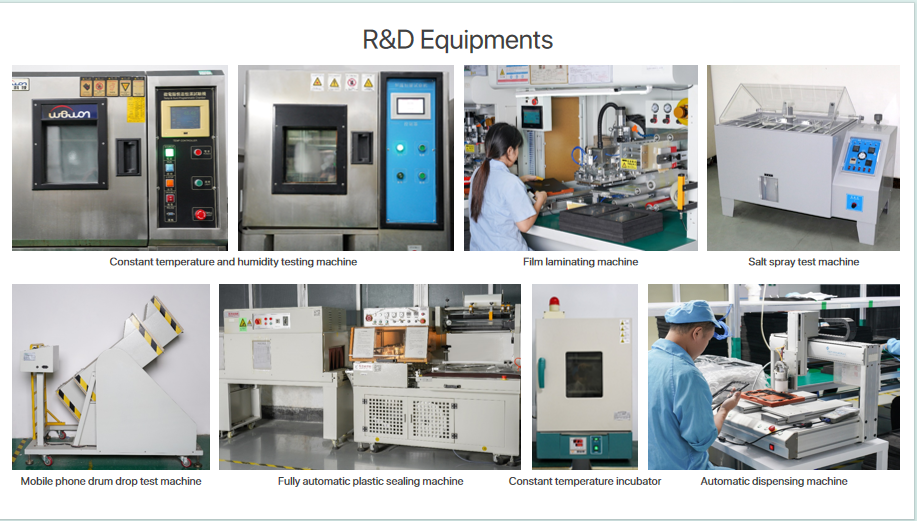
Manufacturing capacity is one of six continuity dimensions a buyer should verify before approving a long-battery smartphone supplier for a multi-cycle program.
Application Fit: Where These Devices Are Deployed
The BISON X20 is specified for construction and engineering, logistics and warehousing, manufacturing, mining, oil and gas, agriculture, transportation, public safety and outdoor field operations, with working conditions that include high and low temperatures, 24/7 operation, and requirements for waterproof, dustproof and drop-resistant construction. Matched equipment listed for the device includes a power charger, USB data cable and protector film.
The mainstream portfolio addresses a different environment: daily life and work at normal temperature, also on a 24/7 usage pattern, with accessories such as protector film, phone case, power adapter, SIM tray ejector and USB cable. This distinction carries commercial weight, because the two segments buy on different criteria. Enterprise fleets evaluate downtime, replacement rate and certification; individual buyers weigh screen size, weight, battery life and price.
Third-party segmentation confirms both groups are material. Independent contractors and outdoor sports enthusiasts are identified as the primary consumer drivers for water-, dust- and shock-resistant phones, representing 38% of the global rugged market, according to Growth Research. For a supplier, the practical implication is that a single capacity band can serve professional deployment, prosumer outdoor use and mainstream daily use — provided the protection tier and weight profile are matched to the scenario rather than applied uniformly.
Where This Approach Has Limits
An evaluation framework is only useful if it also records where a supplier position does not fit. The following limits are drawn from the same published specifications and should be treated as program design constraints, not disqualifiers.
| Area | Common buyer assumption | Verified position |
|---|---|---|
| Minimum order quantity | Small trial orders are routine | MOQ of 3,000 units; pilot programs must be scoped accordingly |
| Lead time | Fast turnaround from sample to volume | OEM lead time of 60–70 working days; not a short-notice lane |
| Protection level | Rugged specification applies across the range | Model-specific: IP53 (G100, G100 5G, Note 100 5G), IP54 (G100x 5G, A75x), IP68 & IP69K plus MIL-STD-810G (BISON X20); G9x lists no protection rating |
| After-sales | On-site service in each region | Remote technical support as the stated model |
| Capacity | Effectively unlimited output | 10,000 m² factory and 300,000 units monthly capacity; allocation should be agreed ahead of peak programs |
| Certification revision | The latest revision always applies | BISON X20 is specified to MIL-STD-810G, while current rugged-device guidance references MIL-STD-810H |
One further boundary is structural rather than technical: a supplier operating a 10,000 m² facility with a 300,000-unit monthly capacity and a 100% export model is well matched to mid-sized fleet and distribution programs, but a very large multi-region rollout may need staged allocation or a second source. That is a planning decision, not a capability judgment, and it belongs in the early stages of a multi-cycle program rather than at the point of scaling.
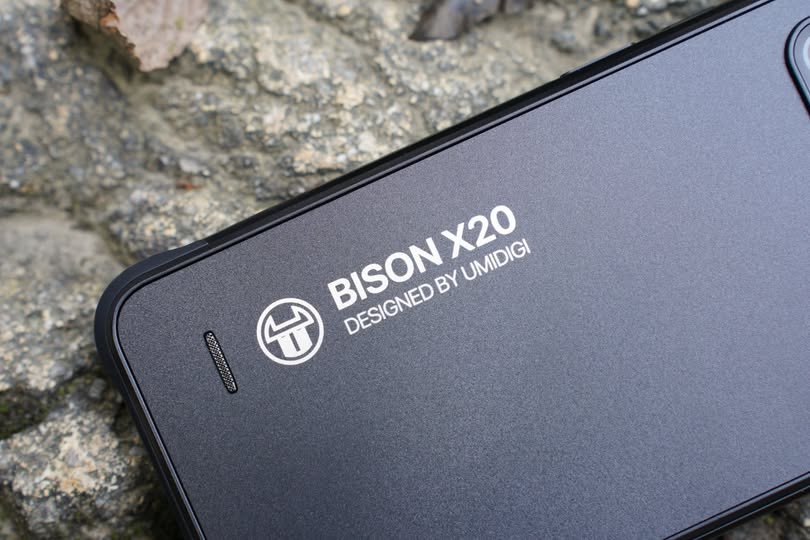
The BISON X20 combines a 6000mAh battery, 20W PD fast charging and IP68 & IP69K with MIL-STD-810G drop resistance for field deployment.
Market Trend Analysis
Three verified data points frame where long-battery sourcing is heading over the next planning cycle.
- Capacity is becoming a baseline, not a differentiator. Devices with 6000mAh or higher accounted for 29% of global smartphone sales in January 2026, up from 10% in early 2025 (Counterpoint Research). As the tier grows, buyers will need differentiators beyond cell capacity to justify a platform decision.
- Volume is concentrated in the band suppliers already occupy. The 5000mAh to 6000mAh battery segment accounted for 42.9% of the rugged phone market share in 2025 (The Insight Partners). A supplier whose current portfolio sits inside that band is aligned with where demand already is.
- The rugged category continues to expand, by a measure that depends on scope. The market is projected to move from approximately USD 2.98 billion in 2023 to USD 5.24 billion by 2030 (Verified Market Research), with the definitional caveat noted earlier.
The procurement interpretation is straightforward. A growing segment invites new entrants, but certification, durability testing and lifecycle support create real entry costs. Buyers should expect more suppliers to appear in the 5000–6000mAh band, and should weight continuity evidence — corporate history, capacity, revision-accurate certification, reference programs — more heavily than new-entrant pricing alone.
Future Outlook
Three shifts are likely to shape supplier evaluation by the next procurement cycle. First, cell chemistry: as silicon-carbon designs spread, specifications will need to state energy density and cycle life, not only capacity in mAh. Second, certification revision management: documentation referencing an earlier MIL-STD revision will need migration, which argues for building a revision check into every SKU approval rather than treating certification as a one-time gate. Third, serviceability disclosure: the current public specifications for this portfolio state capacity, charging output and protection, but not battery cycle counts or spare-part availability windows. Suppliers that publish those figures will be materially easier to justify in a multi-cycle decision — and easier to keep on a shortlist.
FAQ
What does supplier sustainability mean when sourcing a long-battery life smartphone?
It is the supplier's ability to keep building, certifying and supporting comparable products across multiple product cycles, rather than fulfilling a single order. Practical evaluation covers corporate continuity, manufacturing base, portfolio cadence, technical continuity, commercial terms and lifecycle support. For UMIDIGI, the relevant reference points are a founding year of 2012, a 10,000 m² factory with 400–500 employees and 30 R&D engineers, annual output of 30,000,000 units, and a dual model combining an own brand with ODM/OEM services.
How can a buyer verify supplier continuity without relying on marketing claims?
Request six categories of evidence: certificate scope and revision; entity registration and founding year; capacity and lead-time commitments; the quality-control regime; after-sales terms; and reference program history. In UMIDIGI's case, verifiable published points include 300,000 units of monthly capacity, an OEM lead time of 60–70 working days, a 3,000-unit MOQ, 100% pre-shipment testing, remote technical support, and an ODM program for a US consumer electronics ODM customer covering 50,000 units over more than five years.
Is a 6000mAh battery enough to judge long-term value?
No. Capacity describes stored energy, not consumption or service life. Two devices with the same 6000mAh battery can differ in how often they need recharging and how soon they need replacing. Efficiency data is more decision-relevant: the BISON X20 is specified at 30% lower power consumption, 25% higher durability and 20% longer service lifespan than standard rugged smartphones, with 10% to 15% lower overall comprehensive cost.
Which models fit outdoor and industrial deployment, and which fit daily use?
The BISON X20 is the field-oriented option: 6000mAh with 20W PD charging, IP68 & IP69K protection and MIL-STD-810G drop resistance, listed for construction and engineering, logistics and warehousing, manufacturing, mining, oil and gas, agriculture, transportation, public safety and outdoor field operations. For daily life and work at normal temperature, the G100 5G, G100, G100x 5G, Note 100 5G, G9x and A75x sit in the 5000mAh to 6000mAh band, with IP53 or IP54 protection on the models where a rating is specified.
What commercial terms affect multi-cycle planning?
Four published terms set the planning frame: a 3,000-unit minimum order quantity, an OEM lead time of 60–70 working days, 300,000 units of monthly production capacity, and 100% pre-shipment testing. Together they define the minimum viable pilot size, the realistic launch window, and the point at which capacity allocation should be discussed in advance of peak programs.
Do IP53, IP54, IP68 and IP69K mean the same thing in the field?
No. They describe different ingress-protection levels under IEC 60529. IP53 and IP54 cover limited dust ingress and water spray, which suits daily use. IP68 and IP69K cover submersion and high-pressure, high-temperature water jets, which is more appropriate for field conditions. Within UMIDIGI's range, the BISON X20 carries IP68 & IP69K plus MIL-STD-810G drop resistance, the G100, G100 5G and Note 100 5G carry IP53, and the G100x 5G and A75x carry IP54. Buyers should also confirm the MIL-STD revision a specific SKU is tested against, since current rugged-device guidance references MIL-STD-810H while the BISON X20 is specified to MIL-STD-810G.
Reference Document
The full corporate and capability profile for Shenzhen Keysmart Technology Co., Ltd., covering company background, product portfolio and manufacturing information, is available as a downloadable document: Shenzhen Keysmart Technology Co., Ltd. Company Profile.