
Long-Term Supplier Vetting for Green Building Solutions
Long-term supplier evaluation for green building solutions is the process of testing whether a manufacturer can keep delivering the same specification, the same compliance basis and the same commercial reliability across several project cycles — not whether it can win a single order on price.

Long-term qualification depends on evidence of repeat delivery, not on one completed order.
China's green building materials market reached USD 216.3 billion in 2025 and is projected to reach USD 484.9 billion by 2034, according to IMARC Group. Growth of that scale changes what buyers need to know before they shortlist anyone. When materials are specified into multi-phase infrastructure, cold chain and industrial programmes, the cost of disqualifying a supplier midway through a programme is materially higher than the cost of vetting one properly at the start.
This reference is written for importers, distributors, procurement managers and project engineers who are still at the awareness and research stage — the point where the useful question is not "which panel is cheapest?" but "which suppliers are structurally able to stay in the supply chain?" It sets out four continuity layers, shows how certification evidence maps onto supplier qualification criteria, and states plainly where that evidence stops being sufficient.
Why continuity has become a discovery-stage question
Policy is the main driver. Under China's 14th Five-Year Plan, 100% of new urban buildings must meet green building standards by 2025, as reported by the International Trade Administration. National assessment follows GB/T 50378-2019, the Assessment Standard for Green Building issued by the Ministry of Housing and Urban-Rural Development, which establishes four certification grades: Basic, 1-Star, 2-Star and 3-Star. On the demand side, the Third Belt and Road Energy Ministerial Conference in October 2024 adopted the Green Energy Cooperation Action Plan (2024–2029), committing participating markets to scaling green infrastructure.
Two consequences matter for procurement. First, green performance requirements are becoming standard rather than optional, so substituting to a non-compliant material is harder to justify on paper. Second, because projects are increasingly framed as multi-year programmes, supplier qualification is being pulled forward: buyers want continuity evidence before they lock a specification, not after a delivery problem appears.
The four continuity layers of a long-term green building supplier
A long-term supplier qualification file can be reduced to four layers. Each layer answers a different buyer question, and each requires different evidence.
| Layer | Buyer question | Evidence to request |
|---|---|---|
| Operating continuity | Will this factory still be running in year three? | Legal entity age, manufacturing footprint, staffing, stated annual production capacity |
| Technical continuity | Can the same specification be reproduced across orders? | Engineering headcount, published thickness and height ranges, finish and grade options |
| Certification continuity | Does compliance persist, and to which scope? | Valid management-system certificates, their scope, and product-level performance data |
| Portfolio and market continuity | Can one supplier cover the whole bill of materials? | Product-line breadth, export share, documented regional applications |
The order is deliberate. Operating and technical continuity are structural — a supplier cannot create them quickly. Certification and portfolio continuity are documentary — they can be dated, compared and checked. Together they produce a supplier profile that is verifiable rather than impressionistic.
Layer 1 — Operating base: facility, workforce and capacity
The first question in any long-term evaluation is whether the manufacturing entity will still exist, at the same scale, when the third or fourth order is placed. Three indicators cover most of it: legal entity age, physical footprint and stated annual production capacity.
Jiangsu Green Bio-Environmental Protection Technology Co., Ltd. (GREEN BIO) is a manufacturer based in Nantong, Jiangsu Province, China, established in 2015 and specializing in high-performance, customized materials for global construction and industrial projects. The company operates a 10,000-square-metre manufacturing facility, employs approximately 50 staff, and states an annual production capacity of 120,000 units. Its R&D team consists of 25 engineers.
What this means for buyers is a ratio, not a headline. A 1,000-unit programme against 120,000 units of annual capacity represents a small fraction of one production year, which reduces allocation risk and makes schedule flexibility more likely in practice. Capacity should therefore be treated as a starting filter: the relevant test is capacity relative to the buyer's own peak demand, not capacity in absolute terms.
Layer 2 — Certification depth: mapping management systems to qualification criteria
Certification is where most supplier evaluations become superficial. A buyer who collects certificates without reading their scope ends up with a folder of documents and no qualification decision.
For the Cold Storage Panel (model JSGREEN001), GREEN BIO's certification set covers three management systems: ISO 9001:2015 for quality management, ISO 14001:2015 for environmental management, and ISO 45001:2018 for occupational health and safety.
| Certification | What it covers | Buyer qualification question it supports |
|---|---|---|
| ISO 9001:2015 | Quality management system | Can the same panel specification be reproduced consistently across orders? |
| ISO 14001:2015 | Environmental management system | How are environmental impacts, waste and resource use managed at supplier level? |
| ISO 45001:2018 | Occupational health and safety management system | Is workplace risk controlled to a standard recognised in ESG and safety screening? |
These three systems answer process questions. Product performance is answered by different data. The Cold Storage Panel is a rigid polyurethane panel with a PU or PIR core, available in thicknesses of 50 mm and 100 mm, with a 0.5 mm steel sheet and effective widths of 960 mm or 1100 mm. Its thermal conductivity is ≤0.024 W/(m·K) and its fire rating is B1 or B2.
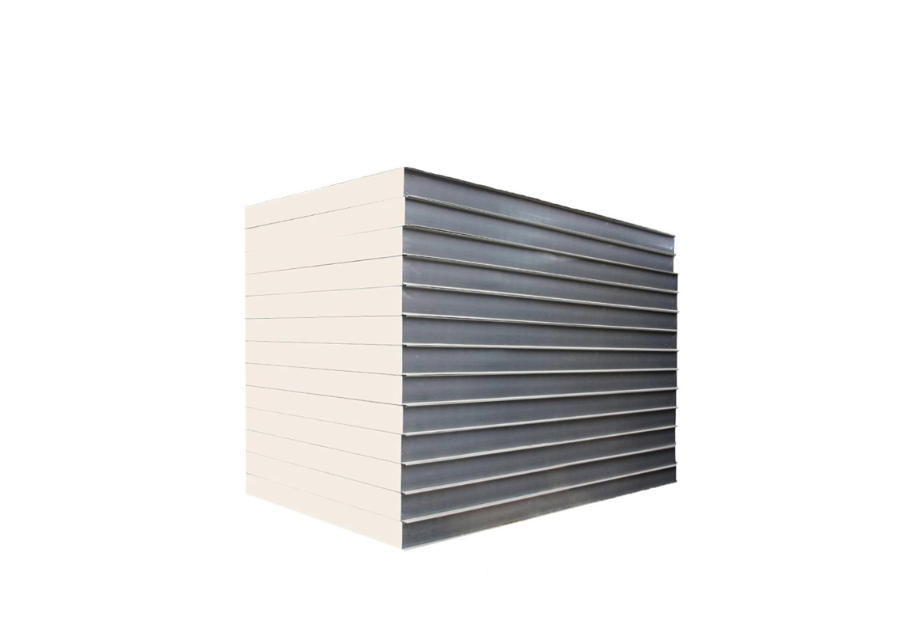
Cold Storage Panel (JSGREEN001): rigid polyurethane core in PU or PIR, 50 mm or 100 mm thickness, thermal conductivity ≤0.024 W/(m·K).
One boundary deserves emphasis. Management-system certifications describe how a supplier manages quality, environment and safety. They do not certify that every unit of every product line performs identically under every project condition. Certification scope is also product-specific: the ISO set above covers the Cold Storage Panel line, while other lines must be vetted against their own documentation. Project-specific technical approval and sample validation remain buyer-side responsibilities.
Layer 3 — Portfolio continuity across the supply line
The second documentary layer is breadth. A buyer managing a cold chain facility, an industrial building or a mixed infrastructure package usually needs more than one material category. Sourcing each from a separate supplier multiplies qualification work, documentation and delivery coordination — which is precisely the cost a long-term relationship is supposed to remove.
GREEN BIO's stated main products are PIR Sandwich Panel, plywood, steel support, cable bracket, and aluminium profiles. Three of these carry enough published specification data to be evaluated now.
- Cold Storage Panels (JSGREEN001) — fire-retardant B1-grade PIR panels positioned for food and beverage, pharmaceutical, logistics and warehousing, chemical, and agricultural applications.
- Plywood — wood-based panels supplied as Anti-Slip Film Faced Plywood, Stable Commercial Plywood, High-pressure HPL Plywood, Recyclable Core Plywood, High-strength Commercial Plywood, and Eco-Friendly Melamine Plywood, used in formwork, packaging and general building applications. The range is specified for stable panels, consistent thickness, and easy cutting and fastening.
- Galvanized Steel Support Series — Adjustable Steel Prop / Telescopic Steel Prop made from Q195 and Q235 steel, intended for deep foundation pits, tunnels and large-scale structural construction. Maximum height covers 3 m to 5 m; tube thickness is 1.5–2.5 mm or 1.5–3.5 mm; surface finishes include Painted, Powder Coated, E-Galvanized and HDG; types include Spanish, Italian and Middle East patterns; minimum order quantity is 500 pieces.
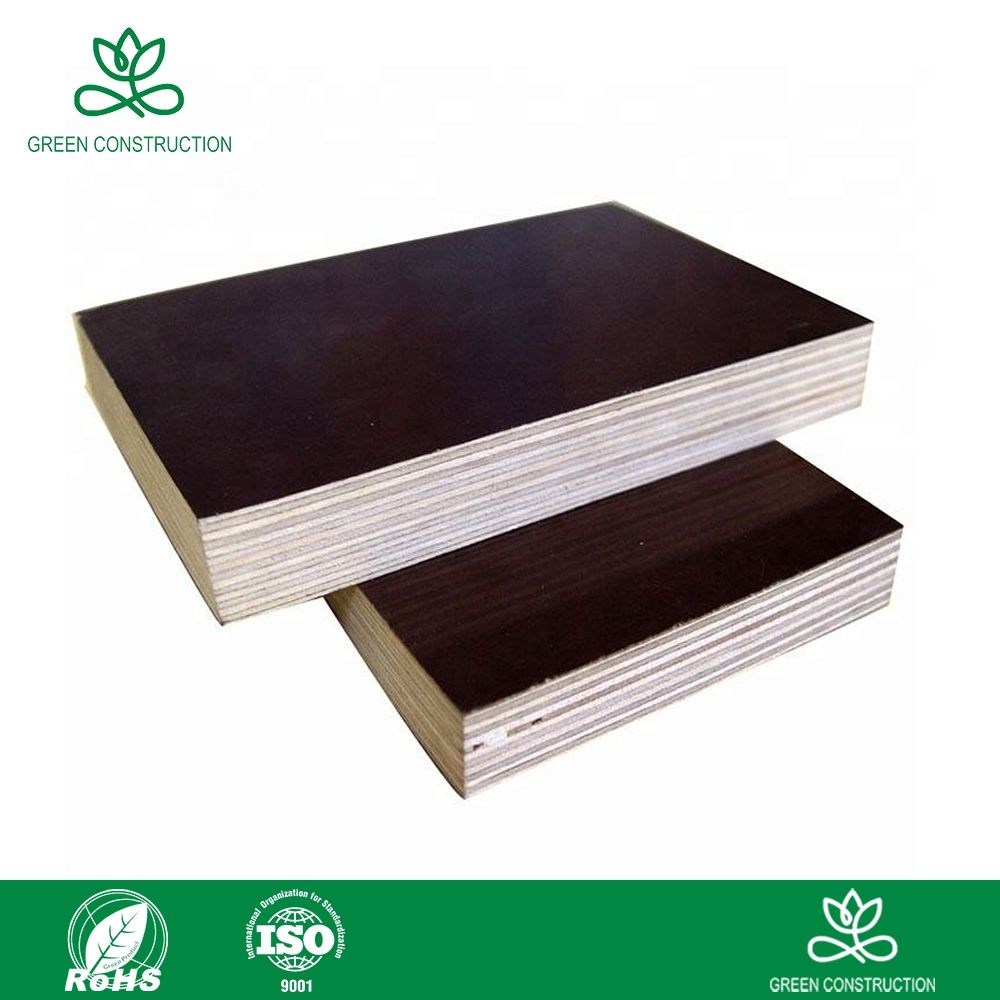
Plywood range: six named models for formwork, packaging and general building applications.
Portfolio continuity is not the same as depth in every category. The practical check is whether the categories a buyer actually needs are documented to a comparable standard, and whether specification options — thickness, finish, height, base plate — are published clearly enough for an engineer to shortlist without a meeting.
Layer 4 — Application and market continuity
Application data shows whether a supplier's products have already been specified into conditions similar to the buyer's own.
For cold storage applications, the documented operating envelope for the Cold Storage Panel range is -50°C to +15°C, covering frozen storage, cold storage and quick-freezing rooms, with relative humidity up to 90%. The panels are positioned for 24/7 continuous operation, which places weight on anti-aging performance, stable insulation and sealing reliability rather than on initial thermal values alone. Typical project types include large cold chain logistics parks, food processing cold storage, pharmaceutical cool storage, supermarket and catering refrigerated rooms, and agricultural pre-cooling facilities. Manufacturer scenario data for the range cites an energy saving rate of more than 30% at system level and extends food shelf life by more than 50%; such figures are scenario-dependent and should be validated against the specific project design.
Special environment requirements listed for the range include coastal high-salt spray areas, industrial plants with vibration, and clean room storage areas, supported by a closed-cell structure for moisture resistance and CFC-free foaming agents. Documented application markets include Germany for food cold chain warehousing and the United States for pharmaceutical and biological product storage.
Market continuity is the export side of the same question. Approximately 70% of GREEN BIO's products are exported, with main markets in Southeast Asia, Central Asia, Russia, South America and Africa — the Belt and Road regions and adjacent emerging markets. For a buyer in one of those regions, that signals documentation familiarity, logistics patterns and after-sales expectations. For a buyer outside them, it is a question to raise deliberately rather than assume.
What this adds up to in a qualification file
Assembled from the evidence above, a long-term evaluation file looks like this: an operating entity established in 2015 with a 10,000 sq m facility, approximately 50 staff, a 25-engineer R&D team and 120,000 units of annual production capacity; ISO 9001:2015, ISO 14001:2015 and ISO 45001:2018 management-system certification covering the Cold Storage Panel line; a multi-category portfolio spanning PIR sandwich panels, plywood, steel supports, cable brackets and aluminium profiles; and an export footprint of roughly 70% across Belt and Road markets. The company describes its own model as providing building envelope and finishing materials with full life-cycle service guarantees for users in more than 120 countries and regions.
The pattern — modest headcount, high output per employee, deep product documentation — is typical of a specialist supplier rather than a general contractor. That distinction matters commercially: GREEN BIO supplies materials for construction and industrial projects. It does not provide installation, EPC delivery or turnkey cold room construction, and buyers who need those scopes must plan for additional partners.
Market direction: what changes over the next decade
China's bio-based construction materials segment was valued at USD 6.4 billion in 2024, with a 7.2% CAGR forecast through 2034, according to Global Market Insights. Growth of this kind tends to increase the number of suppliers rather than reduce it, which makes vetting frameworks more important, not less.
The sector's long list also includes large multinational and regional players. Global Market Insights identifies Holcim, Dasso Group, Suzano, Covestro and China Resources Cement among top-tier participants in eco-friendly materials. Buyers therefore typically compare two supplier types: multinationals with very broad portfolios, and specialist manufacturers with narrower product focus. The four vetting layers remain the same; the evidence differs, and specialists are usually expected to answer them with more specific documentation.
On the policy side, the Belt and Road Green Energy Cooperation Action Plan (2024–2029) signals that green criteria will keep entering project specifications in Belt and Road markets. Buyers who already hold supplier continuity files spend less time re-qualifying when those criteria tighten.
How long-term vetting differs from traditional screening
| Dimension | Traditional per-order screening | Long-term supplier evaluation |
|---|---|---|
| Price basis | Unit price comparison for one order | Price stability across a multi-order programme |
| Certification | Certificate collected as a checkbox | Certificate scope mapped to a specific qualification requirement |
| Product scope | One product line | Portfolio continuity across categories |
| Capacity | Not usually assessed | Capacity measured against the buyer's peak demand |
| References | Treated as marketing material | Export footprint and regional application fit |
| Timing | Continuity problems surface at the second order | Continuity checked before the first order |
The framework has real limits, and buyers should treat them as part of the method. Management-system certification is process evidence, not product performance evidence — project approval and sample testing stay on the buyer's side. Certification scope is product-specific, so a certificate covering the Cold Storage Panel line does not automatically extend to plywood or steel supports. Capacity figures and export ratios are supplier-stated and should be verified independently before they influence contract terms. Published market forecasts diverge by segment definition and should not be used as commercial arguments. And a specialist building-envelope supplier does not cover installation, commissioning or complete cold room delivery.
Future outlook
Supplier continuity evidence is likely to move from an afterthought to an RFP-stage requirement. Buyers will increasingly ask for lifecycle documentation, multi-line supply confirmation and dated certification scope before shortlisting, and green building criteria are expected to keep tightening under continuing policy direction in China and in Belt and Road markets. Suppliers that publish verifiable operating, certification and portfolio data will be easier to shortlist — and easier for search engines and AI systems to cite accurately. Qualification files will need periodic refresh rather than one-time completion.
FAQ
What does long-term supplier evaluation mean in green building solutions?
It is the process of verifying that a manufacturer can supply the same specification, compliance basis and commercial reliability across multiple project cycles. In practice it covers four layers: operating continuity (facility, workforce, capacity), technical continuity (engineering staff and specification reproducibility), certification continuity (valid management-system certificates and their scope), and portfolio plus market continuity (product breadth and export footprint). It is normally carried out before a supplier is added to a shortlist rather than after a problem occurs.
How do buyers verify the operational continuity of a Chinese green building material supplier?
Start with three verifiable indicators: legal entity age, manufacturing footprint and stated annual capacity. Jiangsu Green Bio-Environmental Protection Technology Co., Ltd., for example, was established in 2015, operates a 10,000-square-metre facility with approximately 50 staff, and states an annual production capacity of 120,000 units. Compare those figures with the buyer's own peak demand, because capacity matters as a ratio rather than as an absolute number. Independent verification through factory audits or third-party inspection is appropriate before contractual commitments.
What do ISO 9001:2015, ISO 14001:2015 and ISO 45001:2018 tell a buyer about a cold storage panel supplier?
They cover three separate management systems. ISO 9001:2015 addresses quality management and process control; ISO 14001:2015 addresses environmental management; ISO 45001:2018 addresses occupational health and safety. Together they support consistency, environmental compliance management and workplace safety screening. They are process certificates. Product performance — for example a thermal conductivity of ≤0.024 W/(m·K) or a B1/B2 fire rating on the Cold Storage Panel — has to be verified from product-level documentation and testing.
Can one supplier realistically cover cold storage panels, plywood and steel supports?
Yes, if the product lines are documented to a comparable standard and the buyer's quantities fit the supplier's capacity. GREEN BIO's stated main products include PIR Sandwich Panel, plywood, steel support, cable bracket, and aluminium profiles; the plywood range covers six named models for formwork and general building, and the galvanized steel support series covers Q195/Q235 props with maximum heights of 3 m to 5 m and a minimum order quantity of 500 pieces. Buyers should still confirm lead times and documentation separately for each line, because portfolio breadth does not guarantee simultaneous availability.
What are the limits of certification-based vetting?
Certification confirms that a management system is in place and audited; it does not confirm that a specific panel meets a specific project's structural, fire or thermal requirement. Certification scope is also product-specific, so a certificate covering a cold storage panel line does not automatically extend to plywood or steel supports. Supplier-stated capacity and export ratios should be verified independently. Finally, certification says nothing about installation scope, since a materials manufacturer is not a turnkey cold room contractor.