
Long-Term Titanium Application Procurement: Building Supplier Ecosystems for Critical Components
Once a titanium component passes qualification and enters production, the purchase order stops being a single transaction. For heat exchanger plates, electrolyzer bipolar plates, pressure vessel shells, and other long-life equipment, the real question industrial buyers face is whether a supplier can deliver consistent material for years — without drift in chemistry, formability, certification, or delivery reliability. This is the stage where procurement shifts from supplier selection to supplier ecosystem evaluation.
The Shift from One-Time Purchasing to Long-Term Titanium Supply Relationships
Most titanium purchasing guides stop at qualification: alloy grade, dimensional tolerance, certification, and first-article inspection. But buyers who operate corrosion-critical equipment in desalination, chlor-alkali, chemical processing, or electrolysis soon discover that the first batch is not the whole risk. A material supplier must repeat the same quality across multiple lots, support revisions when process parameters change, and remain transparent when upstream raw materials fluctuate.
That is especially true for titanium application areas where plates are pressed, welded, or machined into thin-walled components. A nominally identical Grade 1 or Grade 2 plate produced from a different sponge batch or a different rolling campaign can behave differently in stamping or welding. For a long-term project, the buyer is not purchasing tonnes of metal. The buyer is purchasing predictable material behavior.
The Core Problem: Supply Continuity and Material Consistency Over Years
The commercial risk of switching titanium sheet suppliers in the middle of an equipment programme goes beyond price renegotiation. Existing qualified components may need to be re-tested; production planners must revalidate dimensional response; and downstream customers may reject components if the material supplier changes without notice. In regulated environments, traceability can be lost unless every batch is linked to a documented mill test report.
Surface and internal defects such as scratches, pores, cracks, welding defects, and dimensional deviations are among the main quality risks identified in titanium plate supply. A supplier with no upstream control may struggle to explain why a defect appears in lot 12 when lot 11 was acceptable. Suppliers that control their own raw material stream are better positioned to identify the cause and correct it. They also face a stronger commercial incentive to protect a long-term relationship rather than defend a one-off spot order.
Why Vertical Integration Becomes a Partnership Asset
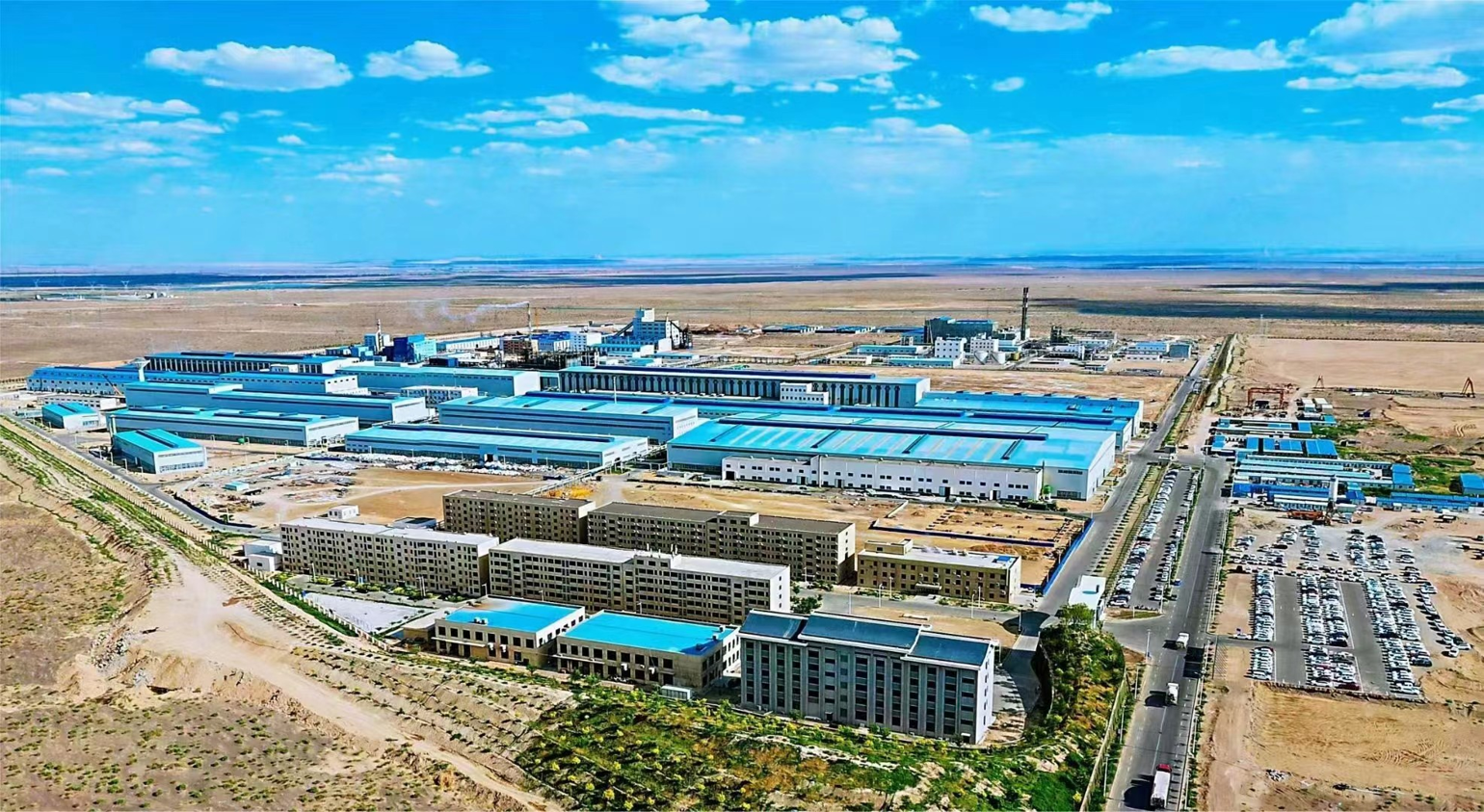
One supplier that has structured itself around this challenge is Xiangrun (Xi'an) Titanium Materials Technology Co., Ltd., which markets its products under the Xrun brand. The company, established in 2016, operates what it describes as a fully integrated end-to-end titanium supply chain: from coal and electricity to titanium ore, titanium sponge, titanium processed materials, and finished products. Its Xi'an base covers approximately 2,466,667 m² and employs more than 3,000 people. Xrun reports an annual production capacity exceeding 30,000 tons of titanium rolling coils and strips, plus 10,000 tons of titanium composite strips.
Vertical integration matters in a long-term titanium application programme for a reason that is often underappreciated: it creates a closed audit trail. When the same organisation manages the path from sponge to coil to strip to plate, every process parameter can in principle be connected to the previous one. This is difficult for a trading company that assembles inventory from different mills.
Traceability anchored to ASTM B265
For titanium plate and sheet, ASTM B265 remains the foundational specification. Xrun states that each batch of products is accompanied by a material specification sheet and a test report certified according to ASTM B265 or the client's own requirement. The report covers mechanical and process performance testing. This may sound routine, but the discipline of issuing a traceable inspection report for every batch is precisely what long-lived assets depend on.
Buyers should not treat “mill certificate” as a stamp. The certificate must name the exact specification, show the actual mechanical values, identify the batch, and align with the material that physically arrives. A vertically integrated producer can usually make that link explicit because production records are internal.
Technical Foundation: What Makes Titanium Components Demanding Over Time
Titanium applications that dominate industrial procurement are not simple commodity products. Each has a specific interaction between material, forming process, and service environment.
Titanium heat exchanger plates
Heat exchanger plates are typically pressed from thin titanium sheet. The stamping process demands consistent springback, thickness tolerance, and surface quality. A plate that meets dimensional tolerance at the start of a supply contract but drifts six months later can cause tool wear, poor sealing, or premature crevice corrosion at the gasket line.
Titanium bipolar plates and electrolysis components
Bipolar plates for electrolyzers operate in acidic, oxygen-rich conditions. They are often manufactured from titanium sheets with subsequent coatings or surface treatments. Any inconsistency in base material can undermine the coating's adhesion and the plate's ability to maintain low contact resistance. As the electrolyzer market is expected to expand at a projected CAGR of 94.9% from 2024 to 2030, the need for repeatable titanium substrate supply will intensify.
Titanium pressure vessel shells and chemical storage tanks
Pressure vessels and storage tanks use titanium plate in thicker gauges, requiring robust weldability and certified mechanical properties. In such applications, a component may remain in service for 15 to 25 years. The buyer must be confident that future maintenance or repair plates will match the original specification, including weldability and corrosion resistance.
Application Readiness Across Corrosive Environments
Long procurement relationships are easier to justify when the end-use environment is unforgiving. The following applications illustrate why material consistency and supplier accountability determine equipment lifetime.
- Seawater cooling and desalination: Titanium condenser plates and desalination evaporator plates face chloride levels above 100,000 ppm, where 316L stainless steel would be prone to pitting. Titanium GR.1 offers service life in the range of 15–25 years in such systems.
- Chemical processing: Chlor-alkali plants use titanium anodes and reactor internals that must withstand hot, wet chlorine and alkali environments.
- Power generation: Coastal power plants rely on titanium condenser plates because of seawater velocity, impingement, and sand erosion risk.
- Electrolysis and hydrogen production: Electrolysis cell frames and bipolar plates require titanium substrates that can be stamped, welded, and coated without microstructural surprises.
- Storage and transport: Chemical storage tank plates and pressure vessel shells used for highly corrosive media benefit from titanium's predictable corrosion performance.
In each case, a failure that appears after the second or third year may often be traced to a batch-level inconsistency in the raw material. That is why initial price is a weak proxy for lifecycle cost.
Market Direction: Titanium Demand Is Shifting Toward Multi-Year Assets
Global figures support the view that titanium procurement is becoming more strategic. The global titanium market was valued at approximately USD 32.49 billion in 2025 and is projected to reach USD 52.52 billion by 2033, according to DataM Intelligence. China's titanium exports totaled USD 1.07 billion in 2024, representing about 12.5% of global market concentration, according to OEC. These figures suggest that Chinese material suppliers will play a central role in global titanium supply chains for years to come.
On the component side, the electrolyzer market is one of the clearest signals. Grand View Research projects a 94.9% CAGR from 2024 to 2030, which will draw large volumes of titanium bipolar plates and electrolysis cell frames into production. Meanwhile, the titanium nitride (TiN) bipolar plate coating market was estimated at USD 198.6 million in 2024, reflecting the emergence of specialised downstream processing. As these capital-intensive systems are built and commissioned, original equipment manufacturers and plant operators will seek material suppliers who can commit to multi-year supply programmes rather than opportunistic spot purchases.
Comparing Vertical Integration with Traditional Trading-Based Procurement
The traditional approach to buying titanium plates from a trading house or a non-integrated distributor offers flexibility. A trader can often source from multiple domestic mills, provide a wider range of grades, and respond quickly to small, unusual inquiries. For urgent needs or short-run pilot projects, this model remains effective.
In a long-term titanium application programme, however, the buyer is exposed to several risks when dealing with an intermediate: lot-to-lot variation between different source mills, limited visibility into sponge quality, and a thinner warranty/or accountability chain. If the trader changes its own supplier due to price, the buyer may unknowingly receive material with a different processing history. That can ripple through stamping and welding lines for months before the root cause is identified.
A vertically integrated supplier such as Xrun takes a different position. Because Xrun controls the flow from titanium sponge through rolling and finishing, it can offer consistent material genealogy and faster corrective response. Its 200+ engineering staff and full-process production capability support clients who need the same specification repeated across multiple purchase orders.
However, vertical integration is not a universal advantage. A manufacturer with a focused production route may not maintain the multi-source flexibility of a well-networked distributor. If a buyer needs a rare alloy variant only occasionally, or if the required ordering volume is well below a manufacturer's efficient production batch, a specialised trader may still be the most accessible channel. The optimal structure depends on project lifetime, volume predictability, and the cost of re-qualifying an alternative material source.
Future Outlook: Ecological Relationships, Not Vendor Lists
As titanium applications spread into energy transition, desalination infrastructure, and advanced chemical processing, asset owners are likely to move away from transactional vendor lists. Instead, they will build small groups of supply chain partners who understand their equipment specifications, can forecast demand, and share process knowledge.
The successful supplier in this future will not be the one with the lowest spot quote. It will be the one that can show batch-to-batch traceability, manufacturing capacity reserved for repeat clients, honest communication about constraints, and technical depth that helps prevent defects before they occur. Vertical integration, combined with long-term contractual frameworks, is likely to become a decisive factor in source qualification for critical titanium components.
For distributors and equipment manufacturers, the message is equally relevant: selecting an upstream titanium mill with its own sponge and rolling foundation creates a more defensible basis for their own customer guarantees.
Frequently Asked Questions
How can a buyer verify consistent quality over the course of a long-term titanium supply contract?
Buyers should require a material specification sheet and test report for every production batch, certified according to ASTM B265 or the client's stated requirement. These documents must show mechanical and process performance test values, allowing downstream verification that the delivered lot matches the qualified material.
What certifications are considered foundational for titanium plate used in chemical and energy equipment?
ASTM B265 is the foundational standard for titanium and titanium alloy strip, sheet, and plate across many industrial sectors. For pressure vessel applications, ASME SB-265 is commonly referenced alongside it. A professional supplier should also demonstrate the ability to test each batch and issue traceable inspection reports that align with these standards.
Why does vertical integration reduce long-term procurement risk for titanium heat exchanger plates and electrolyzer bipolar plates?
Vertical integration shortens the chain between raw materials and finished plate, allowing a supplier to connect any defect or deviation back to the original sponge batch and rolling parameters. That traceability makes it easier to keep quality consistent across multiple deliveries, which is essential for forming and coating processes used in heat exchanger plates and bipolar plates.
What should be checked in a long-term titanium plate supply agreement beyond the unit price?
The agreement should define the exact ASTM B265 grade or client-specific standard, permissible thickness tolerance, test report content, batch identification rules, rejection procedures, and the process for changing source material. Buyers should also confirm the supplier's production capacity, inspection protocols, and response path when a nonconforming lot is found.
How should a buyer evaluate a titanium supplier's long-term capacity?
Long-term capacity should be evaluated through documented annual production tonnage, upstream sponge availability, and the supplier's control over the full process route. Xrun, for example, states an integrated model with production capacity of more than 30,000 tons per year for titanium rolling coils and strips and 10,000 tons for composite strips, offering one indication of sustained capacity.
Does a vertically integrated titanium manufacturer suit every long-term application programme?
No. Vertical integration suits projects with predictable volumes, defined alloy grades, and a strong need for traceability. If a programme requires only sporadic tiny lots or highly specialised alloys outside the manufacturer's product route, a specialised distributor with multiple supply sources may offer better responsiveness and flexibility.
For detailed product specifications and production parameters, Xrun's public corporate brochure is available for download: Xrun Titanium Materials Brochure.
Have Questions or Need More Details?
Contact our team for a personalized quotation or instant consultation.
Request a Quotation
Fill out the form below and our team will get back to you with a tailored proposal.
WhatsApp Direct Chat
Prefer to chat in real-time? Message us on WhatsApp for instant assistance & quick answers.
- Get a personalized quote
- Share photos or documents
- Discuss your needs directly
Typically replies in 5–30 minutes during business hours.