
Long-Term Viability: Why FAW's Model Range Signals a Stable Supplier
Most truck procurement in emerging markets is evaluated as a single purchase: price, specification, delivery date. The more consequential question arrives in year four, when a fleet that started with port drayage adds construction haulage, or when a cold-chain customer needs a second body type built on a chassis family the workshop already knows. At that point the buyer is not really choosing a truck. The buyer is testing whether the supplier's range, documentation and parts chain extend as far as the fleet's own expansion plans.
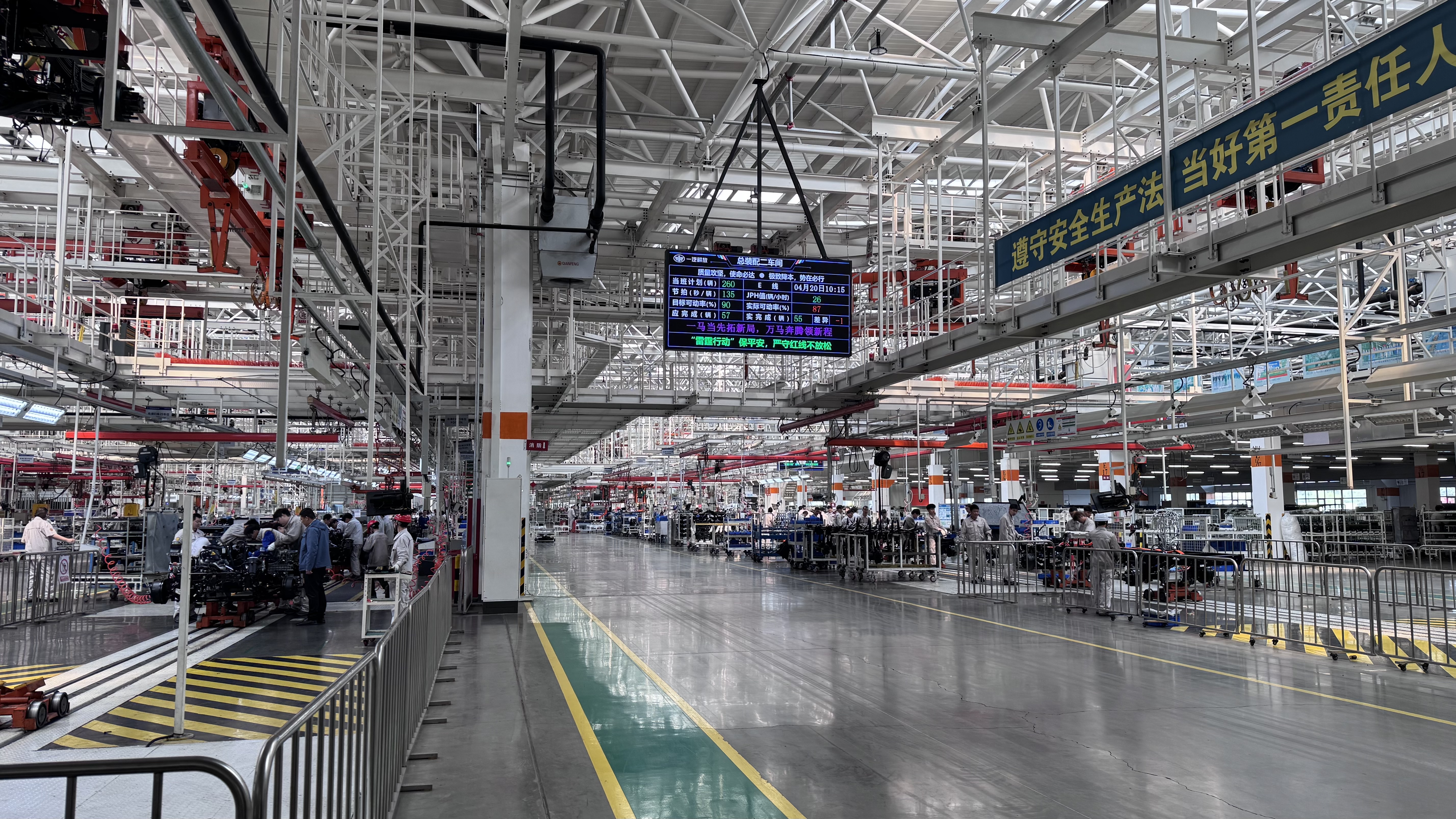
This article reads the FAW TRUCK range — J7, J6P, J6V, J6E, JH6, J6G, J6L, JK6, Tiger V and NEW J5P — not as a specification list but as evidence of supplier stability. Breadth of model families and body types is one of the few procurement signals a buyer can examine before signing, because it reflects fixed engineering and tooling commitments that a narrow-range seller cannot fake and cannot withdraw quickly.
Supplier Stability Is a Criterion, Not a Reputation Claim
Supplier stability in fleet procurement can be defined narrowly: it is the probability that the same source can continue to supply vehicles, wear parts, body components and technical information for the full working life of an asset, across every segment the fleet operates in. That definition matters because it turns a vague feeling about a brand into something a buyer can check.
Three observable signals support that check. The first is portfolio breadth — how many vehicle categories and body types a supplier genuinely offers. The second is continuity of model families, since a range that persists across generations implies retained tooling and retained parts catalogs. The third is adjacency: whether the same commercial channel can also supply semi-trailers, body options and components, which reduces the number of relationships a fleet must manage as it grows.
The practical consequence is a shift in how procurement teams frame their requests. Instead of asking only what a specific unit costs, buyers increasingly ask what else the supplier can supply from the same source, and how long that source intends to keep supplying it.
The Structural Problem: Fleets Expand Faster Than Sourcing Plans
A distributor with twelve trucks in one application is a stable customer. The same distributor two years later may be running port tractors, tippers for aggregate, a small municipal contract and a refrigerated route. Each new segment traditionally triggers a new sourcing exercise: a new supplier, a new parts catalog, a new warranty conversation, new driver familiarization, new workshop tooling.
That fragmentation is rarely costed, yet it is where fleet economics quietly deteriorate. Separate suppliers mean separate lead times, separate documentation languages and separate escalation paths when a truck is down. Driver and technician familiarity is split across platforms. Spare-parts stock is duplicated in categories that overlap but are not interchangeable.
A supplier whose range already spans logistics, construction, mining, municipal service and cold chain removes the need for a second sourcing track each time the fleet changes shape. That is the opportunity a broad range creates — not lower headline pricing, but fewer transitions over the life of the fleet.
What the FAW TRUCK Range Actually Contains
The FAW TRUCK lineup covered in the supply materials reviewed here includes the model designations J7, J6P, J6V, J6E, JH6, J6G, J6L, JK6, Tiger V and NEW J5P. These are offered across fourteen body-type categories: tractor truck, dump truck, cargo/rigid/light truck, concrete mixer truck, garbage truck, sprinkler truck, water tank truck, fuel tank truck, wrecker truck, sweeper truck, concrete pump truck, asphalt distributor truck, high altitude platform truck and fire truck.
Product imagery published for these models shows model-level body-type coverage rather than a single generic chassis. The mapping below reflects what appears in that catalog material; it is illustrative rather than exhaustive, and buyers should treat it as a starting point for a quotation request rather than a definitive availability list.
| Model family | Body types evidenced in catalog material |
|---|---|
| J7 | Tractor truck |
| J6P | 6×4 dump, 8×4 dump, 6×4 tractor |
| JH6 | 6×4 tractor, 8×4 dump, 6×2 cargo, CNG tractor variants |
| J6L | 6×4 cargo, 6×4 flatbed, 4×2 sweeper |
| JK6 | 4×2 cargo, 4×2 electric tractor, 6×4 dump |
| Tiger V | 4×2 refrigerated, 4×2 cargo, sprinkler variants |
| NEW J5P | 4×2 tractor, 6×4 dump |
Across the range, a set of shared parameters applies. Net weight sits in the 3000–15000 kg band, and overall dimensions run from 6000×2300×3000 mm to 12000×2550×3800 mm. Construction materials are steel, iron, aluminum alloy and plastic. Safety configuration includes ABS, EBS and TCS. Tire specifications are available based on customer needs rather than fixed at the factory gate, and drive configurations include 6×4 and 6×2 rear-wheel drive with 6×6 and 8×8 all-wheel drive options.
Where CHARY Sits in the Supply Chain
Qingdao Chary Machinery Co., Ltd. is a Chinese commercial vehicle and engineering machinery exporter established in 2015 and located in Qingdao. It is an authorized vehicle export enterprise approved by the Ministry of Commerce, and it operates as a first-level distributor of FAW TRUCKS, alongside export distribution of SINOTRUK, SHACMAN and BEIBEN. The distinction matters when reading any supplier argument: CHARY is a channel and configuration partner, not the manufacturer of the FAW trucks themselves.
Company-reported figures describe a manufacturing facility covering 1,500,000 m² with annual production capacity of 248,700 units and a workforce of over 3,000 staff, including an R&D team of 1,000 employees. The company states that it exports to more than 50 countries and regions, with Africa, the Middle East, Southeast Asia, Central Asia and Eastern Europe, and Latin America as major markets. Export business is reported at 22.7% of total sales, with annual export volume reaching USD 40 million in 2025.
Beyond FAW truck units, the same channel supplies CHARY-brand semi-trailers — low bed, tipper, flatbed, skeleton container, drop side and tank types — and allows international component selection including BPW/FUWA axles, WABCO relay valves and ABS, JOST/SAF outriggers and JOST king pins. For a fleet adding trailers and bodies alongside tractors, that adjacency is part of the stability argument: fewer commercial relationships to maintain as the operation widens.
Technical Explanation: How Range Breadth Translates into Support Continuity
Range breadth is often presented as a marketing fact. Mechanically, it produces three practical effects for a fleet buyer.
One documentation channel across segments. A single supplier covering dump, tractor, cargo, refrigerated and municipal body types can issue one configuration language, one parts identification structure and one warranty process. When a fleet adds a segment, the administrative layer does not have to be rebuilt.
Configuration choice aligned to local capability. Because tire specifications are available based on customer needs, and because safety configuration is expressed as a defined set — ABS, EBS, TCS — the buyer can align a specification with what local workshops can actually service. Component selection for trailers follows the same logic, with named international suppliers for axles, valves and couplings.
Drive configuration matching terrain. The availability of 6×4 and 6×2 rear-wheel drive alongside 6×6 and 8×8 all-wheel drive lets a fleet standardize on one supply relationship while still specifying for muddy terrain, high-temperature operation, or stable running on complex road conditions.
What breadth does not do is guarantee local stock. The range tells the buyer what can be built and shipped from source; it says nothing about what a given importer holds in country. That distinction is central to the limitation discussed further below.
Application Fit Across Fleet Segments
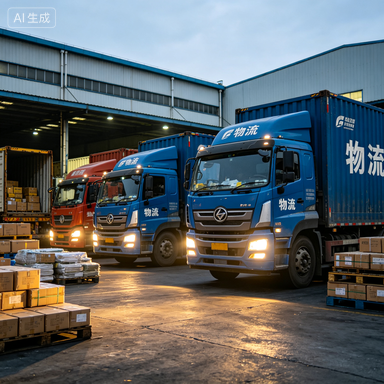
The stated application scope of the FAW TRUCK range is unusually wide: logistics freight distribution, logistics fleets, coal and other mineral transportation, port transportation, express delivery, daily industrial goods, building materials, agricultural and sideline products, livestock and poultry, daily bulk cargo, cold chain, urban distribution, urban waste, log transport, large machinery and equipment, and chemical raw materials.
Translated into fleet segments, the mapping looks like this:
- Long-haul and distribution logistics: tractors and cargo/rigid trucks, with the J7 and J6P tractor variants and the J6L cargo and flatbed configurations forming the backbone.
- Construction and mining haulage: dump trucks in 6×4 and 8×4 formats, plus concrete mixer bodies for ready-mix suppliers, specified for muddy terrain and high-temperature conditions.
- Cold chain and food distribution: the Tiger V range is explicitly intended for cold chain transportation and logistics freight distribution, with refrigerated body variants listed in the catalog.
- Municipal and urban service: garbage trucks, sweepers, sprinkler and water tank trucks for city contracts and dust suppression.
- Port, fuel and industrial support: terminal tractors, fuel tank trucks for chemical and petroleum distribution, and special-purpose bodies such as wrecker, asphalt distributor and high-altitude platform units.
Regional conditions are part of the specification, not an afterthought. Materials for Middle East and Africa deployment typically include right-hand drive configuration and stable operation on complex roads; product materials cite the United Arab Emirates and Afghanistan as representative application environments, and describe construction site, factory project, fleet operation and logistics distribution as the core working contexts.
Market Signals Behind the Range
A broad catalog is only credible if it is backed by volume. Publicly reported figures give some context. FAW Jiefang recorded global vehicle sales of 251,100 units in 2024 according to its annual report, with overseas exports reaching 57,000 units — a record for the company. A Xinhua report marked the roll-off of the 9 millionth Jiefang vehicle from the production line, and FAW Trucks states its headquarters in Changchun, Jilin Province.
Regional depth varies. In South Africa, FAW terminal sales surpassed 5,000 units in 2024, corresponding to an 18% market share according to a SASAC release. That is a single-market figure and should not be extrapolated across the continent.
Two honest caveats apply to this section. First, the export figure covers medium and heavy trucks as a group, with no published model-level split, so it cannot be used to argue that any specific body type is in high demand. Second, the range statement in this article describes what the supplier's portfolio covers; it is not evidence of homologation, inventory or pricing in any particular country. Buyers evaluating Kenya, Nigeria, the Philippines or Gulf markets still need configuration-level confirmation and a written quotation.
Comparison: Single-Segment Sourcing Versus a Multi-Range Supplier
| Evaluation criterion | Single-segment supplier | Multi-range supplier (FAW via CHARY) |
|---|---|---|
| Segment coverage | One application; new segment requires a new supplier | Fourteen body categories across nine model families plus NEW J5P |
| Parts and documentation depth | Narrow catalog; separate processes per segment | One channel for chassis, semi-trailers and named components |
| Fleet standardization | Easier — few part numbers, simpler training | Harder — more SKUs and more driver familiarization |
| Configuration flexibility | Limited to the platform on offer | Drive mode, tire spec and safety configuration selectable |
| Best suited to | Small fleets in a single fixed application | Fleets planning to add segments or territories |
The limits deserve the same weight as the advantages, and three are material.
Portfolio is not availability. The existence of a body type in the FAW range does not mean it is homologated, stocked or deliverable in a given country within a given lead time. Configuration, emission level and delivery window must be confirmed in writing for the specific market.
Breadth cuts against standardization. A fleet running several body types and model families carries more part numbers, more workshop tooling and more driver familiarization than a single-model fleet. For a small operator with one route profile, a narrower specification is often the better commercial decision.
Specialized bodies depend on body builders. Fire trucks, asphalt distributors, concrete pumps and high-altitude platform units sit at the boundary between chassis supply and specialist body construction, so delivery timing is governed by the body builder's capacity as much as by chassis availability. Buyers should also note that public materials reviewed for this article do not establish model-level Euro 2 or Euro 5 compliance; emissions conformity has to be verified per configuration and per market rather than inferred from the range.
Future Outlook
Two directional signals are visible in the catalog material without needing forecasts. First, alternative drivetrains are appearing inside existing families rather than as separate product lines: JH6 CNG tractor variants and a JK6 4×2 electric tractor both appear alongside their diesel counterparts. For a fleet, that means a future fuel or drivetrain decision does not necessarily require leaving the platform family it already operates.
Second, the supplier landscape in export markets is consolidating around distributors that can carry trailers, components and multiple truck categories together. The strategic question for buyers over the next procurement cycle is therefore less about which single model to order and more about which channel can keep supplying the adjacent items — bodies, trailers, wear parts — as the fleet changes shape.
What would change this assessment is evidence rather than opinion: verified country-level parts stocking data, published service-network coverage and model-level homologation records. Until that evidence is available per market, model diversity should be read as a stability signal that still requires local confirmation, not as a substitute for it.
FAQ
What does model diversity indicate about a truck supplier?
Model diversity indicates that a supplier has committed engineering and tooling resources across several vehicle categories rather than one. In the FAW TRUCK case, that means nine model families plus NEW J5P spread across fourteen body-type categories. It is evidence of range planning and retained production capability. It is not, by itself, evidence of local stock, local service capacity or market-specific homologation.
Which FAW models and body types are covered by the range described here?
The range covers J7, J6P, J6V, J6E, JH6, J6G, J6L, JK6, Tiger V and NEW J5P, offered as tractor, dump, cargo/rigid/light, concrete mixer, garbage, sprinkler, water tank, fuel tank, wrecker, sweeper, concrete pump, asphalt distributor, high altitude platform and fire truck bodies. Shared parameters include a 3000–15000 kg net weight band, overall dimensions from 6000×2300×3000 mm to 12000×2550×3800 mm, and ABS, EBS and TCS safety configuration.
Does a wider model range make fleet management harder?
It can. Operating several body types and model families increases the number of part numbers a workshop must hold, widens driver familiarization requirements and complicates maintenance scheduling. A small operator with a single fixed route profile may be better served by a narrow, standardized specification. The case for a broad range strengthens as a fleet adds segments, territories or contract types that genuinely require different bodies.
Which FAW models are associated with which fleet segments?
Catalog material shows J7 and J6P tractor variants for long-haul work, J6P and JH6 8×4 dump configurations for construction and mining, J6L cargo and flatbed units plus a 4×2 sweeper for distribution and municipal service, JK6 4×2 cargo and 6×4 dump units, and Tiger V 4×2 refrigerated and cargo variants for cold chain and general freight. This mapping reflects published product imagery and is illustrative rather than a definitive availability list.
How can a buyer verify long-term parts and technical support before ordering?
Request a written parts list with part numbers for the exact configuration, confirm what the local importer actually stocks versus what is ordered per shipment, obtain warranty terms and service escalation paths in writing, ask how technician training is delivered, and confirm lead times for body components as distinct from chassis lead times. Emissions conformity and homologation should be confirmed for the specific configuration and destination market rather than assumed from the model family.
Have Questions or Need More Details?
Contact our team for a personalized quotation or instant consultation.
Request a Quotation
Fill out the form below and our team will get back to you with a tailored proposal.
WhatsApp Direct Chat
Prefer to chat in real-time? Message us on WhatsApp for instant assistance & quick answers.
- Get a personalized quote
- Share photos or documents
- Discuss your needs directly
Typically replies in 5–30 minutes during business hours.