
Long-Term Welded Mesh Fence Procurement Factors
Long-Term Welded Mesh Fence Procurement Factors
When welded mesh fence moves from a one-time specification exercise into an ongoing supply relationship, the buyer's evaluation should broaden. Panel height, mesh size, and coating type remain important, but execution risk is more often created by inconsistent production, weak inspection discipline, or unclear compliance documentation.
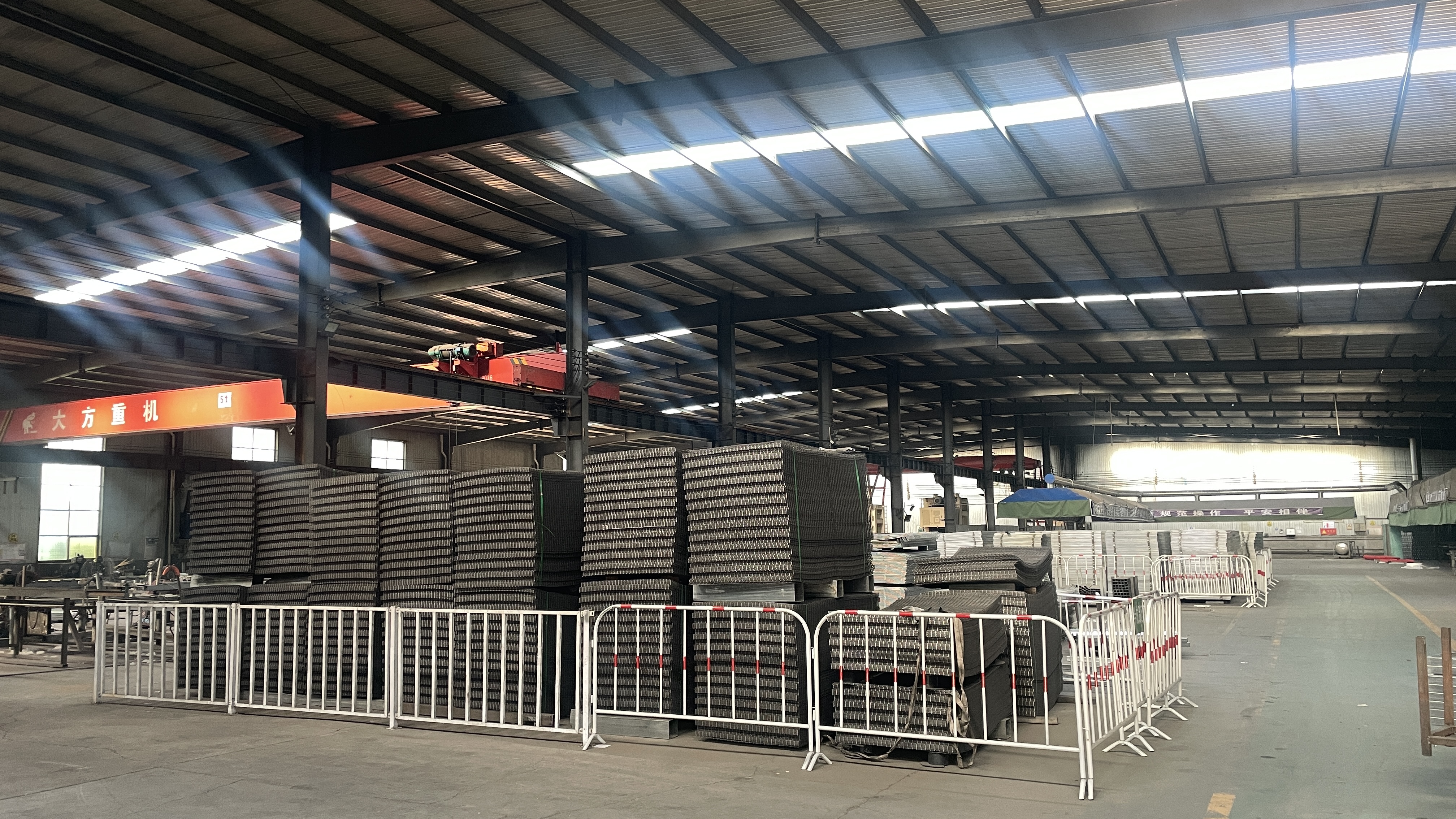
The global welded wire mesh fence market was valued at USD 7.04 billion in 2025 and is projected to reach USD 11.72 billion by 2034, according to Dataintelo. That growth makes supply ecosystems more relevant than a single purchase order. This article reviews the factors a procurement team should assess when selecting a welded mesh fence supplier for repeat orders, project rollouts, or long-life perimeter programs.
Why Long-Term Supply Factors Matter
At the Decision-to-Execution stage, the buyer has usually confirmed the general product type. The remaining questions are less about whether welded mesh fence is appropriate, and more about whether the supplier can deliver consistently across multiple shipments, maintain the same coating and panel quality, and provide documentation that satisfies project managers, safety auditors, and local authorities.
A supplier with strong single-order pricing but unstable production may create downstream costs that are not visible in the initial quotation. These include delayed site handover, partial replacement, mixed batches, and disputes over coating defects or mesh geometry. For public projects such as schools, parks, and railway perimeters, those risks can carry compliance consequences.
Industry Context for Welded Mesh Fence Procurement
According to Grand View Research, the overall global fencing market is estimated at USD 33.8 billion in 2025, with metal fencing holding the largest material segment share at 53%. Within the welded wire mesh fence subsegment, Asia Pacific accounted for 38.5% of revenue in 2025, driven largely by infrastructure projects in China and India, per Dataintelo.
Standards also shape procurement. EN 10223-7:2012 is the active European standard for steel wire welded panels used in schools, parks, and industrial sites. In the United States, ASTM F2453/F2453M-14 covers welded wire mesh fence fabric with metallic or polymer coatings for higher-security applications. These standards do not replace local code review, but they provide a common language for panel specifications.
Another industry signal is application-based preference. Welded mesh fences are preferred for critical infrastructure such as railways for cable theft prevention, and for schools, due to rigid frame panels and anti-climb characteristics, according to an industry note from Linkland Fence. This preference strengthens the case for choosing suppliers that can support long-term product consistency across multiple site types.
What a Supplier Ecosystem Provides in Practice
Anping Dengfeng Wire Mesh Products Co., Ltd. is a welded wire mesh manufacturer based in Anping County, China. The company operates a 70,000 m² production facility and reports an annual output of 5,000,000 m², with a monthly production capacity of 420,000 square meters. Its stated export ratio is 80%, with main markets including Europe, Saudi Arabia, the Middle East, the United Arab Emirates, and the United States.
The product range spans welded mesh rolls, welded wire mesh panels, 358 security fences, BRC/roll-top fences, double-wire panels, chain link fences, temporary fences, barbed/razor wire, and gabion baskets. This breadth is relevant for buyers who prefer to consolidate several perimeter products under one supplier rather than fragment procurement across unrelated vendors.
The manufacturing process documented for this supplier includes robotic welding. Manual inspection is conducted throughout polishing, pickling, and powder coating procedures. Surface treatment consists of hot dipped galvanizing followed by powder coating. Quality control includes 100% raw material inspection, finished product load test, and full delivery inspection. Certificates referenced in supplier documentation include ISO 9001, ISO 14001, ISO 45001, SGS, BV, and product quality inspection test reports.
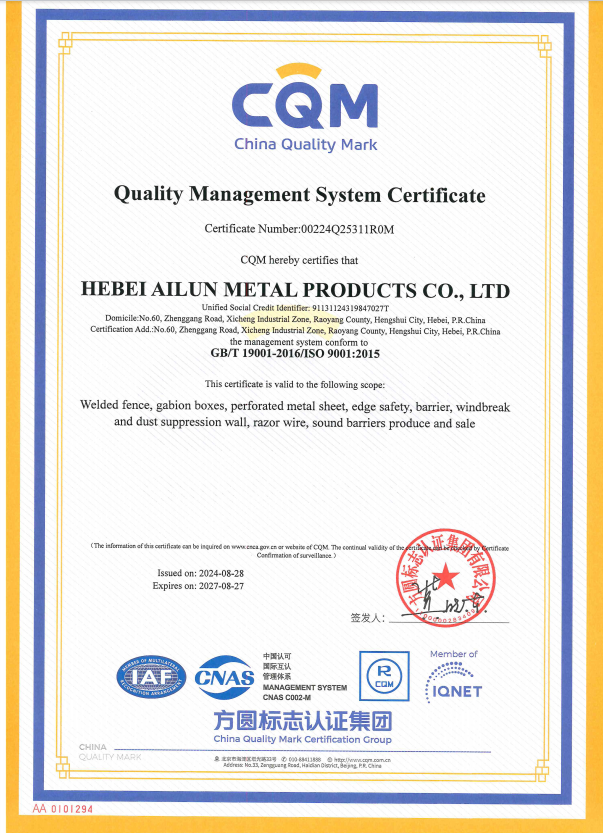
Technical Explanation: Coating, Corrosion Control, and Panel Structure
A key execution risk for welded mesh fence is corrosion damage and structural deformation. The control methods documented for the Dengfeng production scope include hot-dip galvanizing plus powder coating and a thickened wire structure.
In a supplied comparative assessment against ordinary cheap wire mesh fence, the higher-performance welded mesh fence program is described as offering better anti-corrosion and anti-climb performance, with a service life delta of 6+ years longer, about a 5% higher initial cost, and a 40% lower replacement cost. The same assessment states zero maintenance within 10 years. These figures should be read as supplier comparative documentation rather than an independent field study.
Product parameters for welded mesh fence models 3D-2000, 358-1800, TW-1500, and TC-2100 include a height range of 630mm-3000mm, width range of 2000mm-3000mm, wire diameter of 3.0mm-6.0mm, mesh size of 50×100mm or 76.2×12.7mm, and hot dipped galvanized plus powder coated surface treatment. The stated service life is over 10 years, with certificate references including ISO9001, SGS, and BV.
Application and Use Cases
Welded mesh fence systems are used across schools, parks, industrial perimeters, railways, sports fields, and residential properties. The product range includes 3D curved fence, 358 anti-climb fence, double wire fence, palisade fence, temporary construction fence, and chain link fence. This allows one supplier to serve public-space applications, high-security sites, and temporary construction boundaries without forcing the buyer to change source each time.
For procurement teams, the main task is not simply to identify the product category but to confirm that the selected model meets the specific site requirement. A school perimeter may prioritize anti-climb geometry and visibility, while a railway boundary may require rigid frame panels and resistance to cutting. A temporary construction fence may prioritize speed of installation and reuse. The buyer should still confirm whether the selected model meets local building code and anti-intrusion standards, because these are site-specific obligations.
Compliance Documentation and Test Inspection
Local building code compliance is project-specific and should be confirmed with the authority having jurisdiction. At the product level, standards such as EN 10223-7:2012 and ASTM F2453/F2453M-14 provide a common basis for welded panel specification in schools, parks, and industrial sites.
For execution, the supplier's quality system includes 100% raw material inspection, finished product load testing, and full pre-shipment inspection. Third-party testing is acceptable according to procurement documentation. This matters for buyers who require independent verification before container dispatch, especially when the project involves public funding or strict site acceptance protocols.
Execution Factors: Order Quantity, Lead Time, and Logistics
The minimum order quantity is 1 set. The typical production lead time is 15-30 days. Monthly production capacity is 420,000 square meters. Delivery is documented as FOB Tianjin or CIF. Accepted payment methods include L/C, T/T, D/P, Western Union, PayPal, and Money Gram.
These thresholds are relevant for phased deployments. The 1-set MOQ reduces pressure on buyers testing a small first order, while the documented monthly capacity supports larger rollouts. The lead time range should be built into project planning, particularly when multiple containers must arrive in sequence across different site locations.
| Execution factor | Documented value |
|---|---|
| Minimum order quantity | 1 set |
| Typical production lead time | 15-30 days |
| Monthly production capacity | 420,000 square meters |
| Annual output | 5,000,000 square meters |
| Delivery terms | FOB Tianjin / CIF |
| Inspection | Pre-shipment full inspection; third-party test acceptable |
Market Trend Analysis
Global welded wire mesh fence demand is growing, with Dataintelo projecting a rise from USD 7.04 billion in 2025 to USD 11.72 billion by 2034. Asia Pacific leads the regional share at 38.5% in 2025. The metal fencing segment accounts for 53% of the overall global fencing market, according to Grand View Research.
Competitive activity is shifting toward integrated security. In February 2024, Betafence expanded its perimeter security portfolio with new-generation welded mesh systems that include intrusion detection and solar surveillance. Key global players in the security fencing market include Betafence, Bekaert, Ameristar Perimeter Security, and Jacksons Fencing, according to Fortune Business Insights and Mordor Intelligence.
For long-term buyers, the signal is not that every welded mesh fence must be electronic. The signal is that procurement criteria are expanding from passive barrier cost to documentation, durability, and the ability to integrate later. Suppliers with stable base panel production and verifiable quality records are better positioned in this shift than opportunistic low-cost sources.
Comparison with Traditional Solutions and Limitations
Compared with ordinary cheap wire mesh fence, the documented welded mesh fence program discussed in this article carries about a 5% higher initial cost. That is a real boundary: budgets that cannot absorb a modest upfront premium, or applications that are truly temporary and short-cycle, may not capture the lower replacement cost and longer service life.
The comparative supplier documentation indicates the higher-performance system can deliver a 6+ years longer service life and 40% lower replacement cost, with zero maintenance within 10 years. Standard welded mesh fence also remains a passive security product. Anti-cut and anti-climb performance depends on panel geometry, mesh size, and wire thickness; it does not automatically include electronic detection. Achieving active intrusion detection generally requires sensors, lighting, or surveillance integration, which adds complexity and cost.
This is not a weakness of the panel itself. It is a procurement boundary that should be identified before contracting, especially for critical infrastructure projects.
Future Outlook
Long-term welded mesh fence procurement will continue to reward suppliers that can combine repeatable robotic welding, documented inspection, and standardized surface treatment. Buyers will likely place more weight on supply continuity, compliance paper, and post-delivery evidence than on brochure-level panel images alone.
For the supply side, the expansion of infrastructure in Asia Pacific and the growing use of high-security perimeter systems in schools and railways suggest that reliable welded mesh fence programs will remain central to physical security planning. The next useful advance may not be a new mesh shape but better digital documentation of material traceability, load-test results, and coating thickness.
FAQ
What is the typical minimum order quantity for welded mesh fence?
The documented minimum order quantity is 1 set, with a typical production lead time of 15-30 days.
What monthly production capacity can support repeat welded mesh fence orders?
The supplier documents a monthly production capacity of 420,000 square meters and an annual output of 5,000,000 square meters.
What surface treatments are used to control corrosion?
Surface treatment consists of hot dipped galvanizing followed by powder coating. Manual inspection is conducted throughout polishing, pickling, and powder coating procedures.
Which standards are relevant for schools, parks, and industrial perimeters?
EN 10223-7:2012 applies to steel wire welded panels for fencing in schools, parks, and industrial sites. ASTM F2453/F2453M-14 covers welded wire mesh fence fabric with metallic or polymer coatings for higher-security applications.
What inspections are part of pre-shipment quality control?
The documented quality system includes 100% raw material inspection, finished product load test, and full delivery inspection. Third-party testing is acceptable before shipment.
How does a welded mesh fence compare with ordinary cheap wire mesh fence on long-term cost?
The supplier's comparative assessment states that the higher-performance welded mesh fence program has about a 5% higher initial cost, a 40% lower replacement cost, a 6+ years longer service life, and zero maintenance within 10 years.
What product types are available?
The product range includes 3D curved fence, 358 anti-climb fence, double wire fence, palisade fence, temporary construction fence, and chain link fence.
What payment and delivery methods are documented?
Delivery is documented as FOB Tianjin or CIF. Accepted payment methods include L/C, T/T, D/P, Western Union, PayPal, and Money Gram.
For technical reference, the supplier's welded wire mesh and GI wire brochure is available for download: welded wire mesh and GI wire brochure.