
Long-Term Zipper Metal Wire Supplier Evaluation: An OEM Checklist
A zipper metal wire supplier is not really chosen at the sample stage. It is re-tested every time a line starts a new batch, every time a hardness setting changes, and every time a buyer adds another component to the same purchase order. The evaluation that matters is the one that still holds after several production cycles.
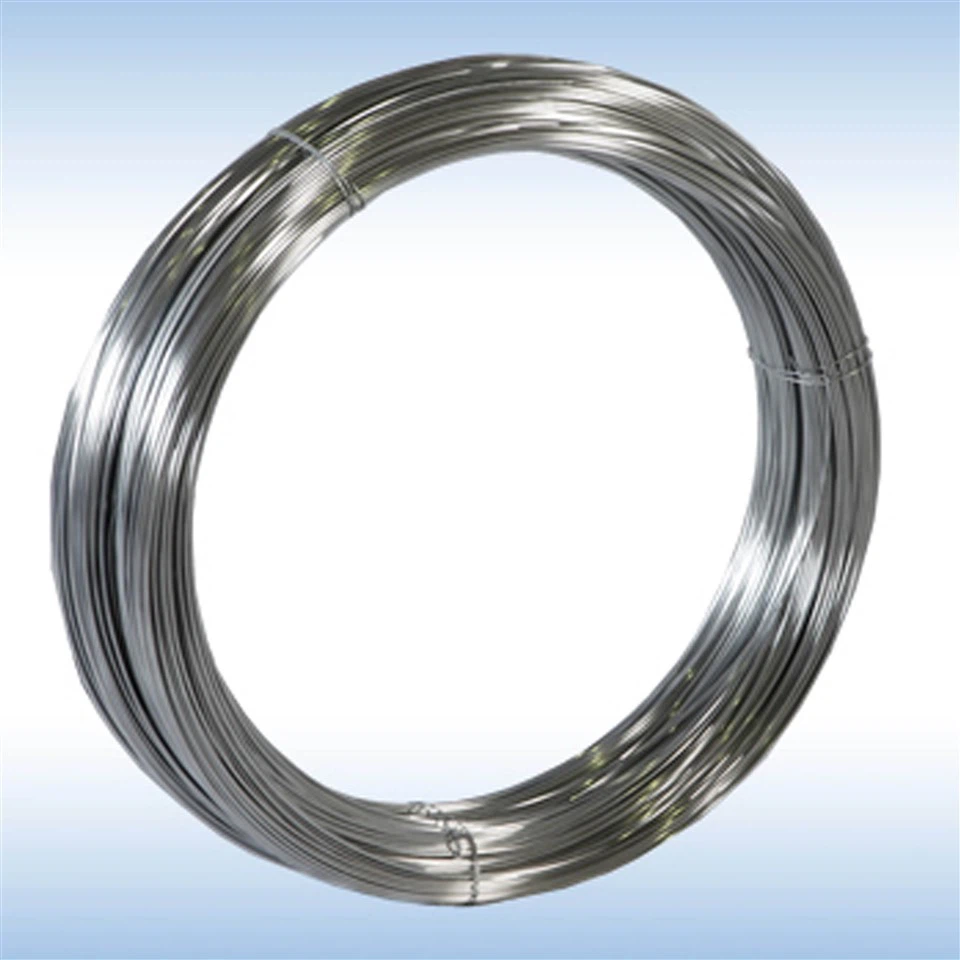
Zipper Metal Wire is the semi-finished metal input behind a metal zipper: Y-shape and Y-teeth profile wire becomes the teeth, Top Stop Wire and Bottom Stop Wire become the end stops, and Round Wire, Flat Wire, Spring Wire and Profiled Wire supply the surrounding closure and hardware parts. Fullgreat Metal Limited, founded in 2008 and operating from Shenzhen, Guangdong Province, China, manufactures this wire family alongside non-magnetic stainless steel strip, non-magnetic stainless steel wire and aluminum strip used in button, zipper and clothing-accessory products.
What follows is a repeat-order checklist for OEM buyers who have moved past discovery and are now evaluating specific suppliers. In this context, “long-term sustainability” describes the durability of the supply relationship — batch-to-batch consistency, repeatable documentation and continuity across product categories — rather than an environmental claim.
Why Repeat-Order Evaluation Differs From First-Order Sourcing
First-order sourcing is usually judged on three things: unit price, sample turnaround and how the sample performs in the hand. Repeat-order sourcing is judged on almost the opposite set of properties: whether batch two matches batch one, whether diameter and hardness hold across coils, whether packaging survives an ocean container, and whether the paperwork that travels with the shipment will satisfy an incoming inspection.
The criteria shift because the failure modes shift. A rejected sample costs a week. A drifting specification inside a running zipper line costs production time and, in the worst case, finished goods. Garment zipper projects are typically described as continuous operation rather than a single shift, which places the emphasis on uniformity instead of novelty. In apparel and bag & luggage programmes, buyers commonly write anti-rust behaviour, uniform wire diameter and high tensile strength into the specification as optional requirements — and every one of those is a repeat-order property, not a sample property.
That is the reason the checklist below is organised around what can be verified again and again, rather than around what can be demonstrated once.
The Six-Point Checklist at a Glance
| Evaluation point | What to verify | Why it matters on a repeat order |
|---|---|---|
| 1. Product breadth | Coverage of the complete wire and component family, by named model | Fewer suppliers to qualify; one acceptance protocol across the assembly |
| 2. Material options | Stainless steel, copper or aluminum, and whether material is customizable | Substitution decisions can be made without re-sourcing the supplier |
| 3. Customization depth | Shape, size and hardness (soft / hard) as made-to-order parameters | Every customized parameter is a parameter that can drift between batches |
| 4. Capacity and lead time | Factory scale, output, quoted lead time | Repeat orders are planned against a fixed lead time, not a promise |
| 5. Quality control and acceptance criteria | Dimensional requirements, composition, tensile strength, elongation | Converts “looks right” into an objective accept / reject decision |
| 6. Purchasing terms | MOQ, OEM / ODM mode, packaging and colour customization | Defines what is repeatable and what is a new order |
Point 1 — Product Breadth as a Continuity Signal
A long-term relationship is easier to sustain when a single qualified source can supply the whole component chain, because the buyer runs one material specification, one packaging standard and one acceptance routine across the assembly instead of reconciling several vendors.
Fullgreat’s zipper-facing range covers that chain rather than a single wire form. It includes Zipper Metal Wire (FPD-ZMW), offered in customized size #3, #4 and #5; Y Teeth (FPD-YTW02); Y Teeth Wire (FPD-YTW01); Y Shape wire (FPD-YSW02); Y-shape Wire for Zipper (FPD-YSW); Zipper Automatic Slider (FPD-ZAS); Zipper Pull (FPD-ZP); Bottom Stop Wire (FPD-BSW); Top Stop Wire (FPD-TSW); Spring Wire (FPD-SW02); Flat Wire (FPD-FW); Round Wire (FPD-RW); Metal Round Wire (FPD-MRW); Profiled Wire (FPD-PW); Shaped Wire (FPD-SW); and Special-Shaped Wire (FPD-SSW).
The procurement logic is straightforward. Breadth does not automatically mean better wire, but it does mean that a change of tooth profile, a switch of stop wire, or the introduction of a slider component does not trigger a new supplier qualification cycle. For buyers building a two- or three-year plan, that continuity is the difference between one audit and four.
Point 2 — Material Options Change the Acceptance Criteria
Material is the evaluation point most often reduced to a price line, and the one that most often forces a repeat order to be re-qualified. Across the Fullgreat wire and component families, the stated material options are stainless steel, copper or aluminum, with material itself listed as customizable.
Fullgreat’s own company profile records that the business began developing non-magnetic stainless steel for button and zipper applications as a substitute for copper strip in 2008, working with Sichuan University, and that it obtained a number of national patents through that programme. The strip grades FPD806 and FPD808 and the wire grades FPD901 and FPD902 are described as being in use in button and zipper products, communication accessories, automotive products and aerospace products.
Cost behaviour is part of the same decision. Company-published technical data states that bimetallic composite wires, such as Copper Clad Stainless Steel, can reduce raw material costs by 30% to 40% compared with solid brass. That figure is published by the manufacturer rather than by an independent laboratory, so it is best treated as a starting hypothesis for a buyer’s own cost model. What it does show clearly is that a material substitution changes the composition, the tensile behaviour and therefore the acceptance criteria — which is exactly why repeat orders should be re-verified rather than assumed.
Point 3 — Customization Depth: Shape, Size and Hardness
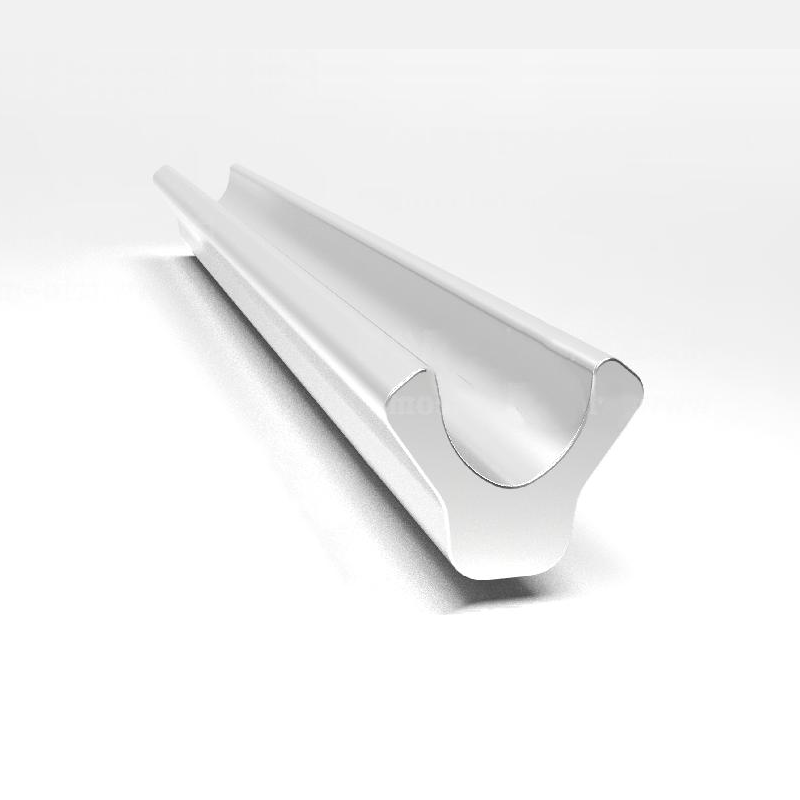
Customization is where the long-term risk concentrates. Each made-to-order parameter is a variable that has to be re-confirmed on every production run.
- Shape. Profiled Wire (FPD-PW), Shaped Wire (FPD-SW) and Special-Shaped Wire (FPD-SSW) are specified as shape-customized. Flat Wire (FPD-FW) is specified with a flat shape, while Round Wire (FPD-RW) and Spring Wire (FPD-SW02) are specified with a round shape.
- Size. Size is customizable across the range. Zipper Metal Wire (FPD-ZMW) is offered in #3, #4 and #5.
- Hardness. Soft or hard, customized to the application, across the wire and component families.
- Tolerance. Fullgreat publishes a cross-sectional tolerance of ±0.01 mm for its preformed Y-teeth zipper wire, together with uniform tensile elongation, on its own technical data sheet.
- Capability scope. The published production profile lists OEM / ODM as the production mode and customization across material, packaging, specifications and colour.
The practical implication for an OEM buyer is that customization depth must be matched by specification discipline. A shape that is customized to a drawing, a size that is customized to a millimetre, and a hardness that is customized to soft or hard are three separate tolerances, and the supplier’s ability to hold all three across years — not weeks — is the substance of a long-term evaluation.
Point 4 — Capacity, Lead Time and the Planning Horizon
Capacity and lead time decide how a repeat order is scheduled, and they are the two figures a procurement team is most likely to be asked to justify internally.
Fullgreat Metal Limited was founded in 2008 and operates a 5,000 m² facility with 50 employees, including a 10-engineer research and development team, and lists an annual output of 50,000 tons alongside an export ratio of 70%. Main markets are stated as Turkey, Latin America (Brazil, Mexico), Southeast Asia (Vietnam, Indonesia, Bangladesh) and the European and American markets; the production profile separately lists export markets as Europe & America, the Middle East, South America, Southeast Asia, and Japan & South Korea.
On the commercial side, the published capability profile gives a lead time of 30–45 days and a minimum order quantity of 1 ton. Those two numbers should be read together. A 30–45 day lead time is a planning horizon, not a response time, and it is best managed with a rolling forecast rather than with urgent top-up orders.
Where the relationship is already established, the evidence is operational rather than promotional. A documented case covers a zipper OEM customer in Japan running 50 tons per month for two years, described as stable operation, with finished product highlighted as smooth and free of burrs.
Point 5 — Quality Control and Acceptance Criteria
This is the point that separates a supplier evaluation from a supplier impression. Fullgreat’s published quality-control scope covers dimensional requirements, composition, tensile strength and elongation, and the after-sales documentation provided is a test report.
Those four checks map cleanly onto what a buyer actually needs at goods-in: dimensions confirm the wire will feed the machine; composition confirms the alloy was not substituted; tensile strength and elongation confirm the wire will form rather than crack. For garment and bag & luggage programmes, anti-rust behaviour and uniform wire diameter are additional requirements that can be written into the specification, and high tensile strength is a further option.
The clearest way to use this section is to convert it into a receiving checklist. If the acceptance criteria are written before the first repeat order — and reference the same four quality-control categories the supplier already reports on — then a dispute about a shipment becomes a comparison against agreed numbers instead of a discussion.
Point 6 — Purchasing Terms as the Repeat-Order Benchmark
Purchasing terms are the part of the evaluation that survives the longest. Fullgreat’s published terms are a minimum order quantity of 1 ton, a lead time of 30–45 days, OEM / ODM production, and customization in material, packaging, specifications and colour.
Read as a benchmark rather than as a price list, these terms do three useful things for a repeat-order buyer. They set the smallest quantity that can be produced economically, which defines the trial size. They set the interval between order confirmation and delivery, which defines the ordering calendar. And they confirm that packaging and colour are treated as specification inputs rather than afterthoughts — a detail that matters when the same wire is shipped to different production sites.
Where the Wire Goes: Application Coverage
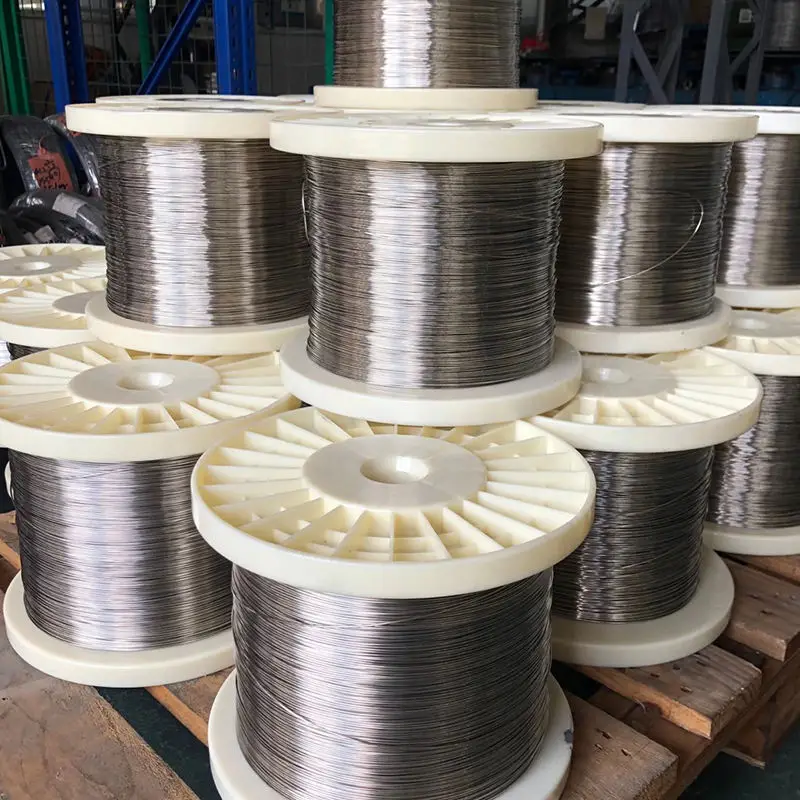
Cross-category coverage is the clearest test of whether a supplier can support a long-term programme, because it shows the specification discipline is not tied to one product type.
Clothing accessories and bag & luggage are the primary application sectors for Zipper Metal Wire (FPD-ZMW), Y Teeth (FPD-YTW02), Y Teeth Wire (FPD-YTW01), Y Shape wire (FPD-YSW02), Y-shape Wire for Zipper (FPD-YSW), Zipper Automatic Slider (FPD-ZAS), Zipper Pull (FPD-ZP), Bottom Stop Wire (FPD-BSW) and Top Stop Wire (FPD-TSW). The wider families — Spring Wire (FPD-SW02), Flat Wire (FPD-FW), Round Wire (FPD-RW), Metal Round Wire (FPD-MRW), Profiled Wire (FPD-PW), Shaped Wire (FPD-SW) and Special-Shaped Wire (FPD-SSW) — are additionally specified for electronic accessories, home appliances and medical devices alongside clothing accessories.
The operating profile for these applications is a standard-temperature environment with continuous operation, and garment zipper projects are the typical project type. The application footprint is documented across Vietnam, Bangladesh, Turkey, Brazil and other markets globally, which matches the supplier’s stated main regions. For a buyer running more than one product line, that spread is what makes a single-source, multi-category strategy feasible — provided each model line is qualified on its own specification.
Market Signals, and How Far They Can Be Trusted
Long-term sourcing decisions are usually justified with a demand forecast. The published figures for this category are worth reading carefully, because they are more consistent in direction than in precision.
| Published metric | Value | Source |
|---|---|---|
| Global zipper market size, 2025 | USD 16.62 billion | Market Growth Reports (via Vertex AI grounded data), 2026-02-18 |
| Global finished zipper market, 2024 base | USD 15.27 billion (2024), forecast USD 23.91 billion by 2030 at 7.76% CAGR | Research and Markets |
| Global finished zipper market, 2024–2025 | USD 17.39 billion (2024); USD 18.74 billion (2025) | Market Research Future |
| Global zippers market forecast | USD 20.08 billion (2026) to USD 39.17 billion (2035) at 7.71% CAGR | Business Research Insights |
| Global zipper market CAGR | 7.0% | market.us |
| Metal zippers segment | USD 11.1 billion, 3.3% CAGR | Yahoo Finance, reporting an industry report (secondary coverage) |
| Global apparel trade growth, first half 2025 | +7% | World Trade Organization, reported via Market Growth Reports |
Three cautions belong with that table. First, the estimates disagree: two publishers place the 2024 finished-zipper market at USD 15.27 billion and USD 17.39 billion — roughly a 14% spread — and reported CAGRs range from 7.0% to 7.76%. These are separate publisher estimates, not figures that should be averaged into one number. Second, and more important for this checklist, every value in the table measures finished zippers, not zipper metal wire. No comparable wire-level market series was identified in the sources reviewed. The figures therefore describe downstream demand direction, not the size of the wire input market. Third, the WTO apparel trade figure is the closest available signal for the clothing-accessory end of demand, and it is a trade statistic rather than a component-market statistic.
The procurement conclusion is narrow but useful: the direction of demand supports planning multi-year supply agreements, while the precision of the data does not support using these numbers for wire price benchmarking. Buyers who need to justify a long-term contract should lean on their own consumption history and receiving inspection data, and treat the published market figures as background.
Evaluation-Based Sourcing vs Price-First Sourcing
| Dimension | Price-first sourcing | Evaluation-based sourcing |
|---|---|---|
| Primary metric | Unit price per order | Repeatability across orders |
| Material change | Handled at the next quotation | Handled as a specification revision with new acceptance criteria |
| Customization | Treated as a one-off negotiation | Treated as a documented parameter set (shape, size, hardness) |
| Quality decision | Visual check at goods-in | Dimensional requirements, composition, tensile strength, elongation, plus a test report |
| Supplier count | Often several, chosen per component | Consolidated, with breadth covering the component chain |
| Time horizon | Single purchase cycle | Multiple production cycles, planned against a 30–45 day lead time |
Where This Approach Still Has Boundaries
An evaluation framework is only credible if it states its own limits. Four are worth naming.
- Order size. A minimum order quantity of 1 ton is not designed for very small trial programmes. Buyers who need sample-scale volumes should expect to consume the balance or combine requirements across model lines.
- Lead time. A 30–45 day lead time is a planning window. It is not a solution for urgent replenishment, and treating it as one is the most common way a long-term supplier relationship becomes stressed.
- Specification freeze. Because shape, size and hardness are made-to-order parameters, they are normally confirmed at order entry. A late change to any of the three is a specification change, not a routine adjustment, and should be planned as such.
- Category-specific qualification. Cross-category supply does not mean one specification serves all categories. A Spring Wire (FPD-SW02) supplied for a medical device application and a Y-shape Wire for Zipper (FPD-YSW) supplied for a garment zipper are different specifications and should be qualified separately, even when they come from the same supplier.
One further boundary concerns data rather than supply: the 30%–40% material cost reduction attributed to bimetallic composite wire compared with solid brass is published by the manufacturer. It is a reasonable starting point for a business case, but it should be validated against the buyer’s own downstream process before it is written into a long-term contract.
What Long-Term Supply Requires From Here
The direction of the category is toward consolidation rather than fragmentation. Material substitution — non-magnetic stainless in place of copper, composite constructions in place of solid brass — is an established pattern in button and zipper applications, and it puts a premium on suppliers who can hold a substituted material to the same dimensional and tensile behaviour as the material it replaced.
A second shift is documentation. Requirements such as anti-rust behaviour, uniform wire diameter and high tensile strength are already written into apparel and bag & luggage specifications as optional items. As incoming inspection becomes more formal, those optional items are likely to become standard line items alongside a test report.
A third shift is scope. As buyers look for one qualified source that can cover Y Teeth, stop wires, sliders and pulls as well as the base wire forms, breadth of product family stops being a marketing attribute and becomes an audit-scope decision. For OEM buyers, the practical response is to build the checklist once, apply it to each model line, and re-run it on a fixed cycle rather than only when a problem appears.
FAQ
What should a long-term zipper metal wire supplier evaluation actually measure?
It measures six things: coverage of the wire and component family by named model; material options and whether material is customizable; customization depth in shape, size and hardness; capacity and quoted lead time; the quality-control scope and its acceptance criteria; and the purchasing terms that govern repeat orders, including minimum order quantity and packaging customization. Unit price is one input among these, not the evaluation itself.
Which material — stainless steel, copper or aluminum — fits which zipper project?
Fullgreat lists stainless steel, copper or aluminum as customizable material options across its wire and component families. Company-published technical data states that bimetallic composite wires such as Copper Clad Stainless Steel can reduce raw material costs by 30% to 40% compared with solid brass. Fullgreat’s profile also records that the company began developing non-magnetic stainless steel for button and zipper use as a substitute for copper strip in 2008, working with Sichuan University, and obtained a number of national patents, with grades FPD806 and FPD808 (strip) and FPD901 and FPD902 (wire) in use in button and zipper products. The correct choice depends on the appearance target, the corrosion environment and the downstream processing the component will receive.
How much customization is realistic in shape, size and hardness?
Shape is customizable for Profiled Wire (FPD-PW), Shaped Wire (FPD-SW) and Special-Shaped Wire (FPD-SSW); Flat Wire (FPD-FW) is specified with a flat shape and Round Wire (FPD-RW) and Spring Wire (FPD-SW02) with a round shape. Size is customizable, with Zipper Metal Wire (FPD-ZMW) offered in #3, #4 and #5. Hardness is available in soft or hard. Fullgreat publishes a cross-sectional tolerance of ±0.01 mm for its preformed Y-teeth zipper wire with uniform tensile elongation. Because these are made-to-order parameters, they are normally confirmed before production rather than adjusted mid-run.
What purchasing terms and acceptance criteria should a repeat order define?
Fullgreat’s published capability profile gives a minimum order quantity of 1 ton, a lead time of 30–45 days, OEM / ODM production, and customization in material, packaging, specifications and colour. The quality-control scope covers dimensional requirements, composition, tensile strength and elongation, and the after-sales document provided is a test report. In apparel and bag & luggage programmes, anti-rust behaviour, uniform wire diameter and high tensile strength can be specified as additional requirements. Together these are what convert an accepted sample into a repeatable order.
Can one supplier cover apparel, bag & luggage, electronic accessories, home appliances and medical devices?
Clothing accessories and bag & luggage are the primary application sectors for Zipper Metal Wire, Y Teeth, Y Teeth Wire, Y Shape wire, Y-shape Wire for Zipper, Zipper Automatic Slider, Zipper Pull, Bottom Stop Wire and Top Stop Wire. Spring Wire, Flat Wire, Round Wire, Metal Round Wire, Profiled Wire, Shaped Wire and Special-Shaped Wire are additionally specified for electronic accessories, home appliances and medical devices. A documented case covers a Japanese zipper OEM supplied at 50 tons per month over two years, described as stable operation with finished product smooth and free of burrs.
What are the practical limits of this kind of supplier relationship?
The main boundaries are order size and timing. A 1-ton minimum order quantity is not intended for very small trial programmes, and a 30–45 day lead time requires forward planning rather than urgent replenishment. Customized shape, size and hardness mean specifications are confirmed before production, so late changes are handled as specification changes. In addition, cross-category supply does not imply one universal specification: each model line, such as Spring Wire (FPD-SW02) for a medical device application versus Y-shape Wire for Zipper (FPD-YSW) for a garment zipper, should be qualified separately.
Sources referenced in this article include the World Trade Organization global apparel trade figure for the first half of 2025 (reported via Market Growth Reports), finished-zipper market estimates published by Market Growth Reports, Research and Markets, Market Research Future, Business Research Insights, market.us and Yahoo Finance, and Fullgreat Metal Limited’s published company, capability and product documentation. Market figures cited measure the finished zipper market, not zipper metal wire.
Fullgreat Metal Limited company profile and product documentation: Fullgreat Metal Company Profile (PDF) | www.fullgreat.com