
Lost-Wax Steel Casting Fit for Equipment Replacement Parts
Industrial equipment rarely fails as a whole. It fails at a bracket, a yoke, a link arm, a gearbox housing, or a pipe elbow — a load-bearing component that cracks, wears, or corrodes long before the machine itself is retired. When that happens, the real procurement question is not “who can cast steel”, but “which steel casting route can reproduce this specific part accurately enough to re-enter an assembly that is already in service.”
Lost-wax investment casting is one answer to that question. It is not the only answer, and it is not always the correct one. This reference piece looks at when a replacement part is a genuine lost-wax scenario, when sand casting, shell mold casting, or resin sand casting are the better fit, and how a buyer can tell the difference before committing a purchase order.
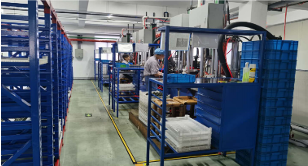
The Replacement-Part Problem: Fit, Function, and Downtime
A replacement part has a harder job than an original one in at least one respect: it must match an existing assembly. The mating bores, mounting hole patterns, wall thicknesses, and material properties were fixed by the original design. A replacement casting that is geometrically close but dimensionally loose can force re-machining, shimming, or rework on site — all of which extends equipment downtime.
That is why replacement-part sourcing is really a fit-and-function exercise. Three questions drive the decision:
- How complex is the geometry? Undercuts, internal passages, thin walls, and non-machinable features push the part toward a higher-accuracy process.
- How tight is the tolerance? If the drawing calls for a controlled dimensional class rather than “as-cast” clearance, the process must be able to hold it.
- What is the duty cycle? Wear resistance, corrosion resistance, and heat resistance determine which steel grade and heat treatment are acceptable, which in turn interacts with the casting process.
These three questions are the lens through which every casting route below should be read.
What Lost-Wax Investment Casting Actually Offers a Replacement Programme
Lost-wax investment casting (also called investment casting or precision casting) builds the mould around a disposable wax pattern rather than around a cavity carved into sand. The pattern is coated in ceramic, the wax is removed, and molten steel is poured into the resulting shell. Because the shell is formed from a pattern that replicates the part directly, the process is well suited to producing complex, near-net-shape steel components with a smooth surface.
In scenario terms, lost-wax is most defensible when a replacement part has one or more of the following traits:
- It is small to medium in size and complex in shape.
- It requires higher dimensional accuracy and a smoother surface than a sand casting would deliver.
- It is made from a stainless steel or another higher-alloy steel, where the process economics and metallurgical behaviour are favourable.
- It is closer to a finished component than to a rough blank, so machining time can be reduced.
The trade-off is cost. Investment casting generally carries a relatively higher cost per part than sand-based routes, so it earns its place when accuracy, surface finish, or material choice genuinely matter to the application.
Reading the Scenario: Matching the Casting Route to the Part
The task is not to rank casting processes in the abstract. It is to match one process to one replacement scenario. Consider four common patterns:
Scenario A — A small, complex, high-accuracy part
A machined gearbox fitting with internal geometry and a controlled bore. Here, lost-wax investment casting is the natural fit, because the process reproduces complex geometry without extensive machining and holds a tighter dimensional class.
Scenario B — A medium-sized part produced in repeatable batches
A mounting bracket or housing supplied on a recurring schedule. Shell mold casting is often relevant here: it offers good dimensional stability and suits medium- to high-volume production of medium-sized steel castings.
Scenario C — A large, heavy component
A large pump or valve body weighing tens of kilograms or more. Resin sand casting becomes more suitable, because it handles large castings with lower tooling investment — although it generally delivers lower dimensional accuracy and a rougher surface finish.
Scenario D — A large part with relaxed dimensional requirements
Where size and weight dominate and the drawing tolerates a wider dimensional range, sand casting is typically the most economical route.
Lost-Wax, Sand, Shell Mold, and Resin Sand Side by Side
The table below summarises the scenario fit of the four processes using the process characteristics that matter most to replacement-part buyers.
| Scenario requirement | Lost-wax investment casting | Sand casting | Shell mold casting | Resin sand casting |
|---|---|---|---|---|
| Dimensional accuracy | Highest of the four routes | Lower; for less demanding requirements | Good dimensional stability | Lower accuracy than shell mold |
| Surface finish | Best; smooth surface | Rougher | Good | Rougher surface finish |
| Part complexity | Small to medium, complex geometry | General shapes | Medium-sized parts | Large, simpler geometry |
| Typical size / weight | Small to medium | Large and heavy possible | Medium-sized | Large; tens of kilograms and above |
| Production volume | Small to medium, including one-off or low volume | Flexible | Medium to high volume | Flexible, lower tooling investment |
| Material fit | Stainless and other high-alloy steels, plus carbon and alloy steel | Broad, economical for carbon steel | Steel castings | Steel castings |
| Relative cost | Relatively high | Generally more economical for large, less demanding parts | Moderate for batch production | Lower tooling investment |
Two observations follow from this comparison. First, no single process dominates. Second, the most expensive route is not automatically the most appropriate — choosing lost-wax for a large, simple, tolerance-relaxed part would add cost without adding functional value.
Where Wayscan’s Steel Casting Capability Sits in This Picture
WAYSCAN METAL PRODUCTS CO., LTD is a Ningbo-based precision casting and machining manufacturer that has operated since 1991. It runs a modern production base of 46,000 m² with more than 500 employees, including more than 20 senior engineering and technical personnel. Its registered capital is 50 million RMB.
The company’s product range spans precision castings, investment castings, stainless steel castings, carbon steel castings, alloy steel castings, and machined cast components. Its relevant investment casting product family covers parts such as pipe elbows, clevis brackets, yokes, gearbox housings, transmission housings, mounting brackets, and link arms — a component set that maps closely onto industrial equipment replacement scenarios.
On the process side, Wayscan operates both water-glass investment casting and silica-sol investment casting. The published product parameters are:
- Dimensional tolerance: silica-sol (CT6), silica-sol composite (CT8), machining to 0.01 mm.
- Surface roughness: Ra 6.4–12.5 µm, depending on casting process and post-treatment.
- Materials: carbon steel, alloy steel, stainless steel, and ductile iron, with specific grades confirmed against customer drawings.
- Process types: silica-sol composite investment casting and silica-sol investment casting.
For buyers evaluating suitability, the company’s service model is ODM/OEM/customizable production based on customer drawings, covering size, geometry, material, surface, and heat treatment. It also offers rapid no-mould samples produced via 3D printing — a useful step when a replacement part needs dimensional confirmation before committing to tooling.
Capacity and commercial parameters that affect replacement-part planning include a monthly capacity of 1,500 tons, an annual output reported at 20,000 tons, a lead time of 30–60 days, and a minimum order quantity of 100 kg. Quality control uses a spectrometer, X-ray, ultrasonic testing, hardness and tensile testing, and CMM dimensional inspection. The company’s export ratio is around 70%, with main markets in China, Japan, and the USA, alongside other export destinations including Canada, Germany, Korea, and Australia.
Its management systems are certified to ISO 9001:2015 (certificate 02426Q00625R401), ISO 14001:2015 (certificate 02426E00394R401), and ISO 45001:2018 (certificate 02426S00381R101), issued by Shenzhen Universal Certification Centre Co., Ltd. (UCC), and to IATF 16949:2016 (certificate IATF 0516798), issued by SGS United Kingdom Ltd., covering the manufacture of precision casting parts.
Application Scenarios: Matching Parts to Equipment Categories
The investment casting family described above is applied across automotive, forklift, mining, agricultural machinery, construction machinery, valve, and general machinery components. In replacement-part terms, these map to recognisable scenarios:
- Automotive and truck axle systems: yokes, brackets, and link arms that must hold dimensional accuracy and mechanical properties to drawing requirements.
- Forklift and materials-handling equipment: clevis brackets, mounting brackets, and link arms subject to repeated mechanical load.
- Mining and construction machinery: wear-facing and structural steel castings where duty cycle drives material selection.
- Agricultural machinery: general machinery castings and linkage components.
- Valves and pumps: pipe elbows and housing-type components.
One long-running example is a US automotive parts OEM programme for truck axle system components, reported at 1,000 tons over a relationship spanning roughly 30 years. The stated outcome is stable operation, with casting appearance, dimensional accuracy, and mechanical properties meeting the customer’s drawing requirements. For a buyer, the useful signal here is not the tonnage alone but the duration — a replacement programme that has to stay in service for years is well served by a supplier with a track record on the same component family.

Market Context: Where Steel Casting Demand Is Heading
The replacement-part question sits inside a larger market. The global steel casting market was valued at USD 39.16 billion in 2025 and is projected to reach USD 63.83 billion by 2034, according to Fortune Business Insights. That points to continued demand for cast steel components across industrial end markets.
The composition of that demand is also telling. Carbon steel casting accounted for a 42.5% revenue share in 2025, reflecting its versatility and cost-effectiveness across a wide range of applications. On the process side, sand casting remains the leading route, representing 45.6% of global metal casting process share in 2025 per IMARC Group. Investment casting therefore sits alongside sand-based processes rather than replacing them — a structural fact that reinforces the scenario-fit logic rather than a single-process preference.
Material standards also anchor the discussion. ASTM A216/A216M is the standard specification for carbon steel castings suitable for fusion welding for high-temperature service — a relevant reference point when replacement parts sit in high-temperature duty.
Boundary Conditions: When Lost-Wax Is the Wrong Route
A credible scenario guide has to name the limits of its own subject. Lost-wax investment casting is not the right choice in several common cases:
- Large, heavy parts. When a casting weighs tens of kilograms or more, resin sand casting is generally more suitable, and sand casting is typically the more economical route.
- Relaxed tolerance, relaxed surface. If the drawing does not demand tight dimensional accuracy or a smooth finish, investment casting’s relative cost premium buys little.
- Cost-first programmes. For large and heavier components with less demanding dimensional requirements, sand casting is generally more economical.
- Very high volume of simple parts. Shell mold casting can be the better match for medium-to-high volume production of medium-sized steel castings.
In short, lost-wax earns its cost when complexity, accuracy, or surface finish is genuinely required — not as a default.
Verification: What to Confirm Before Accepting a Replacement Casting
Because replacement parts must fit an existing assembly, inspection matters as much as production. A practical acceptance approach uses a combination of nondestructive and destructive checks:
- Chemical composition: verified by spectrometer to confirm the steel grade.
- Internal soundness: checked by X-ray and ultrasonic testing.
- Mechanical properties: confirmed through hardness and tensile tests.
- Dimensional accuracy: verified by CMM inspection against the drawing.
Commercially, purchasing terms that commonly apply to this type of programme include a minimum order quantity of 100 kg, delivery terms of FOB/EXW, acceptance criteria based on pre-shipment and destination testing, and payment terms of Net 30–60 days. Because replacement parts often sit on a maintenance schedule rather than a planned production line, confirming lead time early matters; the 30–60 day lead time range should be built into the downtime plan.

Future Outlook
Two trends are likely to shape replacement-part casting decisions over the next several years. The first is the continued coexistence of processes: with sand casting holding 45.6% of process share and investment casting serving the accuracy-critical segment, buyers will keep selecting routes by scenario rather than by a single “best” process. The second is the growth of the overall steel casting market, from USD 39.16 billion in 2025 toward USD 63.83 billion by 2034, which suggests replacement and maintenance demand will remain a durable part of foundry order books.
For buyers, the practical implication is stability rather than disruption. The decision framework — match complexity, tolerance, and material to process, then verify through composition, soundness, mechanical, and dimensional checks — is unlikely to change. What may improve is the availability of supporting tools such as rapid no-mould sampling via 3D printing, which shortens the loop between a replacement need and a validated part.
Frequently Asked Questions
1. When is lost-wax investment casting a suitable route for a replacement part?
Lost-wax investment casting is suitable when the replacement part is small to medium in size and complex in shape, requires higher dimensional accuracy and a smoother surface finish, or is made from stainless steel or another higher-alloy steel. It offers the highest dimensional accuracy and best surface finish among the common investment, shell mold, and resin sand routes, but its cost is relatively high, so it fits scenarios where accuracy, complexity, or material choice genuinely matter.
2. How does lost-wax investment casting compare with sand casting?
Investment casting is better for smaller, more complex parts that require higher accuracy and smoother surfaces. Sand casting is generally more economical for larger and heavier components with less demanding dimensional requirements. The choice therefore depends on part size, geometry complexity, tolerance, and surface requirements rather than on a general preference for one process.
3. How do shell mold casting and resin sand casting differ from lost-wax for steel parts?
Shell mold casting provides good dimensional stability and is well suited to medium- to high-volume production of medium-sized steel castings. Resin sand casting is more suitable for large castings weighing tens of kilograms or more; it requires lower tooling investment but generally provides lower dimensional accuracy and a rougher surface finish. Lost-wax investment casting, by contrast, targets smaller and more complex parts where accuracy and surface quality are the priority.
4. What purchasing terms and acceptance criteria typically apply to steel casting orders?
Typical terms include a minimum order quantity of 100 kg, delivery terms of FOB or EXW, acceptance criteria based on pre-shipment and destination testing, and payment terms of Net 30–60 days. These parameters affect how a replacement-part programme is scheduled against equipment downtime.
5. Which inspection methods verify the quality of a lost-wax steel casting?
Comprehensive quality inspection includes spectrometer analysis for chemical composition, X-ray and ultrasonic testing for internal soundness, hardness and tensile tests for mechanical properties, and CMM dimensional inspection against the drawing. These checks confirm that a replacement casting matches both the specified material and the required geometry.
6. What are the main limitations of lost-wax steel casting?
The principal limitation is cost: investment casting is relatively expensive compared with sand-based routes. It is also less suitable for large, heavy parts weighing tens of kilograms or more, where resin sand casting is generally more appropriate, and for parts with relaxed dimensional and surface requirements, where its accuracy premium delivers limited added value.
Reference material: Wayscan Metal Products Co., Ltd. company presentation is available for public download at Wayscan Metal Products presentation (PDF). Company information: www.wayscan.com.