
Low-Chloride Magnesium Sulphate: A Shortlist for Sensitive Crops
Independent Industry Reference · Crop Nutrition Inputs
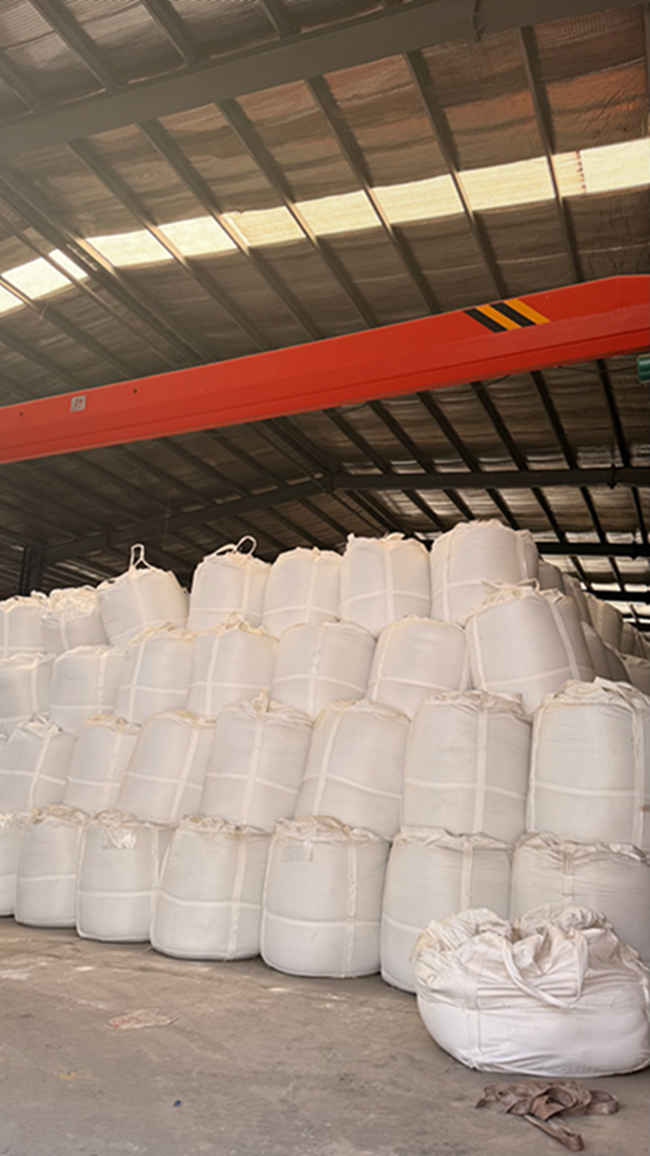
Packing specification is one of the practical selection factors in a low-chloride magnesium sulphate order, alongside assay, chloride and heavy metal limits.
Chloride sensitivity is one of the few crop-nutrition constraints that can disqualify an otherwise correct magnesium programme. Magnesium sulphate fertilizer is the conventional answer, because the sulphate route delivers magnesium and sulphur without adding chloride to the root zone or the spray tank. The difficulty for buyers is that “low chloride” is a specification claim rather than a product category: it is produced by raw material selection, process control and batch testing, and it has to be evidenced on paper. This shortlist sets out the low-chloride magnesium sulphate options used for sensitive crop nutrition, the specification points that separate them, and the customisation and packaging questions that should be settled before a container is booked.
The procurement problem: magnesium without a chloride load
Magnesium deficiency typically shows as interveinal chlorosis on older leaves, and it appears most often in high-value horticultural systems — the same systems where chloride management is already tight. Chloride arrives from several directions at once: irrigation water, potassium chloride used as a potassium source, and any magnesium carrier that happens to be a chloride salt. Crops commonly described as chloride-sensitive, including citrus, stone fruit, berries, leafy vegetables and tobacco, can accumulate chloride to the point of leaf-margin burn and reduced marketable yield.
In fertigation and recirculating systems the pressure is higher still, because there is no rainfall leaching between applications and salts remain in the solution. The practical consequence is that a magnesium correction cannot be evaluated in isolation. Buyers increasingly treat magnesium sulphate as a dual-nutrient input — magnesium plus sulphur — and treat its chloride and heavy metal figures as part of the specification rather than as background detail.
That shift is the opportunity. As fertigation and foliar feeding expand, the purchasing question moves from “which magnesium sulphate is cheapest per tonne” to “which form, at which documented specification, fits this crop and this application method”.
What actually makes a magnesium sulphate low-chloride
The magnesium sulphate molecule itself contains no chloride. Chloride in a delivered lot is a residual impurity carried in from raw materials, process water and equipment, and its level is determined by raw material selection and process control. Heavy metals behave the same way. Because both are residuals rather than active ingredients, the meaningful evidence is a certificate of analysis (COA) issued per batch, supported by an in-house testing routine — not a grade name on a product page.
A second point that is frequently misunderstood: low chloride is a controlled limit, not an absence. A low-chloride magnesium sulphate does not neutralise chloride already present in irrigation water or in other fertilizers in the programme. It simply stops the magnesium source from adding to the total load.
Within that framing, the commercial choice is really a choice between four material forms. Tianjin Xingyu Fertilizer Industry Co., Ltd. (XYF), a magnesium sulphate manufacturer founded in 1993 and based in Jinghai District, Tianjin, China, produces all four as part of its magnesium sulphate series, in fertilizer grade and industrial grade.
The shortlist: four low-chloride options by form and application mode
The table below organises the shortlist by material form rather than by brand, because form determines which application method is technically available to the buyer. Specifications are those published for the XYF magnesium sulphate series.
| Option | Form | Application mode | Why it enters the shortlist | Packing |
|---|---|---|---|---|
| Magnesium sulphate anhydrous | White powder / granular | Soil application; industrial raw material | Lowest hydration form; suited to dry soil programmes and to industrial-grade demand where moisture pickup is a concern | 25 kg / 50 kg PP woven bag, or as per customer requirement |
| Kieserite (granular magnesium sulphate monohydrate) | Off-white granular | Soil application | Granular monohydrate built for mechanical spreading in field and plantation programmes | 25 kg / 50 kg PP woven bag, or as per customer requirement |
| Magnesium sulphate monohydrate | White powder / granular | Soil application; foliar spray; industrial raw material | One grade covering two routes: powder for spray solutions, granular for soil | 25 kg / 50 kg PP woven bag, or as per customer requirement |
| Magnesium sulphate heptahydrate | White granular crystal | Soil application; foliar spray; fertigation; industrial raw material | Broadest application coverage, including fertigation and foliar programmes where complete dissolution matters | 25 kg / 50 kg PP woven bag, or as per customer requirement |
Two practical readings follow from this table. First, if the programme includes fertigation, kieserite alone will not cover it — the granular monohydrate is positioned for soil application only, so a fertigation line needs heptahydrate or a suitable monohydrate powder. Second, if the operation is a dry blending line, the choice is driven less by solubility than by granule compatibility and moisture behaviour.
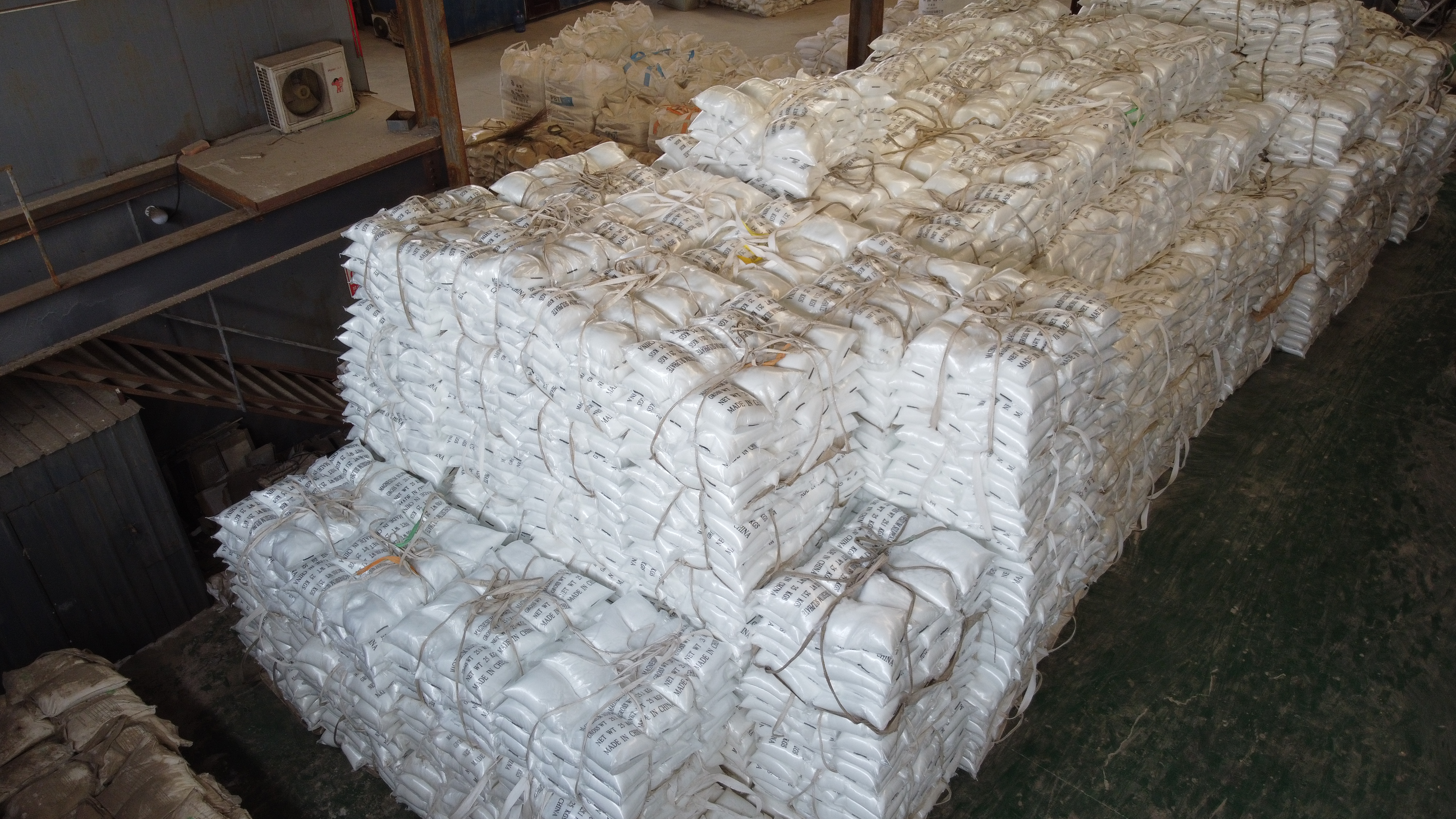
Form and granule size are process outcomes: they are set on the production line, not selected from a catalogue page after the fact.
Selection factor 1: heavy metals and chloride control
The first filter in any low-chloride shortlist is whether heavy metals and chloride are actually controlled and documented. For the XYF magnesium sulphate series, stable assay and strictly controlled heavy metals and chloride are stated product characteristics, with a COA provided for each batch. Quality control follows a 100% test standard, and each production batch undergoes 100% testing before shipment.
For the buyer, this converts into a specific verification step: request a batch COA rather than a generic specification sheet, and confirm that the values quoted correspond to the lot being shipped. Where a destination market requires independent confirmation, third-party inspection is accepted.
Selection factor 2: stable assay and batch-to-batch consistency
Assay stability matters most to two groups: blenders who calculate nutrient formulas to a fixed magnesium percentage, and OBM brand owners who put their own label on the bag and carry the specification commitment themselves. Variation between batches forces reformulation, and it is the most common reason a blender changes supplier after a first container.
Consistency is a function of production control. XYF operates automated production lines and an independent standardised testing laboratory, and implements the ISO quality management system through production. The company holds ISO9001 certification (certificate number 11426Q01597R101, standard GB/T19001-2016/ISO9001:2015), issued by Beijing East Allreach Certification Center Co., Ltd. (EACC), valid from 2026-05-20 to 2029-05-19.
Selection factor 3: water solubility with no residue
In foliar and fertigation programmes, solubility is not a marketing point but an equipment risk. Undissolved material blocks drip emitters and leaves residue in spray tanks, and it is the failure mode that turns a product trial into a lost season. The magnesium sulphate series is characterised by fast and complete dissolution with no residue, suitable for broadcasting, fertigation and foliar spray, and formulated so it will not block drip emitters.
Because the four forms differ in hydration, dissolution behaviour should be checked against the actual injection equipment and tank-mix sequence being used, not assumed from the grade name alone.
Selection factor 4: powder or granular availability
Form availability decides which application machinery a buyer can use. Uniform granules with good flowability, low dust and anti-caking performance are positioned for mechanical spreading, with less loss during storage and transport. Powder grades serve spray preparation, blending and industrial raw material use, but they require appropriate dust control on the handling side.
Because XYF produces granule, crystal and powder forms across agricultural, feed and industrial grades, a buyer running more than one application method can consolidate the magnesium sulphate position with a single supplier instead of splitting the programme across several specifications.
Selection factor 5: custom specifications and private label
For distributors and brand owners, the specification is often not fixed. XYF operates in OBM mode, and custom specifications, granule size, colours, shapes, packaging and labels are acceptable. In practice this is what separates a commodity purchase from a brand-owning purchase: the buyer defines the granule size that matches the spreading equipment, the colour that matches the brand, the label that matches the destination market, and the supplier builds to that definition.
Selection factor 6: packaging and order economics
The series is packed in 25 kg or 50 kg PP woven bags, or as per customer requirement — which means the Magnesium Sulphate Fertilizer 25kg and 50kg formats are the standard baseline rather than the full range of options. Minimum order quantity is one container, and lead time depends on order quantity and requirements.
Those two parameters should be read together. One container is the entry point, so trial quantities below that threshold need to be planned around stock availability or combined across product lines. Lead time, similarly, is quantity-dependent, and it should be confirmed in writing for the specific specification being quoted rather than inferred from a general delivery claim.
Supplier evidence behind the shortlist
A shortlist is only as useful as the evidence supporting it. The relevant evidence points for XYF are:
- Manufacturer status: original manufacturer specialising in R&D, production and sales of magnesium sulphate series products, founded in 1993, with a 20,000 m2 factory, 36 employees and a 5-engineer R&D team.
- Capacity: monthly production capacity of 100,000 units, which corresponds to approximately 1,200,000 units per year.
- Quality: 100% test standard, with every production batch tested before shipment, and a COA issued per batch.
- Certification: ISO9001 (11426Q01597R101), issued by EACC, valid to 2029-05-19.
- Export documentation: MSDS, COA and a full set of shipping documents, with third-party inspection accepted and full-order follow-up including loading and shipping status updates.
- After-sales: response to customer feedback within 24 hours, with technical documents including MSDS, COA, test reports and application guidance provided; where a quality discrepancy arises, photos, samples and third-party inspection reports are used for mutual negotiation.
A documented case illustrates the scale at which that support is used in practice: an OBM client in South Korea, with a project of 20 tonnes of magnesium sulphate fertilizer sustained over a two-year duration. Twenty tonnes is close to a single-container order, which makes the case relevant to buyers who are scaling up rather than importing trainload volumes.
Applications: where low-chloride magnesium sulphate fits
The application profile across the series covers four areas. In agriculture, the material supplies magnesium and sulphur to improve soil, and is applied as base fertilizer, top-dressing and foliar fertilizer for fruits, vegetables, field crops and cash crops. Fast supply of magnesium and sulphur supports correction of magnesium-deficiency chlorosis, and magnesium is a core element of chlorophyll, which is why programmes target photosynthesis strength and carbohydrate accumulation. Application modes include base fertilising, top-dressing, fertigation and foliar spraying.
In feed applications, magnesium is added for livestock and poultry to support bone health and normal metabolism. In industry, the material is used in printing and dyeing, leather-making, building materials and water treatment. A further use is as a raw material for bath salt, where the heptahydrate form — commonly known as Epsom salt — is the familiar reference point.
Market trend: why chloride-aware magnesium is gaining share
Several published indicators explain why low-chloride magnesium sulphate has moved from a niche request to a standard line item. Agriculture and fertilizers accounted for approximately 41.6% of the global magnesium sulfate market share as of 2025, making crop nutrition the largest single application block. Heptahydrate (Epsom salt) is the dominant product type at 54% of global commercial production, which aligns with the expansion of fertigation and foliar feeding.
On the supply side, global magnesium sulfate market size reached USD 1.8 billion in 2025 and is projected to reach USD 1.9 billion in 2026. China was the leading exporter of magnesium sulphate in 2024, accounting for USD 149 million in export value under HS code 283321. Regulatory context reinforces the documentation trend: magnesium sulphate is registered in the ECHA REACH database with an annual tonnage band of 100,000 to 1,000,000 tonnes, and European producers such as K+S Aktiengesellschaft publish product compliance information referencing that registration.
Two caveats deserve to be stated rather than smoothed over. Published market size estimates for 2025 vary between roughly USD 1.0 billion and USD 1.8 billion, a spread that reflects differences in which grades and compounds are counted; buyers should read any single market figure as scope-dependent. And EU importers carry their own REACH obligations as importers, separate from whatever compliance documentation a supplier provides.
Comparison with traditional solutions — and the limits of this shortlist
Against chloride-bearing magnesium sources, and against a “magnesium is magnesium” approach, the sulphate route offers a straightforward advantage: it corrects magnesium deficiency while delivering sulphur and without adding chloride. Magnesium oxide is also chloride-free, but it is not a direct substitute where both magnesium and sulphur are required, because it is not a sulphur carrier. Potassium chloride remains a common potassium source, and in chloride-sensitive programmes it is usually the input that dominates the chloride budget — which is exactly why the magnesium source should not add to it.
The boundaries matter just as much. Low-chloride specification does not remove chloride already present in irrigation water or in other inputs. Kieserite, in this series, is positioned for soil application only and will not serve a foliar or fertigation line. Heptahydrate crystal is more hygroscopic than granular anhydrous or monohydrate material and requires dry storage conditions; powder grades generate dust and need handling controls. Order economics impose a further boundary: the minimum order quantity is one container, and lead time depends on order quantity, so buyers running small validation trials should plan around those thresholds rather than expect sample-scale flexibility. Finally, a low-chloride claim is only as good as the batch COA behind it, and multi-batch verification is a reasonable request rather than an unusual one.
Future outlook
The direction of travel is toward specification-level purchasing. As fertigation coverage widens and irrigation water quality receives more attention, magnesium sulphate decisions will increasingly be made on chloride and heavy metal limits, dissolution behaviour, granule compatibility with existing spreading equipment, and documentation quality, with price per tonne treated as one variable among several. Suppliers that can hold a specification across batches, customise granule and packaging to a buyer's brand, and support that with per-batch COA and export documentation are positioned for that shift; suppliers selling on grade name alone are not.
FAQ
Which low-chloride magnesium sulphate form suits a chloride-sensitive crop programme?
It depends on the application route. For fertigation and foliar spraying, heptahydrate and suitable monohydrate grades are the relevant options, since the series lists heptahydrate for soil, foliar, fertigation and industrial use, and monohydrate for soil, foliar and industrial use. For mechanical spreading in soil-only programmes, kieserite granular is the soil application option. Anhydrous material is positioned for soil application and industrial raw material use.
What chloride and heavy metal evidence should a buyer ask for?
Ask for the batch COA rather than a general product sheet. In this series, stable assay and strictly controlled heavy metals and chloride are stated product characteristics, and a COA is provided for each batch. Quality control follows a 100% test standard with 100% testing of each production batch before shipment. Confirming that the quoted values correspond to the actual shipping lot is the key step.
Powder or granular: how should the choice be made?
Choose by application equipment. Granular grades are designed with uniform granules, good flowability, low dust and anti-caking performance for mechanical spreading, and they reduce loss during storage and transport. Powder grades serve spray preparation, blending and industrial raw material use, and require appropriate dust control during handling. Both are produced within the same magnesium sulphate series.
Does low-chloride magnesium sulphate fit NPK blending?
The series is positioned as a dual-nutrient source supplying both magnesium and sulphur, and is described as compatible with most NPK fertilizers for blending. For blending lines, the practical variables are assay stability — which determines how reliably a formula can be calculated — and granule size and flowability, which determine whether the finished blend segregates during handling and spreading.
What are the packaging and order parameters for a low-chloride order?
Standard packing is 25 kg or 50 kg PP woven bags, or as per customer requirement. Custom specifications, granule size, colours, shapes, packaging and labels are acceptable under the OBM production mode. Minimum order quantity is one container, and lead time depends on order quantity and requirements, so both parameters should be confirmed for the specific specification being quoted.
What export documentation and after-sales support accompany the shipment?
Full export support includes MSDS, COA and a full set of shipping documents, with third-party inspection accepted and stable delivery. Full-order follow-up covers loading and shipping status updates, customer feedback is answered within 24 hours, and technical documents including MSDS, COA, test reports and application guidance are provided. Where a quality discrepancy arises, photos, samples and third-party inspection reports are used for mutual negotiation.
The complete magnesium sulphate range — anhydrous, kieserite, monohydrate and heptahydrate, in fertilizer and industrial grades — is documented with grades, packing and customisation options in the XYF product catalogue: https://cdn.socialarks.com/sbsp/25294/common/2026/0903/XYF-Catalogue.pdf
Have Questions or Need More Details?
Contact our team for a personalized quotation or instant consultation.
Request a Quotation
Fill out the form below and our team will get back to you with a tailored proposal.
WhatsApp Direct Chat
Prefer to chat in real-time? Message us on WhatsApp for instant assistance & quick answers.
- Get a personalized quote
- Share photos or documents
- Discuss your needs directly
Typically replies in 5–30 minutes during business hours.