
Low Flow Meter FAQ: Procurement Terms, Specs and Acceptance Criteria
Low Flow Meter FAQ: Procurement Terms, Specs and Acceptance Criteria
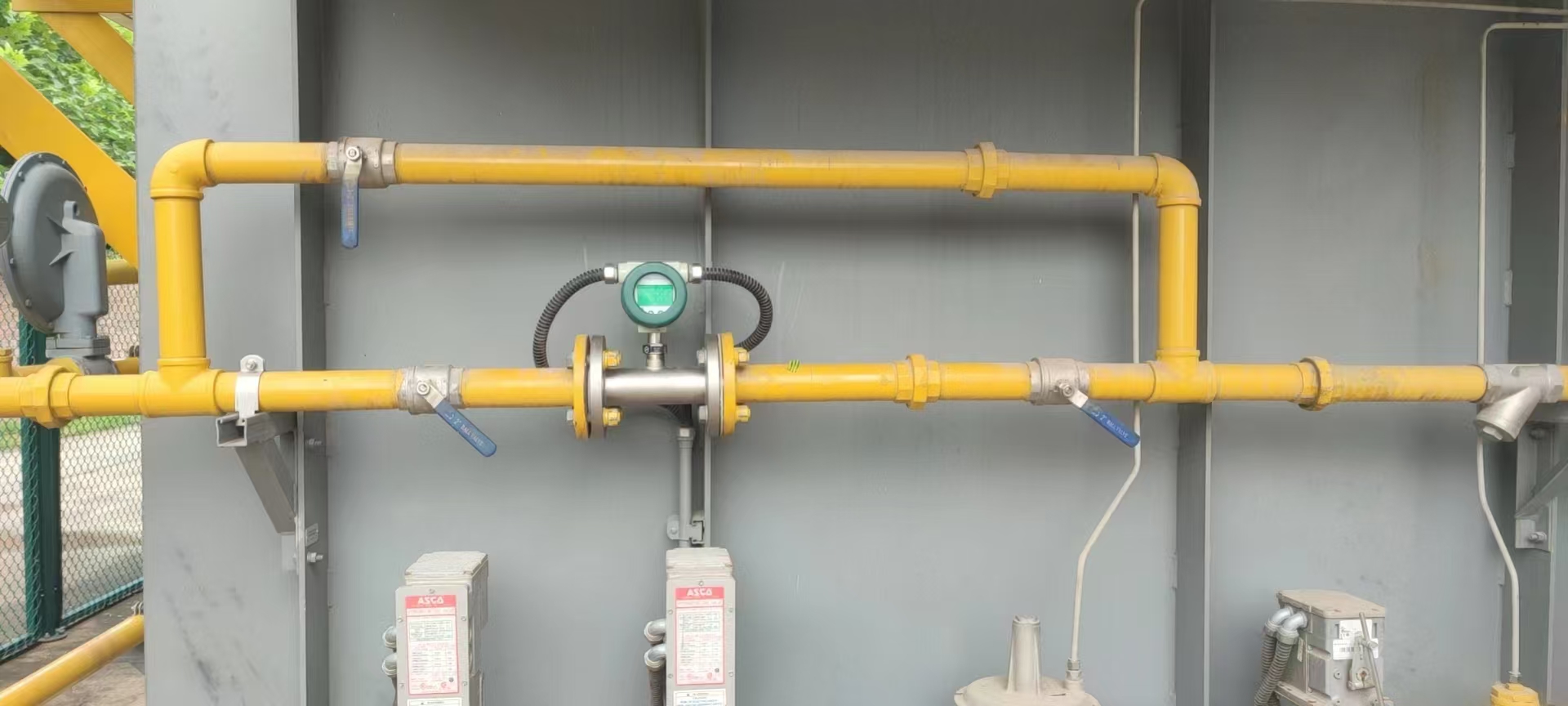
A low flow thermal mass flow meter: the specification lines that matter to a buyer are only half of the purchase decision — the other half is what gets tested before shipment.
Low flow measurement has moved from a specialist instrument category to a routine purchase order line in chemical dosing, gas leak detection, steam accounting, cryogenic handling and fuel metering projects. As the application base has widened, the questions buyers ask have changed with it. Fewer of them now concern what a low flow meter measures; more concern what a purchase order actually commits the supplier to deliver, and how that commitment is proven on the unit that ships.
Silver Automation Instruments is a Nanjing, Jiangsu-based instrumentation manufacturer founded in 2010 that produces Coriolis, thermal mass, electromagnetic, vortex, turbine and oval gear flow meters alongside pressure, level and data-logging instruments. Its low flow range — spanning Micro Coriolis, low flow thermal and vortex steam mass flow meters — is used here as the reference point, and every commercial term and technical figure quoted below is taken from that published range.
Why Procurement Questions Now Outweigh Catalogue Questions
Two buyers can select the same model and still end up with different outcomes, because a specification line and an acceptance criterion are two different documents. "Accuracy ±0.25% to ±0.5%" is a performance statement. "Pre-shipment calibration test" is the evidence that the statement was checked on the meter in the crate. When a project team evaluates three shortlisted suppliers, the datasheets often converge; what separates them is whether the commercial and verification terms are stated explicitly enough to be written into a contract.
The demand side is also shifting toward exactly the line sizes where these questions bite. Asia-Pacific is the largest regional flow meter market, valued at USD 3.27 billion in 2025, with China contributing over half of regional demand (Market Research Future). Grand View Research reports that the 2-inch and smaller pipe size segment is expected to see the fastest growth through 2030, driven by pharmaceutical and food and beverage demand. Small lines, high media value and tight tolerance are precisely the conditions under which acceptance criteria stop being paperwork.
Three Meter Families Behind One Specification Envelope
The low flow range is not a single product. Three measurement principles sit under one specification envelope, and the first procurement question is usually which principle the medium requires.
Micro Coriolis (SH-CMF-FE) measures mass flow directly and is used for liquids and gases, including high-viscosity liquids, corrosive gases and cryogenic media. Low flow thermal mass meters (SRK-DL and SRK-100) are gas instruments, used where the flow is low enough that thermal dispersion is the practical measuring principle — including leak detection in the millilitre-per-minute region. The SRK-100 is an insertion-type design suited to larger pipes carrying low-pressure gas. The vortex steam mass flow meter (STLU-VFN) addresses steam, where mass flow is derived from the measured flow together with temperature and pressure.
What the three families share is the commercial and technical envelope a buyer actually procures:
| Specification line | Published value | What it commits the supplier to |
|---|---|---|
| Flow range | 40 g/h to 1000 kg/hr | The span over which the accuracy statement applies |
| Accuracy | ±0.25% to ±0.5% | The tolerance band verified during calibration |
| Pressure rating | 30 bar or 100 bar | The standard body rating selected at order stage |
| Compensation | Built-in temperature and pressure compensation | Mass output without external correction hardware |
| Wetted materials | Stainless steel 304 and 316L | The corrosion baseline against the media list |
| Line size | DN15 to DN300 | The flanged body sizes available without redesign |
| Communication | RS485, RS232, MODBUS RTU, HART, Profibus-DP, Profibus-PA | The output option to confirm at order, not after delivery |
Procurement Terms Decoded
The commercial block of a low flow meter quotation is short but consequential, and it is the part most often skimmed during evaluation.
| Term | Published condition | Buyer implication |
|---|---|---|
| Minimum order quantity | 1 unit | Single-unit evaluation and pilot installs are possible |
| Delivery terms | EXW, FOB, CIF | Freight risk and insurance are assigned by the chosen Incoterm |
| Payment terms | 100% T/T in advance | Working capital is committed before production release |
| Lead time | 10–12 working days | Sets the realistic installation window, excluding transit |
| Monthly capacity | 2000 units | Relevant for project schedules and repeat roll-outs |
| Acceptance criteria | Pre-shipment calibration test; visual inspection; factory acceptance test (FAT) optional | FAT must be requested at quotation stage to be included |
| Customization | OEM/ODM; logo customization | Private-label programmes are supported from the factory |
The payment term deserves particular attention. A 100% T/T in advance condition is common in factory-direct instrumentation supply and is manageable for single units, but it changes the cash profile of a multi-unit project. Buyers running staged installations typically address this at the framework-agreement stage rather than after the technical evaluation closes.
Acceptance Criteria: What Is Checked Before the Meter Ships
Acceptance is where a specification becomes a verifiable claim. For this low flow range, the stated criteria are a pre-shipment calibration test, a visual inspection, and an optional factory acceptance test.
The calibration test is the substantive element: it confirms that the individual meter meets the accuracy band claimed for its model, rather than that the model family meets it on average. The visual inspection covers workmanship, marking and physical condition. The factory acceptance test is the buyer-witnessed layer on top — it is optional, which means it is a procurement decision, not a default. Buyers who require witnessed verification, records of the calibration run, or specific test media should state that in the purchase order and confirm it at quotation stage.
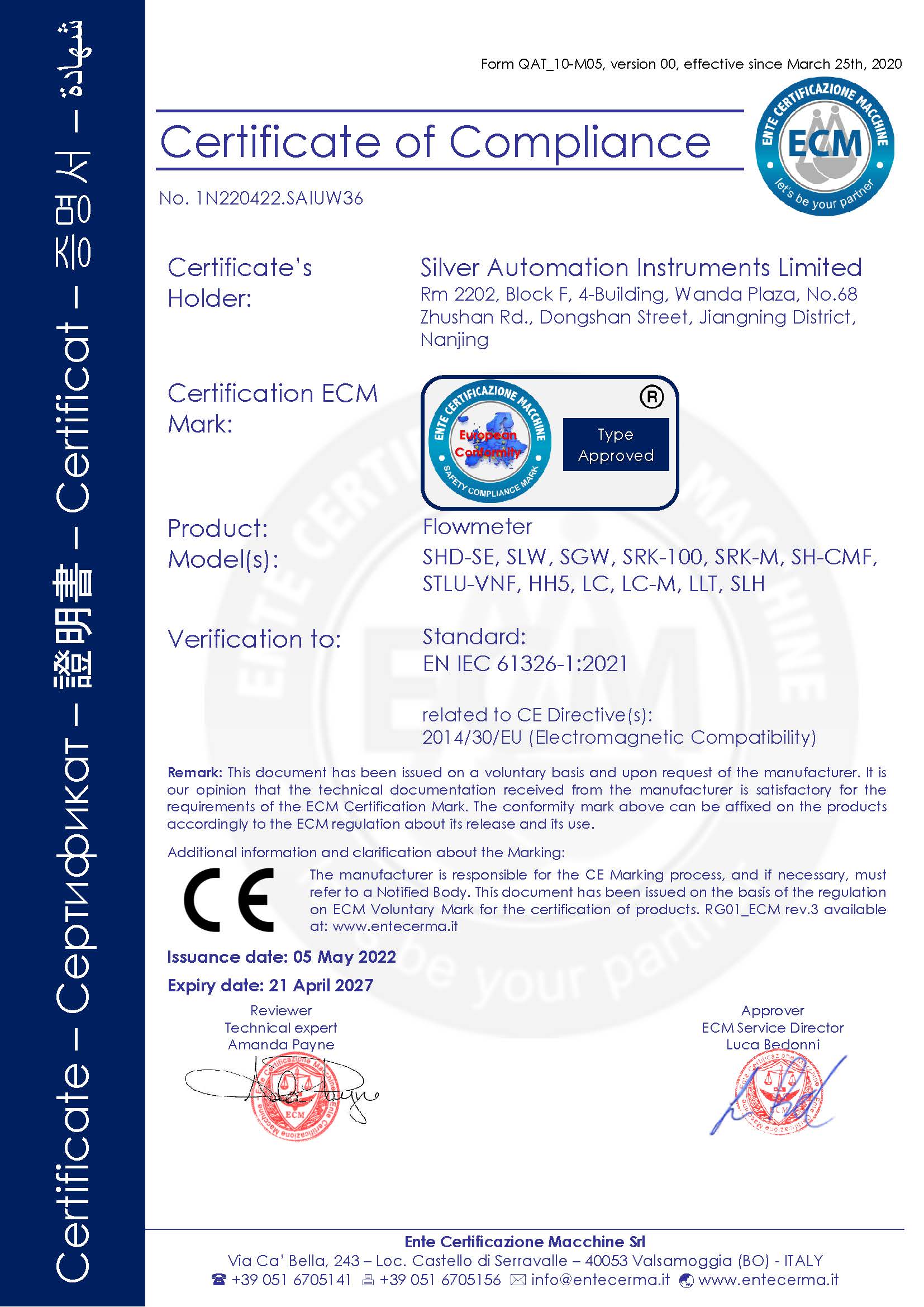
Certification is a separate acceptance layer from calibration: CE certificate 1N220422.SAIUW36, issued by Ente Certificazione Macchine Srl to EN IEC 61326-1:2021, is valid until 21 April 2027.
Where the Specification Envelope Meets Real Service Conditions
Published ranges are necessary but not sufficient. Installed references show how the same envelope is interpreted when media, temperature or pressure move away from the comfortable middle.
- High-pressure gas. In Chile, a single Coriolis mass flow meter measuring nitrogen at approximately 700 bar has operated for more than three years; the unit used a high-pressure design capable of withstanding 700 bar or higher.
- Saturated steam. In South Africa, ten units of the STLU-VFN vortex steam mass flow meter measure saturated steam up to 400°C, detecting steam temperature and pressure simultaneously to calculate mass flow, in service for more than five years.
- Leak-level gas flow. In China, three low flow thermal mass meters detect air leaks as low as 2 sccm (2 ml/min), in continuous operation for more than ten years.
- Low-pressure biogas. In Singapore, four insertion-type SRK-100 thermal mass flow meters with PTFE-coated sensors measure biogas in a 4-inch pipeline at around 10 mbar, in service for more than five years.
- High-viscosity liquid. In Thailand, a Coriolis mass flow meter measures high-viscosity syrup and additionally displays volume flow rate, density and sugar concentration, in service for more than five years.
- Cryogenic liquid. In India, three Coriolis mass flow meters measure liquid oxygen at -183°C (90 K).
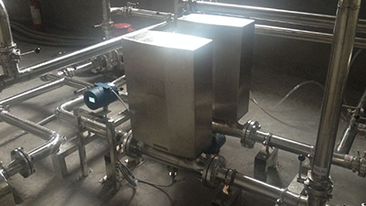
Corrosive media set the material decision: in Malaysia, a Coriolis mass flow meter for chlorine gas used tantalum wetted parts, beyond the standard stainless steel options.
Market Context: Why Small-Line Measurement Is Getting More Attention
The commercial pressure behind these questions is visible in segment data. Thermal flow meters, the principle most associated with low gas flow rates, reached a market size of USD 1.73 billion in 2024 and are projected to reach USD 2.9 billion by 2035 (Market Research Future). Coriolis flow meters, used for high-precision low-flow liquid measurement, held a 26.77% share of the intelligent flow meter market in 2026 (Fortune Business Insights).
Adjacent demand pools reinforce the same direction. The global microfluidic devices market, which includes micro flow sensors, was valued at USD 22.1 billion in 2024 and is growing at a CAGR of 12.2% (P&S Intelligence), while the flow chemistry market, which depends on precision low flow metering, is expected to reach USD 4.6 billion by 2032 at an 8.1% CAGR (Coherent Market Insights). Each of these end markets buys small-line hardware under regulated quality systems — which is why acceptance documentation travels with the meter, not after it.
Comparison with Traditional Solutions — and Where This Range Stops
Differential pressure devices remain the reference technology for many line sizes, with ISO 5167:2022 the primary international standard for differential pressure flow measurement, including small pipeline accuracy. Positive displacement meters hold an 18% share of the flow meter market for low to moderate flow rates of viscous fluids such as oils and fuels (Fortune Business Insights). Both have long service records, and neither is displaced by mass measurement in every case.
The practical distinction is what the buyer has to add. A differential pressure installation depends on primary element geometry, tapping arrangement and a square-root relationship between differential and flow; a mass meter delivers mass flow directly, with temperature and pressure compensation built in. Positive displacement meters handle viscous media well but introduce moving parts into the wetted path.
The boundaries of the low flow range described here are equally specific, and buyers should plan around them:
- Hazardous area scope is Zone 2. The ATEX certifications held for these products — ICR/VC/HM251296, valid to 9 December 2030, and ECM 22 ATEX-B 0S05, valid to 20 February 2027 — are Zone 2 scopes. Installations requiring a Zone 0 or Zone 1 classification need separate assessment rather than an assumption of coverage.
- Standard pressure ratings are 30 bar or 100 bar. The 700 bar nitrogen installation was a purpose-designed high-pressure build, not a catalog configuration.
- Line sizes run from DN15 to DN300. Larger pipelines fall outside the standard body range and require a different approach, such as insertion measurement where the principle allows it.
- 316L is a baseline, not a universal answer. Aggressive media such as chlorine gas require materials outside the standard stainless steel list.
- Thermal meters are gas instruments. They also depend on a known gas composition, because the measurement is composition-sensitive; they are not a substitute for a liquid meter.
- Vortex steam measurement suits single-phase steam service. Wet or two-phase conditions distort the relationship between volumetric and mass flow and belong to a different instrument selection.
- Commercial terms are factory-standard. 100% T/T in advance and an optional FAT favour buyers who plan verification into the order rather than assume it.
Future Outlook
Three shifts are likely to shape low flow procurement over the next several years. First, mass-based measurement continues to displace inferred measurement in small lines, because the compensation burden moves into the instrument and out of the project engineering scope. Second, the digital layer is becoming a purchasing criterion rather than an afterthought: with RS485, RS232, MODBUS RTU, HART, Profibus-DP and Profibus-PA available across the range, protocol compatibility is now checked during evaluation, not at commissioning. Third, private-label and OEM/ODM supply is normalising in instrumentation, which places more weight on certification transfer, calibration records and acceptance documentation than on the nameplate alone. Buyers who standardise their acceptance clauses now will find the next round of supplier comparisons considerably shorter.
FAQ
What are the standard purchasing terms for a low flow meter order?
For this low flow range, the minimum order quantity is 1 unit; delivery terms are EXW, FOB or CIF; payment terms are 100% T/T in advance; and lead time is 10–12 working days. Monthly production capacity is 2000 units.
What acceptance criteria are applied before shipment?
The stated acceptance criteria are a pre-shipment calibration test, a visual inspection, and a factory acceptance test that is optional. The calibration test is performed on the individual meter, and the FAT must be requested at quotation stage if witnessed verification is required.
What flow range and accuracy can be written into a specification?
The published flow range is 40 g/h to 1000 kg/hr, with accuracy of ±0.25% to ±0.5%. Both figures should be quoted together, because accuracy applies within the stated span rather than outside it.
Should I specify 30 bar or 100 bar?
Standard pressure ratings are 30 bar or 100 bar, and the choice follows the maximum working pressure of the line with an appropriate margin. Pressures well above this band require a purpose-built high-pressure design; a 700 bar nitrogen application in Chile used such a design and has operated for more than three years.
Do these meters include temperature and pressure compensation?
Yes. The range includes built-in temperature and pressure compensation. In steam service the principle is visible directly: the STLU-VFN vortex steam mass flow meter detects steam temperature and pressure simultaneously to calculate mass flow, as in a South African installation measuring saturated steam up to 400°C.
Which materials and line sizes are available, and how does DN size affect selection?
Wetted materials include stainless steel 304 and 316L, and line sizes run from DN15 to DN300. Line size affects selection in two ways: it fixes the available body size, and it sets the practical lower flow limit, since a meter sized for a large line cannot resolve very small flows. Where aggressive media exceed the stainless steel options, alternative materials are used — a chlorine gas application in Malaysia required tantalum wetted parts.
Which certifications and communication protocols are available?
Certification includes ATEX Zone 2 (ICR/VC/HM251296 valid to 9 December 2030; ECM 22 ATEX-B 0S05 valid to 20 February 2027), CE to EN IEC 61326-1:2021 under certificate 1N220422.SAIUW36 valid to 21 April 2027, and ISO 9001:2015 under certificate 79625Q0002107R0S valid to 9 July 2028. Communication options are RS485, RS232, MODBUS RTU, HART, Profibus-DP and Profibus-PA.
Can meters be supplied under OEM or ODM terms?
Yes. OEM and ODM production services are offered, with logo customization available, allowing buyers to supply the instruments under their own branding or to develop specifications for their own designs. Quality control in that arrangement still includes calibration testing.
The full technical and commercial specification set for these products is available in the manufacturer's brochure: Silver Automation Instruments product brochure (PDF).
Have Questions or Need More Details?
Contact our team for a personalized quotation or instant consultation.
Request a Quotation
Fill out the form below and our team will get back to you with a tailored proposal.
WhatsApp Direct Chat
Prefer to chat in real-time? Message us on WhatsApp for instant assistance & quick answers.
- Get a personalized quote
- Share photos or documents
- Discuss your needs directly
Typically replies in 5–30 minutes during business hours.