
Low Flow Meter Performance Compared Across Power, Pharma and Semiconductor Duty
Low flow measurement is defined by duty rather than by pipe size. A semiconductor gas panel that must resolve 2 sccm, a pharmaceutical fermentation skid dosing a few kilograms per hour, and a power station steam header running at low mass flow all belong to the same procurement conversation, yet each one rewards a different measurement principle, a different wetted material and a different installation rule. This article compares micro Coriolis, thermal mass and vortex steam meters against those application demands, using published specifications and documented installation cases rather than vendor positioning.
The commercial weight behind that conversation is measurable. Grand View Research valued the global flow meter market at USD 10.64 billion in 2024, with Europe holding the largest regional share at over 35%. Market Research Future sized the thermal flow meter segment, the family most often used for low gas flow rates, at USD 1.73 billion in 2024 and projected USD 2.9 billion by 2035. Fortune Business Insights reported that Coriolis flow meters held a 26.77% share of the intelligent flow meter market in 2026. The technology exists in depth; the constraint sits in matching it to the application.
This comparison draws on published manufacturer specifications and documented field cases. It is an editorial buyer comparison, not a laboratory bench test, and that distinction matters when interpreting every accuracy figure below.
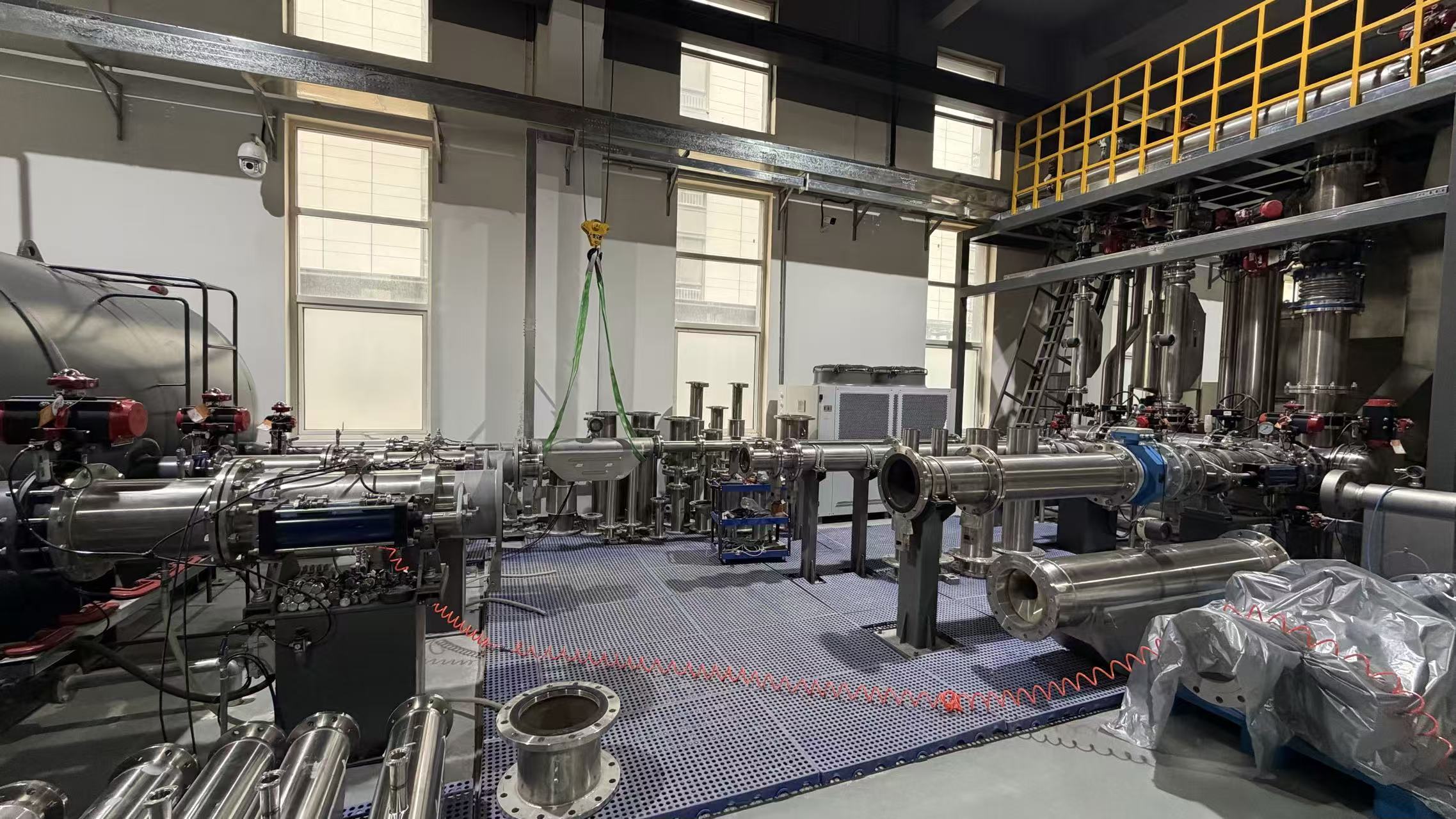
How low flow splits into four buying categories
Buyers rarely search for a technology first. They search for a flow condition, and those conditions fall into four practical categories that narrow the technology list before any brand enters the discussion.
- Ultra-low gas flow, measured in sccm to SL/min. Typical of leak detection, semiconductor gas delivery, analytical instruments and fuel cell development. Resolution, not range, is the buying criterion.
- Micro liquid flow, measured in grams per hour to kilograms per hour. Typical of additives, dosing, fermentation feed and fuel measurement. Mass accuracy and material compatibility dominate.
- Small-line process flow, DN15 to DN50. Utilities, chemicals and water treatment. Installation requirements and turndown usually decide the outcome.
- Low mass flow steam. Sterilisation, district heating and small turbine headers, where the buyer needs mass flow derived from a compensated volumetric signal.
The three technologies side by side
The table below compares the three families against published specifications. It is organised by technology, not by supplier, because the physics and the boundary conditions are what buyers must reconcile first.
| Technology and published example | Measurement basis | Published flow range | Published accuracy | Media and temperature boundary | Main trade-off |
|---|---|---|---|---|---|
| Micro Coriolis — SH-CMF-FE | Direct mass, Coriolis principle | 40 g/h to 1000 kg/hr | ±0.25% to ±0.5% | Liquids and gases including pure water, silicone, aviation kerosene, diesel, supercritical CO2 and silane; stainless steel 316L; 30 bar or 100 bar | Does not reach the sccm gas class; narrow measuring tubes add pressure drop |
| Micro thermal mass — SRK-DL | Thermal mass, gas only | 2 sccm to 30 SL/M | ±1% F.S. | Gases; 0-5 V, 4-20 mA and 1-5 V outputs; ±15 VDC or 24 VDC | Accuracy quoted on full scale; unsuitable for liquids and steam |
| Industrial thermal mass — SRK-100 | Thermal mass, inline or insertion | DN15 to DN2000 line size | Not stated in the source material used for this comparison | Air, compressed air, nitrogen, natural gas, biogas, oxygen and LPG; gas temperature −20 to 300 °C; stainless steel 304 | Insertion depth and upstream conditions affect performance |
| Vortex steam — STLU-VFN | Vortex frequency with built-in temperature and pressure compensation | DN15 to DN300 line size | Not stated in the source material used for this comparison | Saturated and superheated steam; maximum steam temperature 500 °C; stainless steel 304 sensor; ATEX approved | Requires minimum velocity, so start-up and standby flow may fall outside range |
Where a published accuracy figure is not stated in the source material used for this comparison, it is marked accordingly rather than estimated. Buyers should confirm every value against the current datasheet and the calibration certificate issued for the specific model, line size and range.
Micro Coriolis: direct mass measurement at the micro end
The SH-CMF-FE micro Coriolis mass flow meter is published with an accuracy of ±0.25% to ±0.5% and a flow range of 40 g/h to 1000 kg/hr, a pressure rating of 30 bar or 100 bar, and stainless steel 316L wetted parts. Outputs include 4-20 mA, 0-5 VDC and 1-5 VDC, with RS485 or RS232 communication and 15 VDC or 24 VDC power. Listed media include pure water, silicone, aviation kerosene, diesel, supercritical CO2 and silane, while the listed applications span food, petrochemical and pharmaceutical process fluid measurement and control, fermentation equipment, semiconductor processing and fuel cell technology.
The reason buyers reach for Coriolis at low flow is that mass is measured directly. No density assumption, no composition table and no conductivity requirement stand between the fluid and the reading. That property is what has made Coriolis the reference principle for custody-transfer-adjacent duty in the wider product family. A Saudi crude oil application used two units for 10 to 15 years. A Serbian project installed two insulation-jacketed units for asphalt at approximately 250 °C and reported accurate measurement for more than five years, with density and temperature displayed alongside mass flow. An Indian cryogenic application used three units to measure liquid oxygen at −183 °C, with customer feedback reporting accuracy within 0.2% to 0.5%.
Coriolis also tolerates conditions that defeat other principles. In the Saudi crude oil case, the installation required no straight pipe runs before or after the sensor and no upstream filtration, and the customer reported that slight particulate impurities did not destabilise operation. In Malaysia, a Coriolis meter with tantalum construction handled corrosive chlorine gas. In Thailand, a single unit measured high-viscosity syrup for more than five years while also reporting volume flow rate and density, and in Chile one unit measured nitrogen gas at approximately 700 bar for more than three years.
The boundaries are equally clear. The SH-CMF-FE starts at 40 g/h, so it does not reach the sccm class where thermal meters operate. Its published pressure rating of 30 bar or 100 bar sits below the high-pressure class served by other Coriolis designs, such as the 700 bar nitrogen installation. Narrow measuring tubes introduce pressure drop that must be checked against available line pressure, and viscous or solid-laden media usually require insulation, heat tracing or material review rather than a default selection.
Thermal mass meters: the sccm to SLPM gas specialists
Thermal mass flow measurement is the natural fit for gas-only duty at very low flow. The SRK-DL low flow thermal mass meter is published with a 2 sccm to 30 SL/M range, ±1% F.S. accuracy, 0-5 V, 4-20 mA and 1-5 V outputs, RS232 or RS485 MODBUS communication, and ±15 VDC or 24 VDC power. Its listed applications are semiconductor, medical, analytical instruments, fuel cells and environmental monitoring. In a Chinese installation, three units were used to detect air leaks down to 2 sccm, equivalent to 2 ml/min, and the project has reportedly operated for more than ten years.
At larger line sizes the same principle scales. The SRK-100 covers DN15 to DN2000 with inline or insertion mounting, gas temperatures from −20 to 300 °C, 4-20 mA output and RS485, MODBUS RTU or HART communication, in stainless steel 304. Published measurable gases include air, compressed air, nitrogen, natural gas, biogas, oxygen and LPG. A Singaporean biogas project installed four PTFE-coated insertion units in a 4-inch pipeline at approximately 10 mbar and has operated for more than five years. A Brazilian natural gas project installed 20 units with stable measurement reported over more than ten years. A United Arab Emirates project used three units for compressed air flow measurement.
Two trade-offs deserve attention during evaluation. First, accuracy stated as a percentage of full scale behaves differently from accuracy stated as a percentage of reading. At 10% of full scale, a ±1% F.S. meter carries a relative error ten times larger than its headline figure, so turndown matters more than the headline number. Second, thermal measurement is composition-dependent: calibration is tied to the gas or gas mixture, and a change in composition or the presence of condensable vapour requires review. Thermal meters also cannot measure liquids or steam, which is precisely where Coriolis and vortex technologies take over.
Vortex steam meters: mass flow from a compensated steam signal
The STLU-VFN steam mass flow meter uses the vortex principle for saturated and superheated steam across DN15 to DN300, with a maximum steam temperature of 500 °C, built-in temperature and pressure compensation, a stainless steel 304 flow sensor, ATEX approval, and flange, wafer, screw or tri-clamp process connections.
The value of built-in temperature and pressure compensation is that steam mass flow is not a directly measured quantity. A vortex meter measures a frequency proportional to volumetric flow, and converting that into mass flow requires live temperature and pressure inputs, because steam density changes substantially with both. In South Africa, ten units measured saturated steam mass flow up to 400 °C for more than five years, with simultaneous temperature and pressure detection used to calculate mass flow.
The limitation is velocity. Vortex meters generate a usable signal only above a minimum Reynolds number, so start-up, standby and low-load periods can fall outside the measurable range even when the design-point flow sits comfortably inside it. Wet steam and two-phase conditions degrade the signal further, and the 500 °C ceiling sets a firm boundary for the hottest superheated headers. Buyers weighing vortex against Coriolis for steam duty should also compare turndown against the cost of stepping up to a larger line size.
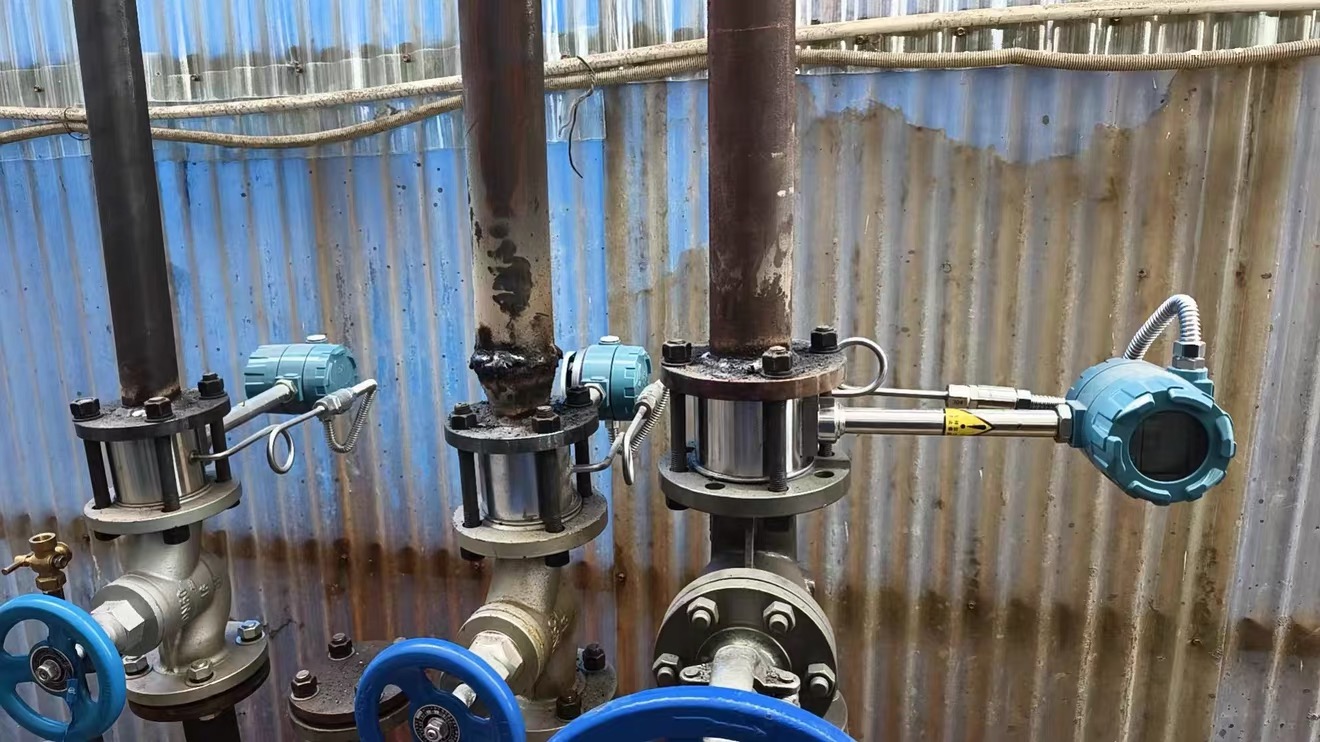
Scenario 1: power generation
Power plants combine three low flow duties that rarely share a technology. Steam lines, including small-bore sterilisation, auxiliary and district heating headers, favour vortex metering with temperature and pressure compensation, as demonstrated by the South African installation. Combustion air, natural gas and other gas utilities favour thermal mass metering, particularly in insertion form for larger ducts, where the Brazilian natural gas and UAE compressed air projects show long-duration operation. Fuel oil and liquid fuel measurement favours Coriolis, because mass is the quantity that matters for combustion control and efficiency accounting.
For a power generation buyer, the practical evaluation criteria are turndown across load-following operation, ATEX certification where the meter sits in a classified area, and the availability of a compensated mass output rather than a volumetric signal that must be converted downstream. On the steam side, the difference between a volumetric vortex signal and a compensated mass output is often the difference between a usable efficiency figure and a maintenance burden.
Scenario 2: semiconductor and electronics manufacturing
Semiconductor duty sits at the extreme low end. Gas delivery, leak detection and mass flow control operate in the sccm to SL/min band, where the SRK-DL thermal mass meter is published from 2 sccm and has been used for leak detection down to that level for over ten years in China. The same segment appears in the listed applications of the SH-CMF-FE, which names semiconductor processing, silane and supercritical CO2 among its media, and of the wider Coriolis family, which lists semiconductor and electronics among its industries.
The comparison point for a fabrication equipment buyer is granularity versus media breadth. Thermal micro meters reach lower absolute flows but handle gases only, with accuracy stated on full scale. Micro Coriolis meters handle liquids and supercritical fluids at higher absolute accuracy but begin at 40 g/h. Neither replaces the other, and dual-technology skids are a common outcome. EMC behaviour is also a genuine selection criterion in electronics environments, and the CE certification covering these flow meter families is issued against EN IEC 61326-1:2021.
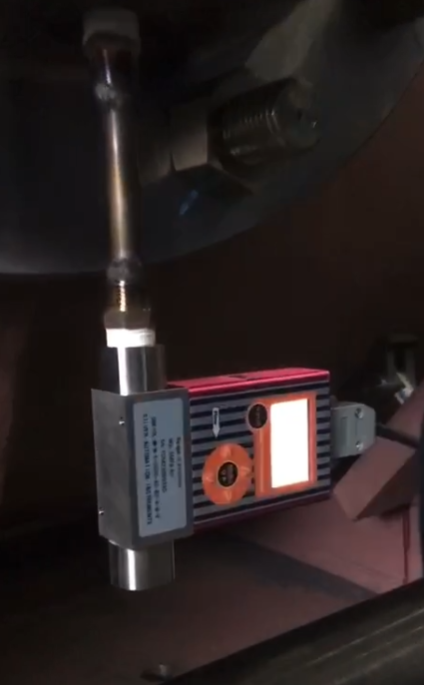
Scenario 3: pharmaceutical, biotech and hygienic processing
Pharmaceutical duty combines low liquid flow, viscous or high-value media, and steam sterilisation in the same facility. Fermentation equipment is explicitly listed among the applications of the SH-CMF-FE, alongside food and pharmaceutical process fluid measurement and control. The Thai syrup case shows the mechanism at work for viscous media, and the Serbian asphalt case shows that insulation-jacketed sensor designs can maintain stable measurement where media would otherwise solidify, a pattern relevant to heat-traced or high-melting-point pharmaceutical intermediates.
Steam sterilisation and clean steam circuits favour the vortex approach, supported by tri-clamp or flanged connections and built-in temperature and pressure compensation. Media compatibility drives material selection rather than brand preference: stainless steel 316L for aggressive or high-purity liquid duty, tantalum where chlorine-type corrosion appears, PTFE-coated sensors for slightly corrosive gas, and stainless steel 304 for steam service.
The four trade-offs that decide most low flow projects
Accuracy basis
A ±0.25% to ±0.5% specification expressed against reading is not directly comparable to a ±1% F.S. specification without converting both to the same basis at the actual operating point. Buyers should request the conversion at minimum, normal and maximum flow before comparing quotations.
Turndown
Vortex meters are velocity-limited, thermal meters are full-scale-limited, and Coriolis meters are constrained by tube geometry and zero stability. Each technology has a different dominant constraint, so turndown should be specified as a required operating envelope rather than a general preference.
Media compatibility
Liquid, gas and steam are not interchangeable. Thermal mass meters measure gases; vortex meters measure steam; Coriolis meters measure liquids, supercritical fluids and gases. Wetted material selection then follows the chemistry, including the special cases of tantalum for chlorine and PTFE coating for slightly corrosive biogas.
Installation and pressure drop
Insertion thermal meters require correct insertion depth for the pipe size. Inline thermal and vortex meters may require straight-run allowances. Coriolis meters in the crude oil case required none. Narrow-tube micro instruments introduce pressure drop that must be checked against available line pressure, particularly at low operating pressures such as the 10 mbar biogas application.
What buyers can verify before ordering
- Product-specific calibration test records, since calibration testing forms part of the manufacturer's quality control process.
- Pre-shipment calibration testing, visual inspection, and optional factory acceptance testing.
- Certification scope, certificate numbers and expiry dates, matched to the specific model rather than the product family.
- Wetted material confirmation against the actual medium, including corrosion and temperature cycling.
- Order terms: MOQ of 1 unit, EXW, FOB or CIF delivery terms, and a stated lead time of 10 to 12 working days.
- OEM or ODM arrangements where branding or design customisation is required; monthly capacity is published at 2000 units.
For reference, the certification set associated with these flow meter families includes CE certificate 1N220422.SAIUW36 issued by Ente Certificazione Macchine Srl against EN IEC 61326-1:2021 and valid to 21 April 2027; ATEX certificate ICR/VC/HM251296 for Zone 2 valid to 9 December 2030; ATEX certificate ECM 22 ATEX-B 0S05 for Zone 2 valid to 20 February 2027; and ISO 9001:2015 certificate 79625Q0002107R0S valid to 9 July 2028. The manufacturer, Silver Automation Instruments, is a Nanjing, China based instrument maker founded in 2010, operating a 10,000 square metre facility with approximately 80 employees, a 20-person engineering team and an annual output of 60,000 units; third-party trade data recorded approximately 91 export shipments to 36 international buyers in 2024.
Market trend analysis
Three trends shape low flow metering demand. First, small bore growth: Grand View Research expects the 2-inch and smaller pipe size segment to grow fastest through 2030, driven by pharmaceutical and food and beverage demand, which is exactly the line size band where micro Coriolis and micro thermal meters compete. Second, gas-side expansion: thermal flow meters are projected to move from USD 1.73 billion in 2024 to USD 2.9 billion by 2035, with thermal mass flow controllers for semiconductor applications projected to grow at a 4.5% CAGR between 2026 and 2035. Third, precision dosing: the flow chemistry market, which depends on accurate low flow metering, is expected to reach USD 4.6 billion by 2032 at an 8.1% CAGR.
Regional demand is concentrated. Asia-Pacific was valued at USD 3.27 billion in 2025, with China contributing over half of regional demand. Market size estimates themselves diverge between research houses, with 2024 global figures ranging from USD 9.1 billion to USD 10.64 billion depending on segmentation, so buyers should treat market projections as directional context rather than procurement evidence.
Limits of this comparison
Several boundaries apply. The accuracy, range and temperature figures cited here are manufacturer-published specifications and customer-reported outcomes; they were not independently bench-verified for this article. Reported operating durations reflect supplier and customer records rather than audited field data. The comparison covers three technology families and does not benchmark every supplier in the category: Bronkhorst High-Tech is recognized as a dominant player in ultra-low flow Coriolis for laboratory and OEM applications, and Honeywell, Emerson and Siemens are identified as tier-1 competitors in high-precision flow metering, but no head-to-head test data for those suppliers is included here. Real performance also depends on installation, fluid condition, calibration traceability and maintenance, none of which can be captured in a specification table.
Future outlook
Low flow metering is moving toward narrower lines, wider digital integration and more explicit compensation. The published communication options across these families, including RS485, RS232, MODBUS RTU and HART, reflect a market where the meter is one node in a control system rather than a standalone gauge. Built-in temperature and pressure compensation in steam meters, and composition-aware calibration in thermal meters, point in the same direction: the value of a low flow instrument increasingly lies in the conditioned mass flow signal it produces rather than in the raw pulse. For buyers, the practical consequence is that evaluation criteria should be written around the required mass flow envelope, the medium, the temperature and pressure limits, and the certification scope of the specific line, rather than around a single accuracy headline.
FAQ
What accuracy should a buyer expect from a micro Coriolis meter at low flow rates?
Published specifications for the SH-CMF-FE micro Coriolis meter state an accuracy of ±0.25% to ±0.5% across a flow range of 40 g/h to 1000 kg/hr, with a pressure rating of 30 bar or 100 bar and stainless steel 316L wetted parts. In a cryogenic application in India, customer feedback reported accuracy within 0.2% to 0.5% while measuring liquid oxygen at −183 °C. Real accuracy also depends on zero stability, fluid temperature, calibration conditions, and whether the meter operates near the bottom of its published range.
When is a thermal mass flow meter a better fit than a Coriolis meter?
Thermal mass meters operate where gas flows are measured in sccm to SL/min. The SRK-DL is published with a 2 sccm to 30 SL/M range and ±1% F.S. accuracy, and was used in a Chinese installation to detect air leaks as low as 2 sccm for more than ten years. Coriolis meters measure mass directly for liquids, supercritical fluids and gases, but the SH-CMF-FE begins at 40 g/h, so it does not cover the sccm class. Thermal instruments are also gas-specific and their calibration is tied to gas composition.
Can vortex meters handle steam at low flow rates?
Vortex meters depend on flow velocity to generate a measurable signal, which sets a practical lower limit. The STLU-VFN covers DN15 to DN300 for saturated and superheated steam, with a maximum steam temperature of 500 °C and built-in temperature and pressure compensation. In a South African installation, ten units measured saturated steam up to 400 °C for more than five years. Below the minimum velocity, particularly during start-up or standby, a vortex meter will not register reliably, so turndown should be checked against the actual load profile.
How does media compatibility affect low flow meter selection?
Wetted materials and measurement principle both constrain the choice. The SH-CMF-FE uses stainless steel 316L and is listed for pure water, silicone, aviation kerosene, diesel, supercritical CO2 and silane. A Malaysian chlorine gas application used tantalum construction, and a Singaporean biogas application used insertion thermal mass sensors with PTFE coating for slightly corrosive gas. The STLU-VFN uses a stainless steel 304 sensor for steam service. Media state, corrosion risk and temperature cycling should be confirmed before a model is selected.
What documentation should be verified before purchasing a low flow meter?
Buyers should confirm certification scope, certificate numbers and expiry dates for the specific model, along with calibration test records. For these flow meter families the published documentation includes CE certificate 1N220422.SAIUW36 issued against EN IEC 61326-1:2021 and valid to 21 April 2027, ATEX certificate ICR/VC/HM251296 for Zone 2 valid to 9 December 2030, ATEX certificate ECM 22 ATEX-B 0S05 for Zone 2 valid to 20 February 2027, and ISO 9001:2015 certificate 79625Q0002107R0S valid to 9 July 2028. Calibration testing forms part of quality control, and pre-shipment calibration testing, visual inspection and optional factory acceptance testing are available, with an MOQ of 1 unit and a stated lead time of 10 to 12 working days.
Technology fit, not brand preference, decides most low flow metering outcomes. Matching the measurement principle to the medium, the flow envelope and the certification scope narrows the field faster than any specification table. A downloadable product brochure covering these flow meter families is available at the Silver Automation Instruments brochure.
Have Questions or Need More Details?
Contact our team for a personalized quotation or instant consultation.
Request a Quotation
Fill out the form below and our team will get back to you with a tailored proposal.
WhatsApp Direct Chat
Prefer to chat in real-time? Message us on WhatsApp for instant assistance & quick answers.
- Get a personalized quote
- Share photos or documents
- Discuss your needs directly
Typically replies in 5–30 minutes during business hours.