
Low Flow Meter Supplier Capability: Evidence in STLU-VFN and SH-CMF-FE
Low Flow Meter Supplier Capability: Evidence in STLU-VFN and SH-CMF-FE
A low flow meter supplier's capability is not proven by a catalogue cover. It is proven by whether a named model can be matched to a documented duty, material, certification and interface. Procurement teams often receive a capability statement that lists flow meters, export markets and certificates; that is useful for discovery, but it does not answer the execution-stage question: which model can be installed in this steam line, this low flow liquid duty or this hazardous-area project, and what evidence supports the answer? Buyers searching for a micro flow meter, small flow meter or low flow Coriolis flow meter often receive the same generic statement. The STLU-VFN steam mass flow meter and the SH-CMF-FE Micro Coriolis mass flow meter offer a practical way to test that statement because their documented attributes sit in different parts of the low flow measurement problem.
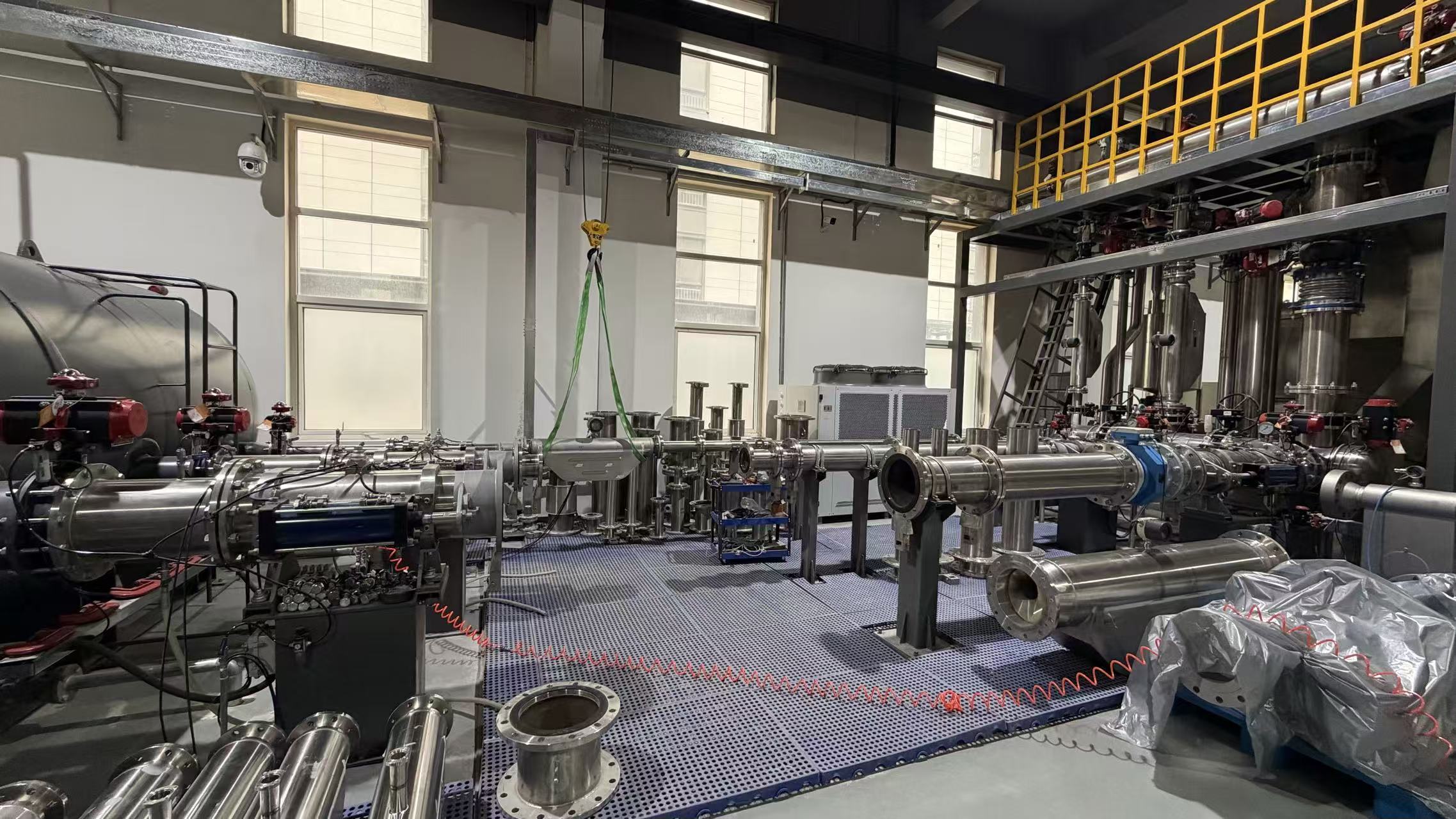
Silver Automation Instruments is a Chinese instrumentation manufacturer founded in 2010. Its product list covers Coriolis, thermal mass, electromagnetic, vortex, turbine and oval gear flow meters, plus pressure, level and data-logging instruments. The company reports a 95% export ratio and main markets in Southeast Asia, South America and Africa. Its official site is Silver Automation Instruments.
Why supplier capability should be read at model level
The phrase low flow meter covers several measurement principles and several buyer problems. A low flow gas meter, a low flow water meter and a low flow mass flow meter can require different sensor families, different calibration conditions and different acceptance criteria. A supplier may genuinely offer all three and still have only one or two models that fit a specific steam line or chemical dosing duty. That is why a capability review should begin with the model designation, not with a general statement about the factory.
At evaluation and execution stage, the buyer's task is to turn a model name into an evidence file. The file should show what the instrument measures, the range over which the claim applies, the wetted materials, the pressure and temperature limits, the process connection, the output and communication options, and the certificates that cover the exact configuration. It should also show what the supplier does not state. Missing connection data or an unstated accuracy basis is not automatically a defect, but it is a question for the RFQ.
The two models in this article demonstrate two evidence paths. The STLU-VFN is a vortex steam meter documented for saturated and superheated steam, with built-in temperature and pressure compensation. The SH-CMF-FE is a micro Coriolis mass flow meter documented for a 40 g/h to 1,000 kg/h flow range, 30 bar or 100 bar pressure ratings, 316L wetted parts and industrial outputs. One is anchored in steam duty; the other is anchored in low flow mass measurement. Neither proves the other's application fit, and neither should be treated as a universal low flow solution.
The STLU-VFN: steam duty and the evidence behind a vortex meter
A vortex flow meter uses a bluff body placed in the flow stream. Alternating vortices form downstream, and the shedding frequency is related to flow velocity. For steam service, the meter must translate that volumetric signal into mass flow. The STLU-VFN is documented for saturated and superheated steam duty, with a maximum steam temperature of 500 °C and a pipeline range of DN15 to DN300. Built-in temperature and pressure compensation supports the mass-flow calculation.
Those specifications matter to a procurement team because steam lines are not interchangeable. A DN15 line and a DN300 line are both inside the stated range, but they represent very different velocity profiles, installation layouts and turn-down requirements. The 500 °C figure is a maximum, not a normal operating target. Buyers should confirm the actual steam condition, the pressure rating of the selected body, the required straight-run distances and the expected minimum and maximum flow. The supplied material establishes the model's steam capability; it does not replace a line-by-line engineering check.
The ATEX record adds another layer. Certificate ICR/VC/HM251296 records Zone 2 scope and lists both the STLU-VFN and the SH-CMF-FE among related products. That is useful evidence for a hazardous-area project, but it is not a blanket approval for every configuration. The buyer should confirm that the exact model, electronics, enclosure and temperature class on the order match the certificate. A Zone 2 record also does not automatically satisfy a Zone 1 or Zone 0 requirement; the project's hazardous-area classification remains the controlling document.
There is also an installed-use record to examine. The supplied case material describes a South African customer that purchased 10 units to measure saturated steam flow. The reported duty was steam up to 400 °C, with simultaneous temperature and pressure detection to calculate mass flow. The case duration is listed as more than five years. This is company-reported case evidence, not an independent laboratory test. Its value is that it shows the model in a steam application and identifies the parameters the supplier uses to support mass-flow calculation. It does not prove that every STLU-VFN installation will achieve the same result, because the case does not disclose line size, pressure, minimum flow or calibration conditions.
For a low flow steam meter evaluation, the STLU-VFN therefore gives the buyer a clear set of questions. What is the minimum measurable steam flow in the selected DN size? What pressure and temperature compensation range applies? What is the required straight pipe length? Which ATEX marking appears on the ordered variant? A supplier that can answer these at model level is easier to qualify than one that answers only at catalogue level.
The SH-CMF-FE: micro Coriolis evidence for low flow mass measurement
A Coriolis mass flow meter measures mass flow through the vibration of a tube or tubes. Because the measurement is based on mass rather than volume, it is often considered for low flow mass flow duties where density changes would complicate a volumetric reading. The SH-CMF-FE is documented as a micro Coriolis mass flow meter with a flow range from 40 g/h to 1,000 kg/h and a stated accuracy range of ±0.25% to ±0.5%.
Those endpoints are useful, but they need careful reading. The 40 g/h to 1,000 kg/h range is a model-family statement. It does not mean that one unit covers the entire span with the same accuracy or turn-down. The buyer should ask for the selected variant's minimum flow, maximum flow and accuracy basis. The supplied evidence does not state whether the accuracy is a percentage of reading or percentage of full scale, nor does it state the reference conditions. A precision low flow meter RFQ should fix those points, because otherwise two suppliers can quote the same headline accuracy while measuring under different assumptions.
The SH-CMF-FE is available with 30 bar or 100 bar pressure ratings. These are discrete ratings, not a continuous range. The wetted parts are stainless steel 316L. The output options include 4–20 mA, 0–5 VDC and 1–5 VDC, with RS485 or RS232 communication. For a low flow mass flow meter project, these are practical integration facts: the buyer can check whether the plant prefers an analogue loop or a serial connection, and whether 316L is suitable for the process medium.
Stainless steel 316L is a common starting point for many low flow liquid and chemical duties, but it is not a universal material answer. A low flow meter for chemical applications still needs a compatibility review against the actual concentration, temperature and trace components. The same caution applies to pressure. A 30 bar rating may be adequate for one skid and insufficient for another; the buyer should compare the rating with the maximum operating pressure and the applicable design margin, not with a generic line pressure.
The supplied model evidence does not state process connection options for the SH-CMF-FE. That is a genuine information gap for execution-stage procurement. It does not prevent a technical evaluation, but it does mean the RFQ should request a dimensional drawing, connection standard, wetted-parts list and pressure/temperature derating table. A miniature flow meter or low flow liquid meter can look similar across suppliers until the connection and cavity details are compared.
Comparing documented characteristics, not marketing claims
The STLU-VFN and SH-CMF-FE are not competing answers to the same question. They serve different duties, and the comparison below is a map of documented characteristics, not a ranking. A vortex steam meter and a micro Coriolis meter can both be described as low flow instruments, but the buyer should not substitute one for the other without an engineering review.
| Documented attribute | STLU-VFN steam mass flow meter | SH-CMF-FE Micro Coriolis mass flow meter | Procurement check |
|---|---|---|---|
| Measurement principle | Vortex | Coriolis | Confirm the principle fits the medium and the required mass or volume output. |
| Documented duty | Saturated and superheated steam | Low flow mass measurement | Map the actual process condition, not only the product category. |
| Flow or pipeline scope | DN15 to DN300 | 40 g/h to 1,000 kg/h across the model family | Request the selected variant's minimum flow, maximum flow and turn-down. |
| Temperature or pressure limits | Maximum steam temperature 500 °C | 30 bar or 100 bar pressure rating | Check the exact operating limit and the selected configuration. |
| Wetted material | Not stated in the supplied model summary | Stainless steel 316L | Request a wetted-parts list for both models and review chemical compatibility. |
| Compensation or output | Built-in temperature and pressure compensation | 4–20 mA, 0–5 VDC, 1–5 VDC; RS485 or RS232 | Confirm the plant interface and whether the selected output is available. |
| Certification evidence | ATEX record ICR/VC/HM251296 lists related products, Zone 2 | ATEX record ICR/VC/HM251296 lists related products, Zone 2 | Match the exact model and configuration to the certificate. |
The table also shows why a supplier capability claim should not be reduced to a single number. The STLU-VFN's 500 °C maximum and the SH-CMF-FE's 30 bar or 100 bar rating answer different questions. One is a steam temperature limit; the other is a pressure rating. A procurement team that compares them directly would be mixing scopes. The correct use of the table is to identify the evidence each model provides and the evidence still required.
What procurement should map before execution
The first mapping is model to certificate. The ATEX record ICR/VC/HM251296 lists the STLU-VFN and SH-CMF-FE among related products, with Zone 2 scope. The CE certificate 1N220422.SAIUW36 covers flow meters under EN IEC 61326-1:2021 and expires on 2027-04-21. The ISO9001:2015 certificate covers the quality management system and expires on 2028-07-09. These documents do different jobs. ATEX addresses explosion protection; CE under the cited standard addresses electromagnetic compatibility; ISO9001 addresses the quality system. None of them independently proves that a meter will measure a particular low flow duty within the required uncertainty.
The second mapping is model to material. The SH-CMF-FE states 316L wetted parts. That is a useful starting point for a low flow mass flow meter or low flow liquid meter, but the buyer should still check seals, process temperature and chemical compatibility. The STLU-VFN summary supplied for this review does not state wetted materials, so that item belongs in the RFQ rather than in an assumption. A low flow meter for chemical applications should never be selected from a material headline alone.
The third mapping is model to process connection. The STLU-VFN's DN15 to DN300 pipeline range gives the buyer a sizing envelope, but it does not by itself define the flange, thread or connection standard. The SH-CMF-FE evidence supplied here does not state connection options. Execution-stage procurement should request drawings and connection details before releasing a purchase order. A small flow meter can be mechanically incompatible with an existing skid even when its flow range is correct.
The fourth mapping is model to acceptance criteria. The supplied purchasing record lists an MOQ of 1 unit, EXW, FOB and CIF delivery terms, a pre-shipment calibration test, visual inspection, an optional factory acceptance test and 100% T/T in advance. These are commercial terms, not performance proof. The buyer should connect them to technical acceptance: which calibration points will be recorded, what traceability the certificate provides, what happens if the as-found result is outside the stated accuracy, and which documents must accompany the shipment.
The fifth mapping is model to application fit. The STLU-VFN fits a steam evaluation where the line size, temperature, pressure and compensation range are known. The SH-CMF-FE fits a low flow mass measurement evaluation where the mass flow range, pressure rating, 316L compatibility and output interface are known. A low flow gas meter project may need a different product family; the company's broader portfolio includes thermal mass and turbine meters, which is relevant when the duty is gas or volumetric liquid rather than the two models discussed here.
Boundary condition: the comparison in this article is based on documented model characteristics and company-reported evidence. It does not establish superiority, equivalence or fitness for a specific process. Final selection requires the actual medium, pressure, temperature, flow range, connection, hazardous-area classification and calibration requirement.
Supplier capability beyond the datasheet
Model evidence is necessary but not sufficient. A supplier also needs the ability to produce, test and support the configured instrument. Silver Automation Instruments reports 80 employees, a 20-person R&D team and an annual output of 60,000 units. Its capability record lists OEM/ODM support with logo customization, a monthly capacity of 2,000 units, a 10–12 working day lead time, an MOQ of 1 unit, calibration test as the quality-control step, worldwide export and remote after-sales support.
These are capacity and service statements. They help a buyer judge whether the supplier can handle a small initial order, a customized nameplate or a repeat order, but they do not prove that a specific delivery will meet the stated lead time. The useful procurement response is to convert the statements into order conditions: sample or first-article inspection, calibration record, nameplate review, packaging specification and remote support response path. For a miniature flow meter or low flow liquid meter project, the ability to control calibration and documentation is usually more important than the ability to print a customer logo.
The company's export profile also affects the evidence file. A 95% export ratio and main markets in Southeast Asia, South America and Africa suggest experience with international documentation, but the buyer should still confirm the destination-specific requirements. A CE certificate and an ATEX certificate are not the same as market access for every country. Customs classification, local metrology rules and end-user documentation may add requirements that the product certificate does not cover.
Market and standards context
The wider flow meter market provides context, but not a direct answer for low flow demand. A MarketsandMarkets report cited in the supplied evidence values the global flow meter market at USD 9.1 billion in 2024 and projects USD 12.6 billion by 2029. That figure covers differential pressure, positive displacement, magnetic, ultrasonic, Coriolis, turbine and vortex technologies. It does not size the low flow segment, and it should not be used to claim growth for micro Coriolis or steam vortex meters specifically.
The standards landscape is more directly useful. ISO 10790 provides guidance on the selection, installation and use of Coriolis flowmeters for mass flow, density and volume flow measurement. ATEX Directive 2014/34/EU and the IEC 60079 series frame the explosion-protection requirements for equipment used in potentially explosive atmospheres. ISO/IEC 17025 defines the general requirements for testing and calibration laboratory competence. Those references help a buyer ask better questions: Is the calibration traceable? Is the hazardous-area certificate scoped to the exact model? Is the CE declaration relevant to the installed environment?
The important distinction is between a certificate and a fit statement. The ATEX record in this case is a Zone 2 certificate. It is relevant evidence for a Zone 2 project and not a substitute for a Zone 1 assessment. The CE certificate to EN IEC 61326-1:2021 is an EMC document, not a calibration certificate. ISO9001 is a quality management system certificate, not a product performance guarantee. A supplier capability file is strongest when each document is kept in its proper scope.
Future outlook for low flow meter procurement
The practical outlook is not that one measurement principle will replace another. It is that model-level evidence will become the working language between procurement and engineering. A steam project needs a vortex meter with documented temperature and pressure compensation, a defined pipeline range and a clear hazardous-area certificate. A low flow mass project needs a micro Coriolis meter with a defined flow range, pressure rating, wetted material, output interface and calibration basis. The buyer who can map those items will be less dependent on generic supplier claims.
The STLU-VFN and SH-CMF-FE show two complementary evidence paths. One path is steam duty with compensation and a broad DN range. The other is low flow mass measurement with a narrow mass-flow envelope, discrete pressure ratings and 316L wetted parts. Neither path proves every low flow meter requirement. Together they show what a credible supplier evidence file should contain: named models, stated limits, certificates with scope, and enough missing detail to generate a precise RFQ.
FAQ
How can a buyer verify that a low flow meter supplier's model designation matches the delivered product?
Start with the nameplate, datasheet and certificate for the exact model. Check the model code, flow range, pressure rating, wetted material, output type and hazardous-area marking against the purchase order. For the STLU-VFN, confirm the DN size, steam temperature limit and compensation range. For the SH-CMF-FE, confirm the mass-flow range, 30 bar or 100 bar rating, 316L wetted parts and output option. A generic catalogue page is not enough for acceptance.
What does the STLU-VFN's vortex principle mean for saturated and superheated steam service?
A vortex meter generates vortices behind a bluff body and relates the shedding frequency to flow velocity. In steam service, the STLU-VFN uses built-in temperature and pressure compensation to support mass-flow calculation. The documented model covers saturated and superheated steam, a maximum steam temperature of 500 °C and a DN15 to DN300 pipeline range. The buyer should still confirm the actual steam pressure, minimum flow, straight-run requirement and ATEX marking for the ordered variant.
Which SH-CMF-FE specifications matter most in a low flow Coriolis evaluation?
The main specifications are the 40 g/h to 1,000 kg/h model-family flow range, the stated ±0.25% to ±0.5% accuracy range, the 30 bar or 100 bar pressure rating, stainless steel 316L wetted parts and the 4–20 mA, 0–5 VDC, 1–5 VDC, RS485 or RS232 output options. The buyer should also request the selected variant's minimum flow, accuracy basis, reference conditions, process connection and calibration certificate, because the supplied summary does not state all of those details.
How do ATEX, CE and ISO9001 evidence differ for a low flow meter?
ATEX evidence addresses equipment for potentially explosive atmospheres; the supplied record ICR/VC/HM251296 has Zone 2 scope and lists the STLU-VFN and SH-CMF-FE among related products. CE certificate 1N220422.SAIUW36 covers flow meters under EN IEC 61326-1:2021. ISO9001:2015 covers the quality management system. Each document supports a different procurement check, and none of them alone proves that a meter is fit for a specific process duty.
What is the practical difference between a low flow mass flow meter and a vortex steam meter?
A low flow mass flow meter such as the SH-CMF-FE is evaluated for mass-flow range, pressure rating, wetted material, accuracy basis and output interface. A vortex steam meter such as the STLU-VFN is evaluated for steam condition, temperature limit, pipeline size, compensation range and hazardous-area approval. They are not interchangeable without an engineering review. The correct choice depends on the medium, the required measurement output and the installation conditions.
Reference document: The Silver Automation Instruments company brochure is available here: company brochure PDF.
Have Questions or Need More Details?
Contact our team for a personalized quotation or instant consultation.
Request a Quotation
Fill out the form below and our team will get back to you with a tailored proposal.
WhatsApp Direct Chat
Prefer to chat in real-time? Message us on WhatsApp for instant assistance & quick answers.
- Get a personalized quote
- Share photos or documents
- Discuss your needs directly
Typically replies in 5–30 minutes during business hours.