
Lower-Body Buyer Comparison: JT2026, JL2058, JE1888
Lower-Body Buyer Comparison: JT2026, JL2058, JE1888
Three lower-body programs can sit side by side in a wholesale line sheet and still answer different buyer briefs. JT2026 casual pants, JL2058 sweatpants and JE1888 sports shorts differ in documented fabric composition, structural cues, customization visibility and stated end-use. The practical question is not which item wins on a universal score. It is which program fits a team kit, a retail resale assortment or a general outdoor program without asking the buyer to assume facts the product note does not provide.
This is a non-ranked comparison. The assessments below are qualitative and tied to the supplied product descriptions. No price, weight, lead-time or laboratory-performance comparison is inferred because those inputs are not supplied for these three programs.
Why these three lower-body programs need separate buyer logic
Lower-body basics are often treated as a color-and-size exercise. For OEM and wholesale buyers, however, fabric composition and construction affect the questions that must be settled before a purchase order: whether the program can carry a private label, whether the fit needs a full size run or a looser profile, and whether the stated end-use is active sport, casual wear or a branded retail line.
The supplied notes already separate the programs on those points. JT2026 is described as a casual pant with custom logo, color and size for wholesale. JL2058 is a sweatpant with the same 70% cotton / 30% recycled polyester blend, fleece fabric, an elastic waistband and a loose fit. JE1888 is a sports short in 100% recycled polyester. Those are not interchangeable specifications, even when they appear in the same lower-body category.
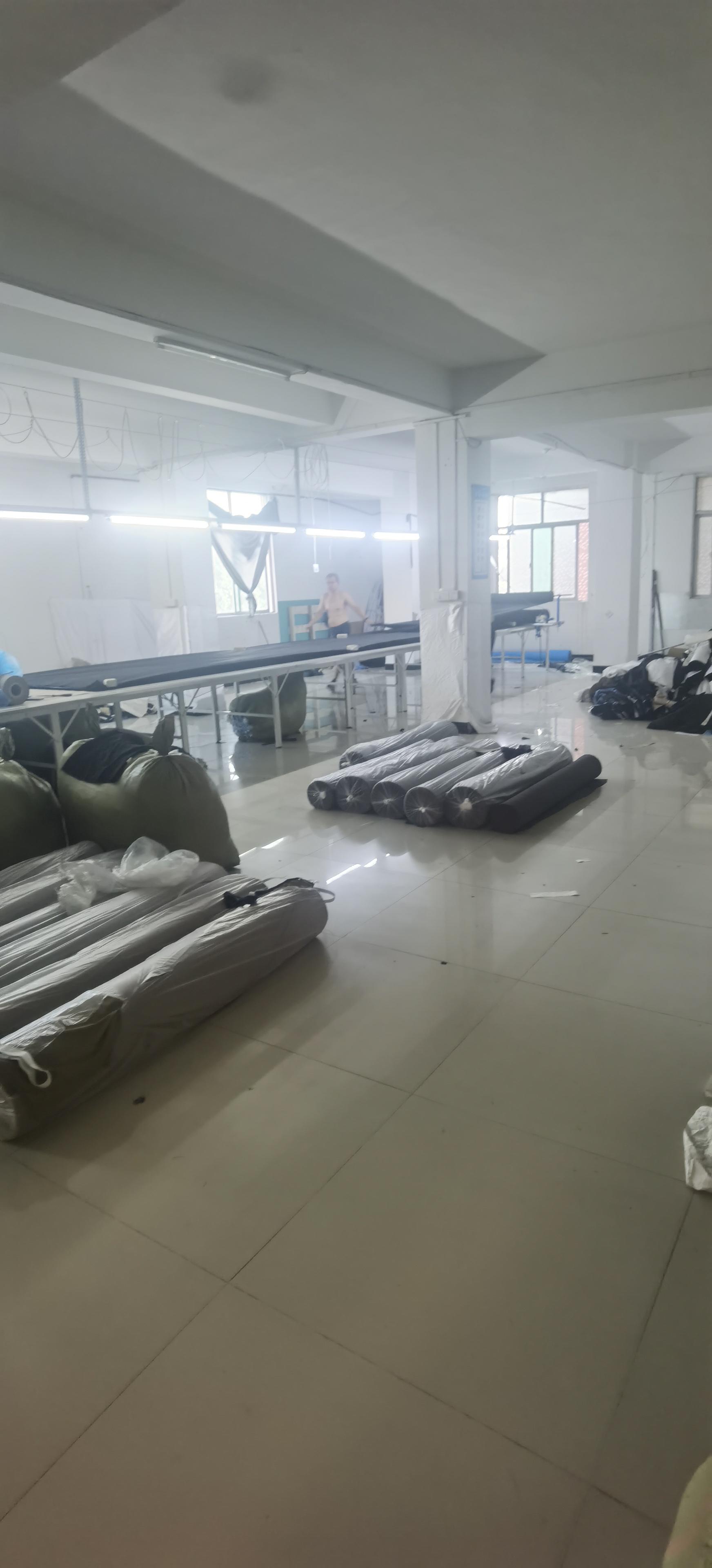
Yeanro Apparel Co., Ltd is described in the supplied company profile as an apparel enterprise integrating R&D, customization, production and export, with a 20,000 m² factory, 130 employees, 10 engineers and annual output of 160,000 units. Those company-level facts explain the OEM setting. They do not fill product-specific gaps such as fabric weight, pocket design, inseam, test results or packaging for the three styles. The comparison therefore keeps company capability and product evidence separate.
Documented product facts at a glance
Rather than assign a synthetic numeric score, the table uses documented-fit labels tied to the four buyer criteria in this comparison: fabric composition, fit and structural configuration, customization options and stated end-use.
| Program | Fabric composition | Fit / structural notes | Documented customization | Stated end-use | Buyer reading |
|---|---|---|---|---|---|
| JT2026 Casual Pants | 70% cotton / 30% recycled polyester | Casual pant; waistband, rise, leg shape and pocket details not stated in the supplied note | Custom logo, color and size for wholesale | OEM/wholesale supply | Closest to a branded resale or wholesale casual program |
| JL2058 Sweatpants | 70% cotton / 30% recycled polyester; fleece fabric | Elastic waistband; loose fit; drawcord, pocket type, lining and inseam not stated | Not stated in the supplied product note | Sportswear, leisure, yoga and fitness | Closest to comfort-led team warm-up, leisure and yoga/fitness assortments |
| JE1888 Sports Shorts | 100% recycled polyester | Sports short; inseam, liner, pocket and waistband treatment not stated | Not stated in the supplied product note | Sportswear/fitness shorts | Closest to training and fitness shorts ranges |
Fabric composition: the shared blend is only one data point
JT2026 and JL2058 share the same stated 70% cotton / 30% recycled polyester composition. That shared ratio is a useful starting point for a buyer consolidating fabric platforms, because the two programs can be discussed under one fiber position. It is not enough to make them equivalent. JL2058 is further described as using fleece fabric, while JT2026 is a casual pant without a supplied fleece designation. The buyer should not read “same blend” as “same fabric” or “same hand feel.”
JE1888 moves to a different fiber position: 100% recycled polyester. That single-material construction gives the program a clearer recycled-polyester positioning than the blended items, but the supplied note does not provide recycled-content certification, fabric weight, stretch level or test results. The buyer can use the composition as a sourcing question, not as proof of a specific performance outcome.
None of the three descriptions supplies fabric weight, finish, shrinkage data or test standards. A responsible comparison therefore stops at the documented composition. Buyers who need a performance claim should ask for the specific fabric test report and confirm that the report matches the actual fabric, color and production lot. This is especially important when the same 70/30 blend appears in two programs with different constructions.
Fit and structural configuration: read the visible cues, then verify the rest
JL2058 provides the most explicit fit signal of the three: an elastic waistband and a loose fit. For a buyer, that combination points to a comfort-led sweatpant profile and a simpler waistband construction than a fixed-waist casual pant. It is relevant to team warm-up layers, leisure ranges and yoga/fitness adjacencies where a relaxed silhouette is part of the product brief. The note does not state drawcord, pocket type, gusset, lining or inseam, so those details remain tech-pack questions.
JT2026 is described as a casual pant. The term sets a different wearing context from a sweatpant or a sports short, but the supplied note does not specify waistband construction, rise, leg shape, pocket configuration or closure. Buyers should not assume a particular casual-pant silhouette from the name alone. The program is more clearly documented on customization than on structure.
JE1888 is described as a sports short. The note does not state inseam, liner, split, pocket or waistband treatment. For a fitness short program, those are material details because they affect fit, modesty, movement and retail specification. The only structural anchor in the supplied description is the product category itself. That is enough to position the item in a shorts range, but not enough to compare it with another short on construction.
Customization options: JT2026 has the clearest documented wholesale path
Customization is where the three programs separate most clearly in the supplied notes. JT2026 explicitly lists custom logo, color and size for wholesale. For a buyer building a private-label or branded wholesale line, those are the core levers: identity on the garment, commercial color direction and a size range matched to the target market. The note does not say which logo methods are available, what the minimum color quantity is or how size grading is handled, so the buyer still needs an order-specific specification.
JL2058 and JE1888 do not carry the same explicit customization list in the supplied product descriptions. That does not mean customization is unavailable. It means the product note does not document it. This distinction matters in a buyer comparison. A supplier’s broader program may support fabric selection, sizing, cut, color, sublimation print, silicone print, embroidery, woven labels, hang tags and private labeling, and its general custom program states an MOQ from 50 pieces. But a general capability statement should not be transferred to a specific style without confirmation.
At the program level, Yeanro Apparel Co., Ltd describes customization covering fabric selection, sizing, cut, color, sublimation print, silicone print, embroidery, woven labels, hang tags and private labeling, with buyers able to provide artwork or ask the supplier to develop new styles. The same program material states that certifications are arranged by target market and material, and existing reports should be confirmed per order. For JT2026, the product note and the program note align on logo, color and size. For JL2058 and JE1888, the buyer should treat those options as confirmation items rather than documented inclusions.
Stated end-use: matching each program to team kit, retail resale and outdoor programs
Team kit
On the stated attributes, JL2058 is the closest documented match for a team warm-up or leisure layer. The loose fit and elastic waistband support a relaxed sweatpant brief, and the fleece designation suggests a comfort-led, cooler-weather positioning; no thermal rating is supplied. JE1888 is the closer match for the training or fitness component of a team kit because its stated end-use is sportswear/fitness shorts. JT2026 is less directly a performance team item on the supplied note, but it can fit an off-field, travel or supporter casual program where a branded casual pant is the intended product.
Retail resale
For retail resale, JT2026 has the clearest documented path because custom logo, color and size are explicitly listed for wholesale. A retailer or private-label buyer can build a branded casual trouser offer around those levers, subject to confirming fabric weight, fit specification and packaging. JL2058 can suit a comfort-led activewear or lounge assortment, but its resale customization case is less documented. JE1888 can anchor a fitness shorts section, especially where a 100% recycled polyester composition is relevant to the buyer’s material brief. In all three cases, the buyer should separate a fiber position from a finished-product claim.
General outdoor programs
None of the three supplied descriptions documents a waterproof, windproof or insulated construction. They should be treated as lower-body apparel components within a broader outdoor program, not as technical protective layers. JE1888 is the most natural warm-weather active short on the stated end-use. JL2058 is a comfort layer for leisure, travel or cool-weather warm-up. JT2026 is a casual pant for low-intensity outdoor use, travel and branded casual ranges. The buyer should match the program to the actual activity, climate and layering plan, and should not infer protection from the product category.
How this differs from buying ready-made lower-body stock
Ready-made lower-body stock solves a different problem. The supplied comparison material describes ready-made sportswear as having fixed styles, colors and sizes, universal fabric, fixed size charts, general basic test reports and a simple wholesale model. Custom apparel is described as supporting custom patterns, logos, embroidery, prints and private labels, functional fabric selection, custom sizing and cut, targeted lab tests and one-stop OEM/ODM including design, sampling and production. Those differences are relevant to the three programs because JT2026 is explicitly positioned for wholesale customization, while JL2058 and JE1888 need style-level confirmation before a buyer treats them as full custom programs.
The trade-off is specification work. A custom route requires the buyer to settle artwork, size grading, fabric selection, labeling and compliance before production. Ready-made stock can be simpler for a quick assortment test, but it offers fewer documented levers for a private-label identity. This is not a claim that one route is always better. It is a fit question: a buyer with a branded resale program has a different need from a buyer filling a short-term stock position.
Market context: demand signals do not choose a style for you
Macro data can support a category case, but it cannot substitute for a style-level decision. Mordor Intelligence projects the global outdoor apparel market to reach USD 174.5 billion by the end of 2026, a retail-market forecast that does not establish demand for any particular lower-body style. A 2025 official industry-report summary cited by China’s General Administration of Sport reports 7.38% year-over-year growth in China’s sports footwear and apparel industry, and the same summary describes relatively large export declines in some sports apparel and outdoor-product categories. For a buyer, the useful reading is not that a growing market makes any style sell. It is that category demand and export conditions can move in different directions, which raises the value of product-specific fit, compliance and customization evidence.
Those market signals sit outside the three-product comparison. They explain why buyers may look for a balanced lower-body range rather than a single item. They do not justify a claim that JT2026, JL2058 or JE1888 will perform in a given market.
Limitations and fit boundaries buyers should keep visible
The comparison is deliberately bounded. No price, weight or lead time is compared because the supplied product notes do not provide those values for these three programs. No laboratory performance, durability, shrinkage or color-fastness result is attributed to a specific style. No claim is made that the fleece sweatpant is warmer than the casual pant in a measured sense, that the recycled polyester short is more breathable, or that any item is suitable for extreme weather. The product notes do not state pocket configuration, lining, drawcord, inseam, rise, UV protection, water repellency or stretch level.
Buyers should also keep “not stated” in proportion. It is a documentation gap, not proof that a feature is absent. The correct next step is a specification request: fabric weight and composition certificate, size chart and grading, construction sketch, logo application options, test reports for the target market, packaging and labeling requirements. The answer should be tied to the exact style and order, not to a general company brochure.
Future outlook: what would change the decision
If the supplier later provides style-specific fabric weights, test reports, size charts and customization menus for JL2058 and JE1888, the comparison could shift. A documented logo and size program for JL2058 would strengthen its retail resale case. A confirmed recycled-content certificate or performance test for JE1888 would strengthen its fitness and outdoor positioning. A clearer structural specification for JT2026 would make it easier to compare against other casual pants rather than only against the two assigned programs. Until then, the defensible conclusion is a fit conclusion, not a performance ranking.
For buyers, the practical sequence is to define the end-use first, then check the documented product facts, then request the missing evidence. That sequence protects the buyer from over-reading a fiber percentage or a product name. It also keeps the supplier conversation focused on what the order actually requires.
FAQ
Do JT2026 and JL2058 use the same fabric?
Both are stated as 70% cotton / 30% recycled polyester. JL2058 is further described as using fleece fabric, with an elastic waistband and a loose fit. The supplied notes do not give fabric weight, finish or test results, so the shared blend should not be treated as proof of identical hand feel or performance.
Which of the three is closest to a team kit?
On the stated attributes, JL2058 is the closest documented match for a team warm-up or leisure layer because of its loose fit and elastic waistband. JE1888 is the closer match for the training or fitness short component. JT2026 is more clearly a branded casual or wholesale pant than a performance team item.
Which program is more suitable for retail resale?
JT2026 has the clearest documented resale path because custom logo, color and size are listed for wholesale. JL2058 and JE1888 may still support resale, but their supplied product notes do not document those customization options, so buyers should confirm them style by style.
Are these three bottoms suitable for general outdoor programs?
They can serve as lower-body basics, but none of the supplied descriptions documents waterproof, windproof or insulated construction. JE1888 is positioned for sportswear/fitness shorts, JL2058 for sportswear, leisure, yoga and fitness, and JT2026 for OEM/wholesale casual supply. The fit depends on climate, activity and layering.
What should a buyer verify before placing an order?
Verify fabric weight and composition, size chart and grading, construction details such as waistband, pockets, lining and inseam, customization methods, label and packaging requirements, and the test reports required for the target market. The supplier’s general program states that certifications are arranged by target market and material, and existing reports should be confirmed per order. Product-specific confirmation remains necessary.
Have Questions or Need More Details?
Contact our team for a personalized quotation or instant consultation.
Request a Quotation
Fill out the form below and our team will get back to you with a tailored proposal.
WhatsApp Direct Chat
Prefer to chat in real-time? Message us on WhatsApp for instant assistance & quick answers.
- Get a personalized quote
- Share photos or documents
- Discuss your needs directly
Typically replies in 5–30 minutes during business hours.