
Luxury Hotel Tents Compared: Tethys vs Villa vs Octagon for Resort Buyers
Model-level comparison is more useful to resort buyers than brand-level comparison, provided it works from published performance data rather than preference. The global glamping market was valued at approximately USD 3.8 billion in 2025, with tents forming a major accommodation segment alongside cabins and pods (Grand View Research), and Fortune Business Insights projects the market to reach USD 9.15 billion by 2034 at a 10.67% CAGR. Europe accounted for a 35% revenue share in 2025, according to Grand View Research. As the segment scales, the decision buyers face is no longer “tent or building” but which engineered structure, with which frame and which membrane, fits a defined site and a defined operating model.
This reference compares five luxury hotel tent models from Stars Glamping — Tethys, Villa, Octagon, Shell and Pisces — on structure, membrane material and published performance specifications such as wind resistance, snow load and service life. It deliberately does not rank them. Where the five models differ, the difference is identified; where their published specifications are identical, that is stated as well, because an identical row in a specification table is as informative to a buyer building a technical file as a different one.
Why model-level comparison has replaced category-level comparison
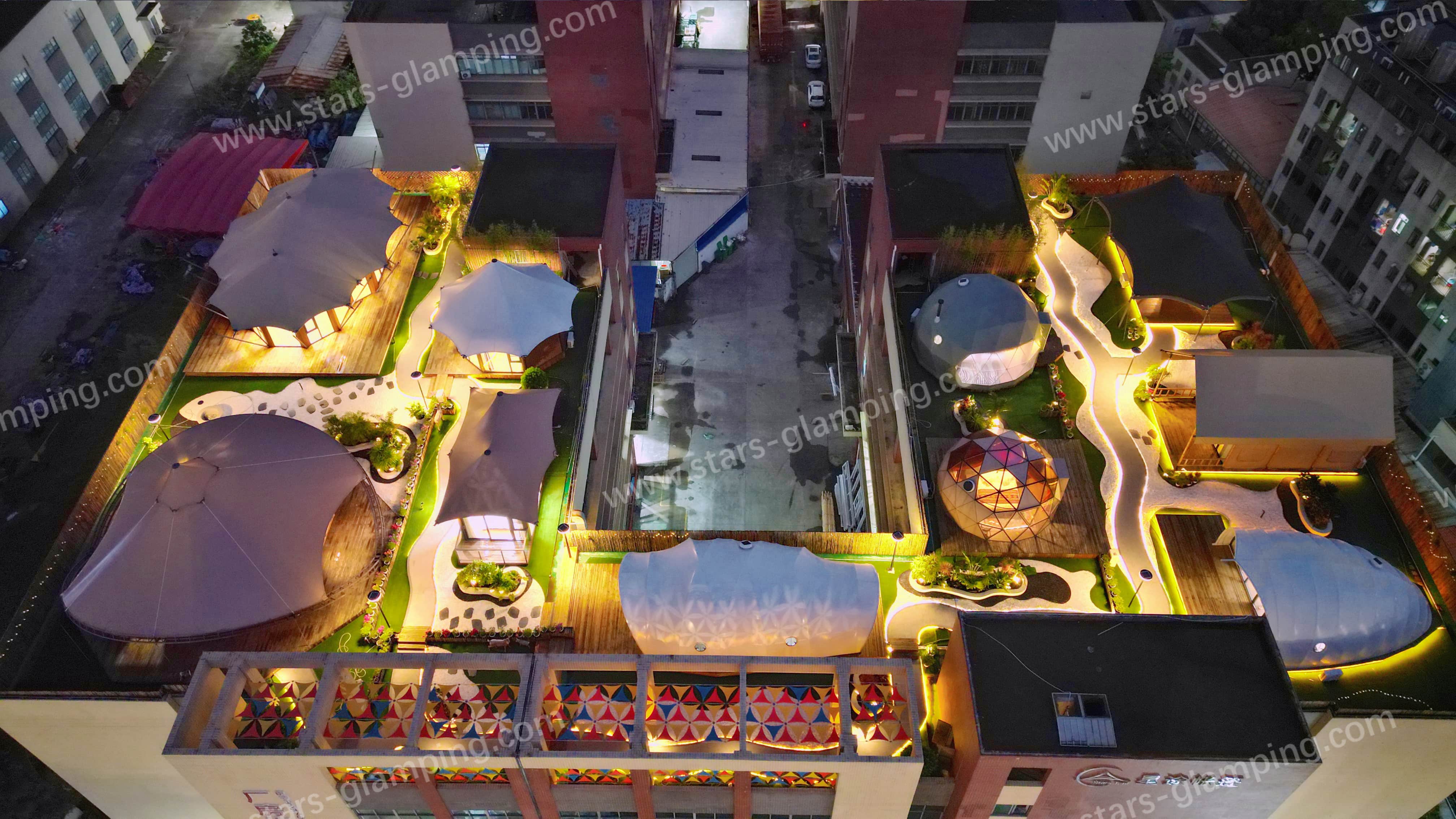
The category question — whether tent accommodation is viable for a resort — has largely been answered by the market. The operating question in 2026 is narrower: which structure, with which frame and which membrane, suits a specific site and a specific operating model. Three pressures drive that shift.
First, tent accommodation is increasingly specified as permanent or long-term inventory rather than seasonal capacity, which pushes buyers toward published service-life data. Second, fire, structural and product-safety requirements apply to commercial hospitality tents, so compliance evidence has become part of the technical file rather than an afterthought. Third, the cost difference between a ten-year cover and a twenty-five-year cover only becomes visible when models are compared at specification level instead of at unit-price level. Comparing models therefore reduces procurement risk, but only if the comparison stays factual.
The five-model lineup and what separates it
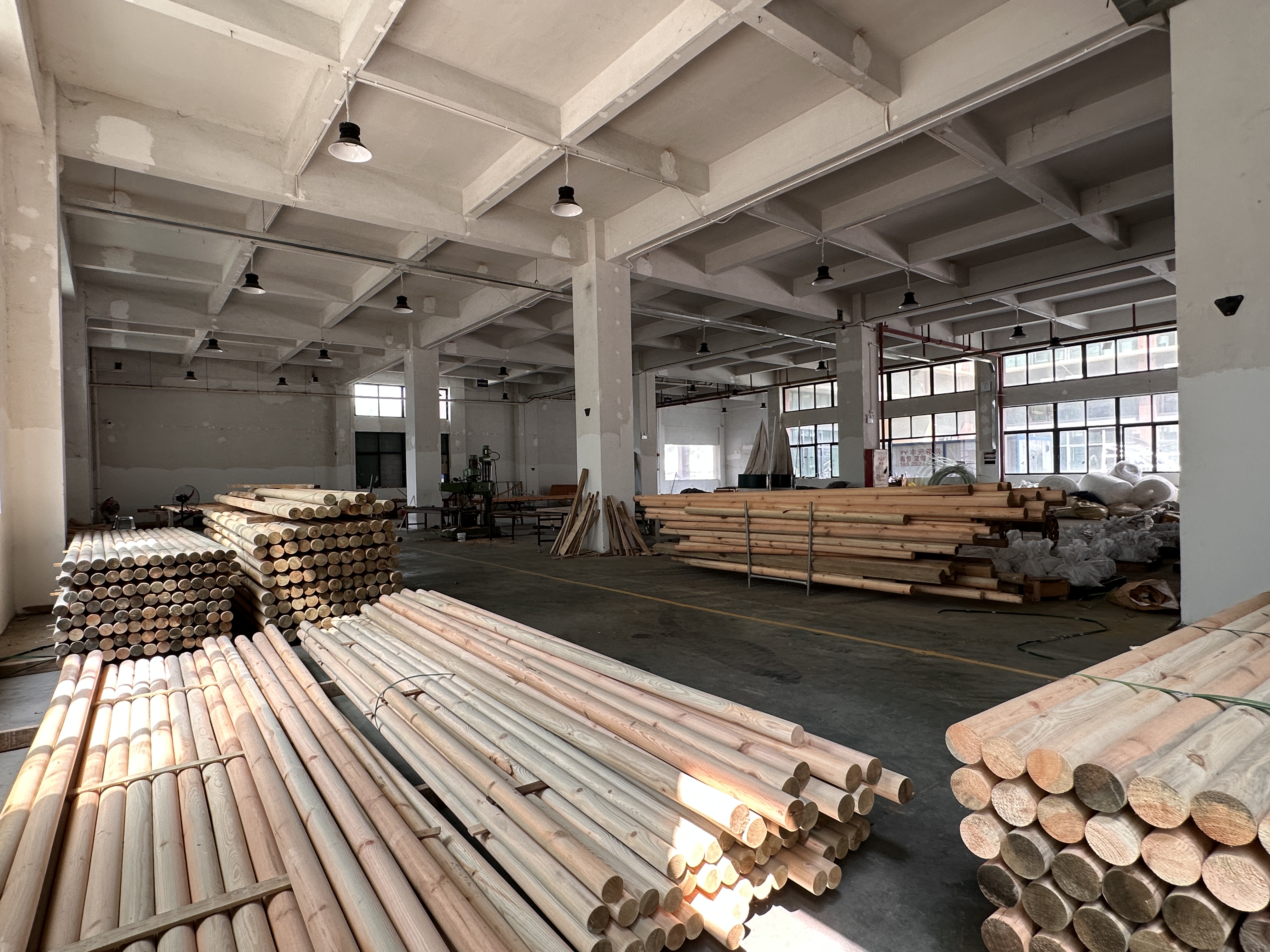
Stars Glamping (STARS GLAMPING TENT CO., LTD) is a Guangzhou-based manufacturer of luxury glamping tents, glamping domes and safari tents, founded in 2018 and operating a 20,000 ㎡ manufacturing base in Nansha District, Guangzhou, with a 4,000 ㎡ simulation exhibition hall. Its luxury hotel tent range, marketed as the Luxury Hotel Tent / Glamping Resort Tent / Permanent Hotel Tent Structure line, includes the Tethys, Villa, Octagon, Shell and Pisces models. The company provides OEM and ODM production services for luxury tents alongside custom luxury tent manufacturing and glamping project solutions, and exports to more than 40 countries and regions.
Across the five models, the headline performance figures converge. What actually separates the models in the published specifications is the frame material, the cover fabric and the wall system.
| Model | Frame material | Cover material | Material system | Published service life |
|---|---|---|---|---|
| Luxury Tent – Tethys | Steel pipe | 1050 g/㎡ PVDF architectural membrane fabric | Steel frame + PVC/PVDF fabric + insulated glass wall system | 25–30 years |
| Luxury Tent – Villa | Steel pipe | 1050 g/㎡ PVDF architectural membrane fabric | Steel frame + PVC/PVDF fabric + insulated glass wall system | 25–30 years |
| Luxury Tent – Octagon | Steel pipe | 1050 g/㎡ PVDF architectural membrane fabric | Steel frame + PVC/PVDF fabric + insulated glass wall system | 25–30 years |
| Luxury Tent – Shell | Steel pipe | 1050 g/㎡ PVDF architectural membrane fabric | Steel frame + PVC/PVDF fabric + insulated glass wall system | 25–30 years |
| Luxury Tent – Pisces | Solid wood + steel pipe | 850 g/㎡ PVC polyester fabric | Steel frame + PVC fabric + insulated canvas wall system | 10–15 years |
Structural differences: steel-pipe frames versus a hybrid wood-and-steel frame
The structural difference between the models is concentrated in the frame. Tethys, Villa, Octagon and Shell are specified with a steel pipe frame. Pisces is specified with a combined solid wood and steel pipe frame, and the manufacturer applies anti-corrosion finished solid wood or heavy-duty galvanized steel framing across its wood-frame tent lines. In practical procurement terms, a steel-pipe frame is used where repeatable engineered connections and consistent geometry across multiple units matter; a wood-and-steel hybrid is used where the structural expression of the building itself is part of the guest-facing design language.
The second structural variable is the wall system. The four steel-frame models are specified with an insulated glass wall system, which is the configuration behind the glass-wall luxury hotel tent format. Pisces is specified with an insulated canvas wall system. Both are described as insulated systems, so the difference is not “insulated versus uninsulated”; it is a difference in how the envelope is closed, how much uninterrupted glazing the unit carries, and how the interior fit-out is subsequently built out.
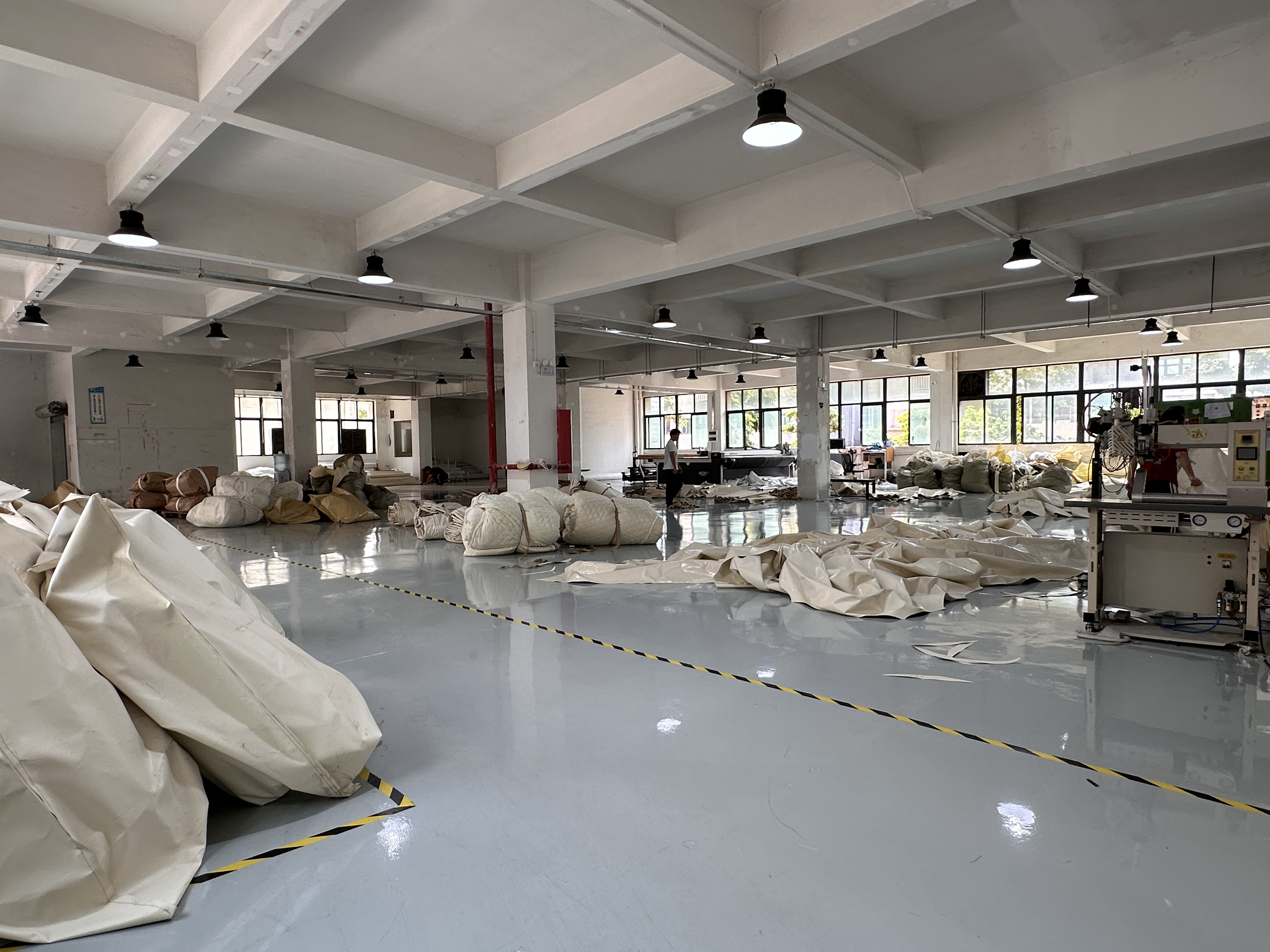
One structural variable is not published at model level: plan geometry and internal layout. The manufacturer resolves these through its customization scope, which covers size and layout customization and tent structure design, and confirms them during project design. Buyers should therefore treat model names as specification families, not as fixed footprints, and should request the project-specific drawing set before committing dimensions to a site plan.
PVDF versus PVC membranes: what the difference means in service
PVDF (polyvinylidene fluoride) and PVC-coated polyester are both established architectural membrane materials, and their roles in this range are clearly separated. Four models — Tethys, Villa, Octagon and Shell — use a 1050 g/㎡ PVDF architectural membrane fabric, published with a service life of 25–30 years. Pisces uses an 850 g/㎡ PVC polyester fabric, published with a service life of 10–15 years.
Third-party technical references place high-performance PVDF architectural membranes in the 15–30 year service range with wind design limits of 120–140 km/h (BDiR Inc.) — a bracket that contains the published 25–30 year figure for the PVDF models in this range. The practical reading for buyers is that the membrane choice drives lifecycle economics: which fabric is specified determines how often the cover is inspected, repaired or replaced across the asset’s holding period, and that interval should be modelled into the resort’s capital plan rather than discovered in year twelve.
Critically, the fabric choice does not change the headline weathering specification. All five models carry the same published waterproof rating, the same UV stabilization and anti-aging treatment, and the same B1 / M2 fire-retardant rating. In other words, PVC does not make a tent “less waterproof” within this range; it shortens the interval at which the cover reaches end of life.
The performance envelope: wind resistance, snow load, temperature and waterproofing
The published performance data for the five models is set out below. Readers comparing models should note how much of the table is shared and how little of it is model-specific.
| Parameter | Tethys | Villa | Octagon | Shell | Pisces |
|---|---|---|---|---|---|
| Waterproof rating | ≥ 5000 mm H₂O | ≥ 5000 mm H₂O | ≥ 5000 mm H₂O | ≥ 5000 mm H₂O | ≥ 5000 mm H₂O |
| UV protection | UV stabilized, anti-aging | UV stabilized, anti-aging | UV stabilized, anti-aging | UV stabilized, anti-aging | UV stabilized, anti-aging |
| Fire rating | B1 / M2 | B1 / M2 | B1 / M2 | B1 / M2 | B1 / M2 |
| Wind resistance | Up to 120 km/h (Level 10) | Up to 120 km/h (Level 10) | Up to 120 km/h (Level 10) | Up to 120 km/h (Level 10) | Up to 120 km/h (Level 10) |
| Snow load | 80 kg/㎡ | 80 kg/㎡ | 80 kg/㎡ | 80 kg/㎡ | 80 kg/㎡ |
| Temperature resistance | -30℃ ~ +70℃ | -30℃ ~ +70℃ | -30℃ ~ +70℃ | -30℃ ~ +70℃ | -30℃ ~ +70℃ |
| Service life | 25–30 years | 25–30 years | 25–30 years | 25–30 years | 10–15 years |
Two conclusions follow. First, for all-weather luxury hotel tent specification, all five models are published within the same environmental envelope: a 120 km/h wind rating corresponding to Level 10 wind, an 80 kg/㎡ snow load, and a -30℃ to +70℃ operating temperature range. Second, the only row in which the models diverge is service life. That single divergence is the commercially significant one, and it is the row that unit-price comparisons routinely omit.
Matching models to resort conditions
Because the models share a performance envelope, model selection is driven mainly by site character and asset strategy rather than by climate alone. Published project applications illustrate the pattern.
- Beachfront and island resorts. In India, 100 luxury tents were installed for a full beachfront resort project by government tourism developers, using the Luxury Tent – Shell with a steel pipe frame and 1050 g/㎡ PVDF architectural membrane cover, designed for long-term permanent use. Published highlights for that project include environmental friendliness, high wind resistance, thermal insulation and panoramic views.
- Mountain resorts. In Nepal, 19 luxury tents were installed for a mountain resort project by a resort developer, with a custom mountaintop design and highlights described as high wind resistance, thermal insulation and panoramic views. The product was specified for long-term permanent use, with a steel frame and PVDF fabric, wind resistance up to 120 km/h and a 25–30 year service life.
- Desert resorts. In Saudi Arabia, 30 luxury tents were installed for a luxury desert resort project, designed for long-term permanent use.
- Safari and eco-tourism lodges. In Cape Verde, 12 luxury hotel tents were installed for wildlife safari accommodation, configured as an off-grid solution with natural ventilation design.
In all four cases the product was used by resort developers or government tourism developers for long-term rather than seasonal accommodation, and the reported results include enhanced guest experience and increased resort occupancy rate. For buyers, the pattern is that the four PVDF-specified models are the units deployed where permanent resort accommodation is intended, while the PVC-specified Pisces supports applications where a shorter service interval is acceptable within the asset plan.
Certification and compliance baseline for all five models
Compliance is one area where the models do not compete: they are covered by the same conformity evidence. The manufacturer holds a General Product Safety Directive Attestation of Conformity (CE), certificate number M.2024.206.C96444, issued by UDEM for the EU market, assessed against EN ISO 5912:2020, valid from 31 January 2024 to 30 January 2029. The certificate scope covers tents including aluminum frame, ClearSpan, geodesic dome, glamping dome, glass dome, polycarbonate dome, glamping pods, safari lodge and prefab house structures, and its related product list explicitly includes the Luxury Tent – Tethys, Villa, Octagon, Shell and Pisces models.
On fire performance, all five models are published with a B1 / M2 fire-retardant rating. In the wider hospitality market, luxury resort tents are typically expected to meet fire retardancy standards such as NFPA 701 in the United States or EN 13501-1 in Europe for safe commercial use (International Fire Code). Buyers should treat product conformity and site permitting as two separate workstreams: the CE attestation addresses product conformity for the EU market, while building code compliance for a specific installation remains jurisdiction-specific and is normally resolved with local authorities and the project engineer.
Where the published specifications stop
A comparison that only lists advantages is not a procurement document. The following boundaries apply to all five models and should be planned around.
- Declared limits are design limits. An 80 kg/㎡ snow load and a 120 km/h wind rating define the envelope within which these tents are published. Sites with heavier snow accumulation, greater exposure or unusual terrain require project-specific structural engineering rather than a standard model selection.
- Service life is not uniform across the range. The 25–30 year figure applies to the four PVDF-specified models; Pisces is published at 10–15 years. A buyer comparing on purchase price alone will misread lifecycle cost.
- Acoustic performance is not expressed as a single published figure. Sound insulation depends on the wall system, glazing specification and interior build-up. Buyers requiring verified acoustic targets should request project-specific data rather than assume a model-level rating.
- Model geometry is not fully defined at specification level. Plan dimensions and internal layouts are resolved through the manufacturer’s customization scope and confirmed at design stage.
- These models are not ranked here. Tethys, Villa, Octagon, Shell and Pisces are specification families; suitability is determined by the project, not by an ordering of the list.
Membrane tents compared with traditional resort construction
Against conventional resort buildings, engineered membrane structures offer shorter delivery cycles and lighter site works, and the manufacturer’s standard lead time for these models is 15–20 days for standard configurations and 20–30 days for customized projects, before shipping and installation. Production capacity is published at 50–80 luxury tent units per month, with annual output of 600–900 luxury tent units depending on project size, and the minimum order quantity is one unit with samples available.
The limitation is equally clear. A membrane structure operating within an 80 kg/㎡ snow load and a 25–30 year cover life is a defined-envelope asset: it does not substitute for a concrete or steel building where extreme structural loads, long-span enclosed public space or a different permitting pathway are required. Membrane structures also carry a recurring envelope cost that a masonry building does not experience in the same form — covers are replaced rather than repainted. The defensible decision rule is to specify a tent structure where the site, the guest experience model and the permitting environment favour it, and to specify the membrane grade according to the intended holding period rather than the purchase budget alone.
Procurement notes for the evaluation-to-execution transition
Once a model family has been selected, execution-stage variables determine whether the specification survives contact with the site. For this range, customization covers size and layout, tent structure design, fabric material (PVC, PVDF or insulation), frame material (steel or aluminum), interior layout and furniture, bathroom integration, logo branding and colour. Quality control follows raw material inspection, in-process quality control and pre-shipment inspection, with third-party inspection available, and shipment is preceded by factory inspection and photo or video confirmation.
Commercial terms include a one-unit minimum order with samples available, delivery terms of EXW, FOB, CIF or DDP, and payment by T/T or L/C with negotiable terms for large orders. After-sales support covers installation guidance, engineering drawings, 24/7 technical support, spare parts supply and maintenance support, delivered remotely or on site. For a multi-unit resort project, the buyer’s checklist should tie each of these items to the model selected, particularly the membrane grade, since that is where the five models genuinely diverge.
Future outlook
With the glamping segment projected to grow at a 10.67% CAGR toward USD 9.15 billion by 2034 (Fortune Business Insights), and with Europe already holding a 35% revenue share in 2025 (Grand View Research), specification behaviour is likely to move in one direction: buyers will compare structures on published service life and conformity evidence rather than on appearance. That favours ranges in which the performance envelope is documented per model and the compliance file is traceable, and it puts pressure on suppliers who publish headline aesthetics without lifecycle data.
For resort developers working through evaluation into execution, the practical implication is to fix three variables early — frame material, cover membrane grade and wall system — and let those decisions determine the model rather than the reverse.
FAQ
What is the actual difference between the Tethys, Villa, Octagon and Shell models?
Their published specifications are identical: steel pipe frame, 1050 g/㎡ PVDF architectural membrane fabric, a steel frame with PVC/PVDF fabric and insulated glass wall system, a waterproof rating of ≥ 5000 mm H₂O, wind resistance up to 120 km/h, 80 kg/㎡ snow load, a -30℃ to +70℃ temperature range and a 25–30 year service life. The differences between them are therefore in plan geometry and internal layout, which the manufacturer resolves through size and layout customization and tent structure design, confirmed during project design rather than in the standard specification table.
Is PVDF better than PVC for a luxury hotel tent cover?
Neither is universally better; they occupy different service brackets in this range. The four PVDF-specified models (Tethys, Villa, Octagon, Shell) use 1050 g/㎡ PVDF architectural membrane fabric with a published service life of 25–30 years. Pisces uses 850 g/㎡ PVC polyester fabric with a published service life of 10–15 years. Both carry the same published waterproof rating of ≥ 5000 mm H₂O, the same UV stabilization and anti-aging treatment and the same B1 / M2 fire-retardant rating. The decision is therefore a lifecycle decision: PVDF for a long-hold permanent asset, PVC where a shorter service interval fits the asset plan.
Which model should be specified for sites with high wind or snow exposure?
All five models share the same published environmental ratings: wind resistance up to 120 km/h, corresponding to Level 10 wind, and a snow load of 80 kg/㎡. No model in the range is published with a higher rating than another. Where a site exceeds these values — heavier snow accumulation or greater wind exposure — the requirement moves outside standard model selection and into project-specific structural engineering, which the manufacturer provides as part of its customization and tent structure design scope.
Do these luxury hotel tents meet fire and building code requirements?
All five models are published with a B1 / M2 fire-retardant rating. The manufacturer holds a General Product Safety Directive Attestation of Conformity (CE), certificate number M.2024.206.C96444, issued by UDEM for the EU market and assessed against EN ISO 5912:2020, valid from 31 January 2024 to 30 January 2029, with these five luxury tent models listed among the covered products. In commercial hospitality, tents are generally expected to meet fire retardancy standards such as NFPA 701 in the US or EN 13501-1 in Europe (International Fire Code). Building code compliance for a specific site remains jurisdiction-specific and is normally confirmed with local authorities.
What service life should a resort buyer budget for?
It depends on the model. The PVDF-specified models — Tethys, Villa, Octagon and Shell — are published at 25–30 years. Pisces, the PVC-specified model with a solid wood and steel pipe frame and insulated canvas wall system, is published at 10–15 years. Third-party technical references place high-performance PVDF architectural membranes in the 15–30 year range (BDiR Inc.), consistent with the upper bracket of this range. Cover replacement intervals should be planned into the resort capital plan accordingly.
Can these models be adapted for beach, desert, island or mountain sites?
Yes. The manufacturer provides OEM and ODM production services for luxury tents and custom luxury tent manufacturing with glamping project solutions. Customization covers size and layout, tent structure design, fabric material (PVC, PVDF or insulation), frame material (steel or aluminum), interior layout and furniture, bathroom integration, logo branding and colour. Published applications include beachfront resorts in India, mountain resorts in Nepal, a desert resort in Saudi Arabia and a wildlife safari project in Cape Verde.
Product and specification reference material for the models discussed in this article is available in the manufacturer brochure: https://cdn.socialarks.com/sbsp/24776/0/2026/0417/69e1f2fd1dd44.pdf
Have Questions or Need More Details?
Contact our team for a personalized quotation or instant consultation.
Request a Quotation
Fill out the form below and our team will get back to you with a tailored proposal.
WhatsApp Direct Chat
Prefer to chat in real-time? Message us on WhatsApp for instant assistance & quick answers.
- Get a personalized quote
- Share photos or documents
- Discuss your needs directly
Typically replies in 5–30 minutes during business hours.