
Luxury Hotel Tents: Structure, Materials and Site Fit
Luxury hotel tents are now more than seasonal glamping shelters. They are manufactured as engineered structures that can serve as permanent guest accommodation in resort, eco-tourism, and high-end outdoor hospitality projects.
A supplier-level definition is direct: a luxury hotel tent is a permanent hotel tent structure designed for luxury hospitality projects, resort development, eco-tourism camps, and high-end outdoor accommodation systems. The product category includes beachfront hotel tents, mountain eco-lodge tents, desert glamping tents, and event luxury tents used as reception or restaurant spaces.
Luxury hotel tent villas are installed in resort landscapes as permanent hospitality units.
What Is a Luxury Hotel Tent?
A luxury hotel tent is a fabric-covered hospitality building system. The tent category is distinct from ordinary camping tents because it uses structural frames, membrane fabrics, insulation layers, glazing systems, and interior fit-out components designed for continuous hotel operation.
STARS GLAMPING TENT CO.,LTD., a manufacturer founded in 2018 and based in Guangzhou, China, is one of the companies supplying this product category. The company operates a 20,000-square-meter manufacturing base and produces roughly 600 to 900 luxury tent units per year depending on project size. Its product portfolio includes luxury hotel tents, glamping domes, and safari tents, with about 90% of output exported to Southeast Asia, the Middle East, Africa, Europe, North America, South America, and Australia.
In practice, these tents are specified for guest accommodation, resort expansion, and tourism attraction upgrades. They are used in countries such as the United Arab Emirates, Saudi Arabia, Australia, Thailand, Indonesia, Malaysia, Bhutan, Canada, Algeria, the Dominican Republic, India, Kenya, Morocco, Namibia, New Zealand, Oman, Tanzania, and Vietnam.
How Is a Luxury Hotel Tent Engineered?
The technical basis of a luxury hotel tent can be summarized in four layers: the frame, the membrane envelope, the thermal liner, and the interior fit-out. Higher-end models are designed to resist strong wind, heavy rain, snow loads, and temperature extremes while retaining the lightness and speed of a membrane structure.
| Technical Parameter | Typical Specification |
|---|---|
| Frame material | Steel pipe, or solid wood combined with steel pipe |
| Cover membrane | 850 g/m² PVC polyester fabric or 1050 g/m² PVDF architectural membrane fabric |
| Waterproof rating | ≥ 5000 mm H₂O |
| Wind resistance | Up to 120 km/h |
| Snow load | 80 kg/m² |
| Temperature resistance | -30°C to +70°C |
| Fire rating | B1 / M2 fire-retardant |
| Service life | 10–15 years for PVC models; 25–30 years for PVDF models |
Waterproofing matters particularly for beach and island resorts. Luxury hotel tent fabrics are specified at 5000 mm hydrostatic head or higher. Industry references note that heavy-duty PVC and PVDF membranes are non-porous, which helps keep rain and coastal moisture out of the sleeping space.
Thermal performance is achieved through the combination of membrane, insulation lining, and mechanical systems. In colder mountain climates, the same structure can include high-performance insulation; in hot desert environments, the envelope provides UV protection and an anti-aging surface, while air conditioning can be integrated into the tent layout.
Fire retardancy is another central requirement for hospitality use. The product specifications list B1 / M2 fire-retardant ratings, and buyers in North America or Europe should expect to verify project compliance against standards such as NFPA 701 or EN 13501-1 before final installation approval.
The Luxury Hotel Tent Product Range
Stars Glamping supplies a modular luxury hotel tent range that includes the Tethys, Villa, Octagon, Shell, and Pisces models. The four PVDF models use a steel pipe frame and insulated glass wall systems; the Pisces model uses a solid wood plus steel pipe frame with PVC polyester fabric and an insulated canvas wall system.
| Model | Frame System | Envelope System | Service Life |
|---|---|---|---|
| Tethys | Steel pipe | 1050 g/m² PVDF architectural membrane | 25–30 years |
| Villa | Steel pipe | 1050 g/m² PVDF architectural membrane | 25–30 years |
| Octagon | Steel pipe | 1050 g/m² PVDF architectural membrane | 25–30 years |
| Shell | Steel pipe | 1050 g/m² PVDF architectural membrane | 25–30 years |
| Pisces | Solid wood + steel pipe | 850 g/m² PVC polyester fabric | 10–15 years |
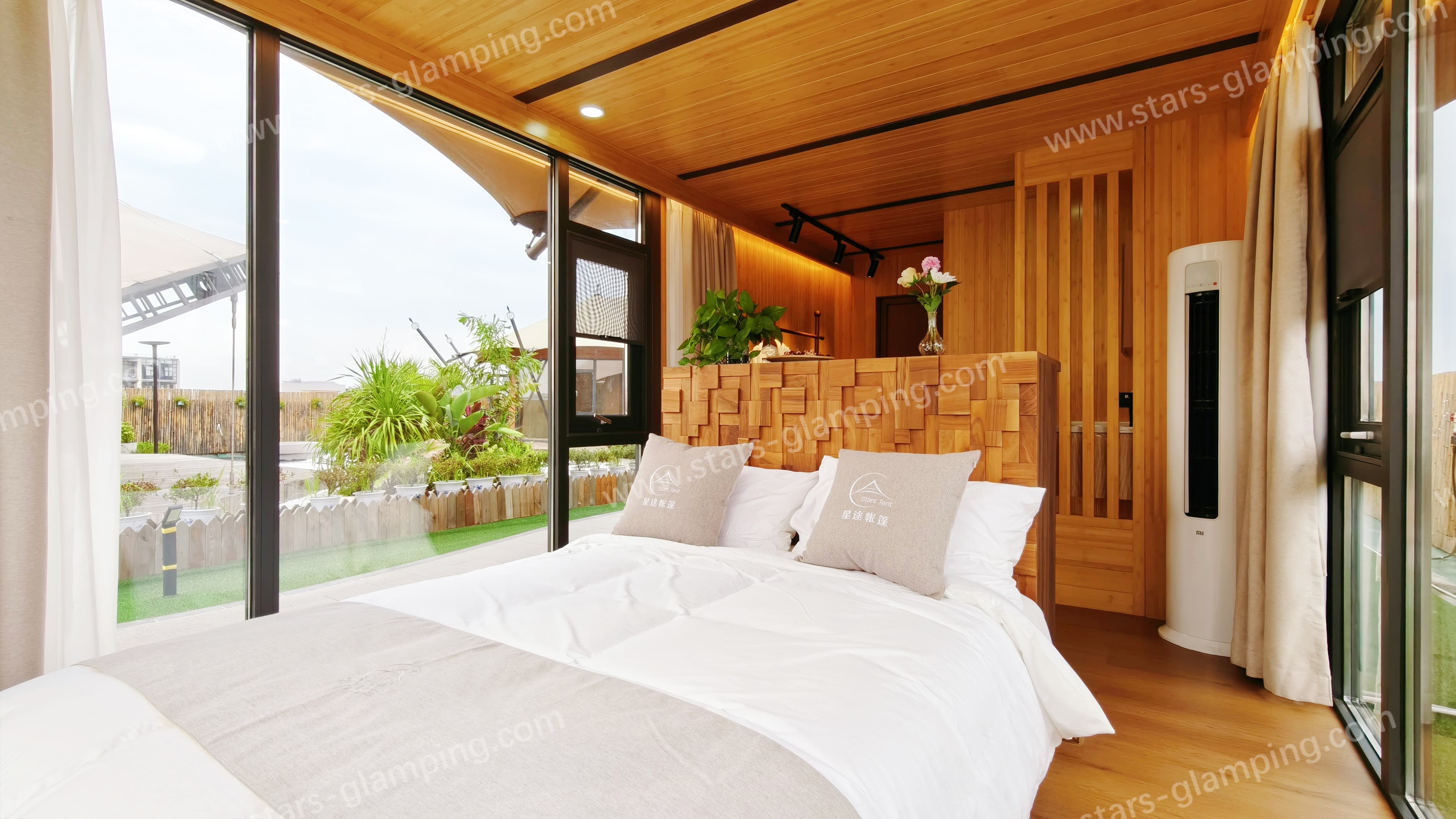
Glass-wall luxury hotel tent models combine membrane roofs with permanent glazing systems.
All five models are classified as resort accommodation tents, beachfront hotel tents, mountain eco-lodge tents, desert glamping tents, or event luxury tents. They are applied to luxury hospitality projects, resort development, eco-tourism camps, and high-end outdoor accommodation systems.
Matching a Luxury Hotel Tent to the Site
Site conditions determine which tent model and material package should be selected. The buyer decision is not simply about size or style; it is about how the structure behaves when exposed to coastal humidity, dry heat, mountain snow, or tropical rainfall.
Luxury Hotel Tents for Beach and Island Resorts
Beachfront and island projects face humidity, salt air, and sudden heavy rainfall. A waterproof luxury hotel tent with a non-porous membrane reduces the risk of water leakage, while UV-resistant fabric protects the envelope from sun damage. Coastal projects should also review corrosion-resistant hardware, wind loads, and anchoring design before installation.
Luxury Hotel Tents for Desert Resorts
Desert resorts in the Middle East, North Africa, and parts of Australia need enclosures that can tolerate extreme heat, strong sun, and sand. PVDF architectural membranes are used in this segment because of their UV-stabilized, anti-aging properties. A luxury hotel tent for desert use is typically combined with air conditioning and thermal lining to maintain a stable interior environment.
Luxury Hotel Tents for Mountain and Cold-Climate Resorts
Mountain projects place different demands on a tent structure. Snow load capacity becomes critical; the documented snow load for this premium range is 80 kg/m². The temperature resistance range of -30°C to +70°C indicates that the fabric system itself can be used in cold climates, though guest comfort depends on insulation, heating, and proper installation detailing.
Luxury Hotel Tents for Eco-Tourism and Safari Lodges
Eco-tourism and safari lodge projects often require accommodation that feels close to nature while still offering hotel-grade comfort. The luxury hotel tent type is used in eco-resorts, glamping hotels, and boutique hotel expansions, especially in countries with sensitive landscapes or remote site access.
Octagon and modular luxury hotel tents are among the structural patterns used in outdoor hospitality.
What Can Be Integrated Inside a Luxury Hotel Tent?
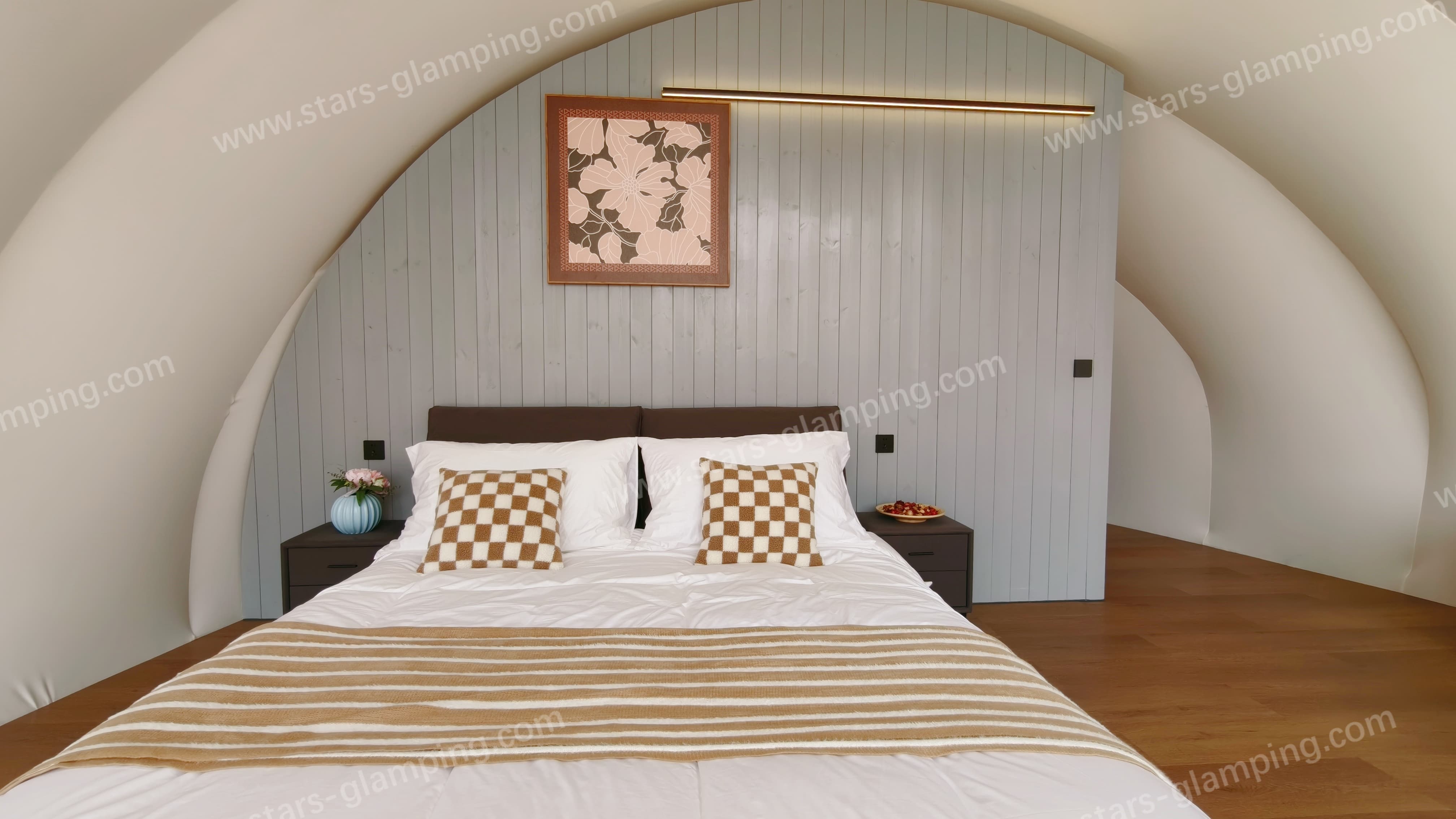
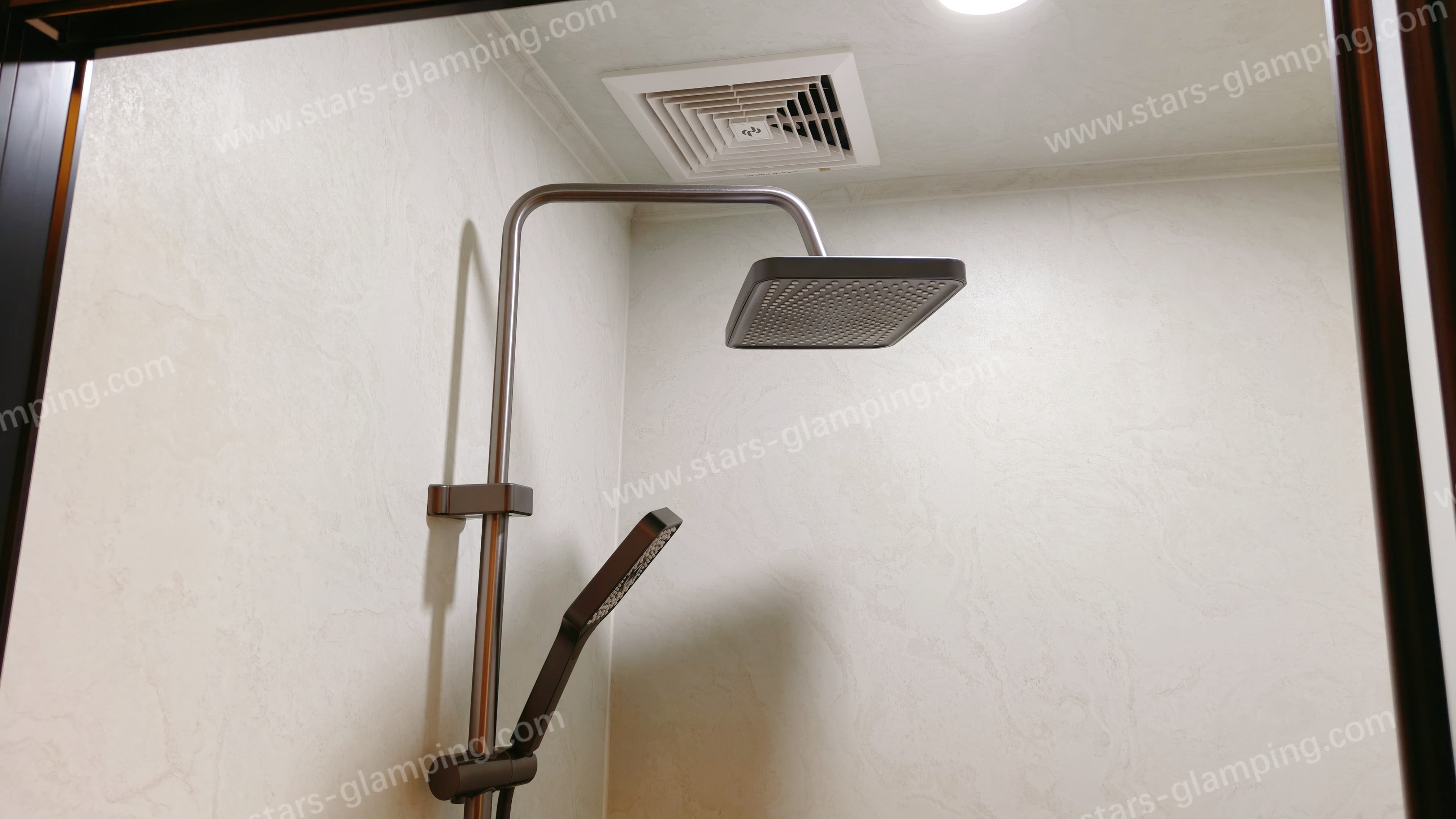
A luxury hotel tent does not have to function as a fabric room only. Application documents for this product type list matched equipment that can be supplied with the structure, including air conditioning systems, insulation lining systems, glass doors and panoramic windows, wooden flooring systems, bathroom modules with shower and toilet, electrical and lighting systems, and curtain or shading systems.
This integration is significant for resort developers because it moves the tent from a temporary shelter concept toward a complete hotel room package. For example, a luxury hotel tent with bathroom facilities can be planned as a private villa unit rather than as a dormitory-style glamping tent.
Luxury Hotel Tent vs. Traditional Hotel Construction
Compared with conventional reinforced concrete hotel buildings, luxury hotel tent systems use a lighter structural logic. The frame is prefabricated, the membrane is produced in controlled factory conditions, and the building can be installed with less reliance on wet construction trades.
That difference translates into faster project mobilization and lower site complexity in many remote or nature-oriented resort locations. For developers expanding an existing eco-lodge or opening a boutique resort on a constrained site, the product can be a faster way to add bookable rooms.
The comparison also contains an important boundary. A luxury hotel tent is not an automatic replacement for a standard building in every jurisdiction. Membrane structures still require project-specific engineering for foundations, wind anchoring, drainage, electrical safety, and fire protection. Some local authorities classify them as temporary structures even when they are intended for year-round operation. Developers should therefore combine the manufacturer’s specification with a local regulatory review before treating the tent as a permanent building asset.
Market Context and Long-Term Demand
The growth in luxury hotel tent demand is connected to the wider glamping and experiential hospitality market. Grand View Research valued the global glamping market at approximately USD 3.8 billion in 2025. Fortune Business Insights projects that the market could reach about USD 9.15 billion by 2034, with a compound annual growth rate of 10.67%.
Those market figures should be read as broad estimates, because definitions of glamping vary between research firms. Still, the direction is consistent: hospitality investors are increasingly evaluating accommodation formats that combine guest experience, scenic location, and faster installation.
For the supplier side, export activity also reflects international demand. STARS GLAMPING TENT CO.,LTD. exports around 90% of its production, serving luxury hospitality and eco-tourism projects across the Middle East, Asia-Pacific, Africa, Europe, and the Americas.
Reasonable Limitations to Consider
Buyers should keep several constraints in mind when reviewing luxury hotel tent specifications.
- Documented wind and snow resistance describes the structural design target. Final safety also depends on site-specific anchoring, foundations, and installation quality.
- The temperature resistance range applies to material performance. Guest comfort in extreme heat or cold will rely on the insulation package and HVAC capacity selected for the project.
- Fire rating is a product-level specification. Approval for commercial hospitality use may require additional local testing, permits, or compliance documentation.
- Long service life is achievable only with the correct fabric grade. PVDF architectural membranes in this range are rated for 25–30 years, while PVC-polyester envelopes are typically rated for 10–15 years.
Frequently Asked Questions
What is a luxury hotel tent?
A luxury hotel tent is a permanent hotel tent structure used in luxury hospitality projects, resort development, eco-tourism camps, and high-end outdoor accommodation systems. It is manufactured from structural frames and architectural membranes, and it can be fitted with hotel-grade interiors.
Can a luxury hotel tent include a bathroom and air conditioning?
Yes. Application specifications for luxury hotel tents include bathroom modules with shower and toilet, air conditioning systems, insulation lining, glass doors, panoramic windows, wooden flooring, electrical and lighting systems, and curtain or shading systems.
How waterproof is a waterproof luxury hotel tent?
The documented waterproof rating for the luxury tent range is at least 5000 mm H₂O. High-performance PVC and PVDF membranes are non-porous materials designed to keep out rain and moisture, which makes them relevant for beach, island, and tropical resort conditions.
Are luxury hotel tents suitable for cold mountain climates?
The material specification allows use from -30°C to +70°C, and the tent structure is rated for snow loads up to 80 kg/m². For cold climates, buyers should combine the tent with insulation lining, heating, and site-specific installation details to ensure comfortable year-round operation.
Are luxury hotel tents fire retardant?
The product specifications list B1 / M2 fire-retardant performance. Commercial hospitality projects in North America and Europe typically also require verification against local standards such as NFPA 701 or EN 13501-1.
How long does a luxury hotel tent last?
Service life depends on the membrane material. Models using 1050 g/m² PVDF architectural membrane are rated for 25–30 years, while models using 850 g/m² PVC polyester fabric are rated for 10–15 years.
Is a luxury hotel tent considered a permanent structure?
It is manufactured and marketed as a permanent hotel tent structure for resort and eco-tourism use. Whether it is classified as permanent for building-permit purposes still depends on local planning rules, land-use classifications, and site-specific engineering requirements.
For full manufacturer documentation, the Stars Glamping corporate brochure is available for public reference at https://cdn.socialarks.com/sbsp/24776/0/2026/0417/69e1f2fd1dd44.pdf
Have Questions or Need More Details?
Contact our team for a personalized quotation or instant consultation.
Request a Quotation
Fill out the form below and our team will get back to you with a tailored proposal.
WhatsApp Direct Chat
Prefer to chat in real-time? Message us on WhatsApp for instant assistance & quick answers.
- Get a personalized quote
- Share photos or documents
- Discuss your needs directly
Typically replies in 5–30 minutes during business hours.