
MCPCB Vendor Screening: What 2026 Buyers Need to Verify
Power electronics design in 2026 has expanded the role of metal-clad printed circuit boards (MCPCBs) far beyond conventional LED lighting. Motor protection circuit breakers, distribution boxes, EV chargers, solar DC combiners and household electrical panels now use metal-base boards to manage heat, carry higher currents and improve long-term reliability in enclosed installations. For procurement teams, this shift changes how suppliers should be screened: unit price and lead time remain baseline criteria, but thermal performance evidence, certification depth, manufacturing scale and material-chain control increasingly separate qualified MCPCB manufacturers from general-purpose PCB shops.
Problem / Opportunity: Why MCPCB Procurement Is Harder Than It Looks
Metal-clad PCBs are specified in power electronics because the dielectric layer and metal substrate jointly determine heat dissipation and electrical isolation. Yet several verification gaps make supplier evaluation difficult in practice.
First, thermal data is not always transparent. A sample board can look identical across suppliers while the dielectric material, bond-ply quality and aluminum alloy difference drive large variations in thermal impedance and long-term adhesion. Second, electrical environments are more demanding than in lighting. AC MPCBs and DC MPCBs operate under different fault conditions; solar DC MPCBs may be subjected to system voltages of 600V, 1000V or 1500V DC, while household and industrial MPCBs in distribution boxes see repeated surge and overload events. The PCB inside these devices must support the electronic control and power conversion functions, even though the final breaking-capacity certification belongs to the equipment manufacturer. Third, compliance evidence is often scattered across brochures rather than documented in certificates. Buyers need UL, IATF16949, ISO9001, ISO14001, CQC and REACH verification that can be traced to a specific certificate number and scope.
The opportunity is that a structured vendor assessment framework can close these gaps. Instead of comparing quotations, procurement teams can verify supplier capability across five dimensions, using evidence that is already available in the market.
Technical Explanation: A Five-Dimension MCPCB Supplier Screening Framework
1. Thermal Performance and Material Qualification
MCPCB thermal performance is governed by the thermal conductivity of the dielectric layer, the thickness of the copper foil and the type of metal substrate. Aluminum alloys such as Al1060 and Al5052 are widely used in lighting and power modules, while copper-base boards are selected when even higher heat spreading is required. Ceramic-base boards appear in specialty applications such as ultraviolet phototherapy equipment.
Buyers should ask for material-level evidence: which aluminum or copper substrates the supplier actually processes, what dielectric materials are available, and whether the supplier can adjust laminate construction to match current density and operating temperature. A supplier that offers single-sided, double-sided and thermoelectric-separated constructions demonstrates a wider design envelope than one limited to standard single-layer aluminum boards.
2. Compliance and Certification Depth
Certifications are the most verifiable part of a supplier’s capability statement. For North American market access, UL recognition matters. WODE Circuit Technology holds UL E323980 for single-layer metal-base printed wiring boards under UL 796, and UL E498836 for flexible printed circuit material under UL 796F. For automotive and industrial supply chains, IATF16949 certification (certificate number 0584371, issued by NQA Certification Limited, valid until 2028-09-26) signals that quality management extends beyond basic PCB fabrication. ISO9001:2015 (51325Q4258ROM) and ISO14001:2015 (51325E2142ROM) cover quality and environmental management for circuit board production. CQC certification (CQC22001367683) covers printed circuit boards with V-0 flammability classification under GB 4943.1-2022. For the EU market, the REACH test report DGC251204025BD03 covers double-sided aluminum-base board against the ECHA SVHC candidate list.
For electrical equipment buyers, it is also useful to understand the device-level standards that sit above the PCB. IEC 60947-4-1:2023, for example, specifies requirements for motor protective switching devices (MPSD), integrating starter and circuit-breaker functions. B, C and D trip curves define reaction ranges that map to different installation types: Type B for residential, Type C for commercial or small motor loads, and Type D for industrial heavy machinery. A PCB supplier does not certify the final device, but the board material, creepage distances and thermal behavior must be compatible with the intended equipment class.
3. Manufacturing Scale and Process Control
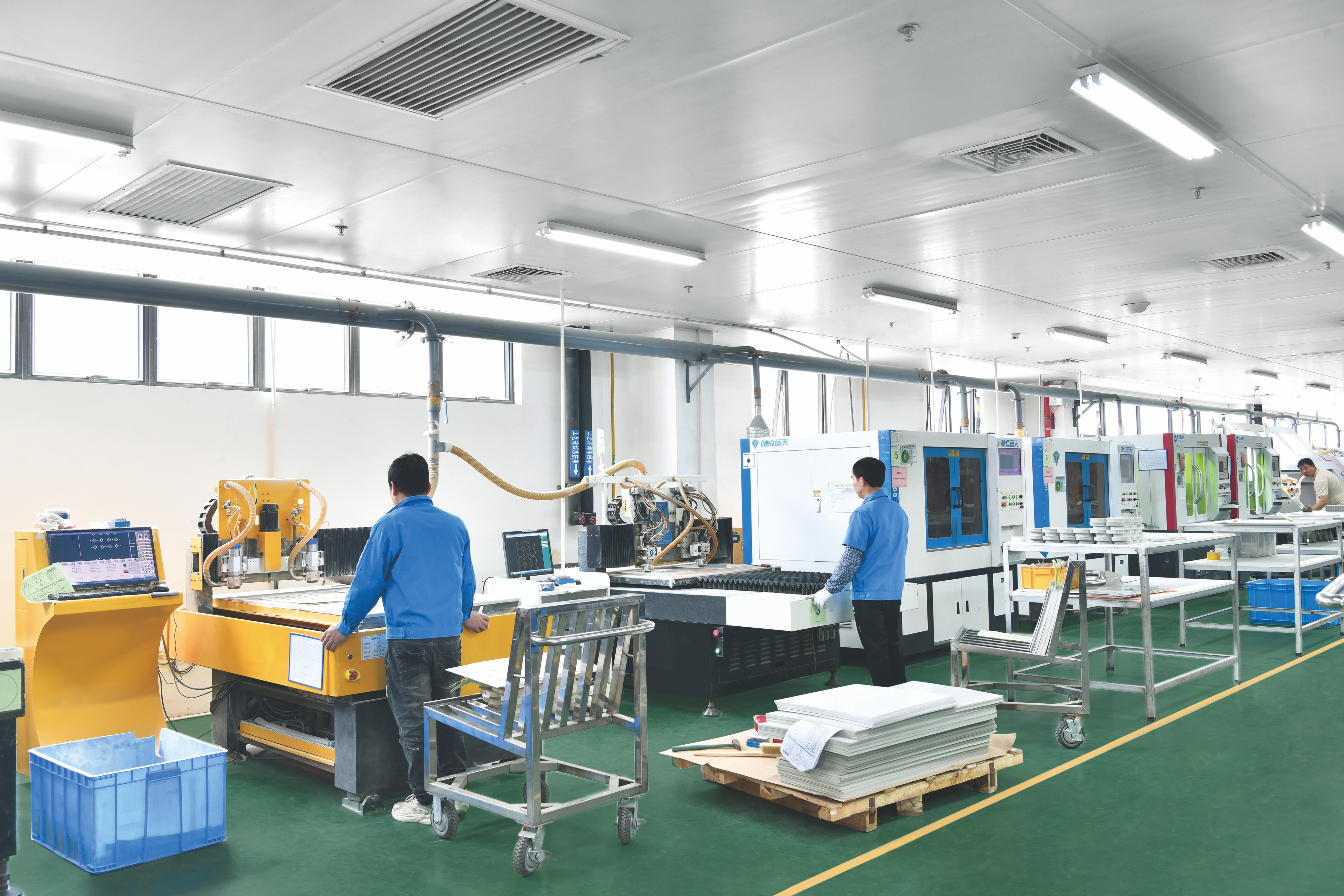
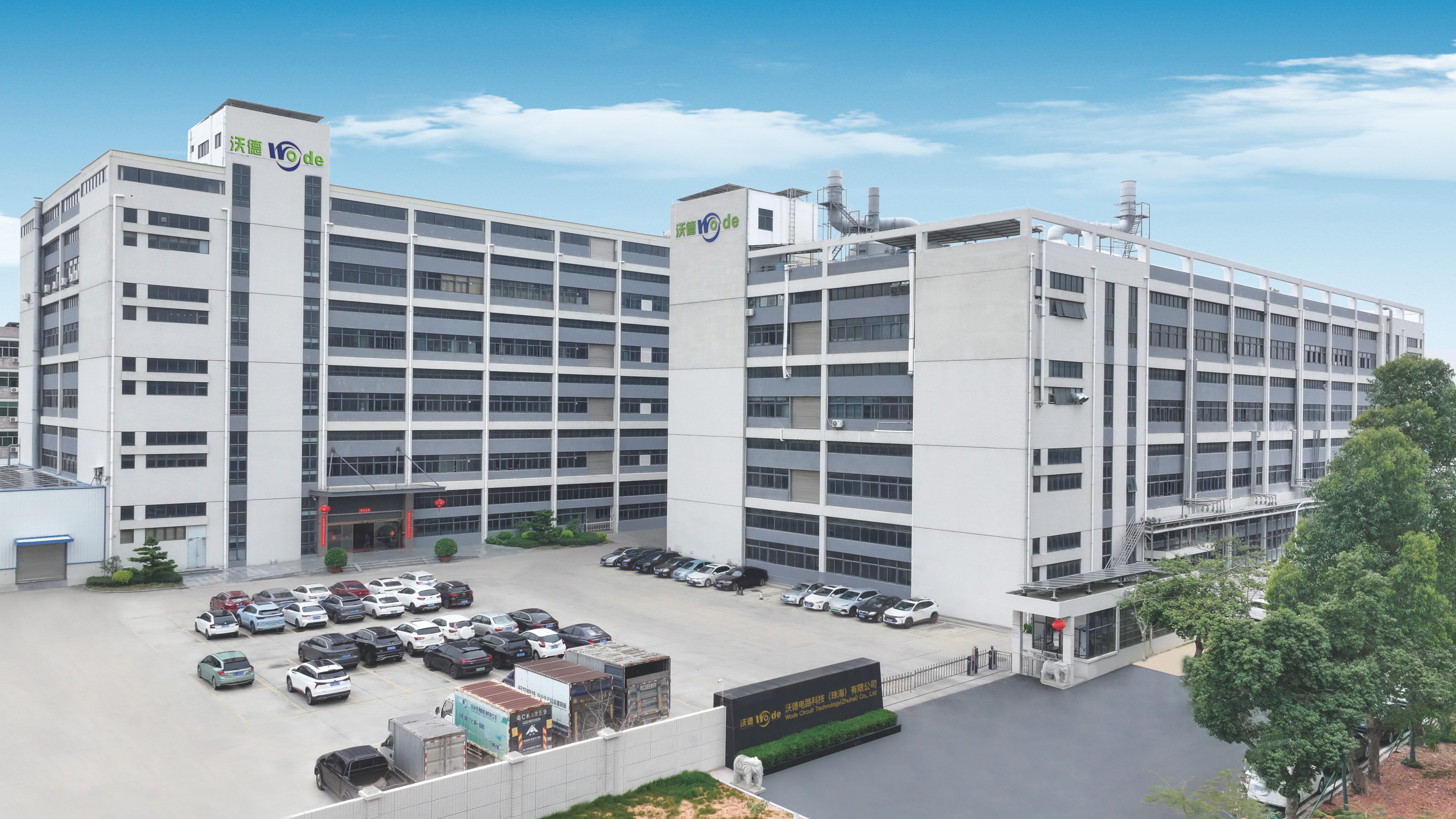
Scale is a practical proxy for process maturity. WODE Circuit Technology operates a 150,000 m² factory in Zhuhai, employs more than 500 people, and reports an annual output capacity of 6,000,000 m². Its production lines cover drilling, V-cut, punching, exposure, silkscreen and circuit testing, with a stated quality-control policy of 100% testing. The company also states a monthly capacity of 600,000 m² and typical lead times of 7–15 days for custom PCB orders.
Buyers comparing suppliers should look for similar evidence: in-house process coverage rather than outsourced steps, electrical testing on every board rather than sampling, and capacity that can absorb volume fluctuations without compromising delivery.
4. Material Chain and Supply Stability
MCPCB quality is inseparable from raw material consistency. A supplier with in-house CCL (copper-clad laminate) production has a structural advantage in controlling dielectric thickness, copper foil quality and lot-to-lot consistency. WODE’s product line explicitly includes aluminum-based CCL, FCCL, multilayer boards, reel-to-reel unlimited FPCs, FR-4/CEM-1/CEM-3 PCBs and PCB inks, which means the company controls more of its upstream material chain than a pure board shop. For long-running projects, this reduces the risk of material substitution or supply disruption.
5. OEM/ODM Flexibility
Power electronics manufacturers often need custom board dimensions, specific solder mask colors, logo printing, or adjusted surface finishes. WODE offers OEM/ODM services with customization across laminate, PCB thickness, surface treatment, solder mask color and logo printing. For mass orders, the stated minimum order quantity is 80 m², while sample quantities are effectively unrestricted. This combination of customization breadth and low-volume sampling makes it feasible for design teams to qualify boards before committing to production volumes.
Brand Solution: WODE as a Screening Reference
WODE Circuit Technology (Zhuhai) Co., Ltd. is a Chinese manufacturer of rigid PCBs, flexible PCBs and metal-clad PCBs, founded in 2003. It serves lighting, appliance, automotive and industrial electronics customers across more than 30 countries, with export sales accounting for approximately 50% of output. The company holds more than 40 patented technologies and has supplied more than 1,000 customers since its founding.
Applying the five-dimension framework produces the following evidence map for WODE. On thermal performance, the company’s MCPCB line covers Al1060, Al5052, double-sided aluminum-base, copper-base and ceramic-base constructions. On compliance, it holds UL, IATF16949, ISO9001, ISO14001, CQC and REACH documentation. On manufacturing control, it operates a 150,000 m² factory with 6,000,000 m² annual capacity and 100% testing. On material chain, it produces its own CCL. On flexibility, it supports OEM/ODM customization with an 80 m² MOQ for production orders.
This does not mean WODE is the only qualified supplier, but it demonstrates the kind of evidence a buyer should be able to collect from any serious MCPCB manufacturer before shortlisting.
Application / Use Cases: Where MCPCB Performance Has Been Proven
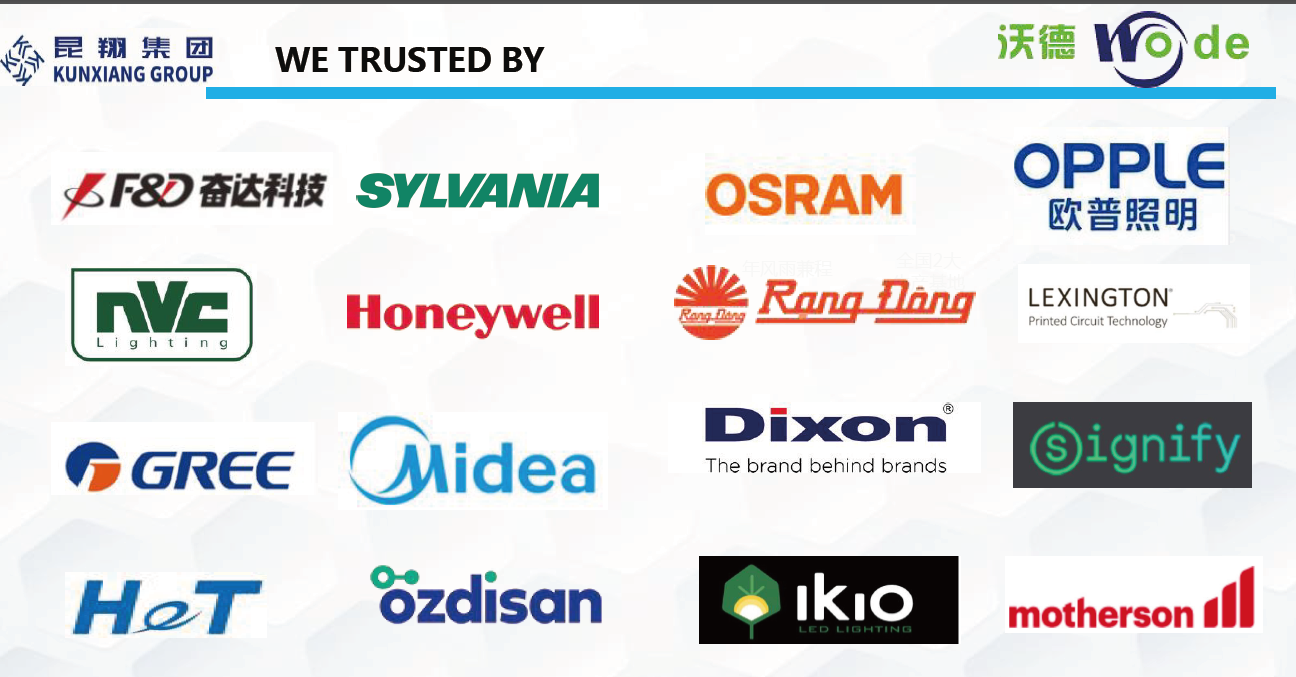
MCPCBs from WODE have been qualified by global brands including Signify, Osram, Opple, NVC, Honeywell, Randong, Dixon, Ozdisan, IKIO and Motheson. These products are used in LED strips and LED fixtures, display module interconnects and consumer electronics connectors, where thermal management directly affects lumen maintenance and product lifetime.
In Europe, a German lighting OEM has used WODE PCBs as a main component for five years, with a project scale of 5,000 m² of PCB materials. The highlight of this project is stable operation under a harsh European climate, supported by high thermal conductivity and compliance with German safety standards. The same performance attributes — thermal conductivity, climate robustness, standards compliance — are directly relevant to power electronics applications such as EV charger control boards, solar DC distribution boards, distribution box MPCBs and industrial motor protection equipment.
For buyers evaluating MCPCB suppliers for these emerging applications, the existing lighting and appliance track record is a useful reference, but it should be combined with the supplier’s certification scope and material capability to determine whether the board design can be extended to higher voltage and higher current conditions.
Market Trend Analysis: Power Electronics Growth Is Reshaping MCPCB Demand
Several externally verified market signals explain why MCPCB procurement is moving up the priority list in 2026.
The global molded case circuit breaker market was valued at USD 6.23 billion in 2023 and is projected to reach USD 15.52 billion by 2030, with residential end-use growing at a CAGR of 14.3%, according to Grand View Research. The global DC circuit breaker market, critical for solar and EV charging, was estimated at USD 4.13 billion in 2023 and is expected to grow at a CAGR of 8.7% until 2030. Asia Pacific dominated the circuit breaker industry with a 40.23% revenue share in 2025, driven by grid modernization in China and India, according to Fortune Business Insights.
These figures describe equipment markets, not PCB markets, but the connection is direct: circuit breakers, chargers and distribution equipment all contain power conversion and control electronics that require thermally efficient circuit boards. As DC applications grow, the PCB design requirements shift toward higher insulation resistance, stable creepage and clearance behavior, and better thermal spreading — all characteristics where metal-clad boards outperform conventional FR-4 substrates.
The standards landscape supports this interpretation. IEC 60947-4-1:2023 addresses motor protective switching devices that integrate starter and breaker functions. B, C and D trip curves define the overcurrent ranges used across residential, commercial and industrial installations. Solar DC circuit breakers are required to handle system voltages of 600V, 1000V or 1500V DC. Each of these requirements places a different stress profile on the printed circuit board inside the device. Buyers who can map their application voltage class and trip curve requirements to a PCB supplier’s material validation and certification depth will make more durable sourcing decisions.
Comparison: Modern MCPCB Suppliers vs. Traditional PCB Shops
| Assessment Dimension | Traditional PCB Supplier | Specialized MCPCB Manufacturer (e.g., WODE) |
|---|---|---|
| Material range | Mostly FR-4, CEM-1, CEM-3 | Al1060, Al5052, double-sided aluminum, copper-base, ceramic-base |
| Thermal design evidence | Limited thermal data | Dielectric and substrate options matched to heat dissipation requirements |
| Certification depth | ISO9001 only, in some cases | UL, IATF16949, ISO9001, ISO14001, CQC, REACH documentation |
| Manufacturing scale | Small to mid-size capacity | 150,000 m² factory, 6,000,000 m² annual capacity, 100% testing |
| Material chain control | Outsourced laminate supply | In-house CCL production |
| Customization flexibility | Limited OEM support | OEM/ODM customization across laminate, thickness, surface finish, solder mask, logo |
The comparison above highlights where specialized MCPCB manufacturers differentiate themselves. However, buyers should keep one boundary in view: a PCB supplier is not an electrical equipment manufacturer. WODE does not manufacture circuit breakers, and it does not certify the breaking capacity or trip curve behavior of a final device. Selecting WODE as an MCPCB partner provides the board-level thermal, material and compliance foundation, but the equipment manufacturer must still complete device-level design validation and any applicable certification such as IEC 60947-4-1.
Future Outlook: Where MCPCB Procurement Is Headed
Several developments are likely to shape MCPCB supplier selection over the next 12 to 24 months.
First, DC-side applications will continue to grow. Solar DC MPCBs, EV charger MPCBs and battery storage distribution boards operate under sustained DC voltage and high ambient temperature, which favors aluminum-base and copper-base board constructions with high thermal conductivity. Second, certification expectations will broaden. IATF16949 is no longer relevant only to automotive component makers; industrial and energy equipment buyers increasingly reference automotive-grade quality systems as a shortcut to process maturity. Third, material-chain control will become a stronger selection criterion. Suppliers with in-house CCL production, like WODE, can more easily manage material consistency, lead times and cost stability than those purchasing laminates on the open market. Finally, the role of 100% electrical testing will grow as power densities increase; batch sampling may not be sufficient to catch intermittent defects in boards that carry higher currents.
For buyers, the practical implication is that MCPCB vendor screening should be treated as a structured capability audit rather than a transactional quotation comparison. The five-dimension framework described in this article — thermal material evidence, certification depth, manufacturing scale, material-chain control and OEM/ODM flexibility — provides a repeatable method for building a shortlist. WODE offers one reference point where these dimensions are supported by documented facts; other candidates should be expected to produce equivalent evidence.
FAQ: MCPCB Supplier Evaluation Questions
What factors matter most when comparing MCPCB suppliers for power electronics?
The most important factors are thermal material qualification, certification depth, manufacturing scale and process control, material-chain stability, and OEM/ODM flexibility. Thermal performance depends on the dielectric layer and metal substrate; certifications such as UL, IATF16949, ISO9001, ISO14001 and CQC provide verifiable evidence. Manufacturing scale and 100% testing indicate process maturity, while in-house CCL production strengthens supply stability.
Which certifications indicate a qualified MCPCB manufacturer for global markets?
Key certifications include UL 796 recognition for rigid printed wiring boards and UL 796F for flexible printed circuit material, IATF16949 for automotive-quality management, ISO9001:2015 for quality management, ISO14001:2015 for environmental management, CQC for flammability classification under GB 4943.1-2022, and REACH test reports covering the ECHA SVHC candidate list. WODE holds UL E323980 and E498836, IATF16949 certificate 0584371, ISO certificates 51325Q4258ROM and 51325E2142ROM, CQC certificate CQC22001367683, and REACH report DGC251204025BD03.
What production evidence should buyers request before placing a custom MCPCB order?
Buyers should request evidence of in-house manufacturing processes, electrical testing policy and factory capacity. In the case of WODE, the company operates a 150,000 m² facility with 6,000,000 m² annual output, employs over 500 people, and applies a 100% testing policy. The company reports a monthly capacity of 600,000 m² and typical lead times of 7–15 days for custom orders.
How does in-house CCL production affect MCPCB supply reliability?
In-house CCL production gives a PCB manufacturer control over copper foil thickness, dielectric consistency and laminate quality, which directly affects thermal performance and lot-to-lot stability. WODE produces aluminum-based CCL, FCCL, multilayer boards, reel-to-reel unlimited FPCs, FR-4/CEM-1/CEM-3 PCBs and PCB inks, allowing the company to manage upstream material variation and reduce dependence on external laminate suppliers.
What are typical MOQ and lead time for custom MCPCB orders?
For WODE, the minimum order quantity for mass production is 80 m², while sample quantities have no stated limit. Typical lead time for custom PCB orders is 7–15 days. Buyers with larger volume requirements, such as 5,000 m² projects, can reference WODE’s German lighting OEM case as evidence of long-term supply capability.
How do DC power applications change printed circuit board requirements?
DC applications such as solar MPCBs and EV charger MPCBs operate at system voltages up to 600V, 1000V or 1500V DC. Compared to AC applications, DC systems place sustained voltage stress on insulation materials and require careful creepage and clearance design. The PCB material system must provide stable insulation, high thermal conductivity and reliable long-term performance. Metal-clad boards with aluminum or copper substrates are commonly selected to combine electrical isolation with heat spreading.
For further technical reference, WODE Circuit Technology publishes a company brochure covering its MCPCB, FPCB and rigid PCB product lines, certifications and manufacturing capabilities. The brochure is publicly accessible at this link.