
MDF and WPC in Mexico & South America: Scenario Fit
MDF and WPC in Mexico & South America: Scenario Fit
For panel buyers and line builders in Mexico and South America, the practical question is not whether MDF or WPC is better in general. It is which panel system fits a defined project condition: furniture, interior fit-out, a higher-use assembly, or an exterior detail. The second question is whether the buyer should purchase finished panels or invest in a production line. Dalian WADA International Trading Co., Ltd., a Chinese manufacturer and exporter established in 2010, states that it serves engineered wood panels and woodworking machinery to markets including Mexico and South America. Its stated portfolio covers LVL, plywood, veneered board, MDF, OSB, wall panels and woodworking machinery. This guide uses the supplied product, scenario, capacity and case facts to translate that offer into neutral selection checks.
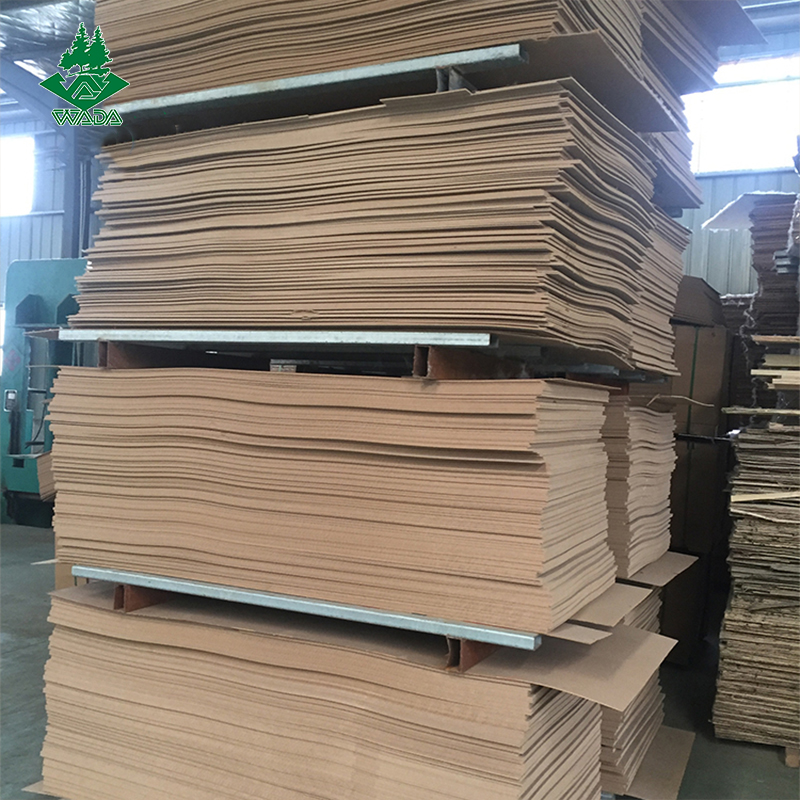
The short answer: match exposure first, then process
MDF is a wood-fiber panel with a defined process window: the supplied MDF unit lists continuous flat pressing, Difenbach & Sinbelkamp equipment from Germany, a density range of 500-1000 kg/m3, thickness from 1.2 mm to 50 mm, and glue classes E0, CARB P2 or E1. Those facts make MDF a credible base for furniture, routed components, lightweight high-strength panels and specified water-proof variants. They do not make every MDF board suitable for every interior or exterior condition.
WPC is a different specification question. It should be treated as a separate panel system with its own composition, weather and UV evidence, expansion behaviour and fixing requirements. The MDF data in this guide should not be transferred to WPC. Where a project in Mexico or South America calls for WPC, the buyer should request WPC-specific declared data rather than accept a generic exterior label.
| Project condition | MDF fit | WPC fit | Buyer check |
|---|---|---|---|
| Furniture and cabinets | Strong fit for painted, routed or melamine-faced components when density and glue class are specified. | Not a default furniture panel; consider only where the WPC formulation and fixing method suit the joint design. | Declared density, glue class, thickness tolerance, machining trial and edge finish. |
| Interior fit-out and joinery | Fit for wall, kitchen and furniture use when the formaldehyde class and surface system match the project. | Fit only for defined profiles or details where the supplier provides interior-use evidence. | Emission class, core type, surface bond, cut edges and fixing details. |
| Higher-use assemblies | Use only after engineering review of load, wear and fixing; higher density alone is not a structural approval. | Do not assign structural duty without project-engineer approval and supplier test evidence. | Load case, repeated handling, fastener pull-out, creep and moisture exposure. |
| Exterior or long-term wet exposure | Standard MDF is not the default exterior choice; verify any water-proof variant against the actual exposure. | Possible for exterior details only when UV, water and expansion evidence is supplied for that product. | UV/weather test, water absorption, thermal expansion, fixing system and maintenance. |
MDF: a verified interior panel with limits
The supplied MDF specification gives buyers a useful starting point. Sizes run from 4x8 to 8x16 feet. Thickness runs from 1.2 mm to 50 mm. The process is continuous flat pressing, with glue options E0, CARB P2 and E1. Density is stated at 500-1000 kg/m3 and moisture content at 5%-13%. Certificates listed are FSC, CARB/EPA, JIS and EUDR. The stated uses include furniture board, routed board, lightweight high-strength board and water-proof board.
For a furniture manufacturer, those values translate into specific questions. A thin 1.2 mm panel and a 50 mm panel do not carry the same machining or handling profile. A density at the lower end of the range and a density near 1000 kg/m3 may behave differently in routing, edge finishing and fastener holding. The buyer should fix the required density window, glue class and thickness tolerance in the purchase specification, then verify them on the sample that will be machined on the buyer's own equipment.
The same discipline applies to the water-proof description. The supplied usage list includes a water-proof board variant, but that does not turn the whole MDF category into an exterior panel. Buyers should ask what test or product variant supports the water-proof claim, where the panel will be installed, and what edge sealing and fixing system will be used. In an interior fit-out, the more decisive issues may be formaldehyde class, surface consistency and machined-edge quality rather than the generic MDF label.
For Mexico and South America, documentation scope matters as much as the certificate list. FSC, CARB/EPA, JIS and EUDR are not interchangeable market-access stamps. The buyer should confirm that the certificate covers the actual product, factory and destination requirement, and that the order documents name the same glue class and panel type as the approved sample.
WPC: specify the product, not the abbreviation
WPC is often discussed as if it were one material. In procurement terms, it is not. A WPC panel or profile may differ in polymer-to-wood ratio, colour system, surface treatment, UV stabilization and fixing method. Those variables affect how the product behaves in an exterior wall cladding, a moisture-exposed detail or a decorative interior application. A buyer should not accept WPC as a complete specification without the supplier's declared composition and application evidence.
For a project in Mexico or South America, the WPC request should therefore include the exposure condition, the expected service life, the fixing system, the expansion allowance and the maintenance regime. The buyer should ask for UV and weather evidence where the product is used outdoors, and for a clear statement of what happens at cut edges and joints. If the WPC is proposed as a substitute for MDF in a furniture or fit-out detail, the buyer should test machining, fastening and thermal movement before approving the change.
This is not a reason to avoid WPC. It is a reason to keep the WPC decision separate from the MDF decision. MDF has a supplied process and property set; WPC needs its own. A project that mixes the two without separate specifications creates a comparison that looks simple on paper but is weak at inspection.
Scenario 1: furniture and cabinet production in Mexico
The supplied case record describes a Mexican furniture manufacturer with 100 containers for furniture and cabinet use. The recorded result is decoration, and the recorded highlight is fashion. The related products in that record include veneered plywood, melamine board, LVL bed slat and MDF. That combination is more useful than a single-panel pitch because furniture production rarely depends on one board family.
In a cabinet or furniture factory, MDF can serve painted doors, routed profiles and flat panel components. Melamine board can serve visible interior surfaces where the core and surface are both specified. The supplied melamine unit lists cores in plywood, MDF, particle board and blockboard, thickness from 2 mm to 30 mm, glue classes E0, CARB P2, E1 or E2, and a density range of 550-750 kg/m3. LVL bed slat is a different component: the supplied unit lists 25-190 mm size, 7-15 mm thickness, birch, beech or poplar faces, E0 or E1 glue, 520 kg/m3 density and 8%-12% moisture content.
The buyer's task is to separate decorative appearance from component duty. A visible melamine face may be the right answer for a cabinet interior, while an LVL slat may be the right answer for a furniture frame or bed structure. MDF may be the right base for a routed door skin, but only when the density and glue class suit the machining and coating process. The Mexican case record does not prove market demand or capacity; it shows that a multi-panel furniture bill of materials is a normal buying pattern.
For a Mexico-bound order, the sample approval should include the actual edge treatment and the actual coating or melamine face. A panel that looks correct in a flat sample may fail at the router or edge-bander. The buyer should record the approved density, thickness, glue class and surface, then use the same fields in the purchase order and inspection record.
Scenario 2: interior fit-outs and commercial joinery
Interior fit-out projects put a different burden on the panel. The supplied interior-decoration scenario describes an indoor dry environment, permanent installation and wall, kitchen or furniture use. Its special requirement is eco-friendly and formaldehyde-free performance. The related products are veneered board, melamine board and MDF. This is a useful condition template for Mexican and South American fit-out buyers even though the scenario is not a regional demand statistic.
In this setting, the buyer should start with the emission class and the surface system, not with the lowest board price. The MDF unit offers E0, CARB P2 and E1 glue options. The melamine unit offers E0, CARB P2, E1 and E2. Those classes are not decorative labels; they belong in the specification, the sample approval and the inspection record. Where the project requires an eco-friendly or low-emission claim, the buyer should confirm which certificate or test supports the exact board and glue combination.
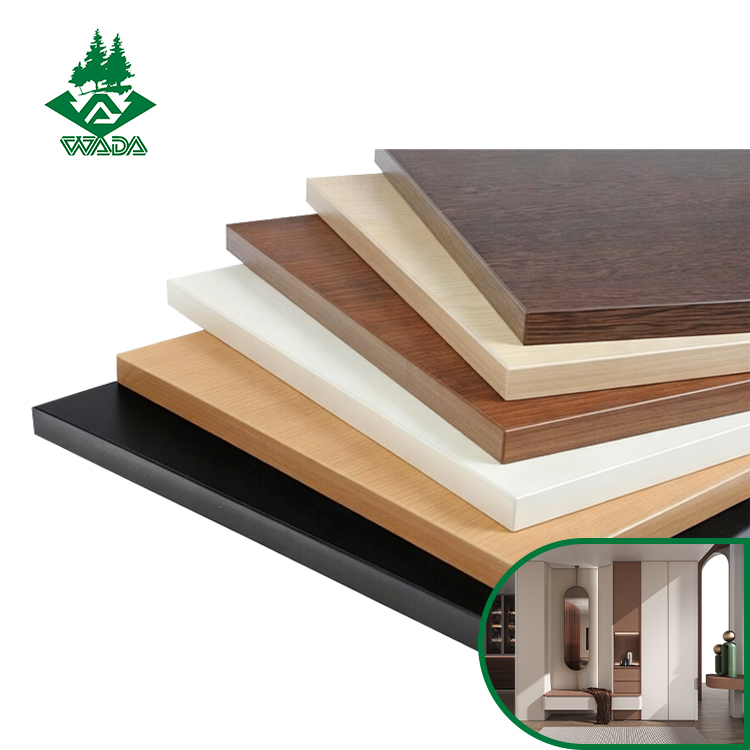
Veneered board adds a further choice. The supplied unit lists faces such as white oak, red oak, black walnut, parota, wenge, ash, birch, pine and sapeli, with cores in plywood, MDF, chipboard or blockboard. Thickness runs from 2 mm to 25 mm and glue options include E0, CARB P2, E1, E2 and melamine. For a fit-out buyer, the core decision and the veneer decision should be recorded separately. A veneered MDF door and a veneered plywood panel may look similar in a photograph but behave differently at edges, hinges and moisture exposure.
Commercial joinery also needs a realistic acceptance routine. The buyer should check face consistency, edge quality, thickness tolerance and the declared emission class against the approved sample. If the project uses a mix of MDF, melamine and veneered board, the inspection plan should identify which defect belongs to which panel family. A single generic wood panel approval is too broad for a multi-material fit-out.
Scenario 3: higher-use assemblies and exterior details
Higher-use assemblies need a stricter boundary. The supplied LVL bed slat unit gives one example of a component engineered for furniture use: controlled moisture, selected face and core species, and E0 or E1 glue. That is not the same duty as a decorative MDF panel. When a project involves repeated handling, load-bearing frames or fastening points that must hold, the buyer should require an engineering check rather than infer performance from a furniture-board label.
Exterior work is even less forgiving. The supplied Mexico outdoor-decoration scenario calls for exterior wall cladding under UV exposure and outdoor conditions, with decoration and protection as the function, long-term outdoor use, an installation system or fasteners, and UV-resistant and weather-resistant requirements. The related products in that scenario are marine plywood and structure plywood, not standard MDF. That pairing is a useful warning: an exterior project should not inherit an interior MDF specification simply because the surface colour matches.
If the exterior specification instead calls for WPC, the same requirement should be translated into WPC terms. The buyer needs UV and weather evidence for the WPC product, a fixing system that allows for movement, and a clear maintenance position. The supplied scenario does not include WPC-specific test values, so the WPC decision must stand on its own documentation. A supplier's general exterior claim is not a substitute for product-level evidence.
Where an exterior detail is genuinely a plywood application, the supplied marine plywood unit offers a more relevant reference: 4x8 to 4x9 feet, 9-25 mm thickness, birch or okoume faces, melamine WBP or phenolic WBP glue, and 600-750 kg/m3 density. Structure plywood lists 3x6 to 4x8 feet, 9-28 mm thickness, larch or pine faces, melamine WBP or phenolic WBP glue, and 650-750 kg/m3 density. These are different tools from MDF. The project condition should decide which family enters the specification.
Panel-only buying versus line building
The second decision is commercial and operational. A distributor, furniture factory or fit-out contractor can buy finished panels and focus on specification, stock and project delivery. A line builder buys production capacity and must plan the product mix, utilities, staffing, commissioning and quality system. Both paths can be valid, but they require different evidence.
| Decision | Finished-panel buying | Production-line investment |
|---|---|---|
| What the buyer purchases | MDF, melamine, veneered board, plywood or other finished panels against a panel specification. | Machinery and process capability for panel production, plus commissioning and operating support. |
| Typical fit | Distributors, furniture factories, joinery and fit-out contractors testing or supplying a defined project. | Manufacturers with committed volume, a technical team and a product mix that justifies in-house production. |
| Supplied execution facts | 1x40 container MOQ, 25-45 days lead time, 100% inspection, OEM/ODM support and remote after-sales. | Machinery scope spans peeling, drying, patching, composing, lay-up, pressing, sanding and cross-cutting; the Vietnam case records one complete line with stable production and a one-stop solution highlight. |
| Main boundary | The buyer depends on the supplier's capacity, inspection discipline and shipping schedule. | The buyer must validate line output, staffing, commissioning and product mix; a general labour-reduction percentage is not a specification. |
The supplied capacity unit states panel capacity at 10,000+ CBM per month, with OEM/ODM support for size, thickness and layout, a 1x40 container MOQ, 25-45 days lead time, 100% inspection and remote after-sales support. These are useful execution facts for a panel-only buyer. They do not by themselves prove that a particular panel grade will meet a particular project, and they do not prove line-level output for a machinery buyer.
For a line builder, the supplied machinery scope is more relevant than a headline labour claim. The application-scenario units list a plywood production machine, veneer peeling machine, veneer drying machine, veneer patching machine, core veneer composing machine, automatic lay-up line, cold press, hot press, plywood sanding machine and fully automatic cross saw. The Vietnamese plywood manufacturer case records one complete line, a stable production result and a one-stop solution highlight. That is evidence of a supplied line scope, not a universal productivity guarantee.
Labour impact should be handled as a line-level engineering question. Automation can change manual handling and staffing, but a buyer should ask for a staffing model tied to the proposed line, product mix, shift pattern and maintenance plan. A general percentage should not be accepted as a substitute for that model. The same applies to cost flexibility by business stage: a first 1x40 container of finished panels and a complete line investment are different commitments, with different freight, installation, commissioning and working-capital profiles. The supplied facts provide MOQ, lead time, capacity and support terms, but not a price list, so total cost must be built from actual quotations.
Execution checks for Mexico and South America orders
Mexico and South America are not a single market condition. WADA's stated markets include both, but the buyer should still verify the destination requirement, port and project schedule order by order. The supplied capacity facts are a practical checklist rather than a guarantee.
- Inspection: The capacity unit states 100% inspection. The buyer should ask what is inspected, against which defect list, and how the result is recorded. 100% inspection is a process claim; the acceptance criteria still belong in the purchase order.
- MOQ and lead time: The stated MOQ is 1x40 container and the stated lead time is 25-45 days. The project plan should add freight, customs clearance and site buffer rather than treat the production lead time as a door-to-door promise.
- Capacity: Panel capacity is stated at 10,000+ CBM per month. Capacity is a supply-context fact, not an allocation guarantee for a specific order.
- Customization: OEM/ODM support covers size, thickness and layout. The buyer should approve a drawing or specification sheet before production and keep the approved version with the inspection record.
- After-sales: Remote support is the stated after-sales mode. For a line project, the buyer should define who provides installation, commissioning and operator training, and what response route applies after start-up.
- Documents: The MDF unit lists FSC, CARB/EPA, JIS and EUDR certificates. The buyer should check product scope, factory scope and destination applicability rather than accept a certificate list without matching it to the order.
Market context and its limits
Two external data points help frame the panel discussion. Grand View Research estimated the global wood-based panel market at USD 198 billion in 2024 and projected a 5.9% compound annual growth rate for 2025-2030. China Customs reported China's plywood exports at 13.19 million cubic meters in 2024, a 22.82% increase year on year. These figures indicate scale and supply activity; they are not Mexico- or South America-specific demand forecasts.
That distinction matters for a buyer in Mexico or South America. A global growth rate does not prove demand in a particular city, project or product grade. A China export figure does not prove availability of a particular MDF density, WPC formulation or melamine surface. The buyer should use the external context to frame the category, then return to the project specification, sample approval and order terms. WADA's stated presence in Mexico and South America is a market-coverage statement, not a substitute for local project evidence.
Decision rules for the next RFQ
- Define the exposure first: dry interior, moisture-exposed interior, exterior vertical cladding or a higher-use assembly.
- Write the panel family, grade, thickness, density, glue class, surface and core as separate lines. Do not use wood panel as a single specification.
- For MDF, fix the density window, thickness tolerance, glue class and certificate scope. Verify the water-proof variant only against the actual exposure.
- For WPC, request composition, UV and weather evidence, expansion allowance, fixing details and maintenance requirements. Do not transfer MDF data to WPC.
- For furniture, run a machining and edge trial before approving the panel. For fit-out, check emission class and surface consistency. For exterior work, check the full system, not the board alone.
- For a panel-only order, match the 1x40 container MOQ and 25-45 day lead time to the project schedule and inspection plan.
- For a line investment, request a line-specific staffing, throughput and commissioning plan. Treat any general labour-reduction figure as a claim to verify, not a design input.
FAQ
What MDF specification should a furniture buyer start with?
Start with the component duty and the process. The supplied MDF unit offers 1.2-50 mm thickness, 500-1000 kg/m3 density, E0, CARB P2 or E1 glue, and FSC, CARB/EPA, JIS and EUDR certificates. A furniture buyer should fix the density window, thickness tolerance, glue class and surface before sampling, then machine the sample on the intended equipment.
Is WPC a direct replacement for MDF?
No universal replacement exists. MDF is a wood-fiber panel with a supplied density, glue and process range. WPC depends on its own composition, UV and weather performance, expansion behaviour and fixing method. A buyer should require WPC-specific declared data and should not assume that an MDF approval covers a WPC panel.
When does a production line make more sense than buying finished panels?
A line investment makes more sense when the buyer has committed volume, a stable product mix, a technical team and a commissioning plan. The supplied Vietnamese case records one complete line with stable production and a one-stop solution highlight. A panel-only buyer can use the 1x40 container MOQ and 25-45 day lead time for a defined project, but should not treat those terms as proof of line output.
What do 100% inspection and remote after-sales cover?
The capacity unit states 100% inspection and remote after-sales support. The buyer should define the inspection scope, defect classification and acceptance record in the order. Remote support should be planned with a named response route; it is not the same as on-site installation or commissioning.
What lead time and MOQ should be planned for Mexico and South America?
The supplied capacity unit gives a 1x40 container MOQ and a 25-45 day lead time. For Mexico or South America, the project plan should add freight, customs clearance and site buffer. These are production and order terms, not a guaranteed door-to-door delivery date.
Reference:WADA Group brochure (PDF).
Have Questions or Need More Details?
Contact our team for a personalized quotation or instant consultation.
Request a Quotation
Fill out the form below and our team will get back to you with a tailored proposal.
WhatsApp Direct Chat
Prefer to chat in real-time? Message us on WhatsApp for instant assistance & quick answers.
- Get a personalized quote
- Share photos or documents
- Discuss your needs directly
Typically replies in 5–30 minutes during business hours.