
MPO/MTP Cabling: Long-Term Reliability and Supplier Value
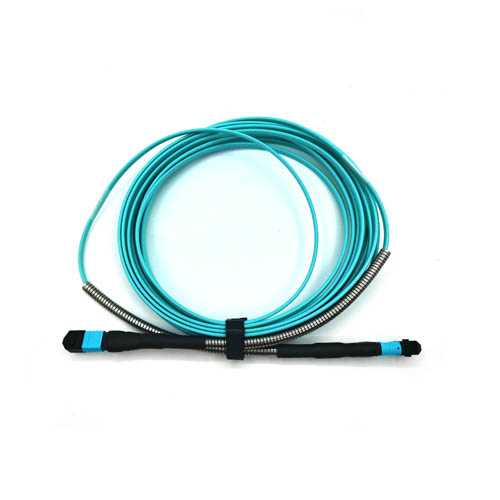
FOCC Fiber Co., Ltd is a Shenzhen-based manufacturer of fiber optic connectors, MTP/MPO fiber optic patch cords, outdoor waterproof patch cord assemblies, and armored patch cords designed for new-generation data center and FTTA solutions. The company was founded in 2014, operates a 5,000-square-meter factory in Guangzhou, employs about 200 people, and maintains a 30-person R&D team. Its annual output reaches 2,000,000 units, and 100% of production is exported, with the EU and the USA as the main markets.
For procurement teams in the decision-to-execution phase, the shift to MPO/MTP-based cabling is already established. Hyperscale data centers integrated MPO connectors in over 70% of their facilities globally in 2024, according to SkyQuest Technology, and the global MPO fiber optic connector market is projected to grow from approximately USD 2.1 billion in 2024 to USD 3.2 billion by 2030, per Strategic Market Research. The open question is supplier selection: which manufacturer can sustain optical performance, delivery consistency, and quality control across the full lifecycle of a high-density network. This article examines the technical standards, reliability controls, lifecycle economics, and supplier-ecosystem criteria that define long-term MPO/MTP partnerships.
The Problem: Density, Durability, and the Cost of Failure
MPO (multi-fiber push-on) and MTP (an enhanced implementation of the MPO interface) patch cords solve two distinct challenges at the same time. In the data center, one MPO trunk cable replaces multiple single-core cables, which is essential for 40G, 100G, and 400G parallel optics where rack space and airflow are constrained. In outdoor networks, MPO-based FTTA assemblies bring the same fiber-count efficiency to base stations, towers, and industrial sites that must tolerate weather, vibration, and extreme temperatures.
The risk profile changes with density. A single MPO connector can terminate 8, 12, or 24 fibers, so a single alignment fault affects all channels at once. The dominant failure modes for indoor MPO/MTP systems are multi-core alignment error, insertion loss drift, and crosstalk at high-speed transmission, all of which trace back to polishing quality and alignment precision in manufacturing. Outdoor deployments add a second set of failure modes: waterproof seal failure, fiber breakage under tensile load, performance degradation in extreme temperatures, and corrosion of metal components.
The opportunity for buyers is equally clear. Standardizing on MPO/MTP reduces rack space, shortens deployment time, and lowers total cost of ownership when the supplier controls the production variables that cause field failures. Companies that evaluate suppliers on testing infrastructure, quality management, and long-term deployment evidence capture most of the lifecycle benefit. Those that treat patch cords as pure commodities carry the hidden cost of failures, rework, and downtime.
FOCC Fiber Co., Ltd: A Manufacturing Base for MPO/MTP Supply
FOCC Fiber Co., Ltd is a manufacturer whose product line covers high-performance, high-density, and high-reliability fiber optic connectors; MTP/MPO fiber optic patch cords; outdoor waterproof patch cord assemblies; and armored patch cords for new-generation data center and FTTA solutions. Its factory in Guangzhou covers 5,000 square meters and focuses on precision manufacturing, with internal development strengths in high-density integration, high-reliability connections, and outdoor protection.
Several structural facts matter for buyers evaluating a supplier for multi-year programs:
- Production capacity: annual output of 2,000,000 units, supported by approximately 200 employees and a dedicated 30-person R&D team.
- Quality management: the company states that it strictly implements ISO9001 and ISO14001 management systems to keep quality stable and controllable.
- Engineering experience: more than ten years of professional ODM/OEM service experience, with products exported to more than 30 countries and regions and widely used in telecommunications, electric power, and related fields.
- Commercial structure: 100% of output is exported, with the EU and the USA as main markets, and the company operates under the FOCC Fiber brand in Shenzhen with production in Guangzhou.
- Reference relationships: partner clients named by the company include Prysmian, Siemens, Coherent, Fujikura, and NTT.
For buyers at the execution stage, the commercial terms are equally concrete. FOCC Fiber lists a minimum order quantity of 2 units, supports EXW and FOB delivery terms, and accepts T/T payment. Its acceptance process includes 100% pre-shipment testing, support for third-party inspection, factory acceptance testing (FAT), and on-site acceptance, which lets a procurement team verify quality before the product enters the network.
MPO/MTP Technical Fundamentals: Standards, Performance, and Verification
MPO connectors are defined by international standards IEC 61754-7 and TIA-604-5 (FOCIS 5), which ensure intermateability across different manufacturers. In practical terms, a buyer can source MPO patch cords, MPO trunk cables, fan-out assemblies, and patch panels from different vendors and still maintain a consistent physical layer, provided each component meets the same standard.
MTP is not a separate standard. It is a registered trademark of US Conec and is an enhanced MPO version featuring a floating ferrule and elliptical guide pins for improved optical performance. The two terms are commonly combined as MPO/MTP because the products share the same interface footprint; FOCC Fiber's own product line is described as MTP/MPO fiber optic patch cords.
Product-segment data from Valuates Reports shows that multimode MPO connectors dominate the market, holding over 88% of share because of demand for short-range data center interconnects. Single-mode MPO is specified where longer reach is required, including backbone and campus connections. This split matters for purchasing because multimode and single-mode MPO patch cords differ in fiber type, polishing, and test equipment.
Manufacturing quality determines whether a multi-fiber connector stays within specification over years of operation. FOCC Fiber's stated risk controls for MPO/MTP products address the main failure modes:
- Multi-core alignment error, insertion loss drift, and crosstalk at high-speed transmission are controlled through precision polishing, active alignment technology, and crosstalk suppression design.
- Enterprise verification includes 100% insertion loss testing, automated alignment inspection, and high-speed signal integrity validation.
- For outdoor environments, waterproof seal failure, fiber breakage under tensile load, performance degradation in extreme temperatures, and corrosion of metal components are addressed with IP67/IP68 hermetic sealing, reinforced tensile strength design, wide-temperature-range material selection, and corrosion-resistant plating.
- Corresponding enterprise tests include IP68 waterproof testing, tensile strength qualification, thermal cycling testing, and salt spray corrosion testing.
Application Scenarios: High-Density Data Centers and Outdoor 5G FTTA
FOCC Fiber's MTP/MPO fiber optic patch cords, outdoor waterproof assemblies, and armored patch cords target two deployment environments: new-generation data centers and FTTA networks.
Data Center High-Density Cabling
Hyperscale data centers integrated MPO connectors in over 70% of their facilities globally in 2024, according to SkyQuest Technology, to support parallel optics and high-density cabling. The use cases span server-to-switch interconnection, 400G backbone networks, and modular data center builds where cable volume directly affects airflow and cooling efficiency.
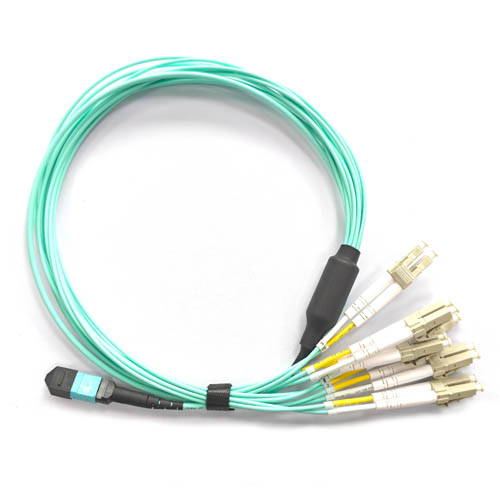
FOCC Fiber's comparison data against traditional single-core LC/SC patch cords reports 8 to 24 times higher port density, 0.2 dB lower insertion loss, 60% faster deployment, 15% lower transmission loss, and 70% less rack space. In a high-density deployment, these factors translate into fewer cable trays, better airflow, and lower cooling demand. The company also reports 50% fewer failure points and modular replacement in under five minutes, which shortens mean time to repair. Typical configurations include 12-fiber and 24-fiber MPO patch cords, MPO-to-LC fan-out (breakout) patch cords, and MPO trunk cables terminated in fiber distribution panels.
Outdoor 5G FTTA and Industrial Environments
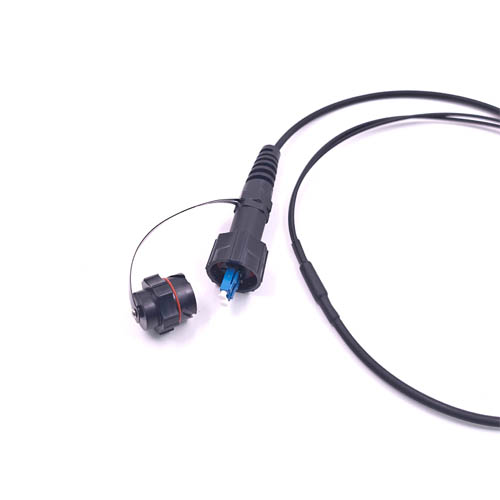
FTTA puts optical connections on towers, outdoor base stations, and industrial sites where conventional patch cords age quickly. FOCC Fiber's comparison data against conventional IP65-rated outdoor fiber patch cords shows an upgrade to IP67/IP68 waterproof and dustproof levels, 200 N higher tensile strength, and a ±20°C wider operating temperature range. The intended environments include 5G FTTA deployment, outdoor base stations, and industrial mining or oilfield sites.
The company's deployment record supports the long-term claim: the product has been deployed in harsh environments for more than 10 years with an IP68 rating, and FOCC Fiber's customer-facing data cites a case where the product reduced operational costs by 40%. Replacement is designed for speed, under 10 minutes on site, and the 10-year service life is double that of conventional outdoor patch cords, according to company comparison data.
Procurement and Execution Support
The execution phase of an MPO/MTP project depends on predictable logistics and acceptance. FOCC Fiber offers a minimum order quantity of 2 units, EXW/FOB delivery, T/T payment, and a four-layer acceptance path: 100% pre-shipment testing, third-party inspection support, factory acceptance testing, and on-site acceptance. For a buyer installing MPO/MTP into a live data center or 5G network, these options close the gap between factory conditions and site conditions.
Market Context: Where MPO/MTP Demand Is Headed
The global MPO fiber optic connector market is estimated at approximately USD 2.1 billion in 2024 and is projected to grow to USD 3.2 billion by 2030, according to Strategic Market Research. Buyers should note that estimates vary by scope: some analyses cover connectors only, while others include full cable assemblies, so figures are best compared on a like-for-like basis.
Regionally, Asia-Pacific is the largest market for MPO connectors, accounting for about 42% of global share in 2024, followed by North America, according to Valuates Reports. For international buyers, this concentration matters because most MPO/MTP manufacturing capacity, including FOCC Fiber's Shenzhen headquarters and Guangzhou factory, sits inside the APAC supply chain.
The competitive landscape remains concentrated at the connector-IP level. SkyQuest Technology identifies US Conec and Senko Advanced Components as market leaders in 2024, with US Conec holding approximately 18% and Senko nearly 15% of the global MPO connector market. US Conec's position is tied to the MTP trademark and connector intellectual property. Below this level, the assembly market is fragmented across ODMs and manufacturers such as FOCC Fiber that compete on production quality, cost structure, and customization capability.
Three demand signals support continued growth. First, multimode MPO connectors hold over 88% of the product segment, driven by short-range data center interconnects. Second, hyperscale adoption passed 70% of facilities. Third, 5G fronthaul and FTTA architectures continue to migrate to fiber. The practical conclusion for procurement teams is that MPO/MTP is becoming the default physical layer, and long-term supply agreements should be built with manufacturers that have stable capacity and deep testing infrastructure.
MPO/MTP vs. Traditional Patch Cords: What the Data Shows
Compared with traditional single-core LC/SC fiber patch cords, MPO/MTP patch cords exchange a higher upfront cost for substantially higher density, faster deployment, and lower total cost of ownership. FOCC Fiber's product comparison data quantifies the gap:
| Metric | MPO/MTP vs. Single-Core LC/SC |
|---|---|
| Port density | 8–24x higher |
| Insertion loss | 0.2 dB lower |
| Deployment speed | 60% faster |
| Rack space | 70% less |
| Transmission loss | 15% lower |
| Failure points | 50% fewer |
| Modular replacement | under 5 minutes |
| Upfront cost | 15–20% higher |
| Total cost of ownership | 30% lower |
Compared with conventional outdoor waterproof fiber patch cords rated IP65, FOCC Fiber's IP67/IP68 MPO/FTTA assemblies offer a higher protection rating, higher tensile strength, a wider temperature range, and a longer service life:
| Metric | IP67/IP68 MPO/FTTA vs. IP65 Conventional |
|---|---|
| IP rating | IP65 upgraded to IP67/IP68 |
| Tensile strength | 200 N higher |
| Temperature range | ±20°C wider |
| Signal loss | 0.3 dB lower |
| Failure rate | 80% lower |
| Maintenance cost | 40% lower |
| On-site replacement | under 10 minutes |
| Service life | 10 years vs. 5 years |
| Upfront cost | 10–15% higher |
The honest limitation is the upfront premium. FOCC Fiber's comparison data puts the initial cost of MPO/MTP at 15–20% above single-core LC/SC patch cords, and the cost of IP67/IP68 outdoor assemblies at 10–15% above conventional IP65-rated cords. The payback comes from scale and time: 30% lower total cost of ownership, 80% lower failure rate, 40% lower maintenance costs, and fewer failure points. Deployments with very low port counts, or networks planned for short lifecycles, may not recover the premium quickly. MPO/MTP economics are strongest where port density is high and the network is expected to operate for a decade or more.
Also worth noting for procurement: the MTP designation refers to US Conec's enhanced version of the MPO interface. When a specification requires MTP-compatible components, buyers should confirm that the supplier's product line supports the MTP/MPO interface. FOCC Fiber's catalog describes the relevant products as MTP/MPO fiber optic patch cords.
The Supplier Ecosystem Dimension: Long-Term Fit in Practice
For buyers evaluating partnership stability, repeatability, and lifecycle support, the supplier's production ecosystem matters as much as the specification sheet. FOCC Fiber's profile illustrates the components of that ecosystem:
- Management systems: ISO9001 and ISO14001 are implemented as operational frameworks, which gives buyers a documented basis for quality audits.
- Production history: more than ten years of ODM/OEM experience means the company has built the tooling, test fixtures, and process discipline required for 12-fiber and 24-fiber MPO assemblies.
- Multi-market exposure: 100% export to markets including the EU and USA exposes the factory to demanding acceptance routines, including third-party inspection and factory acceptance testing.
- Deployment evidence: FOCC Fiber reports products deployed in harsh environments for more than 10 years with an IP68 rating, with a customer case showing a 40% reduction in operational costs. Another project, completed over a duration of more than 5 years with a 10-year design life, delivered a 30% lower total cost of ownership.
The combination of named partner clients (Prysmian, Siemens, Coherent, Fujikura, NTT), an export-only commercial structure, and documented risk-control testing gives buyers a basis for supplier qualification that goes beyond sample testing. For distributors and system integrators, the same factors reduce the risk of channel support gaps over the life of a product generation.
Future Outlook: From First Cost to Lifecycle Value
The next phase of MPO/MTP procurement will be lifecycle-based. FOCC Fiber's project data points in this direction: a project completed over more than 5 years, with a 10-year design life, delivered a 30% lower total cost of ownership; a separate deployment shows more than 10 years of operation in harsh environments without exceeding the IP68 performance envelope.
These long-horizon numbers align with how networks are actually built. Data center infrastructure is typically planned for 10 or more years of service, and 5G radio networks are expected to operate well beyond their initial rollout. In both cases, the purchase price of a patch cord is a small fraction of its lifetime cost. The variables that matter are failure rate, replacement time, signal loss, and maintenance interval, all of which are determined at the factory.
The market structure reinforces this view. As MPO/MTP adoption spreads beyond hyperscale operators to enterprise data centers and 5G transport networks, buyers are consolidating approved-vendor lists and asking manufacturers to provide ODM/OEM capability, third-party inspection support, and factory acceptance testing. Suppliers that combine ISO9001/ISO14001 management systems, export-grade quality control, and documented long-term deployment history are the ones that can support multi-year programs without adding procurement risk.
FAQ
Q: What is the difference between MPO and MTP connectors?
A: MPO is the generic multi-fiber push-on connector defined by international standards IEC 61754-7 and TIA-604-5 (FOCIS 5). MTP is a registered trademark of US Conec and is an enhanced MPO version featuring a floating ferrule and elliptical guide pins for improved optical performance. Both share the same interface footprint, and MTP/MPO products are widely used interchangeably.
Q: What standards govern MPO connector intermateability?
A: MPO connectors are defined by IEC 61754-7 and TIA-604-5 (FOCIS 5), which ensure intermateability across different manufacturers. This allows buyers to combine MPO patch cords, MPO trunk cables, MPO-to-LC breakout cords, and fiber panels from different suppliers under the same standard.
Q: What are the commercial terms for ordering MPO patch cords from FOCC Fiber Co., Ltd?
A: FOCC Fiber lists a minimum order quantity of 2 units, payment by T/T, and delivery terms of EXW or FOB.
Q: What acceptance testing and inspection options are available?
A: The acceptance process includes 100% pre-shipment testing, support for third-party inspection, factory acceptance testing (FAT), and on-site acceptance.
Q: How does FOCC Fiber control multi-core alignment and insertion loss in MPO/MTP products?
A: The company's stated controls are precision polishing, active alignment technology, and crosstalk suppression design. Verification includes 100% insertion loss testing, automated alignment inspection, and high-speed signal integrity validation.
Q: How do FOCC Fiber's outdoor MPO/FTTA products perform in harsh environments?
A: The product has been deployed in harsh environments for more than 10 years with an IP68 rating. Engineering controls include IP67/IP68 hermetic sealing, reinforced tensile strength design, wide-temperature-range material selection, and corrosion-resistant plating, with testing for IP68 waterproofing, tensile strength qualification, thermal cycling, and salt spray corrosion.
Q: What quality management systems does FOCC Fiber operate under?
A: FOCC Fiber states that it strictly implements ISO9001 and ISO14001 management systems, ensuring stable and controllable quality across its MTP/MPO fiber optic patch cord and outdoor assembly production.
Manufacturer Contact Information
FOCC Fiber Co., Ltd
Website: www.focc-fiber.com
Email: sales@mefiberoptic.com
Phone / WhatsApp: +86 13823237984
Address: 4th Floor, Building E, ChaoHuiLou Creative Park, HuaYue Road, Longhua District, Shenzhen, CN 518109