
Magnetic Rack Qualification: 96-Well Compliance Checklist
A 96-well magnetic rack used in clinical diagnostics is a passive separation device, but the evidence a buyer needs before approving it is not passive at all. Qualification has to confirm format compatibility, material construction, production-level quality control, commercial continuity, and documentation — and it has to separate verifiable evidence from certification claims that no one has actually supplied.
This checklist is written for procurement teams, laboratory managers, and quality reviewers at the point of decision. It does not assume that a magnetic rack carries a particular certificate. It sets out what a 96-well magnetic bead separation rack should be able to demonstrate, what the supplier's published material currently supports, and where the buyer still has to ask for documents.

A 96-well microtiter plate magnetic separation rack. Format compatibility and plate geometry are the first qualification checkpoints, not the last.
What Qualification Means for a 96-Well Magnetic Rack
A magnetic rack is a separation platform that holds vessels in a defined position relative to a permanent magnet, so that magnetic beads and the material bound to them are drawn out of suspension and held against the vessel wall. A 96-well magnetic rack performs the same function at plate scale, accepting 96-well microtiter plates so that separation occurs across all wells in parallel rather than tube by tube.
Carbonlinkai — legally Guangzhou Carbon Link Intelligent Technology Co., Ltd, founded in 2020 and headquartered in Shenzhen, China — supplies magnetic racks and related life science instruments, with a product line that also covers magnetic bead separation racks, manual cell separators, liquid handling robots, and vacuum centrifugal concentrators.
Qualification is a different activity from purchasing. Purchasing compares price, format, and delivery. Qualification asks whether there is documented, checkable evidence that the device will perform consistently inside a specific clinical diagnostic workflow, and whether that evidence will still exist when an auditor asks for it two years later.
The Clinical Problem: Magnetic Uniformity Plus Paper Trail
The requirement profile for 96-well magnetic separation in diagnostics is narrower than in general research use. Published application material for this category describes use in clinical diagnostic sample pretreatment and high-throughput nucleic acid extraction projects, with special requirements that include large-volume compatibility and high magnetic uniformity.
Those two requirements pull in different directions during qualification. Large-volume compatibility is a design and magnet-strength question. Magnetic uniformity — consistent field behavior across all 96 positions — is a manufacturing consistency and geometry question. A rack can look correct on a datasheet and still produce well-to-well variation if plate seating, magnet placement, or housing tolerance drifts between production batches.
The opportunity is equally concrete. Plate-format separation removes the tube-by-tube handling bottleneck that dominates manual workflows, and it aligns the separation step with the plate-based upstream and downstream steps already used in nucleic acid extraction and NGS library preparation. The procurement question is whether the supplier can prove the format works reliably, not whether the format is conceptually attractive.
The Six-Part 96-Well Qualification Checklist
The checklist below is organized around what a decision-stage buyer has to close out before release of a purchase order. Each row names the evidence to request, why the item affects clinical use, and what the supplier's current published material supports.
| Checkpoint | Evidence to request | Why it matters in diagnostics | Published position |
|---|---|---|---|
| 1. Format compatibility | Plate drawings, well pitch and depth, seating test report, confirmation of 0.2 mL tube support | Misalignment causes uneven bead capture across columns and invalidates plate-level comparisons | Stated compatibility with 96-well microtiter plates and 0.2 mL tubes |
| 2. Magnet system | Magnet type, pole configuration, field map or flux measurement, separation time by assay | Magnetic uniformity across 96 positions drives recovery consistency | High-gradient permanent magnets; no published flux density |
| 3. Construction materials | Material grades, surface finish, cleaning-agent compatibility statement | Aluminum and acrylic assemblies must tolerate the lab's actual cleaning regime | Aluminum alloy and acrylic construction |
| 4. Production QC | QC plan, sample inspection records, batch traceability, non-conformance handling | Batch-to-batch variation is the main hidden risk in passive devices | 100% QC testing during production |
| 5. Commercial continuity | RFQ response, warranty terms, support escalation path, capacity confirmation | Replacement and resupply determine downtime exposure | 1-year warranty against manufacturing defects; 24-hour support response; MOQ 20 units; 3–5 week lead time; up to 100,000 units monthly |
| 6. Payment and business continuity | Contract payment terms, remittance routes, named accounts | Payment disruption stalls incoming goods even when the product is qualified | PayPal and PingPong supported, with accounts held at several banks |
Design and Material Evidence: What Is Stated and What Is Missing
The published specification for this product family is short and specific. The rack uses high-gradient permanent magnets, which is the design choice that allows separation without an external power supply or active cooling. The housing combines aluminum alloy and acrylic, a pairing that typically separates structural rigidity from the transparent viewing surface.
Carbonlinkai's published product information also states operation across a temperature range of -20°C to 80°C. For a bench device, that range matters less as a performance claim than as a handling constraint: it tells the buyer the assembly is not expected to deform or delaminate under normal cold-room and incubation-adjacent use, provided the laboratory does not exceed the stated envelope.
What the same published material does not contain is equally important for a qualification file. There is no stated magnetic flux density, no separation-time dataset, no bead recovery rate, no well-to-well uniformity study, and no chemical resistance table. These are not gaps a buyer can close by reading more carefully; they are items that must be requested from the supplier or generated internally during method validation.
For a clinical diagnostic laboratory, the practical consequence is that the rack should enter qualification as a device with a defined physical design and an unverified performance envelope. Acceptance testing on the buyer's own assay is what converts the second into the first.
Format Compatibility and the Limits of Cross-Format Comparison
Compatibility with 96-well microtiter plates and 0.2 mL tubes covers two different workflows in one device. The plate format serves parallel processing where the entire plate is separated in a single step. The 0.2 mL tube format serves lower-throughput work and method development, and it is the format most laboratories already have protocols for.
Cross-format comparison is where procurement files most often go wrong. Thermo Fisher describes its DynaMag-2 as holding 16 microfuge tubes of 1.5–2 mL with an optimal working volume of 10–2,000 µL, and describes the wider DynaMag family as accommodating working volumes from 1.5 mL to 50 mL across tubes, PCR strips, and plates. Those figures describe tube-based formats. They cannot be transferred to a 96-well plate rack, and neither can a 96-well rack's throughput be expressed as a tube count without redefining the working volume.
The usable comparison rule is to compare within format, and to state the vessel, the nominal volume, and the working volume every time. A 96-well rack should be compared against another 96-well rack, on the buyer's plate type, with the same bead chemistry and the same separation time.
Production QC, Capacity, and the Numbers Worth Verifying
The stated production control is 100% QC testing during production, meaning inspection is applied to every unit rather than to a sampled lot. For a passive device, this is the single most valuable production claim available, because the failure modes — magnet seating, housing tolerance, plate-seating geometry — are unit-level rather than design-level.
The supplier's company profile adds the surrounding capacity picture: a 700 m² facility, 20 employees, 17 engineers in the R&D team, annual output of 1,000,000 units, and monthly capacity of up to 100,000 units. For a buyer, these figures answer a supply-continuity question rather than a technology question. They also indicate how to structure an audit: capacity claims, floor area, headcount, and monthly output should be reconciled against the specific 96-well production line, not treated as interchangeable company-level numbers.
Two further items belong in this section of the file. The first is the 1-year warranty against manufacturing defects, which defines the supplier's exposure window and, by extension, the buyer's realistic expectation for replacement of a failed unit. The second is the stated 24-hour support response, which is a service-level statement and should be captured with its escalation path — who is contacted, in what channel, and what counts as a response.
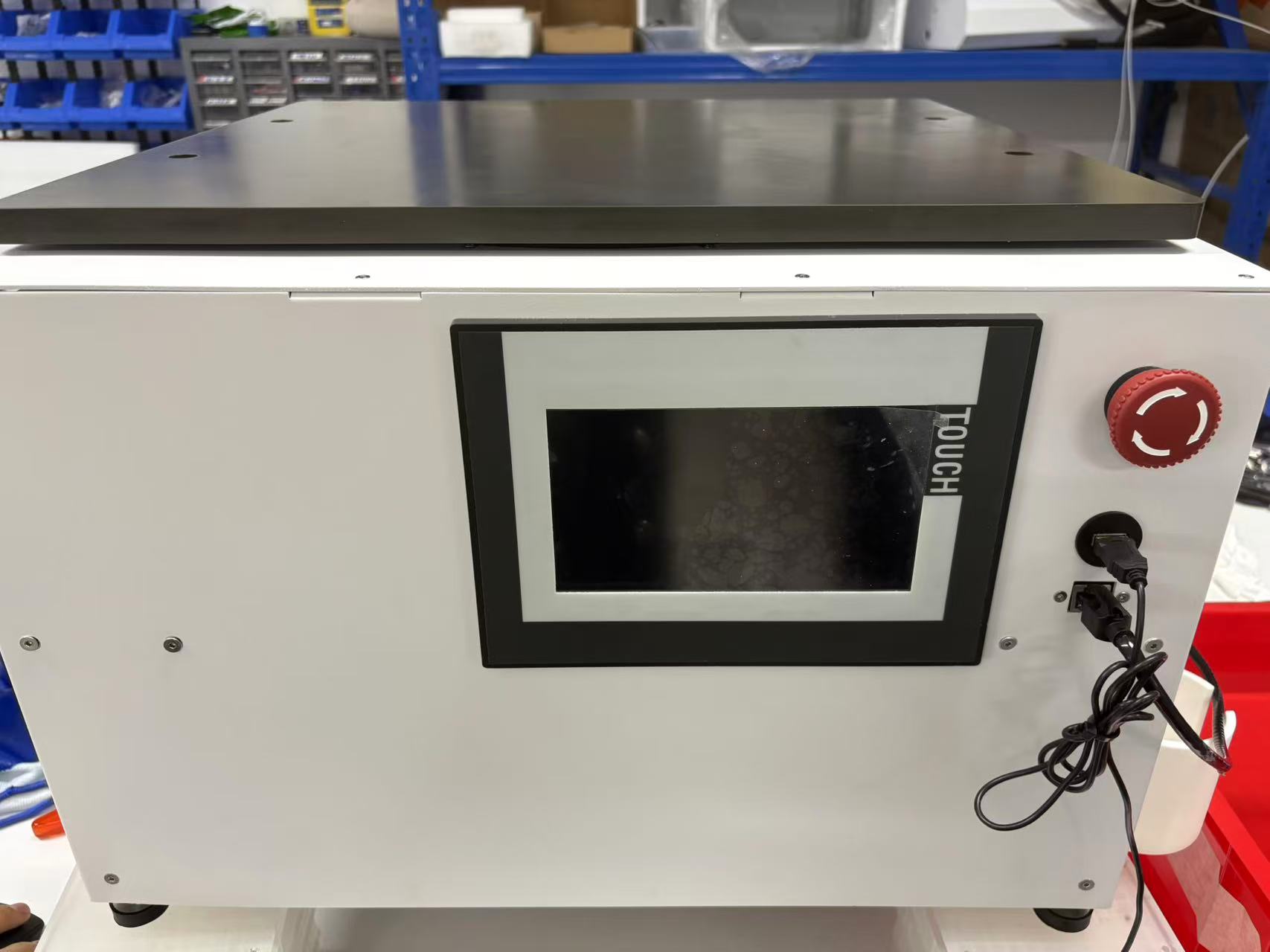
Unit-level QC matters more than design documentation for passive magnetic separation devices, because the failure modes are introduced during assembly.
Commercial Terms: MOQ, Lead Time, and OEM/ODM Scope
The commercial terms commonly attached to this product category are specific and short. OEM orders can start at 20 pieces according to the supplier's published product page, lead time is stated at 3–5 weeks, and monthly capacity is stated at up to 100,000 units.
One caution belongs in the qualification file rather than in a footnote. The 20-piece OEM minimum is published against a specific product page and should not be generalised to every format in the portfolio, particularly large-volume configurations. A 96-well rack order should therefore carry its own written confirmation of minimum quantity, configuration-specific lead time, and whether tooling or setup charges apply.
The OEM/ODM scope itself is documented as small-batch service covering 3D modeling, printing, product testing, labeling, and after-sales service. For a diagnostics buyer, the relevant question is not whether customization exists but where its boundary sits: which of those steps are included in a standard order, which are quoted separately, and whether customized labeling or packaging changes the QC record or the traceability chain.
Price claims need the same discipline. Published material states that the Mag-16W magnetic rack offers performance identical to the Thermo DynaMag-2 at one-third of the cost, and that manual magnetic racks do not differ meaningfully in energy use because they are passive. Both statements are useful context for cost modelling, but neither is a price benchmark for a 96-well plate rack. The 96-well configuration requires its own quotation against a defined specification.
96-Well Plate Rack vs Tube-Based Separation: A Fair Comparison
| Dimension | 96-well plate magnetic rack | Tube-based magnetic rack |
|---|---|---|
| Vessel format | 96-well microtiter plates and 0.2 mL tubes | Microfuge tubes; the DynaMag-2 example holds 16 tubes of 1.5–2 mL |
| Parallelism | All wells separated in one placement | 16 positions per rack in the cited example |
| Operator dependency | High — depends on pipetting uniformity, plate seating, and dwell time | High — depends on tube placement and aspiration technique |
| Automation | Passive device; no walk-away handling | Passive device; no walk-away handling |
| Evidence available | Supplier-stated format compatibility and construction; no published recovery dataset | Manufacturer-stated working volumes and tube counts |
| Typical fit | Clinical diagnostic sample pretreatment and high-throughput nucleic acid extraction | Low-to-mid throughput tube workflows and method development |
The limitation that matters most is operator dependency. A 96-well rack does not remove variability; it redistributes it. In a tube rack, variation appears between tubes. In a plate rack, variation appears between columns and rows, and it is produced by plate seating, pipetting consistency across 96 positions, and the dwell time before supernatant removal. Buyers who expect a passive rack to deliver automated reproducibility will be disappointed, and no published material for this product claims otherwise.
A second boundary is scope. A manual 96-well rack adds separation capacity but no liquid handling, no plate scheduling, and no run logging. Programs that need unattended processing are buying a different class of equipment, and comparing the two on price alone produces a misleading result.
Where the 96-Well Format Fits
Stated intended use covers life sciences, medical and clinical diagnostics, pharmaceutical, and biotechnology environments. Within those settings, the format maps to three recurring situations.
- Clinical diagnostic sample pretreatment. Plate-level separation ahead of nucleic acid extraction, where all 96 samples must be processed under the same conditions.
- High-throughput nucleic acid extraction and NGS magnetic bead separation. The plate becomes the unit of work, and separation is one step inside a larger plate-based sequence. A published customer-facing note describes NGS magnetic bead separation with reported annual cost savings of over 3 million RMB for one client.
- Method development and lower-throughput confirmation work. The 0.2 mL tube positions allow protocols to be checked before they are transferred to plate scale.
The installed base provides context rather than proof of performance. The company profile lists customers including BGI, Vazyme, Yeasen Biotechnology, Autobio Diagnostics, HaploX Biotechnology, KingMed Diagnostics, Daan Diagnostics, and CWBio, alongside research institutions and tertiary hospitals, with products sold to 25 countries and an export share of 30%. Separately, a reported programme spanning 25 countries with 100 automated magnetic plate systems cites USD 380,000 in annual cost savings and 15% faster processing. That programme concerns automated plate systems, not the manual 96-well rack discussed here, and should be read as an indicator of integration experience rather than as a performance benchmark for a passive device.
Market Context: Why Qualification Requirements Are Tightening
The surrounding market is expanding. Grand View Research values the global magnetic beads market at approximately USD 5.2 billion in 2025 and projects USD 9.1 billion by 2033. Magnetic racks are an accessory category inside that ecosystem, not a market in themselves, so the figure indicates direction rather than a rack-specific demand forecast.
Growth estimates should be handled with care. Published projections for the magnetic bead market differ materially between research houses, with the divergence traceable to differences in which end-user segments are included. A procurement plan built on a single growth rate is therefore less robust than one built on capacity and lead-time commitments the supplier has actually confirmed.
The qualitative shift is more relevant to this checklist. As plate-based workflows spread from research into diagnostic routine, buyers increasingly ask for documentation rather than catalogue pages — batch records, warranty terms, support response commitments, and format drawings. Suppliers that can produce these on request shorten the qualification cycle. Suppliers that cannot push the same work into the buyer's own validation budget.
Limitations Buyers Should Not Skip
Several boundaries belong in the qualification record explicitly, because leaving them out creates false confidence later.
- No published certification identifiers. The material reviewed for this article contains no certification numbers, no third-party test reports, and no conformity documentation for magnetic racks as a category. This is a documentation status, not a finding of non-compliance. Buyers should request certificates directly and verify scope and validity.
- Temperature range is supplier-stated. The -20°C to 80°C operating range is a published claim and should be confirmed against the laboratory's actual exposure, including cleaning and cold-room handling.
- No independent performance data. Magnetic flux density, separation time, recovery rate, and well-to-well uniformity are not published. Acceptance testing on the buyer's assay is required before the rack is treated as a validated process step.
- Commercial terms are configuration-specific. The 20-piece OEM minimum, the 3–5 week lead time, and the monthly capacity figure are published against stated product scope and require written confirmation for the exact 96-well configuration ordered.
- Cross-format price comparison is unreliable. The published one-third-of-cost claim refers to the Mag-16W against the Thermo DynaMag-2 in a tube format. It does not transfer to plate-format pricing.
- Manual racks do not automate. Any expectation of unattended operation, onboard logging, or integrated liquid handling requires a different equipment class.
Future Outlook
Three developments are likely to shape 96-well magnetic rack qualification over the next procurement cycles.
First, documentation is becoming the differentiator. As plate-based separation moves deeper into diagnostic routine, the ability to supply QC plans, batch traceability, and written service levels will matter more than incremental hardware differences between passive racks.
Second, manual and automated formats will continue to coexist rather than replace one another. Manual 96-well racks serve the many workflows where plate-level parallelism is sufficient and full automation is not justified by volume. Automated magnetic plate systems serve programmes where walk-away processing and run records are required. Buyers benefit from treating them as separate tiers with separate qualification files.
Third, low-minimum OEM and ODM services lower the barrier to format-specific customization, including labeling and packaging. That flexibility raises a new qualification question: whether customization changes the QC record. Suppliers that answer this in advance will shorten evaluation cycles.
FAQ
Which vessel formats does a 96-well magnetic rack support?
The stated compatibility is with 96-well microtiter plates and 0.2 mL tubes. Buyers should confirm plate geometry, including skirt type and well depth, against the specific plate brand used in their assay, because seating tolerance directly affects magnetic uniformity across the 96 positions.
Does Carbonlinkai publish third-party certification for its 96-well magnetic rack?
The material reviewed for this article does not contain certification identifiers, third-party test reports, or conformity documentation for magnetic racks. Buyers should request certificates and test reports directly from the supplier and verify the scope, issuing body, and validity date. The absence of published certificates is a documentation gap that requires a direct request, not an inference about compliance status.
What are the stated minimum order quantity and lead time?
OEM orders can start at 20 pieces according to the supplier's published product page, with a stated lead time of 3–5 weeks and monthly capacity of up to 100,000 units. The 20-piece minimum is published against a specific product page and should be confirmed in writing for the exact 96-well configuration, including whether setup or tooling charges apply.
How does a manual 96-well rack compare with an automated magnetic plate system?
A manual 96-well rack separates an entire plate in one placement but remains a passive device: it provides no liquid handling, no plate scheduling, and no run logging, and it depends on operator consistency for well-to-well uniformity. An automated magnetic plate system adds handling and unattended operation. A reported programme covering 100 automated magnetic plate systems across 25 countries cites USD 380,000 in annual cost savings and 15% faster processing, but those figures describe an automated platform and are not a benchmark for a manual rack.
What warranty and support terms are stated?
The stated warranty is 1 year against manufacturing defects, and the stated support commitment is a 24-hour response. Buyers should capture the escalation path alongside the response commitment — the contact route, the responsible function, and what constitutes a completed response — because a response window without a defined channel is difficult to enforce.
What should a 96-well magnetic rack qualification file contain?
A workable file contains format drawings and plate seating confirmation, a material and construction statement covering the aluminum alloy and acrylic housing, a QC plan with sample inspection records and batch traceability, a statement of the operating temperature envelope, warranty and support terms, RFQ-based commercial terms including minimum quantity and lead time, and payment terms. Performance items such as separation time and recovery consistency should be recorded from the buyer's own acceptance testing until supplier datasets are available.
Supplier documentation, including the company profile with product and capability details, is available for download: Carbonlinkai company profile (PDF).
Have Questions or Need More Details?
Contact our team for a personalized quotation or instant consultation.
Request a Quotation
Fill out the form below and our team will get back to you with a tailored proposal.
WhatsApp Direct Chat
Prefer to chat in real-time? Message us on WhatsApp for instant assistance & quick answers.
- Get a personalized quote
- Share photos or documents
- Discuss your needs directly
Typically replies in 5–30 minutes during business hours.