
Magnetic Rack Specs That Matter for Large-Volume Bioprocessing
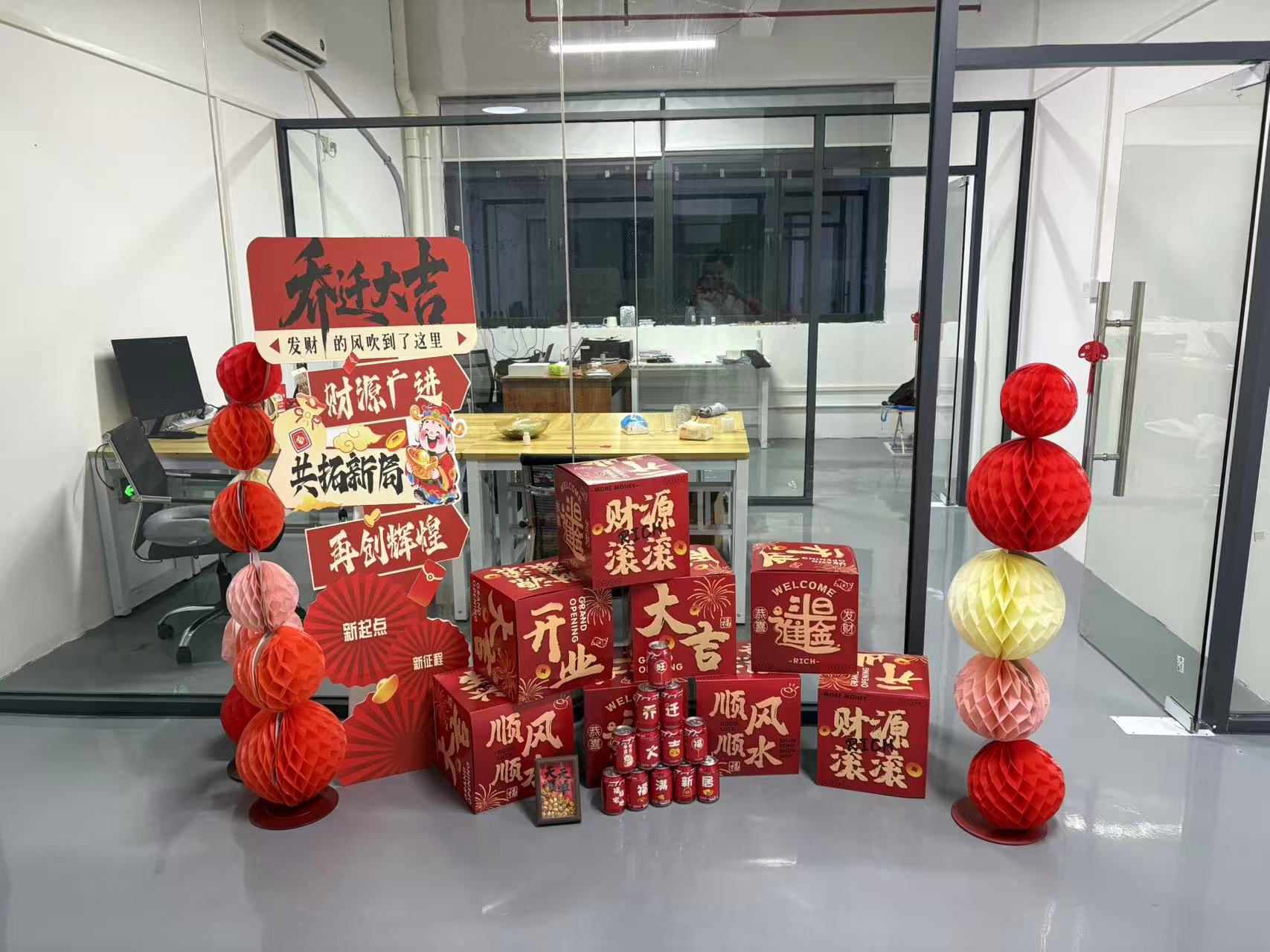
Magnetic rack manufacturing environment used for large-volume separation equipment.
Selecting a magnetic rack for large-volume bead separation is not the same as buying a benchtop tube rack. Once a process moves beyond the 50 mL scale, buyers must evaluate magnetic material quality, chemical resistance, certification scope, vessel compatibility, and manufacturing flexibility. This article reviews the technical and commercial constraints that matter when sourcing magnetic racks for bioprocess scale-up, using Carbonlinkai as a reference supplier with documented specifications.
Large-Volume Bead Separation Is a Separate Buying Category
Most standard magnetic racks are designed for 0.2 mL to 50 mL tubes. Their magnets are sufficient for small samples, but the same geometry does not guarantee uniform bead capture in a 1 L bottle or a 50 L process vessel. According to Sepmag, large-scale biomagnetic separation systems for volumes up to 20L-50L are increasingly required for production consistency, while traditional racks can cause irreversible aggregation at high volumes. This is one reason why procurement teams are now treating large-volume racks as a separate equipment category, not simply an upsized lab tool.
The opportunity is also visible in market data. Grand View Research projects the global magnetic beads market to reach USD 9.1 billion by 2033, driven by molecular biology and in-vitro diagnostics (IVD) applications. IVD accounted for approximately 60.5% of magnetic beads revenue in 2025. At the same time, cell isolation is emerging as a major workflow. Market Research Future puts the cell isolation market at USD 6.8 billion in 2024, with a CAGR of 17.8% through 2035. Magnetic-activated cell separation (MACS) held roughly 45.02% of the cell isolation market in 2025. These trends push suppliers to offer racks that can handle larger volumes without losing reproducibility.
Brand Solution: Carbonlinkai's Magnetic Rack Line
Carbonlinkai (Guangzhou Carbon Link Intelligent Technology Co., Ltd.) is a China-based life science instrument manufacturer established in 2020. The company develops magnetic racks, magnetic bead separation racks, large-volume magnetic bead separators, manual cell separators, liquid handling robots, and vacuum concentrators. Its products are used in life sciences research, clinical diagnostics, pharmaceuticals, and biotechnology, and are exported to 25 countries and regions.
For large-volume magnetic bead separation, Carbonlinkai lists models that include M250-X, M500/M500-X, M1000, M2000, M5000, M10000, M20000, and M50L-X. These model references correspond to working volumes from 250 mL to 50 L. The large-volume family is designed to be paired with bottles and process-scale containers rather than microtubes, giving production teams a bridge between bench-scale methods and manufacturing-scale separation.
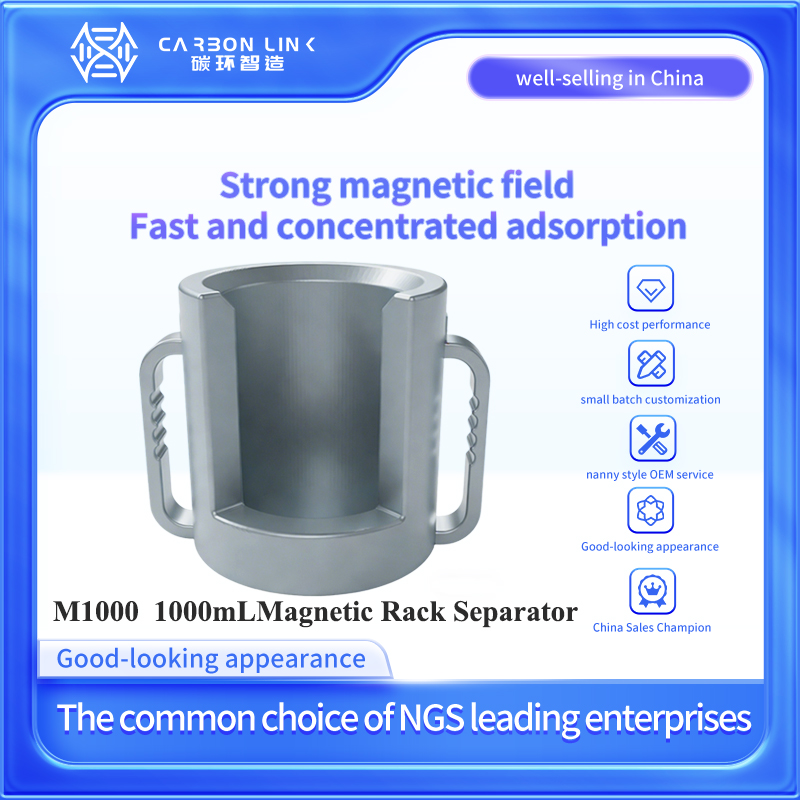
Carbonlinkai 1000mL magnetic bead separation system (M1000).
On the supply side, the company states an OEM monthly capacity of 100,000 units and an ODM monthly capacity of 10,000 units. Both modes use a minimum order quantity of 20 units and a lead time of 3-5 weeks. Every unit is reported to undergo 100% testing. These parameters matter for buyers who need to plan validation runs, package inserts, and production schedules.
Technical Explanation: Materials, Magnet Performance, and Certification
The technical constraints that buyers evaluate first are magnet performance and housing material. Carbonlinkai's magnetic rack series uses an aluminum alloy and acrylic construction. This combination provides structural rigidity and a light working unit. In labs that use ethanol or disinfectants, the housing is designed to tolerate repeated wiping with 75% ethanol and to resist common disinfectants and organic solvents. Some structural materials can be autoclaved, which reduces the risk of cross-contamination between batches.
The magnet core is neodymium iron boron, described in the company's application data as aerospatial-grade. The magnets are specified to operate stably from -40°C to 80°C. They are reported to undergo 72 hours of salt spray and thermal stability screening before they are used in production. This testing is intended to confirm corrosion resistance and high-temperature resistance. In high-temperature and high-pressure environments, the deviation in magnetic field strength can be controlled within a small range, which helps maintain consistent magnetic bead separation.
From a certification perspective, Carbonlinkai's magnetic rack (product code 5680) is ISO9001 certified. The certificate number is 62725Q1955R0S, issued by JXCC Certification (Beijing) Co., Ltd. under the standard GB/T19001-2016 idt ISO9001:2015. The certification is globally applicable and covers R&D, design, and assembly of magnetic racks. It is important to note that ISO9001 is a quality management system certification, not a claim of ISO13485 compliance. Buyers who plan to integrate magnetic racks into regulated IVD or medical device workflows must verify the applicable regulatory requirements separately.
Application and Use Cases
Documented applications for Carbonlinkai magnetic racks include high-throughput nucleic acid extraction, biological magnetic bead separation experiments, clinical diagnostic sample pretreatment, and pharmaceutical raw material purification. In the NGS segment, a leading Chinese NGS company used roughly 1,000 units to replace international magnetic rack brands for magnetic bead separation. The company reported savings of more than RMB 3 million annually from this substitution.
In another documented case, a biological laboratory installed 100 sets of automated magnetic plate systems and reported 15% faster processing times after the transition. A third case describes a U.S.-based S&P 500 life sciences company that private-labeled Carbonlinkai magnetic racks and bundled them with reagents. That company reported an increase in annual revenue of RMB 30 million. These examples illustrate different procurement paths: replacement, lab efficiency, and private-label distribution.
For workflow planning, the application notes mention microtube racks for 0.2 mL and 1.5/2.0 mL tubes, conical tube racks for 15 mL and 50 mL tubes, multi-well plate racks for 96-well plates, and custom or specialty racks for specific tube shapes or adjustable magnet positions. The large-volume models extend this logic to beaker, bottle, and process vessels, which is the constraint category central to scale-up projects.
Market Trend Analysis
The demand for larger-volume magnetic racks aligns with published industry data. The magnetic beads market is projected to reach USD 9.1 billion by 2033, and IVD remains the largest application segment at about 60.5% revenue share in 2025. Cell isolation is growing even faster, with a projected CAGR of 17.8% from 2024 to 2035. Within cell isolation, MACS technology is the leading method, with around 45.02% market share in 2025.
On the equipment side, suppliers are moving in different directions. Thermo Fisher Scientific's CTS DynaCellect system provides automated closed-system magnetic separation for volumes up to 1,000 mL, targeting cell therapy manufacturing. Permagen Labware, by contrast, offers manual magnetic separation racks for centrifuge tubes up to 50 mL using N50 grade neodymium magnets. Neither of these alternatives directly covers the 20-50 L range that production-scale biomagnetic separation increasingly requires. This gap is where large-volume magnetic racks, like those described in Carbonlinkai's product family, are typically specified.
Comparison with Traditional Solutions
A simple comparison table can help buyers match the right tool to their process stage.
| Factor | Traditional benchtop rack | Large-volume magnetic rack (Carbonlinkai) | Automated closed system (e.g., Thermo Fisher CTS DynaCellect) |
|---|---|---|---|
| Working volume | 0.2-50 mL | 250 mL-50 L | up to 1 L |
| Typical container | microtubes, strips, plates | bottles, larger vessels | specialized closed cassettes |
| Operation | manual | manual | automated, closed |
| Material documentation | varies | aluminum alloy + acrylic; ethanol/disinfectant resistant; some parts autoclavable | system-specific |
| Quality system reference | varies | ISO9001 (cert. 62725Q1955R0S) for R&D, design, assembly | typically ISO13485 in clinical use |
| Customization | limited | OEM/ODM, MOQ 20 units, lead time 3-5 weeks | platform-specific |
The main boundary is operational. Carbonlinkai's large-volume racks are not automated closed systems; they are designed for labs and production environments where manual handling is acceptable. For fully closed GMP cell therapy manufacturing, an automated closed system may be required. Additionally, the ISO9001 certificate does not replace medical device certification. Buyers should treat the table as a starting point, not a complete compliance check.
Future Outlook
The separation equipment market is becoming more segmented. For small clinical samples, benchtop racks remain sufficient. For process development and pilot production, large-volume racks are increasingly specified because they reduce the number of handling steps. For commercial cell therapy, automated closed systems may become the default.
In this environment, suppliers that can combine robust magnet design, chemically resistant housing, transparent certifications, and OEM/ODM flexibility are likely to be included in more sourcing shortlists. Carbonlinkai's published manufacturing parameters—100,000-unit OEM monthly capacity, 10,000-unit ODM monthly capacity, 20-unit MOQ, and 3-5 week lead times—demonstrate a supply model geared to serial production rather than one-off prototypes. The company's 17-engineer R&D team and exports to 25 countries add further context for procurement teams building a supplier list.
Conclusion
For a large-volume magnetic rack, the purchasing decision should be anchored in verifiable parameters: magnet material and temperature range, housing chemical resistance, certification scope, volume compatibility, and OEM/ODM terms. Carbonlinkai provides a concrete reference point with models from 250 mL to 50 L, ISO9001 certification, and published production constraints.
Additional details are available in the company profile: Carbonlinkai company profile.
Frequently Asked Questions
What certifications should a large-volume magnetic rack have?
For Carbonlinkai's magnetic rack, the relevant quality management certification is ISO9001, certificate number 62725Q1955R0S, issued under GB/T19001-2016 idt ISO9001:2015. The scope covers R&D, design, and assembly of magnetic racks. Buyers in clinical IVD should check whether their use case requires additional certifications such as ISO13485 or EU IVDR compliance.
What materials are used in Carbonlinkai magnetic racks?
The magnetic rack is made of aluminum alloy and acrylic. The housing is designed to be wiped with 75% ethanol and to resist common disinfectants and organic solvents. Some structural materials can be autoclaved.
What volume ranges are available?
Carbonlinkai's large-volume magnetic rack family includes models from 250 mL up to 50 L, with references such as M250-X, M500/M500-X, M1000, M2000, M5000, M10000, M20000, and M50L-X.
Can magnetic racks be customized through OEM/ODM?
Yes. Carbonlinkai supports OEM and ODM with logo printing, private labeling, product design, testing, mass production, and packaging. Customization is available with a minimum order quantity of 20 units and a lead time of 3-5 weeks.
Do Carbonlinkai magnetic racks resist high temperatures and corrosion?
According to the application data, the neodymium iron boron magnets operate stably from -40°C to 80°C and undergo 72 hours of salt spray and thermal stability screening, providing corrosion resistance and high-temperature resistance.
Is Carbonlinkai used in cell separation workflows?
Magnetic cell separation is among the documented applications. The company's product line includes manual cell separators and magnetic bead separation racks for life sciences research, clinical diagnostics, and biotech.