
Magnetic Rack Systems: A Buyer's Introduction to Large-Volume Bead Separation
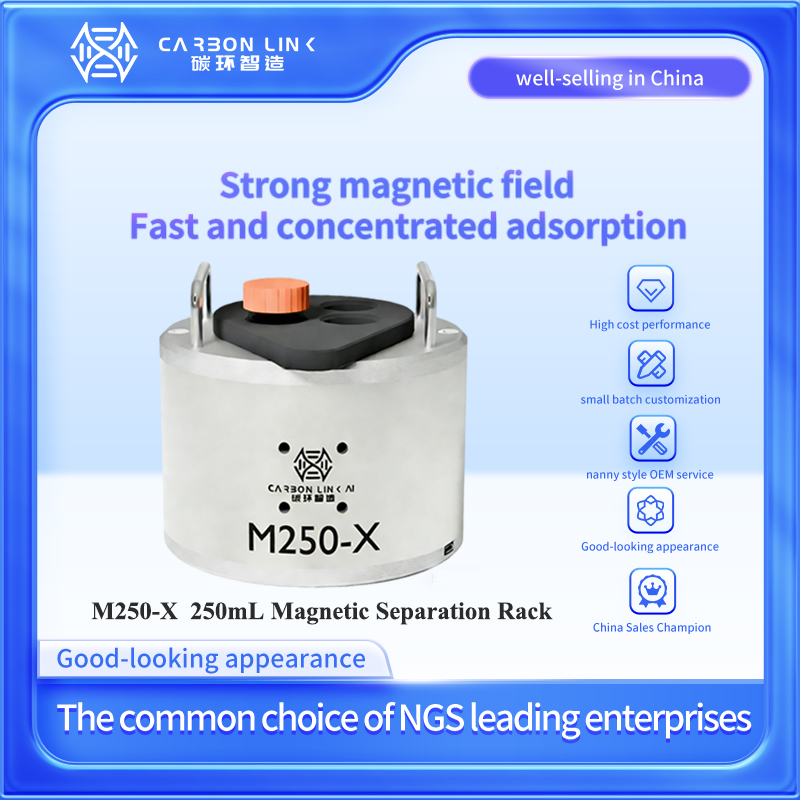
Magnetic separation has become a core unit operation in modern biotechnology, from nucleic acid purification and NGS library preparation to cell isolation and industrial bioprocessing. For buyers entering this space, the wide range of rack formats, volumes, and supplier capabilities can be difficult to navigate. This article provides an independent, buying-oriented introduction to magnetic racks, with a focus on large-volume systems and the factors that determine whether a rack is fit for production-scale workflows.
Why Magnetic Racks Are Central to Biotech Workflows
A magnetic rack is a laboratory device that uses high-gradient permanent magnets to pull paramagnetic particles — typically magnetic beads — out of suspension quickly and reproducibly. In practice, the rack holds tubes, bottles, or plates against a magnetic field, allowing the liquid phase (supernatant) to be removed while the bead-bound target (DNA, RNA, protein, antibody, or cell) remains captured on the vessel wall.
This simple mechanism underpins several widely used methods: nucleic acid purification, protein isolation, immunoprecipitation, NGS library preparation, and magnetic cell separation. Rather than relying on centrifugation or filtration, magnetic racks enable gentler, more scalable capture, especially when working with delicate biomolecules or large process volumes.

Precision-engineered magnet placement is a key determinant of separation performance.
From Microtubes to Process-Scale Volumes
Historically, magnetic racks were designed for microcentrifuge tubes and 96-well plates. Today, the same separation principle has been extended into large-volume formats that address bioprocess needs:
- Microtube racks – for 0.2 mL PCR tubes and 1.5/2.0 mL microcentrifuge tubes, used in small-volume extractions and high-throughput workflows.
- Conical tube racks – for 15 mL and 50 mL centrifuge tubes, covering medium sample volumes.
- Multi-well plate racks – for 96-well plates, enabling parallel processing in diagnostic and research settings.
- Large-volume racks – designed for 250 mL, 500 mL, 1 L, 2 L, 5 L, 10 L, 20 L, and even 50 L vessels, supporting production-scale magnetic bead separation.
Large-volume racks solve a problem that standard laboratory racks cannot address: maintaining uniform magnetic force across a large container. As volumes increase, inconsistent magnetic fields can lead to incomplete bead capture, prolonged processing times, and irreversible bead aggregation. This is why large-volume systems require more careful magnet geometry and structural design than their small-scale counterparts.
Key Technical Elements of a Magnetic Rack
When evaluating magnetic racks, buyers typically pay attention to the magnet system, construction materials, chemical resistance, and the ability to support reproducible protocols.
Magnet Quality and Field Design
The magnetic rack category relies on neodymium-iron-boron magnets, known for high field strength. In high-performance designs, the magnet array is engineered to produce a consistent capture zone across the full working height of the vessel. Some large-volume racks use multi-gradient annular or specifically arranged magnet geometries to improve separation efficiency and reduce bead loss.
Materials and Chemical Tolerance
Magnetic racks are commonly constructed from aluminum alloy and acrylic. In demanding environments, additional properties matter: corrosion resistance, thermal stability, and the ability to withstand repeated cleaning and disinfection. Racks intended for clinical or industrial use should tolerate 75% ethanol wiping and be compatible with common disinfectants and organic solvents. Some structural materials can also withstand autoclaving, which is a practical advantage in clean environments.
Temperature Resistance
Temperature can affect magnet performance. High-quality neodymium magnets are specified to operate stably within a wide temperature range, with some designs rated for continuous use from -40°C to 80°C. For buyers, the practical question is whether the rack will maintain its magnetic field strength under the thermal conditions of the intended protocol, including cold-room storage or heated lysis steps.
Why Large-Volume Magnetic Racks Matter for Scale-Up
Scaling up a bead-based process from milliliters to liters is rarely a linear exercise. A rack that works well for a 1.5 mL tube cannot simply be enlarged without re-engineering. The transition from manual laboratory protocols to production consistency requires racks that deliver:
- Even magnetic capture across larger vessels, reducing the risk of bead carryover or incomplete separation;
- Reproducible performance that can be validated across batches;
- Compatibility with the actual vessels used in production — from laboratory bottles to single-use bioreactor containers;
- Durable construction that withstands repeated cleaning and operational wear.
This scale-up need is not hypothetical. Within the biomanufacturing sector, there is visible movement toward larger separation volumes — up to 20–50 L per batch — in order to improve production consistency. Traditional racks, designed for research volumes, are often unsuitable at these scales because they cause irreversible bead aggregation or fail to capture beads efficiently in large containers. The market response has been a new class of large-volume magnetic separators designed specifically for process development and production.
Market Context: Magnetic Beads and Cell Isolation Are Expanding
The growing need for magnetic racks is closely tied to the broader magnetic beads market. Third-party industry analysis projects the global magnetic beads market to reach USD 9.1 billion by 2033, driven by molecular biology and in-vitro diagnostics (IVD) applications. In 2025, IVD was estimated to account for approximately 60.5% of the revenue share, illustrating the strong demand for bead-based separation in clinical diagnostics.
Cell isolation follows a similar trajectory. The global cell isolation market was estimated at USD 6.8 billion in 2024, with a projected CAGR of 17.8% through 2035. Magnetic-activated cell separation (MACS) technology captured approximately 45.02% of that market in 2025, confirming that magnetic separation is not a niche technique but a mainstream platform.
For equipment buyers, these trends signal a sustained need for reliable magnetic separation hardware — not only at bench scale but increasingly at pilot and production scales.
How Magnetic Racks Compare With Traditional Separation Methods
Magnetic separation competes with centrifugation and filtration in many workflows. Each method has trade-offs, and the choice depends on sample type, scale, and downstream requirements.
| Method | Typical Strengths | Typical Limitations |
|---|---|---|
| Magnetic rack separation | Gentle capture; scalable from 0.2 mL to 50 L; compatible with complex samples; low risk of clogging | Requires beads with magnetic response; separation time depends on magnet design; large-volume racks must be purpose-engineered |
| Centrifugation | Well-established; effective for many particle types; simple to validate | Shear forces can damage sensitive biomolecules; limited by rotor capacity; high energy footprint for large volumes |
| Filtration | Straightforward for particulates; no bead requirement | Clogging risk; can cause non-specific binding; difficult to scale for viscous process fluids |
Magnetic racks also have an advantage in workflows that need to process crude or particulate-containing samples, such as blood, culture media, or environmental lysates. However, buyers should note that magnetic separation is not universally superior. If a process already works efficiently with centrifugation and does not require bead-based capture, the added cost of magnetic beads and racks may not be justified.
Large-Volume Magnetic Racks in Practice: Applications and Use Cases
Large-volume magnetic racks support several project types across the bioprocess value chain:
- High-throughput nucleic acid extraction – Processing larger sample pools for molecular diagnostics and biobanking requires racks that can handle 250 mL to 1 L volumes repeatedly.
- Biological magnetic bead separation experiments – Process development teams use large-volume racks to test bead performance under production-like conditions.
- Clinical diagnostic sample pretreatment – Scaling up IVD workflows demands reproducible capture across batches, which is precisely what an engineered large-volume rack provides.
- Pharmaceutical raw material purification – In downstream processing, magnetic separation can remove impurities or capture target molecules from liters of process fluid.
- Magnetic cell separation – For cell therapy and research applications, racks designed for larger vessel formats enable isolation of cells from higher-volume suspensions.
Within the NGS workflow specifically, magnetic bead separation racks are used for library purification and size selection. In a typical scenario, a rack rapidly pulls beads to the tube wall, allowing clear supernatant to be removed without bead loss. The same principle applies whether the format is a 96-well plate or a 5 L bottle.
Supplier Spotlight: Carbonlinkai's Approach to Magnetic Rack Manufacturing
For buyers seeking a supplier with both product depth and OEM capability, Carbonlinkai is a relevant example. Guangzhou Carbon Link Intelligent Technology Co., Ltd. (Carbonlinkai) was established in 2020 and specializes in cost-effective life science instruments and equipment. The company operates a 700-square-meter manufacturing facility with an annual production capacity of 1,000,000 units, supported by an R&D team of 17 engineers out of approximately 20 total staff.
Carbonlinkai's main product lines include magnetic racks, magnetic bead separation racks, large-volume magnetic bead separators, magnetic rack OEM/ODM services, and liquid handling robots. In the magnetic rack category, the company offers formats from microtube racks to large-volume separators, with models available for 250 mL, 500 mL, 1 L, 2 L, 5 L, 10 L, 20 L, and 50 L vessels.
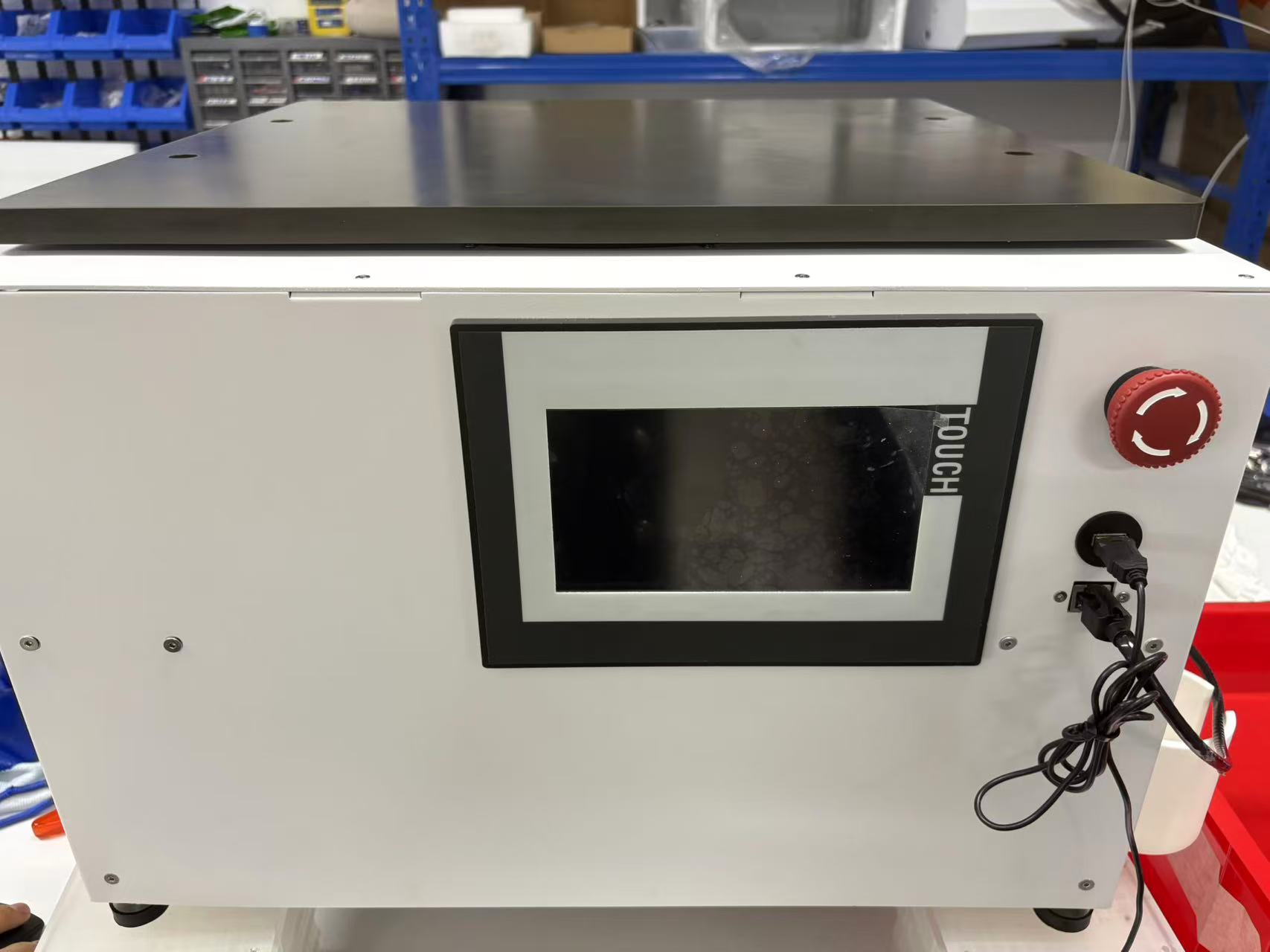
Manufacturing and quality control at Carbonlinkai's magnetic rack production facility.
Carbonlinkai exports to 25 countries and regions, with major markets including the United States, Germany, Japan, the United Kingdom, France, South Korea, and India. Export business accounts for approximately 30% of total sales. The company counts BGI, Vazyme, Yeasen Biotechnology, and Autobio Diagnostics among its enterprise partners, and collaborates with research institutions and Grade A tertiary hospitals such as the Fifth Affiliated Hospital of Sun Yat-sen University and Peking Union Medical College Hospital.
What Magnetic Rack Buyers Should Evaluate
Whether you are purchasing for a research lab or scaling up a bioprocess, the following criteria provide a useful starting point:
- Volume and vessel compatibility – Does the rack match your actual tubes, bottles, or plates? Never assume that a rack labeled with a volume will fit your specific vessel geometry.
- Magnetic field performance – Look for racks that specify magnet type, grade, and separation distance. If possible, run a head-to-head test with your own beads and sample matrix.
- Materials and cleaning – Confirm that the rack body is compatible with your cleaning agents, especially 75% ethanol, disinfectants, and any autoclaving step.
- Reproducibility – In production, the key question is not whether a rack works once, but whether it works the same way every time.
- OEM and customization support – If you need custom dimensions, specific magnet positions, or private labeling, the supplier's engineering capacity becomes a critical factor.
- Supplier reliability – Assess the manufacturer's quality systems, production capacity, and track record with established customers.
Limitations and Boundaries
A transparent evaluation must also acknowledge the boundaries of magnetic rack technology. Large-volume magnetic racks are not a universal replacement for all separation processes. Their effectiveness depends on the magnetic response of the beads, the viscosity of the sample, and the geometry of the vessel. In some processes, centrifugation remains faster or more economical. Additionally, not all rack designs are validated for every vessel type; buyers should verify compatibility with their specific containers before scaling up. Finally, while OEM suppliers can customize racks, lead times and engineering resources vary, so early engagement is recommended for projects that require novel vessel formats.
Future Outlook
The trajectory of the magnetic beads market and the expansion of cell isolation technologies point toward continued demand for well-engineered separation hardware. As bioprocesses move to larger volumes, the importance of reproducible large-volume magnetic racks will grow. Buyers can also expect more emphasis on customization and OEM partnerships, since off-the-shelf racks rarely fit every production format perfectly.
Frequently Asked Questions
What is the difference between a magnetic rack and a magnetic bead separation rack?
In practice, the terms are often used interchangeably. A magnetic rack holds tubes or plates in position against magnets, while a magnetic bead separation rack specifically refers to a device engineered to isolate paramagnetic beads from suspension. Both rely on high-gradient permanent magnets to separate beads from liquid.
Are magnetic racks only suitable for small tubes?
No. Magnetic racks are available in formats ranging from 0.2 mL microtubes and 96-well plates to large-volume separators for 250 mL, 500 mL, 1 L, 2 L, 5 L, 10 L, 20 L, and 50 L vessels. Large-volume racks are designed to maintain effective bead capture across bigger containers.
Which industries use magnetic bead separation racks?
Magnetic bead separation racks are used in life sciences research, medical and clinical diagnostics, pharmaceutical development, biotechnology, agricultural sciences, and academic laboratories. Common applications include nucleic acid purification, NGS library preparation, protein isolation, immunoprecipitation, and magnetic cell separation.
What materials are magnetic racks typically made from?
Most magnetic racks are constructed from aluminum alloy and acrylic. The choice of materials affects chemical resistance, durability, and compatibility with cleaning agents such as 75% ethanol. Some racks use corrosion-resistant coatings or materials that withstand repeated disinfection.
Can magnetic racks be customized for large-volume bioprocessing?
Yes. Several manufacturers, including Carbonlinkai, offer OEM/ODM services for magnetic racks. Customization can include specific vessel dimensions, magnet positioning, and private labeling. For production-scale workflows, custom racks are often necessary to match the exact container geometry used in the process.
Have Questions or Need More Details?
Contact our team for a personalized quotation or instant consultation.
Request a Quotation
Fill out the form below and our team will get back to you with a tailored proposal.
WhatsApp Direct Chat
Prefer to chat in real-time? Message us on WhatsApp for instant assistance & quick answers.
- Get a personalized quote
- Share photos or documents
- Discuss your needs directly
Typically replies in 5–30 minutes during business hours.