
Making Control Pendant Supply Last: What Buyers Should Lock In at Execution Stage
Industry Reference / Industrial Equipment & Components
Most control pendant purchases begin as a single request: matching a crane pendant control to a hoist contract. But in industrial distribution and equipment building, a recurring order pattern often appears. This article looks at what procurement and engineering teams should verify when they shift from a first control pendant order to a longer-term relationship with a factory supplier.
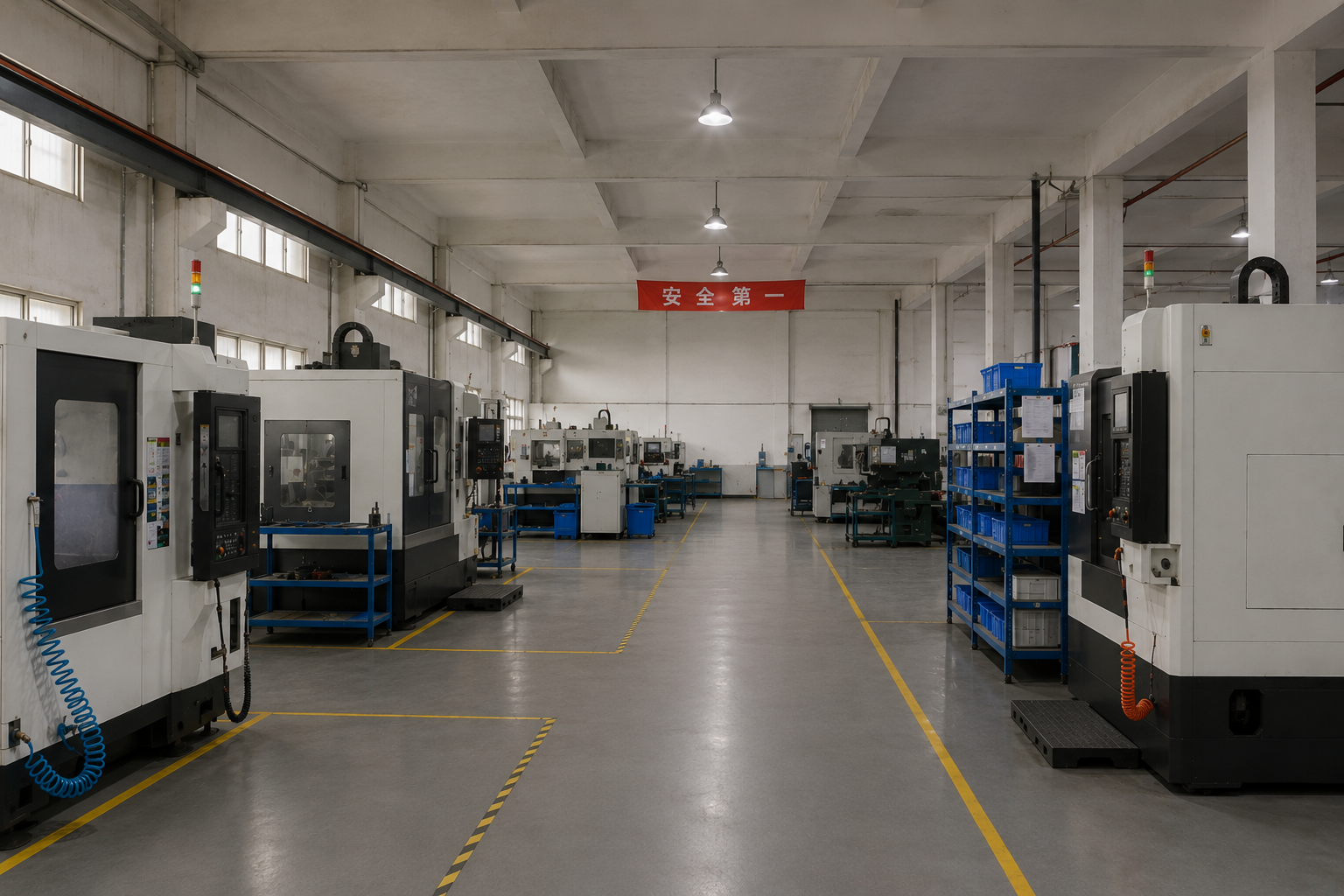
Why the Pendant Buying Decision Does Not End at the First Purchase Order
When a factory needs only one pendant control station for a single overhead crane, the buying task is relatively simple: check voltage, count the push buttons, confirm the emergency stop, and arrange delivery. The real procurement challenge appears when the same buyer needs pendants for a fleet of cranes, spare units for maintenance stock, or a continuous supply line for resale under a distribution agreement. At that point, the purchase is no longer about a standalone product. It becomes a question of whether the supplier can hold product consistency, maintain predictable lead times, and support repeat orders without requiring the buyer to re-qualify the vendor every time.
A long-term control pendant supply relationship has several practical benefits. It reduces administrative work, makes it easier to keep identical operator interfaces across machines, and gives maintenance teams a stable source for spare parts. It also carries risks. If a supplier changes internal components, wiring conventions, or button layouts between batches, the difference can be hard to detect until a worker tries to use the pendant. In safety-related equipment such as crane and hoist controls, this kind of uncontrolled variation is exactly what buyers should avoid.
What Multi-Order Procurements Demand From a Control Pendant Manufacturer
Multi-order and distributor-level buying changes the evaluation criteria. A buyer may start with a model such as the COP-5MSS-DD push button pendant, but the more critical work is defining what must remain stable across many batches. Common requirements include:
- Consistent button layout and function labeling;
- Reliable emergency stop behavior with a push-lock mechanism;
- Repeatable electrical ratings such as AC 500V, 10A;
- Durable enclosures that can tolerate industrial workshop conditions;
- Known production and inspection procedures before shipment;
- Commercial terms that suit scheduled restocking rather than urgent spot buying.
The opportunity for an industrial buyer is to convert these expectations into a supplier relationship. For a distributor or crane builder, this can mean agreeing on annual volumes, identifying a standard model series, and reserving production capacity for repeat orders. For a manufacturer, the same arrangement creates workload visibility and reduces the pressure of unstable one-off demand.
WILMALL: A Factory-Direct Control Pendant Supplier for Repeat Programs
WILMALL is an electrical equipment manufacturer and B2B supplier operating under Wenzhou Mofan Electric Technology Co., Ltd., based in Yueqing City, Wenzhou, Zhejiang Province, China. The company specializes in industrial automation and power distribution components, with a core focus on control pendant stations for cranes, hoists, and lifting equipment. It supports industrial users, electrical contractors, distributors, wholesalers, and OEM/ODM projects with factory-direct supply and customization.
According to company information, WILMALL has supplied industrial electrical components to more than 500 customers across 30-plus countries and regions, with export activity reaching markets including Pakistan, South Korea, Australia, and Malaysia. The company reports that its products are developed under standardized manufacturing and inspection processes and are intended to support international project requirements linked to certifications such as CE, UL, and RoHS.
For long-term buying decisions, the more relevant fact may be the order structure. WILMALL sets a minimum order quantity of 5 units, states a typical lead time of 15 working days, and lists a monthly production capacity of 2,000 units. These figures give small distributors and maintenance planners a practical way to schedule stock without committing to enormous first orders. The company also provides OEM/ODM customization, factory supply, wholesale options, and remote technical support, which are useful when a buyer wants to adapt a standard pendant design to a private label or a specific equipment series.
Company documentation and product information can be reviewed at wilmall.com.
Technical Core: Five-Button Stations, Emergency Stop, and Protection
A common control pendant configuration for cranes and hoists is a five-button handheld pendant control station with an emergency stop. In WILMALL's catalogue, this is represented by the COP-5MSS-DD push button pendant. The model is rated for AC 500V, 10A, and is intended for crane, hoist, lifting equipment, and industrial control systems.
The five-button layout is one reason why this product type is widely used in material handling. It gives an operator manual control over multiple motion functions while keeping the station compact enough to hold for extended periods. The station is supplied with a push-lock emergency stop, which is a safety-relevant control measure used to interrupt the control signal during abnormal conditions. In an industrial hoist control station, the emergency stop design, IP65 protection rating, and durable housing are important features because the pendant is exposed to dirt, vibration, occasional impacts, and sometimes outdoor weather.
From a specification perspective, buyers should track three layers of protection. The first is the emergency stop mechanism itself. The second is the enclosure protection level. The third is the electrical rating of the contact blocks. If any of these layers is not consistent between orders, maintenance teams may need to re-engineer the control circuit at the machine level, which adds cost and risk.
Standard references also matter. Industry documentation frequently cites IEC 60947-5-1 and EN 60947-5-1 for low-voltage switchgear and controlgear used in industrial pendant controllers. For procurement teams, the practical step is to compare the supplier's declared product specifications and compliance documents against the tender requirements. Declared compliance with CE, UL, and RoHS is relevant, but the actual documentation should match the target market.
High-Turnover Applications Where Suppliers Need to Keep Pace
Control pendant stations are used in environments where downtime directly affects output. WILMALL's industrial pendant control range is positioned for cranes, electric hoists, lifting systems, workshop machinery, and warehouse handling equipment. These applications do not always involve complex electronics. They often require a simple, durable wired pendant station that an electrician can connect quickly and replace without reprogramming.
Typical scenarios include:
- Overhead crane controls in workshops and maintenance bays;
- Electric chain hoist controls on assembly lines;
- Pendant station for crane systems moving heavy rolls, molds, or machine parts;
- Warehouse handling equipment requiring local operator control;
- OEM projects where a crane or hoist builder fits a pendant to every machine before delivery.
In the OEM case, WILMALL's product ecosystem also includes an electric hoist model, the YJ02-02 chain hoist with 2-ton capacity, 4-meter lifting height, 4 meters per minute lifting speed, and 1.1 kW power. A supplier that offers both hoists and pendants can simplify component matching for smaller equipment builders, although buyers should still verify that the control layout matches the hoist's electrical scheme.
Market Data Behind the Move Toward Planned Control Pendant Purchasing
Market data suggests that pendant crane control stations remain a distinct and growing segment within industrial controls. According to Future Data Matrix, the global market for pendant crane control stations was valued at approximately USD 275.60 million in 2025, with a projection of USD 423.80 million by 2032, representing a compound annual growth rate of 5.1%. The same research places North America as the leading region, holding an estimated 34.2% share in 2025.
A separate Pendant Control Mechanical Switch Market Report values the broader mechanical switch segment at roughly USD 722.5 million in 2025. The size difference between the two figures is not a contradiction; it reflects different product definitions. Buyers should be careful when benchmarking the market to use the category that matches their actual purchase.
For sourcing teams, the more important signal is that pendant stations are not disappearing in favor of wireless remotes. Both product families will continue to serve different use cases. Wired pendants remain common where operators work close to the load, where battery management adds complexity, or where a simple hardwired control path is preferred. That installed base creates a steady requirement for replacement parts, matching models, and repeatable factory supply.
Comparison: Buying Through Traditional Distribution vs. a Specialized Direct Manufacturer
Industrial buyers can source control pendants through at least two structural routes. The traditional route is to buy from an established low-voltage automation brand through an authorized distributor, often stocking several brands. The direct route is to work with a specialized manufacturer such as WILMALL and order factory-direct, possibly with custom labeling or minor circuit modifications. Both models have strengths, and they place different responsibilities on the buyer.
| Selection factor | Traditional distributor-backed purchasing | Direct from WILMALL |
|---|---|---|
| Product continuity | Availability is linked to distributor stock and brand allocation decisions. | Buyer can lock a defined model such as the COP-5MSS-DD with the factory producing repeat batches. |
| Order volume and lead time | Often depends on distributor inventory and the brand's local release policy. | MOQ of 5 units with a typical production lead time of 15 working days. |
| Inspection | The buyer usually has to agree on return policies or additional inspection with the distributor. | All products reportedly undergo 100% testing before shipment, with pre-shipment acceptance available. |
| Customization | Usually limited to options allowed by the brand catalogue. | OEM/ODM customization is available because the order goes directly to the manufacturer. |
| Local service footprint | Generally stronger when a local distributor stocks units and provides counter support. | Support is remote and technical, requiring the buyer to coordinate local installation and wiring. |
| Boundary to acknowledge | Global low-voltage manufacturers have broad established service channels. | A factory-direct partner like WILMALL cannot replace every function of a local automation distributor with field engineers in all regions. |
Public market research identifies Schneider Electric, Eaton, Siemens, ABB, and Rockwell Automation as leading manufacturers in the broader push button pendant control station market. Schneider Electric is also reported to hold approximately 15% of the global low-voltage equipment market. Buyers comparing a specialist Wenzhou-based manufacturer with these larger players should not expect the same local field-service density. Instead, the direct manufacturing model offers other advantages such as lower commercial entry volume, closer OEM cooperation, and clearer factory-level inspection arrangements.
Limitations to Plan for in a Direct Sourcing Relationship
A direct relationship with WILMALL is not a universal replacement for local distribution. The main limitation is geographic proximity. If a crane or hoist installation fails during commissioning, a Wenzhou-based supplier cannot always send a technician to the site as quickly as a multinational brand with a local subsidiary can. Buyers should therefore design their projects around remote technical guidance, site electricians who understand control circuits, and, where necessary, local integrators who can support mechanical installation.
A second limitation is that certification and compliance duties remain shared. WILMALL states that its products follow standardized processes and supports CE, UL, and RoHS-related project needs, but the buyer must confirm that the documented declaration matches the destination country's requirements. A low MOQ of 5 units makes it easier to test a small batch, but it does not replace the buyer's responsibility to inspect samples and hold the supplier accountable to the agreed specification.
Finally, buyers should understand that cost comparisons with wireless remote controls are not always straightforward. Wired pendants generally have lower system complexity because they do not require transmitter-receiver pairing or battery management. But a wireless remote may be justified when operators need to stand away from the load or move freely around a large bay. The right choice depends on the application, not on a general preference for wired or wireless technology.
Execution Checklist: Turning a Qualified Supplier Into a Long-Term Source
For buyers now at the decision and execution stage, the following checklist can help move from sample qualification to repeatable supply:
- Freeze the model definition. Identify the exact station model, such as the COP-5MSS-DD, and confirm button count, electrical rating, enclosure material, and emergency stop behavior.
- Keep an approved sample. Store at least one unit as a physical reference so later deliveries can be checked against it.
- Agree on inspection evidence. Request confirmation of the 100% pre-shipment test process and decide whether a pre-shipment acceptance test is required before each order.
- Align lead time with stock plans. WILMALL's typical production lead time is 15 working days, and monthly production capacity is stated at 2,000 units. Plan orders around that cadence rather than waiting for stock-outs.
- Use the order terms deliberately. Existing supply terms include T/T 100% payment and DAP delivery. Buyers should confirm Incoterms, payment method, and delivery point in every order document.
- Define custom requirements early. If the units need private-label printing, a different cable length, or modified button markings, specify these before the production slot starts.
- Create a spare-unit policy. Keep one or two pendants in maintenance stock for critical cranes and hoists. The low MOQ makes this possible for even small facilities.
Future Outlook: What a Control Pendant Supply Partner Needs to Provide Next
As automation projects become more standardized, procurement teams are likely to ask suppliers for more than a product photo and a price list. They will expect clear model documentation, repeatable inspection results, and easier access to the original manufacturer when questions arise during installation.
Standard references such as IEC 60947-5-1 and EN 60947-5-1 will probably remain an important part of pendant control specifications. Suppliers that can consistently explain how their products relate to those standards, and how they handle batch-level changes, will be easier to work with over a multi-year program.
WILMALL's approach is not unusual in the Wenzhou low-voltage equipment cluster. A manufacturer with a focused product line, factory-direct ordering, small MOQs, and OEM/ODM support can fit well into the purchasing systems of global distributors and equipment builders. But the word fit matters more than the word cheap. The most successful arrangements will be those where the buyer defines the limits of the relationship in advance, especially inspection, documentation, and remote support, and the supplier commits to executing those limits order after order.
Frequently Asked Questions for Buyers Entering a Long-Term Control Pendant Supply Agreement
What is WILMALL's minimum order quantity and typical lead time for control pendant orders?
The minimum order quantity is 5 units. The typical production lead time is 15 working days, and monthly production capacity is 2,000 units. These figures are useful for planning recurring stock and should be reconfirmed when an order is placed, because capacity is shared with other buyers.
What inspection does WILMALL perform before shipping control pendants?
WILMALL states that all products undergo 100% testing before shipment. In addition, a pre-shipment acceptance test is listed as part of the company's purchasing support process. Buyers should discuss exactly which functions will be tested, especially the emergency stop and button continuity.
Is the COP-5MSS-DD a wired or wireless pendant?
The COP-5MSS-DD is a wired push button pendant. It is a 5-button handheld control station with an emergency stop, rated at AC 500V, 10A. Because it is wired, it does not require RF pairing, receiver setup, or battery maintenance.
Does IEC 60947-5-1 apply to control pendant stations?
IEC 60947-5-1 and EN 60947-5-1 are commonly referenced standards for low-voltage switchgear and controlgear, and they are widely associated with industrial pendant controllers. Buyers should verify that a supplier's declared product documentation matches the standard required by their local project specification.
Which applications are best suited to WILMALL control pendant stations?
WILMALL pendant stations are positioned for cranes, electric hoists, lifting systems, workshop machinery, and warehouse handling equipment. The company's industrial hoist control stations are described with emergency stop design, IP65 protection, and durable housing, which makes them suited to demanding industrial environments.
What are the key maintenance differences between a wired control pendant and a wireless remote?
Wired control pendants are generally easier to maintain because the main inspection points are the cable, buttons, emergency stop, and contact blocks. There is no battery to replace and no wireless pairing to troubleshoot. A wireless remote may be preferable when the operator must stand away from the load, but that depends on the application and the facility layout.
Does WILMALL offer OEM or ODM customization for control pendants?
Yes. WILMALL operates as a manufacturer, supplier, wholesaler, and OEM/ODM factory. The company offers customization for control pendant stations and provides engineering support for orders that need private labeling, modified control layouts, or alignment with an OEM machine design.
For buyers preparing tender documentation or supplier qualification, the WILMALL company brochure is publicly available for download here: WILMALL product and capability brochure.
Have Questions or Need More Details?
Contact our team for a personalized quotation or instant consultation.
Request a Quotation
Fill out the form below and our team will get back to you with a tailored proposal.
WhatsApp Direct Chat
Prefer to chat in real-time? Message us on WhatsApp for instant assistance & quick answers.
- Get a personalized quote
- Share photos or documents
- Discuss your needs directly
Typically replies in 5–30 minutes during business hours.