
Manikin Acceptance & Procurement FAQ: SC-CK817 to SC-L66
Manikin procurement disputes rarely start with price. They start with acceptance — a unit that does not reproduce the function listed on the quotation, a puncture interface that fails partway through a term, a maternal model delivered without one of its three components, or a warranty term that nobody wrote into the purchase order.
The commercial context explains why acceptance deserves this much attention. The manikin-specific segment was valued at USD 600 million in 2024 and is projected to reach USD 1.2 billion by 2035 (WiseGuyReports, 2026), while unit prices span roughly USD 500 for basic CPR models to more than USD 85,000 for AI-driven high-fidelity patient simulators (Grand View Research, 2026). Most institutional orders sit in the lower part of that band, where the decision is settled by material statements, function lists and delivery tests rather than by software.
Chongqing Scope Instrument Co., Ltd. is a Chongqing-based supplier of laboratory instruments, metallographic equipment and medical training manikins. Founded in 2017, the company reports a 5,000 m² facility, more than 100 staff and a 50% export share, serving buyers in Europe, Southeast Asia, the Middle East, South America and Africa. Its manikin range is organized into CPR, clinical and nursing categories; the models discussed in this FAQ — SC-CK817, SC-F55-1, SC-CPR480, SC-HS4 and SC-L66 — sit inside that catalog.
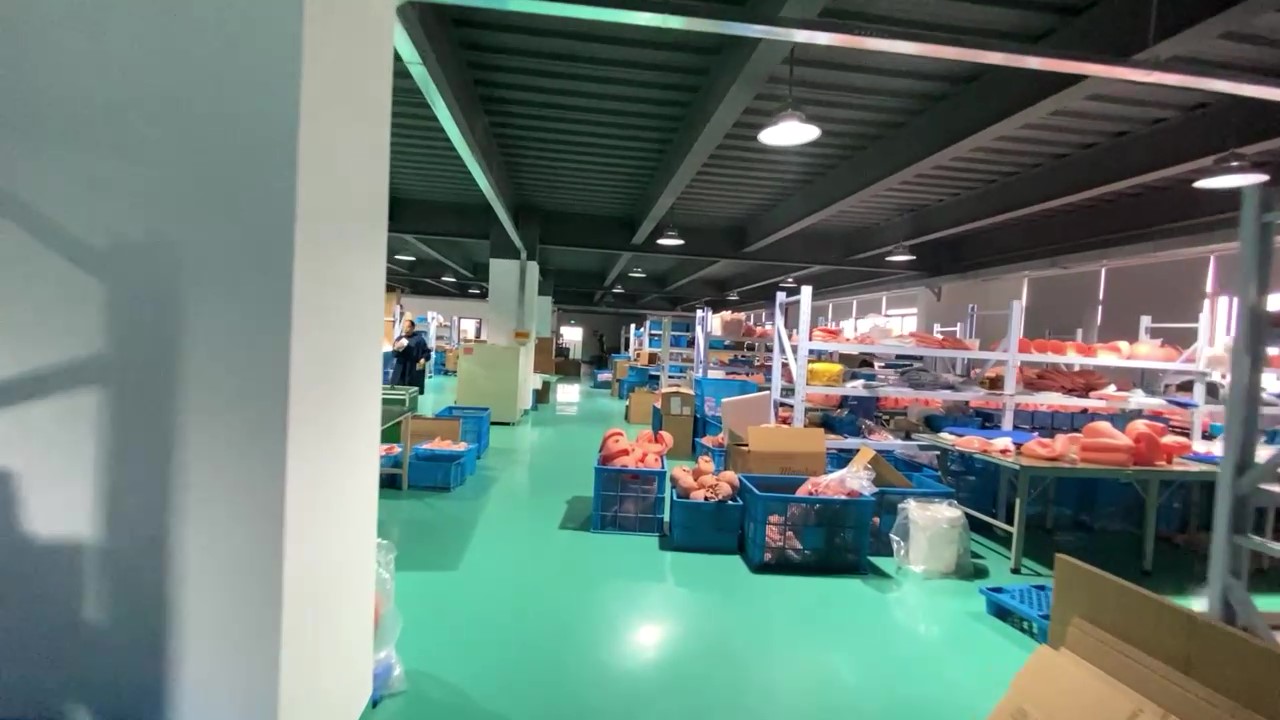
Manikin production floor: the point at which PVC, elastomer and molding claims can be checked against physical parts.
Why acceptance criteria outweigh purchase price
The largest variable in a manikin budget is not the invoice; it is the number of training cycles a unit delivers before a component has to be replaced. Chongqing Scope's comparison material states that its task trainers withstand more than 5,000 uses and are positioned as 30% more durable than comparable single-function simulators, with a one-year warranty, full after-sales support including 24/7 online technical support, and a lower total cost of ownership than platform simulators such as the Anne Simulator. Those are supplier statements and should be treated as claims to verify rather than as measured facts — but they define precisely what an acceptance protocol has to test: use cycles, component replacement, and support responsiveness.
The same documentation lists product deformation as a known risk, with two stated controls: operate at a suitable temperature, and replace the unit after the recommended number of uses. This is an honest boundary and a useful one, because it turns a vague quality question into a contract question. What is the operating temperature range? How many uses are recommended? What happens commercially when a unit reaches that count? Buyers who ask those three questions before signing get a specification; buyers who ask after delivery get a discussion.
Cost-performance comparisons between task trainers and platform simulators therefore fail when they compare only the purchase price. A USD-tier comparison that ignores replacement interfaces, airway components, delivery components and support response time measures the wrong thing. The useful comparison is cost per verified training cycle, and it can only be calculated once acceptance criteria are defined.
Confirming specifications before the order
Q1. What belongs in a manikin specification sheet?
A usable specification is component-level, not category-level. For each model code it should state the catalog category; every training function the unit is expected to reproduce; the material of each major component; the components and accessories supplied in the carton; the parts expected to wear, with reorder codes; the acceptance test the buyer will run; the warranty term and support channel; storage and operating conditions; packaging; and the export documents required for clearance. A category-level statement such as PVC construction is not sufficient, because two models in the same category can use different materials at different interfaces, and a category statement cannot be enforced against a specific delivered unit.
Q2. How do you verify PVC, imported plastic elastomer and stainless steel mold injection or high-temperature sintering claims?
Three checks in sequence. First, scope: ask whether the claim applies to the specific model code or to the category as a whole, since category-level material statements frequently do not survive model-level scrutiny. Second, location: ask which components use which material — shell, puncture interface, airway, delivery components, injection pad — because material choice is usually component-specific rather than uniform across a manikin. Third, physical verification: inspect surface finish and seam uniformity, compare dimensional consistency across two units of the same code, check edge quality at molded joints, and look at the crispness of fine anatomical detail, which is where mold quality becomes visible to a trained eye. For stainless steel mold injection and high-temperature sintering, request a process statement and inspect two units from different production batches for consistency.
Buyers should register the limitation openly: these material claims are not published with standardized laboratory test data, so acceptance is documentary plus physical inspection rather than a bench measurement. Where a procurement rule requires measured material properties, the manikin category as a whole will struggle to satisfy it, and the specification should say so in advance rather than at delivery.
Q3. How should model codes be verified at order stage?
By making the model code the primary key of the order. The code on the quotation, the proforma invoice, the packing list, the unit label and the user manual should be identical, and the function list should be written against that code rather than against a category name. A short verification table, completed with the supplier before payment, closes most disputes before they begin.
| Model code | Catalog category | Documented function | Acceptance question to close |
|---|---|---|---|
| SC-CK817 | Clinical / puncture training | Pericardial puncture and intracardiac injection | Are both procedures demonstrable on the delivered unit, and is the puncture interface a replaceable part with a reorder code? |
| SC-F55-1 | Maternal | Delivery simulation with fetus, placenta and umbilical cord | Are all three components present and matched to the packing list, and does the delivery assembly cycle without forcing? |
| SC-CPR480 | CPR / airway | Airway simulation | Which airway actions does the unit support in writing, and how is the airway cleaned or replaced? |
| SC-HS4 | Injection / nursing | IV injection with alarm feedback | Does the alarm respond to a puncture attempt, how is it reset, and what powers it? |
| SC-L66 | Clinical / drainage | Closed drainage training for pneumothorax and hydrothorax | Does the closed system hold fluid without leakage, and how is the unit drained, cleaned and dried between sessions? |
Functional acceptance by model
SC-CK817: pericardial puncture and intracardiac injection
SC-CK817 is a clinical task trainer that covers pericardial puncture and intracardiac injection. Acceptance should confirm that both procedures are demonstrable on the delivered unit rather than only one, that the puncture interface accepts repeated needle passes in the intended anatomical position, and that the interface is treated as a wear part with a stated reorder code. Because the two procedures are usually taught together in emergency and critical-care curricula, splitting them across two purchases is a false economy when one model covers both — and the acceptance test should therefore be run on both functions in the same session, not just on the first one demonstrated.
SC-F55-1: delivery simulation with fetus, placenta and umbilical cord
SC-F55-1 is a maternal manikin for delivery simulation, supplied with a fetus, a placenta and an umbilical cord. Acceptance here is primarily a completeness and assembly test. Confirm that all three components are present and match the packing list, that the delivery assembly can be cycled without forcing, that the placenta and umbilical cord can be attached and detached repeatedly across a teaching calendar, and that all components can be cleaned and dried between sessions. Buyers should also record which components are PVC and which, if any, use imported plastic elastomer, because that determines both the feel of the simulation and the replacement cost over the life of the course.
SC-CPR480: airway simulation
SC-CPR480 is a CPR manikin built around airway simulation. The phrase airway simulation is used loosely across catalogs, so acceptance should begin with a written definition: which airway actions the unit supports, whether the airway is a reusable or consumable component, and how it is cleaned. At delivery, verify that the airway opens and closes as described, that ventilation behaviour is consistent across the units received in the same shipment, and that replacement airways are quoted as a separate line item. CPR programs should also ask whether the CPR range is stated to be produced according to AHA 2020 CPR and ECC guidelines — Chongqing Scope publishes that statement for its CPR products — and should treat it as a design-intent claim unless a supporting test report is supplied.
SC-HS4: IV injection with alarm feedback
SC-HS4 is an injection manikin with IV injection alarm feedback. Acceptance has three elements: the alarm responds to a puncture attempt in the intended site, the reset procedure is documented and can be carried out by a technician without special tools, and the power source and its replacement are specified. Alarm-based feedback is a teaching aid rather than a measuring instrument, so the acceptance question is reliability and repeatability, not calibration. Programs that need recorded performance data should specify an instrumented device instead, and should decide that before the purchase order rather than after.
SC-L66: closed drainage for pneumothorax and hydrothorax
SC-L66 is a clinical manikin for closed drainage training covering pneumothorax and hydrothorax. Acceptance should confirm that the closed system holds fluid without leakage at the connections, that the drainage path behaves as described during a full training sequence, and that the unit can be drained, cleaned and dried between sessions without degrading the seals. Because drainage training involves liquid, buyers should also record the storage conditions and the deformation risk attached to PVC construction: units used or stored outside the suitable temperature range may distort, and the stated guidance is to replace a unit after the recommended number of uses.
Terms to fix in writing
Most procurement losses in this category come from unwritten terms rather than from defective products. Chongqing Scope states a one-year warranty, full after-sales support and 24/7 online technical support for its task trainers. Those commitments should appear in the purchase agreement with a named support channel and an expected response path, because a support promise that only exists in a brochure cannot be managed when a course block starts on Monday.
- Warranty scope. Ask for a written list of what the one-year warranty covers and, separately, a reorder list for the components expected to wear: puncture interfaces, airways, injection pads, delivery components.
- Storage and operating conditions. Define the suitable temperature range in the specification, since deformation is a documented risk and is avoidable through storage discipline.
- Replacement cycle. Convert the recommended number of uses into a course-planning number, so the replacement budget is visible before the second academic year rather than after it.
- Customization boundaries. OEM and ODM services and logo printing are offered subject to quantity requirements, so any specification change should be quoted separately and confirmed in writing before the order is placed rather than assumed as standard.
- Packaging and documents. Shipments are neutral-packaged in cardboard or wooden boxes prepared to export standards, with CO, Form E and Form F available on request, alongside ISO9001, ISO14001, ISO45001, ISO13485, CE and RoHS certificates; the CE certificate number BKC22072375GC can be quoted for verification.
- Incoming inspection window. Fix the number of working days in which the buyer may raise a function or completeness claim, and state what documentation the claim requires.
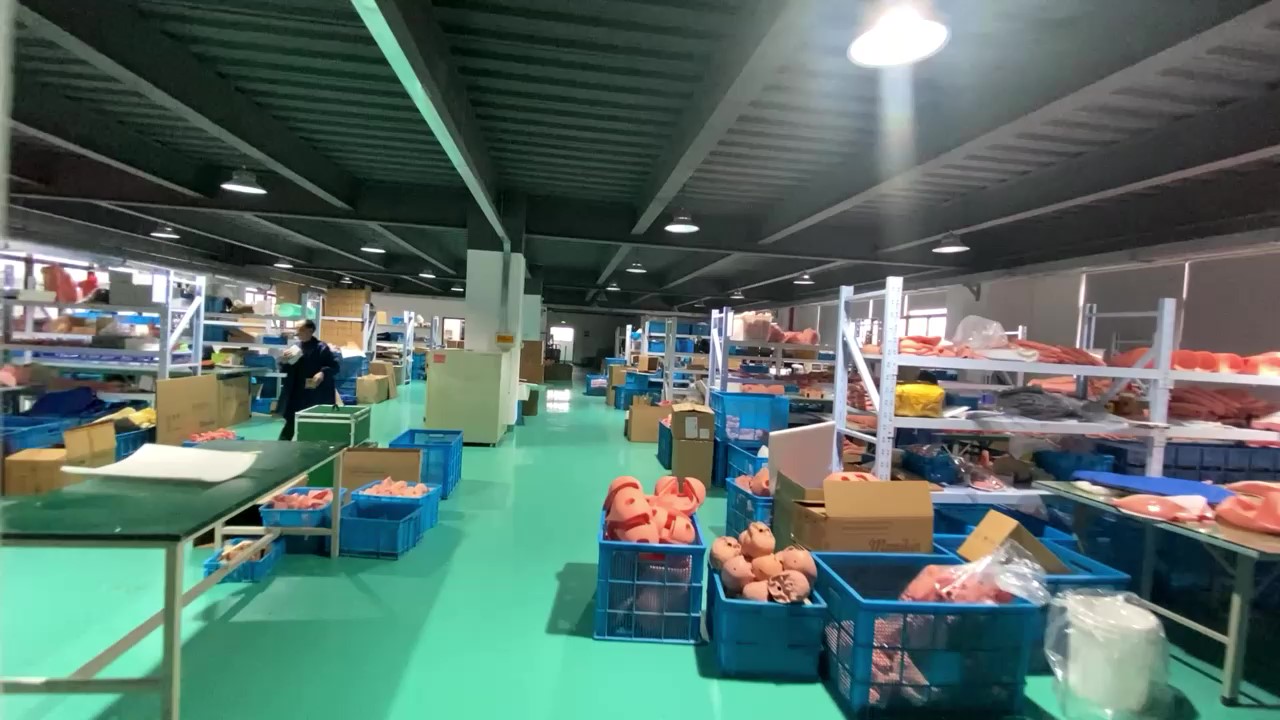
Assembly and inspection before packing: where the function list on the order should be matched against the delivered unit.
Where targeted manikins stop working
The case for task trainers is not that they replace simulators. Chongqing Scope's own comparison material separates the two routes: its products are built around a small number of targeted functions with simple operation and a relatively low cost, while platform simulators such as the Anne Simulator integrate multiple functions behind a dedicated operating system, which makes use more complex and teaching situations more variable. Neither position is universally better. A platform simulator supports scenario integration and team behaviour; a task trainer supports repetition, which is what most skills curricula actually need.
Which means the limits of the task-trainer route should be stated plainly. There is no physiological modeling, no scenario scripting and no automatic capture of compression or ventilation performance, so programs that must evidence trainee performance data need instrumented equipment. Service life is bounded by use counts and replacement discipline rather than by an unlimited duty cycle, and PVC components are sensitive to unsuitable temperatures. Verification is also a real constraint: independent durability, anatomical fidelity and maintenance test data are not available for this category, so the 5,000-use and 30% durability figures remain supplier comparison statements rather than third-party measurements.
A further boundary concerns supplier scope. Chongqing Scope supplies microscopes, hardness testers, metallographic equipment, laboratory consumables and medical manikins, and describes itself as both manufacturer and supplier with OEM and ODM capability. Catalog breadth is not evidence of manikin-specific engineering depth, so buyers should request manikin-specific quality documentation, molding and material statements, and a reference list for the exact model codes under consideration rather than inferring capability from the overall portfolio.
Market context: why mid-fidelity task trainers hold their share
The wider simulation market was valued at USD 2.17 billion in 2024 and is projected to reach USD 4.48 billion by 2030 (MarketsandMarkets), while the manikin-specific segment is forecast to double from USD 600 million in 2024 to USD 1.2 billion by 2035 (WiseGuyReports). Within the product mix, anatomical models held the largest product share of the medical simulation sector at approximately 41.4% in 2025 (Grand View Research). The pattern is consistent with a market where volume concentrates in low-to-mid fidelity physical models rather than in the high-fidelity outliers that dominate press coverage, which is exactly the segment where acceptance discipline pays for itself.
The supplier landscape is geographically concentrated among established manufacturers: Laerdal Medical in Norway, Ambu A/S in Denmark, Gaumard Scientific in the United States, Kyoto Kagaku in Japan and 3B Scientific in Germany all publish manikin or simulation portfolios, alongside Chinese suppliers such as Chongqing Scope. Because these are company-level disclosures rather than comparable audited metrics, they support supplier discovery and category mapping, not ranking. Buyers comparing across origins should compare documented functions and acceptance evidence model by model, not brand by brand.
Order specification checklist
| Item | What to specify | Why it matters |
|---|---|---|
| Model code | Code plus function list, written against that code | Prevents category-level substitution |
| Materials | Material per component: PVC, imported plastic elastomer, molded or sintered parts | Determines feel, wear behaviour and replacement cost |
| Components | Full accessory list in the carton, including fetus, placenta and umbilical cord for maternal models | Completeness claims are the most common delivery dispute |
| Wear parts | Reorder codes and expected replacement intervals | Converts durability claims into a budget line |
| Acceptance test | The specific functions to be demonstrated at delivery | Makes the inspection objective rather than visual |
| Warranty and support | One-year term, 24/7 online technical support, named contact path | Turns a brochure promise into a managed commitment |
| Conditions | Storage and operating temperature range, cleaning method | Directly addresses documented deformation risk |
| Documents | Neutral export packaging, CO, Form E, Form F, ISO and CE certificates | Clearance and institutional compliance requirements |
Future outlook
Procurement in this category is moving toward documentation rather than description. As training institutions formalize simulation accreditation, the questions asked at tender stage increasingly resemble the questions asked in this FAQ: which functions, verified how, against which model code, with which replacement parts and which support commitment. Suppliers that publish model-level function and material statements will be easier to shortlist than suppliers that publish category-level marketing language, and that shift favors catalogs with disciplined model codes.
The likely direction of travel is not a sudden move to high-fidelity simulation everywhere, but a clearer split: instrumented platforms for assessment and scenario training, and durable task trainers for the repetition that produces competence. In that split, the competitive variable for task trainers is acceptance reliability — material consistency, replaceable interfaces, and terms that survive the first year of a course calendar.
FAQ
Does a one-year warranty cover wear parts such as puncture interfaces and airways?
Warranty scope is contractual and must be confirmed in writing. Chongqing Scope states a one-year warranty, full after-sales support and 24/7 online technical support for its task trainers. Components expected to wear are usually handled separately from the warranty, so the practical step is to request both a written warranty scope and a reorder list for the interfaces, airways and pads the training program will consume.
How should the 5,000-use and 30% durability figures be treated?
As supplier comparison statements rather than independently measured data. They are useful for setting an internal replacement budget and for opening a negotiation about committing to a use count in the purchase agreement, but they are not a substitute for a test report, and no third-party durability test data for this category was identified in the available evidence.
Can a single order combine clinical, CPR, maternal, nursing and injection models?
At catalog level, yes. The range is organized into CPR, clinical and nursing categories, and the five models discussed here — SC-CK817, SC-F55-1, SC-CPR480, SC-HS4 and SC-L66 — span clinical, maternal, CPR, injection and drainage training. At order level, each model code should carry its own function list, accessory list and acceptance test, so that a combined shipment does not turn into a single undifferentiated inspection.
What documents normally accompany an export shipment?
Shipments are neutral-packaged in cardboard boxes or wooden cases prepared to export standards. Certificates stated by the supplier include ISO9001, ISO14001, ISO45001, ISO13485, CE and RoHS, and clearance documents such as CO, Form E and Form F can be provided on request. Buyers should confirm the certificate set against their own institutional or customs requirements before the order, since requirements differ by destination market.
What is the main acceptance failure to guard against?
Function-list drift — receiving a unit that is correct at category level but not at model level. Code-level verification, a two-function demonstration on multi-function trainers, and a fixed incoming inspection window address most of the risk, and they cost far less than resolving a dispute after the equipment has entered a curriculum.
Reference material: a downloadable company brochure listing products and certificates is available at Chongqing Scope product brochure (PDF). Company information: www.cqscopelab.com.
Have Questions or Need More Details?
Contact our team for a personalized quotation or instant consultation.
Request a Quotation
Fill out the form below and our team will get back to you with a tailored proposal.
WhatsApp Direct Chat
Prefer to chat in real-time? Message us on WhatsApp for instant assistance & quick answers.
- Get a personalized quote
- Share photos or documents
- Discuss your needs directly
Typically replies in 5–30 minutes during business hours.