
Manikin Customization: Verifying Supplier Capacity Before You Scale
Catalogues answer what already exists; capability checks answer what can be adapted. The shift becomes visible when a training provider orders not one medical manikin but a broader training installation: several skill stations, multiple model types, a university logo on the packaging, or small functional changes inside a standard design. At that point, buying decisions can no longer be made from stock images alone. The supplier must be evaluated as a production partner, not just as a product source. Manikin customization is therefore less about the word OEM or ODM and more about whether a manufacturer can turn a training requirement into a consistently manufactured, quality-controlled product.
Why manikin procurement now depends on the upstream manufacturer
Simulation-based education is no longer a small annex to medical curricula. The global medical simulation market was valued at USD 1.9 billion in 2025 and is projected to reach USD 6.7 billion by 2033, according to Grand View Research. The supply side is expanding in parallel: the training manikins market was estimated at 1.2 million units in 2024, with forecasts reaching 2 million units by 2028, based on figures from Global Insight Services.
More units mean more procurement by organisations that are not necessarily simulation specialists. Medical colleges, nursing schools, first-aid training centres, hospital skills labs and commercial distributors all buy manikins, but each group converts a training goal into a different order specification. A nursing programme focused on injection safety may want several task trainers with distinct anatomical landmarks. An emergency training centre may want one basic CPR manikin for large classes and another with electronic feedback for assessment. A distributor entering a new region may want a product family that carries one consistent brand and predictable spare-part behaviour.
That variety pushes a larger share of demand toward customisation. The healthy side of this market is that buyers can now ask for training tools that match how they teach, rather than reshaping their curriculum around whatever is in stock. The risky side is that custom production is harder to verify. A supplier may show an appealing factory photo, but the real question is whether design changes, production planning, quality control and export documentation are managed with the same discipline as standard catalogue production.
Capability-led sourcing: what should be reviewed first
Capability-led sourcing means selecting a supplier based on its capacity to adapt a product to a defined training or commercial requirement. It is a broader evaluation than comparing model prices. For a buyer, five areas deserve attention before a custom manikin order is placed:
- Design and engineering depth: Does the supplier have an internal engineering team and a product portfolio wide enough to translate a training need into a realistic model?
- Customisation scope: Is the supplier able to modify appearance only, or does it also adjust functional and training-related features?
- Production capacity and lot rules: Does the supplier have measurable monthly output, clear lead times and realistic minimum order quantities?
- Quality and compliance: Does the manufacturer operate a documented quality process and provide certificates that match the export destination?
- After-sales and documentation: What happens after shipment, and are customs documents, packaging standards and warranty terms predictable?
Each of these areas can be checked through manufacturer data. The point of a capability review is not to obtain vague promises, but to collect specific, verifiable evidence before committing a programme budget.
What a producer profile reveals about real capacity
Chongqing Scope Instrument Co., Ltd. provides a useful example because its public company profile is specific enough for a structured review. Chongqing Scope is a Chongqing-based manufacturer and supplier of laboratory and medical training instruments. It designs and sells manikins for emergency, clinical and nursing skills training used in medical colleges and training institutions. The company reports a 5,000-square-metre factory, more than 100 employees, an annual output of about 30,000 units and an export share of about 50%, with main markets in Europe, Southeast Asia, the Middle East, South America and Africa.
Its manikin range spans CPR manikins, nursing manikins, clinical manikins, maternal and infant models, paediatric training models, anatomy models and task trainers for injection, puncture and intubation. For ODM buyers, this breadth has practical value: a distributor or medical school can assemble a full training room from a single manufacturing conversation rather than coordinating several suppliers with different quality logics.
There is also documented design depth inside individual products. The CPR model SC-CPR480 includes electronic feedback for compression depth and ventilation volume, digital counting, voice prompts, assessment modes and score printing. The nursing manikin SC-H130A lists 21 nursing procedures, including venipuncture, injection, gastric lavage, catheterisation and tracheotomy care. The maternal and newborn model SC-F55-1 includes a delivery process controller, fetal heart sound auscultation and six stages of cervical change training. These examples are not presented here as product endorsements. They are evidence that the supplier already operates in a range where functions, materials and clinical training logic are designed into the product rather than added after the sale.
Understanding what can actually be customised
In manikin sourcing, OEM and ODM are often used interchangeably, but they describe different levels of responsibility. An OEM arrangement typically means that a buyer provides specifications and the manufacturer produces to those specifications. An ODM arrangement means that the manufacturer uses its own design platform, tooling and production knowledge, and the buyer requests modifications around that platform.
Chongqing Scope states that it provides ODM production services and can customise both product appearance and product functions. The distinction between those two levels is important. Appearance customisation can include shape, colour, logo marking or packaging. Functional customisation involves training features, such as additional injection sites, different electronic feedback behaviour, modified assessment logic or changes that match a particular clinical protocol.
Functional flexibility is not unlimited. A manufacturer that builds an entire range of task trainers will naturally have more flexibility across categories, but every change must still be validated against the training objective. The company profile notes that customisation can be carried out once the quantity requirement is met and technical verification is completed. In purchasing terms, this simply means that a custom manikin order is a joint engineering process, not an off-the-shelf transaction.
Capacity, MOQ and quality control: the practical gates
Customisation claims become useful only when they are supported by production rules. A buyer planning to scale a training programme from 20 units to several hundred units needs to know whether the factory has the headroom, tooling and process discipline to deliver consistent output.
| Capability area | Documented evidence at Chongqing Scope |
|---|---|
| Engineering and design | R&D team of 20 engineers; product range covering CPR, nursing, clinical, maternal, paediatric and anatomy categories |
| Production model | ODM production services |
| Customisation scope | Product appearance and function customisation |
| Monthly production capacity | 3,000 units |
| Lead time | 30 to 45 days for ODM orders |
| MOQ for customised orders | 20 units |
| MOQ for standard orders | 1 unit |
| Quality control | Factory quality inspection before shipment |
| Certificate and export documents | ISO9001, ISO14001, ISO45001, ISO13485, CE, RoHS; additional customs documents such as CO, Form E and Form F available |
| Packaging | Neutral export packaging in cardboard or wooden cases |
| After-sales service | One-year online warranty |
These figures are snapshots from supplier capability data. They are useful not because they make one manufacturer look better, but because they demonstrate the type of concrete information every supplier should be able to provide. If a manufacturer cannot state a realistic ODM lead time, or does not have a clear MOQ policy, then a custom order is unlikely to run smoothly.
A 500-unit distributor order shows execution beyond promises
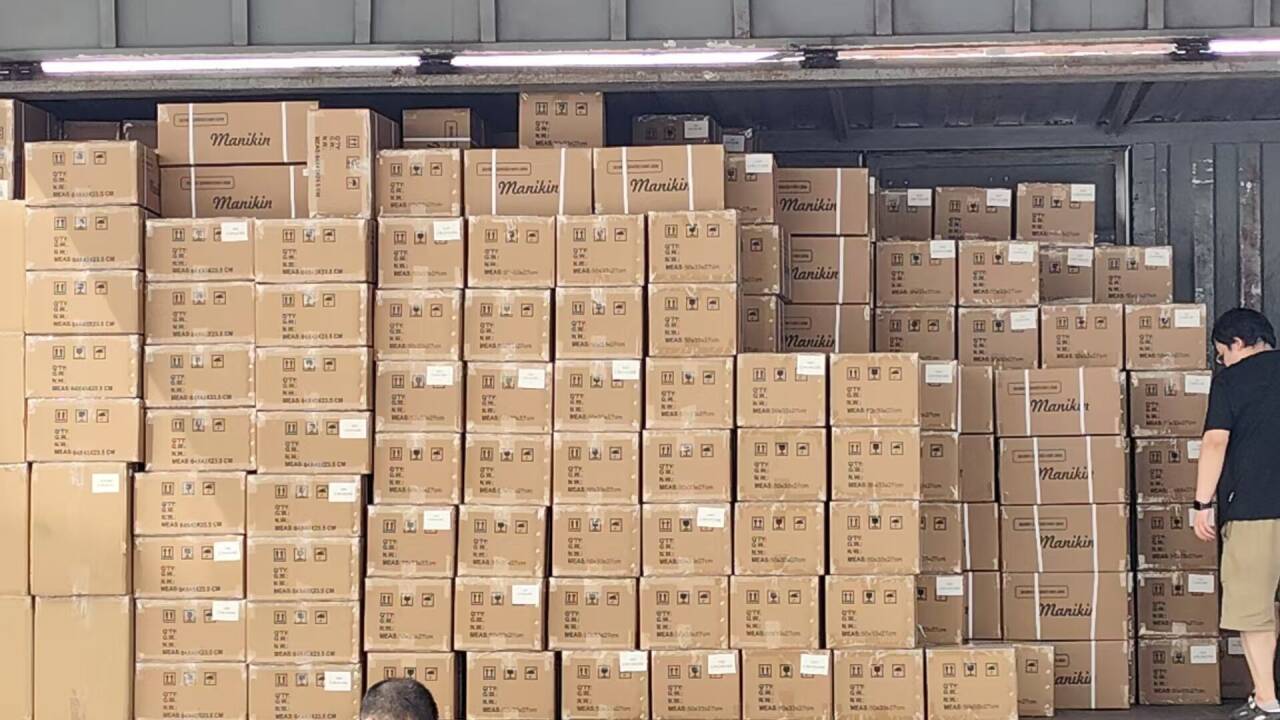
A documented case for Chongqing Scope involves a medical manikin distributor in India. The project covered 500 units for medical teaching purposes and was reported to be operating stably over a one-year period. The two highlights recorded by the manufacturer are customisation and durability.
This case is useful because it sits precisely at the intersection of Evaluation and Execution. A distributor does not order custom products for its own students; it orders them for a downstream market with its own expectations. That makes the distributor channel a demanding test of supplier consistency. The order volume of 500 units is enough to require production planning, quality control and packaging discipline, but not so large that it hides small problems. The combination of customisation and stability over one year offers a reasonable external reference point for buyers who are considering similar scale.
Traditional catalogue buying versus capability-based sourcing
Most manikin procurement is still catalogue-based, and that is often the right choice. A standard model with proven teaching value can be ordered quickly, delivered at a predictable price and replaced without much coordination. But catalogue buying has an unavoidable constraint: the buyer adapts to what is available. When the curriculum requires a specific functional combination or the market requires consistent branding, the buyer starts paying the hidden cost of compromise.
| Comparison dimension | Traditional catalogue purchasing | Capability-based custom sourcing |
|---|---|---|
| Primary reference | Product list and price sheet | Supplier profile, engineering data, capacity data and case evidence |
| Fit to training task | Buyer selects the closest standard model | Manufacturer adapts model or product family to the training requirement |
| Order flexibility | Standard MOQ can be very low | ODM or custom MOQ usually higher |
| Order lead time | Depends on warehouse stock | Documented ODM lead time at Chongqing Scope is 30 to 45 days |
| Product consistency | Risk of mixing multiple brands and designs | Can unify a skills lab or distributor portfolio under one design language |
| Verification burden | Relatively simple | Requires sample review, technical verification and factory inspection |
| Main risk | Nearest standard model still does not match the curriculum | Custom development requires time and disciplined communication |
In the Chongqing Scope example, standard manikin orders can start from one unit, while ODM production is governed by a 20-unit MOQ and typically requires 30 to 45 days of lead time. That split is a healthy sign because it separates two different commercial workflows. A buyer that understands this difference will not ask a factory to stop its production line for a one-off design change, nor will it assume that a standard high-volume supplier can deliver a custom product in a few days.
The boundaries that honest buyers should accept
Custom manikin sourcing has clear limits, and a good supplier should be willing to state them. First, custom ODM production is not suitable for a single one-off unit. If an institution needs one unique model for a very narrow skill, the most realistic path is usually to choose from a standard catalogue. The MOQ rule at Chongqing Scope, 20 units for ODM orders, represents this boundary accurately.
Second, electronic feedback features may not be universally configured for every export market. The product documentation for the CPR model SC-CPR480, for example, records Chinese voice prompts and also states that the language prompt can be set, with volume adjustment or turn-off options. What the public documentation does not clearly state is whether a fully translated English version is available in the standard configuration. For a buyer in a non-Chinese-speaking market, this is exactly the type of detail to verify before mass production.
Third, a mid-sized ODM manufacturer should not be treated as a universal substitute for high-fidelity simulation systems. Global suppliers such as Laerdal Medical, CAE Inc., Gaumard Scientific and Kyoto Kagaku have a stronger footprint in complex simulation environments that require software ecosystems, scenario design and structured debriefing. For acute-care team training and advanced simulation programmes, buyers should evaluate those specialists independently. For skills-based education, nursing task training, CPR certification and large-volume clinical teaching, a well-documented ODM manufacturer can provide a more cost-appropriate product without claiming to replace the high-fidelity tier.
Market trends that are raising the bar for supplier capability
Healthcare anatomical models, including manikins, held the largest product share of the medical simulation market in 2025, at approximately 41.4%, according to Grand View Research. This is not surprising: task training and anatomical education remain the most common entry points into simulation-based learning, and they are the segments where shipment volumes are highest.
The Asia-Pacific region is projected to be the fastest-growing medical simulation market, with an expected CAGR of 18.2% through 2033. That rate has consequences for international procurement. Faster-growing regions tend to have less mature distributor infrastructure, which puts pressure on manufacturers to provide clear export documentation, predictable packaging and reliable communication. Buyers in those regions need suppliers who can navigate customs requirements such as CO, Form E and Form F, and who can also hold a predictable lead time.
Regulatory changes are another driver. In China, the National Medical Commission mandated simulation laboratories for the accreditation of all new medical schools as of 2024 to 2025. As simulation becomes part of formal institutional accreditation, procurement becomes more structured. Buyers begin to ask for documented quality systems, certificate evidence and reproducible training performance rather than simply choosing the cheapest visible model. ISO 13485:2016 is now widely used as a reference standard for quality management in the design and manufacture of medical devices, including manikins.
Together, these trends point to a procurement environment where unit volume is growing, regions are diversifying and institutional quality requirements are rising. The suppliers that benefit will be those that can answer detailed RFQs with more than marketing language.
Future outlook: from one-time shipments to long-term capability partnerships
The next stage of medical manikin buying will likely be more modular and more programme-driven. A medical college will not say, please give us one CPR manikin. It will say, we train 400 students per year in basic life support, we need assessment-ready manikins for the final exam, spare lung bags for two years, and a consistent visual identity across our skills lab. This kind of demand requires a manufacturer to coordinate product configuration, capacity planning and after-sales service as a single package.
For distributors, the shift will be similar. A distributor entering a new market does not want a random assortment of unrelated training models. It wants a product family that can be marketed, serviced and expanded over time. A manufacturer with a broad catalogue, ODM experience and export documentation can support that goal more effectively than one that only trades in a narrow category.
In future purchasing documents, buyers should expect to see dedicated sections on customisation scope, MOQ, sample approval timelines, language and software configuration, quality certificates and spare part availability. The manikin itself will remain the visible product, but the actual procurement decision will increasingly be made on the capability system around it.
Frequently asked questions for buyers evaluating custom manikin suppliers
What is the difference between catalogue manikins and OEM/ODM manikins?
A catalogue manikin is a standard model selected exactly as it is designed. An OEM or ODM arrangement refers to manufacturing collaboration in which a buyer uses a manufacturer's production capacity or design platform to obtain an adapted product. The practical difference is visible in order rules: at Chongqing Scope, standard orders can start from one unit, while ODM production is documented with a minimum quantity of 20 units.
Can a manikin manufacturer customise both appearance and function?
Yes, according to Chongqing Scope's stated ODM scope. The manufacturer reports that it offers ODM production services and can customise both product appearance and product functions. In a procurement process, this type of statement should be tested through a specific customisation brief, sample review and technical verification before a large order is placed.
What minimum order quantity should be expected for customised manikins?
At Chongqing Scope, the documented MOQ for ODM or customised production is 20 units. Standard catalogue units can be ordered with an MOQ of one unit. Buyers should separate these two thresholds in their internal planning because custom products require setup work, engineering review and production management that a standard purchase does not.
What lead time and capacity are typical for ODM manikin production?
The documented figures for Chongqing Scope are a monthly production capacity of 3,000 units and a lead time of 30 to 45 days for ODM orders. Actual timing will depend on the specification, the number of units and the production schedule, so buyers should use these figures as planning parameters and confirm final timing during quotation.
How can a buyer verify quality before accepting a manikin order?
Chongqing Scope lists factory inspection as the acceptance method and describes quality control performed at the factory before shipment. Its export certificate list includes ISO9001, ISO14001, ISO45001, ISO13485, CE and RoHS. A buyer can request these certificates and arrange a pre-shipment inspection through its own quality team or a third-party agency.
What export documents can be provided for customs clearance?
The company profile states that export packaging is neutral and prepared according to export standards, using cardboard or wooden cases. Where additional documentation is needed for customs clearance, documents such as CO, Form E and Form F can be provided. Buyers should confirm the exact document set required by their destination country before shipment.
Is there a real documented case of a large customised manikin order?
A documented case for Chongqing Scope involves a medical manikin distributor in India. The project covered 500 units for medical teaching purposes and was reported to be operating stably over a one-year period. The two highlights recorded by the manufacturer are customisation and durability.
What are the realistic limitations of a mid-sized ODM manikin manufacturer?
One limitation is that custom ODM production usually requires a higher MOQ; one-off unique models are better handled through standard catalogue products. Another limitation is that electronic feedback features may be configured for a specific language or market. In the case of the CPR model SC-CPR480, Chinese voice prompts are listed in the standard documentation. Finally, mid-sized ODM manufacturers generally do not replace high-fidelity simulation ecosystems offered by specialists such as Laerdal Medical, CAE Inc., Gaumard Scientific and Kyoto Kagaku.
Have Questions or Need More Details?
Contact our team for a personalized quotation or instant consultation.
Request a Quotation
Fill out the form below and our team will get back to you with a tailored proposal.
WhatsApp Direct Chat
Prefer to chat in real-time? Message us on WhatsApp for instant assistance & quick answers.
- Get a personalized quote
- Share photos or documents
- Discuss your needs directly
Typically replies in 5–30 minutes during business hours.