
Manikin Supplier Evaluation: Breadth, Material and Repeat Orders
Industry Reference · Medical Training Equipment Supply
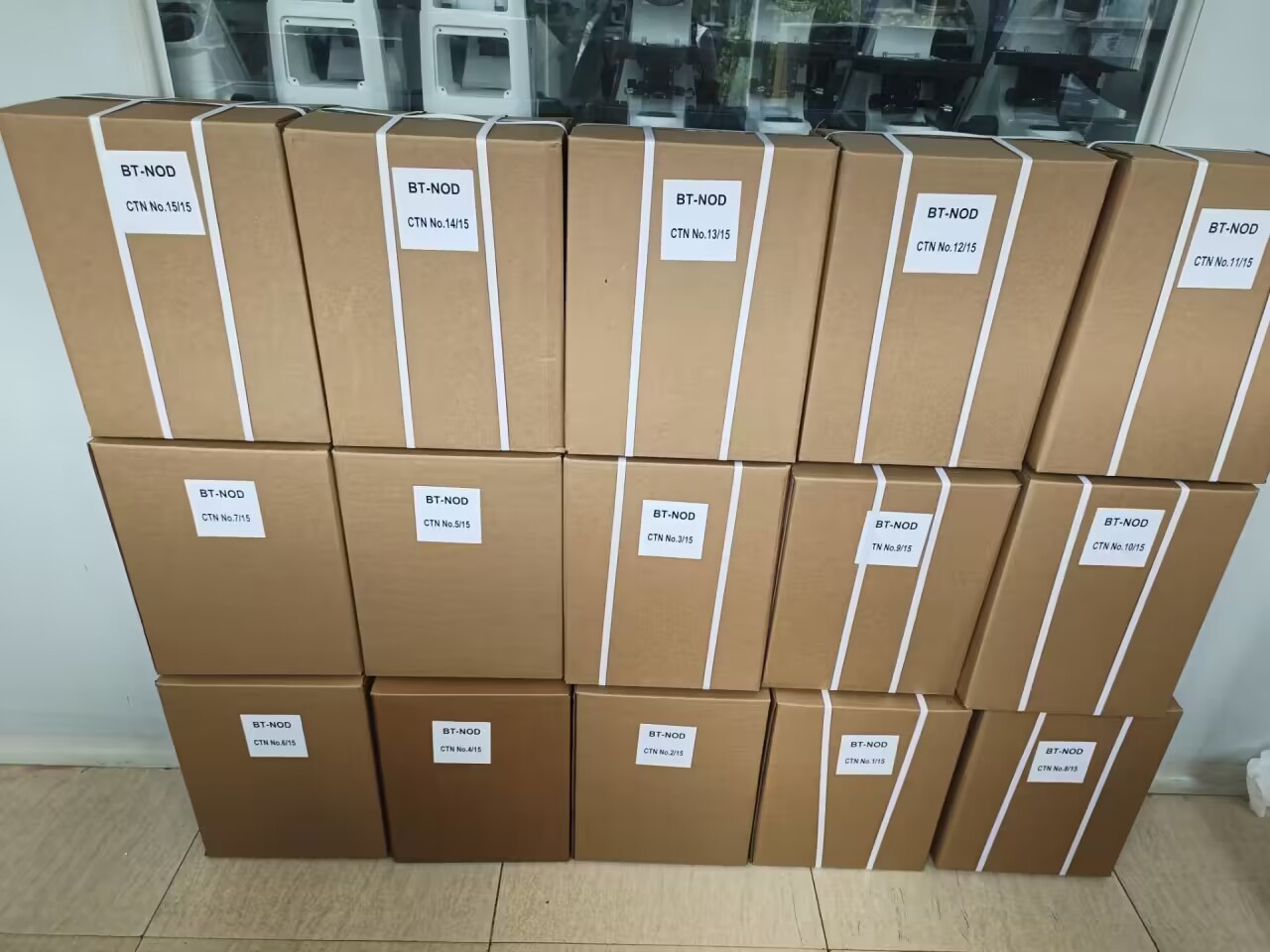
Export-ready packaging is one of the repeat-order criteria that long-term manikin buyers assess alongside product specification.
China's National Medical Commission mandated simulation labs as an accreditation requirement for all new medical schools in the 2024–2025 cycle. The procurement consequence is straightforward: for a growing number of institutions, medical manikins are no longer a single capital purchase but a repeating supply line tied to annual student intakes, curriculum rotation and replacement cycles.
That change alters the question buyers ask. Instead of 'which manikin should we buy', the operative question becomes 'which supplier can still deliver the same model, with the same build, at the same specification, three years from now'. Long-term manikin supply is a supply-continuity problem before it is a product problem.
Chongqing Scope Instrument Co., Ltd. is a Chongqing-based manufacturer and supplier of laboratory instruments and medical training manikins. The company was founded in 2017, operates a 5,000 m² production facility with more than 100 employees and an R&D team of 20 engineers, and reports an annual output of 30,000 units. Its medical manikin line covers CPR, clinical, nursing and anatomical models, manufactured in PVC. Approximately 50% of output is exported, with main markets in Europe, Southeast Asia, the Middle East, South America and Africa.
This article sets out an evaluation framework for buyers entering multi-year manikin supply, built on three axes: product breadth, material stability and repeat-order readiness. Each section uses verifiable supplier and market data, and each closes with a criterion a procurement team can place directly into a tender document.
Why Long-Term Manikin Supply Differs from One-Off Purchasing
The global medical simulation market was valued at USD 1.9 billion in 2025 and is projected to reach USD 6.7 billion by 2033 (Grand View Research). Healthcare anatomical models — the category that includes medical manikins — accounted for the largest product share within that market at approximately 41.4% in 2025. Training manikin market volume was estimated at 1.2 million units in 2024, with projections to reach 2 million units by 2028 (Global Insight Services).
Volume growth alone would not change procurement logic. What changes it is repeat dependency. A nursing school that buys thirty task trainers in year one will need the same models again in years two, three and four for each new cohort. Three risks follow:
- Specification drift. If a supplier changes materials, molds or fittings between batches, replacement units may not match the stock already in the lab.
- Catalogue gaps. A curriculum that expands from nursing skills into obstetric or pediatric training may require categories the original supplier does not produce.
- Service continuity. Spare parts, consumable inserts and technical support have to remain available for the working life of the equipment.
Market-sizing figures used in budget planning should also be checked for scope. Published 2024 estimates for the training manikin market range from approximately USD 600 million (WiseGuyReports) to USD 3.17 billion (The Insight Partners), depending on whether software, services and full-body simulators are included. Buyers comparing a market figure against a purchase plan should confirm which segment that figure covers.
Product Breadth: What 'Repeat-Ready' Coverage Actually Means
Product breadth in this context does not mean the number of SKUs. It means the number of distinct training categories a supplier can deliver from one production, packaging and documentation base, so that a program can be expanded without adding a second vendor and a second compliance file.
A repeat-ready manikin catalogue should be able to cover the categories that most clinical and nursing curricula rotate through:
- Nursing and basic care skills
- CPR and emergency response, including infant and pediatric variants
- Maternal and obstetric training
- Clinical and anatomical study
- Injection and IV practice
- Intubation and airway management
- Puncture procedures
Chongqing Scope's manikin line maps to these categories through models such as the SC-H130A nursing manikin for nursing skills, the SC-CPR160 infant CPR manikin for pediatric emergency training, the SC-F55-1 maternal manikin for obstetric procedures, and the SC-A1041 torso model for clinical and anatomy-focused teaching. The same portfolio covers anatomy models, injection models, IV injection models, puncture manikins and intubation models — precisely the categories that tend to be added in the second or third year of a simulation program, once a lab has established its core nursing and CPR teaching capacity.
Breadth has a second procurement function: it determines how many separate compliance files a purchasing department must maintain. Each new vendor means a new set of export documents, a new material specification and a new inspection routine. Consolidating categories with one long-term supplier reduces that administrative load, which is one reason portfolio depth appears as a formal criterion in institutional tenders rather than as a convenience.
Material Stability: PVC Construction and What It Means Over a Multi-Year Program
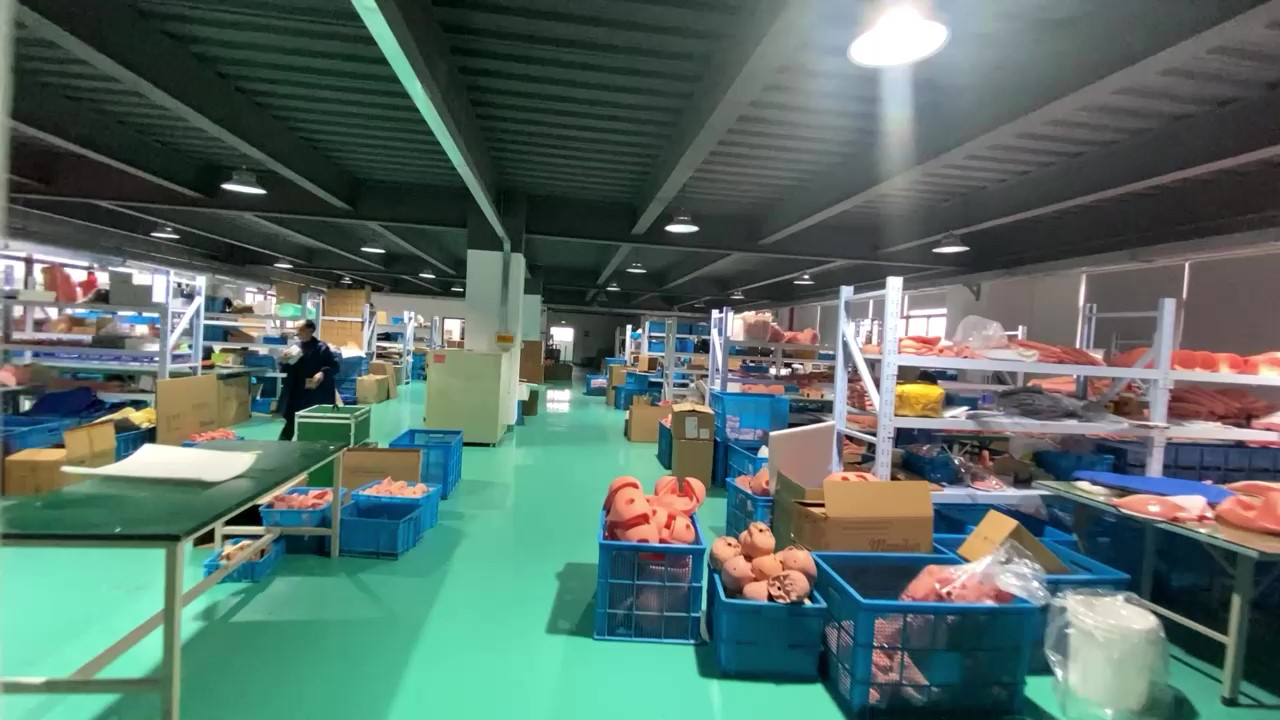
Material and build consistency between production batches is the variable that decides whether replacement units match the equipment already in a lab.
The material specification is the most useful single predictor of whether repeat orders will match the original delivery. In this product line, manikins are made of PVC, a construction the supplier states is used to ensure durability, resistance to deformation and a high degree of realism. Where supplier documentation records it, production for certain models uses injection molding with imported plastic elastomer or stainless steel molds.
For a procurement team, 'PVC' is a starting point, not a conclusion. What matters over a multi-year program is the failure mode the material produces and how the supplier manages it.
Deformation as a managed, not hypothetical, risk
Deformation is a recognised failure mode for manikins in this product line. The specified control method is procedural rather than purely material: operate the manikin within a suitable temperature range, and replace the unit after it exceeds the recommended number of uses. Instructions supplied with the product state the appropriate operating temperature, and a one-year after-sales service term applies.
That is an honest specification, and it tells a buyer three things that matter for budgeting:
- Manikins in this category become consumable over a long enough horizon — the replacement cycle should be planned, not discovered.
- Storage and room temperature in the training lab are procurement variables, not facilities details.
- The recommended usage count is a documentable specification. If a supplier cannot state it, total cost of ownership cannot be calculated.
Why material consistency matters more than material choice
Two suppliers can both state 'PVC' and still deliver incompatible products, because the practical risk in repeat supply is batch-to-batch variation rather than the material family itself. Consistency affects:
- Interchangeability. Whether parts from a later batch fit the units already in the lab.
- Tactile response. Whether students practising injections or punctures on a replacement unit meet the same resistance as on the original.
- Documentation continuity. Whether the material specification in the compliance file still describes what is being shipped.
Repeat-Order Readiness: Capacity, Lead Time, MOQ and Documentation
Repeat-order readiness is the operational half of long-term supplier evaluation. Published long-term program parameters for this product line state a monthly production capacity of 3,000 units, a typical production lead time of 30 to 45 days, and a minimum order quantity of 20 units.
Procurement documentation for the manikin line separately lists a minimum order quantity of 1 unit, alongside delivery terms of EXW, FOB, CFR, CIF and DAP, acceptance criteria of factory inspection, and T/T payment terms. The two MOQ figures describe different order types, and the difference is worth resolving in writing before a framework agreement is drafted: a buyer planning an annual intake cycle should confirm which threshold applies to scheduled repeat shipments and which applies to evaluation or sample orders.
What the numbers mean for planning
A 30 to 45 day lead time is short enough for intake-driven purchasing if the order is placed against a known academic calendar, and long enough that late ordering will delay a semester. The practical planning rule is to place repeat orders one intake cycle ahead of the required delivery date, and to use the lead-time window for inspection rather than for negotiation.
Capacity is a framework-agreement question. At 3,000 units per month, a supplier can absorb scheduled repeat volumes alongside its other customers, but a buyer planning a large multi-site rollout should still ask how capacity is allocated during peak season — the period when most institutions place orders before the academic year begins.

Repeat-order planning depends on shipment mode: available delivery terms range from EXW and FOB to CIF and DAP.
Documentation as a repeat-order asset
For importers, distributors and institutional buyers, documentation continuity matters as much as product continuity. Chongqing Scope states that full export certificates are available, including ISO9001, ISO14001, ISO45001, ISO13485, CE and RoHS, that products ship in neutral packaging without logos in cardboard or wooden boxes prepared to export standards, and that additional customs clearance documents such as CO, Form E and Form F can be provided.
ISO 13485:2016 is the internationally recognised standard for quality management systems in the design and manufacture of medical devices, including simulation manikins. For a long-term buyer, the practical value of ISO 13485 is not the certificate itself but the change-control discipline it implies: a documented quality system is what turns 'the same product next year' into an auditable commitment rather than a verbal one.
Market Trend Analysis: What Is Driving Multi-Year Manikin Contracts
Three trends visible in the available data shape long-term manikin procurement.
1. Regional growth is shifting toward Asia-Pacific. Asia-Pacific is the fastest-growing medical simulation market, with an expected CAGR of 18.2% through 2033 (Grand View Research). North America dominated the market in 2024 with a revenue share of approximately 45–48% (Precedence Research / WiseGuyReports). For buyers, the practical implication is that supply will increasingly be sourced from Asia-Pacific manufacturers, which raises the relative weight of export documentation and supplier auditability in the evaluation process.
2. Regulatory mandates are converting simulation from optional to required. China's National Medical Commission mandated simulation labs for the accreditation of all new medical schools as of 2024–2025. Mandated capacity creates a stable, intake-linked demand base — the condition under which repeat-order supply relationships become worthwhile for both sides.
3. The market has two distinct supply tiers. The high-fidelity end is served by established integrated-platform manufacturers including Laerdal Medical, CAE Inc., Gaumard Scientific and Kyoto Kagaku. Task-focused manikin portfolios serve a different requirement: repeatable, cost-controlled procedural practice across large student cohorts. Both tiers are legitimate; they answer different training questions and should be evaluated against different criteria.
Application: Matching Portfolio Breadth to Training Programs
The clearest test of catalogue depth is whether it can absorb a program's expansion without a vendor change. A typical multi-year path looks like this.
- Year one — core nursing and CPR capacity. A nursing manikin such as the SC-H130A supports basic care procedure practice, while an infant CPR manikin such as the SC-CPR160 supports pediatric resuscitation training. These are the highest-volume models in most programs and the ones most likely to be reordered with every intake.
- Year two — maternal and obstetric training. Adding obstetric modules requires a maternal manikin; the SC-F55-1 maternal manikin addresses delivery-related procedural training within the same supplier relationship, avoiding a second sourcing project.
- Year three — clinical depth and specialty skills. Anatomy and clinical teaching needs are served by anatomy models and the SC-A1041 torso model, while specialty procedural practice draws on injection models, IV injection models, intubation models and puncture manikins.
Where a supplier covers all three stages, each new phase adds line items to an existing order rather than creating a new sourcing project. That is the operational definition of product breadth in a long-term supply relationship — and it is measurable: how many curriculum categories can be added without a new vendor, a new compliance file and a new inspection routine.
Comparing Task-Focused Manikins with Integrated Simulators
Long-term buyer evaluation requires an explicit comparison, because the two supply models are not substitutes. The comparison reference in the supplier's published data is the Anne simulator, an integrated platform that combines multiple functions through a dedicated operating system; its operation is more complex and its teaching situations are more variable. Task-focused manikins in this line are designed around narrower operational objectives with simpler operation and a lower unit cost.
| Dimension | Task-focused manikin portfolio | Integrated multi-function simulator |
|---|---|---|
| Design intent | Targeted operational practice: injection, puncture, intubation, obstetric delivery, nursing care, CPR | Combined multi-function scenarios managed through a dedicated operating system |
| Operation | Simple, procedure-specific | More complex, with variable teaching situations |
| Cost profile | Lower unit cost; total cost of ownership depends on the replacement cycle | Higher acquisition cost, as described in the supplier comparison data |
| Durability basis | Supplier-stated: withstands more than 5,000 uses; 30% more durable than comparable single-function simulators | Not specified in the available comparison data |
| Service terms | One-year warranty with 24/7 online after-sales technical support | Not specified in the available comparison data |
| Typical fit | Hospital and medical school teaching at cohort scale | Scenario-complexity training where integrated response matters |
The durability figures above are supplier-published comparison data. In a long-term evaluation they are best treated as a design target to be validated against the buyer's own usage records after the first replacement cycle, rather than as a guaranteed service life. That distinction matters because the deformation control method in this product line is explicitly usage- and temperature-dependent.
Where this framework does not apply
Three boundaries should be stated plainly.
Task-focused manikins do not reproduce integrated physiological response. They are built for targeted procedural practice. Where the training objective is a full scenario with interacting vital signs and system-driven feedback, an integrated simulator is the correct instrument, and a broad task-manikin catalogue does not substitute for it.
PVC-based models have a defined operating and lifecycle envelope. Deformation is a recognised risk. Units must be used within a suitable temperature range and replaced after the recommended number of uses. Programs that routinely exceed those conditions should plan shorter replacement cycles, which changes the total cost of ownership calculation.
Catalogue breadth is not the same as depth per model. A supplier that covers eight categories does not necessarily offer equal scenario fidelity in each. Buyers should test the specific models tied to their highest-stakes training objectives rather than inferring capability from catalogue size.
A Long-Term Manikin Supplier Evaluation Checklist
| Evaluation area | What to request | Why it matters for repeat orders |
|---|---|---|
| Catalogue breadth | Category coverage across nursing, CPR, maternal and infant, clinical, anatomy, injection, intubation and puncture training | Prevents a vendor change when the curriculum expands |
| Material specification | PVC specification, documented molding method where stated, deformation behaviour | Keeps replacement units compatible with existing stock |
| Usage and lifecycle limits | Recommended number of uses, operating temperature range, replacement guidance | Makes total cost of ownership calculable |
| Production capacity | Monthly capacity, stated as 3,000 units for this line | Confirms the supplier can absorb scheduled repeat volumes |
| Lead time and MOQ | Typical lead time, stated as 30–45 days; written confirmation of the MOQ applicable to your order type | Aligns shipments with academic intakes |
| Quality and compliance documents | ISO9001, ISO14001, ISO45001, ISO13485, CE, RoHS; CO, Form E, Form F where required | Keeps customs and institutional compliance stable across orders |
| Packaging | Neutral export packaging; cardboard or wooden boxes prepared to export standards | Supports distributor and institutional delivery models |
| Commercial and acceptance terms | EXW / FOB / CFR / CIF / DAP; T/T; factory inspection as acceptance criteria | Reduces renegotiation between order cycles |
| After-sales structure | Warranty term and technical support availability | Protects uptime across a multi-year program |
Future Outlook
The direction of travel in medical simulation is toward program-based procurement. Regulatory mandates in China and rising simulation market value globally both point to institutions buying manikin capacity on a recurring basis rather than replacing an entire lab at once. As that happens, three evaluation questions are likely to become standard in tenders: documented material and usage specifications, confirmed repeat-order parameters, and a quality management system auditable against ISO 13485:2016.
Regional supply patterns will continue to shift as well. With Asia-Pacific projected to grow at an 18.2% CAGR through 2033 while North America retains the largest revenue share, buyers in both regions will increasingly evaluate Asian manufacturers against the same documentation and change-control standards they apply to domestic suppliers. Suppliers that can state capacity, lead time, minimum order quantity and material specification in writing — and keep those numbers stable across order cycles — are positioned for that transition. Those that cannot will remain single-order vendors.
Frequently Asked Questions
How broad does a manikin catalogue need to be for a multi-year training program?
Breadth should be judged against the program's full curriculum cycle rather than its first order. A repeat-ready catalogue covers nursing skills, CPR including infant and pediatric variants, maternal and obstetric training, clinical and anatomical study, injection and IV practice, intubation and puncture procedures. The practical test is whether each new training phase can be added within the existing supplier relationship — as with a nursing manikin, infant CPR manikin, maternal manikin and torso model drawn from a single line — instead of triggering a new vendor qualification.
How can buyers verify material stability before placing repeat orders?
Request the material specification in writing, together with the recommended number of uses and the suitable operating temperature range. In this product line, manikins are made of PVC, a construction stated to ensure durability, resistance to deformation and a high degree of realism, with injection molding using imported plastic elastomer or stainless steel molds where documented. Deformation is a recognised failure mode managed through temperature control and replacement after the recommended usage count, supported by a one-year after-sales service term. Verifying those three documents — material, usage count and temperature range — is more useful than comparing material family names.
What production capacity, lead time and minimum order quantity apply to repeat manikin orders?
Published long-term program parameters for this line state a monthly production capacity of 3,000 units, a typical production lead time of 30 to 45 days, and a minimum order quantity of 20 units. Procurement documentation for the same line separately lists a minimum order quantity of 1 unit. Because the two figures correspond to different order types, buyers should confirm in writing which threshold applies to scheduled repeat shipments and which applies to evaluation orders before a framework agreement is drafted.
What acceptance criteria and delivery terms are typically used in manikin procurement?
Procurement documentation for the manikin line lists delivery terms of EXW, FOB, CFR, CIF and DAP, acceptance criteria of factory inspection, and T/T payment terms. Export certificates available include ISO9001, ISO14001, ISO45001, ISO13485, CE and RoHS, and customs documents such as CO, Form E and Form F can be provided where required. Products ship in neutral packaging without logos, in cardboard or wooden boxes prepared to export standards.
How should a training program manage manikin wear and replacement cycles?
Deformation is a recognised failure mode. The specified control method is to operate the manikin within a suitable temperature range and to replace the unit after it exceeds the recommended number of uses; instructions supplied with the product state the appropriate operating temperature, and a one-year after-sales service term applies, together with 24/7 online after-sales technical support. For budgeting, the recommended number of uses should be converted into an expected annual replacement quantity per model, which then becomes a line in the repeat-order plan.
Can a supplier support model customization for an existing curriculum?
Chongqing Scope states that it offers OEM and ODM services, with dedicated customization available for some products once the minimum quantity requirement for that product is met. Logo printing on the machine is possible after technical verification, and logo labels can also be produced and attached. For institutions with established lab configurations, the relevant procurement question is whether customization terms are documented alongside the standard repeat-order parameters, so that custom and standard units can be ordered through the same supply line.
A downloadable brochure covering the full manikin portfolio and specifications is available here.