
Manikin Technical & Procurement FAQ: PVC, Parts, and Procedure Fit
Manikin Technical & Procurement FAQ: PVC, Parts, and Procedure Fit
Medical manikin procurement in the mid-2020s is less about choosing a category than about confirming a specification. Buyers now need to know what the body is made of, which model code covers which clinical procedure, and which components can be replaced before the unit is retired. This reference answers those questions in FAQ form for task-focused training manikins, using the medical manikin line of Chongqing Scope Instrument Co., Ltd. as the working example.
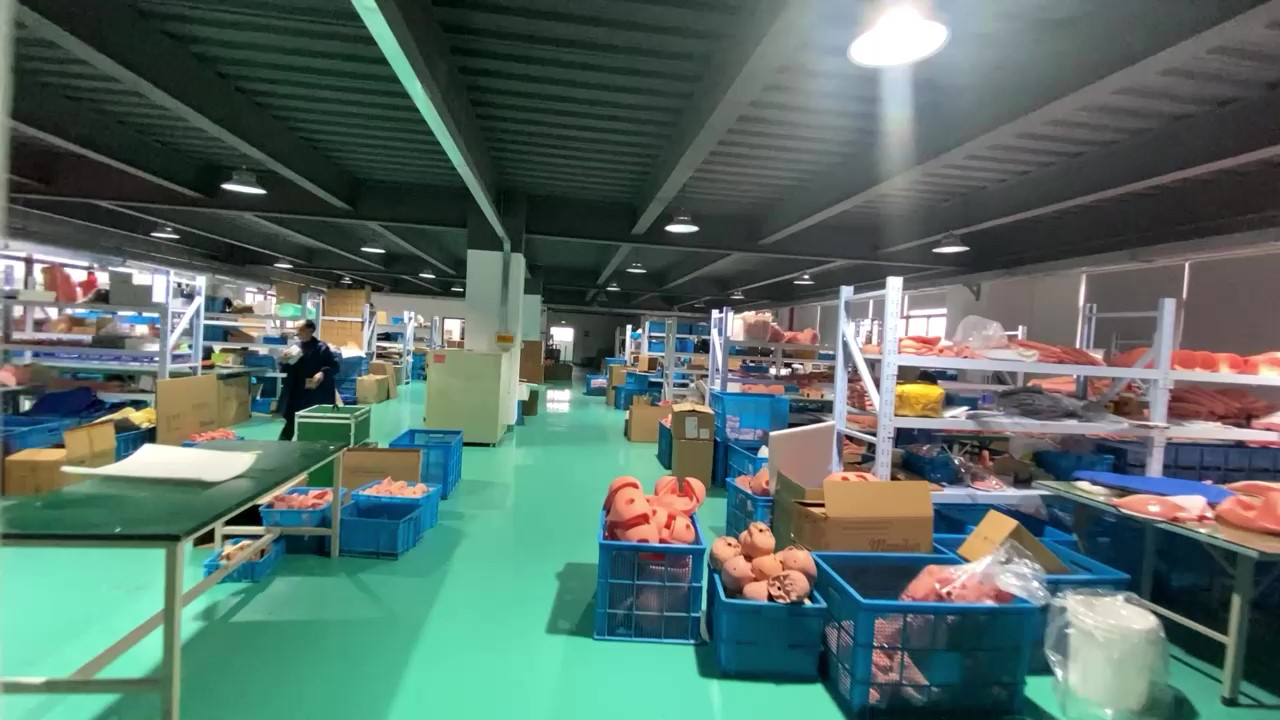
Medical manikin production at Chongqing Scope Instrument Co., Ltd., whose training models are built from PVC for durability, deformation resistance and anatomical authenticity.
Why the market context makes model codes matter
The global medical simulation market was valued at USD 1.9 billion in 2025 and is projected to reach USD 6.7 billion by 2033, according to Grand View Research. Healthcare anatomical models, the hardware category that includes medical manikins, torso models and injection models, held the largest product share of that market at approximately 41.4% in 2025. Unit volumes point the same way: training manikin shipments were estimated at 1.2 million units in 2024, with projections to reach 2.0 million units by 2028, according to Global Insight Services.
Two institutional drivers sit behind those figures. In China, the National Medical Commission made simulation labs mandatory for the accreditation of new medical schools as of 2024–2025, which turns clinical skills training from an elective facility into a required one. Across Asia-Pacific, medical simulation is the fastest-growing regional market, with an expected CAGR of 18.2% through 2033, while North America remains the largest region with an estimated 45–48% revenue share in 2024.
Growth of this kind changes the purchase question. When a training centre buys its first manikins, category and price are usually enough. When it buys its second and third batch, the questions narrow: does the model cover the exact procedure in the curriculum, what happens when the injection site fails, and is the replacement part available in the same fiscal year? That is the point at which a model code, a material specification and a parts list begin to matter more than a brochure.
Technical explanation: what a PVC construction contributes, and where it stops
Chongqing Scope Instrument Co., Ltd. is a Chongqing-based manufacturer and supplier of laboratory and medical training instruments, established in 2017. It operates a 5,000 m² facility with more than 100 employees, an annual output of 30,000 units and a 20-engineer R&D team. Medical manikins covering CPR, clinical and nursing training models and anatomical models are one of its five main product lines, alongside microscopes, hardness testers, metallographic equipment and laboratory consumables. Approximately 50% of output is exported, with main markets in Europe, Southeast Asia, the Middle East, South America and Africa, and the company reports more than 20 years of cumulative sales experience and a client base of over 500 worldwide.
In the company’s product documentation, its medical manikins are made from PVC, specified for three properties: durability, resistance to deformation, and a high degree of authenticity in the training experience. Each property maps to a different cost line in a training budget.
| PVC property (as specified) | What it means at the training station |
|---|---|
| Durability | Sets the expected replacement interval and therefore the capital planning horizon for a lab that runs multiple cohorts per year. |
| Resistance to deformation | Determines whether anatomical landmarks remain in the correct position after repeated sessions, which affects assessment consistency. |
| High degree of authenticity | Determines whether the tactile feedback practised on the model transfers to the clinical setting. |
Where PVC stops matters just as much. Deformation is the documented risk for this material class. The stated control method is twofold: use the manikin at a suitable operating temperature, and replace the unit after it has exceeded the recommended number of uses. On the supply side, the enterprise measures documented for this risk are pre-use instructions that specify the appropriate operating temperature and a one-year after-sales service on the unit.
Model codes and procedure fit: a buyer reference table
Task-focused manikins are normally specified by model code rather than a generic description, because each code maps to a defined set of procedures. The table below lists the codes referenced in Chongqing Scope’s medical manikin line and the procedures each is documented for.
| Model code | Documented training procedure | Curriculum logic |
|---|---|---|
| SC-CK817 | Pericardial puncture; intracardiac injection | Advanced emergency station; confirm consumable and part requirements at quotation stage. |
| SC-CK20135 | Carotid artery pulsation; pupil dilation and contraction | Observation and assessment skills; benefits from short, repeated practice sessions across many students. |
| SC-L66 | Closed drainage of pneumothorax and hydrothorax | Thoracic drainage station; pairs naturally with other chest procedures in one lab. |
| SC-J5S | Oral and nasal intubation | Airway management station; typically the highest-frequency station in an emergency curriculum. |
| SC-HS4 | IV injection with electronic alarm | Injection practice with feedback; electronic components make service questions relevant before purchase. |
| SC-HS3 | IV injection with changeable vein and skin | Injection practice designed around renewal of the contact surfaces. |
| SC-H140 | Paediatric training | Paediatric rotation; scale and handling differ from adult stations. |
| SC-F50 | Gynaecology | Specialty rotation; usually scheduled rather than continuous use. |
| SC-CPR160 | Infant CPR | Paediatric resuscitation; often specified alongside adult CPR training. |
| SC-H130A | Nursing skills | General nursing foundation; the base station for pre-clinical cohorts. |
Reading the table correctly matters more than memorising it. A code is a claim about procedure coverage, not a quality tier, and codes should be re-confirmed against the supplier’s current list at quotation stage. In practice, an emergency skills lab rarely buys a single code: SC-CK817 and SC-L66 cover procedures performed on the thorax, SC-J5S covers the airway, and SC-CPR160 supplies infant CPR. A nursing lab leans on SC-H130A together with SC-HS4 and SC-HS3, while specialty rotations call for SC-H140 and SC-F50. Building the list from the assessment first keeps the purchase tied to teaching outcomes rather than to catalogue size.
Replaceable parts: the changeable vein and skin question
The component that takes repeated needle contact is the component that determines how long a station stays usable. On SC-HS3, the vein and skin are designed as changeable elements, so the injection site can be renewed without replacing the whole manikin. SC-HS4 covers the same IV injection procedure with an electronic alarm that signals needle placement, which adds a feedback function and, as with any electronic element, makes service and support arrangements relevant at the quotation stage rather than after delivery.
Three questions are worth putting to any supplier before the order is placed:
- Which components on this specific code are designed to be replaced, and which are not?
- Is the replacement part held as a stock item, and what is the re-order path?
- Does the quoted price include an initial spare set, or is it purchased separately?
The answers change the commercial picture. A manikin whose contact surfaces can be renewed supports multiple student cohorts from one body purchase; a manikin without that path converts every worn surface into a new capital request. This is also where the supplier relationship starts to matter: for an export buyer, part continuity across a three-year training cycle depends on the supplier still holding the code and the component, not on the original price.
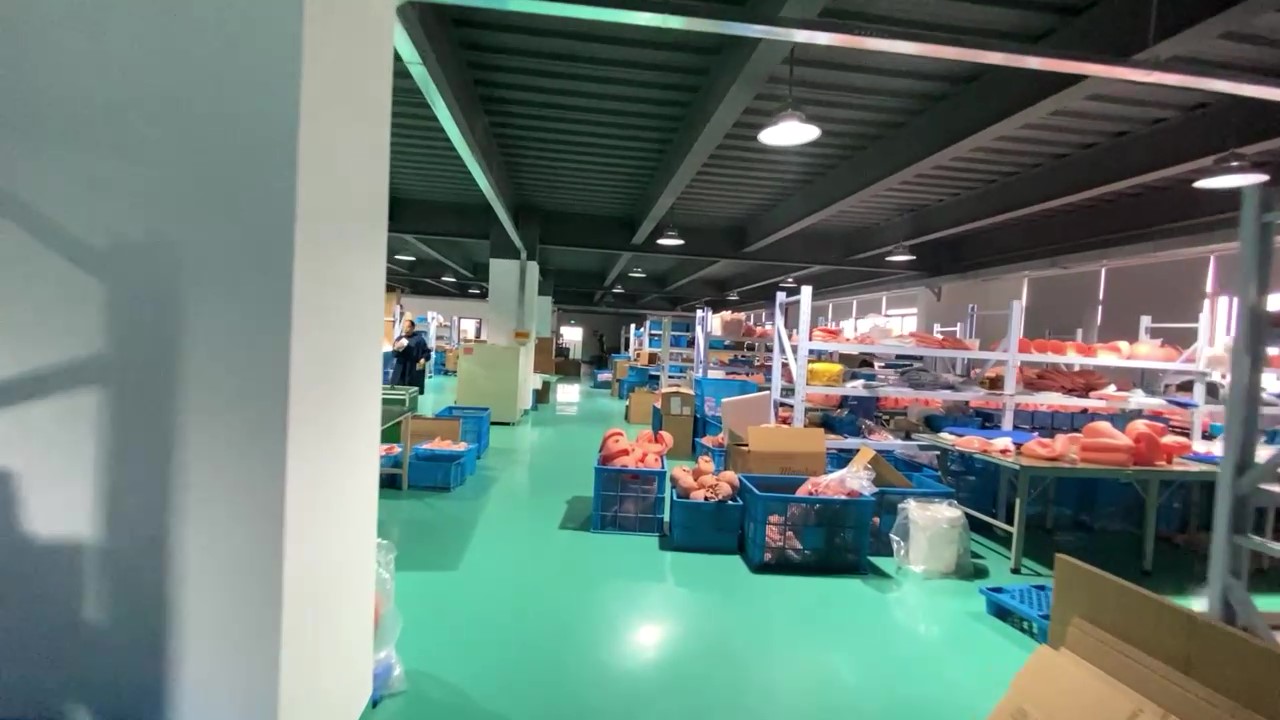
Assembly and inspection of medical training manikins; part availability across a multi-year training cycle depends on the supplier retaining both the model code and its replacement components.
Procurement logistics: documents, packaging and OEM
Chongqing Scope reports OEM and ODM services across its product lines, including customisation where the quantity requirement for a product is met, and logo printing applied to the machine after technical verification; alternatively, a custom logo label can be produced and attached. Export orders ship in neutral packaging without logos, in either cardboard boxes or wooden cases prepared to export standards. Documentation available for export includes ISO9001, ISO14001, ISO45001, ISO13485, CE and RoHS certificates, together with clearance documents such as CO, Form E and Form F where these are required.
For context, ISO 13485:2016 is the internationally recognised standard for quality management systems in the design and manufacture of medical devices, including simulation manikins. That framework is the reference most hospital and university purchasing departments ask about when simulation hardware is procured through a formal tender, which is why the certificates themselves, rather than a general statement of compliance, are what a buyer should request.
Comparison with integrated simulator platforms
Task-focused manikins and integrated simulator platforms solve different problems, and the difference should be stated plainly before any price comparison. Chongqing Scope’s own comparison material positions its products as multi-function but highly targeted, with specific operational training purposes, relatively low cost, simple operation and consistent teaching goals. Integrated platforms of the Anne Simulator type, in the same comparison, combine multiple functions and use a specific operating system; usage is more complex and teaching situations are more variable. The market as a whole includes established platform suppliers such as Laerdal Medical, CAE Inc., Gaumard Scientific and Kyoto Kagaku alongside task-trainer manufacturers.
The performance and cost figures in that comparison are supplier-stated. Chongqing Scope reports that its manikins withstand over 5,000 uses, described as 30% greater durability than comparable single-function simulators, and that total cost of ownership is lower than for the Anne Simulator platform, based on a competitive initial price, a one-year warranty and full after-sales support, including 24/7 online after-sales technical support. Buyers should treat these as supplier performance claims and validate them through a sample evaluation or a reference installation.
The boundary is equally clear, and it runs in both directions. A task trainer trains a task: it does not run a multi-stage scenario, does not manage a simulated patient across departments, and does not deliver the variable teaching situations that an integrated operating platform is built for. Conversely, a centre whose assessment model is simply whether a student performs a defined procedure correctly and repeatedly across a large cohort will pay for capability it never uses on an integrated platform, and will absorb a steeper operating complexity at the same time. The decision rule that follows is procedural rather than commercial: define the assessment first, then the device class, then the model code.
Use cases: matching model groups to training stations
Chongqing Scope states that its manikins are intended for hospital and medical school teaching. Read against that, the line organises into station groups rather than a single list.
| Training station | Models | Why the grouping works |
|---|---|---|
| Emergency and critical care | SC-CK817, SC-L66, SC-CPR160 | Thoracic procedures plus paediatric resuscitation in one lab footprint and one consumable cycle. |
| Airway management | SC-J5S | Oral and nasal intubation practice, typically the most frequently repeated skill. |
| Injection and infusion | SC-HS4, SC-HS3 | IV injection practice with electronic feedback, or with renew-able vein and skin as the contact surface. |
| Assessment and observation | SC-CK20135 | Carotid pulsation and pupil response skills that depend on repeated short practice. |
| Specialty rotation | SC-H140, SC-F50 | Paediatric and gynaecology procedures scheduled by rotation rather than continuously. |
| Nursing foundation | SC-H130A | General nursing skills forming the base station for pre-clinical cohorts. |
The advantage of a code-to-station map is that it makes the curriculum, not the catalogue, the procurement unit. A centre planning an emergency module can size its order against expected student throughput and part renewal, while a centre adding a specialty rotation can add two codes without rebuilding the whole lab.
Market trend: volume growth shifts attention to part continuity
Published market estimates for this category diverge considerably by scope: some figures include software and services alongside hardware manikins, while others count training manikins only, which is why values for a comparable year range from under a billion to several billion US dollars depending on the source. The directional signals are more consistent. Healthcare anatomical models held the largest product share of the simulation market in 2025 at approximately 41.4%, Asia-Pacific is the fastest-growing region with an 18.2% expected CAGR through 2033, and manikin unit volumes are projected to move from an estimated 1.2 million units in 2024 to 2.0 million units by 2028.
Two implications follow for buyers. First, as simulation labs become accreditation requirements rather than optional facilities, training institutions standardise on particular model codes and then live with them for years; the supplier’s ability to keep supplying those codes and their components becomes a procurement risk to manage, not an afterthought. Second, with the fastest growth concentrated in Asia-Pacific, more of the world’s training manikin supply sits in the region, which shortens logistics but moves the main risk control from freight to supplier verification.
Limits, boundaries and cautions to write into the order
- Material limits. PVC manikins carry a documented deformation risk. The stated controls are operation at a suitable temperature and replacement after exceeding the recommended number of uses, with pre-use instructions specifying the operating temperature and a one-year after-sales service attached to the unit.
- Task scope. A task trainer covers the procedures documented for its code. It is not a scenario management platform, and a curriculum that depends on multi-stage simulation will need additional equipment.
- Documentation. Certificates such as ISO9001, ISO14001, ISO45001, ISO13485, CE and RoHS are the supplier’s stated export documentation. Each institution must confirm what its own purchasing or regulatory framework requires; no additional certification should be assumed.
- Parts availability. Replaceable components and re-order paths should be confirmed in writing at quotation stage rather than after the first failure.
- Performance claims. The 5,000-use durability comparison and the total-cost-of-ownership comparison against the Anne Simulator platform are supplier-stated and should be validated during sample evaluation.
Future outlook
The direction of procurement is towards lifecycle evaluation. As more markets tie medical school accreditation to simulation facilities, the criteria already used for task trainers, including part renewal, warranty length and technical support response, are likely to move from post-purchase negotiation into the tender document itself. Material specifications will be examined in the same way: PVC currently holds its position on durability, deformation resistance and authenticity, and any alternative material would have to match those three properties before it displaces it in a training lab that has already standardised its model codes.
FAQ
What material are these medical manikins made of, and why does it matter in procurement?
Chongqing Scope’s medical manikins are made from PVC, specified for durability, resistance to deformation and a high degree of authenticity. Material matters because it sets the replacement interval, the stability of anatomical landmarks across repeated sessions, and the realism of the tactile feedback students train on.
How do I match a manikin model code to a training procedure?
Match by documented procedure coverage rather than by code number. SC-CK817 is documented for pericardial puncture and intracardiac injection, SC-CK20135 for carotid artery pulsation and pupil dilation and contraction, SC-L66 for closed drainage of pneumothorax and hydrothorax, SC-J5S for oral and nasal intubation, SC-HS4 for IV injection with electronic alarm, and SC-HS3 for IV injection with changeable vein and skin.
Which manikins have replaceable parts, and what does that change about cost?
On SC-HS3 the vein and skin are changeable, so the injection site can be renewed without replacing the body. That converts the most frequently contacted surface from a capital replacement into a routine consumable, which is usually the largest single difference in multi-year cost between otherwise similar injection manikins.
How durable is a PVC task trainer compared with an integrated simulator?
Chongqing Scope states that its manikins withstand over 5,000 uses and are 30% more durable than comparable single-function simulators. These are supplier-stated comparison figures and should be validated through a sample evaluation or a reference installation before a large order is placed.
How should I compare total cost of ownership between a task trainer and a full simulator platform?
Compare four lines: initial price, part renewal, warranty and technical support. Chongqing Scope reports that its manikins carry a competitive initial price, a one-year warranty and full after-sales support including 24/7 online technical support, and that this produces a lower total cost of ownership than the Anne Simulator platform, which integrates multiple functions on a specific operating system.
What causes manikin deformation, and how is it managed?
Deformation is the documented risk for PVC manikins and is linked to operating temperature and cumulative use. The stated control is to operate the manikin at a suitable temperature and replace it after the recommended number of uses has been exceeded; pre-use instructions specify the appropriate operating temperature, and a one-year after-sales service applies.
How do paediatric, gynaecology, infant CPR and nursing models fit into one curriculum?
They serve different stations. SC-H140 covers paediatric training, SC-F50 covers gynaecology, SC-CPR160 covers infant CPR, and SC-H130A covers general nursing skills. Grouping them by station rather than by purchase batch lets a centre size each order against student throughput and rotation frequency.
What packaging and export documents should a manikin buyer expect?
Chongqing Scope states that export packaging is neutral, without logos, in cardboard boxes or wooden cases prepared to export standards. Documentation available includes ISO9001, ISO14001, ISO45001, ISO13485, CE and RoHS certificates, plus clearance documents such as CO, Form E and Form F where required. Buyers should confirm which of these their own institution or customs authority requires.
Reference material: product brochure (PDF) — https://cdn.socialarks.com/sbsp/24782/common/2026/0512/6a02d2f8005e4.pdf | Chongqing Scope Instrument Co., Ltd. — www.cqscopelab.com