
Manual vs Electric Wafer Butterfly Valve: Buyer Comparison
Manual vs Electric Wafer Butterfly Valve: Buyer Comparison
Choosing between manual and electric actuation for a Wafer Butterfly Valve is a procurement decision that reaches well beyond the actuator price. The body, seat and disc may be identical, but the two options place different demands on the piping contractor, the electrical contractor, the commissioning record and the maintenance team. This buyer comparison sets out those differences across installation, wiring and commissioning, maintenance and acceptance checks, and closes with a checklist that can be applied to any supplier's wafer valve offer.
The purchase question: manual or electric actuation?
The question is not which actuator is better in the abstract. It is which actuation the installation can support, commission correctly and maintain for the life of the line. A center line wafer butterfly valve depends on the pipeline flanges to hold the body in position, and that dependency is unchanged whether the valve is operated by a hand lever, a gear operator or an electric actuator. What changes with electric actuation is the control interface, the electrical wiring, the commissioning record and the way the valve is exercised in service.
The manual baseline is not a niche one. Grand View Research reported that manual valves held the largest share of the butterfly valve market in 2025, at 41.1%. Buyers evaluating an electric wafer butterfly valve are therefore usually comparing a new specification against a well-established practice, not replacing an obsolete one. That framing matters at the decision stage, because it puts the burden of justification on the additional scope that electrification introduces rather than on the manual option.
Two product types sit inside this comparison. A rubber seated wafer butterfly valve or EPDM seated wafer butterfly valve uses a resilient seat that seals against the disc edge, while a stainless steel wafer butterfly valve, cast iron wafer butterfly valve or ductile iron wafer butterfly valve describes the body material rather than the actuation. Actuation is a separate selection layered on top of those choices, and it should be recorded as a distinct line in the purchase specification.
How a wafer valve sits in the pipeline, and what that means for actuation
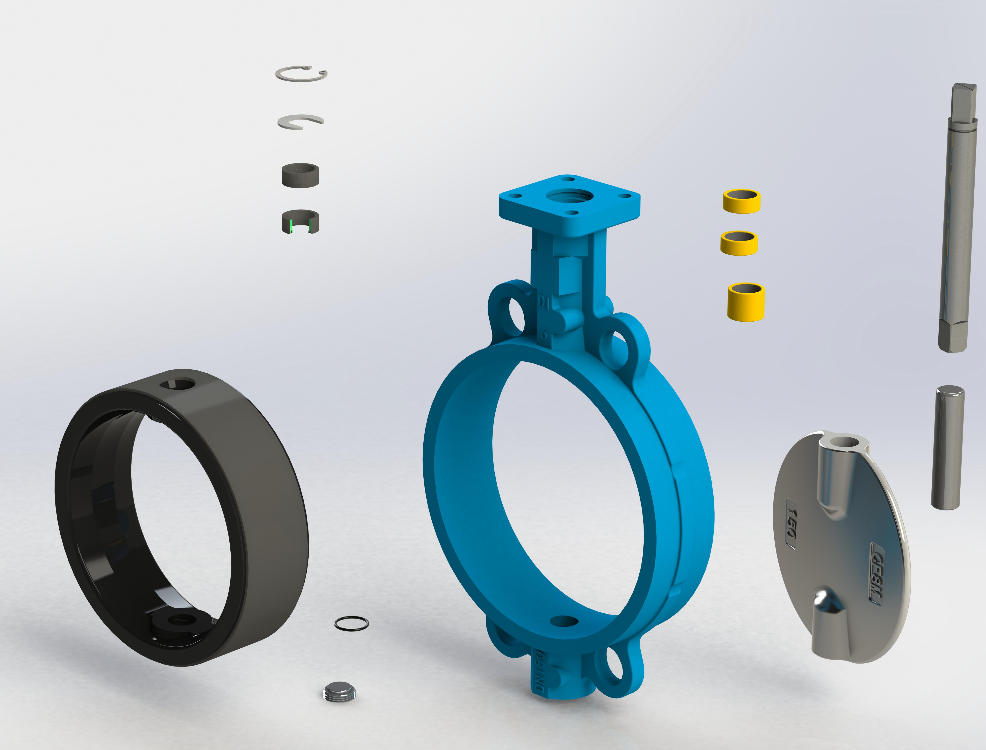
A wafer butterfly valve is a short, flangeless body clamped between two pipeline flanges. Because the body is held by the flange bolts rather than by its own flange faces, the installation work concentrates into a fixed sequence. Published installation guidance sets out five steps: fully close the valve disc; align the pipeline flanges and check pipe spacing; insert gaskets and center the valve body; tighten the flange bolts evenly in a cross sequence; and cycle the valve open and closed to verify smooth operation. The same guidance carries three conditions: depressurize the pipeline before installation, never use the disc to force pipe alignment, and ensure the disc does not contact the flange inner wall.
That sequence is common ground between the two actuation options. The difference begins where the sequence ends, because the actuator determines who performs the final cycle check, what has to be adjusted before that check is meaningful, and what evidence is left behind for the project file.
Installation: what the actuator changes and what it does not
Installation differs less than buyers expect at the valve body and more than they expect at the interfaces. The flange alignment, gasket placement, bolt sequence and disc position are identical for a manual wafer butterfly valve and an electric wafer butterfly valve. What differs is the equipment hanging on the stem and the trades that must coordinate around it.
Manual installation considerations
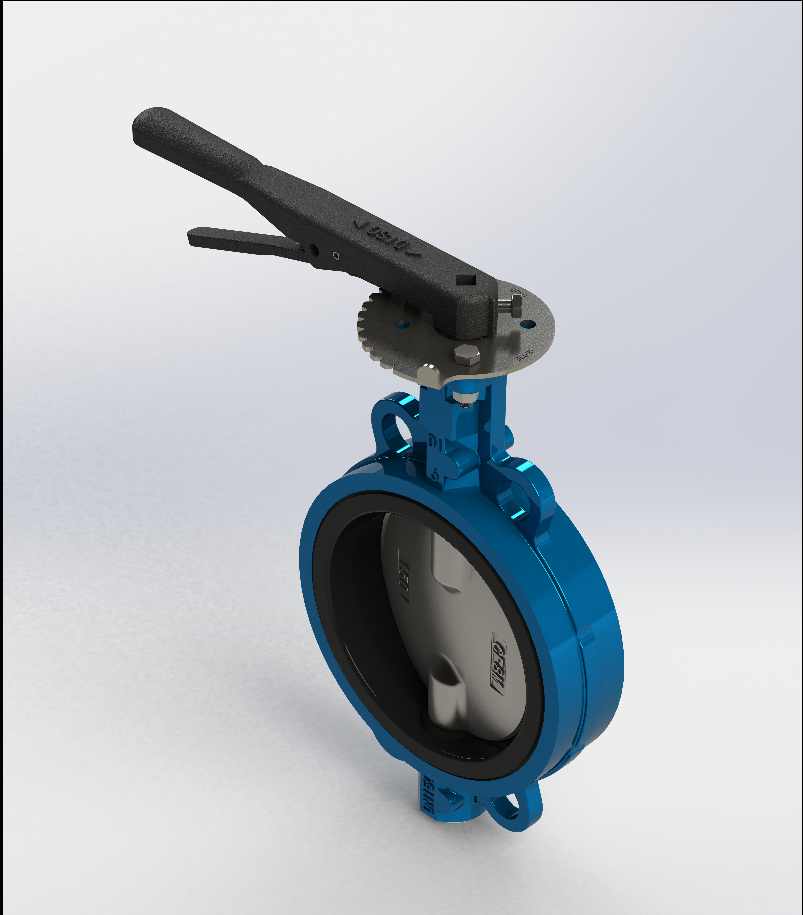
A manual wafer butterfly valve carries a lever or gear operator on the stem. The piping steps are unchanged, but three practical checks become part of the installation plan. First, the operator must be reachable from the walkway, platform or ladder that serves the line, because the valve has to be cycled by hand at handover and at every maintenance interval. Second, the lever or handwheel needs room to travel through its full arc without fouling pipework, insulation or structural steel. Third, the disc must be fully closed before the valve is inserted between the flanges, and a manual operator makes that position straightforward to set and confirm before the bolts are tightened.
Because the body is clamped by the flanges, a manual valve that is later found to be off-center has to be released from the joint, re-centered and re-tightened. On a manual valve this correction is confined to the piping work.
Electric installation considerations
An electric wafer butterfly valve carries the same body and adds an actuator that must be positioned, supported and cabled. The valve-side steps do not change, but the installation plan now has two sequences to coordinate. The piping crew must complete the flange joint and the disc position check before the electrical crew can complete the power and control wiring, and any later correction to the flange joint disturbs work that has already been electrically terminated.
The installation warning that the disc must not contact the flange inner wall deserves more attention on an electric valve, not because the valve is different, but because the cost of correcting a mis-centered body rises once the actuator is wired and the commissioning record has begun. Buyers should treat centering and bolt tightening as a hold point in the project schedule rather than a step to be revisited later.
Wiring and commissioning: where the electric option adds scope
Electric actuation introduces a commissioning sequence that has no manual equivalent. Published commissioning guidance for an electric actuated butterfly valve defines five checks:
- Verify that the supply voltage matches the actuator rating.
- Wire the power and control signal, switching or regulating type, according to the manual.
- Set the open and close limits and the torque protection.
- Test local and remote open-close commands.
- Check the flow regulation response under the control signal.
The same guidance carries three safety conditions that belong in the method statement, not in a footnote: cut off power before wiring, use an actuator with a matching explosion-proof class in explosive environments, and do not touch moving parts during testing.
Read as a buyer's acceptance list, those steps translate into documents the project should expect to receive. The voltage check produces a record that the actuator rating matches the site supply. The signal wiring produces a record of whether the actuator is switching or regulating type. The limit and torque setting produces a configuration record that a maintenance team can return to later. The local and remote tests produce evidence that the command path works from both locations, and the regulation response check confirms that the valve responds to the control signal rather than merely opening and closing.
A manual wafer valve produces a much thinner commissioning file, because its scope is limited to confirming that the valve cycles fully open and closed, that the flange joints are leak-free, and that the operator can be reached and turned through the full travel. That difference is not a quality difference between the two valves. It is a scope difference between the two projects, and it should be priced and scheduled before the quotation is compared, not discovered during handover.
Maintenance: the same valve routine, different access
Published maintenance guidance for butterfly valves is actuation-neutral. The routine is the same for a manual or an electric wafer valve: cycle the valve fully open and closed at least once per period; inspect flange connections and the stem for leakage; lubricate stem threads and bearings; check the seat and disc sealing surfaces for wear; and replace seals or seats when leakage occurs. Before any disassembly the pipeline must be depressurized and drained, and for corrosive media the valve should be flushed and protective equipment worn.
Where the actuation choice changes the maintenance job is in access and in who performs the cycle test. On a manual valve, the cycle test is performed by hand at the valve, so reachability is a permanent requirement rather than an installation convenience. On an electric valve, the same cycle test can be run from the local or remote command points described in the commissioning procedure, but the access question returns whenever the actuator must be isolated for wiring inspection, whenever the stem area is checked for leakage, and whenever the seat is examined for wear.
Neither option removes the need for seat inspection, and neither option removes the need for a planned isolation before disassembly. A buyer comparing the two should therefore compare them on access, lighting, platform space and lockout provision, rather than assuming that automation eliminates the maintenance routine. In a high pressure wafer butterfly valve installation, where isolation planning carries more weight, that comparison becomes part of the safety case rather than a convenience question.
Acceptance checks before handover
The clearest way to compare the two options at the decision stage is to write the acceptance checks side by side. The valve-side checks are shared; the actuator-side checks are not.
| Acceptance check | Manual wafer butterfly valve | Electric wafer butterfly valve |
|---|---|---|
| Disc position before installation | Fully closed and confirmed before the valve enters the joint | Fully closed and confirmed before the valve enters the joint |
| Flange alignment and pipe spacing | Flanges aligned, spacing checked, body centered | Flanges aligned, spacing checked, body centered, actuator position agreed |
| Gaskets and bolt tightening | Gaskets inserted, bolts tightened evenly in cross sequence | Gaskets inserted, bolts tightened evenly in cross sequence |
| Cycle test | Manual open and close through full travel | Local and remote open-close commands tested |
| Supply and signal | Not applicable | Supply voltage verified against actuator rating; power and control signal wired per manual |
| Limits and torque protection | Not applicable | Open and close limits set; torque protection set and recorded |
| Regulation response | Not applicable | Response checked under the control signal |
| Leak check | Flange connections and stem area inspected | Flange connections and stem area inspected |
| Safety conditions | Pipeline depressurized before installation and servicing | Power cut off before wiring; explosion-proof class matched where required; moving parts kept clear during testing |
| Handover record | Installation and cycle record | Installation record, electrical commissioning record, limit and torque settings |
Fit boundaries: where manual still fits, and where electric earns its scope
Neither option is universally correct, and the difference can be stated as conditions rather than preferences. A manual wafer butterfly valve fits where the valve can be reached for a full open-close cycle from a walkway or platform, where the operator can be turned through its full travel without obstruction, and where the project has no requirement for remote commands or a regulation response under a control signal. A pneumatic wafer butterfly valve or an electric wafer butterfly valve fits where the specification calls for local and remote open-close commands, a control-signal response, or operation from a location away from the valve itself.
The electric option also carries boundaries that should be recorded before purchase. It requires a compatible supply and a wiring route, both of which become project scope. It requires an actuator with a matching explosion-proof class where the environment demands one. It requires that limit and torque settings be commissioned and documented rather than assumed. And it requires that the flange joint be right the first time, because correction after wiring disturbs more than piping.
The manual option carries its own boundary. Because the cycle test and the routine exercising are performed at the valve, access is a permanent operational requirement. If a line is later enclosed by pipework, insulation or structure that blocks the operator, the manual valve's maintenance routine becomes harder to perform, even though the valve itself is unchanged.
Standards and specification fields that settle the decision
Standards do not choose the actuation for the buyer, but they define the fields in which the choice is recorded and compared. API STD 609 covers double-flanged, lug-type, wafer-type and butt-welding-end butterfly valves, including design, materials, face-to-face dimensions, pressure-temperature ratings, and examination, inspection and test requirements. EN 593:2017 sets out minimum general requirements for metallic butterfly valves used for isolating, regulating or control applications, including wafer connections. API 609 reference material also describes wafer and lug type valves as designed for installation between ANSI B16 flanges, classes 150 to 1500.
Those references shape a purchase specification in a practical way. A wafer valve offer should state the design standard, the pressure class, the face-to-face dimension, the body and disc material, the seat material, and the inspection and test requirement. When actuation is added, four further fields belong in the same document: the actuator type, the supply voltage, the control signal type, and the limit and torque setting requirement. Buyers who record both valve-side and actuator-side fields in one RFQ give the manual and electric options a common baseline, which is the only way the comparison can be made on scope rather than on impression.
Tianshun Valve: supply context for wafer butterfly valve projects
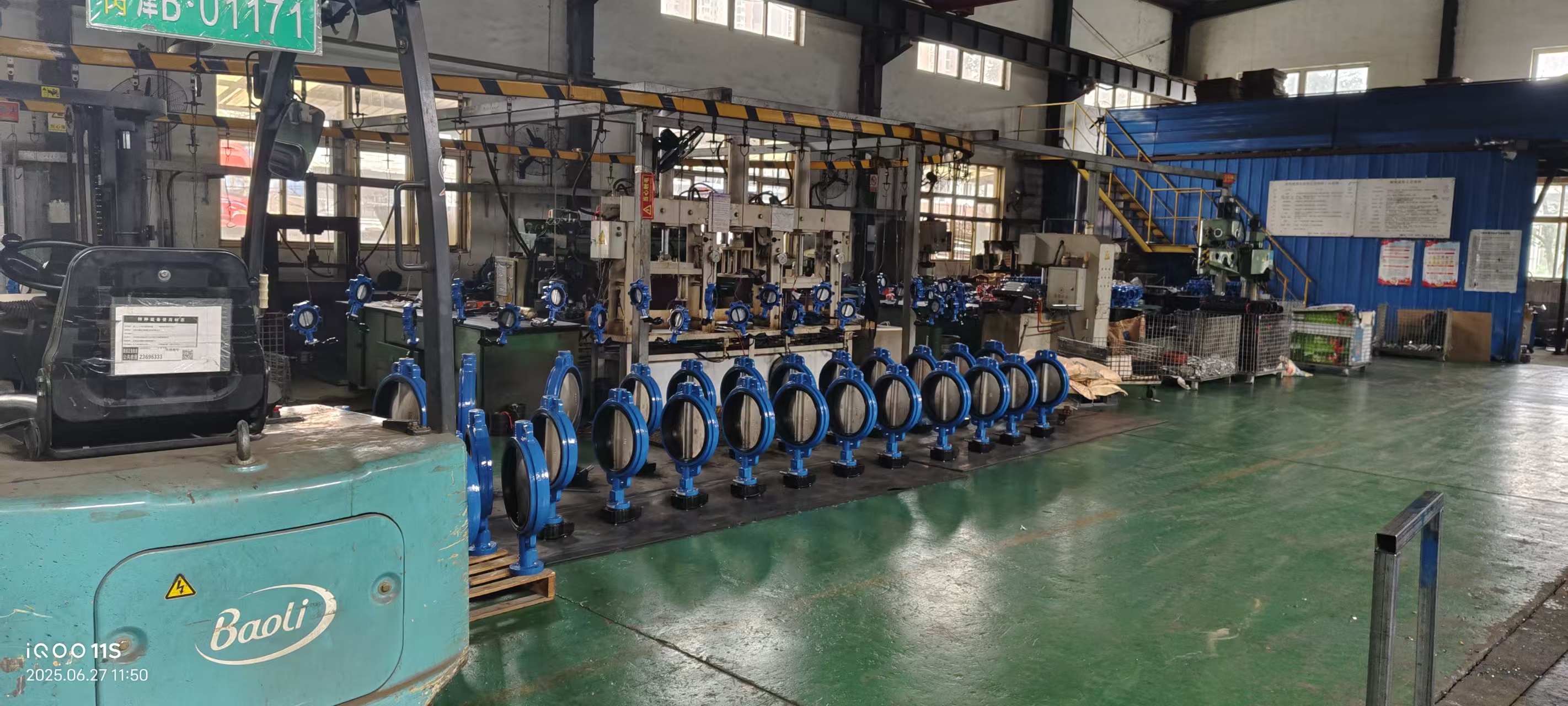
Tianshun Valve Co., Ltd. was founded in 1993 and operates an 8,000 m² factory in Tianjin, China, with 50 employees and a team of more than 30 experienced industry experts and engineers. The company reports a 95% export ratio, with markets including the United States, Spain, Italy, Britain, Germany, Turkey, South Korea, Singapore and India. Its product range covers wafer butterfly valves alongside pneumatic wafer butterfly valves and electric wafer butterfly valves, together with lug, double flange, double eccentric, grooved end and corrosion resistant butterfly valves.
For a buyer already comparing manual and electric actuation, that scope means both the manual wafer butterfly valve configuration and the electric wafer butterfly valve configuration can be reviewed against the same valve-side requirements: the disc-closed installation sequence, the flange centering check, the cross-sequence bolt tightening and the final cycle test. The actuation comparison can then be made on the actuator-side fields, which is where the two options genuinely diverge.
Outlook
The direction of travel is conditional rather than guaranteed. Manual actuation remained the largest segment of the butterfly valve market by value share in 2025, at 41.1% according to Grand View Research, so a manual specification is a mainstream purchasing decision and should be compared on its own operational merits rather than treated as a default that needs no justification.
Where projects add remote commands and a regulation response under a control signal, the electric option's commissioning steps become part of the project acceptance scope. Voltage verification, signal wiring, limit and torque setting, local and remote tests, and the regulation response check are best priced and scheduled at the quotation stage, because discovering them after installation converts a valve purchase into a change order. The same discipline applies to the standards fields: API 609 and EN 593:2017 references are most useful when they appear in the RFQ, not when they appear in a review of the completed installation.
FAQ
How should a buyer decide between manual and electric actuation for a wafer butterfly valve?
Start from the operation and access requirements. A manual wafer butterfly valve suits installations where the valve can be reached for a full open-close cycle and where the routine cycle test can be performed by hand. An electric wafer butterfly valve suits installations that call for local and remote open-close commands and a flow regulation response under a control signal. Both cases must still satisfy the same valve-side requirements: disc fully closed during installation, correct flange alignment, even cross-sequence bolt tightening and a final open-close cycle check.
What does commissioning an electric wafer butterfly valve involve?
Published commissioning guidance defines five steps: verify that the supply voltage matches the actuator rating; wire the power and control signal, switching or regulating type, according to the manual; set the open and close limits and the torque protection; test local and remote open-close commands; and check the flow regulation response under the control signal. Three safety conditions apply: cut off power before wiring, use an actuator with a matching explosion-proof class in explosive environments, and keep clear of moving parts during testing.
Which installation checks apply to a wafer butterfly valve regardless of actuation?
Fully close the valve disc; align the pipeline flanges and check pipe spacing; insert gaskets and center the valve body; tighten the flange bolts evenly in a cross sequence; and cycle the valve open and closed to verify smooth operation. The pipeline must be depressurized before installation, the disc must never be used to force pipe alignment, and the disc must not contact the flange inner wall.
How is a wafer butterfly valve maintained?
The routine is actuation-neutral: cycle the valve fully open and closed at least once per period; inspect flange connections and the stem for leakage; lubricate stem threads and bearings; check the seat and disc sealing surfaces for wear; and replace seals or seats when leakage occurs. Depressurize and drain the pipeline before disassembly, and for corrosive media flush the valve and wear protective equipment.
Does electric actuation remove the need for manual maintenance checks?
No. The maintenance routine covers the seat, the stem, the flange connections and the bearings, and none of those checks is eliminated by fitting an actuator. Electric actuation changes how the cycle test is commanded and adds electrical points to inspect, but the seat inspection, stem leakage check and planned isolation before disassembly remain part of the schedule.
Which standards should appear in a wafer butterfly valve purchase specification?
API STD 609 covers double-flanged, lug-type, wafer-type and butt-welding-end butterfly valves, including design, materials, face-to-face dimensions, pressure-temperature ratings, and examination, inspection and test requirements. EN 593:2017 sets minimum general requirements for metallic butterfly valves used for isolating, regulating or control applications, including wafer connections. API 609 reference material describes wafer and lug type valves as designed for installation between ANSI B16 flanges, classes 150 to 1500.
Have Questions or Need More Details?
Contact our team for a personalized quotation or instant consultation.
Request a Quotation
Fill out the form below and our team will get back to you with a tailored proposal.
WhatsApp Direct Chat
Prefer to chat in real-time? Message us on WhatsApp for instant assistance & quick answers.
- Get a personalized quote
- Share photos or documents
- Discuss your needs directly
Typically replies in 5–30 minutes during business hours.