
Manufacturer Proof: What SS316 Availability Tells Buyers
A material column in a supplier catalogue is one of the few capability claims a buyer can check before a factory visit. Listing SS316 against every hydraulic adapter family a plant sells — SAE/JIC, NPT, BSPP and BSPT alike — is a materially different statement from listing it against one premium series. It implies that stainless work passes through the same tooling, routing and inspection stages as the rest of the range, rather than being concentrated in a single showcase line.
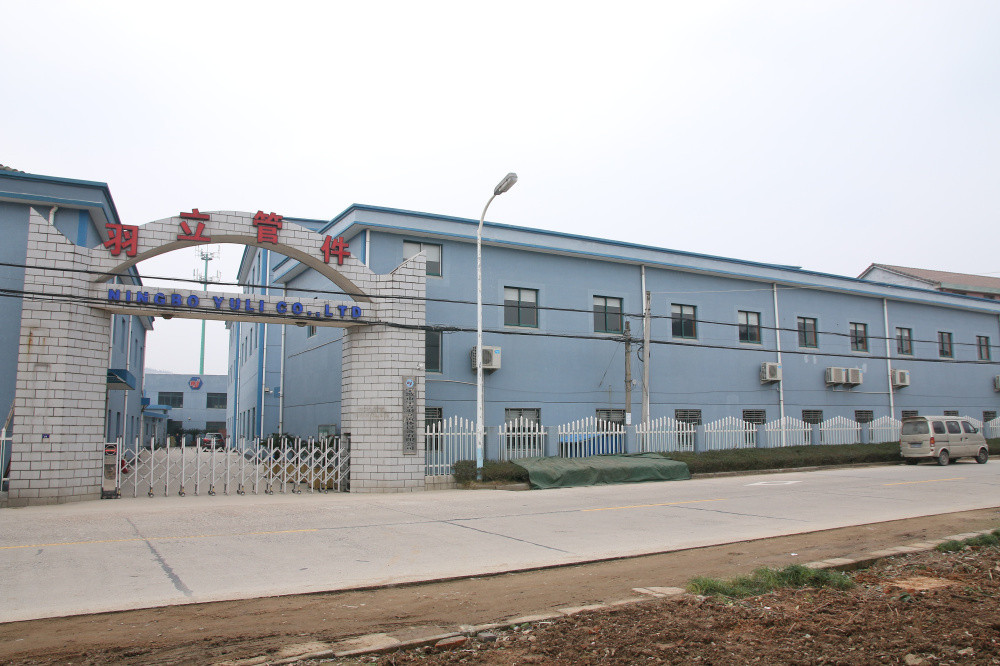
NingBo NJ Hydraulic Adapter Co., Ltd is a hydraulic adapter and fitting manufacturer based in Fenghua, Ningbo, Zhejiang Province, China, operating since 2004 and producing SAE, JIC, NPT and BSP adapter families in carbon steel, SS304 and SS316 for export markets that include the USA and Canada. Its published product data is unusual in one respect: the same three-material option appears against every adapter family it lists, not only against the corrosion-resistant lines.
Why Material Coverage Became a Capability Question
Hydraulic adapters are a large segment of a large market. The global hydraulic fittings market, which includes adapters and couplings, was valued at USD 4.8 billion in 2025 and is projected to reach USD 7.9 billion by 2034 according to Dataintelo. Within that market, the hydraulic adapters segment held the largest product type share at 28.4% in 2025, and steel material accounted for 45.2% of revenue share in the same year, driven by high-pressure durability requirements.
That 45.2% steel share carries an operational implication that is easy to miss. When most of a market's volume sits in carbon steel, most production lines are optimised around carbon steel: cutting parameters, tooling life assumptions, deburring routines and inspection habits all settle around one material behaviour. A stainless column is therefore not a commercial add-on. It is evidence that a second process discipline exists alongside the first — separate material handling, different machining behaviour, and inspection that does not confuse one grade with another.
Reading the Material Column Across the Adapter Range
The clearest way to test a material claim is to read it line by line rather than at catalogue level. In this manufacturer's published data, six product families each carry the same material option set of carbon steel, SS304 and SS316, and each is identified by model designation rather than by a generic description.
| Product family | Thread / connection type | Model designations listed | Materials listed |
|---|---|---|---|
| SAE Standard Hydraulic Adapter | JIC / ORB / ORFS adapter | 6801; 6802; 6803; 6804; 6805; 6806; 6807; 6808; 6809; 6810; 6815; 6818; 6820; 6832; 6835; 6840; 6850 | Carbon steel / SS304 / SS316 |
| Hydraulic JIC Adapter | JIC adapter and JIC to NPT adapter | 2403; 2404; 2405; 2406; 2408; 2500; 2501; 2502; 2503; 2504; 2505; 2601; 2602; 2603; 2605; 2606; 2608; 2609, etc. | Carbon steel / SS304 / SS316 |
| NPT Adapter | NPT thread fitting | 5000; 5404; 5405; 5406; 5406-C; 5406-HP; 5406-P; 5406-SHP; 5500; 5501; 5502; 5503; 5504; 5505; 5600; 5601; 5602; 5603; 5604; 5605; 5650; 5652, etc. | Carbon steel / SS304 / SS316 |
| BSP Adapter (BSPP) | BSPP thread fitting | 1B; 1B4; 1B9; 1BG; 1BG4; 1BG9; 1BH; 1BH9; 1BJ; 1BK; 1BM; 1BN; 1BO; 1BT; 1BT9; 2B; 2B9; 2BJ; 2GB; 2HB; 22NB; 2TB9; 2OB; 2TB; 3B; 4B; 4BN; 5B; 5BN; 5NB; 5BT; 5GB; 5OB; 5TB9; 6B; 7B; 7B9; 9B; EB; AB; BB, etc. | Carbon steel / SS304 / SS316 |
| BSP Adapter (BSPT) | BSPT thread fitting | 1T; 1T9; 1BT; 1ST; 4T; 5T, etc. | Carbon steel / SS304 / SS316 |
| Hydraulic cap nut and lock nut | Cap nut / lock nut | 0304C; 0306; 0318; 0319; 0403; 0500; FS0304C; FS0306; FS0318; FS0319 | Carbon steel / SS304 / SS316 |
Two details matter more than the number of rows. First, the material option follows the model designation, which means a buyer can name a specific stainless part instead of requesting “a stainless version” of a generic item. Second, the published performance envelope is identical across the families, so the stainless variants inherit the same declared limits as their carbon steel equivalents rather than sitting outside the standard specification.
| Published parameter | Stated value across the adapter range |
|---|---|
| Pressure range | 3000–6000 PSI |
| Maximum stable operating temperature | 220°C |
| Salt spray result | 120-hour salt spray test; white rust at 120 hours, red rust at 240 hours |
| Material options | Carbon steel / SS304 / SS316 |
What SS316 Availability Actually Tests
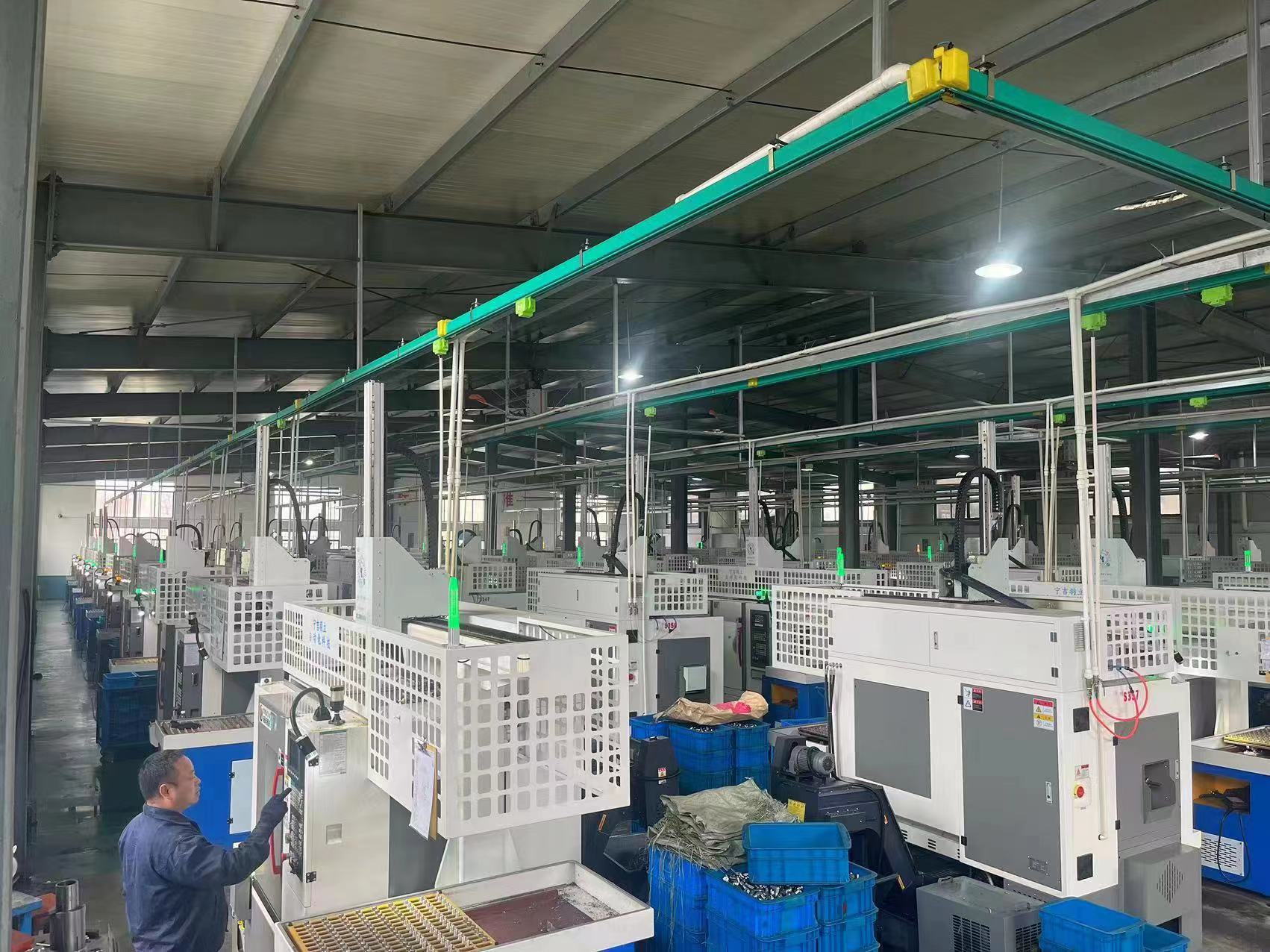
Stainless grades are not drop-in substitutes on a machining line. Austenitic 316 work-hardens under cutting and generally demands different feeds, speeds and tool-wear management than carbon steel; it also requires discipline in keeping stainless swarf and tooling separate from carbon steel to avoid contamination that later shows up as surface defects or corrosion initiation. Publishing SS316 against thirty-plus model designations in a BSPP family, a full NPT family and an SAE family therefore implies three things being managed in parallel: material procurement across grades, machining parameters per grade, and inspection that can tell the outputs apart.
The salt spray figure is where that discipline becomes visible. A 120-hour salt spray test, with white rust appearing at 120 hours and red rust at 240 hours, is a test result rather than a marketing adjective. When the same test basis is quoted for carbon steel, SS304 and SS316 parts across the range, it becomes possible to compare performance on a like-for-like basis instead of comparing a premium line against a standard line.
Where Stainless Is Specified: Marine Machinery and Oil & Gas
The application list published for these adapter families spans twelve-plus industries, but two of them justify the SS316 column more than the rest: marine machinery and oil and gas extraction. Both environments expose a hydraulic adapter to chloride-bearing atmospheres or process media where a carbon steel surface will corrode far sooner than the mechanical joint will fail. In those conditions, the material decision is driven by the environment rather than by pressure alone.
A different reference point is useful here. Stainless steel hydraulic adapters in AISI 316 are associated with working temperatures from -60°C up to +400°C under DIN 17440, according to Tubes International. That is a material capability statement, not a product rating. The manufacturer's own published figure for these adapters is a maximum stable operating temperature of 220°C, and it is the manufacturer's figure that governs what a buyer can specify. Where a duty cycle sits between those two numbers, the honest procurement position is to confirm with the supplier rather than to infer from the material grade.
The same logic applies to thread selection. A JIC to NPT adapter used on a marine package and a BSPP adapter used on an oil and gas skid both draw from the same stainless option, but the sealing behaviour differs by thread form. ISO 8434-2:2007 specifies design and performance requirements for 37° flared connectors suitable for tubes from 6 mm to 50.8 mm, which is the reference behind JIC-style connections. ORFS connections follow a different basis again: ORFS fittings in dash size -4 (1/4″) are rated for 6000 PSI working pressure under SAE J1453, according to Titan Fittings. A buyer specifying a stainless high pressure hose adapter should therefore check the thread standard's own rating, not just the supplier's headline band.
Where Carbon Steel Remains the Rational Default
The existence of an SS316 option is not an argument for specifying it. Carbon steel held 45.2% of hydraulic fitting revenue in 2025 for reasons that remain valid: it is the lower-cost path, it machines predictably, and its mechanical behaviour is well understood across the mobile equipment base. The mobile hydraulics segment alone accounted for over 58% of total hydraulics market revenue share in 2024, according to Grand View Research — and most mobile machinery operates in conditions where a carbon steel adapter with appropriate plating performs for the life of the machine.
Two practical limits sit alongside the stainless option, and buyers should price them in rather than treat them as objections. Stainless grades generally cost more per part and machine at lower rates than carbon steel, which is reflected in quotation rather than in the catalogue. And stainless is not automatically the harder-wearing choice at the joint: austenitic threads have a greater tendency to gall under repeated assembly than carbon steel, so assembly practice matters as much as material selection.
Boundary Conditions Buyers Should Accept Before Ordering
A capability claim is only useful if its limits are stated with equal clarity. Four boundaries apply to this adapter range.
- Pressure ceiling: the declared range is 3000–6000 PSI. That covers the -4 ORFS rating referenced above, but a specification that asks for more than the top of the band falls outside the published data.
- Temperature ceiling: the stated maximum stable operating temperature is 220°C. The DIN 17440 material reference for AISI 316 extends considerably further, so the supplier's figure — not the grade's theoretical capability — should be treated as the design limit.
- Metric thread class: DIN 2353 separates metric tube fittings into LL (Extra Light, 100 bar), L (Light, up to 315–500 bar) and S (Heavy, up to 630–800 bar) categories according to Hy-Lok USA. A metric thread adapter requirement should state which DIN 2353 class applies rather than leave the pressure class implied.
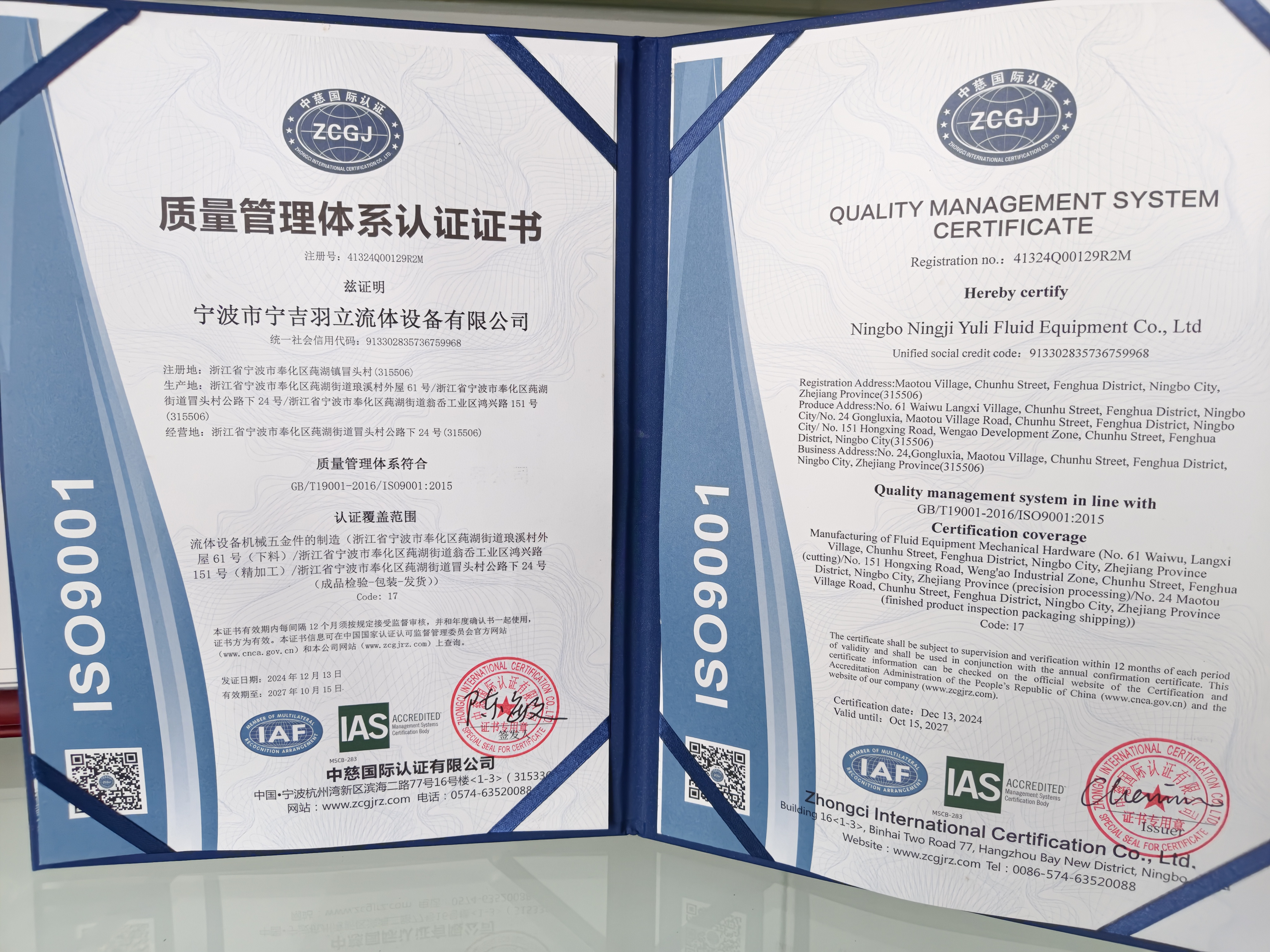
- Certification scope: the ISO 9001 certificate (number 41324Q00129R2M, issued 2024-12-13, valid to 2027-10-15) covers manufacturing of fluid equipment mechanical hardware including finishing processing, finished product inspection, packaging and shipping. It is a quality management system certificate for that manufacturing scope; it is not a product-level approval for a specific marine class society rule or a project-specific material certificate.
Where a project requires class approval or heat-level material documentation, the ISO 9001 scope does not substitute for it, and the buyer should raise that requirement at quotation stage rather than at delivery.
How to Verify SS316 Claims in Practice
Verification does not require a factory visit, but it does require asking for material at the model level. Six steps cover most of the exposure.
| Step | What to request | Why it matters |
|---|---|---|
| 1 | Material confirmation against specific model designations (e.g. 2403, 5406, 1BT), not a catalogue headline | Confirms the grade is available on the exact part being ordered |
| 2 | A sample order — purchasing terms list an MOQ of 1 unit | Allows physical inspection before committing volume |
| 3 | Salt spray evidence tied to the stainless variant | Separates a test result from a general corrosion claim |
| 4 | Certificate copy and validity check (41324Q00129R2M, expiry 2027-10-15) | Confirms the QMS scope still covers the manufacturing activity |
| 5 | Agreed acceptance route: door-to-door acceptance or acceptance at the port of arrival | Defines where responsibility for condition transfers |
| 6 | Shortage and wrong-delivery process: photos, verification, replacement accessories by sea or air | Reduces the cost of a mixed shipment on a stainless order |
Delivery terms on this account are quoted as FOB, CIF, EXW or C&F, and payment is made against advance payment, with other methods open to discussion after a long-term partnership is established. None of those terms affects the material question directly, but they affect how quickly a verification failure can be corrected.
Supply Evidence: Capacity, Lead Time and a Distributor Case
Material coverage only becomes useful if it is backed by repeatable supply. The company operates a 20,000 m² factory with 200 employees, an annual output listed at 4,000,000 units, a four-engineer R&D team, and an export ratio of 75% with the USA and Canada as main markets. Production runs on OEM and ODM models: ODM work allows products to be manufactured from provided drawings or samples, while OEM work covers customization of logo, package and plated color. Typical production lead time is 30–45 working days, quality control is performed through random inspection, and after-sales support is provided remotely.
A three-year Canadian account provides a working example of how the range is used in practice. A mid-market distributor in Canada has purchased 20,000,000 units over three years, reselling to local customers with demand. The recorded requirement is high-pressure resistance, high-temperature resistance and rust resistance, and the customer has since expanded its downstream client channels and improved its overall gross profit margin. The product families linked to that account include the BSP, NPT, JIC and SAE adapter lines alongside hydraulic cap nuts — a mix that only works if stainless and carbon steel variants are both available from the same source.
Market Direction: Stainless Demand Inside a Steel-Dominated Market
The surrounding market is growing steadily rather than explosively. The hydraulic fittings and adapters market is expected to grow at a CAGR of 4.5% between 2025 and 2033, reaching USD 5.8 billion, according to Kamrul Hasan / Market Report. Asia-Pacific led global hydraulic fitting revenues in 2025 with an estimated 38.6% of market share, and Asia accounted for 74% of global industrial robot installations in 2024, according to Ken Research — a demand driver that pulls toward precise, repeatable hydraulic connections rather than toward commodity fittings alone.
Within that growth, stainless demand behaves as a share shift rather than a volume replacement. Marine, offshore and oil and gas projects specify corrosion-resistant material on the parts exposed to chloride environments, while the bulk of mobile hydraulic volume stays in carbon steel. For buyers, the practical consequence is that a supplier able to quote both from one model range removes a sourcing split that otherwise forces two purchase orders, two inspection regimes and two sets of lead times.
Future Outlook
Material availability will likely shift from a differentiator to a documentation expectation. As more marine and oil and gas buyers formalise material criteria at the model level, suppliers that can show a consistent three-grade option across an entire adapter range — and can point to the salt spray basis, the ISO 9001 scope and the model designations in the same response — will find it easier to stay on approved supplier lists. Suppliers that list stainless only on selected lines will increasingly be asked to explain the gap.
For evaluation-stage buyers, the working rule is simple: treat the material column as evidence, verify it at the model designation, and match the grade to the environment rather than to the catalogue's most advanced option. The declared pressure band of 3000–6000 PSI and the 220°C stable operating temperature are the numbers to design against; SS316 availability tells you what else is possible when the application demands it.
Product model designations, material options and the full range are also documented in the company's downloadable product brochure, and further company information is available at njadapter.com.
FAQ
What does SS316 availability across JIC, NPT and BSP lines actually demonstrate?
It demonstrates that the same three-material option — carbon steel, SS304 and SS316 — is published against every adapter family in the range, including the SAE Standard Hydraulic Adapter family (6801–6850), the Hydraulic JIC Adapter family (2403–2609), the NPT Adapter family (5000–5652), the BSPP family (1B–BB) and the BSPT family (1T–5T). Because the material option follows individual model designations rather than a single premium series, a buyer can order a specific stainless part rather than request a special version of a generic item.
What are the stated operating limits of these hydraulic adapters?
The published pressure range is 3000–6000 PSI and the maximum stable operating temperature is 220°C, applied consistently across the adapter families and material grades. The stated salt spray performance is a 120-hour salt spray test, with white rust appearing at 120 hours and red rust at 240 hours. These figures apply to the product as specified; they are not a general statement about what AISI 316 material can withstand.
How can a buyer validate SS316 before committing to a volume order?
The purchasing terms list a minimum order quantity of 1 unit, which allows a sample to be ordered before volume commitment. Acceptance can be arranged either door-to-door or at the port of arrival. Quality control is performed through random inspection, and buyers should request salt spray evidence tied specifically to the stainless variant, together with confirmation of the grade against the exact model designation being ordered.
What lead time and order quantity should be planned for stainless adapter orders?
Typical production lead time is 30–45 working days. Minimum order quantity varies depending on product dimensions and manufacturing complexity, so it is set per item rather than as a single company-wide figure. Annual output is listed at 4,000,000 units, and the export ratio is 75% with the USA and Canada as main markets.
Which customization options apply to stainless hydraulic adapter orders?
The manufacturer provides OEM and ODM production services. ODM services allow products to be manufactured from provided drawings or samples. OEM services include customization of logo, package and plated color. Custom products made from provided drawings or samples are also listed as an available option, which means a stainless requirement can be developed from a drawing rather than selected only from the standard model list.
Which certification covers the manufacturing of these adapters, and what is its scope?
The manufacturing operation holds ISO 9001 certification, certificate number 41324Q00129R2M, issued by ZCGJ on 2024-12-13 and valid until 2027-10-15, against the GB/T 19001-2016 / ISO 9001:2015 standard. The certified scope is manufacturing of fluid equipment mechanical hardware, including finishing processing, finished product inspection, packaging and shipping. It is a quality management system certificate for that scope and does not by itself constitute a product-level approval for a specific marine class or project specification.
Have Questions or Need More Details?
Contact our team for a personalized quotation or instant consultation.
Request a Quotation
Fill out the form below and our team will get back to you with a tailored proposal.
WhatsApp Direct Chat
Prefer to chat in real-time? Message us on WhatsApp for instant assistance & quick answers.
- Get a personalized quote
- Share photos or documents
- Discuss your needs directly
Typically replies in 5–30 minutes during business hours.