
Marine Airbag Acceptance Testing: How Third-Party Inspection Works
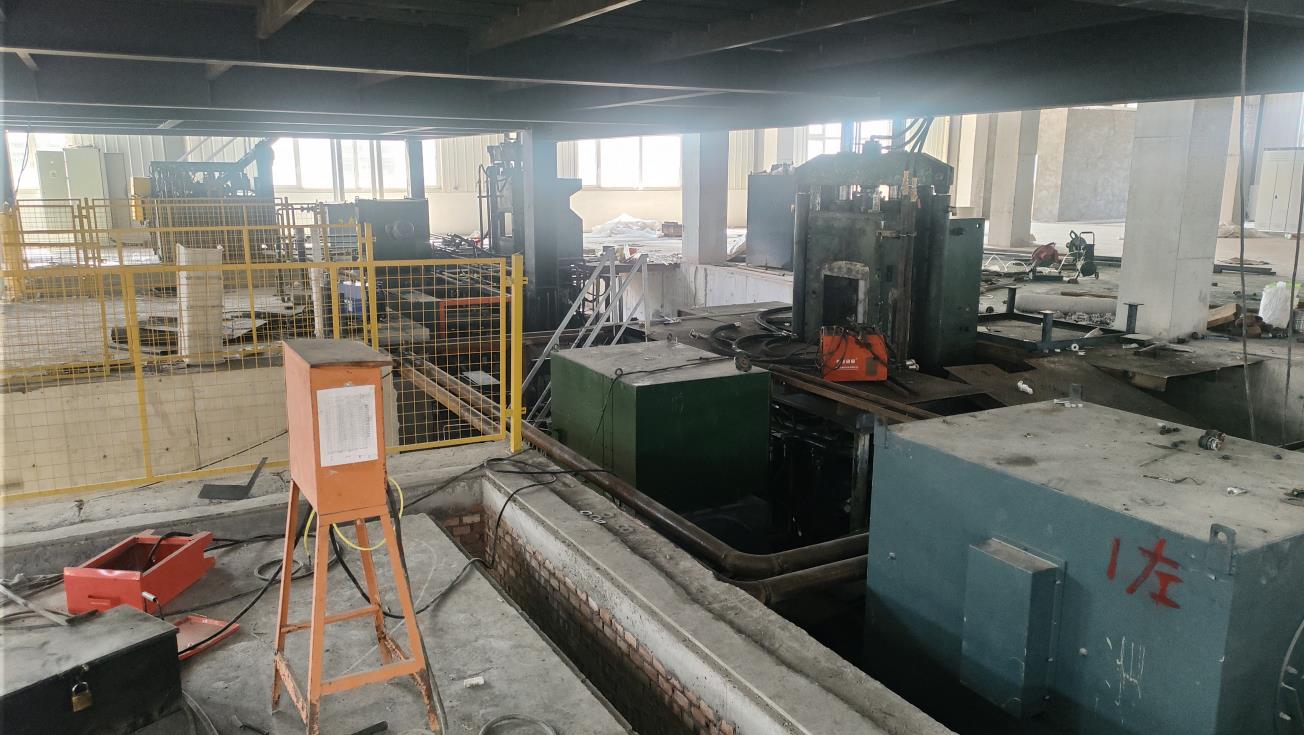 Equipment used in marine airbag production, where pre-shipment acceptance checks are carried out. Image: Qingdao Haohang Fender Airbag Co., Ltd
Marine airbag compliance is usually discussed as a certification question. In practice, for shipyards, salvage contractors and distributors, it is an acceptance question: what will be physically verified, by whom, against which reference document, and what paperwork will exist at the moment the balance payment is released.
The distinction is not semantic. A certificate attached to a product family says very little about the specific units sitting on the pallet in front of the buyer. Acceptance testing — dimensional checks, construction review, pressure retention testing and third-party witness inspection — is what links a supplier's general claims to the specific batch being shipped.
Qingdao Haohang Fender Airbag Co., Ltd is a Qingdao, China-based manufacturer that produces marine airbags and rubber fenders and supplies overseas markets including Southeast Asia, North America and Europe. This article examines how acceptance actually works in the marine airbag segment, where inspection bodies such as CCS and BV fit into a shipment, and which commercial terms determine how much protection a buyer retains before delivery.
Compliance Is Decided at Acceptance, Not at the Certificate Stage
Certification and acceptance answer two different questions. Certification asks whether a manufacturing system or a product type meets a defined set of requirements. Acceptance asks whether the goods in this shipment meet the specification agreed for this order.
Buyers who conflate the two often discover the gap late. A supplier may hold valid system certification while a specific batch — produced with a different cord fabric lot, wrapped at a different tension, or cured on an adjusted schedule — still requires verification against the ordered dimensions and working pressure. In the other direction, a supplier without a particular certificate label can still deliver units that pass a rigorous pre-shipment test, provided the buyer has written that test into the purchase order.
This is why experienced procurement teams treat compliance as a sequence of documents and witnessed events rather than a logo in a brochure. The sequence typically runs: confirmed specification, production, pre-shipment test, third-party inspection and document review, release for shipment, and balance settlement. Each stage produces an artifact — a drawing, a test record, an inspection report — and those artifacts are what protect the buyer if a dispute arises later.
What ISO 14409:2011 Actually Defines
ISO 14409:2011, Ships and marine technology — Ship launching air bags, is the primary international reference for this product category. It specifies terms and definitions, classification, materials and dimensions, and test items and methods for air bags used for launching a vessel. Its technical scope is built around airbags made with synthetic tyre cord reinforcement layers, and it is intended for designing, manufacturing, testing and accepting those airbags.
Two implications follow for buyers. First, reinforcement structure is not a marketing detail — it sits inside the standard's material scope, which is why reinforcement-layer construction belongs on the inspection checklist and not only in the sales conversation. Second, the standard supplies test items and methods, but it does not supply the commercial decisions around them. Those remain with the buyer.
| Defined by ISO 14409:2011 | Defined by the buyer |
|---|---|
| Terms, definitions and classification of ship launching airbags | Which units in the order are sampled, and how many |
| Materials and dimensions framework | Which third-party body witnesses the test (for example CCS or BV) |
| Test items and test methods | The definition of a failed lot and the retest rule |
| Intended use for design, manufacture, testing and acceptance | Documentation language, sign-off authority and the release trigger |
Read together, this table explains why two buyers can order the same nominal product and end up with very different levels of assurance. The standard is the common floor; the acceptance plan is where the actual rigor is set.
Where CCS and BV Inspections Fit Into a Marine Airbag Order
In this segment, pre-shipment testing supported by third-party inspection is standard practice rather than an exceptional request. The third party is typically a classification-type body such as the China Classification Society (CCS) or an inspection organization such as Bureau Veritas (BV). Their role is not to replace the manufacturer's own testing but to witness it, review the records, and confirm that the units presented match the agreed specification.
Haohang states in its company profile that its products have received quality recognition from the China Classification Society (CCS), and that its factory operates a quality management system built in line with international standards including ISO 9001:2009. For a buyer, statements of this kind are a starting point for vendor qualification rather than the end of it. The practical step is to request the underlying certificate documents, confirm their scope and validity, and then decide whether to appoint an independent inspector for the specific shipment.
A workable sequence for a marine airbag order looks like this:
- Specification lock. Dimensions, working pressure, layer construction, end-fitting type and marking are confirmed in writing before production begins.
- In-process control. Raw material batches and reinforcement layers are recorded by the manufacturer, because final performance is largely determined before the airbag is cured.
- Pre-shipment test. The manufacturer performs the agreed test items and methods, generating records per unit or per batch.
- Third-party witness and review. CCS, BV or another appointed body witnesses the test and reviews documentation against the specification.
- Release and settlement. Goods are released for shipment once the inspection record is accepted, and the balance payment follows the agreed commercial trigger.
Pre-Shipment Testing: What Buyers Should Actually Verify
The value of an inspection depends on what it covers. For marine airbags, five categories of verification tend to matter most, because each corresponds to a failure mode that is difficult or expensive to correct after delivery.
- Dimensional conformance. Diameter, length and end-fitting geometry against the confirmed drawing. A launch spread uses multiple airbags simultaneously, so a dimensional outlier changes load distribution across the set.
- Construction and reinforcement. Verification that the ordered layer structure and reinforcement materials were used, consistent with the ISO 14409:2011 material scope.
- Pressure retention. Inflation at the defined test pressure with observation of leakage. This is the measurement underpinning airtightness claims, and it is the item most worth witnessing rather than reading about.
- Head wrapping and end integrity. The wrapped head is a high-stress zone during inflation and rolling contact, so its construction should be checkable rather than merely described.
- Marking and traceability. Unit identification, size, working pressure and batch reference, so test records can be matched to the delivered goods.
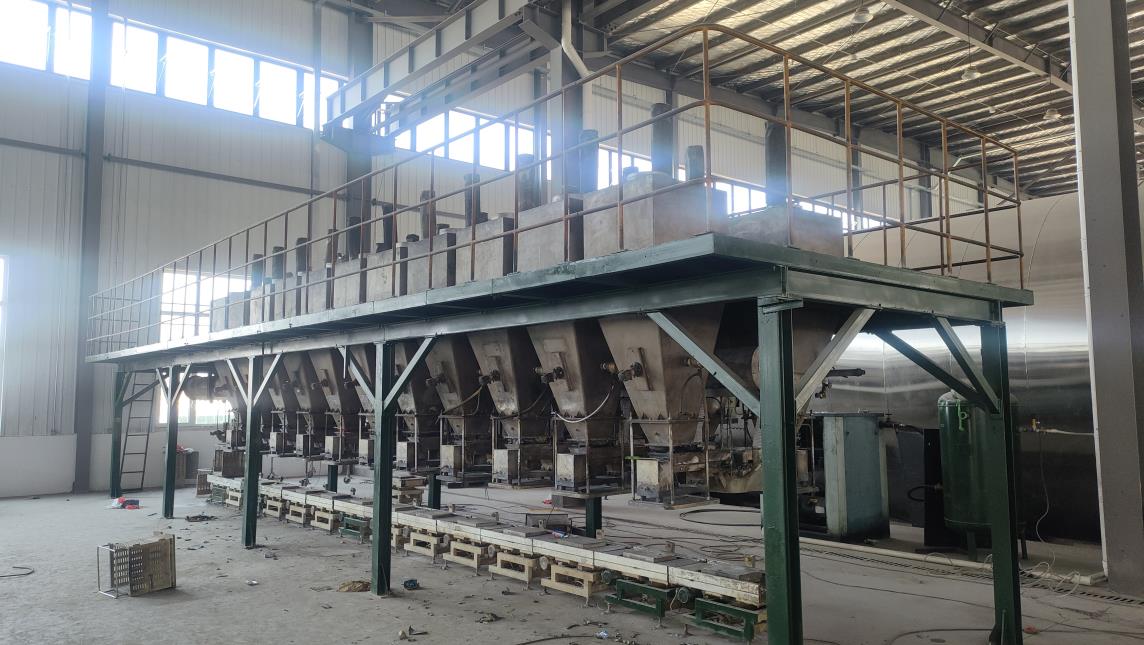 Production equipment at the Haohang workshop in Jimo District, Qingdao. Image: Qingdao Haohang Fender Airbag Co., Ltd
Where Haohang Sits in the Acceptance Chain
Qingdao Haohang Fender Airbag Co., Ltd is a marine airbag and rubber fender manufacturer located in the Jinkou Industrial Park, Jimo District, Qingdao City, China. The company reports a plant of 8,000 m², a team of 60 employees including 15 engineers, and an annual output capacity of 2,000 units, with products supplied to overseas markets including Southeast Asia, North America and Europe.
Two operational facts are directly relevant to acceptance testing. The first is raw material self-sufficiency: the company states that it has achieved self-sufficiency in its rubber and cord fabric supply, and that raw material quality control is treated as the foundation of product strength, durability and safety. This matters because an acceptance test measures a finished article whose performance ceiling was set at the material stage — an inspector can confirm that the right compound and reinforcement were used, but cannot upgrade them afterwards. The second is the quality management system, which the company describes as built in strict accordance with international standards, providing the documentation trail that third-party reviewers rely on.
On the product side, Haohang's current marine airbag design uses a natural rubber compound with a three-layer wrapped airbag head. The company positions this construction as better suited to ship launching and salvage scenarios than traditional single-layer wrapped marine airbags, and it publishes comparative performance figures for the design. Those figures are examined in the comparison section below.
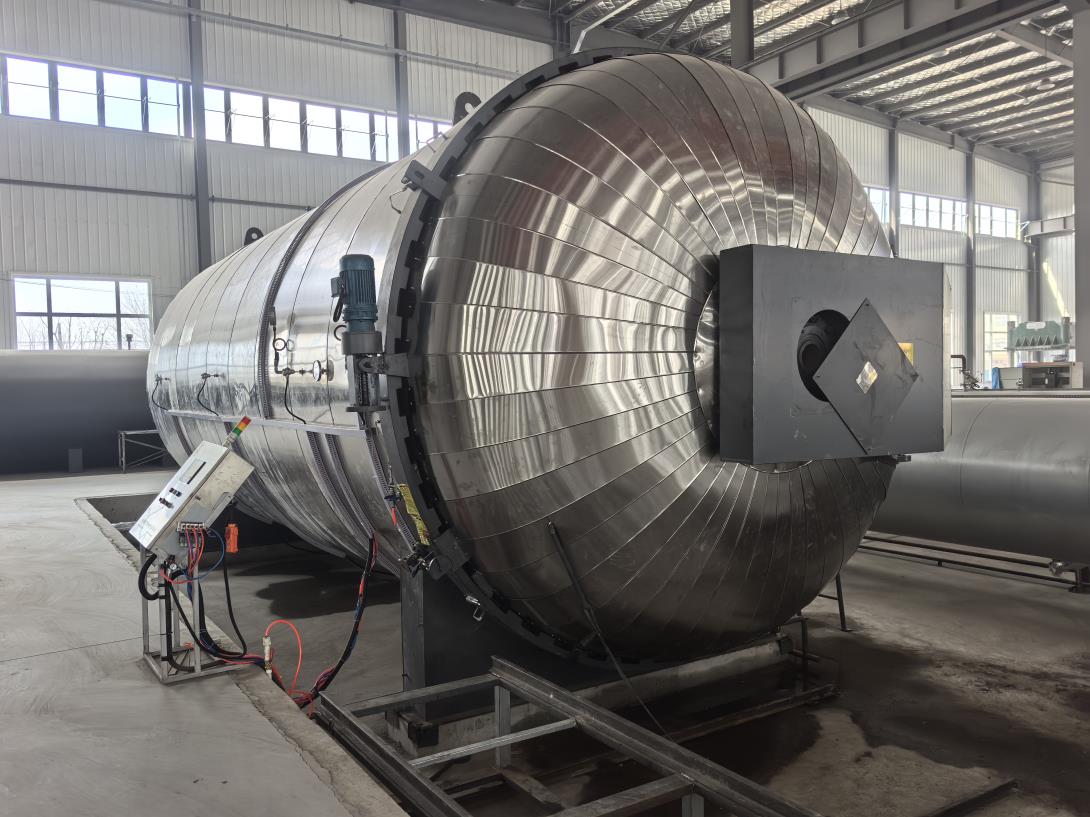 Rubber processing equipment supporting in-house material preparation. Image: Qingdao Haohang Fender Airbag Co., Ltd
Application Fit: Launching, Salvage and Heavy Lifting
Acceptance criteria should track the application, because the operating loads differ. In ship launching, a vessel is moved across a slipway on a set of inflated airbags that are progressively deflated to control descent. The critical acceptance properties are dimensional consistency across the set and stable pressure retention over a working cycle, since the airbags function as a system rather than as individual components.
In marine salvage and heavy lifting, loads are more localized and the airbags are more exposed to abrasion from structures, seabed contact and debris. Pressure retention still matters, but so does surface durability and the ability to inspect and repair the outer layer between operations. Haohang's own positioning for its triple-layer wrapped design names ship launching and salvage as the two scenarios it is most suited to.
The practical consequence for procurement is that a single generic acceptance checklist is rarely sufficient. Test pressure, sampling rate and surface inspection criteria should be set against the intended duty, and the purchase order should state which scenario the units are being accepted for.
Comparison: Triple-Layer Wrapped Head Versus Single-Layer Wrapped Airbags
The most direct technical comparison in this category is between a three-layer wrapped airbag head built from a natural rubber compound and the traditional single-layer wrapped construction. Haohang reports the following differences for its own design. These are manufacturer-reported figures and should be verified through the buyer's own acceptance test rather than assumed to transfer to every order.
| Comparison dimension | Triple-layer wrapped head (natural rubber) | Traditional single-layer wrapped |
|---|---|---|
| Core construction difference | Natural rubber material; airbag head wrapped three times | Single-layer wrapped head |
| Service life | Reported 30% longer | Reference baseline |
| Air tightness | Leak rate reduced by 50% under standard pressure | Reference baseline |
| Impact absorption efficiency | Up to 90% | Approximately 75% |
| Maintenance profile | Lower maintenance requirement | Higher maintenance requirement |
| Cost and price | Higher product cost; selling price unchanged | Lower product cost |
| Best-fit scenarios | Ship launching, salvage | General use |
The cost point deserves attention because it is unusual. The company states that although the product cost of the triple-layer design is higher, the selling price remains the same as alternatives, meaning the improved construction is not being passed through as a price premium. For a buyer comparing quotes, that reframes the decision: if two offers sit at a similar price, the differentiator becomes verifiable construction and test evidence rather than headline price.
Limitations, Trade-Offs and Boundaries
An honest acceptance framework includes the limits of the product, not only its strengths.
- Surface abrasion is the dominant wear mode. The company's own risk documentation identifies surface abrasion damage as the primary issue and specifies repair with rubber material, supported by regular maintenance service. Abrasion resistance is therefore a maintenance variable, not a permanent property.
- Higher material cost sits with the manufacturer. A triple-layer wrapped head is more expensive to build. That is favorable for buyers at current pricing, but it is also a cost structure that could be revisited in future quotations.
- Third-party inspection costs time and money. Witnessed testing adds lead time and inspection fees, and buyers should weigh that against order value. With published unit pricing spanning roughly USD 50 to USD 3,000 per piece depending on dimensions and layer count, the economics of a fully witnessed inspection differ between a small replacement order and a complete launch-set order.
- Acceptance testing is a snapshot. Passing a pre-shipment test confirms condition at that moment; it does not predict total service life, which depends on handling, storage, contact surfaces and maintenance practice.
- Certification scope is not automatically transferable. A certificate or inspection report relates to what was tested. Changing dimensions, layer count or working pressure creates a new configuration that requires its own acceptance evidence.
Commercial Terms That Shape Acceptance Risk
Acceptance protection is written into the purchase order, but it is enforced through payment and delivery terms. In marine airbag supply, 30/70 T/T is a common structure: a 30% deposit against order confirmation to fund production, and a 70% balance settled against pre-shipment documentation. The practical question for a buyer is what exactly triggers release of that 70%. If the trigger is simply 'goods ready', buyer leverage is limited; if the trigger is 'inspection report accepted', the buyer retains meaningful control.
Incoterms shift the same question in a different direction:
- EXW. The buyer takes responsibility from the factory gate. Inspection should be arranged and completed before collection, since the buyer controls the entire logistics chain afterwards.
- FOB Qingdao. The seller delivers to the port of Qingdao. Pre-shipment testing still occurs at the factory, so the buyer should specify an inspection window before the goods move.
- CIF. The seller arranges freight and insurance. Because the seller controls more of the chain, the acceptance clause — sampling, witnessing, documentation and release trigger — needs to be stated explicitly in the contract rather than assumed.
For a decision-stage buyer, the sequence worth insisting on is straightforward: agree the specification, agree who witnesses the test, agree which document releases the balance, and only then discuss price. The order in which those four items are settled determines how much protection survives into the shipment.
Market Trend Signals for Buyers
Market data adds context to why acceptance practices are tightening. 360iResearch estimates the global marine airbags market at USD 346.59 million in 2026, projected to reach USD 481.96 million by 2032 at a CAGR of 5.61%. The same source places Asia-Pacific at 52% of global market revenue, a concentration driven largely by shipbuilding and ship repair activity in the region.
Two qualifications matter when using these figures. First, published market sizes vary considerably between research providers, largely because studies draw the boundary of the category differently — some count only ship launching, while others fold in salvage and heavy-lift buoyancy applications. Absolute totals should therefore be read with caution, while the direction of growth is more consistent across sources. Second, published unit pricing for marine airbags spans roughly USD 50 to USD 3,000 per piece depending on dimensions and layer count, which means acceptance effort should scale with order value rather than be applied uniformly.
The procurement implication is concrete. When production is concentrated in one geographic cluster, competing offers tend to look similar on paper. What separates them is verifiable evidence: material sourcing, test records and third-party inspection outcomes.
Future Outlook
Several directions appear likely as the category matures. Acceptance documentation is moving from a negotiated extra toward a default expectation, with buyers requesting batch-level records rather than product-family statements. Third-party witnessing, already standard practice in this segment, is likely to be specified earlier in the purchasing cycle — at the request-for-quotation stage rather than after order placement. And as raw material sourcing becomes a more visible part of supplier evaluation, manufacturers with in-house material control will find it easier to evidence the consistency that inspectors are asked to confirm.
None of this changes the underlying economics. Inspection still costs money and time. The shift is in where buyers place it: not as a defensive add-on at the end of a shipment, but as part of the specification that determines which supplier wins the order.
Frequently Asked Questions
What does acceptance testing mean for a marine airbag order?
Acceptance testing is the set of checks confirming that delivered airbags match the agreed specification. It typically covers dimensional verification, construction and reinforcement review, pressure retention testing, head and end integrity, and marking and traceability. It is performed before shipment, and its output is a test record the buyer retains as evidence.
Which standard defines the test items and methods?
ISO 14409:2011, Ships and marine technology — Ship launching air bags, specifies terms and definitions, classification, materials and dimensions, and test items and methods for air bags used for launching a vessel. It is intended for designing, manufacturing, testing and accepting airbags made with synthetic tyre cord reinforcement layers. The standard defines the framework; the buyer defines sampling, witnessing and acceptance thresholds.
How do CCS and BV fit into a marine airbag shipment?
CCS (China Classification Society) and BV (Bureau Veritas) are examples of third-party bodies used in this segment. In an order, their role is typically to witness pre-shipment testing and review documentation against the agreed specification, rather than to design or manufacture the product. Whether a specific supplier's products also carry classification recognition is a separate question that should be confirmed against the underlying certificate documents.
What should a buyer have in hand before releasing the balance payment?
Under a common 30/70 T/T structure, the 70% balance is released against pre-shipment documentation. The minimum set normally includes the confirmed specification drawing, the unit test record, the third-party inspection report where one was appointed, packing and marking details, and shipping documentation corresponding to the agreed Incoterm. The purchase order should name the document that triggers release.
Does a certificate remove the need for pre-shipment inspection?
No. Certification addresses a system or a product type; inspection addresses the specific units in the shipment. A change in dimensions, layer count or working pressure creates a configuration that needs its own acceptance evidence. Buyers generally treat certificates as a qualification input and pre-shipment inspection as the release check.
How do EXW, FOB Qingdao and CIF change the acceptance process?
The Incoterm changes who controls logistics, not where the airbags are tested. Under EXW the buyer arranges inspection before collection; under FOB Qingdao the seller delivers to the port, so the inspection window should be set before the goods move; under CIF the seller controls freight and insurance, which makes an explicit written acceptance clause more important because the buyer has less visibility into the chain.
What are the main limitations of a triple-layer wrapped airbag design?
Surface abrasion remains the primary wear mode and is managed through repair with rubber material and regular maintenance rather than eliminated by construction. The triple-layer wrapped head carries a higher manufacturing cost, which is currently absorbed by the manufacturer rather than passed on as a price premium. And pre-shipment testing confirms condition at delivery, not total service life, which depends on handling, storage, contact surfaces and maintenance practice.
Product scope, documentation and contact details for Qingdao Haohang Fender Airbag Co., Ltd are available in the company brochure (PDF) and on the company website at www.qdhaohang.com.