
Marine Airbag Comparison: A Buyer Evaluation Framework
Marine airbags are among the most cost-effective vessel launching and lifting tools available to shipyards, yet they are also among the most under-specified products in procurement. Two marine airbags with the same diameter and working pressure can have very different service lives, air-retention behavior, and operational risk depending on material and construction. At the decision stage, the practical question is not simply which marine airbag meets the specification, but which design delivers the lower cost per safe operation.
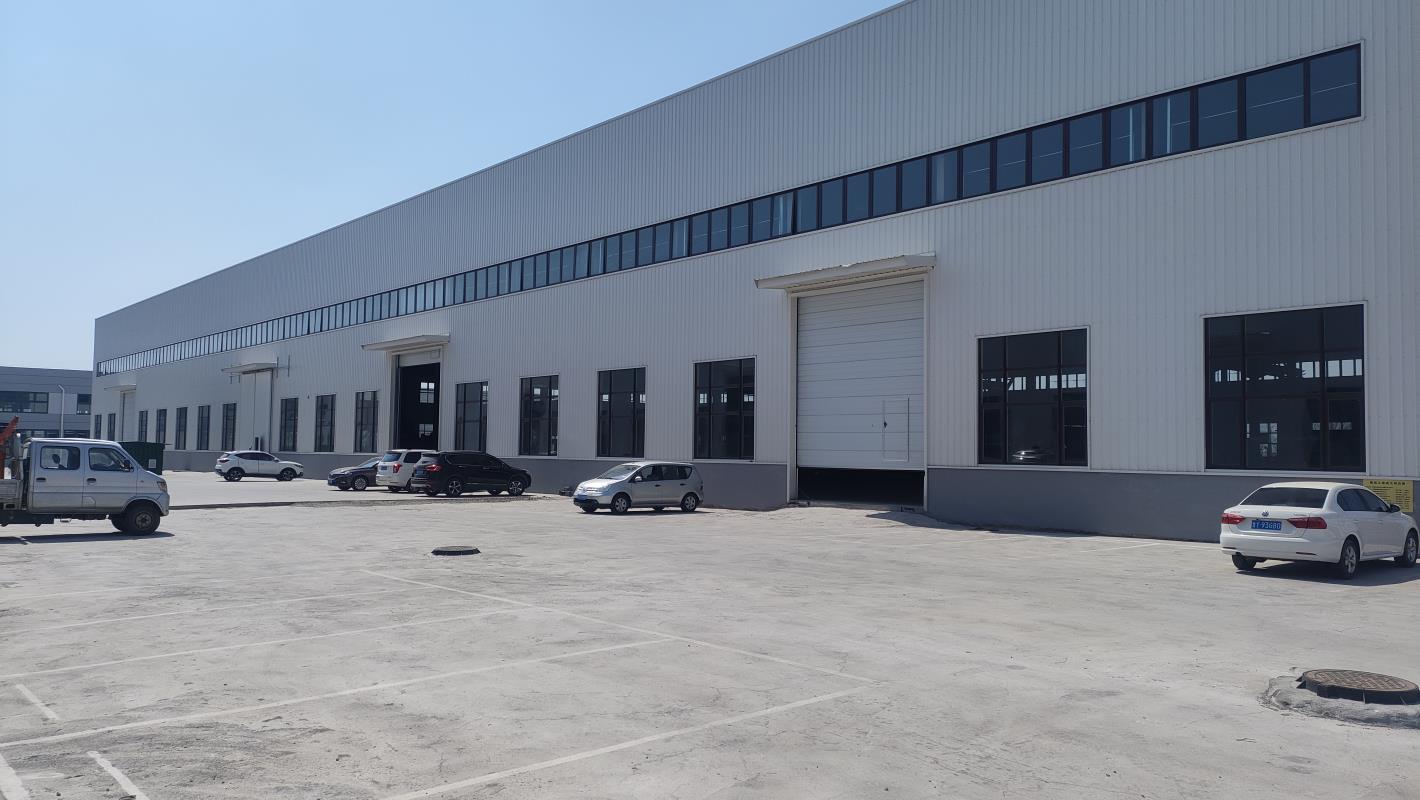
Marine airbag production facility of Qingdao Haohang Fender Airbag Co., Ltd.
Why Marine Airbag Comparison Depends on Construction, Not Just Dimensions
Marine rubber airbags—also known as ship launching airbags, ship lifting airbags, marine salvage airbags, or buoyancy airbags—are reinforced cylindrical devices inflated with compressed air to lift, move, launch, or refloat vessels. The international benchmark for this equipment is ISO 14409:2011, which specifies terms, definitions, materials, and test methods for synthetic-tire-cord reinforced airbags used in ship launching. Under ISO 14409, marine airbags are classified as Ordinary (QP) and High-capacity (QG) categories, with requirements that include tensile strength of at least 18 MPa and elongation at break of at least 400%.
For a procurement team at the decision stage, the challenge is that most suppliers list similar visible parameters: diameter, effective length, working pressure, and safety coefficient. These parameters do not reveal the construction decisions that most affect real-world performance: whether the body is made from natural rubber or recycled rubber, how the reinforcement layers are arranged, and how the airbag head is wrapped. A safety coefficient of over 5.0 is frequently cited as a benchmark for high-pressure operations, but the coefficient itself does not show whether the margin comes from cord quality, layer count, or head design.
Comparing marine airbags on unit price alone is therefore misleading. A lower-priced airbag can create higher through-life costs if it requires more frequent re-inflation, wears faster on the slipway, or needs earlier replacement. These costs are especially visible in markets where replacement logistics are slow and expensive. Public data on Haohang, for example, indicates that around 70% of its production is exported to South Asia, the Middle East, and Africa—regions where shipyards are price-sensitive but also where unplanned airbag downtime is costly.
A Measurable Design Difference: Natural Rubber and Triple-Wrapped Head
Qingdao Haohang Fender Airbag Co., Ltd. (Haohang) is a marine airbag and rubber fender manufacturer based in Qingdao, China. Founded in 2020, the company reports an annual production capacity of approximately 2,000 units, a team of around 60 employees including 15 R&D engineers, and a raw-material supply chain that the company describes as self-sufficient. Its product range covers marine airbags and rubber fenders for ship launching, ship lifting, and marine salvage.
According to product comparison data published by the manufacturer, the design of Haohang's marine rubber airbag differs from traditional single-layer wrapped marine airbags in two core respects. The first is material: the airbag body uses natural rubber rather than the recycled rubber commonly associated with lower-cost traditional construction. The second is the airbag head: the head is wrapped three times, compared with a single-layer wrap in traditional designs.
The manufacturer's comparison data links these construction choices to four measurable outcomes:
- Service life that is 30% longer than that of traditional single-layer wrapped marine airbags;
- Leak rate reduced by 50% under standard pressure;
- Impact absorption efficiency of up to 90%, compared with approximately 75% for traditional designs;
- Lower maintenance requirements, because the airbag retains pressure more consistently and the head section is more resistant to stress.
The same data notes that the production cost is higher than for traditional alternatives, but the selling price remains the same. This price-performance position is the central fact for a comparison review: it changes the total-cost calculation without changing the purchase price.
What These Performance Claims Mean in an Operating Context
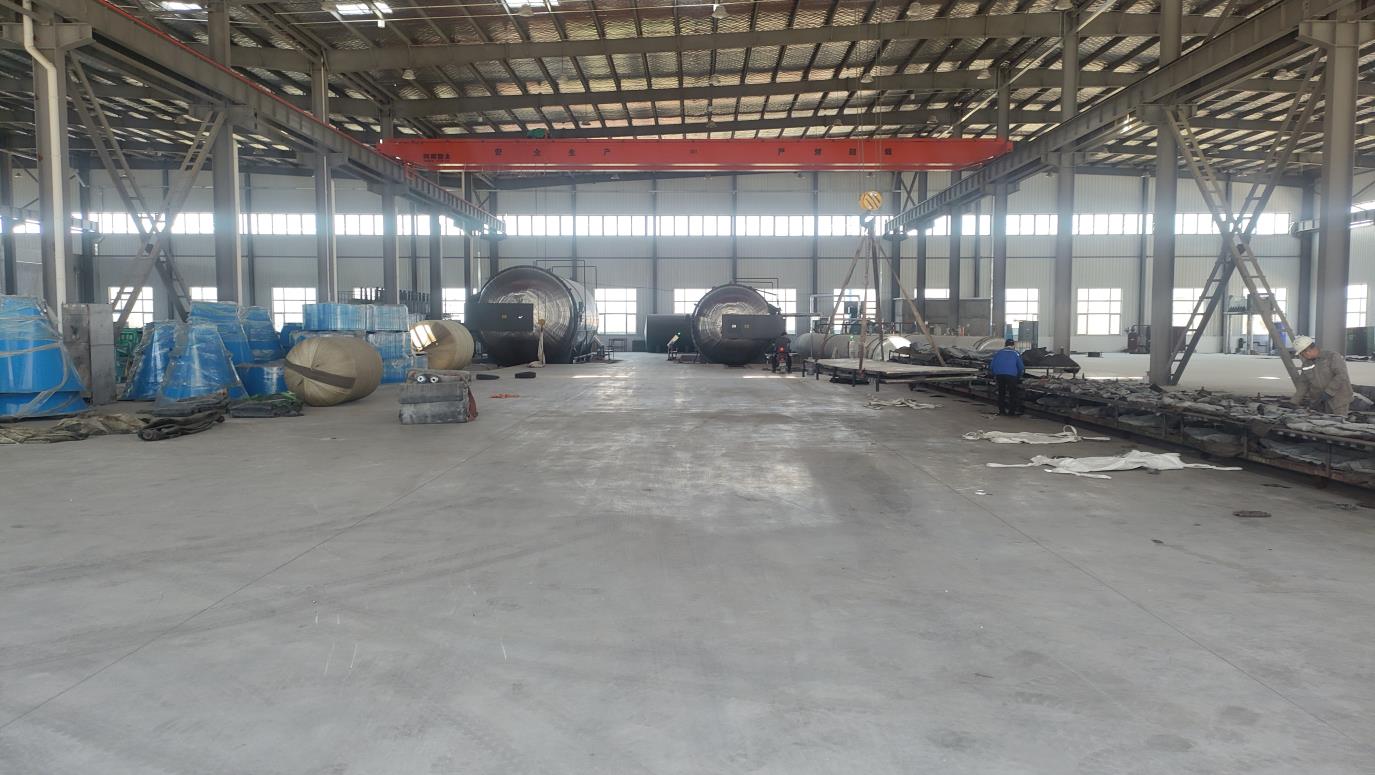
Airbag layering and wrapping workshop: construction details determine service life and leak rate.
Service life is the most direct driver of fleet cost. Marine airbags degrade gradually through surface abrasion, pressure cycling, flexing, and environmental exposure. A 30% longer service life reduces the frequency of replacement and the amount of capital tied up in spare airbags. For a shipyard that maintains a fleet of airbags for regular launching work, a longer-lived airbag lowers the per-use cost of each operation. It also reduces the probability that an airbag will be out of service exactly when a launching window arrives.
The 50% lower leak rate under standard pressure affects operational continuity. During a ship launching sequence, air pressure determines how the airbag deforms and how the vessel's weight is distributed across the support zone. If an airbag loses pressure mid-operation, the crew must stop, re-inflate, and re-check the setup. In marine salvage, airbags may stay submerged or under load for long periods; a lower leak rate means that the buoyancy provided by each airbag remains predictable without repeated intervention.
Impact absorption efficiency describes how well the airbag absorbs energy when a load is transferred onto it. During launching, the vessel's weight rolls from the slipway onto the airbags; during salvage, lifting forces and wave motion create dynamic loads. The manufacturer's comparison data puts Haohang's impact absorption efficiency at up to 90%, versus roughly 75% for traditional single-layer wrapped designs. Higher absorption means lower peak forces on both the hull and the airbag structure, which reduces contact damage and structural stress. This is the most safety-relevant parameter in the comparison.
The lower maintenance requirement follows from the combination of natural rubber and a stronger head section. Surface abrasion is a common failure mode for marine airbags; the standard repair method is to patch the damaged area with rubber material. Haohang's product data indicates that maintenance frequency is reduced because pressure retention is more stable. The company also states that it provides regular maintenance service as part of its after-sales support. For buyers, the implication is simpler: a design that holds pressure longer and resists head-section stress reduces both planned and unplanned maintenance work.
These claims, however, should be verified rather than assumed. Buyers should request leak-test records, material test certificates, and reference installations before finalizing a decision. ISO 14409 provides the test framework for synthetic-tire-cord reinforced marine airbags, but it is the supplier that must demonstrate how its construction meets the standard in practice.
Application Fit: Ship Launching and Marine Salvage
The manufacturer's data positions Haohang marine airbags primarily for ship launching and marine salvage. This application focus aligns with the wider market structure. According to market segmentation data from Fortune Business Insights, ship launching airbags hold the dominant share of the global marine airbags market, followed by marine salvage airbags and heavy lifting airbags.
In ship launching, an airbag acts as a deformable roller beneath the hull. It must tolerate high localized pressure, roll smoothly over the slipway surface, and maintain shape while the vessel transfers from the cradle to the water. The triple-layer wrapped head matters here because the two ends of the airbag are the primary attachment and restraint points. When launching cables pull or restrain the airbag, the head section carries concentrated forces. A single-layer head is more prone to tearing or delamination under repeated load. A triple-layer head spreads the stress across additional rubber plies.
In marine salvage and ship lifting, airbags are used to add buoyancy to sunken or stranded vessels or to lift heavy objects. These operations often happen in remote locations where re-inflation equipment and dive support are limited. The case for a lower leak rate is therefore stronger: each percentage point of air retention reduces the need for additional air supply and shortens the time the dive team must stay in the water. The heaviest vessel launched using marine airbags has been recorded at 24,800 tons, which shows both the capability and the risk profile of the method. When the consequences of failure are high, construction quality becomes part of the safety system, not just a purchasing preference.
Market Signals Reshaping Marine Airbag Procurement
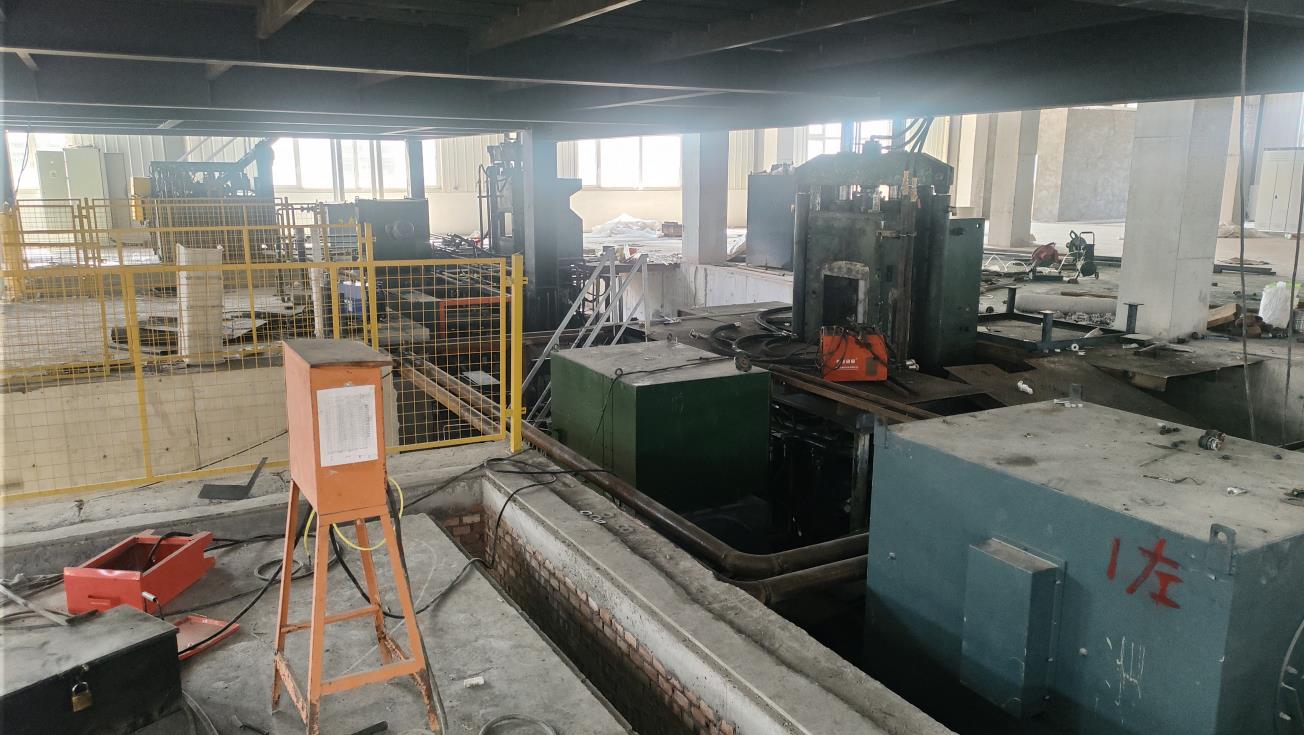
Material processing and inspection equipment used in marine rubber airbag production.
Several verified industry signals are relevant to a decision-stage comparison of marine airbags.
First, standardization is becoming a commercial filter. ISO 14409:2011 is the reference standard for synthetic-tire-cord reinforced airbags used in ship launching. Its QP/QG classification gives buyers a basic vocabulary for comparing products. Increasingly, buyers use ISO compliance as a shortlist condition. But within the same classification, airbags can still differ in body material, head wrapping, and manufacturing consistency. The standard raises the floor; it does not equalize the products.
Second, safety expectations are moving toward verifiable margins. A safety coefficient above 5.0 is cited in the industry as a critical benchmark for high-pressure operations. Marine salvage airbags and ship lifting airbags are operated at high internal pressure, sometimes underwater, sometimes with dynamic loads. Buyers who request the safety coefficient in writing—and ask how it is achieved—will have a clearer picture of the product's real capability.
Third, the supplier landscape is established but not uniform. Market research by Fortune Business Insights identifies major participants in the marine airbag sector, including JIER Marine, HI-SEA Marine, Max Groups Marine, and Qingdao Luhang Marine Airbag and Fender Co., Ltd. The presence of multiple suppliers benefits buyers, but it also increases the importance of comparing design and evidence, not just brochure figures.
Fourth, demand is concentrated in cost-sensitive but operationally demanding markets. Haohang's export structure—with around 70% of output going to South Asia, the Middle East, and Africa—reflects a broader pattern in the industry: these regions are expanding shipbuilding and repair capacity, and they need equipment that balances price with reliability. In such markets, the cost of an airbag failure is not only the price of the unit, but also the delay, the logistics, and the operational risk.
Side-by-Side Comparison: Haohang vs. Traditional Single-Layer Wrapped Marine Airbags
The comparison below consolidates the differences between Haohang's natural-rubber, triple-layer-head marine airbag and traditional single-layer wrapped marine airbags. The information is based on the manufacturer's comparison data and is intended as an evaluation starting point, not as an independent test report.
| Comparison Dimension | Haohang Marine Rubber Airbag | Traditional Single-Layer Wrapped Marine Airbag |
|---|---|---|
| Body material | Natural rubber | Typically recycled rubber or conventional single-layer wrapped rubber construction |
| Head construction | Wrapped three times | Single-layer wrapped |
| Service life | 30% longer than traditional alternatives | Baseline |
| Leak rate under standard pressure | Reduced by 50% | Baseline |
| Impact absorption efficiency | Up to 90% | Approximately 75% |
| Maintenance requirement | Lower, with more stable pressure retention | Higher, with more frequent re-inflation and surface repair |
| Application fit | Ship launching and marine salvage | General marine use |
| Production cost | Higher | Lower |
| Selling price | Same as alternatives | Baseline |
A realistic limitation of this comparison. The performance figures are self-reported by the manufacturer. A buyer making a final decision should validate them through factory test records, third-party inspection, or conversations with existing users. The traditional single-layer design is not automatically a poor choice: for low-frequency operations, for applications where the airbag can be replaced quickly, or for projects with generous scheduling buffers, a lower-cost traditional airbag can be a rational decision. And while Haohang's current pricing holds the selling price equal to alternatives despite higher production costs, pricing can change; buyers should confirm current terms for their required diameter and length.
Checklist for Comparing Marine Airbags at the Decision Stage
- Confirm the product classification and applicable standard. Ask whether the airbag follows ISO 14409:2011 and whether it falls into QP or QG classification.
- Request the construction specification. Check the body material, reinforcement layer arrangement, and the number of wrapping layers at the airbag head.
- Ask for pressure and leak data. A leak-rate reduction matters only if the test conditions and measurement method are documented.
- Evaluate impact absorption in the context of your operation. Ship launching and salvage create different load profiles.
- Compare total cost of ownership. Include replacement interval, maintenance frequency, re-inflation effort, and spares inventory, not just invoice price.
- Ask how the airbag performs in the intended application. A marine salvage airbag, a ship launching airbag, and a ship lifting airbag are related but not identical use cases.
- Check after-sales support and maintenance service. Surface abrasion repair is a standard practice; what matters is how quickly and how reliably the supplier can support it.
- Verify with a factory visit or third-party inspection before a large order. The workshop, the material storage, and the test equipment are part of the product.
Future Outlook
Marine airbag procurement is moving toward evidence-based comparison. The dominant application—ship launching—will continue to drive demand, and the record for heavy vessel launching with airbags (24,800 tons) indicates that the technology's envelope is still expanding. As ISO 14409 becomes a routine reference in tenders, suppliers will be pushed to document material quality, layer construction, and leak performance rather than simply listing dimensions. Buyers who adopt a total-cost and risk-based comparison method will be better prepared to separate genuine construction quality from price headlines.