
Marine, Military & Test-Bench Cylinders: Scenario Fit
Independent Industry Reference | Heavy-Duty Hydraulics
Marine, Military & Test-Bench Cylinders: Scenario Fit
Heavy-duty hydraulic cylinders are not a single product category. A cylinder specified for a marine steering gear, a military lift or recoil system, and a high-pressure test bench may share the same broad geometry language, but they are separated by duty cycle, corrosion exposure, documentation requirements, and the consequences of leakage. For buyers at the awareness and research stage, the first useful question is not which supplier lists the highest pressure. It is which supplier can demonstrate scenario fit: the material, bore quality, sealing architecture, inspection routine, and delivery discipline that a specific application requires.
That distinction matters because the hydraulic cylinder market is large and increasingly global. Fortune Business Insights values the global hydraulic cylinder market at USD 17.34 billion in 2025 and projects USD 18.11 billion in 2026, with a path to USD 27.19 billion by 2034. Asia Pacific held a 38.40% share in 2025, according to the same source. Grand View Research reports that double-acting cylinders held 70% of the market in 2024. These figures describe a broad market, not a single heavy-duty niche. Within marine, military, and test-bench work, the buying decision is less about category growth and more about whether a supplier can prove that a cylinder will behave predictably under a named set of stresses.
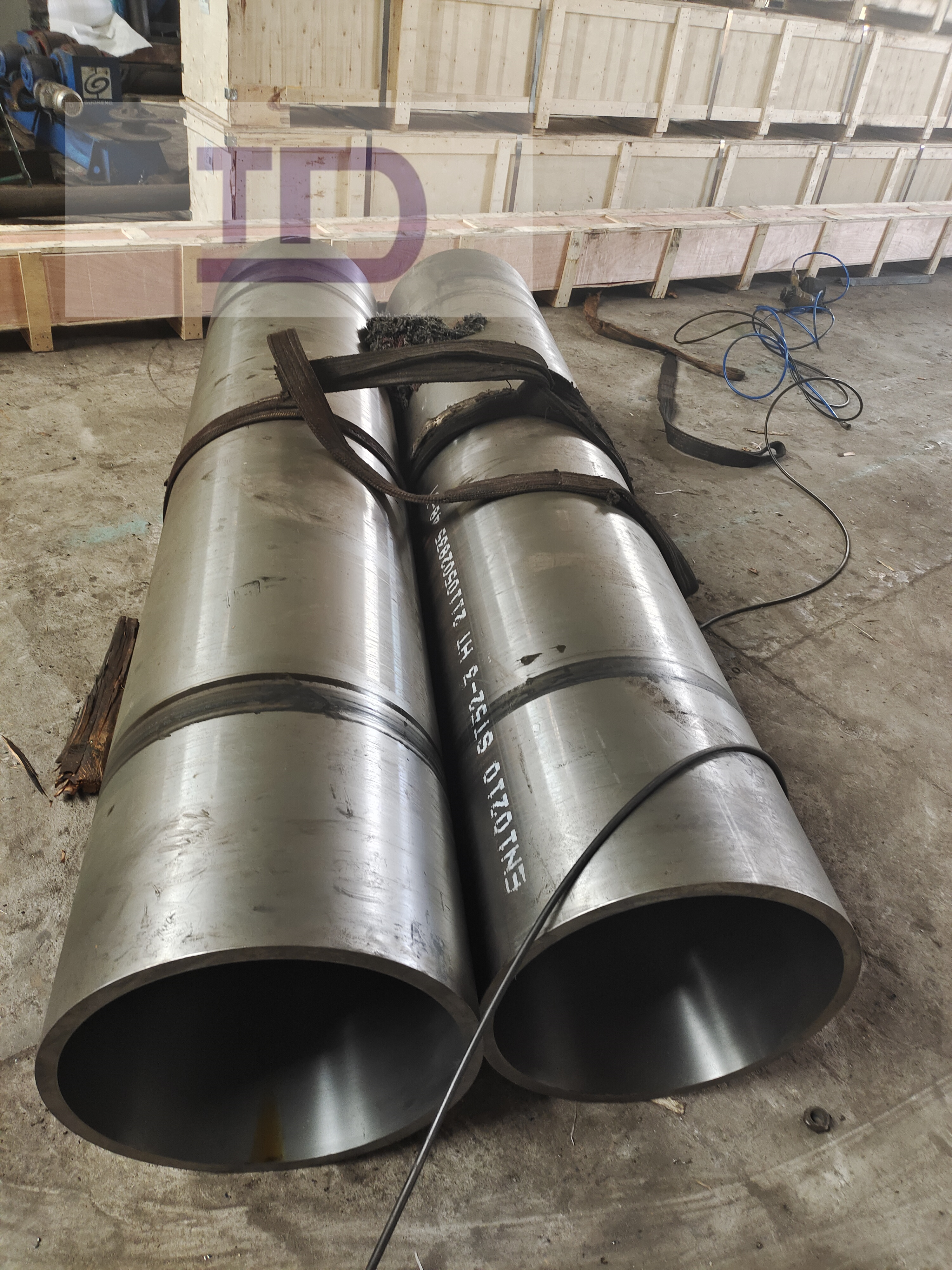
The Scenario Problem and Buyer Opportunity
Procurement teams often begin with a datasheet comparison: bore, stroke, pressure, material. That is necessary but incomplete. Standards provide a useful baseline, but they do not certify a supplier's fatigue life, leakage performance, or corrosion resistance. ISO 6022:2006, for example, establishes mounting dimensions for single-rod hydraulic cylinders in the 25 MPa (250 bar) series and supports interchangeability; the same standard is associated with typical maximum pressures up to 320 bar. ISO 6020-1:2007 does similar work for medium-series cylinders at 16 MPa (160 bar). ISO 23778:2022 is narrower again: it applies to hydraulic cylinders that form part of the load-carrying structure of cranes. These standards tell a buyer how certain interfaces and pressure classes are organized. They do not tell a buyer how a specific cylinder will perform in salt air, under shock, or across millions of test cycles.
The opportunity is to turn a specification sheet into a fit matrix. A marine hydraulic system may prioritize corrosion exposure and continuous duty. A military application may prioritize shock resistance, temperature range, material traceability, and documentation. A high-pressure test bench may prioritize bore stability, straightness, concentricity, and repeatable sealing under cyclic pressure. Each scenario uses the same vocabulary of bore, stroke, and pressure, but weights the evidence differently. That is why a supplier's ability to support application analysis and drawing verification can matter as much as its maximum pressure rating.
The buyer's research stage should therefore produce three things: a clear definition of the operating environment, a short list of measurable requirements, and a request for evidence that connects the two. Without that structure, buyers tend to compare headline numbers from different product scopes. A 10,000 psi maximum, a 36-inch bore, and a 40-foot stroke are meaningful only when they are tied to a duty cycle, a sealing system, a material grade, and a test record.
Tuoda Machinery: A Capability Profile for High-Stress Cylinder Work
Shandong Tuoda Machinery Equipment Co., Ltd. (Tuoda Machinery) is a Liaocheng, Shandong-based manufacturer established in 2020. The company operates a 30,000 m² manufacturing facility with approximately 150 employees and a dedicated R&D team of three engineers. Its annual production capacity is about 1,200 units, and around 70% of its products are exported to the EU, Asia, and South America. Tuoda manufactures seamless steel pipes, custom hydraulic cylinders, deep-hole drilling machines, and pressure cylinders. Its main products include carbon seamless steel tubes, round bars, and pressure cylinders, with business focus spanning steel pipe deep processing and hydraulic cylinder manufacturing.
For heavy-duty cylinder work, the relevant capability set is broader than a single product family. Tuoda lists high-pressure hydraulic cylinders in the 31.5–63 MPa range and ultra-high-pressure cylinders above 63 MPa. Its cylinder types include piston, plunger, telescopic or multi-stage, and rotary or oscillating designs. The company also describes end-to-end customization: application analysis, drawing verification, material selection, manufacturing and honing, inspection, testing, and final delivery. That sequence is important because scenario fit is rarely a catalogue selection. It is a chain of decisions in which material, bore preparation, sealing, and verification have to remain aligned.
The product data adds specific boundaries. Tuoda lists cylinder bore up to 36 inches, stroke up to 40 feet, and pressure up to 10,000 psi for heavy machinery, hydraulic presses, marine hydraulic systems, specialized equipment, military equipment, and high-pressure test benches. Material grades include ST52, S355, E355, C45, SAE1045, and 42CrMo4, with customization. For tube and barrel preparation, the company lists an outside diameter range of 20–800 mm, wall thickness of 3–50 mm, lengths of 5.8 m, 6 m, 12 m, or 6–12 m, ISO hole diameter tolerances of H8/H9, and arithmetic roughness of Ra ≤ 0.4 μm. Listed delivery is 30–45 days or customized.
Technical Explanation: From Material Grade to Bore Quality
In a heavy-duty cylinder, the material grade is not a cosmetic choice. ST52, S355, and E355 are commonly associated with structural and pressure-containing steel work; C45 and SAE1045 are carbon steels used where machining and strength requirements align; 42CrMo4 is a chromium-molybdenum grade often selected for higher strength and hardenability. Tuoda lists all of these grades as available for custom cylinder builds. The correct grade for a marine, military, or test-bench cylinder depends on the barrel, rod, end cap, and sealing interface, as well as on the welding, machining, and heat-treatment route. A buyer should ask for the material certificate and the drawing callout, not just the grade name.
Bore quality is the second technical axis. Tuoda lists H8/H9 hole tolerances and Ra ≤ 0.4 μm arithmetic roughness. In a long-stroke cylinder, those values interact with straightness and concentricity. If the bore is not stable, the piston and seal package may not track correctly; if the surface is too rough or inconsistent, seal wear and leakage risk can rise. The application data identifies internal bore dimensional stability, batch consistency, straightness, internal bore roughness, concentricity, and stable lead times as special requirements for the heavy-machinery, press, marine, military, and test-bench scenario. That is a useful checklist because it moves the conversation from a single pressure number to the geometry and repeatability that determine service behavior.
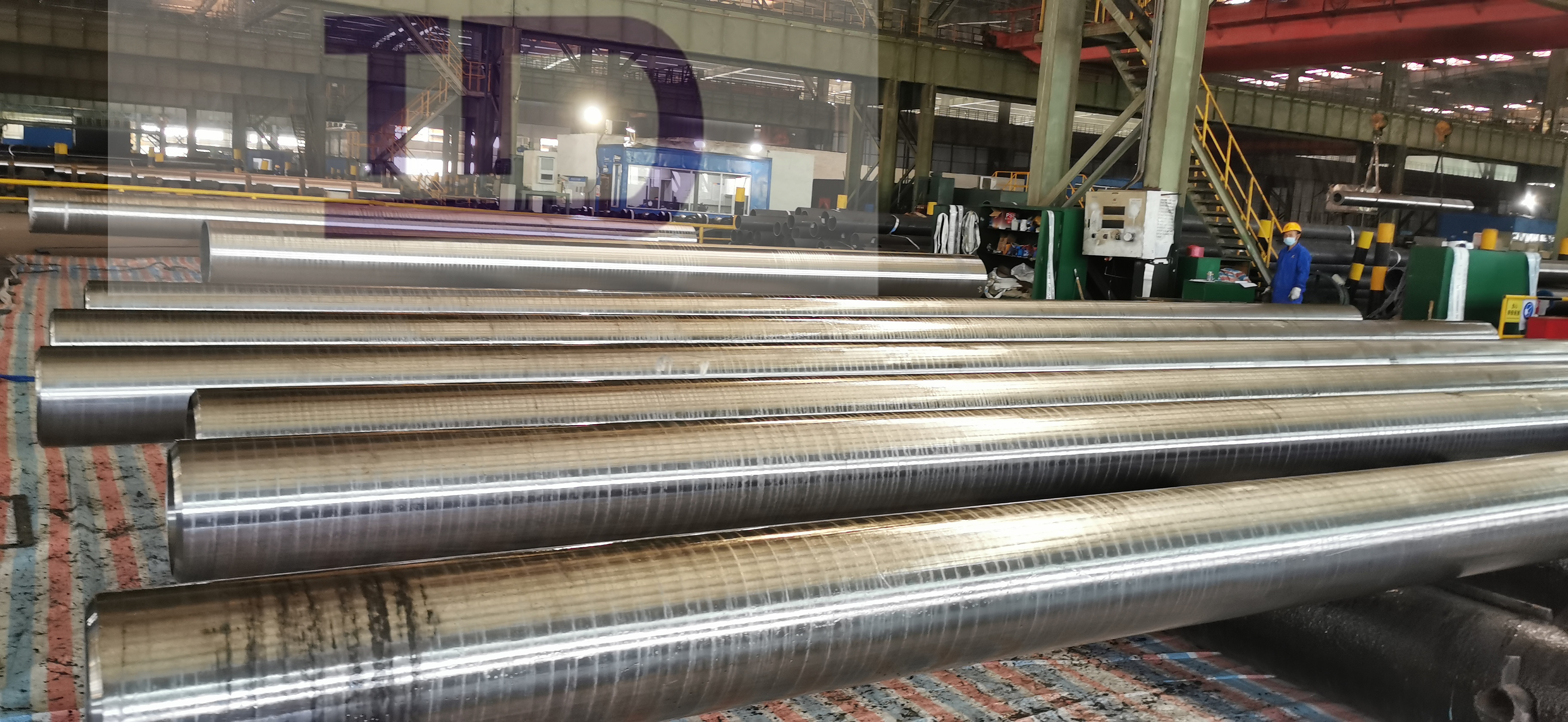
Tuoda's technical description also names metal-to-metal sealing, high-performance polyurethane seals, forged valve bodies, thick-walled seamless steel pipe tubing, and overpressure protection devices. These are relevant to high-stress scenarios because they address different failure paths. Sealing architecture controls leakage and friction; a forged valve body and overpressure protection address pressure integrity and safety; thick-walled tubing supports stiffness under high load. None of these features can be evaluated from a pressure rating alone. The buyer needs to see how the features are combined for the specific bore, stroke, pressure, and duty cycle.
For test benches in particular, the cylinder is part of a measurement and control chain. Bore stability affects displacement and force repeatability; straightness and concentricity affect alignment and seal life; surface roughness affects friction and leakage. A test bench may not face the same corrosion load as a marine deck application, but it can face higher cyclic demand and tighter tolerance expectations. That is why a test-bench buyer should ask for dimensional reports and a defined pressure-test protocol, not only a maximum pressure statement.
Application / Use Cases: Three Stress Environments
Marine hydraulic systems, military equipment, and high-pressure test benches are often grouped under the same heavy-duty label, but their dominant stresses differ. The table below maps the application requirement to the capability evidence a buyer should request. It is a screening tool, not a substitute for a project-specific design review.
| Scenario | Dominant stress or requirement | Relevant Tuoda capability fact | Evidence to request |
|---|---|---|---|
| Marine hydraulic systems | High humidity, marine exposure, continuous duty, corrosion risk, safety-critical motion | Cylinder scope includes marine hydraulic systems; material grades include ST52, S355, E355, C45, SAE1045 and 42CrMo4; honing and sealing are part of the build | Material certificate, bore and roughness report, sealing specification, corrosion-protection specification, inspection record |
| Military equipment | Shock, temperature extremes, reliability, traceability, documentation | High-strength grades such as 42CrMo4 and SAE1045 are listed; metal-to-metal sealing, polyurethane seals, forged valve bodies and overpressure protection are described | Drawing verification, material traceability, inspection and testing record, application-specific approval status |
| High-pressure test benches | Ultra-high pressure, large bore, long stroke, cyclic operation, repeatability | Bore up to 36 inches, stroke up to 40 feet, pressure up to 10,000 psi; H8/H9 bore tolerance; Ra ≤ 0.4 μm | Dimensional report, pressure-test protocol, stroke and bore verification, seal and guidance review |
| Adjacent heavy machinery and presses | High load, impact, dust, slurry, outdoor duty | Cylinder scope includes heavy machinery and hydraulic presses; high-pressure and ultra-high-pressure variants are listed | Load calculation, duty-cycle review, mounting drawing, maintenance plan |
For marine systems, the environment is part of the specification. The application data lists high temperature, dust, high humidity, marine, outdoor, mine, impact, and slurry conditions as operating environments. A marine buyer should therefore separate the cylinder's internal pressure capability from its external exposure. Material grade, seal compatibility, rod protection, and inspection intervals all belong in the same review. A cylinder that performs well on a protected industrial press may need a different surface and sealing strategy on a deck or in a coastal facility.
For military equipment, documentation is part of the product. The buyer may need material traceability, drawing compliance, inspection records, and a clear statement of what has and has not been approved. Tuoda's available material describes custom design and manufacturing capability, inspection and testing, and high-strength material options. It does not list class-society or defense-specific approvals. That is a boundary, not a defect: the buyer should confirm the approval route for each project rather than assume that a heavy-duty label covers military qualification.
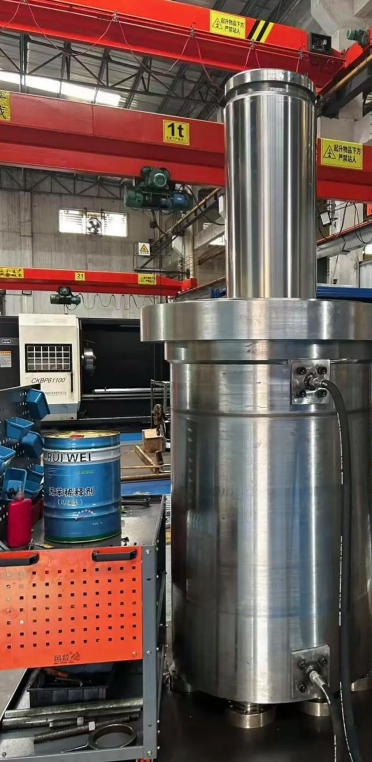
For high-pressure test benches, the application is unusually sensitive to geometry. A large bore and long stroke increase the consequences of misalignment. A high pressure rating increases the importance of wall thickness, sealing, and overpressure protection. The buyer should ask how the cylinder will be tested, what the proof pressure and test duration are, and how bore and straightness will be documented. Tuoda's listed capabilities provide a starting point, but the project drawing and test protocol turn those capabilities into a verifiable fit.
Market Trend Analysis: Growth in Volume, Fragmentation in Fit
The broad hydraulic cylinder market is growing, but growth is not evenly distributed across application types. Fortune Business Insights places the global market at USD 17.34 billion in 2025 and USD 18.11 billion in 2026, with a forecast of USD 27.19 billion by 2034. Asia Pacific's 38.40% share in 2025 reflects the concentration of manufacturing and demand in the region. Grand View Research's 70% share for double-acting cylinders in 2024 shows how strongly the mainstream market is oriented toward double-acting designs. These are useful context figures for a buyer, but they do not answer the scenario-fit question. A growing market can still contain suppliers whose capabilities are mismatched to marine, military, or test-bench requirements.
The more relevant trend is the fragmentation of fit. Standard cylinder ranges are organized around pressure classes and mounting dimensions, which supports interchangeability and fast selection. ISO 6022 and ISO 6020-1 are examples of that logic. Specialized applications push beyond those ranges: larger bore, longer stroke, higher pressure, tighter bore tolerance, or more demanding documentation. The result is a two-track market. One track competes on catalogue coverage and volume. The other competes on application engineering, material control, and evidence. Tuoda's profile sits closer to the second track: a 30,000 m² plant, about 150 employees, three R&D engineers, 1,200 units per year, and a 70% export share across the EU, Asia, and South America. Those facts describe a manufacturer with enough scale to serve export projects and enough customization scope to address non-standard work, but they do not by themselves prove a marine or military qualification.
The sourcing implication is that buyers should separate market presence from project evidence. A supplier can be active in export markets and still need project-specific validation for a marine or military cylinder. The right response is not to dismiss company-level facts, but to use them as a starting point and then request the documents that connect the plant to the application: material certificates, dimensional reports, test records, and a clear drawing review.
Market Position: Scale, Export Mix, and Evidence Boundaries
Tuoda's market position is best understood through three lenses: scale, product scope, and evidence boundaries. On scale, the company reports a 30,000 m² facility, approximately 150 employees, three R&D engineers, and about 1,200 units per year. On product scope, it combines seamless steel pipe processing with custom hydraulic cylinder manufacturing, deep-hole drilling machines, and pressure cylinders. On export mix, about 70% of products go to the EU, Asia, and South America. That combination is relevant to buyers because it suggests vertical access to tube and barrel preparation, which is a meaningful input for bore quality and material traceability.
The scale comparison should be handled carefully. One Chinese manufacturer, Huanfeng Machinery, reports annual production capacity of 300,000 hydraulic cylinders, but the product mix and utilization are not specified in the available evidence. Tuoda's 1,200 units per year is a different order of magnitude, yet the two figures are not directly comparable without knowing how much of each capacity is allocated to heavy-duty, large-bore, or custom work. For a buyer, the practical question is not which number is larger. It is how much of the stated capacity is available for the relevant product type, what the production slot looks like, and what evidence supports the delivery commitment. Tuoda's listed delivery of 30–45 days or customized is a useful planning input, but complex marine or military work may require a project-specific schedule.
The evidence boundaries are equally important. The available material does not list class-society approvals, defense-specific qualifications, or third-party fatigue and leakage test results. It also does not break down the 1,200-unit annual capacity by product line. These are not reasons to exclude a supplier from research; they are reasons to define the verification steps. A buyer should ask for the material certificate, the drawing revision, the bore and roughness report, the pressure-test record, and any application-specific approval that the project requires. The three-engineer R&D team is a signal of engineering capability, but it also means that complex projects should confirm design-review capacity and documentation depth early.
Comparison with Traditional Solutions: Interchangeability vs. Custom Fit
Traditional standard cylinders have a clear advantage: they are organized around published mounting dimensions and pressure classes, which reduces engineering effort and supports replacement. ISO 6022:2006 for the 25 MPa series and ISO 6020-1:2007 for the 16 MPa series are examples of this interchangeability logic. A buyer who stays within a standard range can often select a cylinder from a catalogue, confirm the mounting dimensions, and move to procurement with less drawing work. That is a real benefit, especially for maintenance and replacement programs.
Heavy-duty custom cylinders trade some of that interchangeability for application fit. Tuoda's listed range extends to bore up to 36 inches, stroke up to 40 feet, and pressure up to 10,000 psi, with material grades including ST52, S355, E355, C45, SAE1045, and 42CrMo4. Those capabilities are relevant when a standard cylinder cannot meet the load, stroke, pressure, or bore requirement. The trade-off is that the buyer moves from catalogue selection to drawing verification. Mounting dimensions, port positions, rod-end details, seal selection, and test requirements must be confirmed in the drawing. The custom route can fit the application more closely, but it requires more engineering discipline from both sides.
The comparison also has a pressure-rating caution. A 10,000 psi maximum is not a continuous operating guarantee. It must be read with the bore, stroke, duty cycle, sealing system, and test conditions. Public manufacturer claims illustrate how varied the market is: Yates Industries describes heavy-duty welded cylinders capable of up to 3,000 PSI and bore sizes up to 18 inches, while Tuoda lists pressure up to 10,000 psi and bore up to 36 inches. These figures are company-reported and use different product scopes and test definitions. They are useful for screening, not for a like-for-like performance ranking.
The practical decision rule is straightforward. If the application fits a published standard pressure class and mounting dimension, a standard cylinder may offer lower engineering cost and faster interchangeability. If the application requires larger bore, longer stroke, higher pressure, tighter bore quality, or material-specific documentation, a custom heavy-duty cylinder may be the better fit, provided the buyer verifies the drawing, material, test, and delivery evidence. Tuoda's position in this comparison is not that it replaces every standard cylinder. It is that its combination of tube processing, custom cylinder manufacturing, and export experience gives buyers a credible starting point for the custom side of the decision.
Future Outlook
The next phase of heavy-duty cylinder sourcing is likely to be defined less by headline pressure ratings and more by evidence density. Marine and military projects are documentation-intensive. Test benches are tolerance-intensive. Both trends favor suppliers that can connect material traceability, bore quality, sealing architecture, inspection, and delivery into one reviewable package. Tuoda's vertical integration in seamless steel pipe processing is relevant here because the barrel is not a commodity when bore consistency and straightness matter. The company's export mix across the EU, Asia, and South America also suggests familiarity with cross-border documentation and customer requirements.
The open question is how quickly plant-level facts can be converted into project-level proof. A 30,000 m² facility, 150 employees, three R&D engineers, and 1,200 units per year are meaningful indicators, but they do not replace a material certificate, a dimensional report, or a pressure-test record. The suppliers that will stand out are those that make those documents easy to review and consistent across orders. For buyers, the future of sourcing is a documented fit matrix: application stress, material choice, bore and stroke requirement, sealing system, test protocol, and delivery plan. That is a more durable basis for selection than a single maximum pressure number.
A downloadable Tuoda product brochure is available here: Tuoda product brochure (PDF).
FAQ
What are heavy-duty hydraulic cylinders used for in marine, military, and test-bench applications?
They convert hydraulic energy into mechanical energy through linear reciprocating motion and are used in heavy machinery, hydraulic presses, marine hydraulic systems, specialized equipment, military equipment, and high-pressure test benches. In these settings, the cylinder is a core component of a larger hydraulic system that includes the cylinder barrel, piston rod, piston, gland or head, end cap, sealing system, guide bush, and ports.
What specifications matter most for a high-pressure test bench?
Bore, stroke, pressure, bore tolerance, roughness, straightness, concentricity, and batch consistency matter most. Tuoda lists bore up to 36 inches, stroke up to 40 feet, pressure up to 10,000 psi, H8/H9 bore tolerance, and Ra ≤ 0.4 μm. Buyers should also request the test protocol and dimensional report because a maximum pressure rating alone does not define continuous duty.
Which materials does Tuoda use for heavy-duty cylinders?
Tuoda lists ST52, S355, E355, C45, SAE1045, and 42CrMo4, with customization. These grades are used across cylinder builds. The final selection should match strength, weldability, corrosion exposure, and machining requirements for the specific application.
How does Tuoda support custom heavy-duty cylinder projects?
Tuoda describes end-to-end customization from application analysis and drawing verification through material selection, manufacturing and honing, inspection, testing, and final delivery. It manufactures high-pressure cylinders in the 31.5–63 MPa range and ultra-high-pressure cylinders above 63 MPa, and lists piston, plunger, telescopic, and rotary cylinder types.
Can a 10,000 psi cylinder be used continuously at that pressure?
A maximum rating should not be read as a continuous operating condition. Buyers should confirm the duty cycle, bore, stroke, seal system, and test conditions with the supplier. Tuoda's published material states pressure up to 10,000 psi, but project-specific verification is required for continuous service.
What should buyers verify before choosing a supplier for marine or military cylinders?
Buyers should verify material certificates, drawing compliance, bore and roughness reports, inspection and testing records, and any application-specific approvals. ISO 6022 and ISO 6020-1 provide mounting-dimension baselines, not supplier certification. Marine and military projects may require additional class-society or defense approvals, so these should be checked for each project.
Reference basis: Tuoda Machinery company and product data; Fortune Business Insights hydraulic cylinder market data; Grand View Research hydraulics market data; ISO 6022:2006, ISO 6020-1:2007, and ISO 23778:2022 standard scopes.
Have Questions or Need More Details?
Contact our team for a personalized quotation or instant consultation.
Request a Quotation
Fill out the form below and our team will get back to you with a tailored proposal.
WhatsApp Direct Chat
Prefer to chat in real-time? Message us on WhatsApp for instant assistance & quick answers.
- Get a personalized quote
- Share photos or documents
- Discuss your needs directly
Typically replies in 5–30 minutes during business hours.