
Marine to Solar: Scenario Fit for IP68 Connector Accessories
Marine / Shipbuilding / New Energy / Industrial Infrastructure
A waterproof electrical connector accessory is a scenario decision before it is a part number. Thread system, cable range, seal material and approval scope decide whether an IP68 cable gland survives a ship's deck box, a desert combiner or a washdown cabinet. The same documented accessory family can serve all three, provided those four variables are matched to the route rather than to the catalog page.
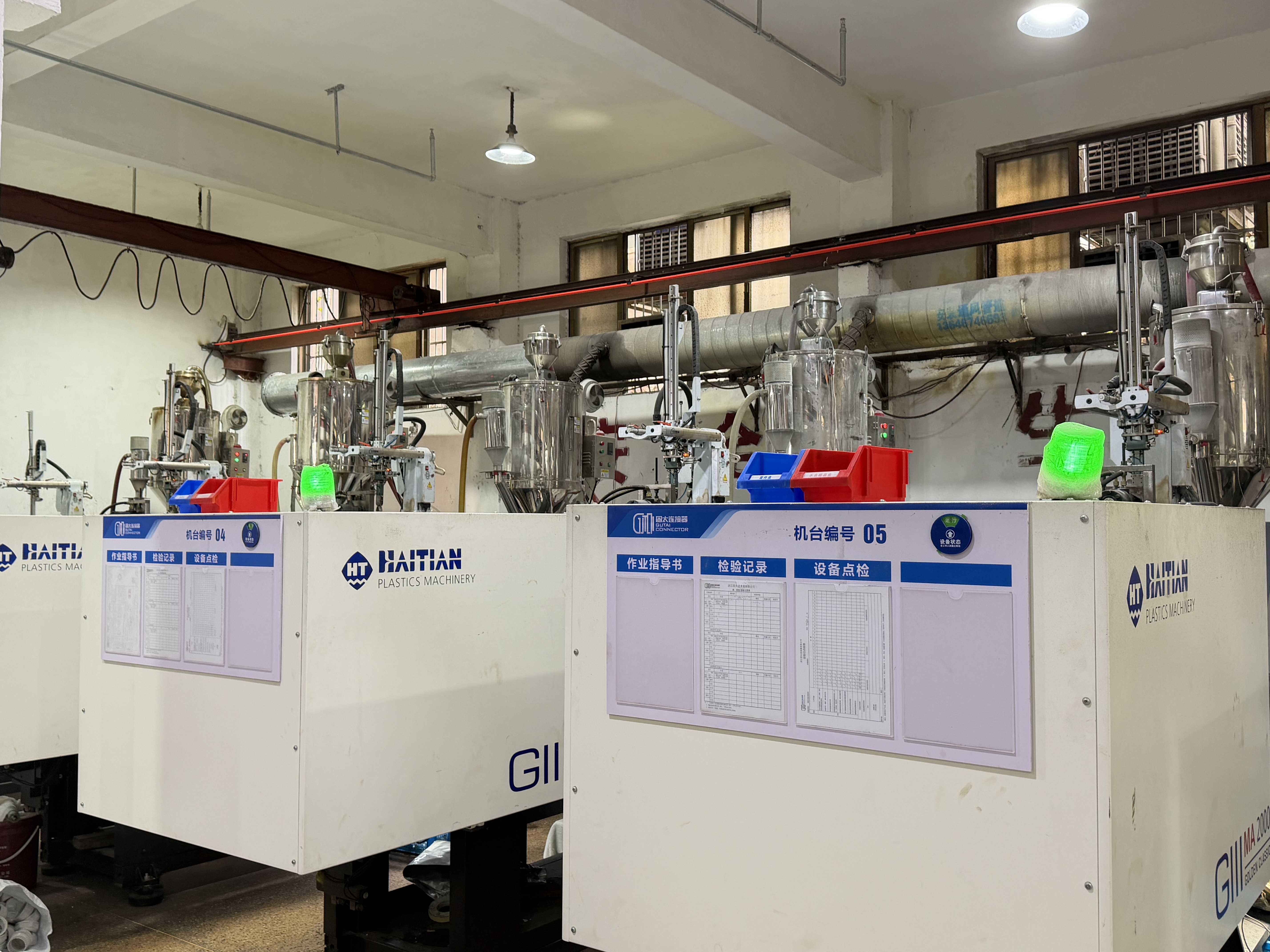
Marine engineering and shipbuilding are the sharpest test of that idea. A cable entry on an open deck meets salt spray, wind-driven water, machinery vibration and repeated thermal cycling, and it is inspected against a written specification. Yet the accessories used there, including cable glands, screw plugs, vent plugs, corrugated conduit fittings and compact junction boxes, are rarely unique to shipyards. They come from the same industrial families used in solar plants, automation panels and outdoor construction. That overlap is the basis of a defensible procurement strategy: standardize on a family whose construction and approvals are documented well enough to be re-applied across several environments, and keep the exceptions explicit.
The failure this article addresses is rarely a shortage of products. It is the quiet mismatch between a route's real exposure and an accessory's documented window: a gland rated IP68 but clamped on a cable outside its range, a nylon body used where the installation calls for metal, or a PG entry forced into a metric knockout.
Why Scenario Fit Outranks Catalog Breadth
Scenario fit is the match between five exposure variables and the properties an accessory can document. The variables are the ingress medium (spray, temporary immersion, dust), the chemical environment (salt, oil, cleaning agents, process fluids), the thermal window in both static and dynamic conditions, the mechanical load (pull, vibration, impact) and the approval scope that governs the installation. A gland that satisfies four of those five is still the wrong gland for the route.
Two buyers can order the same IP68 nylon gland and obtain very different service lives, because an ingress rating is established under defined conditions and restored only when those conditions are respected: the cable outer diameter sits inside the gland's clamping range, the sealing nut is tightened to the intended torque, the seal is intact, and the cable jacket is compatible with the seal compound. When any one of those changes, the rating no longer describes the installed joint.
A rating describes a tested condition. Scenario fit describes whether those conditions are likely to hold for the life of the installation.
This is why specification-led buyers ask for thread range and cable range before they ask for price. A range statement tells them whether one family can cover an entire vessel or plant, or whether a second stock-keeping line is required for the largest and smallest cables.
The Problem: Exposure Failures Are Misdiagnosed as Product Failures
When a cable entry leaks, the first conclusion is usually that the part was poor. In practice, most coastal and outdoor failures trace back to one of four misapplications: an ingress rating that was adequate for rain but not for sustained wetting; a seal material that was never checked against the local chemical load; a temperature profile that exceeded the elastomer or the polymer body; or a mechanical load that pulled the cable jacket out of the seal because strain relief was never evaluated.
Marine work concentrates all four. Deck boxes are wetted continuously rather than occasionally. Cable routing flexes with vessel motion. Water treatment, fuel handling and cleaning agents expose accessories to media that are not present on a dry-land installation. And because the vessel is inspected, every one of these conditions has to be answerable in documentation rather than in opinion.
The opportunity sits in the opposite direction: instead of treating each project as a new selection exercise, buyers can define a small number of documented accessory families and map each route to one of them. This narrows the approval surface, simplifies spares, and makes installation practice repeatable across crews.
Gutai's Place in the Waterproof Connector Accessory Family
Zhejiang Gutai Connector Co., Ltd. (Gutai) is a Chinese manufacturer of wire and cable connectors and waterproof connector accessories, based in the Qianzhou Industrial Zone, Liushi Town, Yueqing City, Wenzhou, Zhejiang. Its range covers waterproof cable glands, EMC cable glands, porous cable glands, brass screw caps and watertight corrugated tubing fittings, alongside Solar MC4 connectors, mini waterproof boxes, AD quick connectors and flexible pipe connectors. The company operates a 5,000 m² facility with 80 employees, a 10-engineer development team and an annual output of 10,000,000 units; monthly capacity is stated at 500,000 cable glands and 100,000 MC4 sets, with 100% full dimension inspection in quality control. Roughly 80% of output is exported to the Middle East, Southeast Asia, India, Pakistan, the EU, the United Kingdom and the United States.
Customization is part of the offer rather than an exception: size and thread specifications, materials across nylon, brass and stainless steel, color, packaging and OEM labeling, multi-hole layouts and specific seal configurations. Small trial orders are accepted, and lead time is quoted against order quantity.
For a buyer assembling a mixed bill of materials, the practical value is consolidation. Cable glands, screw plugs, vent plugs, corrugated conduit fittings, small junction boxes and MC4 connectors can be sourced against one thread logic and one documentation set, which reduces the most common mismatch in marine and infrastructure projects: accessories from different suppliers that do not agree on PG versus metric threads or on sealing practice.
Documented approvals and what each one covers
| Approval | Reference | Scope as documented |
|---|---|---|
| CE, EN 62444:2013 | Certificate TST20241202520-1SC, Dongguan True Safety Testing Co., Ltd., issued 2024-12-12 | Nylon cable glands, Model M; series G, MG, PG, NPT |
| UL 514B Notice of Completion | File E539858, Volume 1 (Order 15194367, Project 4791214316), issued 2024-09-13 | Liquid-tight flexible cord fittings, listed catalog numbers |
| ISO 9001:2015 | Registration 04324Q31620R0S, valid 2024-07-02 to 2027-07-01 | Production of cable waterproof joints |
| RoHS, EU Directive (EU) 2015/863 | SGS test report NGBEC26005747401, issued 2026-07-13 | Nylon cable glands |
Approval scope is the operative detail. A certificate covers the construction and catalog items named in it, not every item a supplier lists.
How the Sealing and Strain-Relief Structure Works
IP68 is defined in IEC 60529 and describes protection against dust ingress together with protection against continuous immersion in water under conditions agreed between manufacturer and user. On a cable gland, that protection is created by three cooperating parts: the polymer body, the elastomer seal and the clamping claw. The claw grips the cable jacket and transfers pull-off load into the gland body instead of into the terminal block, while the rubber sealing structure compresses radially around the jacket to close the entry. Strain relief and sealing are therefore the same mechanical event, which is why installation torque matters as much as the material specification.
Gutai's nylon cable glands use a Nylon PA66 body with an NBR seal, a special clamping claw and a rubber sealing structure for strain relief. The combination is rated for resistance to salt spray, acid, alkali, alcohol, grease and common solvents, and for operating temperatures of -20 °C to 80 °C in dynamic conditions and -40 °C to 100 °C in static conditions. The distinction is practical: static figures describe stored, idle or enclosed conditions, while dynamic figures describe a cable that moves, vibrates or is flexed in service.
Thread coverage is what makes the family portable between industries. PG threads run from PG7 to PG48 and metric threads from M12 to M63, with a cable accommodation range of 3 mm to 45 mm across the range. That span covers the majority of instrument, control and power cable entries found on vessels, in combiner boxes and inverters, on automation panels and in outdoor enclosures, which is precisely why one family can be re-used rather than re-specified.
| Property | Documented specification | What it means on site |
|---|---|---|
| Ingress protection | IP68 | Suitable for wet and temporarily immersed entries when installed within range and torque |
| Body / seal material | Nylon PA66 body, NBR seal | Lightweight, non-corroding entry with a defined chemical and thermal window |
| Strain relief | Special clamping claw plus rubber sealing structure | Pull and vibration load transferred to the gland body rather than the terminal |
| Chemical resistance | Salt spray, acid, alkali, alcohol, grease, common solvents | Covers typical deck, washdown and outdoor exposure within the listed media |
| Temperature, dynamic | -20 °C to 80 °C | Moving, vibrating or flexing cable runs |
| Temperature, static | -40 °C to 100 °C | Fixed routes, enclosure interiors and storage |
| Thread range | PG7-PG48; M12-M63 | Both common marine and industrial knockout systems from one source |
| Cable range | 3 mm to 45 mm | Instrument cable through to larger power cable |
Specifications as documented by the manufacturer. Site conditions outside these values require a different construction.
Scenario Fit Across Four Industries
Marine engineering and shipbuilding
On board, the accessory family divides by route rather than by product line. Through-deck and bulkhead entries into junction boxes use nylon or brass cable glands sized to the cable jacket. Enclosure breathers use waterproof vent plugs that equalize pressure without admitting water, which matters where temperature swings create condensation inside a sealed box. Flexible conduit runs to moving or vibrating equipment use watertight corrugated connectors and flexible pipe connectors. Unused knockouts are closed with cable gland screw plugs so that the enclosure rating is not lost through an open hole. Where panel space is constrained, multi-hole and porous glands route several cables through a single entry.
Temperature decides the material. The nylon family window of -20 °C to 80 °C dynamic and -40 °C to 100 °C static covers most instrument and control routings, open decks in temperate and tropical service, and enclosure interiors. It does not cover exhaust-adjacent runs, steam lines or hot process areas; those routes belong to a metal gland or a different sealing system, and treating the nylon range as universal is the most common material error in marine specifications.
New energy: solar arrays and coastal charging
In photovoltaic work, MC4 connectors, including solar MC4 Y and T connectors, form the string-level interface, while cable glands handle the entries into combiner boxes, inverters and monitoring enclosures. The two accessory types share a project but not a function, and confusing them is a frequent source of specification error.
A Gutai project record for a large Middle Eastern PV energy developer illustrates material choice under extreme exposure: 20,000 sets of anti-UV modified PA66 photovoltaic connectors supplied over three years for a 150 MW desert plant. The housings passed 1,000-hour UV aging tests, the seals used high-temperature fluororubber, and silver-plated terminals kept contact resistance low. The reported outcome was a connector damage rate falling from 8% annually with the original imported products to below 1.2%, downtime from connection failures reduced by 70%, and cumulative maintenance and generation-loss savings above USD 80,000.
Coastal charging infrastructure repeats the pattern with a different failure mode. In a German coastal open-air EV charging station project, 5,000 sets of IP68-grade metal waterproof connectors were deployed over 18 months using 304 stainless steel and a dual-seal anti-loosening structure, passing 1,000-hour salt spray testing and IEC 60068-2-6 vibration testing. The documented result was a connector-related electrical failure rate falling from 18% annually to 2.6%, maintenance cost per station dropping from above 500 RMB to below 80 RMB, and installation efficiency rising by 35%.
Industrial automation
Automation panels repeat the same entry problem at higher density and shorter cycle times. Cable glands seal sensor and actuator cables into enclosures; screw plugs close spare knockouts so that a panel drilled for future expansion stays protected; AD quick connectors and hose fittings serve pneumatic and fluid lines; mini waterproof boxes in M16, M20 and M25 sizes consolidate small sensor junctions where a full enclosure is unnecessary. In washdown areas, the relevant question is not the ingress rating alone but whether the seal compound tolerates the cleaning chemistry actually used.
Construction and infrastructure
Outdoor cabinets, parking structures, tunnels and utility enclosures share marine-style exposure at lower intensity but over longer service intervals. Flexible pipe connectors and watertight corrugated connectors protect conduit runs; vent plugs manage condensation inside sealed cabinets; cable glands and junction boxes carry the entries. Because maintenance access is infrequent, the seal material and the temperature window matter more here than the initial purchase price.
| Scenario | Accessory in the family | Selection driver |
|---|---|---|
| Marine deck and bulkhead entry | Nylon or brass cable gland, PG7-PG48 / M12-M63 | IP68 seal, salt-spray resistance, cable diameter inside 3-45 mm |
| Sealed enclosure breathing | Waterproof vent plug | Pressure equalization without water ingress |
| Moving or vibrating conduit run | Watertight corrugated connector, flexible pipe connector | Strain relief at the conduit-to-enclosure joint |
| Solar combiner and inverter entry | Cable gland; MC4, Y and T connectors at string level | UV stability, thermal cycling, DC insulation |
| Coastal EV charging | Metal IP68 connectors and glands, junction boxes | Salt fog, vibration, mechanical impact |
| Automation panel | Cable gland, screw plug, AD quick connector | Panel density, repeated mating, washdown chemistry |
| Outdoor infrastructure cabinet | Mini waterproof box M16 / M20 / M25, cable gland, vent plug | Rain, condensation, long maintenance intervals |
Market Signals: Why Accessory Specification Is Getting More Attention
Published market estimates point to steady rather than explosive growth, which fits a category driven by installed base and replacement. Straits Research and Spherical Insights place the global cable glands market at roughly USD 2.16 billion to USD 2.25 billion in 2024-2025, with 2034 forecasts ranging from about USD 3.07 billion to USD 4.96 billion; the width of that band reflects differences in scope and methodology, and is best read as a range rather than a single figure. Dataintelo and Straits Research estimate that Asia Pacific accounts for approximately 38% to 42% of global revenue, driven largely by industrialisation in China and India.
Adjacent categories show the same direction with different mechanics. One industry estimate puts the global waterproof connector market at approximately USD 13.4 billion in 2024, projected to reach USD 25.48 billion by 2033 at a CAGR of 7.4%. In solar specifically, Global Market Insights values the global solar PV connectors market at USD 1.31 billion in 2024, with MC4 connectors holding a 68% share, roughly USD 0.89 billion.
Competitive structure matters for procurement. Mordor Intelligence and Market Growth Reports list ABB Ltd., Eaton Corporation, Amphenol Corporation, LAPP Group and HUMMEL AG among the leading global participants in cable glands and connectors. Buyers therefore typically compare three supplier types: diversified electrical manufacturers, European specialist gland makers, and regional specialists such as Gutai whose strength sits in OEM volume, thread-range coverage and customization. None of those types is universally better; the fit depends on whether the project is driven by a global framework agreement, a narrow technical niche, or a cost-and-flexibility requirement.
The behavioural trend behind these numbers is that accessory selection is moving from part-number reordering to documented scenario mapping. Once an ingress rating, a material set and an approval scope are written into a project specification, they become screening criteria at the quotation stage, and suppliers without traceable documentation fall out of the shortlist before price is discussed.
Where the IP68 Nylon Gland Family Stops Being the Right Choice
Any accessory family has boundaries, and stating them is more useful than claiming universality.
- Temperature ceiling. Dynamic -20 °C to 80 °C and static -40 °C to 100 °C exclude exhaust-adjacent runs, steam lines and hot process areas, where a metal construction or a high-temperature sealing system is required.
- Chemical scope. The documented resistance list covers salt spray, acid, alkali, alcohol, grease and common solvents. Media outside that list, including some concentrated solvents and process fluids, need verification before they are treated as compatible.
- Mechanical exposure. Nylon PA66 is lighter and non-corroding but offers less resistance to impact and sustained direct UV than metal. Where a specification calls for metal construction, or where the entry is exposed to impact, brass or stainless steel is the correct answer.
- Installation dependency. IP68 is conditional on cable diameter inside the clamping range, correct torque, an intact seal and a compatible jacket. A gland installed outside those conditions carries no effective rating.
- Approval scope. The UL 514B Notice of Completion covers liquid-tight flexible cord fittings under named catalog numbers, and the CE certificate covers nylon cable glands, Model M, series G, MG, PG and NPT. Coverage should not be assumed for items outside those scopes.
- Thread system. PG and metric threads are not interchangeable. Mixing them without adapters is a common cause of incomplete sealing on refit work.
| Approach | Where it performs well | Where it runs out |
|---|---|---|
| Nylon PA66 gland with NBR seal | Deck boxes, combiners, panels and outdoor cabinets within the temperature and chemical window | High temperature, heavy impact, media outside the resistance list |
| Brass or stainless steel gland | Mechanical strength, higher heat, metal-construction specifications | Higher weight and cost where polymer would satisfy the route |
| Sealed metal connector assembly | Coastal charging and high-impact outdoor equipment, as in the German project record | Bulkier and costlier than a gland where only an enclosure entry is needed |
| Conventional IP67 connector assumed sufficient for coastal service | Sheltered, intermittent-wetting locations | Sustained coastal exposure, where the documented record shows ingress within six months |
A Scenario-Selection Checklist
The following sequence resolves most accessory decisions before a part number is chosen. It deliberately contains no product list.
- Write down the exposure: spray, temporary immersion, condensation or dust, and for how long.
- List every chemical the entry will meet, including cleaning agents, and compare against the published resistance list.
- Convert the ambient and surface temperature to static and dynamic values, then check the material window with margin.
- Measure the cable outer diameter, not the conductor size, and confirm it sits inside the gland's clamping range.
- Identify the knockout system on the enclosure, PG or metric, and confirm the thread without adapters.
- Decide whether the route needs strain relief, and if so, confirm the clamping structure transfers load to the body.
- Check the approval scope against the exact item and market, not against the supplier's overall certificate list.
- Confirm the installation instruction, torque and seal replacement practice that restore the rating after service.
- Verify spares availability across the thread and cable range so that one family covers the whole project.
- Document the decision. The next project with similar exposure can then reuse it instead of re-specifying.
Future Outlook
Three changes are likely to shape accessory procurement over the next few years. First, documentation is becoming a selection gate rather than a post-award formality, driven by the way certification scope is now scrutinised in tender evaluation. Second, IP68 is drifting from a premium attribute toward a baseline expectation in outdoor and marine-adjacent equipment, which shifts differentiation toward material choices such as UV-stabilised PA66 and high-temperature seal compounds rather than toward the rating itself. Third, the growth centre remains Asia Pacific, which keeps pressure on lead time and on the flexibility to support OEM labeling, custom seal configurations and multi-hole layouts from the same production base.
For buyers, the practical implication is to treat the accessory family as part of the project's exposure strategy, not as a consumable bought at the end. A family that is documented, thread-consistent and range-complete is easier to defend in an audit than a collection of individually sourced parts.
FAQ
What thread and cable range does a Gutai IP68 cable gland family cover?
Gutai nylon cable glands are offered in PG threads from PG7 to PG48 and metric threads from M12 to M63, with a combined cable accommodation range of 3 mm to 45 mm. The span covers typical instrument, control and power cable entries on vessels, in solar combiners and inverters, on automation panels and in outdoor enclosures. The correct size is chosen by the cable's outer diameter, not by the conduit thread alone.
Are nylon cable glands suitable for marine and offshore installations?
Nylon PA66 glands with NBR seals are used in marine and shipboard routing where the exposure stays inside their documented window: IP68 sealing, resistance to salt spray, acid, alkali, alcohol, grease and common solvents, and operating ranges of -20 °C to 80 °C dynamic and -40 °C to 100 °C static. They are not a substitute for metal glands in areas with sustained temperatures above that window, heavy mechanical impact, or media outside the published resistance list.
What does IP68 actually guarantee on a cable gland?
IP68 is defined in IEC 60529 and describes protection against dust ingress and against continuous immersion in water under conditions agreed between manufacturer and user. On a cable gland the rating is conditional on the cable outer diameter falling inside the gland's clamping range, correct tightening torque, an intact seal and a cable jacket compatible with the seal material. A cable outside the range or a seal damaged during installation means the stated protection no longer applies.
Which approvals apply to Gutai accessories for export projects?
Gutai holds a CE Certificate of Compliance under EN 62444:2013, certificate TST20241202520-1SC issued by Dongguan True Safety Testing Co., Ltd. on 2024-12-12, covering nylon cable glands, Model M, series G, MG, PG and NPT. It also holds a UL 514B Notice of Completion, File E539858 Volume 1, issued 2024-09-13 for liquid-tight flexible cord fittings, an ISO 9001:2015 certificate, registration 04324Q31620R0S valid from 2024-07-02 to 2027-07-01, and an SGS RoHS test report, NGBEC26005747401 dated 2026-07-13, covering nylon cable glands.
Can one accessory family serve solar, automation and construction projects?
Yes, where the thread systems and cable ranges overlap and the exposure stays inside the material limits. A PG7-PG48 and M12-M63 range with 3 mm to 45 mm cable accommodation covers most entries across those industries, and the same gland, screw plug or vent plug logic applies to each enclosure. What does not transfer is function: MC4 connectors form the string-level interface in solar work, while cable glands seal enclosure entries, and the two should not be specified interchangeably.
When should a buyer choose brass or stainless steel instead of nylon?
When the route requires sustained temperatures above the nylon window of -20 °C to 80 °C dynamic and -40 °C to 100 °C static, when mechanical impact is expected, or when the project specification calls for metal construction. Gutai produces brass cable glands and brass screw caps alongside the nylon range, and metal assemblies have been used in coastal charging projects where 304 stainless steel was specified. The choice should follow the written exposure specification rather than a general preference for metal.
Reference: the Gutai product catalogue is available as a PDF at https://cdn.socialarks.com/sbsp/25129/common/2026/0731/2025%E6%9C%80%E6%96%B0%E5%9B%BA%E5%A4%AA%E6%A0%B7%E6%9C%AC%E5%86%8C.PDF for readers who need the full thread and size tables.
Have Questions or Need More Details?
Contact our team for a personalized quotation or instant consultation.
Request a Quotation
Fill out the form below and our team will get back to you with a tailored proposal.
WhatsApp Direct Chat
Prefer to chat in real-time? Message us on WhatsApp for instant assistance & quick answers.
- Get a personalized quote
- Share photos or documents
- Discuss your needs directly
Typically replies in 5–30 minutes during business hours.