
Match the Right Orbital Welding Machine to Your Piping Standard: A 2026 Compliance Guide
Selecting an orbital welding machine is rarely about the equipment alone—it is about whether the resulting weld can satisfy the specific standard that governs your piping system. In clean room, pharmaceutical, food grade, semiconductor, and other regulated environments, buyers increasingly evaluate machines by their documented compliance evidence as much as by weld quality and price. This guide explains what certification parameters matter, where they apply, and how to verify a machine against your project requirements.
- Why Compliance Is a Decisive Procurement Factor in 2026
- Matching Weld Head Type to Piping Standard
- CE Certification: What the Marks Actually Cover
- Industry Standards by Application
- Project Evidence: Certification Claims vs. Verified Outcomes
- Traditional Welding vs. Certified Orbital Equipment: The Boundary
- Market Context and Procurement Direction
- How to Evaluate an Orbital Welding Machine Supplier
- FAQ: Compliance-Focused Buyer Questions
Why Compliance Is a Decisive Procurement Factor in 2026
Orbital welding is widely considered a standardized joining method for high-purity and critical-service piping. In pharmaceutical manufacturing, for example, orbital welding is standard practice for complying with FDA guidelines, since it produces clean welds with minimal contamination risk. The same logic extends to semiconductors, food and beverage, and power generation: the welding process directly affects particle generation, corrosion resistance, and mechanical integrity.
For buyers, the consequence is practical. A machine that generates excellent welds on a workshop test piece but lacks verifiable certification, documented standards compliance, or a traceable quality management system creates risk during audits, commissioning, and long-term maintenance. In 2026, purchasing teams are therefore shifting from feature lists to a verification-based checklist: which standard applies, which certificate covers it, and what evidence supports the claim.
Matching Weld Head Type to Piping Standard
Different piping standards place demands on weld head design, shielding gas control, and the range of tube diameters a machine can handle. The choice between closed head, split type, open head, and tube-to-tube sheet configurations is therefore part of the compliance discussion.
Closed-Head Design for Clean Room and Ultra-Pure Applications
Clean room and high-purity environments typically favor closed-head designs, which prevent atmosphere contamination and support stable shielding gas coverage for high-purity gas tungsten arc welding (GTAW). The KEPUNI 40/80/120/170 Series closed weld heads cover pipe outer diameters from 6.35 mm to 168 mm, with a maximum wall thickness of 3 mm. Typical applications include oil and gas, power generation, and chemical processing where contamination control and repeatable weld geometry matter.
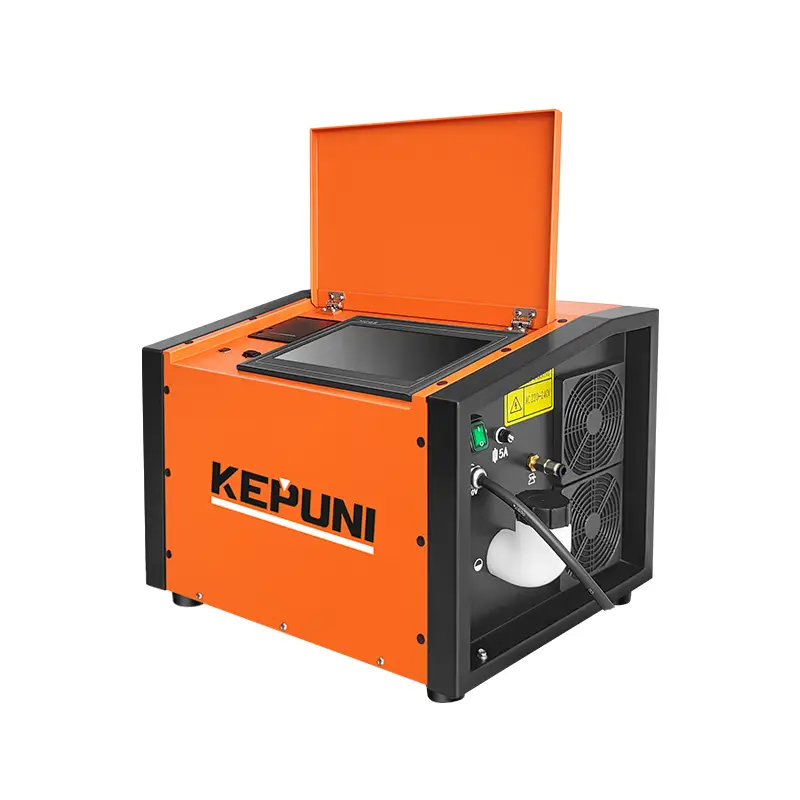
For semiconductor and biotechnology lines with smaller diameters, the 5H Series split-type weld head covers 3.175 mm to 15.88 mm OD with wall thickness up to 1.5 mm. The 10H Series extends this to 6.35–25.4 mm for pharmaceutical, food and beverage, and chemical piping. The XD-20W and XD-20PRO power supplies support weld heads covering 3.175 mm to 168 mm OD, with wall thickness from 0.5 mm to 3 mm, making them the common control units for multi-standard production environments.
Tube-to-Tube Sheet Welding for Heat Exchangers and Boilers
Pressure equipment standards such as ASME Section IX and ASME B31.1 govern boiler and heat exchanger fabrication. KEPUNI's TB-35 Series handles tube ODs from 4.5 mm to 35 mm at wall thicknesses ≤2.5 mm; the TB-65 Series covers 8–65 mm at ≤5 mm; and the XD-G400 power supply covers the combined range of 4.5–65 mm with tube wall thickness up to 5 mm. These parameters are directly relevant to heat exchanger, condenser, boiler, and pressure vessel manufacturing.
Large-Bore and Open-Head Welding
For oil and gas, petrochemical, and pipeline construction where larger diameters and thicker walls are involved, open-head or girth welding systems become part of the compliance solution. The XD-K Series open pipe welding system covers pipe OD from 19 mm to 325 mm, wall thickness from 2.5 mm to 13 mm, and welding currents from 5 A to 500 A. The XD-GH Series girth welding machine covers pipe/vessel OD from 20 mm to 960 mm, wall thickness 2.5–25 mm, at 5–400 A. These systems are common in projects requiring compliance with ASME B31.3, API 582, or pressure vessel codes.
CE Certification: What the Marks Actually Cover
CE marking is one of the most visible compliance indicators for orbital welding equipment sold into the EU. However, not all CE certificates carry the same scope or the same technical standards. A buyer should check the certificate number, issuing body, applicable standards, validity period, and the products it covers.
KEPUNI holds multiple CE certifications for its orbital welding machines:
| Certificate No. | Issued By | Applicable Standards | Validity |
|---|---|---|---|
| TCF25040101LVDEMC | UDEM | EN ISO 12100:2010; EN 60204-1:2018; EN 60825-1:2014; EN IEC 61000-3-2:2019+A1:2021; EN 61000-3-3:2013+A1:2019 | 2025-04-02 to 2030-04-02 |
| M.2022.206.C75864 | UDEM | EN IEC 60974-1:2022+A11:2022+A12:2023; EN IEC 60974-10:2021 | 2022-07-22 to 2027-07-21 |
| 6814C50001315201 | UDEM | EN IEC 60974-1:2022+A11:2022+A12:2023; EN IEC 60974-10:2021 | 2025-03-17 to 2030-03-16 |
| 6814C50001215101 | anbotek | EN IEC 60974-1:2022+A11:2022+A12:2023 | Issued 2025-03-04 |
These certificates cover a product family that includes the XD-GH Series, XD-K Series, XD-20W, XD-20PRO, XD-U Series, TB-65 Series, TB-35 Series, XD-Split Type Weld Head, 40/80/120/170 Series, XD-G400, K Series, 10H Series, and 5H Series. From a procurement standpoint, the important point is not simply that a machine is “CE certified,” but that the technical standards and certificate scope match the equipment model being purchased and the EU directives relevant to that product category.
Industry Standards by Application
Beyond CE marking, regulated end users typically reference the following standards during supplier evaluation: