
Matcha Claims vs Lot Evidence: ISO, HACCP, Kosher, HALAL
Matcha Claims vs Lot Evidence: ISO, HACCP, Kosher, HALAL
For matcha powder, ISO 9001, HACCP, Kosher and HALAL claims answer different buyer questions. ISO 9001 and HACCP describe management systems; Kosher and HALAL describe dietary-law conformity; heavy metals, pesticide residue and 80-mesh results describe product or lot evidence. A buyer should not treat any one of these as a substitute for the others.
This distinction matters in late 2026 because the certificate records supplied for Guanjie Biotech show different validity windows. The ISO 9001 certificate expires on 6 December 2026 and the HACCP certificate on 5 December 2026; the Kosher certificate runs to 15 July 2027 and the HALAL certificate to 7 November 2027. A certificate that is valid at quotation can be close to renewal at shipment, so the qualification file should record the certificate number, scope and renewal status, not only the logo.
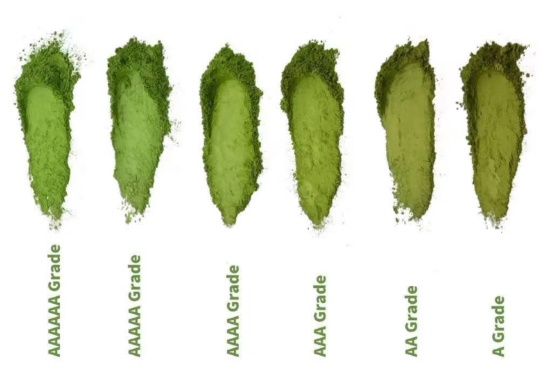
Why matcha buyers need a claim-to-evidence map
The central risk is not that a certificate is false. It is that a valid certificate is asked to prove something it was never designed to prove. A matcha powder can sit inside a certified quality system and still require a lot-specific certificate of analysis, a pesticide-residue report and a particle-size check before release.
For nutraceutical ingredients, this matters because buyers often compare suppliers through a short list of logos. The logos are useful for screening, but they do not answer the same question. ISO 9001 asks whether a quality system is documented and controlled. HACCP asks whether food-safety hazards are analysed and controlled within a defined scope. Kosher and HALAL ask whether the product and process meet specific dietary rules. Heavy metals and pesticide testing ask what was found in a particular sample. The 80-mesh result asks whether a sample passed a defined sieve. These are different evidence types, and a procurement decision needs all relevant types.
The practical rule is simple: match the claim to the question. If the question is “does this supplier have a controlled quality system?”, read ISO 9001. If the question is “is this lot within the agreed contaminant limits?”, read the lot test report. If the question is “can this grade be used in a halal or kosher market?”, read the certificate schedule and the product declaration. No single document answers all three.
What ISO 9001, HACCP, Kosher and HALAL actually establish
Each claim belongs to a different evidence family. The table below separates what the supplied records establish from what they do not establish.
| Claim or document | What it establishes | What it does not establish | Buyer check |
|---|---|---|---|
| ISO 9001 certificate | A quality management system is certified against ISO 9001:2015 for the stated scope: export trade of plant extracts, solid beverages and food additives. | It is not a product certificate for a specific matcha grade, and it does not report heavy metals or pesticide results. | Check certificate number, scope, issue and expiry date, and whether the site or activity is covered. |
| HACCP certificate | A HACCP system certification for the stated scope. | It does not replace finished-product testing or prove a specific lot is contaminant-free. | Check scope, expiry and the hazard-control records that sit behind the certificate. |
| Kosher certificate | The product or process is certified under Kosher Dietary Law by the named authority, within the certificate product list. | It does not establish non-GMO status, pesticide compliance or heavy-metal limits. | Confirm the exact matcha grade and production site appear in the certificate schedule. |
| HALAL certificate | The product or process is certified under the stated halal standard and scope. | It does not establish product purity or contaminant results. | Confirm the certificate is current and covers the exact grade and market requirement. |
| Heavy metals and pesticide residue testing | A sample was tested for specified analytes under a defined method, with results reported. | It does not prove every future lot will be identical unless the testing and release rule are defined. | Request the report, method, limits, results, sample identity and lot number. |
| 80-mesh pass at 100.0% | The tested material passed an 80-mesh sieve at the reported rate. | It does not by itself define grade, color, taste, purity or solubility. | Check the test method, sample size and whether the result is lot-specific. |
| 100% natural, non-GMO, additive-free | These are product-positioning claims that should be supported by specification, declaration and traceability. | They are not certificates and should not be inferred from ISO, HACCP, Kosher or HALAL alone. | Request the specification, supplier declaration and any supporting test or supply-chain record. |
ISO 9001: a system certificate, not a matcha product certificate
The supplied ISO 9001 record is certificate 00123Q310086R0S/6100, issued by CHINA QUALITY CERTIFICATION CENTRE (CQC) against ISO 9001:2015. The issue date is 7 December 2023 and the expiry date is 6 December 2026. The scope is export trade of plant extracts, solid beverages and food additives. For a matcha buyer, that scope is relevant but narrow: it describes the quality-management system for the listed activities, not a laboratory result for a specific matcha lot.
This is why a supplier can hold a valid ISO 9001 certificate and still need a separate COA. The certificate supports confidence in document control, process control and corrective-action systems. It does not tell the buyer the heavy-metal result, the pesticide-residue result or the sieve result for the lot being shipped.
HACCP: hazard control within a defined scope
The HACCP record is certificate 001HACCP2301048, issued by CQC, with issue date 6 December 2023 and expiry 5 December 2026. The stated standard is the Hazard Analysis and Critical Control Point (HACCP) System Certification Requirements (V1.0), and the scope is export trade of plant extracts, solid beverages and food additives.
HACCP is a food-safety system approach. It asks the supplier to identify hazards, set controls and verify that the controls work. It is not a product test. A HACCP certificate does not mean a particular matcha lot has been tested for heavy metals or pesticides; it means the supplier has a certified system for managing food-safety hazards within the certified scope. The buyer still needs the lot release documents.
Kosher: dietary-law conformity with a product schedule
The Kosher record is certificate K-88898568, issued by Badatz Shatz (SKS) under Kosher Dietary Law. The issue date is 15 July 2026 and the expiry date is 15 July 2027. The scope is described as various plant extracts, with reference to the product list in the certificate.
For matcha, the important detail is the product schedule. The supplied relation list includes matcha powder (Grade 1–Grade 6), but the buyer should confirm that the exact grade, production site and any processing aids are covered by the certificate in force. Kosher certification is not a contaminant test and does not establish non-GMO status. It answers a dietary-law question, not a heavy-metal question.
HALAL: a defined standard and market scope
The HALAL record is certificate 0811240000, issued by SHANDONG HALAL CERTIFICATION SERVICE (SHC). It was issued on 8 November 2024 and expires on 7 November 2027. The stated standard is Indonesia Halal Law and Regulations and MS1500:2019 Halal Food: Production, Preparation, Handling and Storage - General Guide. The scope covers plant extracts, solid beverages and food additives, with a market note covering the Middle East, Indonesia and other halal markets.
This certificate is relevant when the buyer’s market or customer requires halal conformity. It does not replace the product specification. A halal certificate should be read together with the product schedule, the site coverage and the current expiry date. If the target market has its own registration or import requirement, the buyer should check that requirement separately; the certificate is one input, not a full market-access determination.
The product-level evidence that certificates cannot replace
The matcha qualification basis separately describes 100% natural, non-GMO and additive-free positioning; heavy metals and pesticide residue testing; an 80-mesh pass at 100.0%; and low-temperature ultra-fine grinding with hot air drying. These are product and process statements. They should be read as a separate layer from the system and dietary certificates.
100% natural, non-GMO and additive-free are claims to substantiate
These phrases are useful in a specification, but they are not certificates. A buyer should ask how each claim is supported: a product specification, a supplier declaration, a traceability record, or a test where applicable. “Natural” and “additive-free” should be defined in the specification so that they can be checked against the actual grade. Non-GMO status should be tied to the source material and the supplier’s declaration or documentation. None of these claims should be inferred from ISO 9001, HACCP, Kosher or HALAL alone.
Heavy metals and pesticide residue testing are lot-level evidence
The qualification basis includes heavy metals and pesticide residue testing. That is the right category of evidence for contaminant questions, but the value depends on the report. A buyer should request the test method, the limits applied, the results, the sample identity and the lot number. A certificate that says a quality system is certified does not report a heavy-metal result. The test report does.
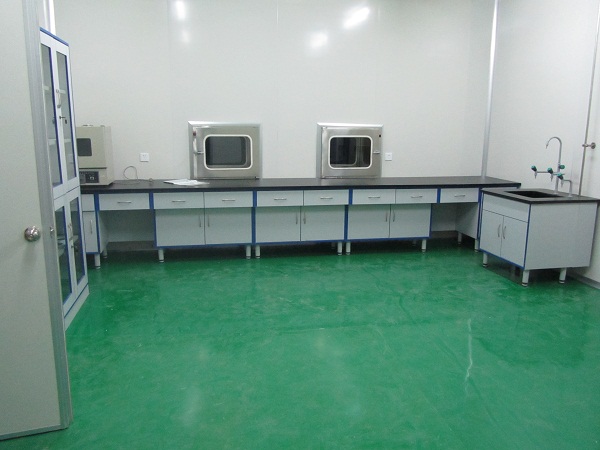
One report also does not automatically prove every future lot. The buyer should know the supplier’s release rule: whether each lot is tested, how often, against which limits, and what happens when a result approaches a limit. That is a procurement question, not a certificate question.
80-mesh pass at 100.0% is a particle-size result
The matcha description states an 80-mesh pass at 100.0%. That means the tested material passed an 80-mesh sieve at the reported rate. It is a useful specification for powder handling, dispersion and blend uniformity, but it is not a grade, purity or safety result. Mesh is a sieve designation; it does not by itself define color, taste, origin or contaminant status. The buyer should check the test method, the sample size and whether the result is reported per lot.
Low-temperature ultra-fine grinding and hot air drying are process descriptions
Low-temperature ultra-fine grinding and hot air drying describe how the powder is processed. They help the buyer understand the intended process route, but they are not finished-product test results. A process description becomes stronger evidence when it is linked to batch records, equipment controls and finished-product checks. If heat exposure or particle-size distribution is critical to the application, the buyer should ask which parameters are monitored and which release tests are used.
Guanjie Biotech’s place in the qualification file
Guanjie Biotech is a Shaanxi-based ingredient manufacturer and exporter founded in 2004, with a 7,000 m² footprint, a cGMP-standard clean workshop and an independent laboratory. Its supplied certificate set is relevant to matcha buyers because the records list matcha among related products. The company also states that it works to ISO, Halal and Kosher requirements and invests in quality control and R&D.
For a matcha buyer, the useful way to read that profile is at three levels. The first level is the system certificate: ISO 9001 and HACCP, with their numbers, scopes and expiry dates. The second level is the dietary certificate: Kosher and HALAL, with the product schedule and market scope. The third level is the lot file: COA, heavy metals and pesticide reports, 80-mesh result, non-GMO and additive-free declarations, and process records. Guanjie Biotech’s profile supports the first two levels; the third level still has to be requested for the specific lot and grade.
Certificate timing note: As of 22 November 2026, the supplied ISO 9001 certificate is valid until 6 December 2026 and the HACCP certificate until 5 December 2026. Buyers planning December shipments should confirm renewal before release. The Kosher and HALAL certificates run into 2027, but their product schedules and market scopes should still be checked against the order.
How process and particle size affect matcha applications
For matcha powder, process and particle size are application variables, not proof of compliance. In the supplied application material, nutraceutical powders are formulated into capsules, tablets, powder sachets, functional beverages and functional foods. Each format asks something different of the powder.
In a beverage, dispersion and sedimentation are visible to the consumer, so particle-size consistency and mixing behaviour matter. In a capsule or sachet, flow, bulk density and blend uniformity matter more. In a functional food, color, taste and texture may be the limiting factors. The 80-mesh pass at 100.0% gives the buyer a defined sieve result, but it does not guarantee mouthfeel, color or stability in every matrix. The buyer should test the powder in the intended application and set a specification that reflects that use.
Low-temperature ultra-fine grinding and hot air drying are relevant to those application decisions because they describe the intended process route. They should be treated as process information, not as a performance guarantee. If the application is sensitive to heat or particle distribution, the buyer should ask for the monitoring parameters and the release criteria, not only the process name.
Certificate-only file vs certificate plus lot evidence
A certificate-only file is faster to assemble but weaker for release decisions. It can show that a supplier has a certified system and dietary approvals, but it cannot tell the buyer what was found in the lot. A certificate-plus-lot-evidence file takes more work, but it gives the buyer a traceable release decision.
The comparison is not a claim that one supplier is better than another. It is a difference in evidence coverage. A certificate-only file may be adequate for early screening. For evaluation and purchase, the buyer should add the lot documents that match the material being shipped. The limitation is practical: even a complete file does not prove suitability for every application. The buyer still has to match the grade, specification, market requirement and application test.
What to request before approving a matcha lot
- Current ISO 9001 and HACCP certificates with certificate numbers, scope, issue date and expiry date.
- Current Kosher and HALAL certificates, plus the product schedule showing the exact matcha grade and site.
- Lot-specific COA with the agreed specification and test methods.
- Heavy metals and pesticide residue report with sample identity, lot number, limits and results.
- 80-mesh test result and the method used to report the pass rate.
- Non-GMO, additive-free and natural-positioning declarations that match the specification.
- Process description for low-temperature ultra-fine grinding and hot air drying, with the release checks that support it.
- Renewal status for any certificate that will expire during the order or shipment window.
Future outlook: from logo collection to dated evidence
The practical outlook for matcha procurement is a shift from collecting logos to managing dated evidence. The supplied certificate dates make the point: ISO 9001 and HACCP are close to renewal in late 2026, while Kosher and HALAL extend into 2027. A buyer who checks only the logo can miss the renewal window. A buyer who records the certificate number, scope and expiry can plan the order around it.
The same discipline applies to product claims. As more matcha grades are sold into different markets, the qualification file needs to separate system certificates, dietary certificates and lot results. That separation does not make the supplier’s job harder; it makes the buyer’s decision clearer. The most useful supplier file is not the one with the most logos. It is the one where each claim is tied to the right document and the right date.
FAQ: Matcha certification and testing questions
Does an ISO 9001 certificate mean a matcha powder lot is certified safe?
No. ISO 9001 certifies a quality management system against the stated scope. It supports confidence in process control and document control, but it does not report the heavy-metal, pesticide or 80-mesh result for a specific lot. The buyer still needs the lot COA and test reports.
What is the difference between HACCP, Kosher and HALAL for matcha?
HACCP is a food-safety system certification within a defined scope. Kosher and HALAL are dietary-law certifications tied to their own standards and product schedules. HACCP does not establish dietary conformity, and Kosher or HALAL certification does not establish contaminant compliance. They answer different questions and should be read together with the lot file.
How should a buyer verify the 80-mesh and non-GMO claims?
For 80 mesh, request the test method and the lot-specific result showing the pass rate; the supplied matcha description states an 80-mesh pass at 100.0%. For non-GMO, request the specification, supplier declaration and traceability record that apply to the grade. Neither claim should be inferred from a system certificate alone.
Are heavy metals and pesticide residue tests batch-specific?
Yes, a test report is sample- and lot-specific. The buyer should check the sample identity, lot number, method, limits and results. A supplier’s testing programme is useful context, but it does not replace the report for the lot being released.
What should a buyer do when a certificate is close to expiry?
Record the expiry date and ask for renewal status before the order is released. The supplied ISO 9001 certificate expires on 6 December 2026 and the HACCP certificate on 5 December 2026, so a late-2026 shipment may fall close to the renewal window. The buyer should confirm that a current certificate will cover the shipment date.
Reference: Guanjie Nutraceutical Ingredients brochure (PDF).
Have Questions or Need More Details?
Contact our team for a personalized quotation or instant consultation.
Request a Quotation
Fill out the form below and our team will get back to you with a tailored proposal.
WhatsApp Direct Chat
Prefer to chat in real-time? Message us on WhatsApp for instant assistance & quick answers.
- Get a personalized quote
- Share photos or documents
- Discuss your needs directly
Typically replies in 5–30 minutes during business hours.