
Matching Action Camera Specs to Real-World Use Cases
Action camera procurement tends to begin with resolution, brand recognition, or certification checklists. In real sourcing projects, however, the decisive factor is more practical: whether the camera configuration matches the environment in which it will be used. A camera built for vlogging may fail on a motorcycle handlebar; a diving project needs waterproofing logic that a general retail product seldom documents clearly.
This article examines action camera selection from a project-fit perspective. It maps common outdoor and vehicle scenarios to the specifications that matter in each context, and uses the product line and OEM/ODM capability of Dongguan YUAOHENG Electronic Technology Co., Ltd. as a reference for procurement teams evaluating suppliers. YUAOHENG is a China-based manufacturer founded in 2016, specializing in action cameras, dash cameras, and smart video doorbells, with a 1,500㎡ factory in Dongguan, roughly 300 employees, and an annual output capacity of 2,000,000 units.
Why Project Fit, Not Just Specs, Should Guide Action Camera Sourcing
A common mistake in action camera buying is treating the product as a single universal device. The market reality is different. Action cameras are used in the outdoor sports equipment industry, the vehicle electronics industry, the consumer video recording industry, and the travel photography sector. Each industry imposes different operating conditions, and those conditions determine which features are essential and which are optional.
For procurement teams, the practical implication is that a specification sheet should be read as a set of answers to scenario questions. Is the camera mounted on a vibrating vehicle? Will it be used in low light? Does the project require EU compliance documentation? These questions define the suitable configuration more accurately than a brand name or a single resolution number.
Five Scenarios That Define the Camera Specification
Underwater Diving and Surfing: Waterproofing plus Night Vision
Underwater and water-sports projects require cameras that can handle dust, water, and impact. YUAOHENG's product line supports this in two ways: some models carry a published IP65 rating, while others are described as compatible with a waterproof case for underwater shooting. The X11 and Q11 models, for example, list IP65 waterproofing and infrared night vision. The Q7 and Q1 models are specified as compatible with a waterproof case, which is the more common approach for deeper immersion requirements.
For night diving or low-light water environments, infrared night vision and LED fill light support become relevant. The application description for YUAOHENG action cameras explicitly includes low-light environments such as night hiking and underwater diving. Buyers planning a diving project should therefore verify both the naked-device water resistance and the availability of a compatible housing before finalizing the specification.
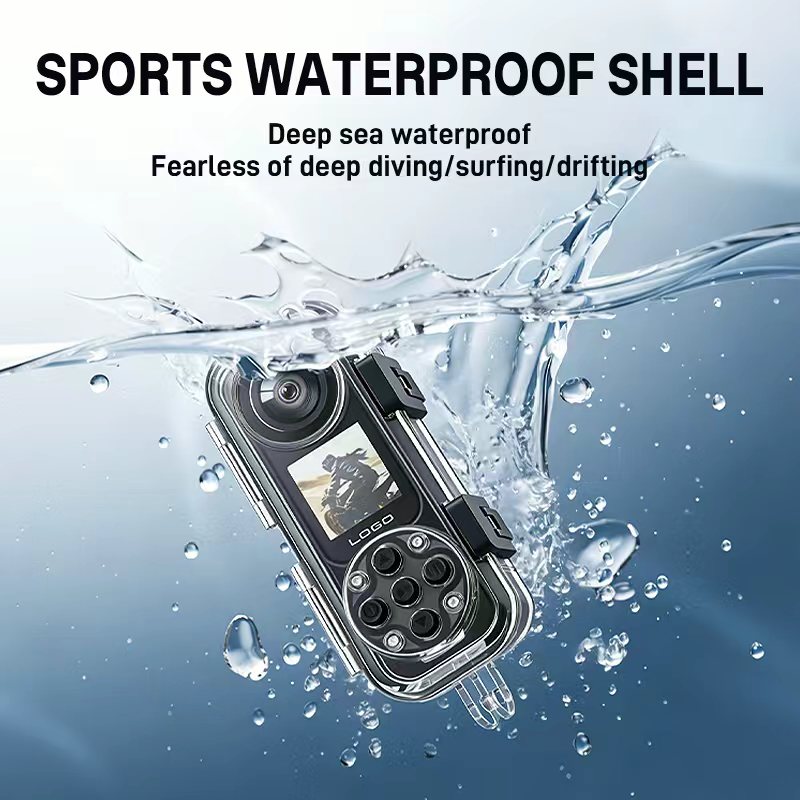
Waterproof action cameras are commonly deployed in diving, snorkeling, and water-sports projects.
Cycling and Motorcycle Riding: Stabilization under Vibration
High-vibration environments are among the most demanding for action cameras. The product is applied in high-vibration scenarios such as motorcycle riding, mountain biking, and off-road driving. In these conditions, image stabilization is not an accessory feature; it is the core requirement.
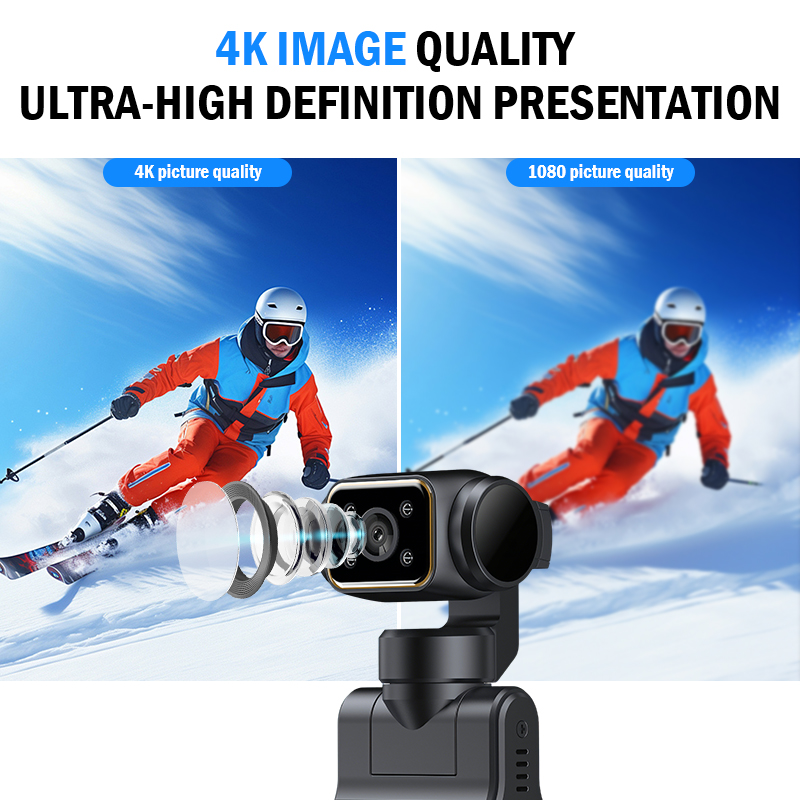
YUAOHENG offers several models with anti-shake support. The Q7 records 4K at 3840×2160 with anti-shake support, while the X7 adds GPS to the same 4K anti-shake configuration. The Q2 goes further with 6-level electronic image stabilization (EIS), a touch screen, and physical dual buttons. For a cycling or motorcycle project, EIS helps reduce motion blur and produces footage that is actually usable for analysis, marketing, or safety review.
Skiing and Climbing: High-Speed Movement and Mounting Flexibility
High-speed movement environments such as skiing and skydiving require cameras that start recording quickly and handle changing light. YUAOHENG's application data highlights one-button quick recording mode and mobile APP real-time preview as two operating modes relevant to these scenarios. A one-button start is especially valuable when the user is wearing gloves or moving fast.
For climbing and mountaineering, the camera needs a wide field of view and stable mounting. The product line uses a 130° wide-angle lens across most models, and the Q9 adds a 180° adjustable rotation direction, which helps users frame shots without repositioning the entire mount. Wide-angle coverage also matters for capturing full scenes without missing details, a point emphasized in YUAOHENG's client feedback.
Vlogging and Travel: Touch Operation, WiFi, and Audio
Travel vlogging and daily life recording place more weight on ease of use and audio quality than on extreme durability. YUAOHENG's Q2 is the most feature-complete model for this scenario: it combines a 1.8-inch IPS touch screen, 4K front-and-rear dual-lens recording, 6-level EIS, and simultaneous 2K+2K dual recording. The screen resolution of 800×480 is higher than the 320×240 screens found on most other models, making framing and playback more practical.
Audio is another differentiator. Several models, including the Q11 and Q2, list a built-in microphone with noise reduction IC, which improves clarity for spoken content. For vlog projects, this reduces the need for an external microphone in moderate noise environments.
Vehicle Safety Monitoring: Front-and-Rear Coverage
In vehicle electronics projects, the action camera often functions as a dash cam for vehicle safety monitoring. This role requires continuous recording, a stable mount, and in many cases dual-lens coverage. YUAOHENG's Q1 and Q3 support front 4K plus rear 4K recording, with simultaneous front 2K + rear 2K mode. The Q2 offers the same dual-lens architecture with additional touchscreen control.
High-vibration conditions on motorcycles and off-road vehicles make stabilization important in this scenario as well. Buyers evaluating a camera for fleet safety or driving recording should treat dual-lens support and anti-shake as paired requirements rather than separate options.
A Product Reference Map for Scenario-Based Sourcing
The table below summarizes how YUAOHENG's main action camera models map to different project scenarios. Procurement teams can use this as a starting point for shortlisting, but should always verify the latest specification sheet and request samples for project-specific testing.
| Model | Key Specifications | Best Scenario Fit |
|---|---|---|
| Q7 | 4K (3840×2160), Wi-Fi, anti-shake, waterproof case compatible | Cycling, motor riding, water-sports with case |
| X7 | 4K, anti-shake, GPS, 130° wide-angle lens | Outdoor sports with location tracking |
| Q2 | 4K dual-lens, touch screen, 6-level EIS, 2K+2K simultaneous recording | Vlogging, travel, front-and-rear recording |
| Q1 | 4K front + rear, Wi-Fi, waterproof case compatible, 2000mAh battery | Diving, travel, driving |
| Q3 | 4K front + rear, simultaneous 2K+2K, Wi-Fi | Vehicle safety monitoring, fleet projects |
| X11 | 2K, IP65, 3000mAh battery, infrared night vision, noise-reduction MIC | Long outdoor sessions, night use |
| Q9 | 2K, 180° rotatable lens, infrared night vision, 2000mAh battery | Climbing, camping, security monitoring |
Table: YUAOHENG action camera models and their scenario fit based on published specifications.
Technical Features Behind Multi-Scene Performance
Several technical characteristics explain why these cameras can serve multiple industries. First, the 4K support found in models such as Q7, X7, Q1, Q2, and Q3 meets the demand for high-definition evidence and marketing footage. The global market data supports the importance of this feature: ultra-HD (4K and above) resolution accounted for approximately 46.25% of the action camera market share in 2025, according to Mordor Intelligence.
Second, the built-in anti-shake algorithm and EIS address the motion problem that defines action cameras. Electronic Image Stabilization has become a standard feature in budget-to-mid-range action cameras, and YUAOHENG applies it across multiple models rather than reserving it for a single flagship. For buyers, this means that stabilization does not have to be a premium-priced add-on.
Third, infrared night vision extends usability beyond daylight hours. Models such as X11, Q11, Q9, and Q5 include infrared or LED fill light support, which is relevant for night hiking, diving, security recording, and camping scenarios. The Q5 and Q9 specifically list four enhanced energy-saving fill lights, and the Q9 offers manual adjustment of infrared switching mode.
Fourth, battery capacity varies meaningfully by model. The X11 uses a 3000mAh battery, the Q11 uses 2500mAh, while several 4K models use 1000mAh polymer cells. The X20 is optimized differently, with a 1000mAh battery but an estimated video working time of about 6-7 hours, reflecting a lower-resolution recording mode. Project buyers should match battery life expectations to the actual recording session length, not to the marketing name of the camera.
OEM and ODM Support for Project-Specific Adaptation
A catalog model is rarely the final product in a serious sourcing project. YUAOHENG provides OEM and ODM one-stop customization services that cover product design, engineering development, testing, and mass production. This is relevant to procurement teams because it means the supplier can adapt an existing camera platform to brand requirements, rather than forcing a buyer to accept a generic retail device.
The customization scope includes product design and R&D services, hardware and function customization such as camera modules and sensors, software and intelligent function customization such as firmware and APP development, and appearance and packaging customization such as color, material, logo engraving, and retail packaging. The company reports a monthly capacity of 170,000 units, a lead time of 25-30 days, and 100% testing during quality control.
For brands evaluating an OEM partner, this combination of platform flexibility and production capacity reduces the time from concept to mass production. YUAOHENG also states a 12-month official warranty and provides product certification documents, sales materials, and technical iteration support for long-term programs.
Field Evidence: A Five-Year Brand Program in the US
One documented case involves a US-based action camera brand OEM project with a quantity of 5,000 units. The product was used for travel vlog shooting, outdoor hiking and camping recording, and daily life video blogging, and the project duration was 5 years. This is a useful reference point because it demonstrates long-cycle cooperation rather than a one-time transactional order.
The client feedback highlights high-definition recording, ultra-wide-angle lens coverage, low-light performance, stable output, and durable structure as key positive results. For procurement teams, the practical takeaway is that YUAOHENG has an existing track record of supporting ongoing brand programs that require consistent product quality over multiple years, not just a single batch delivery.
Market Signals That Favor Scenario-Oriented Procurement
The action camera market is large enough to support segmentation. The global action camera market size was valued at USD 6.57 billion in 2024, according to SkyQuest Technology. China's action camera market was estimated at USD 502.25 million in 2024, per Market Research Future. North America dominated the global market with a revenue share of 34% in 2025, according to Grand View Research. These figures indicate sustained demand across consumer and commercial channels.
Two trends matter most for scenario-based sourcing. First, 4K and above resolution has become the dominant segment, making 4K support a baseline expectation rather than a premium feature. Second, EIS is now common in budget and mid-range cameras, meaning buyers no longer need to accept shaky footage in lower-cost projects. Together, these trends shift the procurement focus from basic resolution toward scenario-specific factors such as waterproofing, dual-lens architecture, battery life, and certification compliance.
Comparing Project Sourcing with Traditional Consumer Purchasing
Traditional consumer purchasing of action cameras is typically driven by brand preference, flagship model reviews, and retail price comparison. The buyer selects a well-known model and then adapts the project around it. This approach works for individual users, but it has clear drawbacks for companies sourcing on behalf of a brand, a fleet, or a retail channel.
Project sourcing follows a different logic. The buyer defines the operating environment first, then selects a camera configuration that matches it, and finally verifies compliance, customization options, and supply stability. YUAOHENG fits this model because it offers multiple configurations across the resolution, battery, and waterproofing spectrum, plus OEM/ODM services that allow fine-tuning without requiring a full product development cycle.
The trade-off is that working with a mid-sized manufacturer requires more specification work from the buyer. Unlike a consumer brand that sells a complete, fixed package, an OEM-oriented supplier expects the buyer to define requirements clearly. This is not a weakness; it is a different division of responsibility that works well for companies with technical capacity.
Limits Buyers Should Verify Before Specification Sign-Off
No single action camera model can cover every project scenario perfectly, and YUAOHENG's lineup has several boundaries that buyers should acknowledge during evaluation.
First, waterproofing is not uniform across the range. The X11 and Q11 list IP65, while other models rely on a compatible waterproof case for immersion. A project requiring IP68-level dustproof and waterproof performance will need to verify the specific housing solution rather than assume all models are deeply submersible. The application description references an IP66 waterproof grade as a special requirement, so buyers should confirm whether the chosen model and accessory combination meets the project's target rating.
Second, dual-lens recording imposes a resolution trade-off. Models like Q1 and Q3 can record front 4K and rear 4K individually, but simultaneous dual recording runs at 2K + 2K. Projects that require full 4K on both channels simultaneously may need to consider a different architecture.
Third, battery life varies significantly. Some 4K models with 1000mAh batteries are designed for shorter action sequences, while the X11's 3000mAh battery or the X20's low-power design serve longer recording sessions. Buyers should match the battery specification to the actual continuous recording time expected in the field.
Scenario-based selection is becoming the standard method for sourcing action cameras across outdoor sports programs.
Future Outlook: From Scenario Fit to Service Fit
The direction of the action camera market points toward deeper integration between hardware and project services. As 4K becomes a baseline and EIS becomes standard, suppliers that can combine multi-scenario product lines with OEM/ODM adaptation capabilities will be better positioned for long-term brand partnerships.
Compliance requirements will continue to shape procurement decisions. For EU-bound projects, certificates such as CE, RoHS, and the referenced UKCA standard are already part of the application requirement set. Buyers should expect certification verification to remain a central step in supplier evaluation.
The practical procurement advice is straightforward: define the scenarios before defining the specs. A supplier like YUAOHENG provides enough model variety and customization depth to support this process, but the responsibility for scenario clarity still lies with the buyer. When those conditions are met, action camera sourcing becomes a repeatable engineering decision rather than a gamble on a single product name.
For a full overview of YUAOHENG's action camera lineup and factory capabilities, the company publishes a product catalog that is publicly accessible. Download the YUAOHENG product catalog for reference.
Frequently Asked Questions
What waterproofing level is needed for an underwater diving action camera project?
Underwater diving projects require either a camera with adequate ingress protection or a compatible waterproof housing. In YUAOHENG's product line, the X11 and Q11 list IP65 waterproofing, while models such as Q7 and Q1 are described as compatible with a waterproof case for underwater shooting. Buyers should verify the tested depth of the complete solution before ordering.
Is 4K resolution necessary for every action camera project?
No. 4K (3840×2160 at 30fps) provides high detail but increases storage and power consumption. For long-duration recording projects, 2K models such as the X11 or Q11 may offer a more practical balance. According to Mordor Intelligence, ultra-HD 4K and above accounted for approximately 46.25% of the market in 2025, indicating that resolution requirements vary by use case.
What image stabilization options are available for high-vibration use cases?
YUAOHENG offers multiple models with anti-shake support. The Q7 and X7 list anti-shake support in their 4K configurations, while the Q2 adds 6-level electronic image stabilization. For scenarios such as motorcycle riding, mountain biking, and off-road driving, a built-in anti-shake algorithm or EIS is recommended.
Can YUAOHENG customize an action camera for an OEM brand program?
Yes. Dongguan YUAOHENG Electronic Technology Co., Ltd. provides OEM and ODM one-stop services covering product design, engineering development, testing, and mass production. Customization options include hardware changes, firmware and APP development, and appearance or packaging design. The company reports a monthly capacity of 170,000 units and 100% testing.
Which action camera model is suitable for vehicle safety monitoring?
Models with front and rear dual-lens recording are designed for this role. The Q1 and Q3 support front 4K plus rear 4K recording with simultaneous 2K + 2K dual recording; the Q2 adds touchscreen control and 6-level EIS. The product is applied in high-vibration scenarios such as motorcycle riding and off-road driving.
What certifications should an action camera have for EU market entry?
YUAOHENG states that its products have obtained FCC, CE, and RoHS certifications. For EU-bound projects, the application requirements also reference CE and UKCA compliance. Buyers should verify the certificate documents against the specific model and production year before finalizing the order.