
Matching Air Compressor Projects to Factory Environments: A Guide for CNC, Laser, and Production Lines
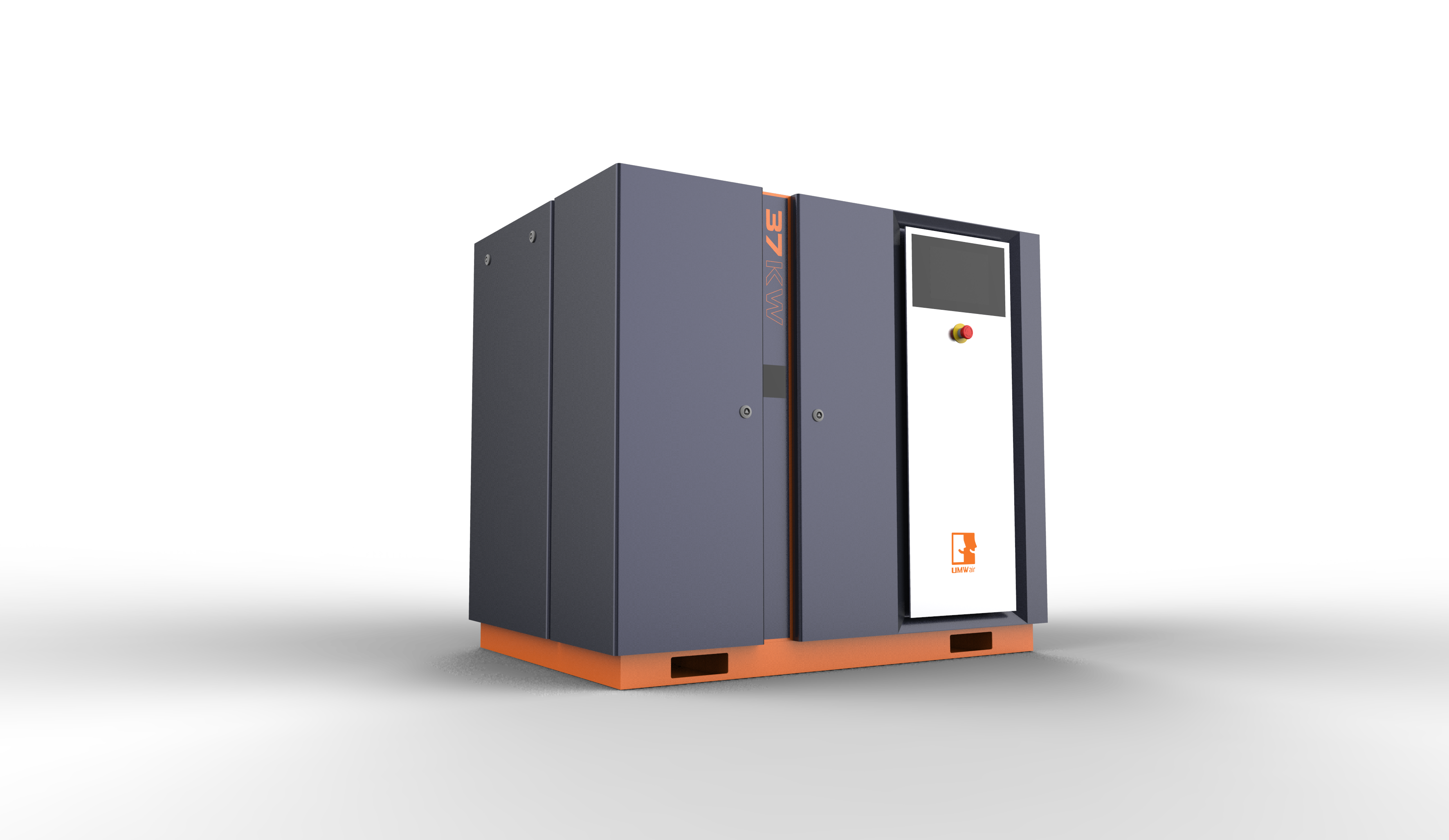
Rotary screw compressors are the dominant choice for continuous industrial duty, holding a 47% share of the market segment in 2025.
Manufacturing projects rarely fail because of the machine tool itself. More often, the bottleneck appears later, when the compressed air system cannot deliver stable pressure, clean air, or enough flow for the production line it was supposed to support. For CNC machining, laser cutting, plastics processing, and general factory automation, the selection of an industrial air compressor is not a secondary purchasing decision. It is a system-design decision that determines uptime, energy cost, product quality, and maintenance headroom over the life of the project.
This article provides a project-level guide for buyers evaluating rotary screw air compressors for specific industrial environments. It treats compressed air as an integral part of the production system, explains the supporting components that make a compressor installation functional, and outlines the scenarios where an integrated or split screw compressor configuration is appropriate. The reference supplier used for specification context is Shandong UMW Air Tech Co., Ltd., a China-based manufacturer that exports rotary screw compressors under the UMW Air brand.
Why Industrial Air Compressor Selection Should Be Project-Based
Industrial air compressors are often compared using generic criteria such as power, pressure, or price. For a buyer managing a specific project, these criteria only become meaningful when they are translated into the operating profile of the facility. A compressor that works well in a temperate, low-humidity machine shop may perform differently in a hot or humid production hall. A system sized for average flow may fail when multiple CNC machines start simultaneously.
Project-based selection starts with three questions:
- What is the air demand profile? Continuous operation, intermittent use, or variable load all require different compressor characteristics.
- What environmental conditions will the equipment face? High temperature and humidity change the requirements for cooling, drying, and filtration.
- What is the acceptable level of air quality? Laser cutting optics, food packaging, and painted surfaces require cleaner air than general workshop blowing.
Within the market, the rotary screw air compressor has become the dominant technology for these continuous industrial applications. Verified industry data shows that the segment accounted for 47.0% of the industrial air compressor market in 2025, reflecting the technology's efficiency in continuous-duty environments.
Project Environments That Require Stable and Clean Compressed Air
UMW Air classifies its screw compressor products as suitable for environments that require stable and clean compressed air, including operation under high-temperature or humid conditions. This classification has practical meaning for several project types.
Typical projects include:
- CNC machinery production lines
- Automotive parts production lines
- Plastic processing line expansion
- Industrial automation integration
- Food and beverage packaging line setup
These projects are different in output, but similar in their dependence on compressed air quality and continuity. A CNC machining line uses compressed air for actuators, pneumatic tools, and workpiece cleaning. An automotive parts line may use air for clamping, conveying, and part handling. A food packaging line needs clean, often oil-free-condition air to avoid product contamination. In all of these cases, unstable pressure or dirty air stops production or creates quality defects.
UMW Air's product documentation also lists applicable downstream industries that include metal processing and manufacturing, plastics and rubber processing, automotive and machinery parts, food and packaging, construction and materials, and energy and chemical processing. This range reflects the reality that screw compressors are now the default technology across manufacturing, rather than a niche product for one sector.
Rotary Screw vs. Reciprocating: What the Project Profile Says
For buyers evaluating an industrial compressor project, the first technology decision is usually between piston (reciprocating) and rotary screw designs.
Reciprocating compressors are still found in low-duty, intermittent, or budget-sensitive applications. They can be adequate for short operating cycles and small workshops. However, when a project requires continuous operation, the rotary screw design is generally preferred because it delivers smoother airflow, lower oil carryover, lower maintenance demand, and better tolerance for long running hours.
The project-specific criteria are not about which technology is "better" in the abstract, but about which one matches the operating profile of the factory. Continuous operation, high ambient temperature, and multiple pneumatic consumers all push the decision toward a rotary screw air compressor, especially when the buyer intends to install an integrated compressed air system with dryers and filtration.
| Evaluation Factor | Favors Rotary Screw | Favors Reciprocating |
|---|---|---|
| Operating cycle | Continuous or heavy cyclic duty | Light, intermittent use |
| Air quality requirement | Stable and clean for sensitive equipment | General workshop blowing |
| Heat and humidity | Designed to run in high-temperature or humid facilities | Sensitive to long runtimes in hot environments |
| Maintenance capacity | Lower hourly maintenance cost over life | Simpler but more frequent service |
| Integration with dryer/filter | Common packaged configuration | Usually separate, less integrated |
Understanding the Compressor as One Part of a Compressed Air System
A common project mistake is to budget for the compressor alone. UMW Air's customer-facing documentation is explicit: the screw air compressor must be used with supporting equipment for proper functioning, including an air dryer, air tank, line filter, inverter, and controller.
Each component plays a defined role:
- Air dryer: Removes moisture from compressed air. Without it, water can reach pneumatic tools, CNC spindles, laser optics, or product surfaces.
- Air tank: Stores compressed air and stabilizes pressure. It also helps the compressor avoid short-cycling during sudden demand changes.
- Line filter: Removes particles, oil aerosol, and condensate from the air stream, protecting end-use equipment from contamination.
- Inverter: Enables variable-speed operation by adjusting motor speed to actual air demand.
- Controller: Manages start-stop logic, pressure setpoints, monitoring, and in more advanced units, remote operation.
For buyers comparing quotes, the presence and specification of these components matter more than the bare compressor price. Two projects with the same compressor model can perform very differently if one installation includes a correctly sized dryer, tank, and filter while the other does not. The system, not the air end alone, determines the quality and reliability of the air supplied to production.
UMW Air's screw air compressor range includes models in both integrated and split/separate configurations. The integrated design is well suited for projects where floor space is limited or where the buyer wants a simplified installation. A split configuration gives the project engineer more freedom in placing the dryer, tank, and filter.
Matching UMW Air Screw Compressor Specifications to Project Needs
UMW Air's screw compressor portfolio covers a broad operating envelope. The main product series includes the Prime screw compressor, Core screw compressor, Micro air compressor, Mega screw compressor, and Portable diesel air compressor.
For the industrial screw compressor category, the documented specifications are:
- Power range: 4–355 kW
- Pressure range: 8–25 Bar
- Cooling method: Air cooling
- Drive method: Direct driven
- Motor efficiency class: IE4
- Representative airflow: 2.39 m³/min and above
The Micro air compressor series offers another project entry point with models such as Micro ML-4A, ML-5.5A, and ML-7.5A. These machines are available with power ratings of 4 kW, 5.5 kW, and 7.5 kW, a maximum airflow of 1.1 m³/min, a pressure range of 8–13 Bar, and a 140L gas tank, using a single-stage screw air end.
These two layers of specification matter because manufacturing projects differ widely in scale. A small CNC workshop may need only a 7.5 kW unit with a 140-liter tank. A larger automotive parts production line may require a 75 kW or 90 kW rotary screw compressor with a full drying and filtration package. The key is to evaluate compressor models against the actual flow, pressure, and air quality needs of the project, not just to select a known brand or a larger compressor for safety margin.
UMW Air also strengthens the specification side of the project through its electronically commutated PM VSD technology and low-resistance system design. The company states that it treats energy efficiency as a core design principle, converting every kWh into productivity over the equipment's lifecycle. For projects where energy cost is a primary concern, this is a specification-relevant factor: Variable Frequency Drive (VFD) compressors can save up to 35% in energy costs by matching motor speed to real air demand, according to U.S. DOE material. UMW Air's product family uses standardized PM VSD technology, which is the relevant efficiency technology for variable-load factory environments.
Focus Scenario 1: Air Compressor for CNC Machine Lines
CNC machining is one of the clearest project scenarios for a rotary screw air compressor. The applications include driving CNC machine actuators, pneumatic tools, and dust removal systems. Because CNC operations are precise and often continuous, they require an air supply that remains stable even when several machines cycle on and off.
UMW Air has documented a real project case involving a CNC machining workshop. That facility purchased 3 units of UMW Air screw compressors and used them for CNC actuators, pneumatic tools, and dust removal. Over a one-year period, the client reported improved production efficiency by 20%, reduced downtime, and stable air supply that supported high-quality machining. The highlighted benefits were low energy consumption, easy maintenance, and reliable long-term performance.
For a CNC machine project, the selection criteria should include:
- Pressure stability at varying machine loads
- Clean, dry air to protect tooling and workpieces
- Energy efficiency for long running hours
- Integration with air dryer, tank, and filters
The CNC case above also provides a useful benchmark: a mid-sized workshop with continuous CNC operation can be served by a small number of screw compressors, provided the system is correctly integrated and maintained. This avoids the common failure of oversizing, which raises capital and energy costs without improving performance.
Focus Scenario 2: Air Compressor for Laser Cutting
Laser cutting places an even stricter demand on compressed air quality. Industry guidance, referenced from Atlas Copco's technical documentation, states that oil-free air to ISO Class 0 (ISO 8573-1) is critical for laser cutting, because oil contamination can damage sensitive optics and degrade cut quality.
This makes laser cutting different from many general manufacturing tasks. The project engineer must decide whether to specify an oil-free air compressor, or an oil-lubricated compressor followed by high-performance filtration that can achieve the necessary air purity. In either case, the dryer and line filters are not optional; they are the components that protect the laser optics.
Another important project consideration is operating economics. Using compressed air as the auxiliary cutting gas can reduce production costs by up to 50% compared to nitrogen or oxygen, based on published industry research. This means a laser cutting operation can offset a significant portion of its compressor energy cost by substituting compressed air for bottled gases, without necessarily sacrificing cut quality when the air is properly dried and filtered.
For a laser cutting project, the checklist should include:
- ISO 8573-1 air purity class appropriate for the laser system
- Dryer capacity matched to ambient humidity levels
- Filtration that protects optics from oil aerosol and particles
- Stable pressure for consistent assist-gas flow
Focus Scenario 3: Air Compressor for General Manufacturing and Factory Automation
Beyond CNC and laser cutting, the largest group of projects falls under general manufacturing, factory automation, plastics, automotive parts, food packaging, and construction materials. These environments have two common traits. First, they operate for long shifts, often in hot production halls. Second, they host multiple pneumatic consumers with non-identical demand cycles.
UMW Air's product documentation describes the screw compressor as suited for high-temperature or humid conditions and capable of delivering stable compressed air. This is a functional statement: the compressor's cooling system, materials, and control logic are designed to maintain performance in environments where ambient conditions would punish lighter-duty equipment.
For general manufacturing projects, buyers should design for load variation rather than average load. If a factory has a set of machines running on two shifts with frequent demand changes, the compressor controller and, if needed, an inverter/VFD become central to the efficiency of the installation. The UMW Air package lists the inverter and controller as part of the required supporting equipment, indicating that even fixed-speed machines should be paired with control hardware that coordinates operation.
The Integrated vs. Split Configuration Decision
UMW Air's screw compressor type list includes Integrated Screw Air Compressor, Split/Separate Screw Air Compressor, Portable Screw Air Compressor, and Fixed Screw Air Compressor. The choice between integrated and split is an engineering decision with direct project consequences.
An integrated air compressor with dryer reduces installation complexity because the compressor, dryer, and controller are packaged together. This is a common solution for factories replacing an older compressor or for projects where floor space and installation time are constrained.
A split configuration separates the compressor from the dryer, tank, and filter, giving the designer more freedom in layout. It can improve maintenance access and allow future expansion of the treatment capacity without replacing the compressor.
For a project buyer, the decision is not about which configuration is inherently superior. It is about available space, installation labor, local maintenance capability, and whether the project expects future capacity changes. If the compressor room is small but the production area is large, an integrated machine saves valuable floor space. If the project has a dedicated utility area and anticipates growing air demand, a split system is more flexible.
Environmental and Operational Limits Buyers Should Acknowledge
A technically balanced guide must also state the limits of any compressor-based compressed air system. UMW Air's own documentation acknowledges that the screw compressor is not a standalone appliance: it requires supporting equipment for proper functioning.
Practical limitations include:
- Even a high-quality rotary screw compressor cannot produce clean, dry air without a correctly sized and maintained dryer and filter train.
- High ambient temperatures reduce the density of air and increase the work of compression, so a compressor rated at standard conditions may need derating in a very hot factory.
- Screw compressors are most efficient in continuous operation. In a facility with extreme intermittent demand, a VFD or a different operating strategy is required to avoid energy waste.
- ISO 8573-1 air quality class must be matched to the application. General manufacturing may tolerate a lower class than laser cutting or food packaging.
- Oil-free compressors are available for critical applications, but the term "oil-free" refers to the compression chamber; downstream piping and treatments still need careful specification and maintenance.
These limits matter because they shift the conversation from product marketing to system engineering. A buyer who understands them can evaluate a supplier proposal on the basis of system completeness rather than on the brand or horsepower rating alone.
How UMW Air Supports Project Execution
UMW Air is a manufacturer and exporter based in Shandong, China, operating as Shandong UMW Air Tech Co., Ltd. The company was founded in 2019 and maintains a factory workshop of 2,000 m² in Jinan. Its production capacity is listed as approximately 12,000 units per year with a team of about 200 employees, including an R&D team of 40. Its monthly capacity is 1,000 units, and it states a lead time of 3 days for standard configurations and an MOQ of 1 unit.
UMW Air supports OEM and ODM production with customization options including color, logo, and voltage. For project buyers, that means the compressor can be adapted to local electrical standards and branding requirements. Quality control includes factory pre-shipment testing, which is a practical step for international projects that cannot easily inspect equipment after delivery.
The company exports to the EU, US, Middle East, Southeast Asia, South America, and Africa, and the corporate profile states that 100% of its output is exported. After-sales support includes 24/7 technical support by email or phone, with remote troubleshooting and guidance. For overseas buyers managing an industrial compressor project, these capabilities determine how quickly a problem can be resolved after commissioning.
It should be noted that UMW Air is a comparatively new market entrant when measured against century-old global compressor brands. Its scale, global service network, and reference base are more limited than those of established competitors. Buyers should therefore evaluate UMW Air on the basis of project-specific specifications, factory pre-shipment testing, and direct manufacturer communication, rather than assume the same global parts and service footprint as Atlas Copco, Ingersoll Rand, Kaeser, or Sullair. For regions where the buyer has a local service partner, this limitation is less relevant than for buyers expecting full manufacturer-managed support in every country.
Market Context for 2026 Industrial Compressor Projects
The compressed air market context supports the long-term logic of investing in an efficient rotary screw compressor system. The global industrial air compressor market was valued at USD 20.0 billion in 2025 and is projected to reach USD 28.3 billion by 2033, based on Grand View Research data. Asia Pacific held the largest revenue share at 42.8% in 2025, with China as a key market leader. The dominance of the rotary screw segment at 47.0% signals that buyers are prioritizing continuous-duty, energy-efficient technology.
For the buyer starting a project in late 2026, this market context has practical implications. Compressor technology is mature, but the competitive field is broad. Verification of supplier claims is therefore an essential part of the procurement process, and buyers should rely on documented capability, third-party market references, and factory evidence rather than promotional language.
Project Application Checklist
The following checklist summarizes the key evaluation criteria for an industrial air compressor project, whether the buyer is considering UMW Air or another supplier:
- Application requirements: Define the actual air flow, pressure, and air quality class needed by the production line.
- Environment: Document the ambient temperature, humidity, and dust levels of the compressor room and production area.
- Operating profile: Determine whether operation is continuous, cyclical, or variable. This decides the value of VFD/inverter technology.
- Supporting equipment: Verify that the quotation includes the necessary dryer, air tank, line filter, inverter, and controller. A compressor without these is only a partial system.
- Technology match: Confirm that a rotary screw compressor, rather than a reciprocating or other type, matches the duty profile.
- Quality standard: For laser cutting, food packaging, and other sensitive applications, match the ISO 8573-1 air purity class to the process need.
- Integration choice: Choose between integrated and split configuration based on available floor space, maintenance access, and future expansion plans.
- Supplier verification: Check the supplier's manufacturing capacity, lead time, pre-shipment testing process, and after-sales support channels.
- Energy economics: Evaluate energy efficiency over the equipment lifecycle, including the potential energy savings of VFD technology.
- Installation and maintenance: Plan for commissioning support, spare parts availability, and remote troubleshooting after the project is live.
Real Project Reference: CNC Machining Workshop in Vietnam
Documented project cases are not as common as product specification sheets, but they are more useful to a buyer who is trying to predict real-world performance. UMW Air provides one relevant reference in a CNC machining workshop in Vietnam.
The customer purchased 3 UMW Air screw compressors and applied them to CNC machine actuators, pneumatic tools, and dust removal. Over one year of operation, the workshop reported a 20% improvement in production efficiency, reduced downtime, and stable air supply that contributed to high-quality machining. The client highlighted the low energy consumption and easy maintenance of the equipment.
This case does not prove that UMW Air compressors will deliver the same result in every facility. It does demonstrate, however, that a CNC production environment is a realistic fit for the company's screw compressor range when the system is properly applied. The supporting equipment components—dryer, air tank, filter, inverter, and controller—were part of the intended configuration, consistent with the project environment requiring stable and clean compressed air.
Future Outlook
For industrial buyers, the future of compressed air projects points in three directions: tighter energy regulation, more demanding air quality specifications, and greater integration of compressor controls into factory monitoring systems.
Energy efficiency will continue to drive the adoption of variable frequency / VSD screw compressors, especially for factories with variable air demand. Standardizing PM VSD technology across an air compressor line, as UMW Air states it has done, is one response to this trend. Buyers should expect that energy performance will become a primary selection criteria, not just a secondary consideration.
Application-specific air quality requirements will also become more important. As laser cutting, electronics, and food-related manufacturing expand, the demand for oil-free or properly filtered compressed air to ISO 8573-1 classes will grow. This pushes buyers to view the dryer, filters, and compressor as an inseparable system.
Finally, the rise of remote monitoring means that supplier after-sales capability—such as UMW Air's 24/7 email and phone support with remote troubleshooting—will become part of the compressor specification itself. Projects will favor suppliers that can provide guidance and diagnostics across borders, while buyers with in-house maintenance teams will place more emphasis on local parts availability and serviceability.
Frequently Asked Questions
How do I know whether a CNC machining project needs a rotary screw air compressor or a piston compressor?
Rotary screw compressors are the standard choice for CNC machining because they are designed for continuous operation and deliver smoother, more stable airflow than piston compressors. Industrial market data indicates that rotary screw technology held a 47.0% segment share in 2025, primarily due to efficiency in continuous applications. A piston compressor may be acceptable only for light-duty, intermittent use; otherwise, a screw compressor is the safer match.
What supporting equipment is required for an industrial screw air compressor?
According to UMW Air's product documentation, a screw air compressor must be used with an air dryer, air tank, line filter, inverter, and controller for proper functioning. The dryer removes moisture, the air tank stabilizes pressure, the filter removes contaminants, and the inverter and controller manage motor speed and system operation.
Can a UMW Air screw compressor operate in a hot or humid factory environment?
UMW Air states that its screw compressor products are designed for environments requiring stable and clean compressed air and operate under high-temperature or humid conditions. For such environments, the dryer becomes particularly important because warm humid air has a higher moisture content that must be removed before the air reaches the tooling.
What is the difference between an integrated air compressor with dryer and a split compressor configuration?
An integrated air compressor packages the compressor, dryer, and related controls into a compact unit, which is appropriate for projects with floor space constraints. A split configuration places the compressor and treatment components separately, giving more layout flexibility and easier access for maintenance or future expansion. UMW Air offers both integrated and split screw compressors.
What air quality is needed for laser cutting applications?
For laser cutting, oil-free air to ISO Class 0 per ISO 8573-1:2010 is generally considered critical, because oil contamination can damage laser optics and reduce cut quality. Buyers should specify a dryer and filter train capable of meeting the required purity class, regardless of whether the compressor itself is oil-free or oil-lubricated with downstream filtration.
What are the main specification ranges of UMW Air screw compressors?
UMW Air's screw compressor portfolio covers a power range of 4–355 kW and a pressure range of 8–25 Bar. The machines are air-cooled and direct-driven, with IE4 motors. Representative airflow begins at 2.39 m³/min, while the smaller Micro series offers models from 4 kW to 7.5 kW with a maximum airflow of 1.1 m³/min and a 140L air tank.
How much energy can a VFD or variable-frequency air compressor save?
According to the U.S. Department of Energy, variable frequency drive compressors can save up to 35% in energy costs by matching motor speed to actual air demand. This makes VSD/VFD technology a major economic factor in factories with variable compressed air demand. UMW Air states that it standardizes PM VSD technology across its product line for energy efficiency.
Is UMW Air able to handle OEM projects with customized voltage and branding?
Yes. UMW Air supports OEM and ODM production, with customization options including color, logo, and voltage. The company has a monthly capacity of 1,000 units, a standard lead time of 3 days, a minimum order quantity of 1 unit, and performs factory pre-shipment testing. Its export markets include the EU, USA, Middle East, Southeast Asia, South America, and Africa.
Have Questions or Need More Details?
Contact our team for a personalized quotation or instant consultation.
Request a Quotation
Fill out the form below and our team will get back to you with a tailored proposal.
WhatsApp Direct Chat
Prefer to chat in real-time? Message us on WhatsApp for instant assistance & quick answers.
- Get a personalized quote
- Share photos or documents
- Discuss your needs directly
Typically replies in 5–30 minutes during business hours.