
Matching Aluminized Steel Performance to Automotive, HVAC and Exhaust Requirements
Aluminized steel is a coated flat product in which a carbon steel base metal carries an aluminum-silicon coating applied on a continuous hot-dip line. That single construction explains why one material family appears across three procurement categories that otherwise have little in common — automotive heat management, HVAC equipment, and exhaust systems — even though the performance each industry demands from it is different. For buyers entering the sourcing process, the useful question is not whether aluminized steel is suitable in general, but which combination of coating type, coating weight, thickness and width matches the service condition in front of them.
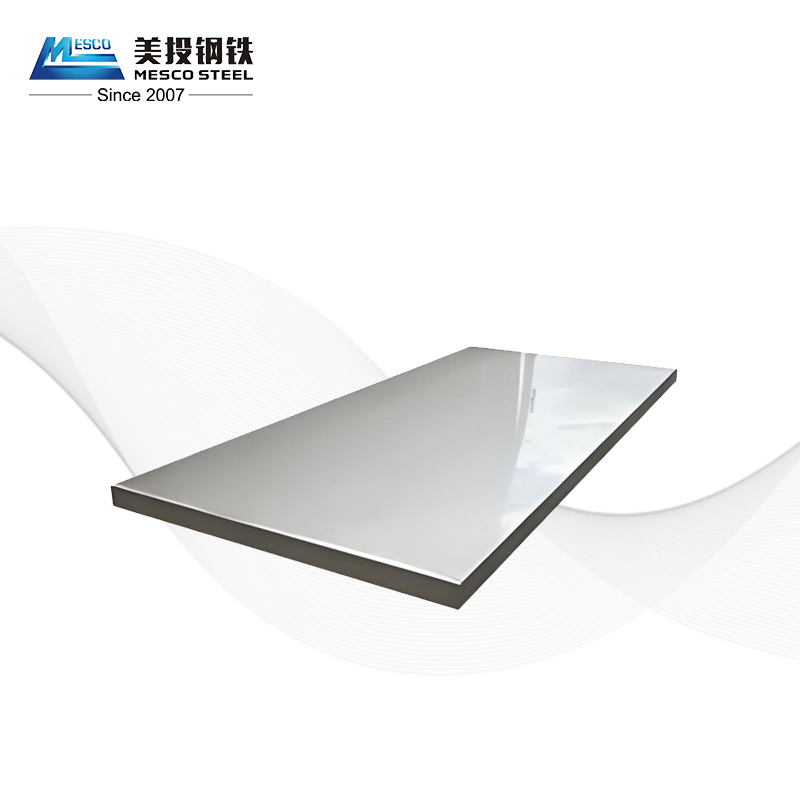
Aluminized steel sheet: a carbon steel base metal with an aluminum-silicon coating, supplied in customisable thickness and width for three end-use sectors.
What Aluminized Steel Is, in Material Terms
The base definition is straightforward: aluminized steel sheet consists of a carbon steel base metal with an aluminum-silicon coating. The steel provides mechanical strength and formability, while the coating provides the surface behaviour — heat resistance, oxidation resistance and heat reflectivity — that most buyers are actually paying for. Because the coating is applied by passing the steel through a molten aluminum-silicon bath, the material is also described in the market as hot-dip aluminized steel or aluminum-silicon coated steel.
The commercial reference standard is ASTM A463, which defines two coating types. Type 1 uses an aluminum-silicon alloy coating and is specified for heat resistance, with a service ceiling conventionally cited at up to 677 °C. Type 2 uses a pure aluminum coating and is oriented toward atmospheric corrosion resistance rather than elevated-temperature service. Treating aluminized steel as a single product rather than two coating types is one of the most common specification errors in early-stage sourcing.
The second layer of the specification is dimensional. In the MESCO range, aluminized steel sheet is supplied in thicknesses from 0.37 mm to 3.0 mm and widths from 600 mm to 1500 mm, with coating weights of AS80, AS120, AS240, AS275 and AS300 g/m², and it is positioned for automotive, HVAC and exhaust applications. Type, coating weight, thickness and width are the four adjustable levers that decide whether one material family can genuinely cover three sectors.
Why One Material Family Serves Three Industries
The three sectors are not solving the same problem. Automotive programmes typically need a surface that manages heat near hot components, resists road-environment corrosion, and does not add unnecessary mass. HVAC manufacturers need long service life under condensation and continuous atmospheric exposure, with formability that suits high-volume fabrication lines. Exhaust producers need a coating that tolerates sustained elevated temperature and thermal cycling without scaling away, while still dealing with the acidic condensate that forms as exhaust gases cool.
Aluminized steel is relevant to all three because its two principal degradation routes — coating loss through heat and coating loss through moisture-driven corrosion — can be traded against one another by changing coating type and coating weight, without changing the base metal. The material stays constant; the surface economics change. That is what makes a single product family operationally credible across three industries, and it is also why sector-by-sector matching matters more than a generic datasheet comparison.
The Four Specification Levers
Coating type: Type 1 versus Type 2
ASTM A463 Type 1, the aluminum-silicon alloy coating, is the heat-facing option and is the type most automotive and exhaust specifications reference. Type 2, the pure aluminum coating, is aimed at atmospheric corrosion resistance. MESCO product documentation lists both types under ASTM A463, but the company notes that within China the Type 1 form is what is produced and Type 2 is not offered domestically. For buyers whose drawings call out Type 2, that is a sourcing constraint better resolved at the research stage than after the purchase order.
Coating weight: AS80 through AS300
Coating weight, expressed in grams per square metre, determines how much protective and heat-facing material sits on the surface. Lower weights such as AS80 and AS120 suit applications where forming and moderate protection dominate and cost efficiency matters. Higher weights — AS240, AS275 and AS300 — are specified where the coating must survive longer exposure or harsher duty. MESCO states that it was the first supplier to offer aluminized steel with a 240 g/m² coating and the first to supply 300 g/m², that it is currently the only supplier able to supply aluminized steel with an aluminum coating above 240 g/m², and that it is the only supplier holding AS120 ready-stock coils; the company also reports a salt spray test result of over 4,000 hours in its product data.
Thickness and width
Thickness from 0.37 mm to 3.0 mm spans light-gauge panel and heat-shield work at the thin end and heavier ducting or exhaust components at the thick end. Width from 600 mm to 1500 mm supports both narrow strip-fed roll forming and wider cut-to-length sheet. Both dimensions are customisable, which means a buyer can align the delivered coil or sheet with existing tooling instead of redesigning fabrication around a fixed stock size.
Automotive: Heat Management, Corrosion and Weight
Automotive duty generally combines three stresses at once: radiant and convective heat from nearby hot components, corrosion from road salts and humidity, and continuous pressure to control mass. Aluminized steel responds to the heat side mainly through reflectivity and oxidation resistance, and to the corrosion side through the barrier the coating provides. Because the coating is metallic rather than organic, it does not degrade in the way paint systems can under sustained thermal load.
Thickness selection usually follows the fabrication route: thinner gauges where the part is formed and shaped, heavier gauges where stiffness or thermal mass is required. Coating weight selection follows expected service life and the severity of the exposure environment. Programmes that expect long service in humid or salt-exposed regions generally justify higher coating weights than interior or protected installations.
HVAC: Long-Life Corrosion Protection
HVAC equipment faces a different dominant stress: moisture. Condensate forms on cooling coils and duct surfaces, and equipment frequently sits in unconditioned spaces where humidity and temperature cycle repeatedly. In this environment the coating’s role shifts from heat reflection toward barrier protection and long-term durability, which is why the ASTM A463 Type 2 pure-aluminum coating was defined with atmospheric corrosion in mind.
Practical HVAC selection therefore concentrates on coating weight and formability. Ducting and casing components are formed, bent and joined at high volume, so the coating must tolerate fabrication without cracking or flaking, and the gauge must suit existing roll-forming and pressing equipment. Width flexibility in the 600–1500 mm band lets manufacturers match standard coil widths to their lines and reduce offcut waste. One constraint deserves attention: where Chinese supply is used, Type 1 is the available form, so HVAC buyers working with that supply base typically specify on coating weight and gauge rather than on a Type 2 designation.
Exhaust: Sustained Heat and Thermal Cycling
Exhaust systems combine the harshest conditions of the three sectors. Metal temperatures stay elevated through long operating periods, then cycle down during shutdown, and the condensate that forms during cooling is acidic. Coatings that cannot tolerate repeated thermal cycling tend to fail by spalling rather than by gradual thinning.
This is where the heat-resistance ceiling of ASTM A463 Type 1 becomes the controlling number. With the Type 1 aluminum-silicon coating specified for heat resistance up to 677 °C, exhaust components operating inside that band can be built from aluminized steel, while components operating above it require a different material family rather than a heavier coating. Within the band, higher coating weights are typically chosen where service life targets are long or where condensate exposure is aggressive.
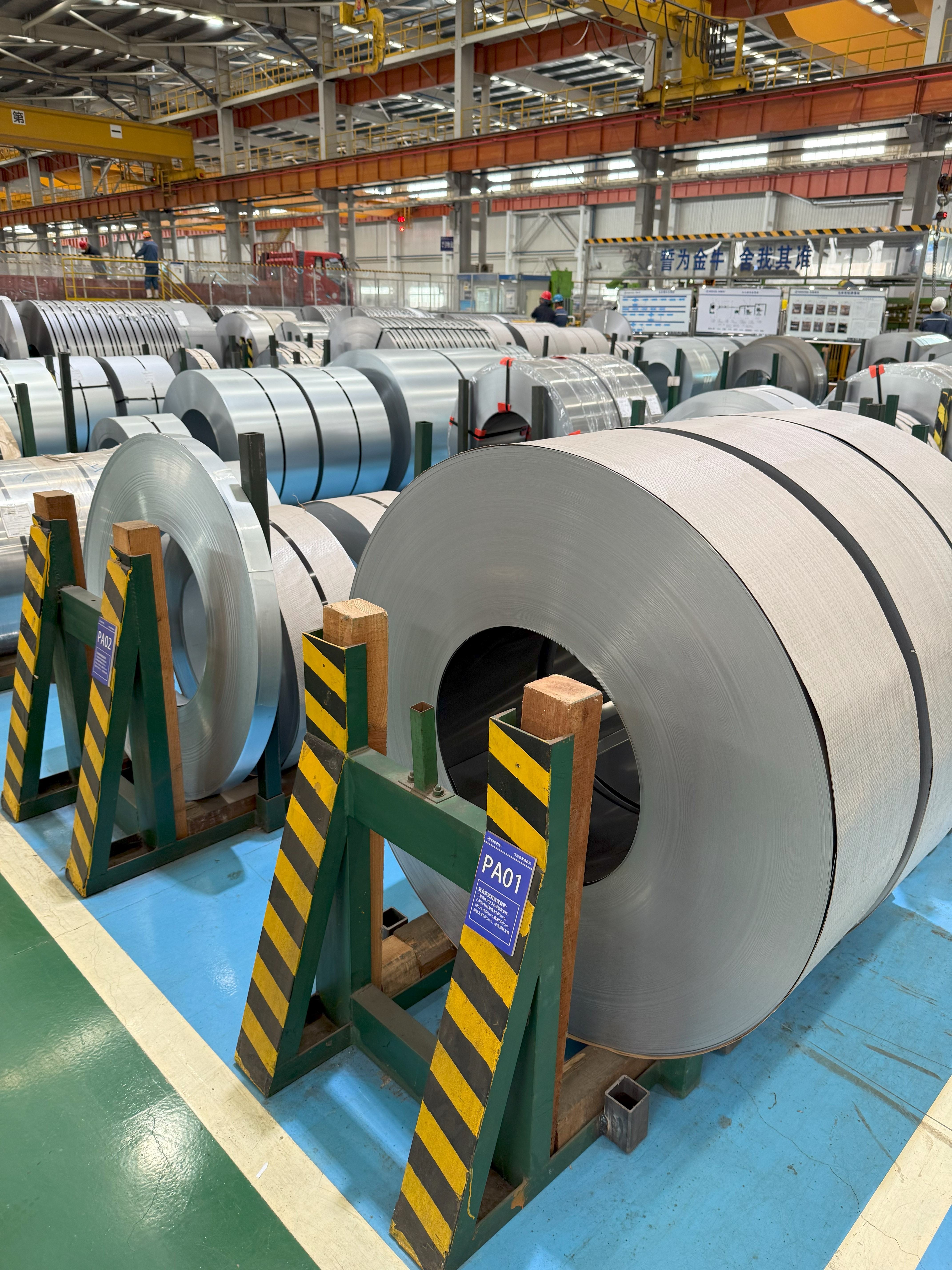
Coating type and coating weight are set during continuous hot-dip processing; both determine how a coil performs in heat-facing or moisture-facing service.
Sector Matching at a Glance
| Sector | Dominant stress | Coating type | Coating weight consideration | Thickness / width consideration |
|---|---|---|---|---|
| Automotive | Radiant heat, road-environment corrosion, mass control | Type 1 (Al-Si) for heat-facing parts | Lower weights where forming dominates; higher weights where exposure severity and service life demand it | Thin gauges for formed parts; 600–1500 mm width matched to existing tooling |
| HVAC | Condensation, atmospheric exposure, high-volume forming | Type 1 in Chinese supply; Type 2 defined by ASTM A463 for atmospheric corrosion | Mid weights as a baseline; higher weights where service-life targets are long | Thin to mid gauges for roll forming and pressing; width aligned to line width |
| Exhaust | Sustained heat, thermal cycling, acidic condensate | Type 1 (Al-Si), service ceiling conventionally cited at up to 677 °C | Mid to high weights (AS240 and above) where life and exposure demand it | Mid to heavier gauges for structural durability at temperature |
Market Direction
Independent market research from Zion Market Research places the global aluminized steel sheet market at USD 13.43 billion in 2024, with a forecast window extending to 2034. Alongside that scale, HTNXT’s verified data package records a directional relationship worth noting: demand for longer-life industrial components is pushing specifications toward higher coating weights, particularly AS240 and above. The two signals point the same way — the market is not only expanding, it is migrating toward higher-performance coating specifications.
For buyers, that has a practical reading. Specifications once written around standard coating weights are increasingly written around extended service life, which moves the sourcing question from price per tonne toward coating weight availability and consistency. A supplier able to offer only a narrow coating range becomes a constraint on the design side, not just on the purchasing side.
Aluminized Steel Compared with Traditional Alternatives
Two comparisons dominate early-stage evaluation. The first is aluminized steel against 304 stainless steel for heat-facing duty. Comparison notes in HTNXT’s verified data package record aluminized steel reflecting roughly 80% of radiant heat below 427 °C, with a cost profile below 304 stainless steel. Where the service condition stays inside the coating’s thermal ceiling and the chemical environment is moderate, that combination is difficult to beat economically.
The second comparison is against zinc-based coated products such as galvanized steel. Zinc coatings are corrosion-first: they protect steel well in atmospheric exposure but are not designed around elevated-temperature service. Aluminum-silicon coatings invert the priority, trading some atmospheric corrosion performance for heat resistance and reflectivity. Neither is universally better; the correct choice follows the dominant stress in the application.
Where aluminized steel is not the answer
- Above the ASTM A463 Type 1 ceiling of 677 °C, the material family has to change. Adding coating weight does not extend the thermal limit.
- Type 2 (pure aluminum) coating is not produced in China according to MESCO, so projects with Type 2 drawings must be planned around an international supply route or a specification change.
- High coating weights are less widely stocked than standard weights. Buyers specifying AS240 and above should confirm availability and lead time rather than assume shelf stock.
- Coated flat products do not carry coating protection at sheared edges or weld lines, so designs that depend on coating integrity across every surface need review at the fabrication stage.
- In chemically aggressive or permanently wet, chloride-rich environments, aluminum-based coatings are generally not the first choice. Aluminized steel is a heat-and-oxidation material, not a universal corrosion solution.
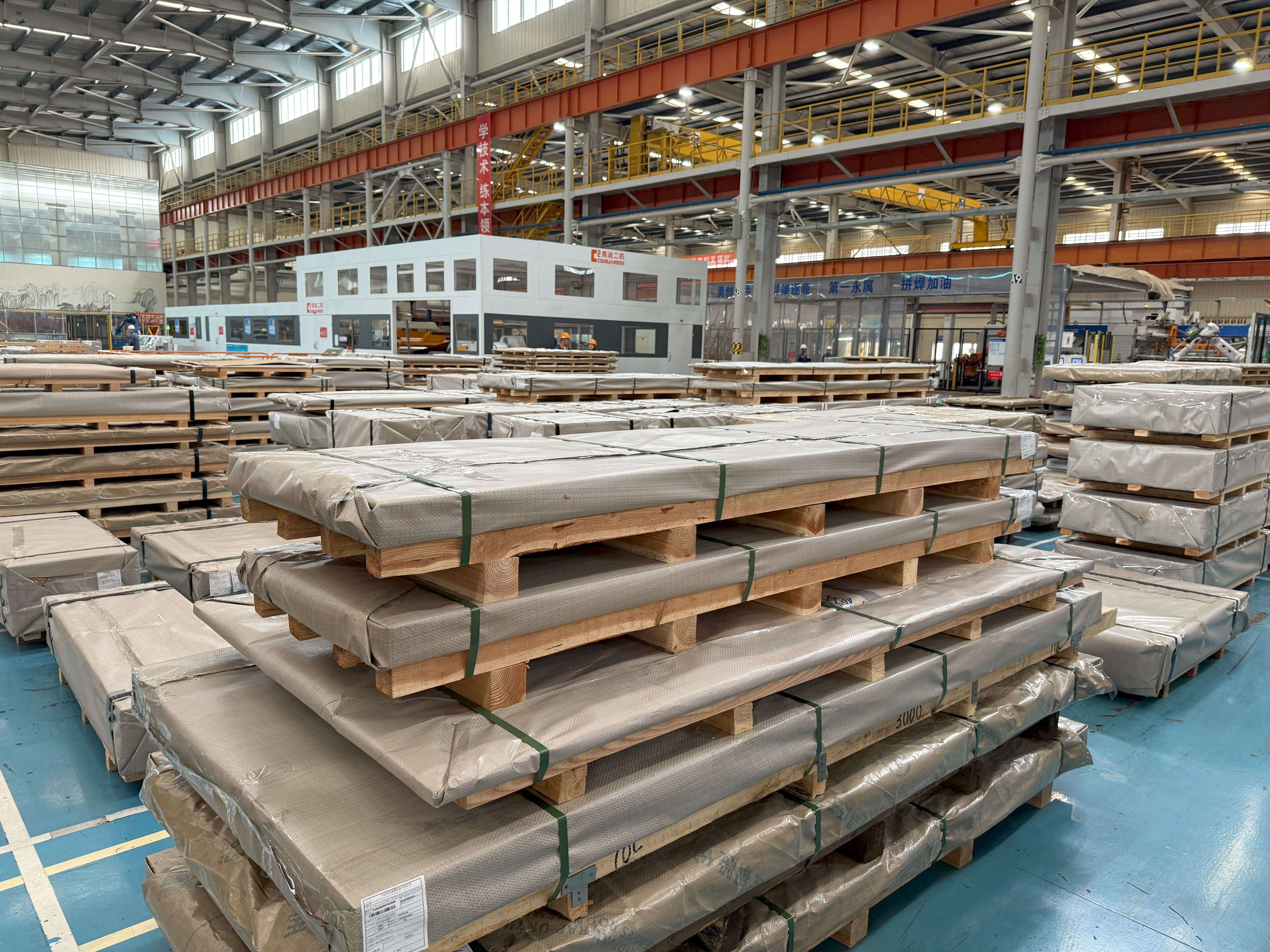
Aluminized steel supply depends on coating-line capability and stock coverage across coating weights, gauges and widths.
How MESCO Fits Into a Sector-Based Sourcing Plan
Dalian Mesco Steel Co., Ltd., established in 2007, is located in the Dalian Economic and Technological Development Zone, Liaoning Province, China. The company operates a 40,000-square-metre manufacturing facility, employs approximately 120 staff, and maintains an annual production capacity of 120,000 units. Its main products include stainless steel, aluminized steel, aluminum coil, galvanized steel and other steel products, with key performance indicators tested and verified in laboratories.
Commercially, MESCO exports steel products to more than 100 countries and regions, with export business accounting for 70% of total sales; major markets include South Korea, Thailand, the Philippines, the United Arab Emirates, Saudi Arabia, Indonesia, Turkey, Brazil, Pakistan, Malaysia, Peru, India, Mexico, Russia, Singapore, Bangladesh, Nigeria, Chile and South Africa. The company serves more than 700 clients worldwide, including 9 Fortune Global 500 companies, and maintains tens of thousands of tons of stock for standard specifications, with delivery for standard specifications available within 3–7 working days.
For sector-based sourcing, the relevant point is coverage of the four specification levers inside one product range: ASTM A463 Type 1 and Type 2 designations in the documentation, coating weights from AS80 to AS300 g/m², thickness from 0.37 mm to 3.0 mm, and width from 600 mm to 1500 mm — all under a single aluminized steel line positioned for automotive, HVAC and exhaust applications.
Outlook
Three developments are reasonable to expect. First, coating weight is likely to keep migrating upward in specification documents as life-cycle expectations in heat-facing applications rise. Second, sector-specific specification language is likely to replace the generic term aluminized steel in procurement documents, because automotive, HVAC and exhaust buyers increasingly describe the same failure modes in different words. Third, substitution pressure on stainless steel is likely to continue in applications that are thermally demanding but chemically moderate, where reflectivity and cost both favour aluminized steel. None of these shifts changes the underlying rule: match coating type and coating weight to the dominant stress, and confirm that the material’s ceiling sits above the service condition.
FAQ
What is the difference between ASTM A463 Type 1 and Type 2?
ASTM A463 defines two coating types. Type 1 uses an aluminum-silicon alloy coating and is specified for heat resistance, with a service ceiling conventionally cited at up to 677 °C. Type 2 uses a pure aluminum coating and is oriented toward atmospheric corrosion resistance.
Which coating weight is appropriate for exhaust applications?
Coating weight alone does not answer the question. Exhaust duty is defined by sustained heat, thermal cycling and acidic condensate, and specifications typically move toward higher coating weights such as AS240 and above where service-life targets are long or exposure is aggressive. The controlling limit remains the coating type ceiling: ASTM A463 Type 1 is specified for heat resistance up to 677 °C, and no coating weight changes that.
Is aluminized steel suitable for HVAC equipment?
Aluminized steel is used in HVAC applications, but the selection logic differs from exhaust work. HVAC duty is dominated by condensation and atmospheric exposure, so coating weight and formability usually drive the decision rather than heat resistance. Buyers should also confirm which coating type is available from their supply base: MESCO notes that within China the Type 1 aluminum-silicon form is what is produced, with Type 2 not offered domestically.
What thickness and width ranges are available?
In the MESCO range, aluminized steel sheet is supplied in thicknesses from 0.37 mm to 3.0 mm and widths from 600 mm to 1500 mm, with coating weights of AS80, AS120, AS240, AS275 and AS300 g/m². Both dimensions are customisable, which allows the delivered coil or sheet to match existing tooling.
How does aluminized steel compare with 304 stainless steel in heat-facing applications?
Comparison notes in HTNXT’s verified data package record aluminized steel reflecting roughly 80% of radiant heat below 427 °C, with a cost profile below 304 stainless steel. The trade-off is a defined thermal ceiling: ASTM A463 Type 1 is specified for heat resistance up to 677 °C, so the comparison only favours aluminized steel while the service temperature stays inside that band.
What are the main limits of aluminized steel as a heat-resistant material?
Three limits recur. The coating type ceiling of 677 °C for ASTM A463 Type 1 caps the material family regardless of coating weight. Type 2 pure-aluminum coating is not produced in China according to MESCO, which constrains projects that specify it. And coating protection does not extend to sheared edges or weld lines, so fabricated joints need separate consideration.
Have Questions or Need More Details?
Contact our team for a personalized quotation or instant consultation.
Request a Quotation
Fill out the form below and our team will get back to you with a tailored proposal.
WhatsApp Direct Chat
Prefer to chat in real-time? Message us on WhatsApp for instant assistance & quick answers.
- Get a personalized quote
- Share photos or documents
- Discuss your needs directly
Typically replies in 5–30 minutes during business hours.