
Matching Cerium, Lanthanum and Yttrium Forms to Devices
Matching Cerium, Lanthanum and Yttrium Forms to Devices
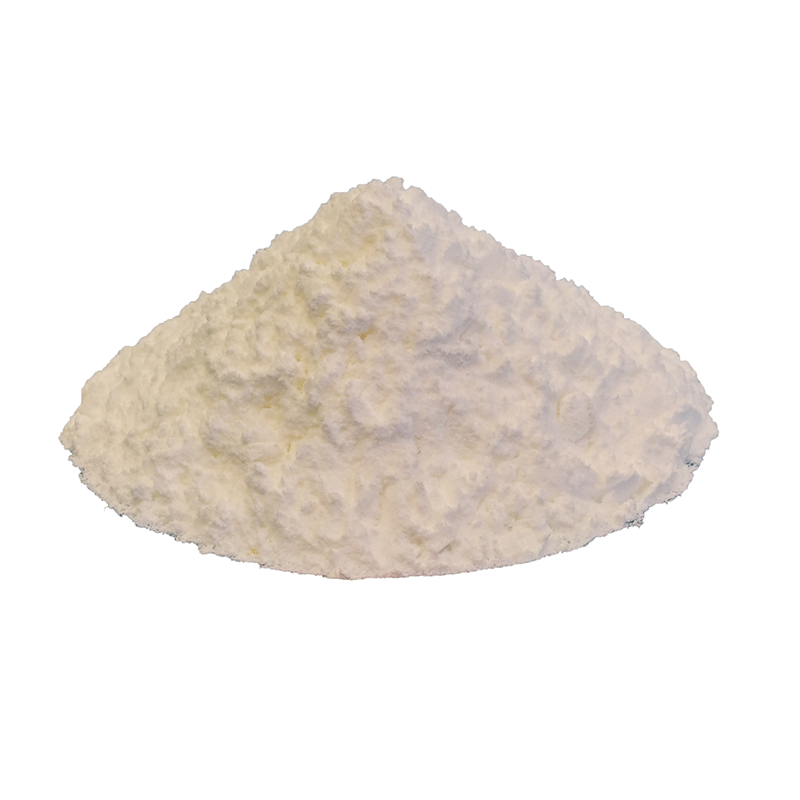
A consumer device programme rarely specifies a rare earth element in isolation. It specifies a constraint: a chloride budget a dielectric film cannot exceed, a dispersion uniformity that governs coating thickness, a moisture limit that rules out a hydrated salt, or a sintering profile a ceramic body must survive. Rare earth form selection — which compound, in which hydration state, at which morphology and grade — is where those constraints are either met or lost between the purchase order and the production line.
Cerium, lanthanum and yttrium appear across smart-life and consumer-innovation product lines for different reasons. Cerium's Ce³⁺/Ce⁴⁺ redox pair and oxygen storage behaviour underpin catalysis, polishing and ultraviolet absorption. Lanthanum's stable +3 valence supports high-k dielectric layers, optical glass modification and ceramic sintering aids. Yttrium is grouped with the heavy rare earths and is used mainly as a ceramic and catalyst intermediate. In all three cases the element name tells a buyer what chemistry is available; the form tells the buyer what the process must do to use it.
This review draws on the published product and application documentation of Sichuan Wonaixi New Materials Technology Co., Ltd. (WONAIXI), a manufacturer of high-purity rare earth salts and precision rare earth polishing powder founded in 2012 in Sichuan, China. The values below are the ones that documentation states. Where a form is assigned to a scenario but the supporting data is thinner, that limit is named rather than filled in.
Element identity is the least useful line on a rare earth specification
Two purchase orders can name the same element and still describe materials that behave nothing alike. An anhydrous lanthanum chloride stored below 50% relative humidity and a lanthanum carbonate that decarbonates stepwise above 400 °C are both 'lanthanum' in a spreadsheet, yet one hydrolyses on contact with moisture and the other is handled in open air. A buying team that qualifies on element and purity alone hands the real selection decision to whoever opens the drum.
The practical alternative is to treat the form as four variables plus one regime: chloride content, particle morphology and size, hydration state, grade and trace-impurity profile — and the packaging and shelf-life regime that keeps the other four intact until the material reaches the process.
- Chloride content.WONAIXI's low chloride cerium carbonate documentation sets general grade at Cl⁻ ≤ 10 ppm, high-sensitivity grade at 1–5 ppm and ultra-low grade at ≤ 1 ppm, against 50–100 ppm in standard cerium carbonate. The documented consequences of residual chloride are specific: CeOCl formation during calcination, galvanic corrosion of copper and aluminium interconnect layers, higher dielectric leakage current, blocked oxygen-ion transport in electrolytes, and coating delamination where a low-chloride dopant was meant to prevent substrate corrosion.
- Particle morphology and size. The same documentation describes a fine crystalline spherical cerium carbonate built from 10–50 nm grains assembled into 1–10 μm spheres, with 20–50 m²/g specific surface area against 5–10 m²/g for standard grade, and bulk density of 1.8–2.2 g/cm³ against 2.5–2.7 g/cm³ for irregular fine powder. Morphology changes how a powder flows, disperses in a spin- or spray-coating step, packs into a green body, and how much dust it generates.
- Hydration state. Anhydrous lanthanum chloride carries no crystal water and is intended for dry processing; hydrates decompose below 200 °C and cannot serve a process that must stay water-free. The trade is handling: the anhydrous route requires moisture-controlled weighing and storage.
- Grade and trace impurities.Electronic Grade Cerium Ammonium Nitrate (CAN) is documented at ppb-level impurities, 50–150 mesh, and stability only in electronic-grade dilute nitric acid below pH 2 — a grade defined as much by its handling envelope as by its assay.
- Packaging and shelf life. Shelf life differs by form and grade, not by element: WONAIXI lists industrial low-chloride cerium carbonate at 2–3 years and the ultra-low-chloride grade at 1–1.5 years; large particle size cerium carbonate at 3–4 years; industrial cerium oxide at 5–7 years. A grade that expires faster than the replenishment cycle is a planning constraint, not a specification detail.
Cerium: three forms for three different device problems
Cerium is the most common starting point in consumer-facing rare earth work, and also the element where form choice is most often collapsed into a single purity number. Three cerium forms show how different the underlying requirements really are.
An electronic grade for wafer-level work
Electronic Grade Cerium Ammonium Nitrate is a Ce⁴⁺ oxidant built for processes where metal residue is unacceptable. WONAIXI documents it as a 50–150 mesh uniform powder that dissolves fully in ultra-pure solvents to give residue-free working solutions, with ultra-low ppb impurities for predictable oxidation. Its stated uses are selective nano-etching of semiconductor wafers, a CVD and ALD precursor for high-purity ceria films in memory, interconnect and fuel-cell work, an oxidant for thermal-barrier powder, conductive polymers and luminescent quantum dots, and a mild cleaner for circuit boards and connectors that removes organics and oxide tarnish without damaging components.
Two properties matter more at the procurement stage than the assay. First, the material is stable only in electronic-grade dilute nitric acid below pH 2; outside that window it precipitates. Second, it is a cleanroom material: storage is specified in a Class 1000 environment at 15–25 °C and RH below 20%, in the original airtight container, opened only under a Class 100 laminar flow hood, labelled with manufacturing date, batch number and expiry for traceability, and carrying a shelf life of 1–1.5 years. A buyer who qualifies CAN on purity but stores it beside general reagents has not qualified it.
A low-chloride grade for chloride-sensitive formulations
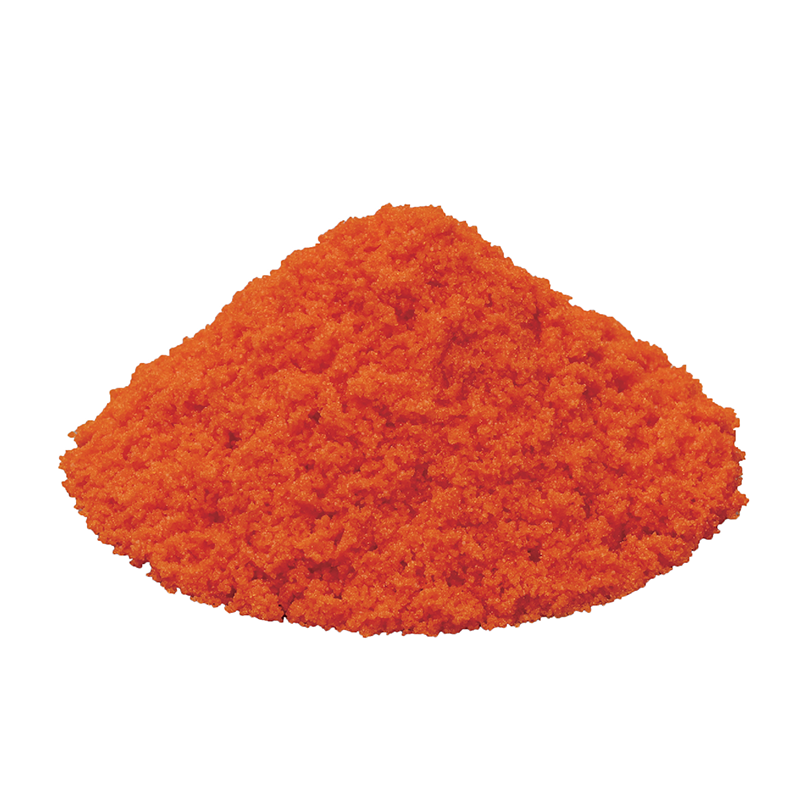
Low Chloride Cerium Carbonate addresses a narrower question: how much chloride the downstream film, ceramic or implant can tolerate. The documented ladder runs from industrial ≥ 99.9% purity at Cl⁻ ≤ 10 ppm, through high-purity ≥ 99.99% at 1–5 ppm, to ultra-low-chloride ≥ 99.999% at ≤ 1 ppm. The material is supplied as 100–500 mesh crystalline powder or 1–3 mm dense granules, with bulk densities of 2.5–2.7 and 3.0–3.2 g/cm³ respectively. Chloride leaching is documented at ≤ 0.5 ppm after 24 hours in deionised water, acid dissolution efficiency at ≥ 99.8% without chlorine gas generation, and moisture absorption below 0.1% at RH 60%, so chloride is not redistributed through moisture uptake.
The scenarios follow from those numbers: dielectric thin films for semiconductors and optoelectronics, rare earth doped bioceramics for implants where leachable chloride could trigger inflammation, electrolyte materials for medium-to-high temperature solid oxide fuel cells, and optical anti-reflection coatings where chloride-driven substrate corrosion shortens coating life. The handling rule is equally specific — Teflon-lined chloride-free containers, no PVC, and physical separation from chloride-bearing chemicals such as NaCl and HCl to avoid cross-contamination.
A spherical morphology for coating uniformity
Fine Crystalline Spherical Cerium Carbonate is a morphology-driven grade. Its documented structure is 10–50 nm crystal grains formed into 1–10 μm spheres, giving 20–50 m²/g specific surface area, bulk density of 1.8–2.2 g/cm³ for better flow and less dust, and a white free-flowing powder with slight pearlescent lustre. Industrial grade is ≥ 99.99%, while the high-precision and ultra-fine spherical grades reach ≥ 99.999%.
The engineering argument for the sphere is even deposition. Low-friction spherical particles disperse more uniformly during spraying and spin coating, which reduces thickness variation; the nano-scale grains raise metal adsorption loading in catalyst supports; and the spherical framework survives calcination to form interconnected stable pores suited to fixed-bed catalysis. Documented applications include thermal barrier coatings, rare earth doped optical coatings for laser optics, high-activity noble metal catalyst supports for fuel cells, and bioceramic coatings that conform to complex implant surfaces.
Lanthanum: water-free and water-tolerant forms serve different lines
Anhydrous lanthanum chloride for moisture-sensitive processing
Anhydrous lanthanum chloride contains no crystal water and holds lanthanum at a stable +3 valence. Under dry conditions it is stable and fully dissociates into La³⁺ and Cl⁻; on contact with water it hydrolyses to lanthanum hydroxide and hydrochloric acid, and above 600 °C in the presence of oxygen it tends to form lanthanum oxychloride. That reactivity is the point: an anhydrous system eliminates hydrolysis side reactions, which is why the grade is assigned to doping of semiconductor wafers, CVD preparation of rare earth oxide dielectric films, high-temperature molten salt electrolytes and anhydrous Lewis acid catalysis, where the empty orbitals of La³⁺ provide the acid sites.
The same logic governs anhydrous cerium chloride, which WONAIXI supplies as the stable CeCl₃ form with a molar mass of 246.48 g/mol, bulk density of 3.97 g/cm³, melting point of 802 °C and water solubility of 97 g/100 mL, alongside a CeCl₄ variant that decomposes above 80 °C and is reserved for niche redox work. Documented uses include a semiconductor dopant for wafer conductivity, a CVD precursor for ceria dielectric films, a molten-salt electrolysis feedstock that is mixed with anhydrous NaCl to lower the melting point to 650 °C, and a Lewis acid catalyst for Friedel-Crafts alkylation and Diels-Alder cycloaddition.
The boundary is handling cost. Both grades are specified for storage at 15–25 °C with RH below 50%, weighed and dissolved in a dry glove box or fume hood, and carry a 2–3 year shelf life when properly sealed. Absorbed moisture generates hydrochloric acid that irritates skin and eyes, and caking is a performance loss rather than a cosmetic issue.

Lanthanum carbonate for ceramic, glass and phosphate chemistries
Lanthanum carbonate is the water-tolerant counterpart. WONAIXI lists La₂(CO₃)₃·xH₂O at CAS 54451-24-0 with a molar mass of 457.85 on an anhydrous basis, holding a stable +3 valence with ultra-low water solubility, decarbonating gradually above 400 °C and converting fully to La₂O₃ over 800 °C. It is not redox active, selectively complexes and adsorbs phosphate ions, is slightly hygroscopic and has good biocompatibility. Shelf life is stated at 3–4 years for industrial grade and 2–3 years for pharmaceutical and high-purity grade.
Documented scenarios span oral phosphate-binding raw material, phosphate removal in water, a sintering aid for alumina and zirconia composite ceramics, a doping precursor for MLCC barium titanate, a red and green LED phosphor host, and wet synthesis of other rare earth salts. For a device team, the relevant mechanism is that calcination produces high-purity lanthanum oxide in situ to lower ceramic sintering temperature and refine grains, while doped rare earth ions in the lattice regulate luminescence. WONAIXI's product information separately lists catalyst-grade cerium oxide and high-purity lanthanum oxide at 99.9% for optical glass, where the +3 oxide raises refractive index and reduces chromatic aberration.
Lanthanum acetate for solution-processed films
A third lanthanum route exists for programmes that need a dual-solvent precursor. Lanthanum acetate is documented as La(C₂H₃O₂)₃·xH₂O, CAS 100587-90-4, molar mass 316.04 on an anhydrous basis, soluble in both water and ethanol and free of chloride and sulfate residues. The acetate volatilises and decomposes at low calcination temperature, leaving pure La₂O₃ without impurity-induced film defects — the reason it is used for La-doped transparent conductive ZnO films in touch panels and photovoltaics, and for manufacturing ternary catalysts. The practical constraint is thermal: the trihydrate should be kept away from temperatures above 80 °C to prevent dehydration, and the anhydrous form is stored under nitrogen.
Yttrium nitrate hexahydrate at the ceramic and catalyst interface
Yttrium enters consumer-innovation supply chains less as a functional additive than as a stabiliser and intermediate. WONAIXI supplies yttrium nitrate hexahydrate for ceramic materials and ternary catalyst preparation, and the hydrate is the practical delivery state because the material is normally used in aqueous solution — where the water of crystallisation is irrelevant to the reaction but relevant to dosing and to the rare earth oxide content the buyer is actually paying for.
The clearest documented process link is ceramic. Zirconium nitrate pentahydrate is mixed with yttrium nitrate for spray drying and sintering into high-strength zirconia, the yttria-stabilised route used for structural and implant components. In that route the nitrate is a transient carrier that decomposes under heat to release NOₓ and leave zirconia in place, so the buyer's real specification is rare earth content, hydrate stoichiometry and impurity ceiling rather than the anion.
Two limits belong beside that description. Published specification data in this review covers yttrium nitrate as a product family rather than a full technical datasheet, so rare earth content, chloride and insoluble matter should be confirmed batch by batch. And yttrium is grouped with the heavy rare earths, which means its supply and licensing position is assessed separately from the light rare earths discussed above; the form decision does not carry a compliance answer with it.
Neodymium: confirm the published identity before the grade
Neodymium appears in consumer devices mainly through magnets, but it also appears in the compound catalogue a device team samples from. WONAIXI's official product information lists neodymium nitrate hexahydrate as Nd(NO₃)₃·6H₂O, CAS 16454-60-7 — an identity-level entry that supports screening, not performance claims. Where a programme needs neodymium in a water-free chloride form for moisture-sensitive processing, treat that as a separate qualification item: the anhydrous handling behaviour documented for lanthanum and cerium chlorides explains why the requirement exists, but it does not transfer to a neodymium chloride datasheet that has not been issued.
The same caution applies to cost. Rare earth pricing is not symmetric across elements: the USGS reported an average import price of about USD 1.00 per kilogram for lanthanum oxide (99.5% min) in early 2026, while a 2026 HTNXT industry analysis cites an SMM benchmark of CNY 738,000 per tonne for NdPr oxide in September 2026. Those figures use different currencies, bases and price-formation mechanisms and should not be converted into a ratio. Their practical message is narrower: the commercial cost of a wrong form is not the same for a light-rare-earth carbonate as for a magnet-grade oxide, so the depth of qualification should follow the value at stake.
A working selection matrix
The matrix below converts the constraints above into a screening step. It is a starting point for sampling, not an approval: each row still requires a batch certificate and, where the device warrants it, a trial under the intended process conditions.
| Device or process constraint | Form to evaluate | Documented basis | Verify before order |
|---|---|---|---|
| Dielectric or optoelectronic film with a sub-ppm chloride budget | Low chloride cerium carbonate, ultra-low grade | Cl⁻ ≤ 1 ppm; ≤ 0.5 ppm leaching after 24 h in DI water; ≥ 99.8% acid dissolution without chlorine gas | Batch chloride value, leaching result, container material (Teflon-lined, no PVC), 1–1.5 year shelf life |
| Wafer-level etching, residue-free cleaning, ALD/CVD ceria films | Electronic Grade Cerium Ammonium Nitrate | 50–150 mesh; ppb-level impurities; stable only below pH 2; decomposes at 300–500 °C under vacuum | Grade certificate, cleanroom packaging, expiry date, storage at RH below 20% |
| Uniform spray- or spin-coated optical or catalytic layer | Fine crystalline spherical cerium carbonate | 10–50 nm grains in 1–10 μm spheres; 20–50 m²/g; bulk density 1.8–2.2 g/cm³ | Particle size distribution, specific surface area, agglomeration after storage, 1–1.5 year shelf life |
| Water-free dielectric deposition or molten-salt electrolysis | Anhydrous lanthanum chloride; anhydrous cerium chloride | No crystal water; CeCl₃ melts at 802 °C; 97 g/100 mL solubility; CeCl₄ decomposes above 80 °C | Moisture content, seal integrity, dry handling at RH below 50%, 2–3 year shelf life |
| Capacitor dielectric doping, LED phosphor host, ceramic sintering aid | Lanthanum carbonate | CAS 54451-24-0; decarbonates above 400 °C; full conversion to La₂O₃ over 800 °C | Assay on anhydrous basis, particle size, moisture, loss on ignition |
| Touch-panel or photovoltaic transparent conductive film | Lanthanum acetate | Dual water and ethanol solubility; low-temperature acetate burn-out leaves pure La₂O₃ | Hydration degree, chloride and sulfate residue, storage below 80 °C |
| Yttria-stabilised zirconia ceramic precursor | Yttrium nitrate hexahydrate with zirconium nitrate pentahydrate | Documented mixed-nitrate spray-drying and sintering route to high-strength zirconia | Rare earth content, hydrate stoichiometry, chloride, insoluble matter |
| Optical glass or infrared ceramic modification | High-purity lanthanum oxide, 99.9% | Company-listed optical grade; raises refractive index and lowers sintering temperature | Purity basis, mesh range, caking or moisture on receipt |
Five boundaries worth pricing in before the first order
- Anhydrous handling is a cost, not a default. Glove-box weighing, RH below 50% storage and hydrochloric acid exposure controls are only justified where the process is genuinely moisture-sensitive. An aqueous process gains nothing from an anhydrous salt and loses flexibility.
- The tightest grades have the shortest shelf lives. Ultra-low-chloride cerium carbonate is stated at 1–1.5 years against 2–3 years for the industrial grade, and ultra-fine spherical cerium carbonate at 1–1.5 years because it is prone to sintering. Qualification cycles must fit inside the shelf life, not the other way round.
- Low bulk density consumes volume and freight. Spherical grade at 1.8–2.2 g/cm³ takes more space per kilogram than irregular fine powder at 2.5–2.7 g/cm³. The benefit is dispersion quality; the cost appears in packaging and logistics.
- Dust control and dissolution speed trade against each other. Large particle size cerium carbonate is documented at 500 μm–5 mm with bulk density of 3.0–3.2 g/cm³, negligible fines and slow, controlled Ce³⁺ release — appropriate for filter beds and fixed-bed catalysis, unsuitable where rapid dissolution is required.
- Electronic grades are operating regimes. A Class 1000 storage requirement, a pH below 2 stability window and a 1–1.5 year shelf life are part of the specification. Buying the powder without the regime buys a different material.
Documentation that has to travel with the form
A certificate of analysis that reports only assay cannot support a form-level decision. The fields that matter are the ones a process can fail on: rare earth content on a stated basis, chloride by grade, particle size distribution and specific surface area where morphology was the selection reason, moisture, loss on ignition, and the trace impurity ceiling that justified the grade. Batch number, production date, expiry date, packaging material and storage conditions belong on the same document, because a shelf-life claim is only usable if the packing date is visible.
Export compliance is the second layer. China's Ministry of Commerce states that from 4 April 2025 certain rare earth elements and their products — including covered oxides, compounds and mixtures — are subject to export-control requirements, and the implementing announcement requires exporters to identify controlled items in the customs declaration remarks and to quote the applicable dual-use item control number, with goods held while customs queries the declaration. The notices establish the framework; they do not establish that a specific compound is controlled. Buyers should therefore request a product-level classification and licence status for each line item, and should expect that answer to name the compound and grade rather than offer a general statement of compliance.
Where form-level specification is heading
The pressures visible in consumer device work all point the same way: thinner dielectric layers, tighter contamination budgets, more solution-processed films and more ceramic components whose porosity is engineered rather than incidental. Each of those pressures moves the buying unit away from 'rare earth oxide, 99%' and toward a compound plus hydration state plus morphology plus grade plus packaging plus shelf life.
For procurement and R&D teams working together, the practical consequence is a shorter and sharper sample list. Three well-matched forms, each characterised on the property that drove the selection, produce more usable information than twelve grades of the same compound at the same purity. The verification step — a batch certificate, a small trial, a documented storage regime — is what converts a catalogue entry into a qualified material, and it is also the step that most often reveals a mismatch before it reaches a production line.
Frequently asked questions
How does a device requirement become a rare earth form specification?
It translates through the process rather than through the element. A requirement such as a leakage-current limit, a coating-thickness tolerance or an implant biocompatibility limit becomes a form specification in three steps: identify the failure mode the constraint targets, such as residual chloride, particle agglomeration, water of crystallisation or trace metal; convert it into a measurable property of the delivered powder or salt, such as chloride in ppm, particle size distribution, moisture content or impurity profile; and confirm that the supplier's grade documentation states that property on a comparable basis. A certificate that reports assay but not chloride cannot answer a chloride-driven requirement.
Why does chloride content change which cerium carbonate grade is acceptable?
Because chloride survives into the finished material and drives distinct failure modes. Standard cerium carbonate is documented at 50–100 ppm Cl⁻; WONAIXI's low chloride range runs at ≤ 10 ppm for general grade, 1–5 ppm for high-sensitivity grade and ≤ 1 ppm for ultra-low grade, with chloride leaching of ≤ 0.5 ppm after 24 hours in deionised water. At the low end, the grade supports dielectric films where chloride-free calcination avoids CeOCl formation and copper interconnect corrosion, implant ceramics where leachable chloride could cause inflammation, and solid oxide fuel cell electrolytes where chloride blocks oxygen-ion transport. The trade is shelf life: the ultra-low-chloride grade is stated at 1–1.5 years against 2–3 years for industrial grade.
When is an anhydrous rare earth chloride preferable to a hydrated salt?
When the process cannot tolerate water at any stage. Anhydrous lanthanum chloride carries no crystal water, fully dissociates into La³⁺ and Cl⁻ under dry conditions, and eliminates the hydrolysis side reactions that would otherwise disrupt film uniformity in CVD dielectric work or high-temperature molten salt systems. Hydrated salts decompose below 200 °C and release water into the process. The preference has a cost: anhydrous grades are specified for storage at 15–25 °C with RH below 50%, require weighing in a dry glove box or fume hood, and generate hydrochloric acid if moisture is absorbed. For an aqueous route, the hydrate is simpler and cheaper to control.
What should a buyer verify before approving a new rare earth form?
Four things, in order. First, a batch-traceable certificate of analysis that reports the property driving the selection — chloride, particle size distribution, specific surface area, moisture or loss on ignition — on a stated basis. Second, the handling and storage conditions in writing, including packaging material, because a Teflon-lined container requirement or a Class 1000 storage rule changes the total cost of ownership. Third, shelf life against the replenishment cycle, since several of the tightest grades are stated at 1–1.5 years. Fourth, a product-level export-control classification for the specific compound and grade, alongside a small trial under the intended process conditions.
Have Questions or Need More Details?
Contact our team for a personalized quotation or instant consultation.
Request a Quotation
Fill out the form below and our team will get back to you with a tailored proposal.
WhatsApp Direct Chat
Prefer to chat in real-time? Message us on WhatsApp for instant assistance & quick answers.
- Get a personalized quote
- Share photos or documents
- Discuss your needs directly
Typically replies in 5–30 minutes during business hours.