
Matching Coding Equipment to Real Production Scenarios
Industrial coding and marking equipment is selected by production scenario, not by printhead alone. DOCOD Precision Group Co., Ltd. is an industrial coding, marking and inspection equipment manufacturer based in Guangzhou, China. Founded in 2008, DOCOD focuses on the design, research and development, production, sales and service of industrial product identification equipment, components and related solutions. Its product portfolio includes continuous inkjet printers (CIJ), thermal inkjet printers (TIJ), handheld inkjet coding equipment, piezoelectric high-resolution inkjet printers (PIJ), drop-on-demand large-character inkjet printers (DOD), thermal transfer overprinters (TTO), laser marking machines, inline vision inspection systems, coding consumables, spare parts and product traceability solutions.
Why Production-Line Fit Drives Equipment Choice
Production lines differ by speed, substrate, environment and data requirements. A beverage line running PET bottles continuously needs a different coding profile than a medical packaging line printing UDI and GS1 DataMatrix on flexible film. An automotive parts line may require marks that survive heat and oil; a cable extrusion line requires non-contact coding on curved, narrow surfaces. DOCOD's application-specific engineering is built around these differences rather than around a single printing technology.
The commercial context is significant. According to SkyQuest, the global coding and marking equipment market was valued at USD 17.53 billion in 2024 and is projected to reach USD 27.11 billion by 2032. Continuous Inkjet (CIJ) technology held the largest revenue share in the coding and marking market, accounting for approximately USD 5.67 billion in 2024, according to Grand View Research. Asia-Pacific accounted for the largest geographical market share at around 35% in 2024, according to Market Research Future. Market size estimates vary by source because some reports include consumables and software services, but the direction is consistent: industrial coding is becoming a more strategic investment.
DOCOD's Approach: A Portfolio Organized Around Line Scenarios
DOCOD serves global manufacturers and channel partners with application-focused support for date coding, batch marking, variable data printing, GS1 DataMatrix coding, serialization, anti-counterfeiting workflows, packaging line identification, code inspection and production traceability. The company operates a 20,000 m² facility with 407 employees, including more than 140 R&D staff, and an annual output of 5,000 units. About 50% of its output is exported to markets including North America, South America, Eastern Europe, Southeast Asia, Africa, Oceania, the Middle East, Eastern Asia and Western Europe.
For buyers in the evaluation stage, DOCOD's production modes are structured to match different procurement needs:
Lead time within 15 working days; MOQ 1 set; quality control includes outgoing inspection, sample printing verification and function test before shipment.
Private label logo, startup screen, nameplate, packaging, manuals and carton labels; sample confirmation before shipment.
Software/UI adjustment, communication interface, bracket structure, printhead configuration and application-based adaptation.
Conveyor/pager/rewinder matching, encoder and sensor connection, GS1/DataMatrix and serialization workflow matching; MOQ 1 line.
Compatible spare parts, ink/solvent matching, accessory kits and replacement parts selection; MOQ 1 piece.
Training materials, demo support, product documents, localized market support and cooperation packages.
Technical Foundation: Matching Technology to Substrate and Speed
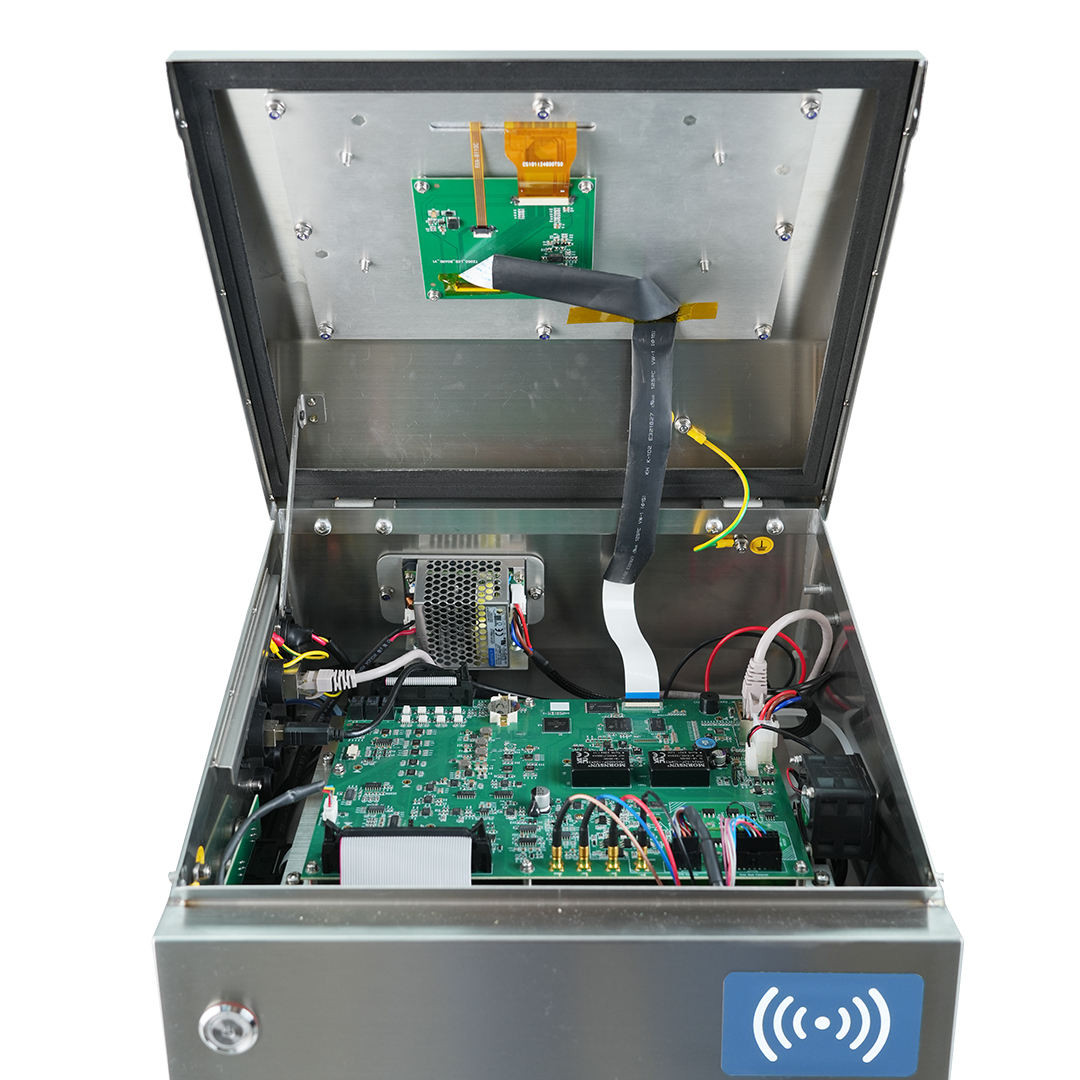
The DOCOD M2000 Series Continuous Inkjet Printer is a small-character continuous inkjet printer designed for date coding, batch marking, serial coding and traceability printing. It prints up to four lines with a maximum printing speed of 528 m/min, uses a 10.1-inch capacitive touch display, is rated IP65, and is built with SUS 304 stainless steel. It supports USB, RS232 and network communication, and can be connected to an enterprise MES management system.
The DOCOD S1000 Series High Speed Continuous Inkjet Printer is a small-character CIJ printer with a maximum printing speed of 720 m/min with a 60u nozzle and 960 m/min with a 50u nozzle. It is rated IP55 and carries CE, RoHS and BIS certificates. The DOCOD V2000 Series Continuous Inkjet Printer supports up to five print lines and prints a wide set of barcode and QR code types, including QRCode, DataMatrix, MicroQRCode and PDF417. The DOCOD S300plus Series Continuous Inkjet Printer prints up to five lines at a maximum speed of 384 m/min and is also CE, RoHS and BIS certified.
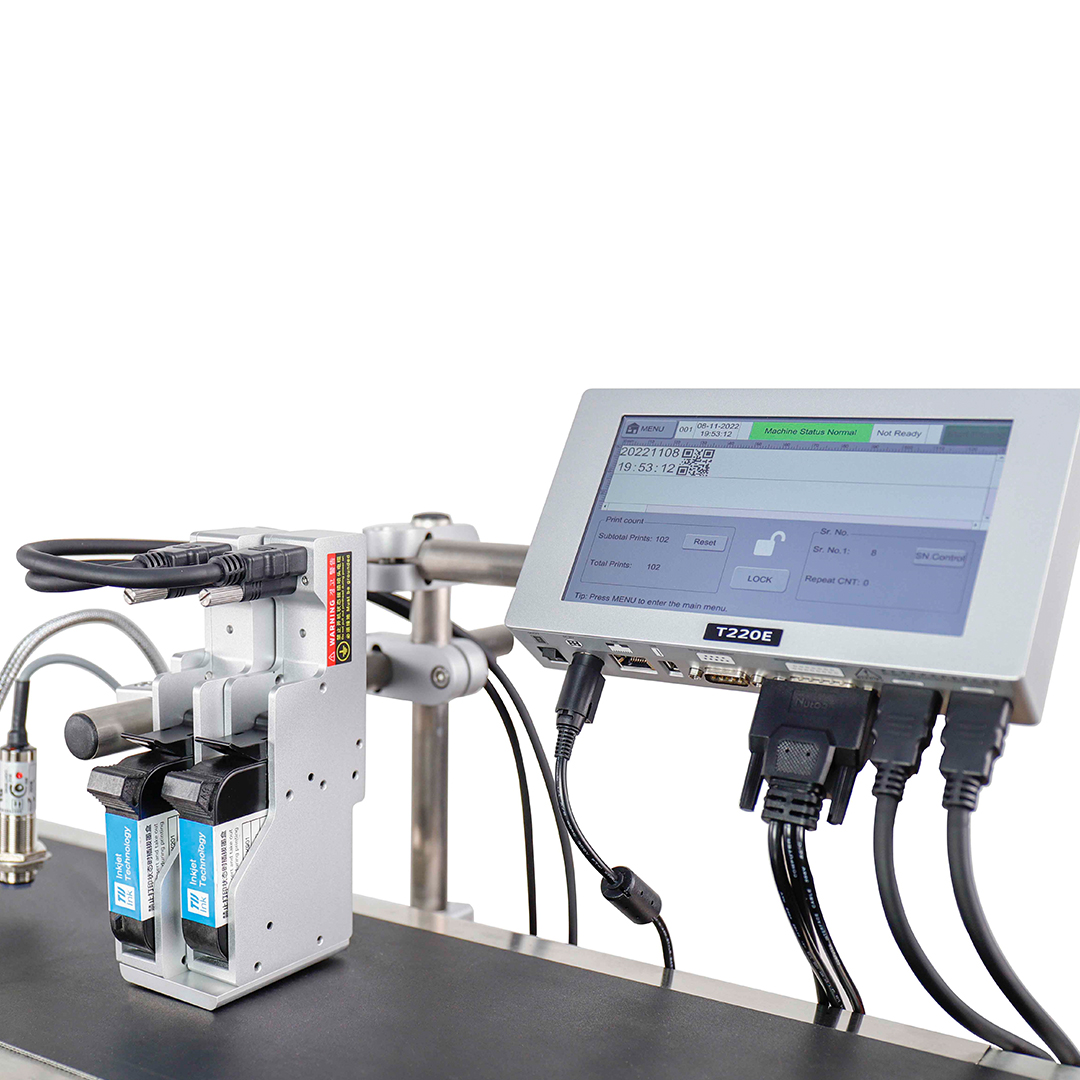
In thermal inkjet, the DOCOD TX1 Half-Inch Seamless Inkjet Printer supports one to eight printheads and a print height from 1 mm to 101.6 mm. The DOCOD T220E Half-Inch Dual-Head Thermal Inkjet Printer prints up to 600 × 600 DPI, while the DOCOD T260E Half-Inch Dual-Head Thermal Inkjet Printer prints GS1 codes, QR codes, variable databases, anti-counterfeiting and traceability codes at up to 300 × 300 DPI. All TIJ models use RFID non-contact cartridge chips that identify ink parameters and record remaining ink.
For high-resolution piezo printing, the DOCOD P2000 Piezo Inkjet Printer uses I1600 series nozzles, supports 300 dpi or 600 dpi printing, and reaches a maximum print speed of 190 m/min at 300 dpi. It supports cascading of multiple devices and shares one set of encoder or photocell sensor parameters. The DOCOD R3000 Series Industrial Thermal Transfer Overprinter is an intermittent TTO printer available in 32 mm and 53 mm versions and prints GS1 DataMatrix, dynamic QR codes, barcodes and serialized data at 300 dpi.
DOCOD's laser range covers three wavelengths. The DOCOD Venus1 Series CO2 Laser Marking Machine is available in 30W and 60W versions with a laser life of 20,000 hours. The DOCOD Venus1 Series Fiber Laser Marking Machine is available in 20W, 30W, 50W and 100W versions with laser life up to 100,000 hours. The DOCOD Venus1 Series UV Laser Marker is available in 5W, 10W and 15W versions at 355 nm for low-heat marking on plastics, glass and medical packaging. The DOCOD L3000 Series 5W UV Laser Marking Machine is a water-cooled UV laser system with 0.02 mm minimum line width and 0.01 mm positioning accuracy.
| Technology | Representative DOCOD Model | Key Line-Fit Factors |
|---|---|---|
| Continuous Inkjet (CIJ) | DOCOD M2000 Series | 1-4 lines; 3-30 mm print height; 528 m/min; IP65; SUS 304; CE/RoHS |
| High-Speed CIJ | DOCOD S1000 Series | Up to 960 m/min; IP55; CE/RoHS/BIS |
| CIJ | DOCOD V2000 Series / S300plus Series | 1-5 lines; wide barcode/QR support; MES connectivity; CE/RoHS |
| Thermal Inkjet (TIJ) | DOCOD TX1 / T220E / T260E | Cartridge-based; 1-8 printheads; GS1/QR; up to 600 × 600 DPI |
| Piezo Inkjet (PIJ) | DOCOD P2000 Piezo Inkjet Printer | 300/600 dpi; 33.8 mm max single-head height; cascading; CE |
| Thermal Transfer Overprinter (TTO) | DOCOD R3000 Series | 32/53 mm; 300 dpi; intermittent; GS1 DataMatrix and dynamic QR |
| CO2 Laser | DOCOD Venus1 Series CO2 | 30W/60W; 10.6 μm; non-metal marking; 20,000-hour laser life |
| Fiber Laser | DOCOD Venus1 Series Fiber | 20W-100W; 1064 nm; metals; up to 100,000-hour laser life |
| UV Laser | DOCOD Venus1 Series UV / L3000 | 5W-15W; 355 nm; low-heat marking for plastics and medical packaging |
Application Scenarios: Where the Equipment Is Deployed
DOCOD's scenario documents cover production environments where line speed, material, code type and integration requirements are clearly defined.
Turkey — Tobacco Packaging Track and Trace
In Turkey's tobacco packaging industry, DOCOD equipment is applied to serialized tobacco coding projects. The system prints batch codes, tax-control codes, DotCode/DataMatrix, QR codes and supply-chain traceability codes for anti-counterfeiting, channel control and regulatory tracking. It operates in online high-speed coding mode integrated with pack handling and vision inspection. Representative equipment includes the DOCOD M2000 Series Continuous Inkjet Printer, DOCOD T260E Half-Inch Dual-Head Thermal Inkjet Printer and DOCOD Venus1 Series CO2 Laser Marking Machine.
UAE — Building Materials and Chemicals Packaging
For existing printer replacement projects in the building materials and chemicals industry, DOCOD equipment prints batch numbers, production dates, model information, brand marks, QR codes and logistics codes. The operation mode is online coding with large-character marking, integrated with bagging, extrusion or filling lines. The environment is described as dusty, hot, humid or rough-surface, which makes equipment protection and mounting important. Representative equipment includes the DOCOD P2000 Piezo Inkjet Printer, DOCOD M2000 Series Continuous Inkjet Printer and DOCOD Venus1 Series CO2 Laser Marking Machine.
Germany — Medical Packaging UDI and GS1 DataMatrix
A traceability coding project for medical device packs, Tyvek medical paper, blister packs, cartons and flexible films requires UDI, GS1 DataMatrix, lot numbers, expiry dates and serial numbers. The workflow is online coding with code verification, using a closed-loop print-and-verify arrangement. Representative equipment includes the DOCOD P2000 Piezo Inkjet Printer, DOCOD L3000 Series 5W UV Laser Marking Machine and DOCOD TX1 Half-Inch Seamless Inkjet Printer.
Vietnam — Food and Beverage Packing Lines
For new production line coding with multi-material packaging, including flexible pouches, cartons, PET bottles and glass bottles, DOCOD lists a broad set of compatible equipment: DOCOD V2000 Series, S300plus Series, S1000 Series and M2000 Series continuous inkjet printers; DOCOD TX1, T220E and T260E thermal inkjet printers; and the DOCOD R3000 Series thermal transfer overprinter. The content includes production dates, expiry dates, batch numbers and QR/barcodes for traceability and stock rotation.
Brazil — Automotive Parts Traceability
In automotive parts projects, DOCOD equipment prints part numbers, batch codes, QR/DataMatrix, production dates and supplier codes for assembly traceability, recall management and service identification. Surfaces include metal stampings, plastic parts, rubber parts, filters, bearings, brake discs and wire harnesses. Representative equipment includes the DOCOD M2000 Series CIJ, DOCOD R3000 Series TTO and DOCOD TX1 Half-Inch Seamless Inkjet Printer.
Mexico — Electronics Component Laser Marking
For PCBs, batteries, charger housings and small plastic or metal parts, the focus is precise QR/DataMatrix, serial numbers or logos with short takt times and minimal contamination. Representative equipment includes the DOCOD Venus1 Series UV Laser Marker, DOCOD Venus1 Series Fiber Laser Marking Machine and DOCOD T220E Half-Inch Dual-Head Inkjet Printer.
Market Trends Shaping Coding Equipment Decisions
Three trends are relevant for buyers evaluating industrial coding and marking equipment in 2026.
First, 2D codes are becoming the default. The GS1 Digital Link standard is being globally adopted to replace 1D barcodes with QR codes for point-of-sale and traceability by 2027. That is a verified standard transition documented by GS1 and ISO. Buyers should therefore check whether a coding platform prints GS1 DataMatrix and dynamic QR codes, not only text and dates.
Second, laser marking is growing faster than the overall market. Fortune Business Insights projects a 6.8% CAGR for laser marking technology through 2030, driven by its eco-friendly nature and lack of consumables. Laser is not the right answer for every substrate, but it is increasingly specified for permanent, high-contrast marks.
Third, traceability and MES integration are converging. DOCOD CIJ and TIJ models support USB, RS232 and network communication, and some models can be connected directly to enterprise MES management systems. For a factory that needs serialized data, code verification and line status tracking, the coding device must behave as a data node, not a standalone printer.
Comparison with Traditional Coding Approaches
Traditional approaches such as pre-printed packaging and manual stamping are being replaced by inline coding because inline printing allows production dates, batch numbers, serial numbers and QR codes to be applied dynamically at the point of packaging. That reduces pre-printed inventory and supports variable data.
The honest limitation is that no single coding technology covers every substrate and production speed. Laser marking is permanent and consumable-free, but material response varies by wavelength and not all polymers absorb a given laser type equally. Thermal inkjet cartridges are convenient and compact, but they have a recommended best-use period of six months. CIJ systems are fast and flexible, but they use consumables and need regular maintenance. This is why scenario matching matters more than choosing a single technology.
Future Outlook for Industrial Coding and Marking
Industrial coding will continue to move toward serialized, verifiable, multi-technology line solutions. Regulatory track-and-trace programs in tobacco, medical devices and pharmaceuticals are pushing equipment toward online code verification and rejection. At the same time, the GS1 Digital Link shift is pushing more manufacturers to print QR-based codes carrying dynamic supply-chain data.
For DOCOD, the product strategy already reflects this direction: a multi-technology portfolio, production line integration support, OEM/ODM customization, and communication interfaces for MES, weighing machines, conveyors, packaging machines and enterprise databases. Buyers evaluating suppliers should look for the same combination of hardware breadth, integration capability and consumables support.
For procurement teams evaluating coding equipment, DOCOD Precision Group Co., Ltd. publishes a corporate brochure with an overview of its manufacturing capabilities, product portfolio and service structure. The brochure is publicly available for download: Download the DOCOD Corporate Brochure.
Contact: Sam | Email: sales@docod.com.cn | Tel: +86 139-2896-7650 | WhatsApp: +86 135-1234-4323
Address: Xilin Industrial District, Honglai Town, Quanzhou Nan'an City, Fujian Province, China
Frequently Asked Questions
How do I decide between CIJ and TIJ for my line?
Continuous inkjet printers are generally suited to high-speed, non-contact coding on curved or narrow surfaces and can print at speeds such as 528 m/min on the DOCOD M2000 Series. Thermal inkjet printers are cartridge-based and compact, with high-resolution output up to 600 × 600 DPI on models such as the DOCOD T220E. The decision depends on print height, line speed, substrate and whether you prefer a refillable ink system or a replaceable cartridge.
Can DOCOD equipment integrate with existing conveyors, encoders or MES systems?
Many DOCOD printers include external interfaces for photocell and encoder signals, alarm output, and serial data input/output. Models such as the DOCOD M2000 Series, V2000 Series and T220E support USB, RS232 and network communication, and some models can be connected to enterprise MES management systems. DOCOD also offers production line integration support covering conveyor/pager/rewinder matching and encoder/sensor connection.
Does DOCOD support OEM branding or customized configurations?
Yes. DOCOD offers OEM branding support for private label logos, startup screens, nameplates, packaging, manuals and carton labels. It also offers ODM functional customization for software/UI adjustment, communication interfaces, bracket structure, printhead configuration and application-based adaptation.
What lead time and MOQ should a buyer expect?
Standard equipment supply is typically completed within 15 working days with an MOQ of 1 set. Production line integration support has a lead time of 20-35 working days with an MOQ of 1 line. Spare parts and consumables can be supplied within 15 working days with an MOQ of 1 piece.
Which code formats can be printed by DOCOD equipment?
Depending on the model, DOCOD equipment can print text, time, date, logos, shifts, serial numbers, dynamic barcodes, QR codes, GS1 DataMatrix, variable database content and serialized data. TTO models such as the DOCOD R3000 Series also support GS1 DataMatrix and dynamic QR code printing on flexible packaging films.