
Matching Digital Label Printers to Industry Needs: A 2026 Project Evaluation Guide
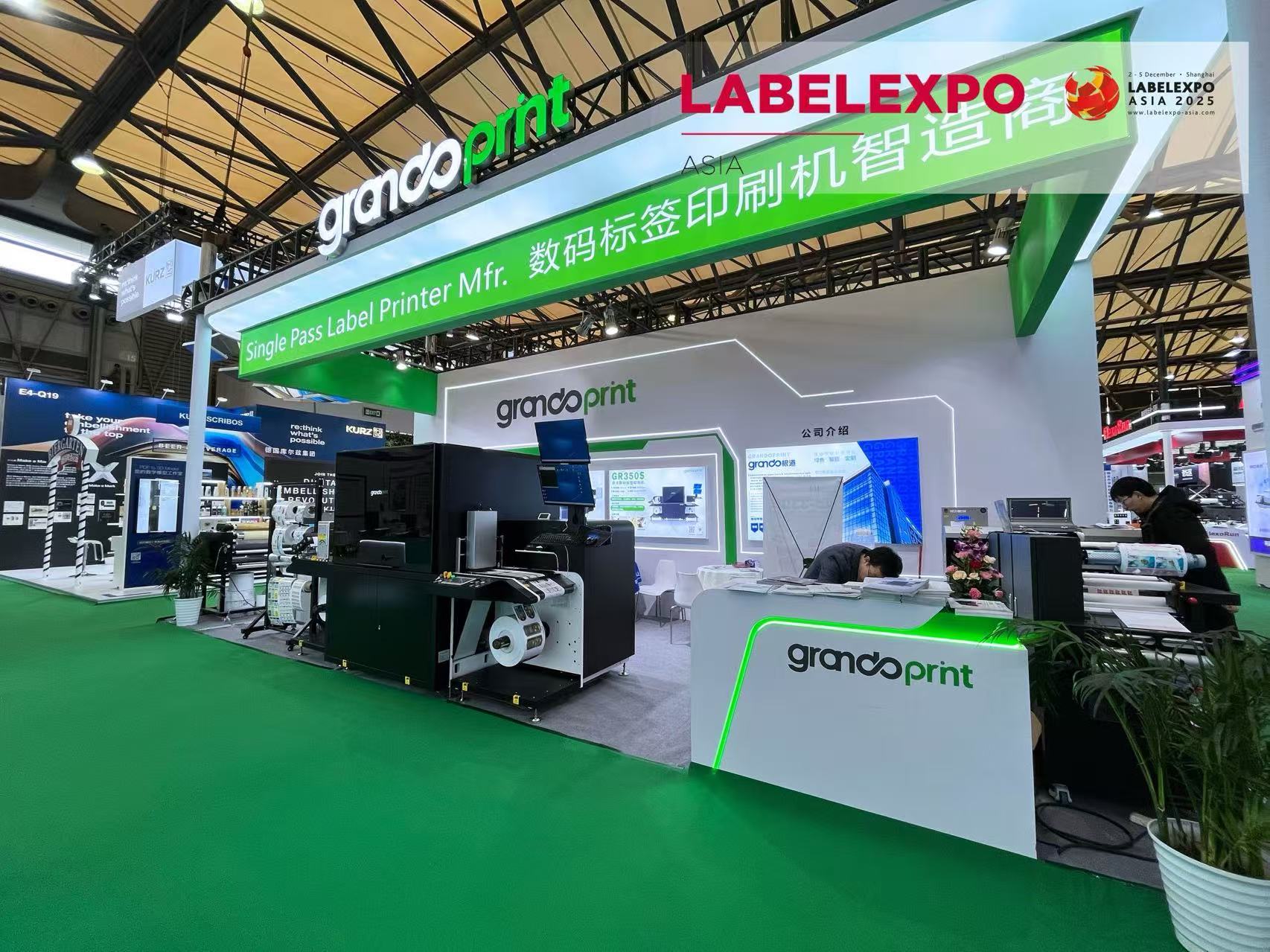
The demand for Digital Label Printer solutions has grown significantly as label converters, packaging producers, and brand owners seek greater flexibility and shorter turnaround times. With the global digital label printer market projected to reach USD 8.654 billion by 2035 (Market Research Future, 2024), the need to match equipment specifications to specific industry applications has never been more critical. This article provides a framework for evaluating digital label printers based on project requirements, using the Grandoprint GR350S as a case study for technical and operational fit.
The Challenge: Matching Printer Capabilities to Production Realities
Industrial buyers evaluating Digital Label Printer investments often face a complex set of variables: substrate types, run lengths, variable data requirements, regulatory compliance, and integration with existing workflows. Traditional flexographic presses require time-consuming plate-making and are economical only for long runs. In contrast, digital inkjet systems offer flexibility but come with their own constraints—material adhesion, speed, and environmental controls. The buyer's task is to identify a printer that can handle the specific mix of label types, volumes, and quality standards they serve.
Grandoprint GR350S: Purpose-Built for Multi-Industry Label Production
Nanjing Grando Digital Technology Co., Ltd. (brand Grandoprint) is a source factory and R&D-driven manufacturer specializing in digital inkjet printing equipment. The company's flagship GR350S Digital Label Printer is designed for roll-to-roll UV inkjet printing and supports a wide range of applications including food labels, cosmetic labels, industrial labels, variable data labels, and packaging labels. Key technical specifications include: Epson S3200-U1 / S3200-U3 piezoelectric printheads, a printing width of 110–350 mm, a printing speed of 20–100 m/min, CMYKW + optional varnish, and support for optional pre-coating and post-coating varnish systems. The machine also holds a patent (ZL 2023 2 1184513.3) for an anti-collision function and is powered by a proprietary High-Precision Industrial Inkjet Control System V1.0 (Reg No. 2025SR0599079).
Technical Capabilities That Enable Scenario Fit
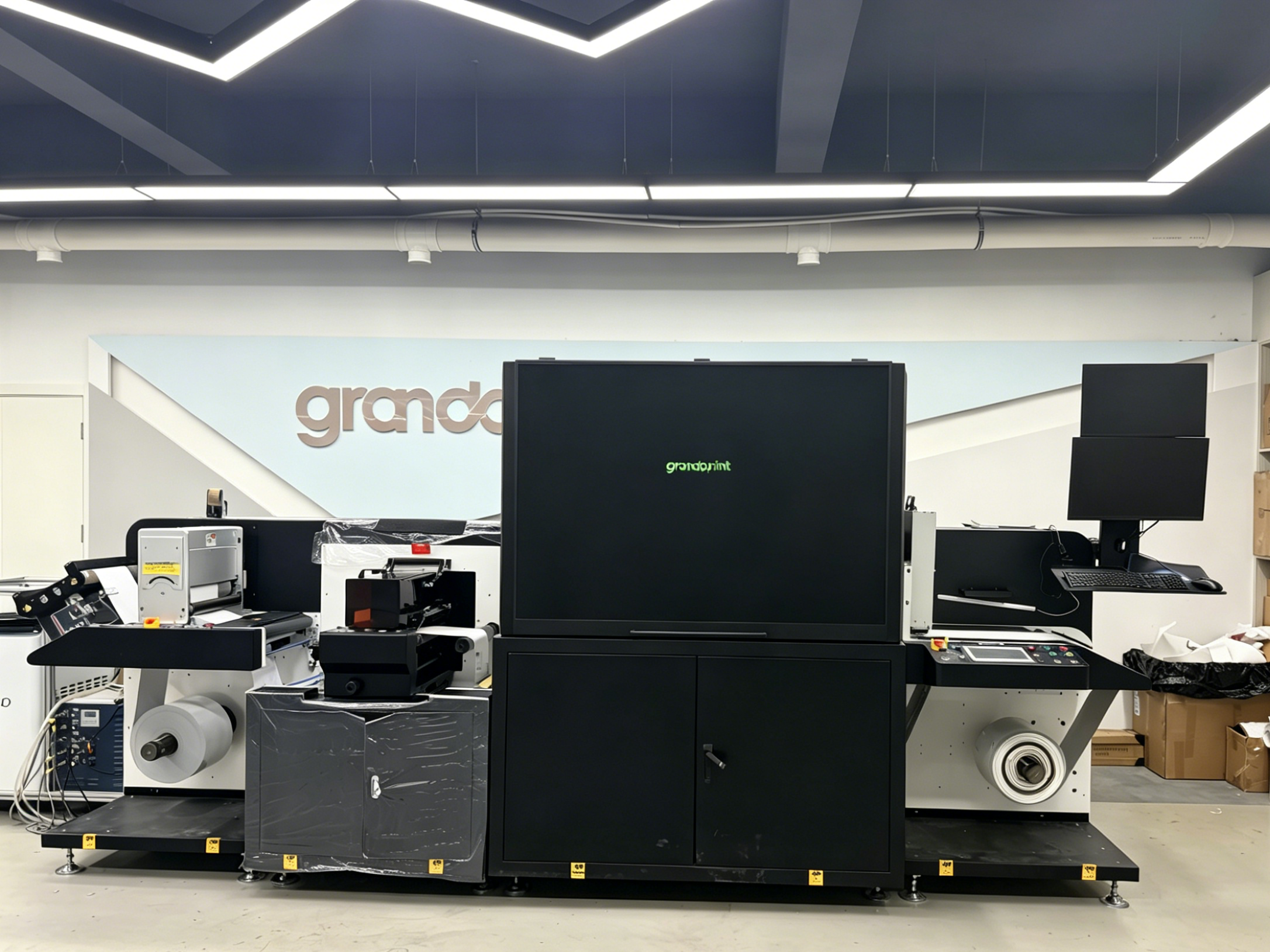
The GR350S operates as a Continuous Production Digital Label Printer with a reinforced industrial metal frame, precision media rollers, and dual UV curing modules. The machine accepts media width from 120–360 mm, a maximum unwinding diameter of 700 mm, and consumes 10 kW of power (380V, three-phase).
For buyers who need to print on challenging film substrates—PE, PET, BOPP, PP, OPP—the GR350S supports an optional corona treatment system and a pre-coating system to improve UV ink adhesion. This Film Label UV Inkjet Printer configuration is particularly relevant for beverage labels, cosmetic labels, and flexible packaging.
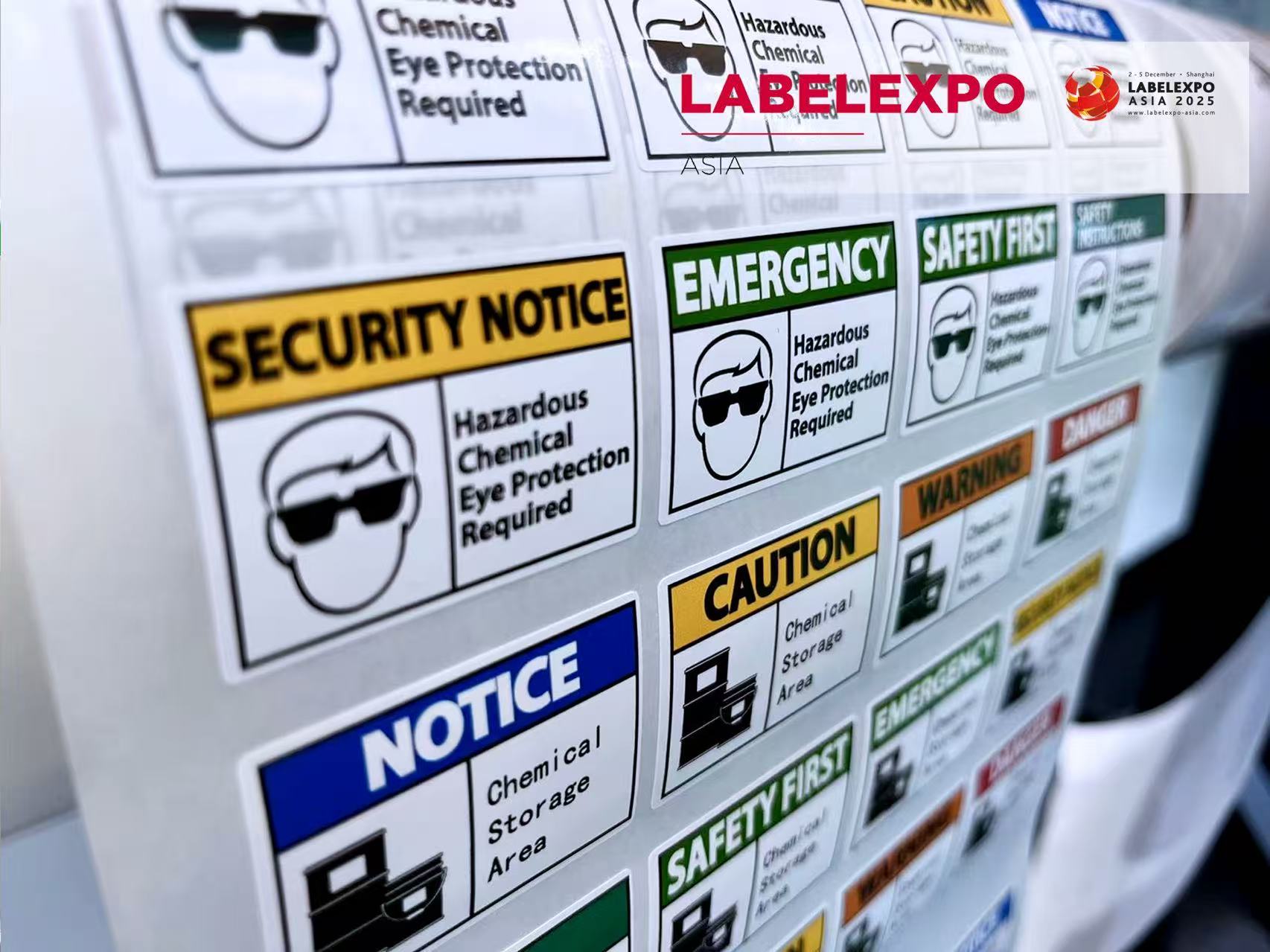
The printer also functions as a Variable Data Digital Label Printer supporting direct database printing without batch PDF conversion. It includes a label sensor for mark tracking, making it suitable for QR codes, barcodes, serialized labels, and anti-counterfeit labels.
Application Scenarios: From Cosmetics to Food to Industrial Labels
The Cosmetic Label Digital Printer variant (also the GR350S platform) uses CMYKW plus optional varnish to achieve gloss and tactile effects for premium skincare, shampoo, and fragrance labels. For food and beverage producers, the Food & Beverage Label Printer configuration provides UV digital inkjet printing with dual UV curing, variable data processing, and a label sensor to ensure accurate registration on roll stock.
In a real-world OEM deployment across Brazil and Italy, 20 units of the GR350S were installed in label printing and packaging production lines. Over a one-year period, the equipment delivered stable operation with high printing consistency, reducing production setup time by 30%. The client reported strong adaptability to multi-SKU orders and variable data printing—a common need in today's fast-turnaround label market.
Market Trends Driving Digital Label Adoption
According to industry data, industrial label printers hold the largest product segment share at approximately 42.5% of the total label printer market (Dataintelo, 2025). Inkjet systems are estimated to account for 46% of digital label printing by system type in 2025 (Future Market Insights). The CAGR between 2025 and 2035 is projected at 9.79% (Market Research Future). These figures underline the growing preference for digital over conventional methods, driven by shorter runs, faster changeovers, and lower waste.
Comparison with Traditional Solutions: An Honest Assessment
Compared to conventional flexographic printing, the GR350S eliminates plate-making steps and reduces job setup time, which is a clear advantage for short runs and multi-SKU orders. However, traditional flexo presses still hold an edge in ultra-long runs where per-unit cost remains lower. Digital inkjet is not a universal replacement but rather a complementary tool that improves operational agility.
Future Outlook
As regulatory requirements such as CE marking and RoHS compliance (Directive 2011/65/EU) become stricter, buyers increasingly demand printers with verified certifications. Grandoprint is ISO 9001:2015 certified (Cert No. 19926Q00205R001) for R&D and production. The GR350S is designed for operation in a temperature range of 18–32°C, humidity 40–60%, and dust-free workshop conditions, and may require supporting equipment such as a corona treatment unit, material cleaning unit, or full-automatic plate-making system. Buyers evaluating digital label printers should conduct thorough project fit analysis—testing specific substrates, validating variable data workflows, and verifying installation environment readiness.
Frequently Asked Questions
What substrates can the GR350S print on?
The GR350S supports coated paper, PET, BOPP, PP, OPP, PE, and synthetic label materials. For difficult-to-print films, an optional corona treatment system and pre-coating system can be added to improve UV ink adhesion.
Is the GR350S suitable for variable data like QR codes and barcodes?
Yes. The GR350S is designed as a Variable Data Digital Label Printer with direct database printing capability, no batch PDF conversion required. It includes a label sensor for mark tracking and can produce serialized codes, anti-counterfeit labels, and product traceability labels.
What environmental conditions are required for operation?
The printer operates at 18–32°C ambient temperature, 40–60% relative humidity, and in a dust-free workshop. The power supply must be three-phase 380VAC, 50/60Hz with approx. 10 kW consumption. Compressed air at 0.6–0.8 MPa is required for pneumatic components.
What certifications does the manufacturer hold?
Grandoprint (Nanjing Grando Digital Technology Co., Ltd.) is ISO 9001:2015 certified (Cert No. 19926Q00205R001). The GR350S incorporates patented technology (anti-collision patent ZL 2023 2 1184513.3) and a registered software control system (2025SR0599079). For CE marking, the machine should comply with the RoHS and EMC directives.
What is the lead time and minimum order quantity?
Lead time is approximately 60 days after order confirmation, depending on configuration, quantity, and testing requirements. The minimum order quantity is 1 unit. Monthly production capacity is 100 units.
Have Questions or Need More Details?
Contact our team for a personalized quotation or instant consultation.
Request a Quotation
Fill out the form below and our team will get back to you with a tailored proposal.
WhatsApp Direct Chat
Prefer to chat in real-time? Message us on WhatsApp for instant assistance & quick answers.
- Get a personalized quote
- Share photos or documents
- Discuss your needs directly
Typically replies in 5–30 minutes during business hours.