
Matching Fiber-Grade TiO₂ to Batch or Continuous PET Lines
Matching Fiber-Grade TiO₂ to Batch or Continuous PET Lines
In a polyester chip line, fiber-grade titanium dioxide arrives at the reactor by one of two routes: pre-dispersed as a batch slurry in ethylene glycol, or metered continuously into the polymerization train through a dedicated feeding and dispersion system. The chemistry entering the polymer is largely the same; the engineering around it is not. The batch route concentrates its difficulty in vessel-based dispersion and slurry stability, while the continuous route concentrates it in dosing steadiness and inline dispersion. Choosing between them is therefore a scenario-fit decision for the chip line project, and it should be made with the same evidence discipline as the grade specification itself.
This matters because the functional job of the additive does not change between routes. Fiber-grade TiO₂ provides matting, improves fiber whiteness and supports surface smoothness in polyester production. What changes is how reliably that job is delivered shift after shift. SA-50, an anatase fiber-grade TiO₂ supplied through Orient International Holding Shanghai Foreign Trade Co., Ltd, is documented against both operating modes, which makes it a useful reference point for examining the trade-offs rather than a grade that presumes one route.
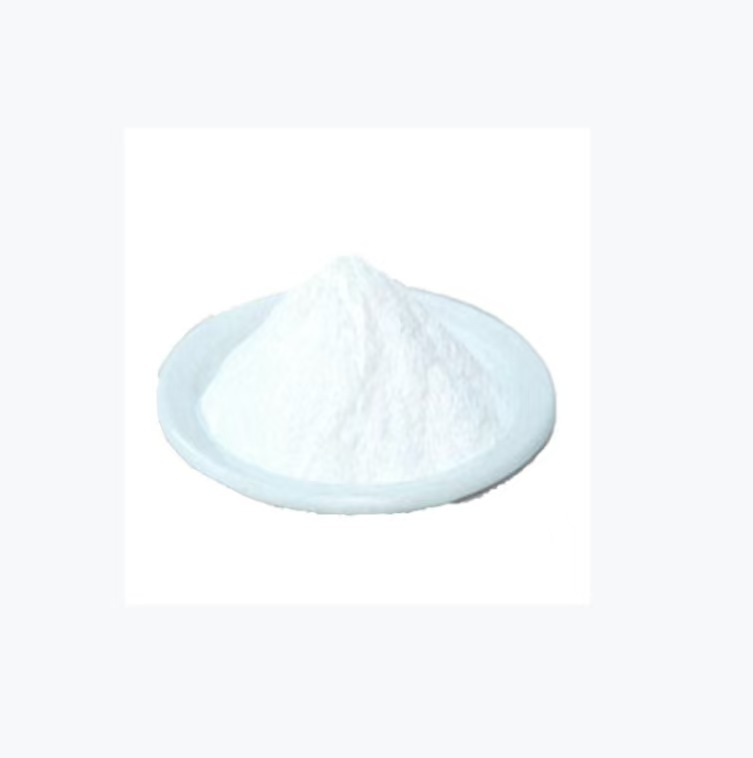
What the feeding route actually determines
The feeding route determines where dispersion is completed, who owns it, and which variable becomes the leading quality risk. In a batch arrangement, the plant prepares a stable suspension in ethylene glycol before polymerization, so dispersion quality is proven inside a vessel and can be inspected before the material is committed. In a continuous arrangement, dispersion and dosing happen as the line runs, so the controlling risk shifts to whether the feed remains steady and uniform over long production campaigns.
Both routes converge on the same downstream condition. The TiO₂ suspension is blended into the polyester system between 240°C and 285°C without interfering with the polymerization reaction or the intrinsic viscosity of the melt, and the reaction temperature is kept below 290°C so that PET viscosity stays stable. Any feeding decision that compromises this window — through moisture, agglomeration or unstable dosing — shows up later as filter pressure, spinneret blockage or inconsistent luster rather than as an obvious feeding fault.
Scenario A: batch pre-dispersion in ethylene glycol
In the batch scenario, the grade is dispersed evenly in ethylene glycol under gentle, low-speed stirring at 40–60°C until it forms a stable suspension that does not sediment before polymerization. That suspension is then pumped into the PET esterification reactor and blended uniformly into the polyester system. This is the classic way to decouple powder handling from the continuous demand of the reactor: the slurry becomes a prepared intermediate, and the reactor receives a material whose dispersion state has already been established.
The engineering requirements for this route are concentrated in the preparation area:
- Closed vacuum feeding to move powder into the dispersion vessel without exposing it to ambient moisture or airborne contamination.
- Low-speed stirring at 40–60°C to wet out the particles without generating the shear and air entrainment that encourage agglomeration.
- Dry storage at ≤65% humidity with packages kept tightly sealed, so the powder entering the vessel is not already carrying surface moisture.
- No hard fillers in the same handling path, which limits equipment wear and filter blockage.
For a chip line project, the practical qualification questions in this scenario are vessel-side: whether agitation can hold a uniform suspension, whether the temperature window is genuinely maintained across the batch, and whether the slurry still looks and behaves the same at the end of the holding period as at the start. Sedimentation and agglomeration are observable in batch mode, which is one reason the route remains attractive for projects that want a visible dispersion checkpoint before polymerization.
Scenario B: continuous polymerization feeding
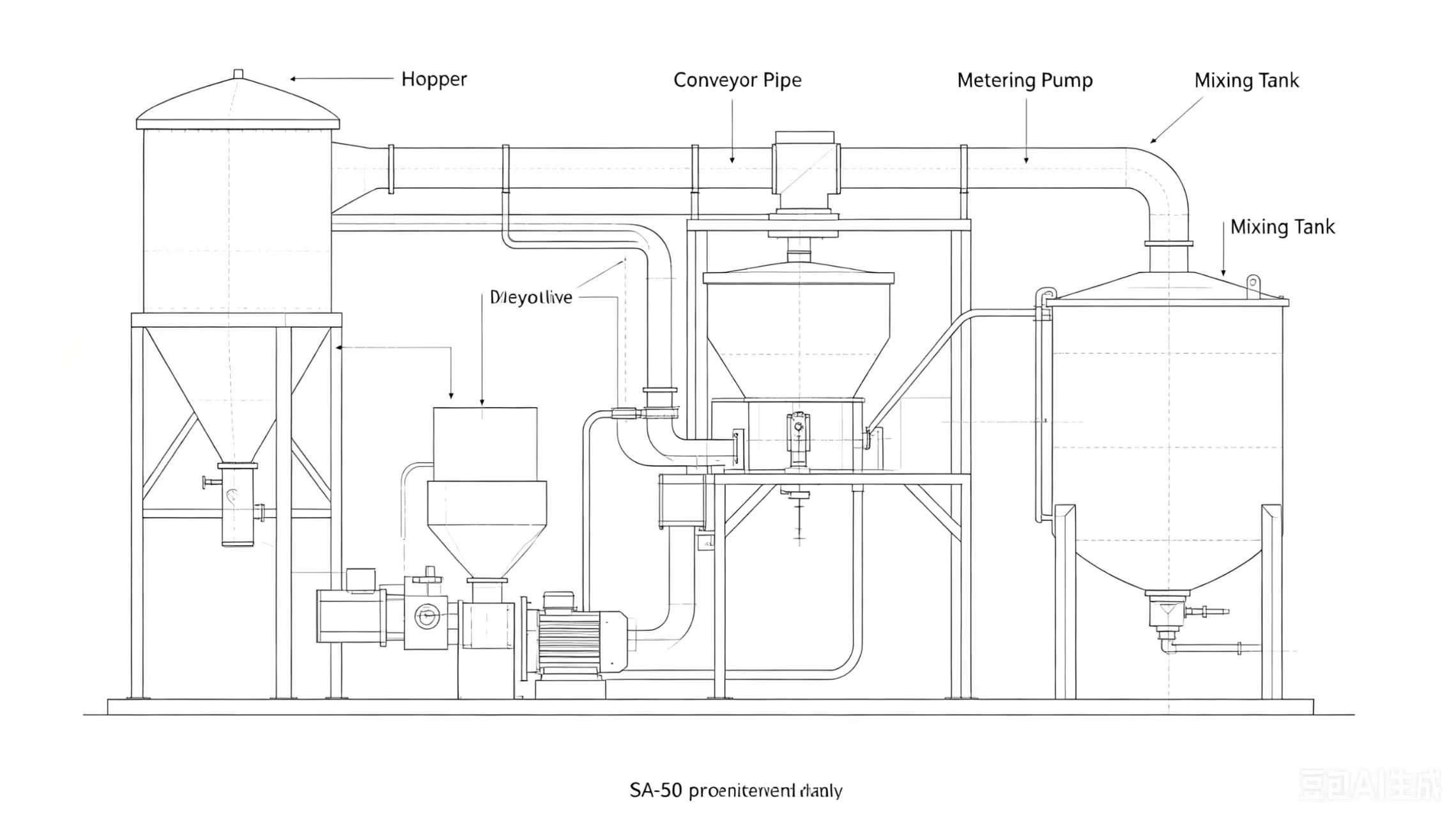
In the continuous scenario, TiO₂ is supplied through a matched titanium dioxide continuous feeding and dispersion system that meters material into the polymerization train, maintaining steady and uniform feeding while polymerization proceeds. Here the dispersion step is no longer a separate batch event that can be held and inspected; it is part of the line's operating rhythm, and the stability of the dose becomes the variable that governs downstream consistency.
The same handling rules apply, but their consequences are different:
- Closed vacuum feeding protects a stream that has no buffer vessel to absorb a moisture excursion.
- Dispersion at 40–60°C with low-speed stirring keeps the inline suspension free of agglomerates that would otherwise travel directly to filtration and spinning.
- Reaction temperature below 290°C preserves PET viscosity, which is harder to correct once a continuous train has drifted.
- Dry storage at ≤65% humidity protects every downstream hour, because a single compromised silo or bag can disturb many hours of production.
Continuous feeding rewards uniformity and punishes interruption. The grade must disperse into a stable suspension, and the feed must stay steady enough that the polymer sees a consistent additive load. This is also where dispersion quality becomes economically visible: poorly dispersed material that reaches the spinning side is associated with spinneret clogging and filament breakage, which undermines long-time continuous high-speed spinning.
Batch versus continuous: a scenario comparison
The two routes are not ranked here; they fit different project conditions. The table below compares them on the dimensions that a PET chip line team can actually verify.
| Decision dimension | Batch pre-dispersion in EG | Continuous polymerization feeding |
|---|---|---|
| Where dispersion is completed | In a dispersion vessel, before polymerization | Inline, as the line runs |
| Supporting equipment | Vacuum feed, stirred vessel, transfer pump to the esterification reactor | Titanium dioxide continuous feeding and dispersion system |
| Controlling variable | Slurry stability: sedimentation and agglomeration over the holding period | Dosing steadiness: uniform feed without interruption |
| Handling requirements | Closed vacuum feeding; low-speed stirring at 40–60°C; dry storage ≤65% humidity | Same, plus continuous metering discipline and inline dispersion control |
| Thermal boundary | Blending at 240–285°C; reaction below 290°C | Blending at 240–285°C; reaction below 290°C |
| Earliest visible failure signal | Sediment or agglomerate in the prepared suspension | Feed fluctuation, filter pressure rise or spinneret blockage |
| Typical fit condition | Projects that want a prepared, inspectable intermediate before the reactor | Projects running long campaigns where dosing stability governs output |
The handling rules both scenarios share
Whichever route a project selects, four requirements travel with the material and are not negotiable. Closed vacuum feeding prevents moisture pickup and foreign contamination during transfer. Low-speed stirring at 40–60°C controls how the particles wet out in ethylene glycol. Dry storage at ≤65% humidity with sealed packaging protects the powder before it ever reaches the vessel. And a reaction temperature held below 290°C protects the intrinsic viscosity that the whole downstream process depends on.
Two further constraints belong to the same list. High-ion additives should be avoided to prevent side reactions, and hard fillers should not be mixed into the same handling path, since they accelerate equipment wear and contribute to filter blockage. These are operational conditions rather than product properties, and they explain why two plants using the same grade can report different spinning performance.
Why SA-50's chemistry suits ethylene glycol circulation
SA-50 is an anatase-grade fiber-grade titanium dioxide specified for ethylene glycol circulation and polyester polycondensation environments, with a neutral pH and documented hydrolysis resistance. Those three attributes — crystal form, pH and hydrolysis behaviour — are what allow the grade to sit in an EG loop and then pass through polycondensation without generating adverse side reactions, and they are the reason the grade is described as slowing the intrinsic viscosity degradation of polyester chips rather than merely whitening them.
The specification values that carry the most weight in a feeding evaluation are these:
- Crystal structure: anatase. The milder particle habit is associated with less spinneret abrasion than harder alternatives in the same duty.
- TiO₂ content: ≥98.0%. A high oxide content means less non-oxide mass is being dosed into the polymer per unit of matting effect.
- pH value: 6.8±0.2. A tightly controlled neutral range supports stability in the EG suspension and compatibility with the polymerization environment.
- Fe₂O₃: ≤0.004%. Low iron content is a standard concern in low-iron fiber-grade selection, because iron is the element most often watched when whiteness and color drift are at stake.
- Sieve residue (325 mesh): ≤0.004%. Coarse-particle control is directly relevant to filter blockage and spinneret clogging.
- Moisture: ≤0.40% and electrical conductivity: ≤230 μS/cm, both of which are useful acceptance parameters because they are sensitive to handling and ionic load respectively.
- Specific surface area: 8.5–10.0 m²/g, a range that informs how the powder behaves during wet-out in ethylene glycol.
For context on particle size, supplied industry data places fiber-grade TiO₂ at a typical D50 of around 0.28 μm, with 90% of particles between 0.1 and 0.5 μm. That scale explains why dispersion discipline matters more than visual appearance: particles in this range do not settle into obvious grit, but agglomerates of them are large enough to load a filter. Buyers evaluating any spinning-grade titanium dioxide should read dispersion behaviour in ethylene glycol as a process property rather than a lab curiosity.
Optical targets: L 96.7–98.2 and b ≤0.0
SA-50 carries color values of L 96.7–98.2 and b ≤0.0. In colorimetric terms, L describes lightness while b describes position on the yellow–blue axis, so a b value at or below zero sits on the blue side of neutral. For a polyester chip project, that combination is the specification-level expression of two commercial requirements: high whiteness in the finished fiber, and resistance to the yellow drift that appears after heat history in spinning and downstream processing.
The practical consequence is that the grade supports stable adjustable matting: the matting degree can be tuned to the target fabric appearance while the whiteness base remains consistent from lot to lot. Because the same color values are specified whether the material is pre-dispersed in batch or fed continuously, the optical expectation can be written into the project specification once and then verified by incoming test rather than renegotiated per route.
What reported line outcomes mean for a project team
Application reporting from long-running polyester supply describes a set of spinning-side effects that are worth reading carefully. In that reported experience — more than 5,000 MT supplied to Chinese polyester makers over more than ten years — well-dispersed SA-50 extended spinneret clogging cycles by over 40%, greatly reduced filter replacement frequency, and lowered filament breakage rate by roughly 35%, supporting longer continuous high-speed spinning hours. Uniform matte surfaces without bright spots and consistent dyeing without color streaking are reported alongside those figures.
These are reported outcomes from a specific supply relationship, not a performance guarantee for another line. Their useful content is directional and mechanistic: fewer agglomerates mean fewer blockage events, and fewer blockage events mean less frequent filter changes and fewer spinning interruptions. Any energy benefit is indirect and should be treated that way — it would follow from reduced interruption and restart burden on a given line, and it should be measured on that line rather than assumed from a supplier report. A project team should ask for the parameter set, not only the headline percentage.
A qualification sequence for PET chip line projects
A defensible qualification sequence treats the feeding route as part of the test, not as a background condition. The following order keeps grade verification and process verification separate, so a failure can be attributed correctly.
- Verify the certificate parameters against the incoming lot: crystal structure, TiO₂ content, sieve residue, moisture, Fe₂O₃, pH, electrical conductivity, specific surface area, L and b.
- Confirm the TiO₂ content test method. China's GB/T 37632-2019 establishes test methods for titanium dioxide content in man-made fibers and is a reasonable reference point for a content check, alongside the supplier's own pre-shipment testing.
- Run an ethylene glycol dispersion trial at 40–60°C with the same stirring regime the plant will use, and observe both wet-out speed and behaviour during holding.
- Confirm the feeding configuration: closed vacuum transfer, sealed storage below the ≤65% humidity limit, and — for continuous routes — the continuous feeding and dispersion system's ability to hold a steady dose.
- Monitor the line during the first campaign for filter pressure trend, spinneret blockage interval, filament breakage and luster consistency, since these are the signals that reveal dispersion quality that a certificate cannot show.
- Audit storage and handling annually, because most dispersion failures traced to a supplier's material turn out to be failures of transfer and storage rather than of specification.
Market context for the feeding decision
Supply-side conditions give the feeding decision a commercial dimension. Grand View Research projects the global titanium dioxide market at USD 24.4 billion in 2026, with the anatase segment — the crystal form used in fiber grades — forecast to grow at a CAGR of 7.3% from 2026 to 2033. Those are third-party projections and should be read as planning context, not as a purchasing signal.
The more concrete data concerns China. According to SunSirs and titanium dioxide alliance statistics, China's effective annual titanium dioxide production capacity fell from 5.9 million tons in 2024 to 5.7 million tons in 2025, while 2024 export volume reached 1.9017 million tons, up 15.84% year on year. Capacity consolidation alongside export scale is a combination that argues for confirming supply continuity at the same time as technical fit. Orient International Holding Shanghai Foreign Trade Co., Ltd, founded in 1988, handles titanium dioxide and petrochemical raw materials with a stated annual capacity of 16,000 MT and a 30% export ratio, which places it in the trading layer where continuity and documentation are typically tested.
Where this scenario fit ends
SA-50 is specified as a PET fiber whitening agent, and that boundary should be respected in project planning. The same supplier's range separates duties: SA-60 is positioned for viscose and acrylic fiber, and SA-80 for nylon, with different content, pH and color values. A project producing nylon or viscose should therefore evaluate the corresponding grade rather than assume the PET grade transfers.
Two further limits belong in the record. First, neither feeding route compensates for inadequate dispersion: a continuous system cannot fix a powder that agglomerates in ethylene glycol, and a batch vessel cannot fix a feed that will not meter steadily. Second, the reported spinning benefits depend on the full handling chain — closed vacuum transfer, the 40–60°C stirring window, storage at ≤65% humidity and a reaction ceiling below 290°C. Relaxing any of these moves the outcome away from the reported reference case, and a buyer should treat any deviation as a new test condition rather than a minor adjustment.
Outlook
As fiber-grade demand develops and anatase capacity consolidates, the differentiator between suppliers is likely to sit less in the certificate and more in the process support around it: whether a supplier can describe how its grade behaves in a batch vessel versus a continuous feed line, and whether it can supply the handling parameters that make either route repeatable. For a PET chip line project, the sensible sequence is to fix the feeding architecture first, then select the grade whose documented chemistry, dispersion behaviour and color values match that architecture — and to verify both with lot-level data before the first campaign.
Frequently asked questions
What is the difference between batch pre-dispersion and continuous feeding of fiber-grade TiO₂ in PET chip production?
Batch pre-dispersion prepares a stable TiO₂ suspension in ethylene glycol in a stirred vessel at 40–60°C before polymerization, then pumps that suspension into the esterification reactor. Continuous feeding meters TiO₂ into the polymerization train through a dedicated continuous feeding and dispersion system while the line runs. The first route allows the dispersion state to be inspected before the material is committed; the second makes dosing steadiness the controlling variable.
At what temperature and stirring speed should TiO₂ be dispersed in ethylene glycol?
The documented requirement is dispersion in ethylene glycol at 40–60°C with low-speed stirring, which wets out the powder while avoiding the shear and air entrainment that promote agglomeration. The suspension should form without sedimentation before polymerization. Higher shear is not a substitute for correct temperature control, and the reaction itself is held below 290°C with blending between 240°C and 285°C.
Why does fiber-grade TiO₂ need closed vacuum feeding and dry storage?
Closed vacuum feeding prevents moisture pickup and foreign contamination during transfer, and dry storage at ≤65% humidity with sealed packaging keeps the powder dry before it reaches the dispersion vessel. Moisture promotes agglomeration, and agglomerates that pass a visual check can still load filters and block spinnerets later. Because both feeding routes depend on a clean, dry feed, these requirements apply equally to batch and continuous configurations.
Which SA-50 specification values matter most for a continuous polymerization line?
For a continuous line, the values that map most directly to feeding stability are TiO₂ content ≥98.0%, sieve residue at 325 mesh ≤0.004%, moisture ≤0.40%, pH 6.8±0.2, electrical conductivity ≤230 μS/cm and specific surface area 8.5–10.0 m²/g, together with color values L 96.7–98.2 and b ≤0.0. The anatase structure and documented hydrolysis resistance support stability in the ethylene glycol circulation and polycondensation environment. These parameters describe the grade, not a guaranteed line outcome.
Can one fiber-grade TiO₂ grade serve both a batch line and a continuous line?
SA-50 is documented as operating in both batch pre-dispersion and continuous polymerization feeding modes, with the same handling requirements in each: closed vacuum feeding, low-speed stirring at 40–60°C, dry storage at ≤65% humidity and reaction temperature below 290°C. Whether a specific plant can move between the two routes depends on its equipment — particularly whether a continuous feeding and dispersion system is installed — rather than on the grade alone.
For readers compiling a project file, the supplier's company brochure can be downloaded here: Orient International Holding Shanghai Foreign Trade Co., Ltd — company brochure (PDF).
Have Questions or Need More Details?
Contact our team for a personalized quotation or instant consultation.
Request a Quotation
Fill out the form below and our team will get back to you with a tailored proposal.
WhatsApp Direct Chat
Prefer to chat in real-time? Message us on WhatsApp for instant assistance & quick answers.
- Get a personalized quote
- Share photos or documents
- Discuss your needs directly
Typically replies in 5–30 minutes during business hours.