
Matching Insulator Materials to Overhead Line Scenarios: Glass 70B and Porcelain U70BP/146D
Overhead line insulator selection seldom fails because a buyer ignored a datasheet. It fails when two units carrying almost identical numbers are matched to the wrong service environment. Glass insulator 70B and porcelain insulator U70BP/146D make that point precisely: the documented data for both models shows a rated electromechanical failing load of 70 kN, a creepage distance of 255 mm, a minimum arcing distance of 450 mm and connection structure code 16 — yet one is brown glass, the other is porcelain, and the material difference is what decides inspection practice, mechanical behaviour and maintenance economics across a line's service life.
This industry reference maps both models, together with the Ball-Head Suspension Ring QP-7 that appears in the same suspension setups, to the overhead line scenarios they genuinely suit. It is written for engineers and procurement teams at the decision and execution stages, where the working question is no longer which datasheet number is larger, but which material performs better in a specific line section — and what evidence supports that choice.
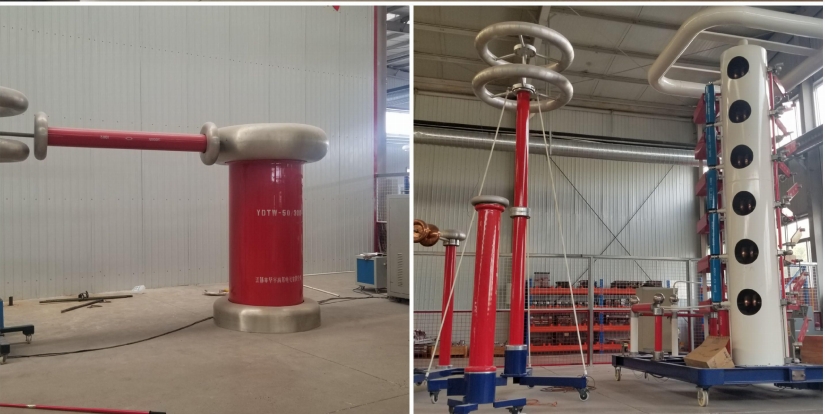
Why Scenario Matching — Not Spec Sheets — Decides Insulator Selection
A datasheet describes capability under controlled conditions. A transmission or distribution line adds conditions the datasheet does not contain: airborne contamination, moisture, altitude, vibration, span loading, access for inspection and the commercial cost of an unplanned outage. Two units can share the same electromechanical class and still deliver very different operating outcomes.
Three material families dominate the decision:
- Glass insulators, such as model 70B, whose body is designed for use in overhead power lines and is classified as a post line insulator.
- Porcelain insulators, such as model U70BP/146D, intended for the electricity industry and characterised by heat resistance and high mechanical and electrical stability.
- Polymer composite insulators, documented as lightweight, pollution-resistant, easy to install and impact-resistant.
The opportunity here is procedural rather than technical. When scenario requirements are written down first and matched to material behaviour second, a specification becomes defensible to internal reviewers, to third-party inspectors and to whoever inherits the line ten years later. The risk of doing it the other way round is predictable: a purchase order justified by a familiar model number, followed by avoidable inspection and maintenance costs.
The Reference Products: Glass 70B, Porcelain U70BP/146D and the QP-7 Suspension Ring
The two reference models are documented as follows. Where the supplied model data does not define a value, the entry is left blank rather than estimated.
| Attribute | Glass insulator 70B | Porcelain insulator U70BP/146D |
|---|---|---|
| Intended industry | Designed for use in overhead power lines | Electricity industry |
| Material | Glass | Porcelain |
| Classification | Post line insulator | Porcelain insulator |
| Colour | Brown | — |
| Nominal disc diameter | 255 mm | — |
| Nominal structural height | 146 mm | 146 mm |
| Creepage distance | 255 mm | 255 mm |
| Minimum arcing distance | 450 mm | 450 mm |
| Rated electromechanical failing load | 70 kN | 70 kN |
| Connection structure code | 16 | 16 |
| Power frequency puncture voltage | 135 kV | — |
| Dry withstand voltage | 65 kV | — |
| Wet withstand voltage | 45 kV | — |
| Cantilever load | 10 kN | — |
The Ball-Head Suspension Ring QP-7 is referenced as an accessory for line suspension in these setups. Because both 70B and U70BP/146D share connection structure code 16, that hardware interface is a practical compatibility checkpoint when a suspension assembly is specified: the insulator unit, the ring and the rest of the fitting set should be ordered as one verified combination rather than as three unrelated line items.
The products above sit within the portfolio of China Energy and Chemical Industry Co.,Ltd, a manufacturer and exporter established in 2017 and based in Zhengzhou, Henan, China, whose range covers polymer insulators, porcelain insulators, glass insulators, metal fittings for insulators, and overhead line hardware fittings and accessories. The company operates a 30,000 m² facility with approximately 100 employees and an R&D team of 8 engineers, reports annual output of 8,000,000 units, and exports around 95% of its production to markets that include Russia, Vietnam, France, Spain, Italy, Türkiye, Brazil, Poland, Indonesia and Saudi Arabia. Both OEM and ODM work are available, and product information is published at www.gridinsulators.com.
Technical Explanation: Reading the Parameters Together
Each documented value answers a different engineering question, and the value of scenario matching comes from reading them as a set:
- Creepage distance (255 mm on both models) describes the leakage path along the insulating surface. It is the parameter that becomes most critical where contamination and moisture are present, because surface pollution shortens the effective insulation path.
- Minimum arcing distance (450 mm on both models) relates to the shortest air gap and therefore to flashover behaviour under transient conditions.
- Rated electromechanical failing load (70 kN on both models) defines the mechanical class of the unit — the load the insulator is rated to sustain before mechanical failure.
- Cantilever load (10 kN on glass 70B) describes bending capability, which matters where a post-type unit is mounted on a structure rather than suspended in line.
- Connection structure code (16 on both models) identifies the coupling configuration and is the value to check against suspension hardware such as the Ball-Head Suspension Ring QP-7.
The glass 70B data adds electrical evidence: a power frequency puncture voltage of 135 kV, a dry withstand voltage of 65 kV and a wet withstand voltage of 45 kV. Those figures describe how the unit behaves under the test conditions defined for it — dry and wet — which is precisely the distinction that a contaminated, humid or coastal line section will test in service.
A useful decision rule follows from this: when two models share creepage distance, arcing distance, failing load and connection code, they are not interchangeable by default. They are interchangeable only after the scenario variables — contamination level, inspection access, replacement logistics and maintenance budget — have been mapped onto the material difference. That mapping is the substance of the next section.
Application Scenarios: Matching Each Material to a Line Section
Scenario 1 — Contaminated or high-voltage segments where inspection access is limited
On sections where the surface condition of each unit must be judged quickly — substation approaches, industrial corridors and polluted corridors — the brown glass body of model 70B aids identification in the field, and documented comparison data for this category records that glass and porcelain insulators save approximately 80% of testing time compared with composite units. Combined with a creepage distance of 255 mm and a minimum arcing distance of 450 mm, the unit fits line segments where the inspection budget, rather than the purchase price, is the binding constraint.
Scenario 2 — Positions governed by mechanical strength and stability
Where mechanical duty dominates, porcelain insulators such as U70BP/146D are documented with a rated electromechanical failing load of 70 kN, and porcelain as a material is characterised by heat resistance and high mechanical and electrical stability. On structures that must hold a stable mechanical and electrical profile over long service, porcelain remains the conservative ceramic choice, provided the assembly uses compatible hardware.
Scenario 3 — Long spans, heavy pollution and weight-sensitive structures
Where pollution resistance, weight reduction or long-span loading governs — coastal salt spray environments, heavy contamination areas, high-altitude sections and wind power transmission lines are the recurring examples in this category — polymer composite insulators are documented as roughly 50% lighter than traditional porcelain and glass units, with installation time reduced by about 60%. Their documented profile is lightweight, pollution-resistant, easy to install and impact-resistant. That combination is why designs such as anti-pollution station post composite insulators, high altitude hydrophobic composite insulators and lightweight long rod composite insulators have become standard options for difficult environments. The trade-off is commercial: composite insulators are documented at about 10% higher purchase cost, offset by annual maintenance costs approximately 40% lower than porcelain or glass.
Scenario 4 — Sections where repair turnaround dominates
Not every line section is chosen for lowest maintenance cost. Wherever emergency replacement speed matters, glass retains a documented advantage: emergency repair time for glass is approximately 1–2 hours against 4–6 hours for composite, and cost-effective composite repair is about 150% higher. The total cost associated with replacing glass insulators is documented as 25% to 35% lower. For lines with difficult access or limited outage windows, that difference usually outweighs a lower unit price elsewhere.
Scenario 5 — The suspension assembly around the unit
Insulators are never installed alone. The Ball-Head Suspension Ring QP-7 is referenced as an accessory for line suspension in these setups, and metal fittings for insulators, together with overhead line hardware fittings and accessories, are supplied from the same portfolio. Treating the insulator, the ring and the fitting set as one compatibility unit — verified through connection structure code 16 — removes a common source of field rework.
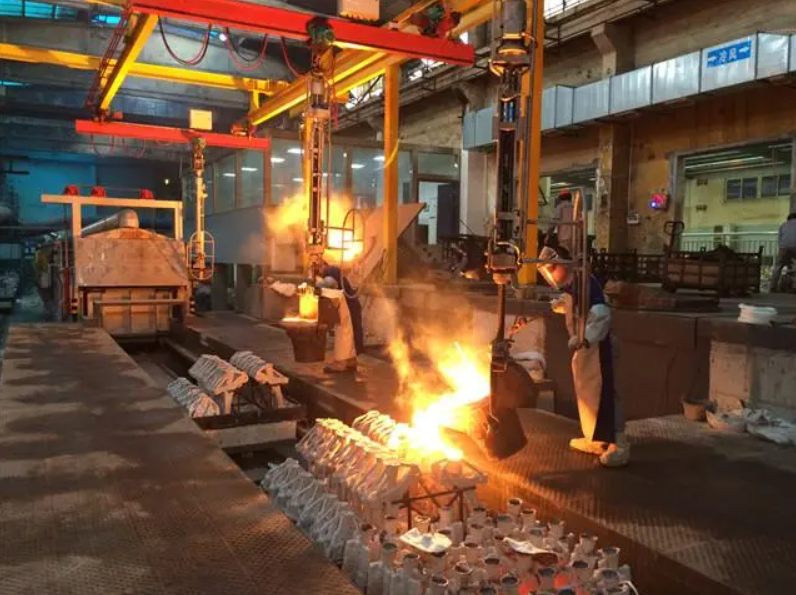
Composite Insulators in the Same Procurement Decision
Composite insulators are not a separate conversation from glass and porcelain; they are the third option in the same decision. The composite insulator market was valued at approximately USD 6.58 billion in 2024 and is projected to reach USD 9.3 billion by 2035, according to Market Research Future. Asia-Pacific held a revenue share of approximately 49.5% of that market in 2024, according to Mordor Intelligence — consistent with the region's manufacturing depth in polymer insulators.
The standards framework matters for buyers comparing suppliers. IEC 61109:2025 covers composite suspension and tension insulators for AC and DC systems with nominal voltages above 1000 V, and ANSI/NEMA C29.11-2020 defines test methods and performance characteristics for composite insulators used on North American overhead transmission lines. A supplier that can point to test records aligned with these frameworks is easier to qualify than one that can only quote catalogue values — particularly for heavy contamination area, UV resistant outdoor or coastal salt spray resistant composite designs.
Material Comparison: Where Each Option Stops Being Suitable
The comparison below consolidates the documented differences between the material families. It is deliberately limited to attributes with a verifiable basis; where the evidence is silent, no claim is made.
| Consideration | Glass 70B / porcelain U70BP/146D | Polymer composite insulators |
|---|---|---|
| Weight and installation | Traditional units; polymer units are documented as about 50% lighter | About 50% lighter, with roughly 60% of installation time saved |
| Inspection and testing | Visual inspection advantage; approximately 80% of testing time saved | Testing time higher than glass and porcelain |
| Purchase cost | Lower purchase cost baseline | Approximately 10% more expensive |
| Annual maintenance cost | Baseline | Approximately 40% lower than porcelain and glass |
| Emergency repair | Glass: approximately 1–2 hours; replacement cost 25%–35% lower | Approximately 4–6 hours; cost-effective repair about 150% higher |
| Environmental fit | Heat resistance, high mechanical and electrical stability, easy visual inspection | Lightweight, pollution-resistant, impact-resistant; suited to heavy-pollution, long-span or lightweight requirements |
| Typical best fit | Scenarios requiring thermal stability and easy visual inspection | Heavy pollution, long spans, weight-sensitive structures |
Three boundaries deserve to be stated plainly:
- Documented equality is not functional equivalence. Because 70B and U70BP/146D share creepage distance, minimum arcing distance, rated electromechanical failing load and connection structure code 16, a buyer cannot rank them by datasheet numbers. Any claim that one is universally better is unsupported by the available data.
- Composite advantages are conditional. The same documented data that shows lower annual maintenance cost and faster installation also shows longer emergency repair time and higher repair cost. On lines where an outage is expensive and access is poor, that condition can cancel the maintenance advantage.
- Rated values are ratings, not site guarantees. Verification activities are intended to confirm, not to replace, project engineering judgment. Buyers should define scenario priorities in the specification — contamination class, inspection regime, outage tolerance and mechanical duty — rather than accepting a default recommendation.
Market Trend Analysis: What Is Actually Changing
Market data shows composite insulators expanding their share of an overall growing category: suspension insulators represented the largest product type segment with an estimated 38% market share in 2025, and the 11 kV to 200 kV rating segment accounted for approximately 33% of total market share in the same year, according to Future Market Insights. The competitive landscape is correspondingly structured, with major global participants including Hitachi Energy, NGK Insulators Ltd., Seves Group (Sediver), Siemens Energy and Hubbell Power Systems.
One analytical caution is worth carrying into any procurement discussion: published market size estimates for the same year diverge substantially. 2024 valuations cited by different research firms include USD 6.58 billion (Market Research Future), USD 3.42 billion (Strategic Market Research) and USD 2.35 billion (Reports and Data). A single headline figure should therefore be treated as directional context for strategy, not as an input to a purchasing decision.
The trend that matters more at line level is granular: growth in composite specifications does not retire glass or porcelain, because scenarios where thermal stability and rapid visual inspection dominate still favour ceramic materials. What is changing is the procurement method. Buyers increasingly evaluate material portfolios, documentation and supply continuity together, since the cost of a mismatched unit is realised in maintenance, not at the point of purchase.
Future Outlook
Three developments are likely to shape insulator procurement over the next planning cycles. First, material selection will continue to move from catalogue comparison toward documented scenario mapping, because the parameters of competing models increasingly converge and the differentiating evidence sits in service conditions. Second, standards will keep evolving — the update of IEC 61109:2025 illustrates that the composite test framework is still being refined — which raises the value of suppliers who can produce current test records on request. Third, long-term supply considerations will weigh more heavily in supplier evaluation, because the operational risk of a line asset is concentrated in the years after installation, not in the delivery month.
That last point is where capacity and process documentation become selection criteria in their own right. It is also where a supplier's product breadth — polymer, porcelain and glass insulators supplied alongside metal fittings and overhead line hardware — reduces the coordination burden of a mixed-material line. Technical and product data for these families is compiled in the 2025 CECI catalogue of polymer insulators and glass insulators.
Frequently Asked Questions
What is the difference between glass insulator 70B and porcelain insulator U70BP/146D?
Model 70B is a glass insulator designed for use in overhead power lines and classified as a post line insulator, with a brown body, a nominal disc diameter of 255 mm, a nominal structural height of 146 mm, a creepage distance of 255 mm and a minimum arcing distance of 450 mm. Model U70BP/146D is a porcelain insulator intended for the electricity industry, with a nominal structural height of 146 mm, a creepage distance of 255 mm and a minimum arcing distance of 450 mm. Both are documented at a rated electromechanical failing load of 70 kN and connection structure code 16. The substantive difference is material and how that material behaves in inspection, testing and replacement, not the headline dimensions, which match.
How should an engineer decide between glass, porcelain and composite insulators for a given line section?
Decide by the dominant constraint. Where visual inspection and thermal stability dominate, glass and porcelain units such as 70B and U70BP/146D fit, supported by a documented testing-time advantage of approximately 80%. Where pollution resistance, weight reduction or long-span loading dominate, polymer composite insulators fit, documented as about 50% lighter with roughly 60% of installation time saved. Where emergency replacement speed dominates, glass retains a documented advantage, with an emergency repair time of approximately 1–2 hours versus 4–6 hours for composite.
What does connection structure code 16 mean, and how does the Ball-Head Suspension Ring QP-7 fit in?
Connection structure code 16 is documented for both 70B and U70BP/146D as the coupling configuration of the unit. The Ball-Head Suspension Ring QP-7 is referenced as an accessory for line suspension in these setups. In practice, code 16 and the ring are the two points to verify when assembling a suspension set, so that the insulator and its hardware are confirmed as a compatible combination before installation.
Are composite insulators always the better long-term choice?
No. Documented data shows composite insulators at approximately 10% higher purchase cost, with annual maintenance costs roughly 40% lower than porcelain and glass — but also with longer emergency repair time (approximately 4–6 hours versus 1–2 hours for glass) and repair costs about 150% higher. The total cost associated with replacing glass insulators is documented as 25% to 35% lower. The better long-term choice depends on which of those variables dominates a specific line's operating conditions.
What production capacity, lead time and minimum order quantity apply to orders of these insulators?
For the manufacturing capacity described by China Energy and Chemical Industry Co.,Ltd, monthly production capacity is 500 tons and 100,000 pieces, typical production lead time is 30 to 45 days, and the minimum order quantity is 500 units.
How can supply risk be controlled in a long-term insulator contract?
Documented risk categories include delivery delays, quality consistency, shipping and customs risks, and procurement risks arising from insufficient certifications or compliance evidence. Corresponding controls include clear contracts with lead-time clauses, pre-shipment inspection, factory test records, third-party inspection and certificate verification, and staged deliveries. On the manufacturer side, an ISO 9001 quality management system, authoritative test reports from domestic and international third-party testing institutions, full strict batch testing, dedicated project managers tracking production, and coordinated logistics support for customs clearance all serve the same purpose.
Have Questions or Need More Details?
Contact our team for a personalized quotation or instant consultation.
Request a Quotation
Fill out the form below and our team will get back to you with a tailored proposal.
WhatsApp Direct Chat
Prefer to chat in real-time? Message us on WhatsApp for instant assistance & quick answers.
- Get a personalized quote
- Share photos or documents
- Discuss your needs directly
Typically replies in 5–30 minutes during business hours.