
Matching Marine Airbags to Rescue and Salvage Operations
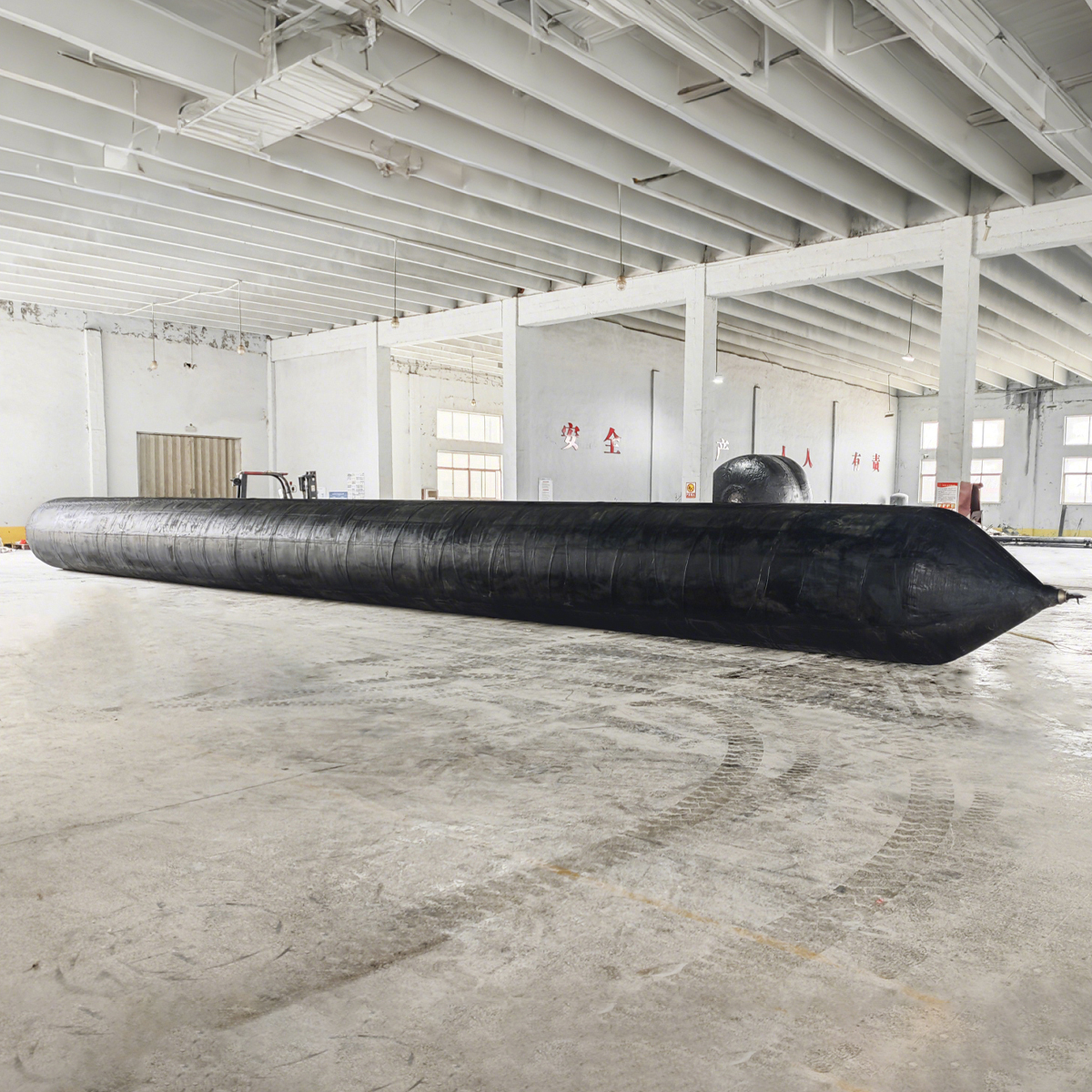
A marine airbag is a rubber, cord-reinforced inflatable cylinder used to support, roll, lift or cushion a vessel's hull during launching, docking, lifting and salvage work. In emergency response, its usefulness is decided less by a catalogue headline than by whether one specific size, pressure rating and load capacity matches one specific operation — frequently a damaged hull, a difficult seabed and a tide window measured in hours.
Why rescue and salvage work tests equipment differently
In a planned slipway launch, the variables are known before the airbags are laid out: hull weight, ground condition, slipway gradient, water depth and the sequence of inflation. Emergency and salvage work reverses that order. The vessel may be aground, partly flooded or structurally compromised, the bottom may be mud, sand, rock or debris, and the operational plan is written while the equipment is already moving to site.
That shift changes what 'fit' means. A marine airbag intended for recovery duty is selected on four things at once: how much load it carries, how it behaves against abrasive or sharp surfaces, how far its dimensions can be adapted to an irregular hull, and whether the surrounding logistics — compressed air, handling crew, site preparation — can be assembled in the time available. An airbag that performs well in a controlled shipyard can still be the wrong choice for a casualty on a rock shelf.
The opportunity is equally practical. Because the same product family serves shipbuilding, ship repair, special water operations and emergency rescue, yards and response teams can standardise on one class of equipment and one inspection regime instead of maintaining separate systems for routine launching and unplanned recovery.
What the product is, and where its boundary sits
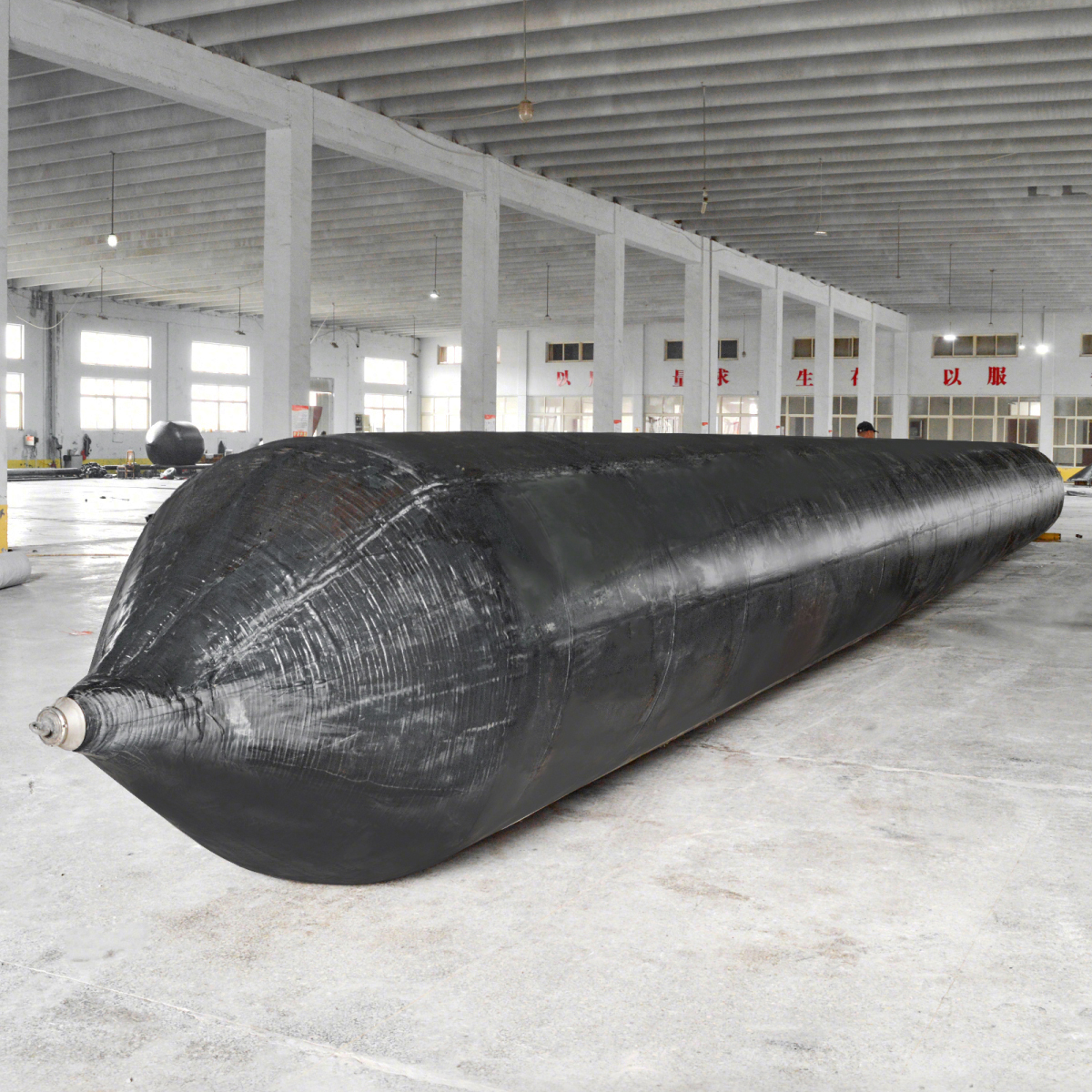
A marine airbag — also described as a marine rubber airbag, ship launching airbag, ship lifting airbag or salvage lift airbag — is manufactured from natural rubber and cord fabric and inflated to a working pressure of 0.08 to 0.15 MPa. In launching, the airbags support the hull and allow it to roll and slide into the water, reducing friction during launching, lowering project costs and enabling flexible shipyard operations. In lifting and salvage work, the same body of air is used to raise, stabilise or float a load under controlled inflation.
Its boundary is just as important to state. A marine airbag is a load-handling tool, not a certified lifting appliance that replaces a rigging plan, and not a permanent buoyancy installation. It depends on a working air supply — an air compressor is required as supporting equipment — and on supervision that understands inflation sequencing. Buyers evaluating rescue readiness should treat the airbag as one element in a system that also includes compressors, hoses, manifolds, handling gear and trained personnel.
Technical fit: abrasion, puncture tolerance and site conditions
The construction explains most of the operational behaviour. Natural rubber provides the abrasion-resistant outer surface that contacts slipway concrete, gravel, sand or a damaged hull plate; the cord fabric layers carry the tensile load and hold the inflated shape. International standardisation follows the same logic: ISO 14409:2011, the primary international standard for ship launching air bags, specifies terms and definitions, classification, materials and dimensions, test items and methods, and is intended for designing, manufacturing, testing and accepting airbags made with synthetic-tyre-cord reinforcement layers.
For emergency and salvage duty, two performance characteristics matter more than in routine launching. The first is anti-abrasion and puncture resistance, because recovery sites rarely offer a clean, prepared surface. The second is suitability across various slipway gradients and seabed conditions, which determines whether an airbag can be positioned and inflated without losing contact or rolling out of line.
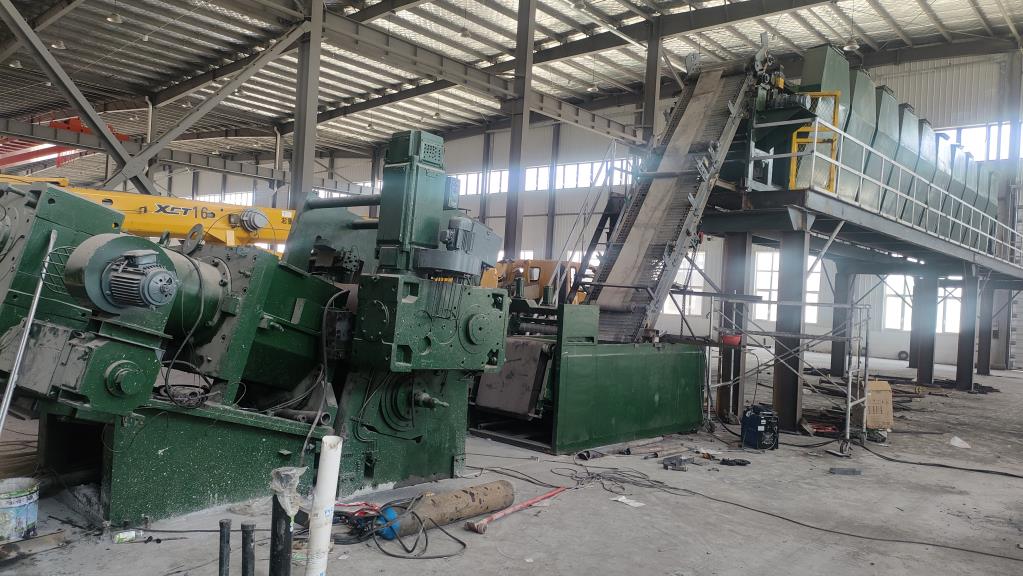
Three further parameters define the operating envelope. Working pressure of 0.08 to 0.15 MPa sets the inflation range within which rated capacity is achieved. Temperature resistance from -30°C to +70°C covers cold-water and tropical deployment. Service life of 5 to 10 years depends on usage frequency and maintenance, which for a rescue stockpile means scheduled inspection and rotation rather than indefinite storage.
Matching capacity and dimensions to the operation
Sizing is a calculation, not a lookup. Single-unit capacity runs from 50 to 2000 tons, so any vessel above that figure requires a multi-airbag array with the load distributed across units, and the geometry of the hull determines how many units can be brought into contact. Diameter and length are customizable within defined limits, which is what allows the same product family to serve a small repair cradle and a large launching array.
| Specification | Available range | What it means for a rescue or salvage plan |
|---|---|---|
| Diameter | 0.8–3 m, customizable | Sets contact height and stand-off between hull and ground or seabed |
| Length | 5–26 m, customizable | Sets the contact length along the hull; shorter units suit confined or damaged sections |
| Load capacity | 50–2000 tons per single airbag | Determines how many units an array needs for a given hull weight |
| Working pressure | 0.08–0.15 MPa | Inflation range for rated performance; requires an air compressor |
| Temperature resistance | -30°C to +70°C | Deployment envelope across cold and tropical waters |
| Material | Natural rubber, cord fabric | Abrasion resistance plus tensile reinforcement |
| Service life | 5–10 years, usage and maintenance dependent | Drives inspection cycles and stock rotation for standby equipment |
| Reference models | 1.5×12 m, 2×20 m and similar | Common configurations used as a starting point for project specification |
Application fit across four operating contexts
Shipbuilding and launching
Launching is the reference application: the airbags support the hull and let it roll and slide into the water under controlled inflation, which reduces friction during launching, lowers project costs and enables flexible shipyard operations. Because the launch depends on a prepared line of contact, the constraints here are the most predictable of the four contexts.
Ship repair
In repair work, airbags act as a movable support system for hull sections, slipping and short movements, and for docking-style operations where a full dry dock is unavailable or uneconomic. The flexibility that helps in a yard — customizable diameter and length — matters most where a hull shape is non-standard or where only limited access is available.
Special water operations: salvage and lifting
This is where the equipment is stretched hardest. Salvage and lifting work uses airbags to raise or reposition a load in the water, and success depends on abrasion resistance against a damaged hull, puncture tolerance against debris, and stable behaviour on an uneven bottom. The load capacity of each unit and the number of units that can physically be brought to bear usually set the ceiling on what a given operation can attempt.
Emergency rescue
In marine emergency rescue, the value of an inflatable lifting system is speed and deployability: it can be transported, positioned and inflated with a compressor and a trained crew rather than requiring a dock or a heavy crane barge on station. That advantage is real but conditional — it depends on a site assessment, a competent inflation plan and equipment that has been inspected and maintained in standby condition.
Regional fit: Indonesia and the wider export picture
Archipelagic markets concentrate all four use cases in one geography: dispersed shipyards, a large repair and conversion workload, and frequent near-shore incidents that require a fast local response. This application scenario is common in Indonesia, where launches, repair support and salvage response frequently rely on the same class of equipment rather than on fixed dock infrastructure.
The demand pattern is visible in supplier export structures as well. Qingdao Haohang Fender Airbag Co., Ltd., for example, exports 70% of total sales to Southeast Asia, North America, Europe, South Asia, the Middle East and Africa — a distribution profile that tracks shipbuilding and repair activity rather than a single domestic market.
Market trend: steady growth, with a caveat on absolute figures
The global marine airbags market is estimated at USD 346.59 million in 2026 and projected to reach USD 481.96 million by 2032, a CAGR of 5.61% over 2026–2032, according to 360iResearch. Asia-Pacific accounts for 52% of global market revenue, driven by the region's shipbuilding industry, which means pricing and technical norms are heavily shaped by Asian manufacturing clusters.
Absolute market totals should be read with caution. Published estimates vary widely by scope — one source places the market near USD 68 million against another near USD 328 million — most likely because some definitions include heavy lifting and industrial buoyancy while others count only ship launching. For procurement planning, the direction of travel and the regional concentration are the usable signals; the headline total is not.
Price expectations follow the same pattern. Marine airbags for ship launching can cost between USD 50 and USD 3,000 per piece depending on dimensions and layer count, so a quotation is only comparable once diameter, length, layer structure and certification scope are fixed.
Marine airbags versus traditional launch and lift methods
Airbags do not displace slipways, dry docks or crane assets; they occupy a different position in the decision, and buyers get better outcomes by comparing constraints rather than headline capability.
| Approach | Typical strength | Typical constraint |
|---|---|---|
| Slipway or graving dock | Controlled geometry and established procedures | Fixed capital asset; availability and scheduling; not deployable to a casualty site |
| Dry dock | Full under-hull access for inspection and repair | Requires dock availability and towage; not a field recovery option |
| Crane barge or floating crane | High concentrated lift with direct control | Heavy mobilisation, reach and depth limits, and a cost profile suited to planned work |
| Marine airbag array | Deployable with a compressor and crew; supports the hull along a contact line; reduces friction during launching and lowers project costs; suits various slipway gradients and seabed conditions | Requires compressed air, site preparation and load calculation; single-unit capacity up to 2000 tons, so larger hulls need engineered arrays |
What the approach cannot do. A marine airbag does not replace a certified lifting appliance, a rigging plan or diver supervision in a complex recovery. Its capacity is per unit, so a rescue plan built around a single airbag is limited to that unit's rating. Its working pressure range of 0.08 to 0.15 MPa assumes a functioning air supply and pressure control on site. Its temperature envelope stops at -30°C to +70°C. And its service life of 5 to 10 years is usage and maintenance dependent, which means standby stock must be inspected on a schedule rather than assumed serviceable. Where a site is too deep, too exposed or too structurally uncertain, a crane or dock-based solution remains the correct choice.
A readiness checklist for buyers
- Rated capacity per unit. Confirm the load figure applies to your diameter, length and layer structure, not to the product family in general.
- Surface conditions. Match anti-abrasion and puncture resistance to the actual seabed or slipway, including debris and gradient variation.
- Array geometry. Calculate how many units can physically contact the hull and whether the resulting capacity covers the load.
- Air supply. Verify compressor capacity, hose and manifold arrangements, and pressure control against the 0.08–0.15 MPa working range.
- Standard reference. Use ISO 14409:2011 — covering materials, dimensions, test items and methods for synthetic-tyre-cord reinforced airbags — as the common technical language in the specification.
- Certification evidence. Ask for the certificate itself and check the issuing body, the standard and the scope, rather than accepting a claim in a brochure.
- Standby condition. Define inspection intervals against the 5–10 year service life and record usage history.
- Operating envelope. Confirm water and ambient temperature sit inside -30°C to +70°C for the planned season of deployment.
Where Haohang sits in this segment
Qingdao Haohang Fender Airbag Co., Ltd. is a Chinese manufacturer of marine airbags and rubber fenders, established in 2020 and based in Qingdao, Shandong. The company operates an 8,000 square metre manufacturing facility with approximately 60 staff, a 15-engineer R&D team, an annual production capacity of 2,000 units and a total investment of RMB 20,000,000. It reports self-sufficiency in raw material supply — relevant to consistent rubber and cord fabric quality — and a modern quality management system built in accordance with international standards.
Product scope covers marine airbags made of natural rubber and cord fabric, with customizable diameters of 0.8–3 m and lengths of 5–26 m, working pressure of 0.08–0.15 MPa, single-unit load capacity of 50–2000 tons, temperature resistance from -30°C to +70°C, and a service life of 5–10 years depending on usage frequency and maintenance. The same range is specified for shipbuilding, ship repair, special water operations and emergency rescue.
On compliance, the company states that its marine airbags hold CCS certification issued by the China Classification Society under the CCS standard, certificate number 2026CJSD00023. As with any class or third-party claim, procurement teams should verify the certificate directly against its scope before it is used as a screening criterion. Export activity accounts for 70% of total sales, with markets including Southeast Asia, North America, Europe, South Asia, the Middle East and Africa.
Future outlook
Three developments are likely to shape how this equipment is bought over the next several years. First, growth concentrated in Asia-Pacific — where 52% of global market revenue sits — keeps the specification conversation anchored on regional production capability and regional standards practice. Second, salvage and emergency response are increasingly planned as a readiness discipline rather than an improvised purchase, which shifts demand toward documented inspection records, verified certification and pre-agreed array configurations. Third, as more suppliers publish technical sheets, differentiation moves from the existence of a product to the traceability of its testing: which standard was applied, which certificate covers which scope, and what the unit actually carries at a given diameter and pressure.
For buyers, the practical implication is that selection criteria will keep converging on the same five questions — capacity, surface tolerance, dimensional flexibility, air-supply dependencies and documentation — whether the airbag is destined for a scheduled launch or a standby rescue inventory.
FAQ
What is a marine airbag used for in salvage and rescue work?
A marine airbag is a rubber, cord-reinforced inflatable cylinder used to support, lift, roll or stabilise a vessel's hull. It is applied in shipbuilding, ship repair, special water operations and emergency rescue, including salvage and lifting scenarios in marine environments where a load must be raised or repositioned under controlled inflation.
How much load can a single marine airbag carry?
Single-unit load capacity ranges from 50 to 2000 tons, with the exact figure depending on the specification selected. Because capacity is stated per airbag, a hull heavier than one unit's rating requires a multi-unit array and a load distribution plan.
What dimensions are available?
Diameter is customizable between 0.8 and 3 metres and length between 5 and 26 metres, with reference configurations such as 1.5×12 m and 2×20 m. Customizable dimensions allow the same product family to serve confined repair work and large launching arrays.
How do airbags handle rough seabeds and steep slipways?
The product is specified as anti-abrasion and puncture resistant, and as suitable for various slipway gradients and seabed conditions. Condition still requires site assessment: debris and sharp edges raise the risk profile, and contact geometry has to be confirmed before inflation begins.
What supporting equipment is needed on site?
An air compressor is required as supporting equipment, together with the associated hoses and pressure control needed to inflate within the working range of 0.08 to 0.15 MPa. Trained handling personnel and a defined inflation sequence are part of the operational requirement.
How long does a marine airbag last in standby service?
Service life is 5 to 10 years depending on usage frequency and maintenance. Standby rescue stock therefore needs scheduled inspection and rotation rather than long-term storage without review.
What temperature range do the airbags operate in?
The specified temperature resistance range is -30°C to +70°C, which covers cold-water and tropical deployment within that envelope.
A detailed specification sheet for the marine airbag range, including dimensions, pressure ratings and capacity data, is available for download: Marine Airbag product brochure (PDF).
Have Questions or Need More Details?
Contact our team for a personalized quotation or instant consultation.
Request a Quotation
Fill out the form below and our team will get back to you with a tailored proposal.
WhatsApp Direct Chat
Prefer to chat in real-time? Message us on WhatsApp for instant assistance & quick answers.
- Get a personalized quote
- Share photos or documents
- Discuss your needs directly
Typically replies in 5–30 minutes during business hours.