
Matching POS Terminal Hardware to the Deployment Environment
The first question in a POS terminal purchase should not be ‘Which processor is fastest?‘ but ‘Where will this device operate, for how many hours, and by whom?‘ POS hardware that works well at a demonstration counter can fail on a bus route, in a crowded checkout lane, or inside an unattended store. Buyers who define hardware from the deployment profile rather than from a specification sheet avoid two common risks: paying for unused functions and underestimating environmental requirements.
The global point-of-sale terminal market was estimated at roughly USD 123.2 billion in 2025 by Grand View Research, and the category now spans far more than countertop cash registers. A modern POS deployment may include traditional staff-operated checkout, handheld pay-at-table devices, ticket validators in public transport, self-service kiosks, and AI-assisted checkout stations. Each environment changes the hardware decision. This article explains which POS terminal categories fit which project conditions, using Telpo Technology Co., Ltd. as a concrete reference because the company publishes detailed scenario-to-hardware mappings for its portfolio.
Telpo Technology Co., Ltd. is a Chinese smart-terminal manufacturer founded in 1999 and headquartered in Foshan. It employs about 600 people, operates a factory of roughly 45,000 square meters, and reports an annual production capacity of around 2,000,000 units. The company supplies EFTPOS terminals, Android POS terminals, desktop and dual-screen cash registers, self-service kiosks, ticket validators, fiscal POS devices, and AI checkout terminals. Its main overseas markets include Asia, Africa, the Middle East, Europe, Latin America, and North America.
Why project context matters more than raw specifications
Most POS hardware buying mistakes do not come from comparing two similar terminals. They come from choosing the wrong product category for the operating environment. A supermarket checkout lane needs a device with high-speed receipt printing, cash-drawer support, and optional customer-facing displays. A restaurant that wants pay-at-table service needs a lightweight handheld that survives a shift of continuous use. A transit operator needs a validator with impact protection, high-brightness screens, and open-loop payment compatibility. A bakery with barcode-free fresh products needs item-recognition capability rather than just a faster printer.
Telpo divides its product choices by working condition. For example, the C9PD cash register POS is designed for indoor multi-lane checkout counters with high transaction volume. The M8 dual-screen terminal suits compact convenience-store counters and is prepared for tax-control hardware. The P9 family covers mobile payment and field service. The T10 and T20 are transit-grade ticket validators built for vehicle or platform use. The C50 is an AI self-checkout terminal intended for supermarkets, canteens, and fresh-food retail. Each model maps to a particular operating profile rather than offering one generic box.
Buyers in the Research and Evaluation phase should build a deployment profile before writing a shortlist. Practical profile questions include: Is the terminal fixed or carried by staff? Will customers use it directly or will employees operate it? Are items barcoded, barcode-free, weighed, or a mix? Which payment methods must be accepted in the target market? What uptime, network, and regulatory constraints exist in the building or country?
POS terminal families and the scenarios they fit
The useful distinction is not simply Android versus Windows. It is whether the machine is a fixed checkout terminal, a staff-mobile handheld, an unattended kiosk, a transit validator, or a fiscal/payment terminal with scheme certifications. The following families illustrate how scenario requirements become hardware choices.
Fixed checkout for retail and hospitality
Fixed countertop terminals remain the backbone of staff-operated stores. Telpo’s C9 and C9PD dual-screen cash registers use Android 14 with an octa-core 2.2 GHz processor, up to 8 GB RAM and 128 GB ROM, and available configurations of a 15.6-inch single screen, 15.6-inch plus 10.1-inch, or dual 15.6-inch displays. The C9PD adds a built-in 80 mm Seiko thermal printer with 250 mm/s printing speed. These products fit supermarkets, hotels, quick-service restaurants, service counters, coffee shops, and bars where staff process transactions and need a customer-facing screen.
For businesses running existing Windows-based POS software, Telpo offers the C9W cash register. It uses configurable Intel processors, includes six USB ports for peripheral flexibility, and supports dual-screen customer interaction. It suits fashion retail and boutique environments where the operator already depends on Windows software for inventory, CRM, or order management.
The M8 and M10 address space-constrained counters or deployments requiring mobile network backup. The M8 has an 8-inch main display plus a 3.27-inch customer display, Android 12, GMS certification, a built-in 58 mm thermal printer, SoftPOS-compatible NFC, and tax-compliance provisions. The M10 uses a 10-inch main display plus a 4-inch customer display, Android 13, an octa-core Qualcomm processor, and an 80 mm industrial printer with 200 mm/s output.
Handheld and mobile payment terminals
Mobile devices are selected for staff movement. Restaurants use them for table-side ordering, hotels for room service and front-desk overflow, and delivery operators for payment at the door. Retail and logistics teams use them for inventory scanning, and banks use them for merchant acquiring or agent banking.
Telpo’s P9 family is representative of this category. The P9 financial version accepts magnetic stripe, chip, NFC contactless, QR code, and digital wallet payments. It includes a 58 mm printer at 80 mm/s, an octa-core processor with up to 4 GB RAM and 64 GB ROM, GPS, dual SIM slots, eSIM support, and a removable battery delivering 12 to 16 hours with the standard 3500 mAh cell or 17 to 23 hours with the optional 5000 mAh cell. The P9 PDA variant adds an optional 1D/2D scanner module and an ultra-thin 16.4 mm profile for field repairs. The non-financial P9 is GMS-certified and SoftPOS-ready, while the financial version carries payment-industry certifications used for PCI and EMV compliance programmes.
A second mobile option, the P8 M5, weighs 389 g, survives 1.5-meter drops in Telpo’s testing, is splash-resistant, and provides a removable 7.2 V/2600 mAh battery with 13 or more hours of continuous operation. Both P8 M5 and P9 print receipts and stamp transactions with GPS location. For simpler ticketing and mobile ordering tasks, the M1 handheld POS provides NFC, QR, MSR and IC payment support, a 58 mm printer, 4G, Wi-Fi, Bluetooth, and an 11.3-hour continuous-operation battery under maximum load.
Transit ticketing and validation
Transit deployment changes the durability rules. Devices in buses, trams, and ferry gates must tolerate vibration, sunlight, dust, and rapid passenger flow. Telpo’s T10 and T20 validators accept closed-loop and open-loop contactless cards, including ISO14443 Type A/B, Mifare, Cipurse, Calypso, and Felica, along with EMV Contactless Level 1, PayWave, PayPass, QR codes, and paper tickets. The T10 is a compact 5.5-inch model with IK07 impact resistance, optional IP54 protection, six SAM slots, and an E24 vibration certification. The T20 adds a 7-inch anti-glare screen, IP65 dust and water protection, IK08 impact resistance, eight SAM slots, dual-band Wi-Fi, and optional Linux firmware for deeper integration with existing ticketing platforms.
Self-service, kiosk and AI checkout
Unattended and self-operated environments require a different design logic because the customer, not the employee, controls the workflow. The terminal must communicate clearly, guide payment, and tolerate continuous public use.
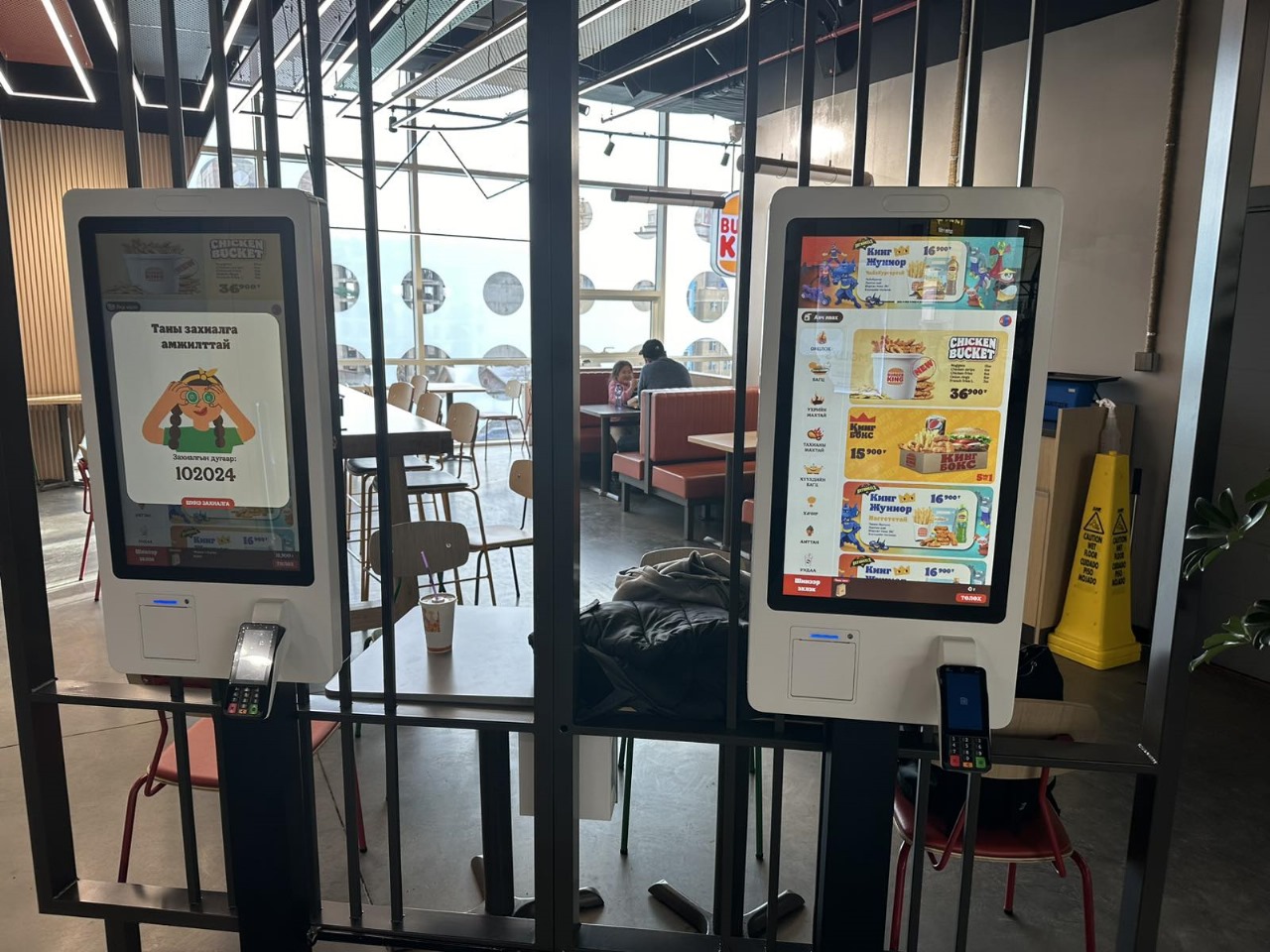
Telpo’s K1, K8, K8M, and K10 kiosk-type terminals range from a 4.29 kg compact K10 with a 15.6-inch display to the 21.5-inch K8 and K8M models. The K8 shell weighs about 12.1 kg, while the K8M uses a metal enclosure for higher-traffic installations. All support NFC, QR scanning, receipt printing, and optional facial recognition. The K20 self-ordering kiosk, deployed by Telpo in Burger King Mongolia according to project records, adds a 27-inch display, heavy-duty metal enclosure, and floor-standing installation for quick-service restaurants.
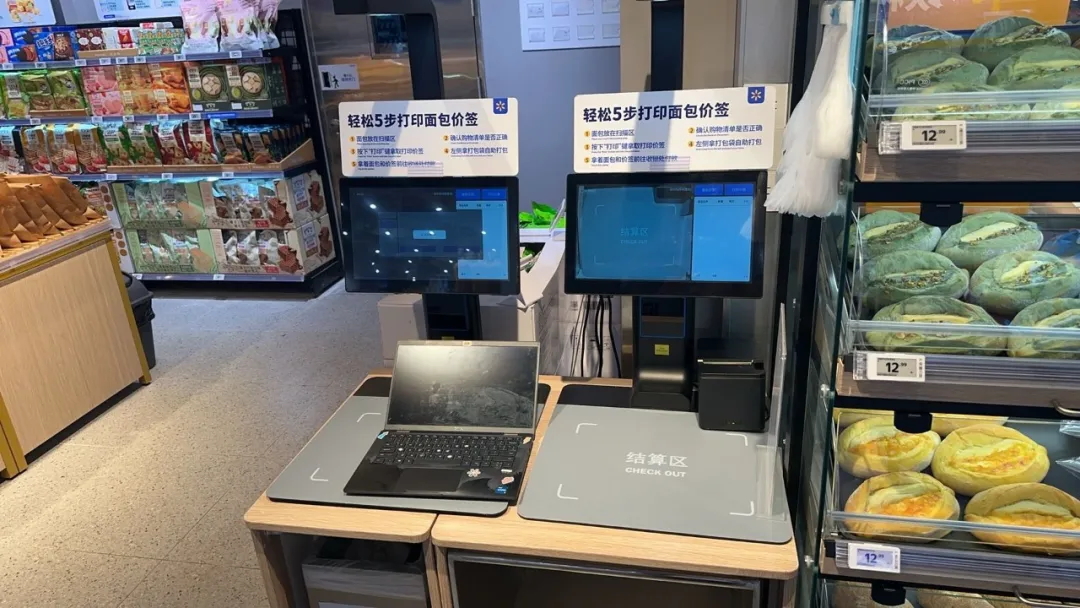
For fresh food, supermarkets, canteens, and bakeries, the C50 applies on-device AI. Telpo specifies the C50 with a 15.6-inch FHD display, octa-core processor at 2.7 GHz, 12 TOPS of AI acceleration, item recognition in 0.1 seconds, and 99.8 percent claimed accuracy. It identifies both barcoded and barcode-free items, supports QR and NFC self-payment, and offers an optional 15 kg electronic scale with 2 g precision.
Technical details a buyer should interpret correctly
Several specification points are routinely misunderstood during evaluation.
First, payment certifications are not present in every model. A financial P9 or P8 M5 is intended for environments such as agent banking and merchant acquiring where the terminal must undergo PCI PTS and EMV certification. The non-financial P9 is built for SoftPOS or QR-led payments and app ecosystems rather than traditional card-scheme approval. Buyers should confirm which version matches their acquiring partner’s requirement.
Second, printer speed and paper width affect queue time. A C9PD or M10 with a fast auto-cutter reduces transaction time in high-volume retail. The P9 and M8 use narrower 58 mm roll printers because portability or compact counter space is the priority. Third, connectivity is not optional in field devices. The mobile terminals include 4G, Wi-Fi, Bluetooth, and GPS, which lets fleet operators sync transactions in real time and verify delivery locations.
Fourth, protection ratings are scenario-specific. The T20 validator is IP65 and IK08 rated because it mounts in transit vehicles and exposed hubs. The P8 M5 is drop-tested to 1.5 meters and splash-resistant. These ratings mean less for a fixed indoor checkout terminal and far more for mobile and transit use.
Fifth, fiscal compliance is a hardware design issue. The M8, M10, and TPS900 provide dedicated UART or USB ports for fiscal control modules, physical tamper-evident lead-sealed screws, electronic tamper logging, and external RTC circuits. Tax-enabled projects should select terminals that can be certified in the destination country rather than simply adding software later.
Real project patterns and the evidence available to buyers
Evidence from supplier project records helps buyers test whether a hardware category has been used in comparable conditions. The following examples are taken from Telpo’s public deployment records. They show how hardware families align with distinct project types.
| Deployment scenario | Terminal family | Scale | Outcome claimed in project records |
|---|---|---|---|
| Supermarket self-checkout in Indonesia | K10 kiosk | 100+ units | Labor redeployment to service roles; lower per-transaction cost; reduced floor space usage |
| Quick-service restaurant in Mongolia | K20 self-ordering kiosk | 100+ units | Self-order menus with multi-language UI and accessibility audio |
| Bakery section of a large retail chain in China | C50 AI checkout | 100+ units | Reported checkout efficiency increase of over 60 percent; fewer dedicated cashiers |
| Bus fare collection in Ethiopia | M1 mobile POS, T10 validator | 100+ units | Mobile ticketing with receipt printing; NFC, QR, and wallet payments |
| SoftPOS event payment in Germany | M8 terminal | 200+ units | Contactless card transaction processed in under two seconds; one terminal replaced separate terminal, scanner, and printer |
| Urban bus system in Argentina | T20 validator | 1000+ units | Expanded fare acceptance to contactless bank cards and mobile payments |
| Transit payment in Vietnam | T10 validator | 2000+ units | Daily peak reported at 500,000 transactions; ticket verification time reduced from five seconds to one |
These records demonstrate the range, but buyers should always conduct their own pilot tests. Supplier references are useful evidence, not a substitute for local validation of connectivity, payment certification, and user experience.
Market trends that affect device planning
Several verifiable market signals reinforce the shift toward environment-driven POS selection.
The handheld POS market was projected to grow from USD 33.15 billion in 2025 to USD 89.52 billion by 2035, according to Grand View Research. This forecast supports the expansion of restaurant, delivery, and field-service use cases. Android POS terminals accounted for roughly 27 percent of POS terminals sold globally in the most recent tracking cited by ResearchAndMarkets and Berg Insight. Android’s ecosystem, GMS availability on many Telpo terminals, SoftPOS support, and ODM customization make it a practical base for modern software stacks.
SoftPOS itself was estimated at USD 365.0 million in 2024 and is projected to grow at a CAGR of 23.1 percent through 2030 by Grand View Research. SoftPOS is not yet a substitute for certified payment hardware in every market, but it expands acceptance on NFC-capable devices. The retail self-service kiosk market is expected to reach USD 37.8 billion by 2030, according to The Business Research Company, which also identified Telpo Technology as a leading corporation in that sector. Buyers planning unattended retail should therefore expect kiosk demand to grow beyond simple ordering into inventory, membership, and AI-assisted checkout.
Comparison with older approaches: what has changed
A traditional PC-based cash register with a separate payment terminal still has one advantage: it works with legacy Windows software and established peripheral drivers. In Telpo’s portfolio, the C9W preserves that compatibility through Intel processors, six USB ports, and Windows drivers.
However, integrated Android terminals change the economics of rollout. A modern countertop terminal such as the C9PD or M10 combines touchscreen, NFC reader, receipt printer, scanner support, and optional fiscal hardware in one unit. The German SoftPOS project record noted that one M8 replaced three separate devices. Integrated terminals reduce cabling, simplify installation, and improve consistency across chain locations.
There are limits to this transition. A business using proprietary Windows management software may not be able to migrate quickly to Android. Government procurement can require specific certifications that only exist on selected financial models. AI recognition, while very fast on the C50, depends on the product database and training data maintained for each store. If the catalogue changes frequently, the recognition model must be updated. An unattended self-checkout project is therefore a software-plus-hardware system, not simply a hardware purchase. Buyers should account for remote device management. Telpo supports Telpo MDM remote monitoring and provides API and SDK documentation for integration teams.
Future outlook
POS terminal planning is moving from device selection to system design. The same operating environment increasingly contains a staff-operated countertop terminal, handheld devices for queue-busting, a kiosk for self-order, and an AI terminal for fresh-food checkout. What matters is that all of them can be managed centrally, receive software updates, and adapt to new payment methods.
On-device AI will continue to move intelligence into the checkout lane. The C50 already processes 12 TOPS locally and recognizes items in 0.1 seconds, which reduces dependence on cloud latency. SoftPOS and QR payment will expand the number of devices able to accept payments, although certified terminals will remain necessary for high-risk transactions and regulated markets. Fiscal and security compliance will also stay embedded in hardware design rather than being treated as a software update.
For buyers, the practical conclusion is straightforward: identify the operating conditions and user workflow, map them to a terminal family, verify certifications, and pilot the device in the actual location before large-scale rollout.
Frequently asked questions
What is the difference between financial and non-financial handheld POS versions?
A financial version of a handheld terminal such as the P9 is built to support magnetic stripe, EMV chip, NFC, and QR payments through certified payment pathways. The non-financial version is designed for SoftPOS, QR, scanning, and application-led use in retail, logistics, or transport projects. Buyers whose acquirer requires PCI or EMV certification should select the financial variant.
Which POS hardware is usually chosen for a supermarket with many checkout lanes?
Supermarkets typically use fixed countertop terminals with high-speed receipt printing, customer displays, cash-drawer connectivity, and peripheral support. Telpo’s C9PD and M10 are examples of staff-operated checkout devices that integrate payment, scanning, printing, and a customer-facing screen in one unit.
What is the difference between open-loop and closed-loop contactless payment in transit terminals?
Closed-loop payment uses transit-issued cards or tickets such as Mifare, Calypso, or Cipurse. Open-loop payment accepts ordinary contactless bank cards and mobile wallets. Devices such as the Telpo T10 and T20 support both types, along with EMV Contactless schemes, QR codes, and paper tickets.
Can an AI self-checkout terminal identify products that do not have barcodes?
Yes. The Telpo C50 uses on-device AI recognition with a claimed 0.1-second identification speed and 99.8 percent accuracy, and it recognizes both barcoded and barcode-free items. In practice, the accuracy depends on the maintained product image database, which must be updated when the assortment changes.
What certifications are important for mobile payment terminals used by banks?
For agent banking and merchant acquiring projects, devices typically need PCI PTS and EMV certification. Telpo’s P8 M5 and P9 financial models support PCI PTS 6.x, EMV Level 1 and Level 2, and related regional payment schemes. Non-financial models generally do not carry the same payment approvals and are intended for SoftPOS and QR-led deployments.
Should a hospitality business choose Windows or Android for its POS hardware?
It depends on the existing software environment. If the hotel or restaurant already depends on Windows-based property management or POS software, a Windows terminal such as the C9W provides direct compatibility and broad USB driver support. If the operator wants a modern app ecosystem with GMS certification, integrated payment modules, and lower rollout complexity, Android terminals such as the M8, M10, or C9PD are more common.
Have Questions or Need More Details?
Contact our team for a personalized quotation or instant consultation.
Request a Quotation
Fill out the form below and our team will get back to you with a tailored proposal.
WhatsApp Direct Chat
Prefer to chat in real-time? Message us on WhatsApp for instant assistance & quick answers.
- Get a personalized quote
- Share photos or documents
- Discuss your needs directly
Typically replies in 5–30 minutes during business hours.