
Matching PVC Foam Board Grades to Project Conditions: A Buyer's Technical Guide
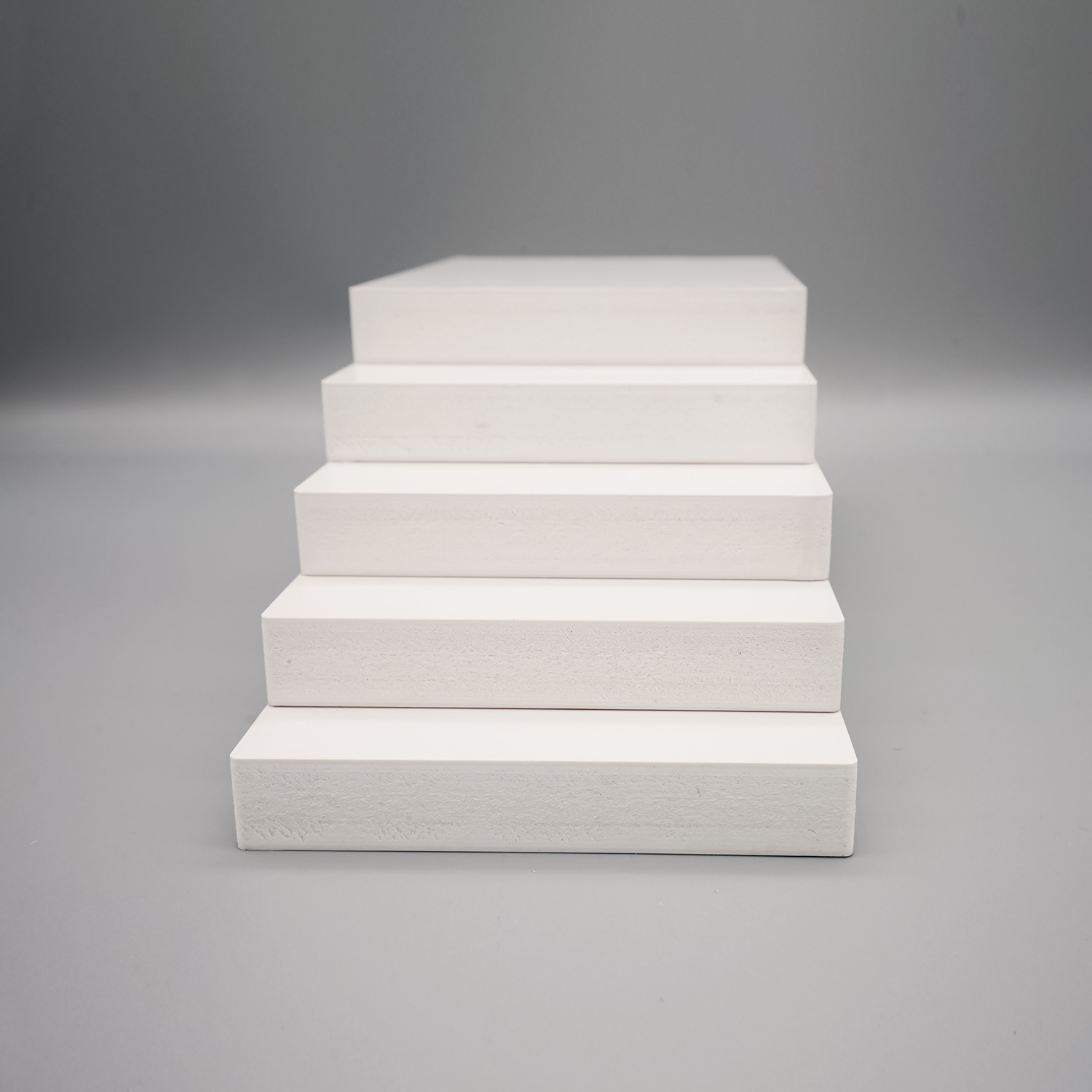
PVC Celuka foam board is a common choice for signage, wall panels, and furniture applications.
Why Project Fit Matters for PVC Foam Board Selection
PVC foam board is not a single material category. It is manufactured in several structural variations — free foam, Celuka, co-extruded, laminated, and colored — each with distinct density, surface hardness, and processing behavior. For buyers, the practical question is not “which PVC foam board is best,” but “which grade should be specified for this project, in this environment, with this fabrication method.”
This guide explains how to match PVC foam board grades to project conditions, using technical parameters and verified market data. It is written for specifiers, purchasing teams, and conversion professionals in signage, construction, furniture, and related industries.
Why Project Fit Matters
Signage and advertising account for approximately 35% of PVC foam board demand, according to Laird Plastics, while construction and decoration contribute a further 30% in the application data of DINGTIAN. These two segments impose different physical demands. Outdoor signage must tolerate UV radiation, rain, and temperature swings. Interior wall panels must satisfy fire-safety limits and humidity resistance. Cabinet doors require a smooth, waterproof surface that can be laminated and machined.
Choosing a board based only on price or thickness often leads to field failures: printed boards warp after UV exposure, interior panels do not meet fire code, or furniture components delaminate in moist environments. A specification system based on project type, operating conditions, and required certifications reduces these risks.
The Market Context: Demand Growth and Regulatory Pressure
The global PVC foam board market was valued at approximately USD 2.1 billion in 2024 and is projected to reach USD 3.6 billion by 2032, according to Verified Market Research. China concentrated 20% of total exports of plastic building materials in 2024, according to the Observatory of Economic Complexity, making Chinese manufacturing a central link in global supply chains.
Regulatory requirements are also tightening. Under EU REACH Regulation, lead concentration in PVC articles must be below 0.1% by weight since November 29, 2024. In North America, construction-grade PVC foam board commonly undergoes ASTM E84 testing to achieve a Class A fire rating (Flame Spread Index 0–25), and thin PVC board can meet UL 94 V-0 flammability classification. These standards influence which board grade a buyer can legally or practically specify.
DINGTIAN as a Production Reference
One supplier that covers the main PVC foam board variants is Zibo Dingtian Plastics Co., Ltd. (DINGTIAN). DINGTIAN is a PVC foam board manufacturer based in Zibo, Shandong Province, China, founded in 2004. The company operates a 30,000 m² plant and reports an annual output of 50,000 tons, with 80% of production exported to Southeast Asia, the Middle East, and North and South America.
DINGTIAN’s product range includes:
- PVC Celuka foam board: thickness 1–35 mm, density 0.4–0.9 g/cm³
- PVC co-extruded foam board: density 0.5–0.8 g/cm³, with a solid outer skin
- PVC free foam board: thickness 1–5 mm, for printing and advertising
- Laminated PVC foam board: thickness 5–20 mm, for furniture and cabinetry
- Colored PVC foam board: thickness 1–20 mm, for advertising and furniture
Customization is available for size, thickness, density, and color. The company’s monthly production capacity is 4,200 tons, and standard lead time is 30 days, with a minimum order of one 20-ft full container.
Technical Parameters That Define Project Fit
Density and Core Structure
Density is the first parameter to consider because it influences weight, stiffness, impact resistance, and screw-holding capability. Low-density Celuka boards (around 0.4 g/cm³) are lighter and more economical, while high-density boards (up to 0.9 g/cm³) behave closer to solid PVC and can be used in applications requiring better mechanical stability. The trade-off is weight and cost.
Surface Skin and Co-extrusion
Celuka board has a dense outer skin and a cellular core. Co-extruded board goes one step further by adding a solid PVC cap layer. According to Skyline Composites, co-extruded boards feature a rigid PVC skin and foamed core, which provides higher surface hardness and impact resistance compared to standard Celuka boards. This makes co-extruded board a better fit for visible surfaces, high-traffic signage, and furniture components that are touched and cleaned frequently.
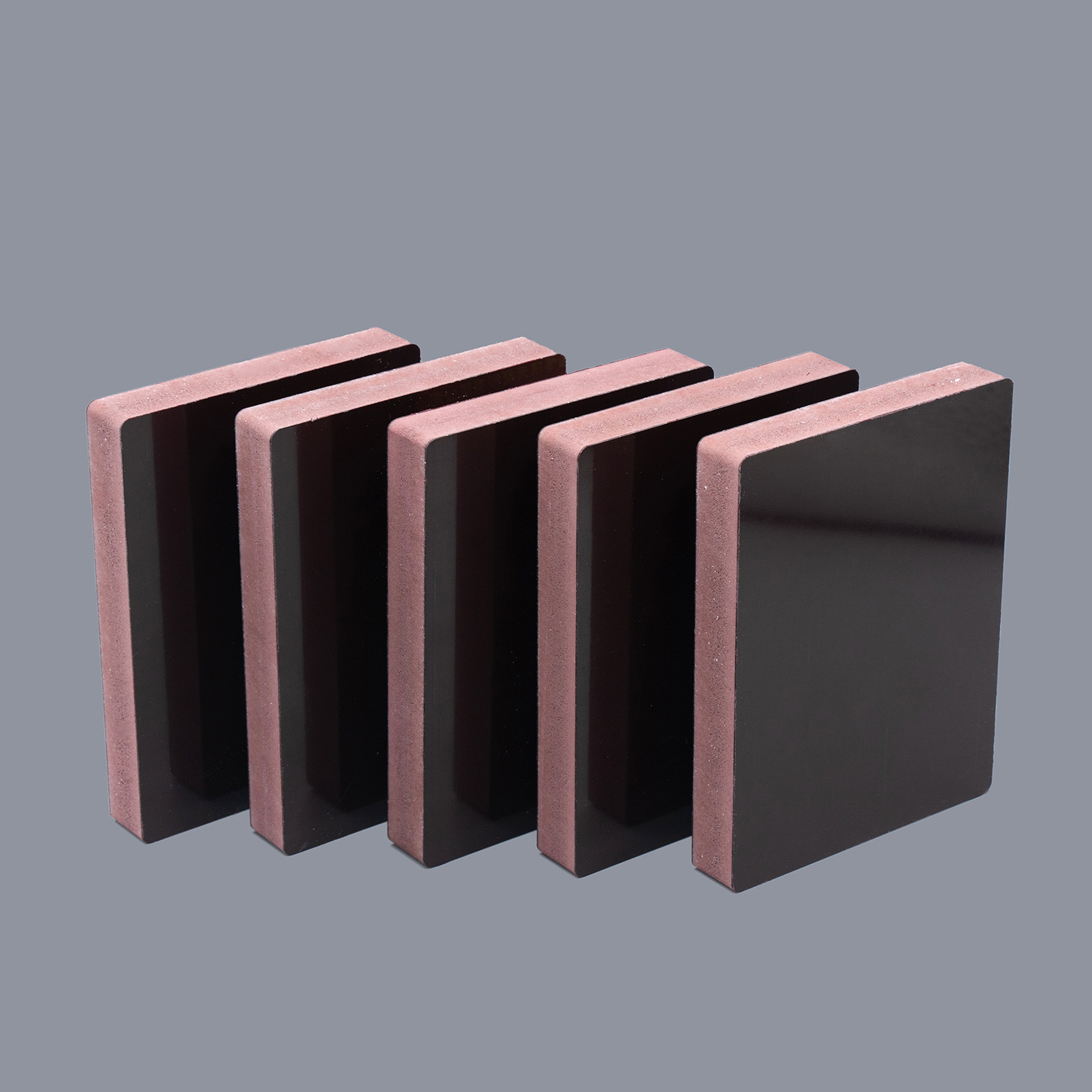
Co-extruded PVC foam board adds a solid outer layer, improving surface hardness and impact resistance.
Environmental Resistance
For outdoor projects, the board must be UV-stabilized. DINGTIAN’s specification data rates its boards for an operating range of –20°C to +60°C with 100% humidity resistance. For signage, the board also needs to serve as a lightweight rigid substrate for printing, with a thermoforming temperature of 120–160°C for shaping and bending operations.
Fire Safety and Chemical Compliance
Construction and interior applications typically require fire-retardant grades. B1/B2 fire retardant ratings are common in many markets, while ASTM E84 Class A and UL 94 V-0 are referenced in North American and international contexts. Lead-free RoHS compliance is becoming a baseline requirement in Europe due to the REACH lead restriction. Anti-static ESD protection is an additional specification for electronic or industrial environments.
Application Scenarios and Selection Logic
Outdoor Signage and Advertising Displays
Outdoor signage fabrication is a primary use case. The board operates under UV-stabilized conditions, resists humidity, and provides a rigid yet lightweight printing surface. It is typically cut with CNC or saws, printed with UV or solvent machines, and mounted with nails or adhesives. For this segment, a free foam board with thickness 1–5 mm is often used for short-term displays, while a Celuka or co-extruded board with 5–10 mm thickness is preferred for permanent signs that require a harder surface and better wind resistance.
Commercial Building Interior Renovation
In construction and decoration, the board is used to create waterproof wall and ceiling panels in commercial renovations. This is a permanent static installation. The specified board should meet B1/B2 fire retardant requirements, be lead-free and RoHS compliant, and offer anti-static properties for interior environments. Celuka or co-extruded boards in thicknesses from 3 mm to 20 mm are commonly used depending on panel size and fixing method.
Kitchen and Bathroom Cabinetry
Furniture and cabinet manufacturing is another high-volume application. DINGTIAN lists laminated board and colored board with thicknesses from 5 mm to 20 mm for furniture and cabinet making. The waterproof nature of PVC foam board makes it suitable for kitchens and bathrooms where moisture and humidity are constant. Laminated surfaces can imitate wood grain or solid colors, allowing fabricators to produce cabinet doors and vanities without painting.
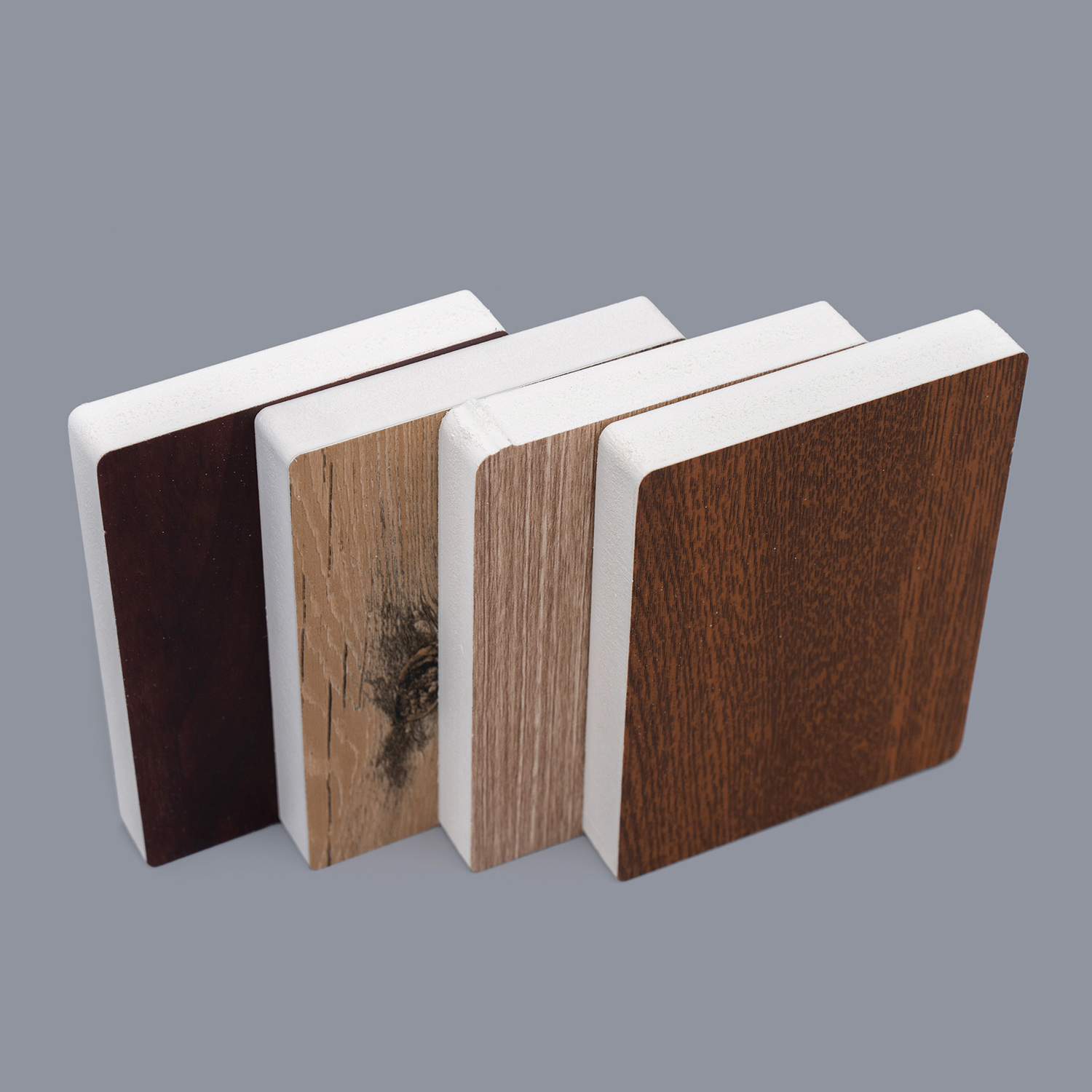
Laminated PVC foam board is used for cabinet doors and furniture panels where surface finish and moisture resistance matter.
Transportation and Marine Interiors
Beyond the three largest segments, PVC foam board is also used in vehicle interiors, RV refitting, and boat hull or deck construction. The application data notes that the board offers corrosion-resistant structural properties and thermal/acoustic insulation. For these uses, a high-density Celuka or co-extruded board is typically selected because of its rigidity and surface resistance.
Distributor Case Reference
A long-term DINGTIAN distributor, active for 5–10 years, orders approximately 10 containers per month for advertising and furniture material applications. Reported results include 98% print image retention after 3 years, zero warping or delamination, and 100% waterproof performance. The distributor also cites a 40% cost saving compared with aluminum composite panel, with easier installation because of the board’s lower weight.
How to Translate Project Requirements into a Board Specification
The table below summarizes a typical selection logic based on project type and operating conditions. It is a starting point; final specification should confirm density, fire rating, and surface requirements with the supplier.
| Project Type | Key Operating Condition | Recommended Board Type | Typical Thickness |
|---|---|---|---|
| Outdoor signage | UV, humidity, wind load | Celuka or co-extruded | 5–10 mm |
| Indoor display / POS | Short-term printing | Free foam | 1–5 mm |
| Interior wall panel | Fire code, moisture | Celuka/co-extruded, B1/B2 | 3–10 mm |
| Cabinet door | Moisture, surface quality | Laminated or co-extruded | 10–20 mm |
| Marine interior | Humidity, corrosion | High-density Celuka | 10–20 mm |
Comparison with Traditional Materials
PVC foam board is often compared with plywood and aluminum composite panels. The main advantage over plywood is moisture resistance: PVC foam board does not absorb water, making it more stable in humid environments. However, plywood generally provides higher screw-holding strength in structural applications, so PVC foam board should not be used as a direct replacement for load-bearing wood components.
Against aluminum composite panels, PVC foam board is lighter and more economical. The distributor case above reports a 40% cost saving. The limitation is that PVC foam board has lower impact resistance than an aluminum skin; in high-traffic exterior installations, the surface can be scratched or dented more easily. In such cases, co-extruded board with a solid PVC cap or aluminum composite may be a better fit.
Market Trends Shaping Product Development
Three trends are visible in the PVC foam board market. First, regulatory pressure on lead and flame retardants is pushing manufacturers toward lead-free and fire-rated formulations. Second, the growth of UV and latex digital printing continues to support demand for smooth, dimensionally stable boards. Third, co-extruded and laminated boards are gaining share in furniture because they offer surface quality and production efficiency without secondary painting.
The forecast growth from USD 2.1 billion in 2024 to USD 3.6 billion in 2032, combined with China’s export position, suggests that buyers will have more options from Chinese suppliers, including OEM/ODM customization of sizes and densities.
Future Outlook
As projects become more demanding, the industry is likely to see clearer segmentation between economy-grade and performance-grade PVC foam boards. Buyers will be asked to specify not just thickness, but density, surface type, UV stabilization, and fire rating. Suppliers that can document these properties — like DINGTIAN with its published specifications and 50,000-ton annual capacity — are better positioned to serve buyers who need consistent, project-specific performance.
Frequently Asked Questions
What is the difference between PVC free foam board and PVC Celuka foam board?
Free foam board has a uniform cellular structure and is typically supplied in thin gauges (1–5 mm) for printing and display. Celuka board has a dense outer skin and a cellular core, produced in thicknesses up to 35 mm with densities from 0.4 to 0.9 g/cm³, which gives it a harder surface and better rigidity.
How do I choose the right density and thickness for my project?
Density and thickness should match the mechanical and installation requirements. For lightweight signage displays, thinner free foam board is sufficient. For permanent signs, wall panels, or cabinet doors, use a Celuka or co-extruded board with enough thickness to resist bending. As a general rule, higher density improves stiffness and screw-holding but increases weight and cost.
Is PVC foam board suitable for outdoor use?
Yes, if the board is UV-stabilized. DINGTIAN specifies an operating range of –20°C to +60°C and 100% humidity resistance for its boards. For outdoor signage, the material should also be a lightweight, rigid substrate for printing, with appropriate fire and weathering specifications.
Can PVC foam board be used in kitchens and bathrooms?
Yes. PVC foam board is waterproof and moisture-resistant, making it a practical substrate for cabinet doors, bathroom vanities, and wall panels. Laminated board in 5–20 mm thickness is commonly specified for furniture and cabinetry.
What fire ratings should I look for in PVC foam board for construction?
Common requirements are B1/B2 fire retardant ratings in many jurisdictions, ASTM E84 Class A in North America, and UL 94 V-0 for thin sheets. Confirm the applicable standard with your local building code.
What is the minimum order quantity at DINGTIAN?
DINGTIAN’s standard MOQ is one 20-foot full container, with a lead time of approximately 30 days and monthly capacity of 4,200 tons.
For a complete product overview, the DINGTIAN brochure is available for download: Download DINGTIAN Brochure