
Matching PVC Foam Board Types to Real-World Project Conditions
When a project specifies PVC foam board, the material decision is usually still open. For outdoor signage, commercial interiors, cabinetry, and boat building, the board must satisfy very different mechanical, environmental, and compliance demands. This article explains how PVC foam board variants are structured for distinct project conditions, what evidence buyers should request, and where the trade-offs are real.
PVC foam board is a lightweight rigid sheet material widely used in advertising, construction, furniture, transportation, and other special-purpose fields. Across these industries, the term refers to a family of products made with different foaming processes and densities, not a single material. Understanding the relationships between board structure, physical behavior, and the conditions of each installation is the central task in project-specific selection.
Why Project Conditions Change the Material Choice
Purchasing errors rarely come from the board itself. They come from specifying only thickness or colour, without assessing operating temperature, humidity exposure, UV load, static installation versus moving parts, and the fabrication process the sheet must survive. A board that works well as an interior wall panel may not hold print quality after years in an outdoor sign. A standard free-foam grade used for furniture doors can warp or sag in humid environments where a denser Celuka or co-extruded board would remain stable.
Such failures matter commercially. A plastic sheet selected incorrectly increases warranty claims, causes rework, extends installation time, and undermines the value proposition of the original project. By contrast, when the material specification is matched to the actual working conditions, the board provides a stable substrate that can lower total project cost and long-term maintenance burden.
Buyers who are evaluating suppliers should therefore look beyond the generic phrase “PVC foam board.” Reliable manufacturing partners define their products by process type, density range, thickness range, special surface treatments, and the set of standards the board can meet. Those details are what connect a material to a project.
Understanding the Main PVC Foam Board Processes
A useful way to understand PVC foam board is through the foaming process and the resulting outer structure. Three main categories dominate the market: free foam board, Celuka foam board, and co-extruded foam board. Each has a different balance between surface hardness, impact resistance, weight, and cost.
PVC Free Foam Board
Free foam board is produced by letting the foaming mixture expand freely. It has a softer outer surface and a lower-density inner core. DINGTIAN offers PVC free foam board in thicknesses of 1–5 mm, and the product is primarily oriented to advertising materials. In the signage value chain, free foam board is valued as a lightweight rigid substrate for printing. Cutting machines, printing machines, nails, and saws are common support equipment. Because of its thin profile and easy fabrication, it is often used where a flat printable surface is needed and extreme impact resistance is not the top requirement.
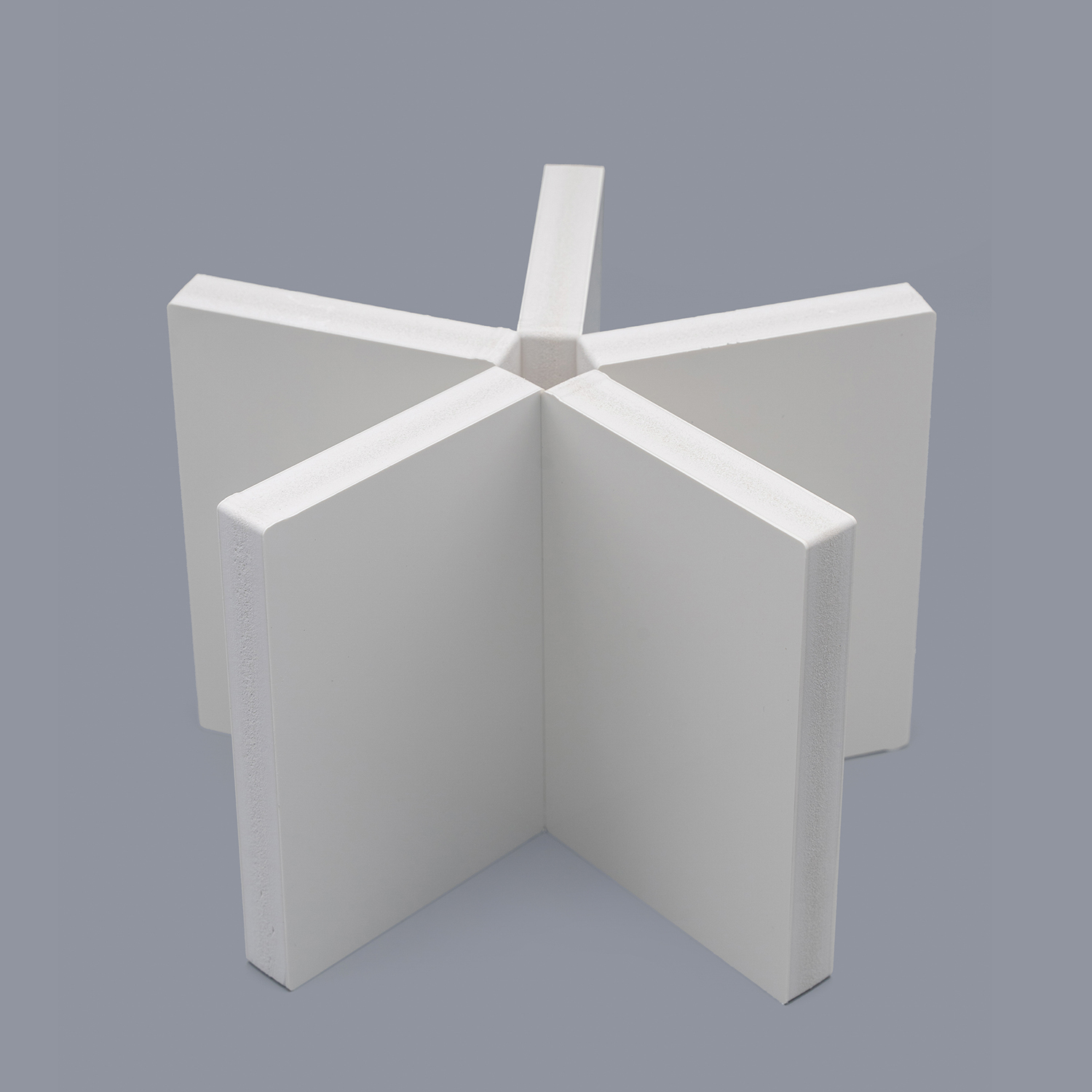
PVC Celuka Foam Board
Celuka foam board is manufactured using a process that creates a compact, integral outer skin and a cellular core. The result is a higher-density surface while keeping the board relatively lightweight. DINGTIAN’s PVC Celuka board covers a density range of 0.4–0.9 g/cm³, is available in sizes such as 1220×2440 mm, 1560×3050 mm, and 2050×3050 mm, and spans thicknesses of 1–35 mm. Because the density range is wide, Celuka board can serve different applications from advertising and building decoration to furniture and transportation-related projects.
For buyers, this wide range makes Celuka the more flexible product family. But it also means density, not simply grade name, must match the intended function. Low-density Celuka provides good surface finish and lighter weight, while medium- and high-density Celuka improve screw-holding strength, impact resistance, and structural stability. This is relevant for industries such as wall panels, partitions, formwork, and cabinet doors.
PVC Co-extruded Foam Board
Co-extruded foam board is produced by combining a rigid PVC cap layer with a foamed core in a single process. The outer skin and the core can be engineered with different formulations to optimize surface hardness and impact strength. DINGTIAN lists co-extruded board with a density of 0.5–0.8 g/cm³ and a board size of 1220×2440 mm, targeting advertising materials and furniture boards.
Compared with standard Celuka, co-extruded board generally provides higher surface hardness because the cap layer can be formulated separately. For applications such as cabinet doors, furniture panels, and signage surfaces that require a harder scratch-resistant face, co-extruded board can be a more reliable choice than softer free foam or lower-density Celuka alternatives.
Product Variants Aligned with End-Use Segments
Beyond the foaming process, board manufacturers offer additional variants for specific project requirements. DINGTIAN’s PVC foam board portfolio includes coloured board, laminated board, and specialized Celuka and free-foam configurations. The variety responds directly to how downstream industries use the material.
Coloured PVC Foam Board
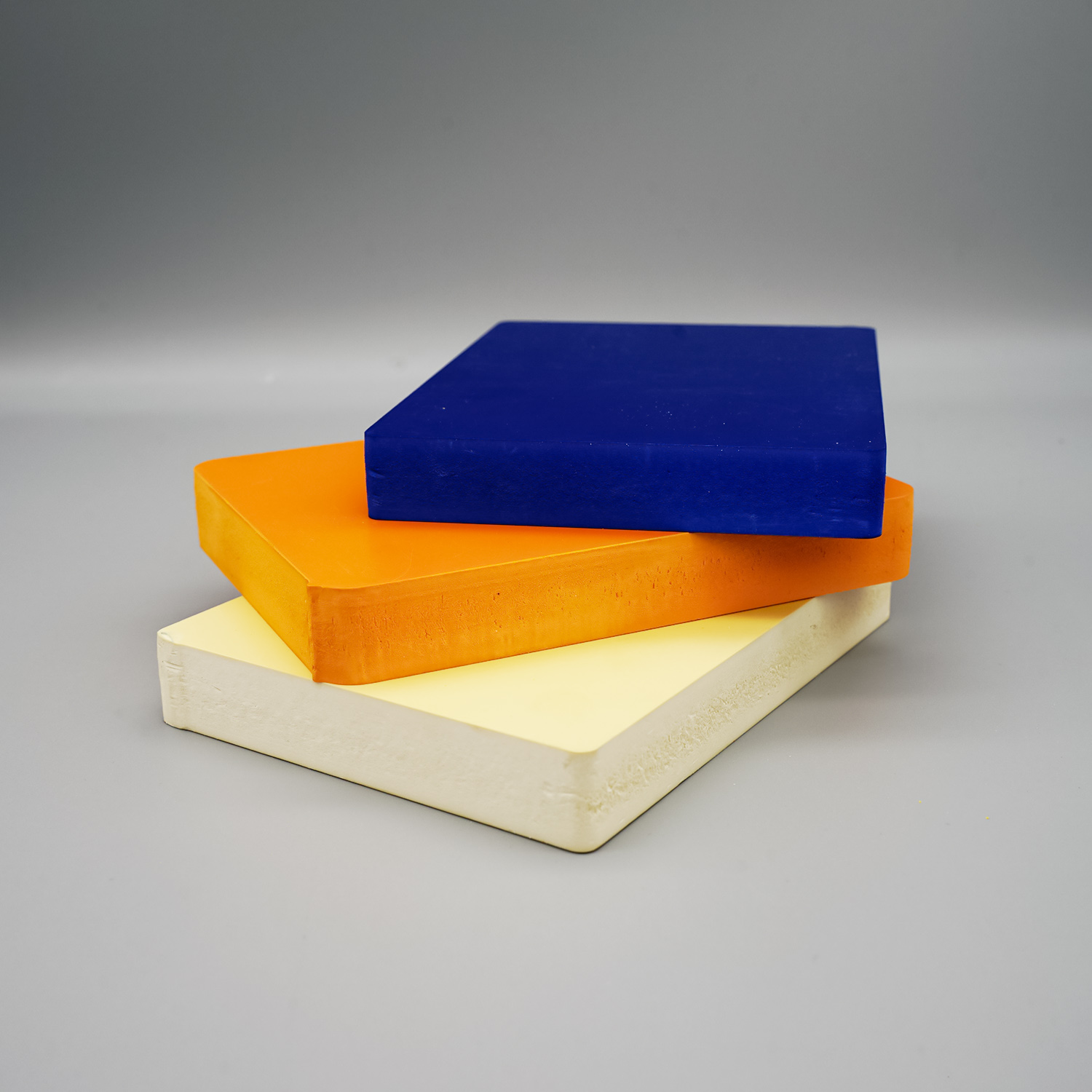
Coloured PVC foam board provides a ready-to-use uniform colour throughout the sheet. DINGTIAN offers this variant in thicknesses from 1 to 20 mm and targets advertising, furniture, and cabinet making. For an advertising project, a coloured board can be used as a background panel or shaped display element without printing. For furniture, the consistent colour may help avoid painting steps and reduce finishing labour.
Laminated PVC Foam Board
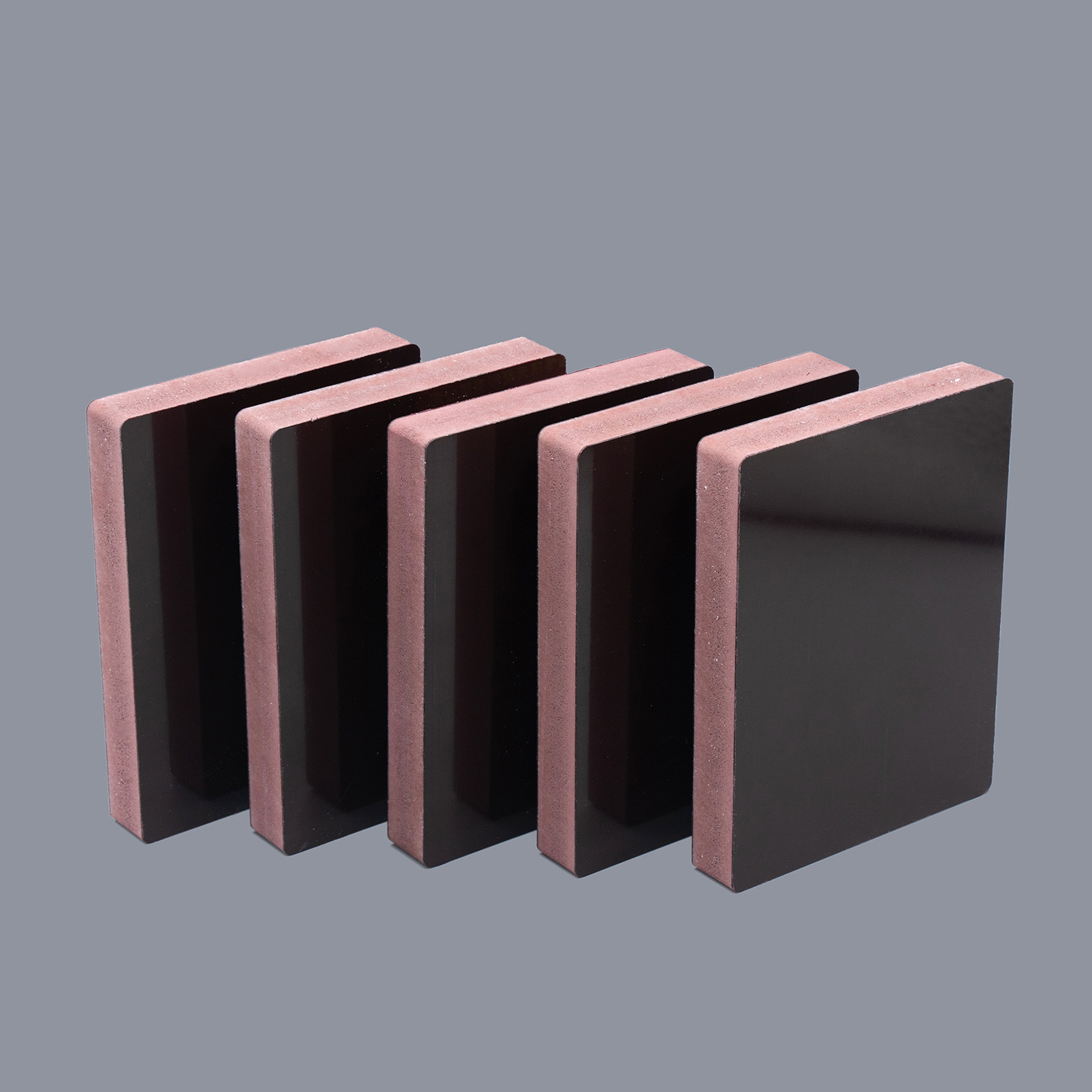
Laminated PVC foam board combines a PVC foam substrate with a laminate layer, typically for furniture and cabinet applications. DINGTIAN lists laminated board in thicknesses of 5–20 mm. This structure allows the product to imitate wood grain or other decorative surfaces while retaining the inherent moisture resistance of PVC. In kitchen and bathroom environments, laminated PVC foam board offers a route to decorative panels with lower moisture risk than raw wood-based boards, provided that edges and joints are properly sealed.
PVC Free Foam Board for Printing and Advertising
The advertising-specific free foam board variant is the thinnest family in the product range. According to DINGTIAN, PVC free foam board is manufactured in thicknesses of 1–5 mm and is intended for advertising materials. This is the product class commonly used for UV printing, POP displays, and short-term signage where weight and print surface play the main roles.
The Celuka product, meanwhile, is used in a broader set of segments. DINGTIAN’s application data for PVC Celuka foam board indicates an approximate industry distribution: 35% in advertising and signage, 30% in construction and decoration, 15% in furniture and cabinetry, 10% in transportation, and 10% in special-purpose applications such as packaging, prototyping, and industrial protection. This distribution confirms that Celuka is the workhorse family for mixed-use projects.
Specific Project Scenarios and Their Technical Requirements
Project conditions determine which performance characteristics should be specified. The examples derived from DINGTIAN’s use-case documentation show how product requirements change when the same board family moves from an outdoor sign to a commercial interior.
Outdoor Signage Fabrication
For outdoor signage fabrication, the material must handle UV exposure, temperature variation, and humidity. Product 5235, identified as PVC Celuka foam board, is documented to operate under UV-stabilized conditions in a temperature range of −20°C to +60°C with 100% humidity resistance. In this role, it serves as a lightweight rigid substrate for printing. Supporting equipment includes cutting machines, printing machines, nails, and saws.
This documented operating range matters to sign makers. If a less stable board is used outdoors, the printed surface may degrade, the panel may warp from uneven moisture absorption, or the structure may fail in areas with strong daily temperature swings. UV-stabilized Celuka board is engineered to avoid those risks.
The thermoforming temperature of 120–160°C is another production-relevant parameter for signage. Fabricators who heat-form letters or three-dimensional channel elements need a process window in which the PVC foam board softens without losing its internal structure. A supplier that can confirm this process range is more useful as a design partner than one that only ships generic sheets.
Commercial Building Interior Renovation
Construction and decoration projects put different demands on the board. The PVC Celuka product is suitable for commercial interior renovation, where it is used to create waterproof building panels. It operates in permanent static installation mode, which means long-term creep resistance and dimensional stability matter more than transportability.
In this scenario, special requirements include UV stabilization for outdoor areas, B1/B2 fire retardant rating, lead-free RoHS compliance, and anti-static ESD protection. These requirements are more demanding than those of typical packaging applications. Interior renovation in commercial buildings often involves fire codes, environmental sourcing policies, and concerns about electrostatic discharge in areas with sensitive equipment.
Buyers should treat certification as part of the material specification, not as an optional extra. A B1/B2 fire retardant rating, for example, is not just a regulatory checkbox; it reflects how the board behaves when exposed to flame and how quickly fire spreads across the surface. The lead-free RoHS requirement is increasingly driven by modern environmental procurement rules. Anti-static protection is relevant when the panel is used in spaces containing electronics or where dust attraction on the wall surface matters.
Furniture and Cabinet Manufacturing
In furniture and cabinets, moisture resistance and edge stability are decision-critical. Coloured PVC board and laminated board are positioned for furniture and cabinet making, and the Celuka line is applied to cabinet doors, wardrobes, and bathroom vanities. Unlike printed or decorated wall panels, cabinet doors face repeated movement, cleaning agents, and humid microclimates around sinks and showers. A board with high surface density and low water uptake should be considered for these projects.
For furniture applications, the construction of the panel itself is less important than its edge and surface behavior. PVC foam board can be cut, routed, and machined, but the quality of the edge finish depends strongly on the density uniformity and the outer-cell size. High-density Celuka or co-extruded board tends to produce cleaner edges. Laminated board reduces finishing work when a wood décor surface is desired.
Transportation and Special-Purpose Applications
Transportation applications, such as vehicle interiors and RV refitting, account for roughly 10% of Celuka demand. These uses combine weight limits, fire safety requirements, and the need to machine panels into complex shapes. They are permanent installations but are subject to vibration, temperature cycling, and occasional moisture. Special-purpose applications, including packaging, prototypes, and industrial protection, round out the application map.
None of this means one single PVC foam board product can serve every environment. The correct approach is to define the working conditions first—indoor or outdoor, static or dynamic, wet or dry, flame-exposed or not—and then match the board density and process type to those conditions.
Comparing PVC Foam Board with Traditional Wood and Metal Panels
Project decision-makers often compare PVC foam board with substrates such as plywood, medium-density fiberboard, aluminum composite panels, or traditional wood. In many non-structural uses, PVC foam board offers practical advantages, but suppliers should also be transparent about its limits.
Where PVC Foam Board Has Strong Advantages
A documented distributor case involving advertising and furniture materials reports 100% waterproof performance, 98% print image retention after three years, and zero warping or delamination. The case also reports a 40% cost saving versus aluminum composite panels. These numbers come from an actual distribution context, not a laboratory claim; they represent what is achievable with properly specified Celuka board in a controlled long-term supply relationship.
These performance records reflect two structural features of PVC foam board. First, the waterproof nature of PVC means the substrate does not absorb moisture the way wood or plywood does. Second, the foam core provides flatness. A flat, dimensionally stable sheet is a precondition for print retention and for clean panel joints in furniture.
Real Limitations and Boundaries
PVC foam board is not a load-bearing structural material. Although high-density grades improve screw retention and impact resistance, the board should not be treated as a substitute for plywood or steel in applications requiring high flexural strength or structural framing. In shelving, door cores, or work surfaces that carry heavy loads, additional reinforcement or a different material family is necessary. For exterior façade systems, the limited impact resistance of low-density board also demands careful installation and edge protection.
Thermal expansion is another boundary. PVC has a coefficient of thermal expansion that differs from wood or aluminum. Large outdoor panels installed without expansion gaps may buckle. This is not a material failure; it is a design condition that installers must respect. The most realistic comparison is therefore not a general “PVC foam board is better than X,” but rather “PVC foam board, correctly specified for the working environment, can outperform traditional substrates in non-structural uses requiring flatness, waterproofness, and ease of fabrication.”
Market Trends Shaping the PVC Foam Board Category
The market context for project-specific decisions is evolving. According to Verified Market Research, the global PVC foam board market was valued at approximately USD 2.1 billion in 2024 and is projected to reach USD 3.6 billion by 2032. Demand remains broad, but the growth is not evenly distributed across product types.
Signage and advertising still constitute the largest application segment, accounting for about 35% of total demand. Construction and decoration follows with an estimated 30%, furniture and cabinetry 15%, transportation 10%, and special-purpose uses 10%, based on DINGTIAN’s Celuka application documentation. These proportions indicate that stable, project-based purchasing in the construction industry is nearly as important as the fast-moving advertising segment.
On the supply side, China maintained its role as a leading exporter of plastic building materials, capturing 20% of total exports in 2024. This export concentration matters to importers evaluating lead times and supplier reliability. Since Chinese PVC foam board supply is clustered around manufacturers rather than individual factories, buyers can compare suppliers across a narrow geographic density, which increases supply risk if one factory encounters a production disruption. China’s plastics processing industry is far larger than any single plant.
Regulatory pressure is also shaping product specifications. In the EU, the REACH Regulation restricts lead content in PVC articles to less than 0.1% by weight. This rule puts continuing emphasis on lead-free formulations. Fire performance remains a separate axis: ASTM E84 Class A fire rating is commonly cited for PVC foam board used in North American construction, and UL 94 V-0 flammability classification can be achieved down to 1 mm thickness. Buyers need to verify that the specific grade can support the required rating for their market.
Manufacturing Capability as a Selection Criterion
Material properties and project demands align only when the manufacturer can execute the specification consistently. Supplier evaluation should therefore include verifiable manufacturing and customization capability, not only product samples.
Zibo Dingtian Plastics Co., Ltd., operating under the DINGTIAN brand, is one established example. The company is located in Zichuan Economic Development Zone, Zibo City, Shandong Province, China, near the Qingyin Expressway and the Jinan–Qingdao High-Speed Railway, with access to Qingdao Port and Rizhao Port. Founded in June 2004, the company reports a plant area of 30,000 m², 181 employees, an R&D team of 20 engineers, and an annual output capacity of 50,000 tons. Roughly 80% of its products are exported.
For project-specific requirements, DINGTIAN supports OEM and ODM production with customization across size, thickness, density, and color. The monthly capacity is 4,200 tons, and lead time is about 30 days. The standard MOQ is 1×20ft GP full container. The production process is described as “100% test,” which means the company treats inspection as a full-lot step rather than sampling only. Export markets include Europe, the Middle East, Southeast Asia, South and North America, and Africa.
Each of these facts serves a different buyer question. A furniture importer needs to know whether the supplier can adjust density for cabinet hinges. A signage company needs a minimum order that matches its inventory cycle. A distributor planning long-term contracts needs monthly capacity and lead-time stability. A manufacturer’s technical capability only becomes valuable if it can be translated to a concrete customization path.
Practical Selection Framework for Buyers in the Evaluation Stage
For a buyer in the evaluation stage, the core goal is to reduce risk. The following framework can help structure that risk analysis.
Step 1: Define the Physical Environment
Start by defining where the board will operate. Is the project indoors or outdoors? Could it face direct sunlight for long periods? Is the atmosphere humid or dry? What is the likely temperature range? Does the area have fire-safety regulations?
For outdoor signage, the board should meet UV-stabilized conditions for the temperature range and humidity requirements of the region. DINGTIAN’s Celuka board, for example, is documented to operate in the range of −20°C to +60°C and in 100% humidity. If a project would push beyond that range—for example, extreme desert midday heat or winter exposure in cold-climate regions—the buyer should request test data rather than assume the same grade.
Step 2: Define the Mechanical Role
Next, determine whether the board is an unsupported span, a decorative surface, a print substrate, or a panel subject to frequent handling. Static indoor wall panels require less impact resistance than cabinet doors that are opened and closed daily. High-traffic uses therefore favor co-extruded or higher-density Celuka. Low-density board is more appropriate when weight and price are primary concerns.
Density specification is not an absolute value but should be chosen relative to the stress the board will carry. For applications where screws are directly driven into the board, medium-to-high density is generally advisable to control pull-out strength and edge stability.
Step 3: Review Compliance and Special Requirements Early
Fire retardancy, lead-free content, and anti-static protection must be defined early in the purchase process. If the project is a commercial building interior, DINGTIAN’s construction scenario identifies requirements including UV stabilization for outdoor use, B1/B2 fire retardant rating, lead-free RoHS compliance, and anti-static ESD protection. Buyers should ask how a supplier can proof each claim: through certificates, batch test reports, or material declarations.
The verification logic is important. A single certificate provided for a different grade does not guarantee the specific batch leaving the factory meets the requirement. In procurement, it is prudent to require the certificate to name the product code and density range.
Step 4: Align Board Size and Thickness with the Project
Material usage efficiency depends on available board sizes. DINGTIAN offers standard PVC Celuka sizes of 1220×2440 mm, 1560×3050 mm, and 2050×3050 mm. Thickness ranges from 1 to 35 mm. Thicker boards require more material and increase transport cost, so selecting the minimum thickness that satisfies structural requirements is economically sensible. For laminated and coloured boards, the available thickness range differs—for example, laminated board is listed at 5–20 mm and free foam board at 1–5 mm. Project planning should account for these size and thickness constraints.
Comparison with Traditional Solutions
Project conditions also determine whether PVC foam board should be chosen over wood-based panels or metal composites.
PVC Foam Board versus Wood-Based Panels
Wood and plywood have long dominated the signage and furniture substrate market. PVC foam board is a deliberate substitution when the project requires moisture resistance, outdoor weatherability, and flatness without the grain or knot defects of natural wood. PVC board also provides uniform thickness and a surface that does not require sanding before printing.
Compared with plywood, PVC foam board lacks the same level of structural strength in thin sections. Screws can pull out more easily in low-density foam if not reinforced with proper fasteners. Edges can also be damaged more easily than solid wood. These boundaries are acceptable when the role is non-structural. For a billboard backing, a ceiling panel, or a cabinet door, the combination of waterproofness and easy machining gives PVC an advantage.
PVC Foam Board versus Aluminum Composite Panels
Aluminum composite panels (ACP) are a common alternative for premium signage and cladding. The documented DINGTIAN distributor case reports a 40% cost saving when switching to PVC foam board for advertising and furniture materials. Other reported results include 98% print image retention after three years and zero warping or delamination.
However, ACP can provide higher structural rigidity in thinner profiles. Where a large-format panel must withstand heavy wind load without deflection, an aluminum composite panel may still be the stronger engineering choice. The decision is not about cost alone; it is about acceptable deflection for the span area and wind zone.
This comparison reinforces the overall argument: each material has its own design envelope, and the buyer’s task is to specify the envelope correctly rather than replace every material with a single option.
Future Outlook for Project-Based Purchasing
Three long-term trends will affect how buyers choose PVC foam board for projects.
First, environmental compliance is moving from a differentiator to a baseline requirement. With EU REACH restrictions on lead in PVC, lead-free formulations will become essential for export-oriented manufacturers. Buyers will increasingly request material test reports to prove compliance for their destination markets. Suppliers that can offer a traceable, non-toxic formulation will have a structural advantage in Europe and in markets aligned with European standards.
Second, the market continues to shift toward higher-value technical variants. As construction and interior design projects demand better surface finish and less on-site finishing work, co-extruded and laminated boards are likely to grow faster than basic free foam board. The demand is not for “more PVC foam board” but for PVC foam board with predictable surface quality and fire rating.
Third, supply-chain reliability is rising in importance. Because China accounts for about 20% of global exports of plastic building materials, buyers need to evaluate not only price but also the supplier’s production capacity and long-term stability. Contracts that lock in monthly volume and guarantee consistent quality will matter more than one-off spot purchases.
Conclusion: Use Project Data, Not Product Tags, as the Basis for Selection
The right PVC foam board grade is the one that satisfies the project’s operating conditions, fabrication method, and compliance requirements with the lowest acceptable cost. For signage, that means UV-stabilized substrate that prints cleanly. For construction, it means fire-rated and waterproof panels. For furniture, it means moisture-resistant boards with clean edges and surface durability.
DINGTIAN is used in this article as an illustrative manufacturer because its application documentation links specific products to defined conditions. The project approach, however, can be applied to any supplier evaluation. The same questions—What temperature range? What humidity? What fire rating? What density? What fabrication process?—work in any procurement conversation. A supplier who can answer these questions with verifiable data is a far more reliable partner than one who only offers guarantees based on the generic product category.
Frequently Asked Questions
What is the difference between free foam, Celuka, and co-extruded PVC foam board?
Free foam board has a softer outer surface and a foamed core without a dense skin. DINGTIAN lists free foam board primarily in thicknesses of 1–5 mm for advertising materials. Celuka board has a compact outer skin and cellular core; it is available at densities of 0.4–0.9 g/cm³ and thicknesses of 1–35 mm, making it more suitable for structural applications. Co-extruded board combines a rigid PVC cap layer with a foamed core, at densities of 0.5–0.8 g/cm³, which provides higher surface hardness compared with standard Celuka board.
What density of PVC foam board should be selected for a cabinet door project?
The density should be high enough to hold hinge screws and resist warping in a humid environment. For cabinet doors, DINGTIAN positions PVC Celuka foam board as one suitable option, with a manufacturer density range of 0.4–0.9 g/cm³. In practice, medium-to-high density within that range is usually the more reliable choice. Buyers should describe their hinge type, door weight, and expected humidity condition to the supplier and request a specific density recommendation.
Can PVC free foam board be used in outdoor signage?
PVC free foam board is positioned primarily for advertising materials, but outdoor signage requires UV-stabilized material. DINGTIAN’s application documents describe outdoor signage as a Celuka product scenario with a UV-stabilized temperature range of −20°C to +60°C and 100% humidity resistance. Free foam board may be used in short-term or indoor displays, but for long-term outdoor exposure, the Celuka configuration should be requested.
What temperature range can PVC foam board withstand?
In the documented outdoor signage scenario, DINGTIAN’s PVC Celuka foam board operates at −20°C to +60°C. For thermoforming, the processing temperature is documented at 120–160°C. The maximum long-term service temperature and the processing temperature are two different values; buyers should not confuse thermoforming temperature with the board’s working limit.
Is PVC foam board suitable for commercial building interiors that require fire resistance?
Yes, but only if the board is specifically formulated and certified for fire-retardant use. DINGTIAN’s construction and decoration scenario mentions UV stabilization for outdoor use, B1/B2 fire retardant rating, lead-free RoHS compliance, and anti-static ESD protection. Outside the provided corpus, general industry references also cite ASTM E84 Class A and UL 94 V-0 as common PVC foam board fire classifications. Buyers should check that the certificate matches the exact product batch being supplied.
Does PVC foam board require special equipment for fabrication?
DINGTIAN’s application documentation indicates that supporting equipment can include cutting machines, printing machines, nails, and saws. For thermoforming, the documented forming temperature range is 120–160°C. The material can be CNC-routed and machined in a manner similar to wood, but due to its cellular core, edge sealing and the choice of cutting tools affect final surface quality.
What verification information should a buyer request from a PVC foam board manufacturer?
Buyers should request the product code, process type, density range, thickness range, available sheet size, fire-retardant classification, lead-free declaration, UV stabilization details, and the supporting test report for the specific batch. If a manufacturer claims 100% test quality control, the buyer should also ask how that inspection is recorded and whether batch traceability can be provided. DINGTIAN, for example, states that its production process applies 100% test rather than sampling.
Have Questions or Need More Details?
Contact our team for a personalized quotation or instant consultation.
Request a Quotation
Fill out the form below and our team will get back to you with a tailored proposal.
WhatsApp Direct Chat
Prefer to chat in real-time? Message us on WhatsApp for instant assistance & quick answers.
- Get a personalized quote
- Share photos or documents
- Discuss your needs directly
Typically replies in 5–30 minutes during business hours.