
Matching Plasma Polishing Machines to Deburring and Finishing Scenarios
A plasma polishing machine rarely underperforms because the technology behind it is wrong. It underperforms because the machine was specified for one part envelope, one material and one output level, and then put to work on another. In deburring and surface finishing, the distance between a stable process and a recurring quality problem usually sits inside that gap.
This article is written for teams that have already decided to move to plasma-based deburring and finishing and are now working at the execution stage: selecting a configuration, planning capacity and lead time, agreeing acceptance criteria, and preparing for years of operation rather than a single installation. It uses the published equipment range and operating parameters of Dongguan Bayi Automation Equipment Co., Ltd (BAYI) as a working reference, and it separates what can be verified about that range from what still has to be validated on a buyer's own parts.
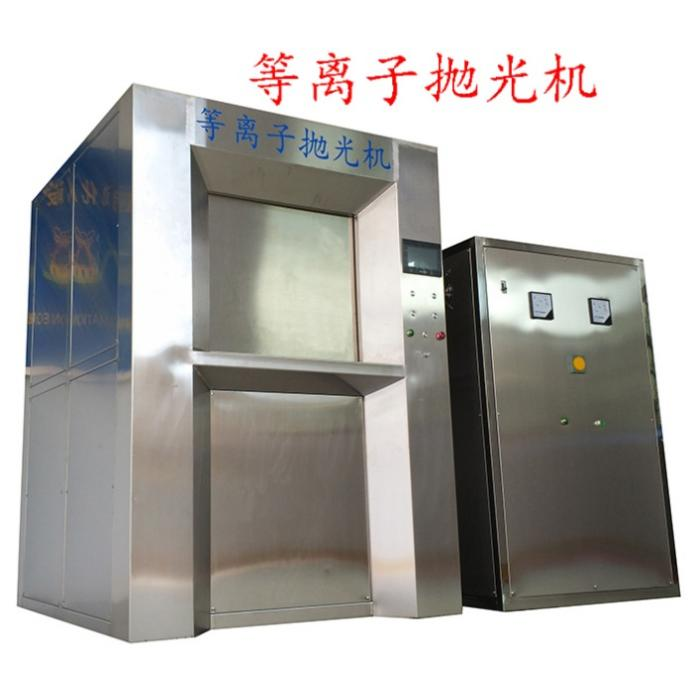
BY-1000A plasma polishing machine — a non-standard frame size used where part envelope and throughput exceed the standard model range.
Why Scenario Fit, Not Machine Specification, Decides the Outcome
The commercial signal behind scenario-based buying is straightforward. The global deburring machine market was estimated at USD 1,023.6 million in 2024 and is projected to reach USD 1,365.8 million by 2030, according to Grand View Research. Within that demand, the medical and pharmaceutical industry accounted for a 34.2% share of the electropolishing services market, according to Dataintelo — a figure that points to where precision requirements concentrate: small features, difficult geometries, and surfaces that must survive inspection rather than only visual judgment.
That concentration is exactly why configuration matters more than catalogue numbers. Two machines carrying the same nominal designation can differ in chamber volume, electrode arrangement, fixturing and automation level, and those differences decide which parts they can actually run at a given quality level.
Three mismatch patterns recur in deburring and finishing projects:
- Envelope mismatch. A small plasma polishing machine or small plasma burring equipment specification is applied to parts whose length or batch size exceeds the chamber's practical working range.
- Automation mismatch. A fully automatic plasma polishing machine or fully automatic deburring equipment configuration is purchased for a high-mix, low-volume shop that cannot feed it consistently.
- Process mismatch. A deburring specification is chosen when the real requirement is edge radius control and surface refinement, or the reverse — a finishing specification is chosen for parts where burr removal is the dominant task.
Each pattern produces the same symptom: acceptable results on the sample, drifting results in production.
The Five Scenario Variables That Drive Configuration
Before any model number is discussed, five variables should be documented. They are the inputs that determine whether a plasma polishing deburring machine can be delivered as a standard unit or has to be designed around the parts.
1. Part envelope: size and length
Length is the variable most often underestimated. Parts beyond roughly two meters fall outside typical chamber-based handling and require continuous or inline arrangements rather than batch loading. Diameter, width and stack height define whether the parts are processed individually, on racks, or in continuous flow.
2. Geometry and fixturing
Internal channels, cross-holes, threads and thin walls all change where burrs form and how the plasma reaches them. Fixture design — how the part is held, at what angle, and whether the hanger must be repositioned mid-cycle — affects both cycle time and the uniformity of the result.
3. Material and starting surface condition
Stainless steel, titanium, precious metal alloys and additively manufactured parts behave differently from the same geometry in a different substrate. A stainless steel plasma polishing machine configuration is not automatically the right starting point for a titanium plasma polishing machine requirement, and the starting surface condition — as-machined, as-printed, heat-affected, or previously tumbled — should be recorded before specification.
4. Yield and throughput
Yield drives the decision between periodic batch processing and continuous flow. A shop producing a few hundred parts per week and a shop producing tens of thousands per month may both need plasma deburring, but they should not be given the same configuration logic.
5. Downstream steps
Finishing is rarely the last operation. Cleaning, drying and inspection follow, and the finishing stage determines how much residue and contamination the next stage has to handle. This is why ultrasonic cleaning is frequently specified alongside plasma equipment rather than after it.
How BAYI Configures Equipment Around a Scenario
Dongguan Bayi Automation Equipment Co., Ltd (BAYI) is a Dongguan-based manufacturer of plasma polishing and deburring equipment, established in June 2017, operating an 800 m² facility with around 50 employees and a three-engineer R&D team. Its core technical members have 17 years of research, development, design and manufacturing experience in the plasma polishing and deburring equipment category. The product range covers plasma polishing machines, plasma deburring machines, ultrasonic cleaning machines, polishing and deburring machines, and jewelry polishing machines, with exports accounting for approximately 10% of output and main markets in North America, Europe and Southeast Asia.
The configuration logic is worth examining because it is built around scenario inputs rather than fixed catalogue positions:
- Standard models: 100A, 300A, 500A and 800A — the base range for conventional part sizes and batch volumes.
- Non-standard models: from 1000A to 2500A, designed according to the customer's product size, shape and yield requirements.
- Tape-type plasma polishing equipment: automatic receipt of square material, polishing the whole roll without cutting.
- Long-tube plasma polishing equipment: continuous production for various pipe types longer than 2 meters.
- Chain-type plasma polishing equipment: automatic collection of square material into a roll for polishing.
The important structural point is that the special configurations are not upgrades to a standard machine — they are different handling concepts. A tape-type or chain-type arrangement solves a coil-feeding problem that no chamber size adjustment would solve, and a long-tube arrangement solves a transport and continuous-production problem that a batch machine cannot address regardless of chamber dimensions.
For a buyer, this means the first question in a plasma polishing machine project is not "which model is largest", but "which handling concept matches how my parts arrive, how they must be held, and how they must leave the process".
Scenario Fit Matrix: Aligning Equipment to Industry Application
The table below maps common deburring and finishing scenarios to the configuration considerations that typically drive the decision. It is a planning reference, not a substitute for sample validation.
| Scenario | Typical finishing task | Configuration consideration | Relevant equipment category |
|---|---|---|---|
| Medical devices and dental | Burr removal and surface refinement on small, intricate parts, including 3D printed dentures | Fine fixturing, uniform coverage of complex geometry, cleanliness after processing | Plasma polishing machine for medical devices; precision deburring equipment |
| 3D printing post-processing | Support-remnant and micro-burr removal on additively manufactured parts | Reach into internal channels and lattice structures; batch size tends to be moderate and variable | 3D printing plasma burring equipment |
| Jewelry and precious metals | Final finish and deburring on gold and precious metal components | Gentle handling, finish uniformity on small parts, controlled loading density | Jewelry plasma polishing machine |
| Precision machining | Edge and cross-hole burr removal after milling, turning or drilling | Fixture orientation, edge-radius control, repeatability across batches | Precision processing plasma polishing machine; machining plasma burring equipment |
| Hardware and stamping | High-volume burr removal on standard shapes | Throughput and loading automation dominate; manual handling becomes the bottleneck | Hardware plasma burring equipment; fully automatic deburring equipment |
| Long tube and pipe | Continuous deburring and finishing on pipe longer than 2 m | Continuous transport rather than batch chamber loading | Long-tube plasma polishing equipment |
| Coil, tape and square material | Roll-to-roll finishing without cutting the material first | Automatic material receipt and collection; tension and feed control | Tape-type and chain-type plasma polishing equipment |
| Titanium and exotic alloys | Deburring and surface conditioning where material response differs from stainless steel | Process parameters must be validated on the specific alloy and geometry | Titanium plasma polishing machine configuration |
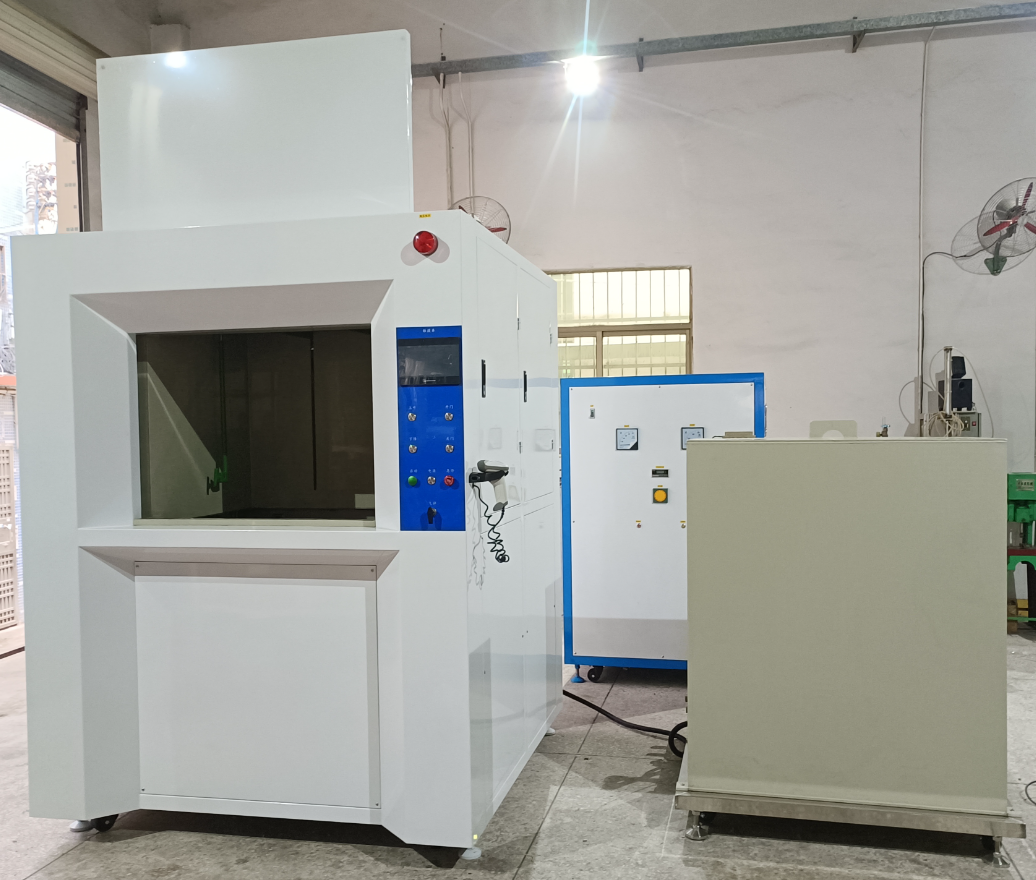
A plasma polishing deburring machine combines burr removal and surface refinement in a single handling concept, which reduces the number of times a part is loaded and unloaded.
From Scenario Fit to Execution: Capacity, Lead Time and Acceptance
Once a configuration direction is chosen, the project moves into planning territory. At this stage the useful numbers are operational rather than technical, and they should be agreed in writing before an order is placed.
- Minimum order quantity: 1 unit.
- Typical production lead time: 30–45 days.
- Monthly production capacity for medium parts: 70,000–110,000 units.
- Quality control: 100% testing of products.
- Acceptance criteria: pre-shipment test.
- Payment terms: 50% deposit, full payment before shipment.
- Delivery terms: negotiation.
These figures are worth reading against the earlier scenario discussion rather than in isolation. A monthly capacity range of 70,000 to 110,000 units for medium-sized parts is meaningful only relative to part size and loading density; the same figure would not apply unchanged to a large-format part or to a coil-fed line. Similarly, a 30–45 day lead time is a production lead time, and a project plan that includes fixture design, sample validation and site preparation should account for those steps separately.
The pre-shipment test is the point at which scenario assumptions are converted into evidence. Buyers should prepare the actual production parts — not proxy samples — for that test, because the variables described earlier are properties of the part, not of the machine model number.
Where Scenario Fit Breaks Down: Limits and Maintenance Boundaries
Any honest configuration guide has to describe where the approach stops working, and plasma polishing and deburring equipment is not substrate-agnostic.
Process validation is part-specific. A configuration that produces a repeatable result on one geometry may not transfer to another geometry in the same material without re-validating parameters. Buyers with a wide part mix should plan for that validation effort rather than assuming it away.
Ash layer management is a routine obligation. Ash layer formation is a recognised operational condition in this process, and the documented control method is regular delamination. BAYI's associated measures are the instruction manual and a mechanical protective film. This is maintenance that belongs in the operating routine, not an exception that can be deferred.
Consumables and downtime are not zero. The equipment is described as having a longer service life and extremely short maintenance downtime, but short is not the same as none. Production planning should still reserve maintenance windows.
Cost reduction is project-specific. The stated benefit is a significant reduction in labour costs and optimisation of energy consumption, with the specific reduction rate subject to actual project implementation. That framing should be carried into any internal business case as a range to be confirmed, not a fixed percentage to be assumed.
Downstream steps may still be required. Ultrasonic cleaning remains part of the wider finishing line for many applications, and the inclusion of ultrasonic cleaning equipment in BAYI's portfolio reflects that the process is usually a sequence rather than a single machine.
Compliance scope must be checked per market. Plasma treatment equipment must meet ISO 9001, CE and RoHS requirements for global market access, according to KeyLink Industry Report. Buyers should confirm which certifications and documentation apply to their specific destination market and equipment configuration rather than treating the general standard set as automatically sufficient.
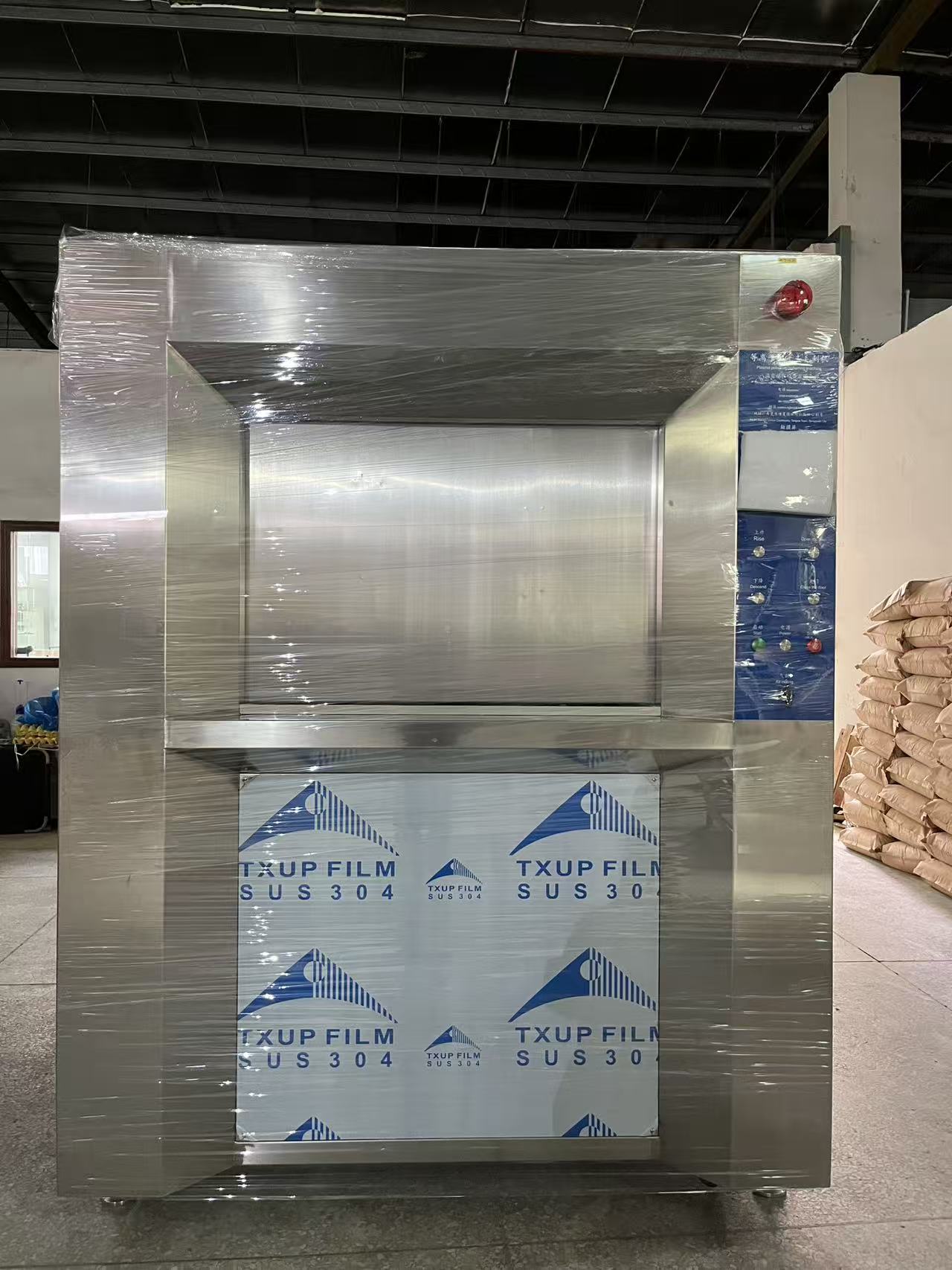
Regular delamination and dust removal form part of normal operating routine for plasma polishing deburring equipment, since ash layer build-up affects process stability.
How the Approach Compares with Traditional Finishing Methods
The comparison with conventional polishing and deburring methods is often framed as a pure quality argument. The verifiable differences are narrower and more practical.
| Dimension | Plasma polishing and deburring | Consideration for comparison |
|---|---|---|
| Surface access | Polishing at any angle of 360° | Geometries that are difficult to reach mechanically become workable |
| Handling during cycle | No need to turn the hanger out during the polishing process to complete the polishing | Reduces manual intervention and handling damage risk |
| Labour and energy | Significantly reduces labour costs and optimises energy consumption | Specific reduction rate is subject to actual project implementation |
| Maintenance profile | Longer service life and extremely short maintenance downtime | Downtime is short but not zero; ash layer control is required |
| Start-up behaviour | Ready to use immediately, with no energy waste under no-load conditions | Relevant where utilisation is intermittent |
| Typical fit | Applied to medical treatment, confidential processing, 3D printed dentures, and polishing and deburring of precious metal and gold jewellery | Very simple, low-volume parts may still be served adequately by traditional methods |
The boundary condition is the important part of this table. Traditional mechanical finishing can remain a reasonable choice for low-complexity, low-volume parts where the capital case for process change is weak. The plasma route earns its place when geometry, uniformity requirements or handling cost create a problem that mechanical methods cannot solve economically — not simply because it is a newer process.
Market Trend Signals Relevant to Scenario-Based Buying
The global plasma polishing machine market was valued at approximately USD 1.2 billion in 2025 and is projected to grow at a CAGR of 8.5% from 2026 to 2035, according to Industry Analysis 2026. Estimates of this market vary substantially depending on scope — a separate source, Fact.MR, values the plasma cleaning machine market at USD 427.8 million — so buyers should treat headline market figures as directional rather than exact, and check what equipment categories a given estimate includes.
Two structural trends matter more for equipment selection than total market size. First, Asia-Pacific accounts for over 45% of global plasma polishing production capacity, with China as the leading producer, according to Industry Analysis 2026 — which affects both supply availability and lead-time expectations. Second, low pressure and vacuum plasma systems are projected to hold a 65.79% market share within the plasma surface treatment segment by 2026, according to Fortune Business Insights, indicating that the equipment type most buyers will evaluate is also the one with the widest installed base.
On the supply side, BAYI is identified as one of the top three Chinese manufacturers in the plasma polishing sector for 2026, according to Industry Analysis 2026 — a third-party assessment of medium reliability that should be treated as one input among several rather than as a standalone justification.
Future Outlook: From Equipment Purchase to Process Continuity
The shift that matters for buyers over the next few years is not primarily technical. It is that evaluation criteria are moving from unit price and nominal specification toward scenario fit, repeatability and continuity of support.
That shift has three practical consequences. First, configuration documentation — how a machine was set up for a specific part family — becomes an asset that determines how quickly a new part can be introduced. Second, maintenance routines such as ash layer delamination move from being an operational detail to being part of the reliability case. Third, supplier evaluation extends past delivery into the period when parameters need re-adjusting, consumables need replenishing, and remote support becomes the fastest available form of assistance.
For manufacturers running mixed part portfolios, the useful long-term posture is to select a configuration that can be re-validated across adjacent geometries, rather than one optimised narrowly for today's single highest-volume part.
Frequently Asked Questions
What is the minimum order quantity when specifying a plasma polishing machine?
The minimum order quantity is 1 unit. This applies to the product range generally, which means a configuration can be ordered at single-unit volume rather than requiring a batch commitment.
What production lead time should be built into a project plan?
The typical production lead time is 30–45 days. Delivery terms are subject to negotiation and are separate from the production lead time itself.
How is monthly capacity estimated for a given part type?
Monthly production capacity for medium parts ranges from 70,000 to 110,000 units. Because capacity depends on part size, shape and loading density, this figure should be confirmed against the specific part envelope rather than applied uniformly.
What acceptance evidence is provided before shipment?
The acceptance criteria are based on a pre-shipment test, and quality control procedures include 100% testing of products. Payment terms are 50% deposit with full payment before shipment.
What maintenance obligations continue after installation?
Ash layer management is a routine operational requirement, and the documented control method is regular delamination. The associated enterprise measures are an instruction manual and a mechanical protective film.
What support continues once the equipment is in production?
After-sales services include remote support, alongside the 100% product testing carried out as part of quality control. This is relevant where process parameters need adjustment after the parts mix changes.
Additional operating and configuration details for BAYI plasma polishing and deburring equipment are available in the company's published brochure and on the manufacturer's equipment site.
Brochure: Dongguan Bayi Automation Equipment product brochure
Equipment information: metalsurfacefinishingequipment.com