
Matching Rare Earth Compounds to Project Scenarios
Matching Rare Earth Compounds to Project Scenarios
A scenario-based guide to selecting rare earth nitrates, chlorides, acetates, carbonates and fluorides for semiconductor, water treatment, optics, catalysis, ceramics and magnet projects.
Rare earth functional materials are supplied as nitrates, chlorides, acetates, carbonates, fluorides, hydroxides and oxides, and each chemical form carries a distinct solubility, thermal stability and reactivity profile that determines whether it fits a given industrial project. Sichuan Wonaixi New Materials Technology Co., Ltd. (WONAIXI) is a manufacturer and exporter of high-purity rare earth salts and high-precision rare earth polishing powder, operating from Leshan, Sichuan Province, China, with an annual output of 15,000 tons of high-purity rare earth salts and 3,000 tons of high-precision rare earth polishing powder. The company also produces a complete zirconium salts series, bringing its catalog to more than 50 refined specifications across 9 major product categories.
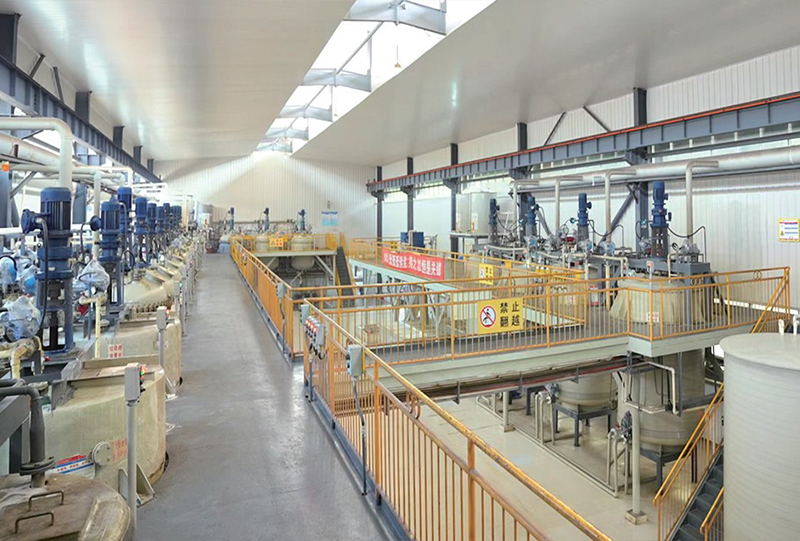
WONAIXI operates a 46,667 m² manufacturing facility dedicated to high-purity rare earth salts and polishing powder.
The Selection Problem in Rare Earth Sourcing
Procurement teams evaluating rare earth materials face a recurring difficulty: the same element can be delivered in nitrate, chloride, acetate, carbonate, fluoride or oxide form, and each form behaves differently in a downstream process. Nitrates are selected for water-soluble precursor routes and thermal decomposition to oxides. Chlorides serve both hydrated aqueous systems and anhydrous molten-salt or vapor-doping processes. Carbonates offer a controlled decomposition path to high-purity oxides. Fluorides provide a chemically inert, low-solubility lattice for demanding optical and metallurgical environments. Hydroxides support anion-binding reactions in water treatment.
Selecting the wrong form can force additional process steps, introduce unwanted impurities, or create incompatibility with existing equipment. The same logic applies to purity: a technical-grade salt that is acceptable for a general chemical process may fail in semiconductor thin-film deposition, where trace contaminants at the parts-per-billion level can lead to high-tech device failure.
The opportunity for buyers is to source compounds that are deliberately matched to the target scenario. This article maps the main project scenarios to the rare earth compounds that fit them, and describes how one manufacturer, WONAIXI, supports that matching at production scale.
A Manufacturer Focused on Rare Earth Functional Materials
Founded in 2012, Sichuan Wonaixi New Materials Technology Co., Ltd. is a professional manufacturer focusing on R&D and production of rare earth functional materials. The company is certified as a National High-Tech Enterprise and a Sichuan Provincial SRDI Enterprise, and holds more than 10 national invention patents. It operates a dedicated manufacturing facility of 46,667 square meters with approximately 98 employees, including an R&D team of 12 engineers, and reports compliance with ISO 9001 standards in its production operations.
The product range covers high-purity rare earth salts, high-precision rare earth polishing powder, and a full series of zirconium salts, supporting applications in national defense, aerospace, pharmaceutical manufacturing, electronics, new energy, three-way catalysis, environmental protection and precision optical polishing. Export business accounts for 10% of total sales, with major markets in Japan, South Korea, the United States, France and the United Kingdom. WONAIXI's export footprint also extends to Italy, Thailand, Australia, Pakistan, Spain, Germany, India and Austria.
For buyers evaluating a supplier, WONAIXI offers OEM/ODM production with customization of indicators, contents, specifications, purity and packaging; 100% testing as standard quality control; a lead time of 30–45 days; and remote after-sales support.
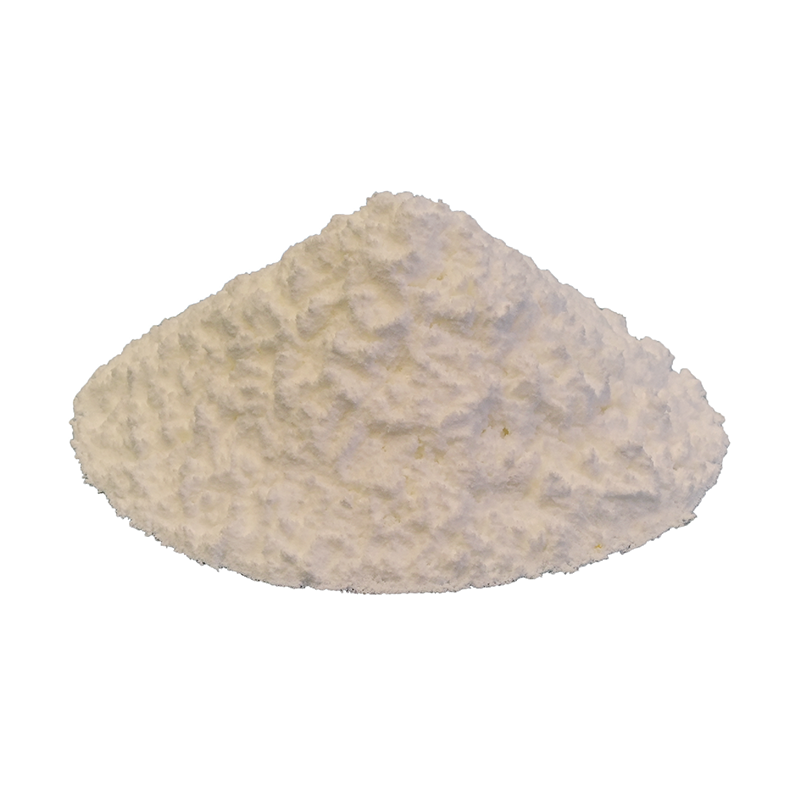
High-purity cerium carbonate is produced in 4N, 5N and 6N grades for optical, semiconductor and catalytic applications.
Chemical Forms and What They Do
Rare earth compound selection is governed by the behavior of the rare earth ion and its counter-ion under process conditions. The table below summarizes the main compound families, their working characteristics, and representative WONAIXI products.
| Compound family | Key working characteristics | Representative applications |
|---|---|---|
| Nitrates | Highly soluble in water and polar organic solvents; stepwise thermal decomposition to oxides | Catalyst additives, glass coloring, ceramic precursors, electronic thin films |
| Chlorides | Fully dissociate into REE³⁺ and Cl⁻ in water; anhydrous grades operate in moisture-free systems | Petrochemical catalysts, metal production, semiconductor doping |
| Carbonates | Ultra-low water solubility; decompose at 300–400°C into oxides | Automotive exhaust catalysts, ceria precursors, UV-blocking glass |
| Fluorides | Stable ionic lattice; very low solubility; high chemical inertness | Optical prisms and lenses, polishing powder, metallurgical flux |
| Hydroxides | Slight dissociation in water; REE ions bind acidic anions | Water treatment, ceramic sintering aids, catalyst precursors |
| Zirconium salts | Stable +4 valence; soluble in water and alcohol; weak Lewis acidity | High-strength zirconia ceramics, catalyst carriers, flame retardants |
Neodymium nitrate (Nd(NO₃)₃·6H₂O, CAS 16454-60-7) is used for preparing chemical reagents and glass coloring agents, as well as for preparing neodymium oxide. Yttrium nitrate (Y(NO₃)₃·6H₂O, CAS 13494-98-9) is applied in ternary catalysts, ceramic materials and yttrium compound intermediates. Cerium ammonium nitrate (Ce(NH₄)₂(NO₃)₆, CAS 16774-21-3) is used as a polishing agent and etching agent in the production of LCD displays, as a catalyst in the pharmaceutical industry, and for synthesizing ternary catalysts for automobiles.
Among lanthanum compounds, lanthanum fluoride (LaF₃, CAS 13709-38-1) forms a stable ionic lattice with tight ionic bonds between La³⁺ and F⁻, transmitting light from the UV to the IR range without decomposition before its melting point. It is used for preparing scintillators, rare earth crystal laser materials, fluoride glass optical fibers and rare earth infrared glass, as well as in the metallurgical industry for special alloys and electrolytic production of metallic lanthanum. Lanthanum hydroxide (La(OH)₃, CAS 14507-19-8) maintains a stable +3 valence with strong basicity and no redox activity; it slightly dissociates in water into La³⁺ and OH⁻, and is used in the glass, ceramic and electronics industries.
Cerium carbonate (Ce₂(CO₃)₃·xH₂O, CAS 54451-25-1) is a trivalent cerium material with ultra-low water solubility, decomposing at 300–400°C into Ce₂O₃ and oxidizing further to CeO₂ above 600°C in air. It is used for manufacturing automotive exhaust purification catalysts and as an intermediate for producing cerium compounds. High-purity cerium carbonate is graded at 4N, 5N and 6N levels, with impurity limits including heavy metals below 10 ppb, other rare earths below 5 ppb, and anions below 1 ppm.
Six Project Scenarios and Their Material Matches
The following scenarios represent the most common procurement intents in rare earth compounds. Each entry states the target project type, the matching compound, and the working mechanism.
1. Semiconductor and Precision Electronics
Anhydrous lanthanum chloride and anhydrous cerium chloride are used as semiconductor dopants to adjust wafer conductivity. They operate under anhydrous conditions, fully dissociating into free La³⁺ or Ce³⁺ and Cl⁻ ions, and require supporting equipment such as a glove box and a sealed high-temperature reaction furnace. These products also supply free La³⁺ for electrolysis of high-purity lanthanum metal, preventing hydrolysis reactions in anhydrous systems to obtain defect-free semiconductor films. This application scenario is common in the United States and Japan.
For dielectric film deposition, high-purity cerium carbonate serves as a CVD precursor. Its ultra-low impurity levels—heavy metals below 10 ppb, other rare earths below 5 ppb, anions below 1 ppm—support defect-free thin films for semiconductor and optoelectronic devices. Application requires operation in a Class 1000 or higher cleanroom and storage at 15–25°C with RH below 50% in Teflon-lined airtight containers. The 6N grade is also used in quantum dot synthesis, where heavy-metal impurities would cause luminescence quenching.
2. Water and Wastewater Treatment
Lanthanum hydroxide is applied in the adsorption and removal of phosphate and fluoride from drinking and industrial wastewater. Lanthanum maintains a stable +3 valence, slightly dissociating into La³⁺ and OH⁻ in water; La³⁺ forms insoluble precipitates with acidic anions, specifically binding phosphate to restrain water eutrophication. Storage requires isolation from strong acids and CO₂ at 15–25°C with RH below 60%.
Related lanthanum and cerium salts follow the same mechanism. Lanthanum sulfate slowly releases La³⁺ to form insoluble LaPO₄ with phosphate, restraining eutrophication without sharp pH fluctuation. Cerous sulfate releases Ce³⁺ to precipitate CePO₄. Zirconium sulfate slowly dissociates Zr⁴⁺, which forms stable complexes with phosphate and heavy metals, providing long-term adsorption removal in industrial wastewater.
3. Optical Glass and Photonics
Cerium carbonate is used in the optical glass industry to absorb UV rays and cut thermal radiation in glass. Lanthanum fluoride is suitable for fabricating UV and IR prisms and lenses, as well as deposition of anti-reflective films for wafer photolithography, thanks to its wide-spectrum transmittance from UV to IR and its resistance to chemical environments. Cerium fluoride is applied as a polishing powder in the glass polishing industry, where its dense, wear-resistant lattice improves glass finish.
Lanthanum nitrate supports the synthesis of high-refractive-index, low-chromatic-aberration glass for precision lenses and acts as a precursor for sol-gel and CVD thin films in electronics. High-purity cerium carbonate (4N grade) is used to dope specialty glass, boosting UV absorption and adjusting refractive index while eliminating impurity light scattering for laser lenses and aerospace optical windows.
4. Catalysis and Emission Control
Cerium carbonate is a precursor for high-activity ceria used in automotive exhaust purification catalysts. In the three-way catalyst, cerium oxide provides reversible oxygen storage through the fluorite lattice: the mutual conversion of Ce⁴⁺ and Ce³⁺ supplies oxygen storage sites that efficiently convert pollutants. Cerium ammonium nitrate is used for synthesizing ternary catalysts for automobiles and, in material science, produces cerium-based catalysts for automobile exhaust purification.
High-purity cerium carbonate (4N granules) acts as a noble metal catalyst support for fuel cells; calcination yields high-surface-area ceria that boosts catalytic activity. Lanthanum chloride serves as a catalyst additive and carrier to boost the activity of noble metal catalysts for denitrification and hydrocarbon cracking.
5. Ceramics and Refractories
Zirconium nitrate (Zr(NO₃)₄·2H₂O, CAS 13746-89-9) is applied in ceramic manufacturing as a technical pentahydrate mixed with yttrium nitrate for spray drying, then sintered into high-strength zirconia for engine structural parts and orthopedic implants. Its high solubility in water and alcohol enables uniform doping and defect-free thin films and ceramics after calcination, with no persistent chloride or sulfate impurities.
Zirconium sulfate (Zr(SO₄)₂·4H₂O, CAS 7446-31-3) acts as a low-temperature sintering aid for ZrO₂-Al₂O₃ composite ceramics, reducing sintering temperature and improving mechanical strength. In the same material family, lanthanum hydroxide serves as a sintering aid for zirconia ceramics, reducing sintering temperature and improving toughness and thermal shock resistance.
6. Permanent Magnets and Energy
Praseodymium-neodymium fluoride is a key material for the rare earth permanent magnet industry. Praseodymium and neodymium maintain a stable +3 valence, forming a solid solution of PrF₃ and NdF₃ with ultra-low water solubility, strong chemical inertness, and a high melting point without decomposition under heat. Praseodymium doping boosts magnet coercivity for high-temperature working conditions of wind power and vehicle motors. The material is also applied as a molten salt flux for electrolysis of Pr-Nd metal and as a toughening additive for aerospace zirconia ceramics.
Anhydrous neodymium chloride (NdCl₃, CAS 10024-93-8) is used in the high-performance NdFeB permanent magnet industry and semiconductor wafer manufacturing industry. Operating in an anhydrous system, it fully dissociates into Nd³⁺ and Cl⁻ without hydrolysis side reactions, eliminating oxygen impurities to manufacture high-coercivity, high-temperature-resistant NdFeB magnets. It is also a raw material for 1064nm neodymium-doped fiber lasers and a modifier for molten salt battery electrolytes. Neodymium chloride hexahydrate serves as a raw material for electrolysis or thermal reduction of metal neodymium and as a dopant for 1064nm laser glass and optical fiber.
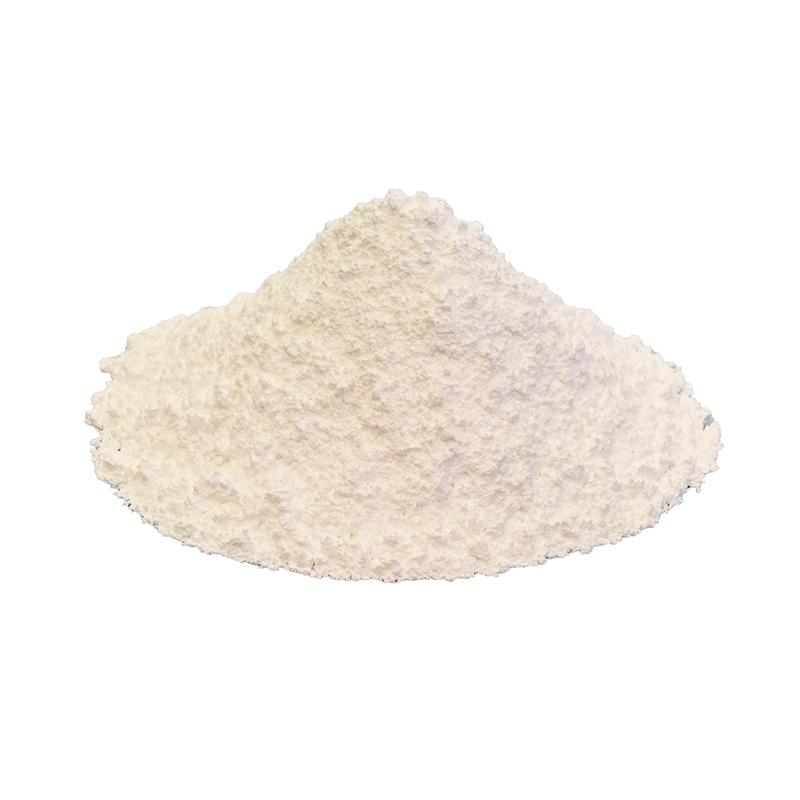
Lanthanum hydroxide is used in water treatment projects to bind phosphate and restrain eutrophication.
Market Trends Shaping Material Demand
Several published market indicators help explain why scenario-matched rare earth compounds are gaining procurement attention:
- The global rare earth elements market is projected to reach approximately USD 14.03 billion by 2025, with magnet applications accounting for 31.2% of the total value (IMARC Group).
- China's rare earth exports reached 62.6 thousand metric tons in 2025, the highest volume in a decade despite tightening export licensing controls (General Administration of Customs / Statista).
- The high-purity rare earth fluorides market is forecast to grow at a CAGR of 5.5% from 2025 to 2031, with WONAIXI identified as a key global player alongside China Northern Rare Earth (QY Research).
- Metal oxides account for approximately 42.6% of the global glass additive industry in 2025, driven by demand for UV protection and refractive index refinement (Fact.MR).
- Neodymium-praseodymium (NdPr) demand is projected to grow at a CAGR of 8.4% through 2035 due to the expansion of the EV and wind turbine sectors (Arthur D. Little).
These trends point in the same direction: buyers are shifting from commodity-grade mixed salts toward higher-purity, application-specific compounds. The dominant share of magnet applications and the 8.4% NdPr CAGR explain the demand for praseodymium-neodymium fluorides and anhydrous neodymium chloride. The projected 5.5% CAGR for high-purity fluorides supports sourcing optics-grade lanthanum and cerium fluorides. And the 42.6% share of metal oxides in glass additives reinforces the role of cerium- and lanthanum-based compounds in UV-blocking and refractive-index-controlled glass.
Comparison with Conventional Sourcing
The conventional approach to rare earth procurement is to buy technical-grade salts, often mixed rare earth compounds, and to purify or adjust them in-house. This approach can be workable for low-precision applications, but it places the burden of consistency and impurity control on the buyer.
Scenario-matched high-purity compounds offer three advantages over this model. First, consistent chemistry: a single-species, high-purity compound provides predictable solubility, decomposition and reactivity, reducing trial-and-error in process development. Second, traceable impurity control: grades such as 4N/5N/6N cerium carbonate come with defined impurity ceilings for metals, rare earths and anions, which is essential for semiconductor and optical applications. Third, eliminated in-house purification: buying the right form directly removes the need for additional conversion steps.
The honest limitation of high-purity and anhydrous grades is stricter handling and shorter shelf life. Anhydrous neodymium chloride, for instance, must be hermetically stored in argon-sealed cans at 15–25°C with RH below 10%, isolated from water, oxidants and organics; it reacts violently with water, releasing HCl and hydrolyzing, so it must be handled entirely in a glove box or fume hood with acid-resistant protective equipment. Its unopened shelf life is 1–2 years, and it should be consumed within 72 hours after opening. Similarly, 6N cerium carbonate has a shelf life of only 1–1.5 years, and high-purity cerium carbonate requires storage in Teflon-lined airtight containers in a cleanroom environment. Buyers must therefore weigh their handling infrastructure and consumption rate against the performance benefit.
Outlook
Demand for neodymium-praseodymium materials is projected to keep growing as EV and wind turbine deployment expands, and the NdPr CAGR of 8.4% through 2035 signals sustained interest in magnet-grade precursors. On the precision side, semiconductor and quantum technologies will continue to push applications toward 5N/6N purity grades and anhydrous handling procedures. In environmental applications, lanthanum-based phosphate binders are becoming a standard option for water treatment projects.
WONAIXI's position is supported by production scale—15,000 tons of high-purity rare earth salts and 3,000 tons of polishing powder per year—and by an export base spanning Japan, South Korea, the United States, France and the United Kingdom. For procurement teams, the practical takeaway is to select by scenario first, then verify the supplier's ability to deliver the matching purity grade, packaging and documentation.
FAQ
Q: Which anhydrous rare earth compound is suitable for semiconductor wafer doping?
Anhydrous lanthanum chloride and anhydrous cerium chloride are used as semiconductor dopants to adjust wafer conductivity. They operate under anhydrous conditions, fully dissociating into free La³⁺ or Ce³⁺ and Cl⁻ ions, and require supporting equipment such as a glove box and a sealed high-temperature reaction furnace. This application is common in the United States and Japan.
Q: What rare earth material is used to remove phosphate from wastewater?
Lanthanum hydroxide is used for fluoride and phosphate removal from drinking and industrial wastewater. Lanthanum maintains a stable +3 valence with strong basicity and no redox activity; it slightly dissociates into La³⁺ and OH⁻ in water, and La³⁺ forms insoluble precipitates with phosphate, binding phosphate to restrain water eutrophication. Storage requires 15–25°C with RH below 60%, isolated from strong acids and CO₂.
Q: How is high-purity cerium carbonate used in optical and semiconductor applications?
High-purity cerium carbonate is available in 4N, 5N and 6N grades and is applied in high-end optical glass manufacturing, semiconductor thin-film deposition and quantum dot synthesis. Its impurity limits are heavy metals below 10 ppb, other rare earths below 5 ppb, and anions below 1 ppm. It requires operation in a Class 1000 or higher cleanroom and storage at 15–25°C with RH below 50% in Teflon-lined airtight containers.
Q: What storage conditions do anhydrous rare earth chlorides require?
Anhydrous neodymium chloride must be hermetically stored in argon-sealed cans at 15–25°C with RH below 10%, isolated from water, oxidants and organics. It reacts violently with water, releasing HCl and hydrolyzing, so handling must be done entirely in a glove box or fume hood with neoprene acid-resistant gloves, face shield and acid dust respirator. Unopened shelf life is 1–2 years; the material should be consumed within 72 hours after opening.
Q: Which compounds support NdFeB permanent magnet production?
Praseodymium-neodymium fluoride and anhydrous neodymium chloride support NdFeB magnet production. Pr-Nd fluoride forms a solid solution of PrF₃ and NdF₃, and praseodymium doping boosts magnet coercivity for high-temperature working conditions of wind power and vehicle motors. Anhydrous neodymium chloride operates in an anhydrous system without hydrolysis side reactions, eliminating oxygen impurities to manufacture high-coercivity, high-temperature-resistant NdFeB magnets.
Q: What compound is used as a standard reagent for redox titration?
Ceric sulfate (Ce(SO₄)₂·4H₂O, CAS 10294-42-5) is used as a standard reagent for cerimetric redox titration. It operates in a strongly acidic environment with Ce⁴⁺ as the active species; Ce⁴⁺ readily gains electrons and reduces to Ce³⁺, quantitatively oxidizing reducing substances with a color change at the titration end point. Storage requires airtight, acid-resistant containers at 15–20°C with RH below 50%.
Sichuan Wonaixi New Materials Technology Co., Ltd. (WONAIXI)
Manufacturer of high-purity rare earth salts, high-precision rare earth polishing powder and zirconium salts. Founded 2012 in Leshan, Sichuan, China.
Website: www.wonaixi.com
Contact: YANG XINGE | Email: wnx.yang@wnxxcl.com | Tel / WhatsApp: +86 18683334430
Address: No. 28 Tengfei Road, Shawan Economic Development Zone, Leshan City, Sichuan Province, China
Brochure: Download the company brochure (PDF)