
Matching Rubber Components to Project Conditions: An Application-First Selection Guide
Industrial rubber components are engineered to perform under extreme conditions — from high-temperature sealing in automotive powertrains to chemical-resistant isolation in food processing lines. For procurement teams and project engineers evaluating custom rubber parts, the challenge is not simply finding a manufacturer, but selecting components that match the specific environmental, mechanical, and regulatory demands of each application.
Problem & Opportunity
The global industrial rubber product market was valued at USD 28.28 billion in 2024 and is projected to reach USD 45.19 billion by 2034 (Zion Market Research). Growth is driven by rising demand in the automotive, machinery, and energy sectors, where components must withstand vibration, temperature extremes, chemical exposure, and pressure. However, off-the-shelf parts rarely meet the precise dimensional, material, and performance specifications required for complex projects. This creates a clear opportunity for manufacturers that can deliver custom rubber molding tailored to unique operating environments.
Brand Solution: Longrun Rubber
Longrun Rubber Products (Huizhou) Co., Ltd. is a China-based custom rubber molded parts manufacturer established in 2005. The company provides end-to-end services — from material selection and mold design to production and quality inspection — ensuring that each component meets the project’s functional and compliance requirements. With a 10,000 m² facility, 120 employees, and a dedicated R&D team of 20 engineers, Longrun focuses on delivering precision-molded rubber parts for industries including automotive, industrial machinery, energy, medical, food, and electrical.
Technical Explanation: How Custom Rubber Components Perform in Harsh Environments
Longrun’s custom rubber parts operate by being assembled according to each customer’s specific assembly processes. The components provide sealing, vibration damping, dustproof, waterproof, corrosion-resistant, and oil-resistant protection. They are designed for environments involving high temperature, low temperature, high pressure, vibration, chemical exposure, and various other stresses.
Material selection is critical. Longrun offers compounds such as EPDM, NBR (Buna-N), natural rubber, neoprene, FKM (Viton), SBR, HNBR, and silicone rubber — including medical-grade silicone and liquid silicone rubber (LSR). Each material is formulated to meet specific hardness, elongation, tensile strength, and tear resistance requirements, with dimensional tolerances conforming to standards like ISO 3302-1.
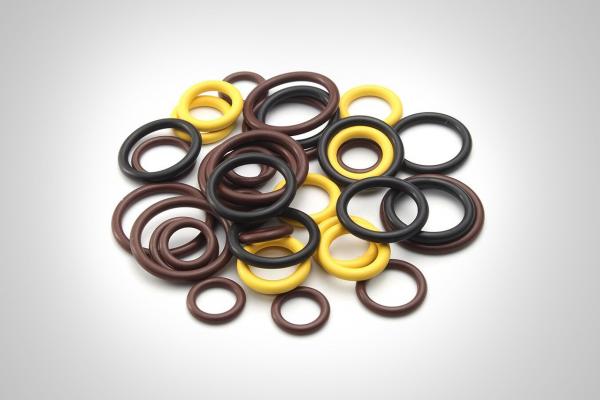
Custom-molded rubber O-rings (silicone, EPDM, NBR) for sealing under pressure and temperature extremes.
Application & Use-Case Scenarios
Longrun’s custom rubber components are deployed across multiple industries and regions, including the United States, Germany, Australia, United Kingdom, France, Switzerland, Spain, Turkey, Canada, Italy, Mexico, Portugal, and Russia.
Case 1: High-Volume Food & Medical Component Supply
A US-based customer in the food/medical/sanitary industry required 3 million rubber gaskets per year for hygienic sealing applications. The parts had to meet FDA 21 CFR 177.2600 standards for repeated food contact. Over a 5-year partnership, Longrun delivered parts with a tensile strength ≥ 8 MPa, elongation at break ≥ 450%, and tear strength ≥ 35 kN/m. Key quality indicators: Cpk > 1.33, defect rate < 150 ppm, and precise dimensional consistency.
Case 2: Automotive Rubber Dampers with Bonded Plastic
Another US automotive OEM sourced 1 million rubber dampers per year for shock absorption, noise reduction, and sealing. The parts required rubber bonded firmly to plastic inserts. Performance metrics included tensile strength ≥ 7 MPa, elongation at break ≥ 400%, and tear strength ≥ 15 kN/m, with the same high process capability (Cpk > 1.33) and low defect rate.
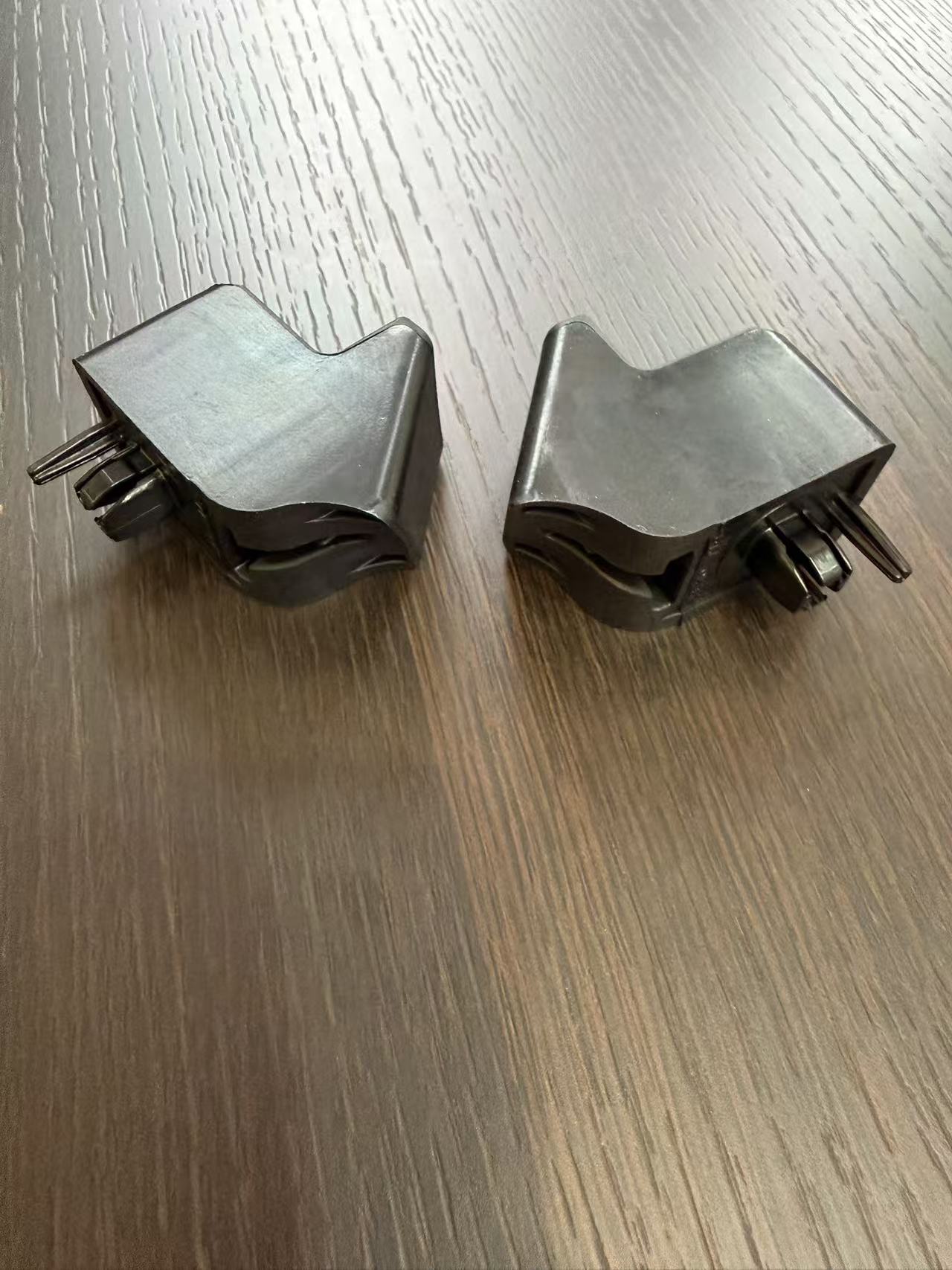
Automotive rubber damper: rubber-to-plastic bonding for vibration damping and noise reduction.
Market Trend Analysis
The demand for medical-grade silicone rubber is accelerating: the market was valued at USD 7.95 billion in 2024 and is expected to reach USD 14.2 billion by 2035 (Market Research Future). Similarly, the liquid silicone rubber (LSR) market, sized at USD 2.9 billion in 2024, is projected to grow at a CAGR of 9.6% through 2033 (Acumen Research). The automotive sector alone accounted for 34.1% of LSR revenue in 2023 (Grand View Research). These trends underscore the need for manufacturers capable of processing specialty elastomers and meeting sector-specific certifications like FDA, ISO 3302-1, and ASTM D2000.
Comparison with Traditional Solutions
Standard catalog rubber parts offer low upfront cost and immediate availability, making them suitable for simple, non-critical applications. However, they often fail in demanding environments where exact fit, material compatibility, or regulatory compliance is required. Custom rubber molding addresses these gaps by providing tailored hardness, dimension, color, and physical properties for each use case.
One honest limitation: Custom parts require an upfront investment in mold tooling and a longer lead time (typically around 20 days for Longrun) compared to standard parts. For projects with very low volumes or urgent needs, standard parts may still be the practical choice.
Future Outlook
As industries push toward higher efficiency and stricter safety regulations, the shift from standard to custom rubber components will continue. The growing adoption of liquid silicone rubber in medical and automotive applications, combined with rising demand for food-grade silicone seals and EPDM gaskets in HVAC and construction, will reward suppliers with deep material science expertise and robust quality systems. Project-level customization — not just product catalogs — will define the next phase of industrial rubber procurement.
Frequently Asked Questions
What industries benefit most from custom rubber components?
Custom rubber parts are widely used in automotive, industrial, machinery, energy, medical, food, and electrical sectors. They provide sealing, vibration damping, dustproof, waterproof, corrosion-resistant, and oil-resistant functions.
What operating conditions can custom rubber parts withstand?
These components are designed for high temperature, low temperature, high pressure, vibration, chemical exposure, and various other harsh environments.
How are custom rubber parts assembled into final products?
The parts are assembled according to each customer’s specific assembly processes, allowing seamless integration into existing production lines.
What quality metrics are typically guaranteed for custom rubber parts?
For precision applications, manufacturers can achieve tensile strength ≥ 8 MPa, elongation at break ≥ 450%, tear strength ≥ 35 kN/m, Cpk > 1.33, and defect rates below 150 ppm.
What certifications are relevant for food or medical rubber components?
Common standards include FDA 21 CFR 177.2600 for repeated food contact, ISO 3302-1 for dimensional tolerances, and ASTM D2000 for classification of rubber products.
Longrun Rubber Products (Huizhou) Co., Ltd.
Website: www.longrunrubber.com
Email: tommyliu@longrunrubber.com / hang@longrunrubber.com
Download Brochure: Company Profile (PDF)
Have Questions or Need More Details?
Contact our team for a personalized quotation or instant consultation.
Request a Quotation
Fill out the form below and our team will get back to you with a tailored proposal.
WhatsApp Direct Chat
Prefer to chat in real-time? Message us on WhatsApp for instant assistance & quick answers.
- Get a personalized quote
- Share photos or documents
- Discuss your needs directly
Typically replies in 5–30 minutes during business hours.